UI/UX in Retail Apps: Gamified Design That Retains 35%

UI/UX in retail apps face steep early churn, with shopping apps averaging 29.1% Day-1 retention and just 7.2% by Day-30, which compresses the window for activation and habit formation.  

Cross-industry datasets corroborate this reality, showing Day-30 retention for shopping around 5% globally, which underscores how fragile engagement becomes after week one. In this context, digital experiences in retail that apply design psychology and ethical gamification are not a novelty; they are levers that turn fragile first sessions into repeat visits and sustained use.  

Industry syntheses report that organizations with gamified loyalty programs see about a 22% increase in customer retention, which is material for LTV without an overreliance on discounts.  

Leaders evaluating digital experience services for retail apps should target compounding improvements across Day-1, Day-7, and Day-30, since cohort survival curves determine margin, growth, and brand affinity over quarters. 

How does Design Psychology make UI/UX in Retail Apps Habit-Forming?

Self-Determination Theory (SDT) provides the most mature lens: interfaces that support competence, autonomy, and relatedness sustain motivation and engagement beyond novelty effects.  

Gamification can facilitate or undermine intrinsic motivation depending on whether mechanics support those needs, so progress cues, meaningful choices, and fair feedback matter more than raw point tallies.  

Contemporary reviews urge practitioners to move beyond superficial SDT references and design for the full continuum of motivation, which aligns well with retail’s mix of intrinsic exploration and extrinsic rewards.  

For retail industry UX, this translates into visible progress for competence, opt-in challenges for autonomy, and light social proof for relatedness, each calibrated to reduce friction and increase session return probability. 

  • Competence: progress bars, tiers, or mastery cues reduce cognitive load and reinforce forward motion. 
  • Autonomy: optional quests, alternative paths, or skip choices prevent control perceptions that erode motivation. 
  • Relatedness: social proof, community goals, or lightweight leaderboards add connection without zero-sum pressure. 
  • Variable rewards: intermittent, transparent surprise-and-delight perks sustain curiosity and revisit cadence when applied ethically. 

Boost Engagement with Smarter UI/UX in Retail Apps

Turn casual shoppers into loyal customers with ViitorCloud’s gamified design expertise.

Where is the Real Retention Opportunity Window in Shopping Apps?

Week one dictates the curve: every vertical saw doubledigit drops in week one retention year over year, which compresses the activation window and raises the bar for immediate value delivery.  

Category benchmarks show Shopping Day 30 stabilizing near 5% globally, with marketplace subtypes reaching higher single digits in some datasets, which frames a clear target for design-led improvement.  

Platform splits reinforce the point—averages trend roughly mid-20s at Day1 and low single digits by Day30—so the job to be done is to lift early momentum that compounds into survivorship at day thirty.  

For executives, the implication is practical: invest in week-zero and week-one mechanics that reduce cognitive load, reward progress, and spark routine, or accept structural LTV penalties. 

Read: How to Build Data Pipelines for Retail: Turning Disjointed Data Sources into Real-Time Insights 

Gamification Mechanics that Work Best for UI/UX In Retail Apps Today

The highest-yield mechanics combine immediate, effort-appropriate rewards with progress visibility and ethical variability, which together encourage early success and sustained revisits.  

Points and levels satisfy competence when progress is clear and meaningful, while streaks and timeboxed challenges establish routines without coercion when opt-in and fair. Tiers with utility benefits—like early access or service perks—protect margin better than blanket discounts and reinforce identity, which fits retail category dynamics.  

Surprise and delight, applied transparently, leverage variable reinforcement to maintain interest, but it must avoid opacity that feels manipulative to preserve autonomy. 

  • Progress visibility: levels, bars, and milestone messaging tied to real shopping behaviors such as discovery, wishlisting, and first purchase. 
  • Streaks and seasonal quests: gentle cadence drivers that anchor weekly use without punitive resets, framed as optional challenges. 
  • Status tiers with utility: access, service, or exclusivity over pure discounting for healthier contribution margins and loyalty durability. 
  • Intermittent perks: transparent, fair randomness that delights without confusing value exchange or overcomplicating checkout. 

Redefine Customer Loyalty with UI/UX in Retail Apps

Deliver engaging experiences that keep customers coming back with our proven gamification methods.

How Does Gamification Tie to Measurable Retail Outcomes, Not Vanity Metrics?

Multiple industry syntheses attribute roughly a 22% improvement in loyalty or retention to well-executed gamified programs, which compounds LTV when applied to categories with mid-single-digit Day30 baselines. Adjusted for channel mix and platform, even small absolute lifts at Day 7 can cascade into meaningful Day 30 survival, which then stabilizes DAU/MAU and reduces reacquisition pressure. Practically: reduce cognitive load to raise Day1 activation, reinforce microsuccess to deepen sessions, and deploy variable, ethical rewards to raise revisit frequency over 3090 days. Teams should instrument cohort analyses rather than rely on vanity engagement, since survivorship curves and purchase frequency reveal durable ROI more reliably than short-term spikes. 

  • Day1/7/30 retention and week-one retention delta to isolate early habit formation effects. 
  • DAU/MAU and session depth as durability indicators rather than bursty clicks. 

Major Pitfalls that Derail UI/UX In Retail Apps, and How Teams Can Avoid Them

Gamification fails when rewards feel controlling, opaque, or bolt-on, which undermines autonomy and competence and accelerates attrition despite short-term spikes.  

Reviews emphasize that superficial use of SDT risks mixed or negative outcomes, so the design must intentionally support psychological needs and contextual factors such as user goals and app intents.  

Overly complex rules increase cognitive load at critical junctures like checkout, which harms activation and erodes trust, especially in price-sensitive retail contexts.  

The antidote is clear mechanics, fair value exchange, opt-ins for challenges, and continuous cohort validation to separate novelty from durable behavior change. 

  • Transparency and fairness in reward schedules to sustain intrinsic motivation while leveraging extrinsic drivers. 
  • Choice architecture that preserves autonomy, including easy opt-outs for streaks or quests. 
  • Minimal cognitive overhead during high-stakes flows such as payment and delivery selection. 
  • Regular A/B and cohort analyses to monitor novelty decay and tune mechanics responsibly. 

Check: Build Custom AI Agents for Business: Transform Your Operations 

Maximize Retention with Powerful UI/UX in Retail Apps

Create immersive shopping journeys that convert and retain up to 35% more customers.

What 90-Day Blueprint Converts Evidence into A 35% Retention Lift Target?

A three-sprint plan aligns with observed week-one compression and builds compounding habit loops that target Day 30 survivorship directly.  

Sprint 1 establishes baselines, reduces friction, and adds quick-win progress rewards to onboarding and first purchase, which typically lifts Day 1 activation when executed cleanly.  

Sprint 2 introduces streaks, seasonal challenges, and milestone perks focused on behaviors that correlate with repeat purchase, which aim to strengthen Day 7 retention.  

Sprint 3 layers tier progression with utility benefits and tunes triggers via controlled experiments, anchoring Day30 cohort survival, and setting up Q2Q3 LTV expansion. 

  • Instrumentation: cohort retention by platform, DAU/MAU, and purchase cadence wired before experiments begin. 
  • Ethics and clarity: SDT-aligned copy and UI affordances to support autonomy and competence across flows. 
  • Governance: predefined guardrails on randomness, odds communication, and reset policies to maintain trust. 
  • Readouts: weekly dashboards on week-one retention and monthly Day30 survivorship to inform backlog decisions. 

Here’s How ViitorCloud Connects this to High-Performing Digital Experiences in Retail

ViitorCloud’s digital experience services integrate behavioral science with product strategy to design UI/UX in retail apps that make progress obvious, choices meaningful, and rewards fair, which aligns with SDT evidence on sustained motivation and habit formation.  

The team focuses on week-zero instrumentation, week-one activation, and Day 30 cohort durability, which mirrors category benchmarks and derisks investments in personalization, loyalty, and in-app engagement layers. Contact us right now at support@viitorcloud.com and book a complimentary consultation meeting. 

Turn Retail Apps into Revenue Engines

Leverage gamified UI/UX in Retail Apps to boost customer satisfaction and sales performance.

Conclusion

Benchmarks show shopping Day30 retention near 5%7%, which makes early activation and habit loops the decisive lever for LTV in UI/UX in retail apps. Ethical gamification grounded in SDT consistently correlates with improved loyalty and retention near 22%, which becomes transformative at retail scale when layered onto clear progress, optional challenges, and fair variability. With a disciplined 90-day plan and ViitorCloud’s digital experience services for retail apps, a 35% segment-level retention lift is a credible goal that compounds engagement, margin, and brand affinity over time. 

Accessibility in the Digital Museum: Designing Inclusive Experiences with Modern SaaS

The digital experience revolution has fundamentally transformed how cultural institutions serve diverse audiences, with over 80% of visually impaired visitors expressing that they would visit museums more frequently if spaces and content were more accessible.

Today’s museums are embracing digital experience services that bridge physical and virtual worlds, creating inclusive environments where technology serves as the great equalizer.

This exploration shows how modern SaaS solutions are reshaping museum accessibility through innovative digital experience consulting approaches, advanced AI implementations, and cutting-edge interactive technologies that ensure cultural heritage remains accessible to all.

What Is the Current Accessibility Scene in Museums

The museum industry has undergone a dramatic transformation in 2025, driven by legal requirements, technological advancements, evolving visitor expectations, and competitive pressures.

Recent accessibility guidelines mandate that museum applications include text-to-speech functionality, adjustable font sizes, contrast settings, and GPS navigation for visitors with mobility challenges.

This digital transformation extends far beyond compliance. Museums are discovering that accessible design benefits everyone – from older adults to multilingual visitors accessing content in environments with limited connectivity.

The principle of Universal Design emphasizes equitable use, simple, intuitive interfaces, perceptible information accessible to all sensory abilities, and effective sizing that accommodates users of different mobility levels.

Leading institutions recognize that true inclusivity requires both physical accessibility and robust digital experience solutions. Digital collections now require multiple asset versions adapted for different disability types, including audio transcriptions for visually impaired visitors and written transcriptions for hearing-impaired guests.

AI-Powered Solutions Transforming Museum Experiences

Artificial intelligence has emerged as a game-changer in museum accessibility, with institutions implementing AI solutions to serve broader audiences more effectively.

Content digitalization powered by AI helps institutions transcend physical space limitations while ensuring mobility-challenged visitors can access comprehensive museum resources.

The COVID-19 pandemic accelerated digital transformation efforts, leading museums to leverage AI-powered document processing platforms that make archives truly accessible.

These systems process vast collections systematically, organizing and preserving items with long-term research value while making special collections available to global audiences.

Modern digital experience services incorporate machine learning algorithms that personalize visitor experiences based on individual needs, preferences, learning styles, and accessibility requirements.

These intelligent systems adapt content delivery in real-time, ensuring every visitor receives optimized information regardless of their abilities or background.

Design for All with Inclusive Digital Experience

Create barrier-free museum experiences using ViitorCloud’s expert digital experience service tailored for accessibility.

Interactive Technologies: Beyond Traditional Displays

The integration of immersive technologies has revolutionized how museums present collections. Virtual Reality and Augmented Reality enable visitors to explore exhibitions virtually, interact with artifacts digitally, and experience dynamic storytelling through digital overlays on physical objects.

Interactive displays now feature touchscreens for multimedia content access, motion sensors for responsive exhibits, and haptic feedback systems that allow virtual object interaction. These technologies create multisensory experiences that accommodate different learning styles and accessibility needs.

Holographic displays represent another breakthrough, showcasing 3D holograms of artifacts and historical figures that provide lifelike engagement. Interactive projections respond to visitor movement and gestures, encouraging active participation while making learning more dynamic and accessible.

Museums are also implementing customizable interfaces with adjustable font sizes, contrast settings, reading modes, and multilingual options. These personalization features ensure that digital experience consulting approaches address diverse visitor needs effectively.

SaaS Platforms Driving Inclusive Design

Software-as-a-Service platforms have become essential infrastructure for modern museum operations, providing scalable solutions that support accessibility initiatives without requiring massive upfront investments. These platforms offer dedicated Digital Asset Management systems that organize accessibility-focused content versions efficiently.

The key to accessible digital collections lies in creating multiple asset versions adapted for different disabilities. SaaS platforms simplify this process by organizing related digital assets systematically while facilitating seamless third-party sharing when required.

Cloud-based solutions enable museums to implement real-time translations, voice-to-text transcriptions, and adaptive content delivery that makes institutions more inclusive. These platforms provide the technical foundation necessary for delivering consistent digital experience services across multiple touchpoints.

Modern SaaS offerings include automated accessibility testing tools, compliance monitoring systems, workflow management for content adaptation, and analytics platforms that track visitor engagement patterns to optimize inclusive design strategies.

Build Immersive Digital Journeys

Deliver seamless and inclusive virtual museum experiences with our cutting-edge digital experience service.

Case Studies

ViitorCloud’s real-world implementations showcase the transformative power of digital experience services in cultural institutions. Our work with The Museum of Art and Photography demonstrates how comprehensive digital solutions can enhance visitor accessibility while preserving cultural heritage through innovative technology integration. This project exemplifies how modern SaaS platforms can democratize art appreciation for diverse audiences.

Museums worldwide are implementing mixed reality experiences that combine virtual and augmented reality elements, creating immersive experiences that bridge physical and digital worlds. ViitorCloud’s approach to revolutionizing museum experiences showcases how AI-powered solutions can transform traditional exhibition spaces into interactive, accessible environments that accommodate visitors with varying abilities and learning preferences.

Our innovative work in lighting up the museum environment demonstrates how digital experience consulting can create dynamic, responsive spaces that adapt to visitor needs while maintaining the integrity of cultural artifacts and storytelling.

These implementations demonstrate industry commitment to inclusive design principles and technology-driven accessibility improvements, with ViitorCloud’s comprehensive approach serving as a blueprint for institutions seeking to balance innovation with preservation while ensuring universal access to cultural experiences.

Future-Proofing Museum Digital Experiences

Looking ahead, museums must prepare for evolving accessibility requirements, emerging technologies, changing visitor expectations, and regulatory updates. The integration of seamless technology will continue transforming museum visits through enhanced accessibility features, personalized content delivery, and adaptive user interfaces.

Future digital experience consulting strategies must encompass comprehensive accessibility audits, staff training programs, technology integration planning, and ongoing compliance monitoring. Museums need partners who understand both cultural preservation requirements and cutting-edge accessibility technologies.

The rise of sustainable digital practices, preservation-focused solutions, global accessibility standards, and governance frameworks will shape future museum operations. Institutions must balance innovation with preservation while ensuring inclusive access remains central to their mission.

Make Digital Culture Accessible

Empower every visitor with intuitive, accessible interfaces using ViitorCloud’s digital experience service.

We Are Your Partner in Digital Experience Excellence

Museums seeking comprehensive digital experience services require partners who understand both cultural sensitivity and technological innovation. ViitorCloud specializes in developing custom AI solutions that enhance visitor engagement while ensuring accessibility compliance across all digital touchpoints.

Our expertise in digital transformation enables cultural institutions to implement scalable SaaS platforms that support diverse visitor needs. We provide end-to-end digital experience consulting that encompasses accessibility auditing, technology integration, staff training, and ongoing optimization.

ViitorCloud’s AI development services create intelligent systems that personalize museum experiences while maintaining the highest accessibility standards. Our solutions include automated content adaptation, multilingual support, real-time accessibility features, and comprehensive analytics platforms that help institutions understand and serve their diverse audiences effectively. Contact us to learn how our digital experience services help your museums.

Unity Model Context Protocol (MCP): How We Are Unlocking Game Development Efficiency

Recently, you might have heard, seen, or read about Unity Model Context Protocol (Unity MCP). And as game developers, we are also constantly on the lookout for the tools and methodologies that not only streamline our team’s workflow but also increase productivity (which also benefits our clients).

So, after working extensively with Unity MCP, I can confidently say that this technology represents the future of streamlined game development. With the gaming industry experiencing unprecedented growth (Unity powering over 70% of top mobile games) and the Model Context Protocol ecosystem expanding rapidly with early adopters like Block and Apollo integrating MCP into their systems, I have witnessed firsthand how this protocol transforms development workflows from weeks to hours.

So, let’s discuss why adopting Unity MCP can be a pivotal move for your projects and how ViitorCloud does this efficiently.

Why Unity MCP is a Game-Changer for Development Teams

Through my implementations at ViitorCloud, I have discovered that Unity Model Context Protocol addresses the core pain points that have plagued game developers for years.

The protocol serves as a bridge between Unity Editor and Large Language Models, enabling what we call AI-driven development automation.

The Benefits I Have Observed

In my experience leading digital transformation projects, Unity MCP delivers five critical advantages that directly impact project success:

  1. Faster Development stands out as the most immediate benefit. I have guided teams through implementations where ideas transform into playable prototypes in minutes rather than days. The simplified processes eliminate the traditional bottlenecks that slow creative momentum.
  2. Reduced Bugs and Issues emerge from the structured approach Unity MCP enforces. Through systematic automation, we have seen fewer debugging sessions in projects and prototypes I have overseen, allowing teams to focus on innovation rather than troubleshooting.
  3. Effortless Setup revolutionizes project initialization. Directory structures, script scaffolding, and scene configurations that previously required hours of manual work now complete automatically. This efficiency gain translates directly to reduced project costs for our clients.
  4. Enhanced Code Quality results from the organized practices Unity MCP promotes. The protocol’s standardized approach ensures consistent coding standards across development teams, regardless of individual developer experience levels.
  5. Streamlined Debugging capabilities enable rapid issue identification and resolution. I have watched developers locate and fix complex problems in minutes using Unity MCP’s integrated diagnostic tools. 

Read: Creating Immersive Customer Journeys with Digital Experiences in Real Estate 

Unlock Game Development Efficiency with Unity MCP

Discover how ViitorCloud leverages Unity Model Context Protocol to streamline your game development process, enhancing productivity and innovation.

Operations That Transform Development Workflows

Based on extensive implementations across diverse client projects, I have identified the key operational categories that make Unity MCP indispensable for modern game development teams.

Prefab Management Revolution

The prefab operations fundamentally change how we approach reusable game elements:

  • apply_prefab: Instantly synchronizes changes across all prefab instances
  • create_prefab: Transforms any GameObject into a reusable asset with a single command
  • instantiate_prefab: Spawns prefabs directly into scenes through natural language instructions

These capabilities align perfectly with our game development services approach, where efficiency and scalability drive project success.

Intelligent Object Control

Object manipulation through Unity MCP eliminates the tedious manual processes that consume development time:

  • create_object: Generates primitive or complex objects based on AI interpretation
  • delete_object: Intelligently removes unnecessary scene elements
  • modify_object: Adjusts transforms and components through conversational commands
  • select_object: Highlights specific objects for immediate editor access

Automated Script Management

Script operations represent perhaps the most transformative aspect of Unity MCP:

  • create_script: Generates functional C# scripts from natural language descriptions
  • attach_script: Automatically connects scripts to appropriate GameObjects
  • list_scripts: Provides comprehensive project script overviews

This automation addresses a critical challenge I have observed across our client projects—the time-consuming nature of repetitive scripting tasks.

Scene and Asset Management Excellence

Personally, I have seen how Unity MCP’s scene management capabilities accelerate project delivery timelines.

Streamlined Scene Operations 

  • new_scene: Creates optimized scene templates instantly
  • open_scene/change_scene: Facilitates seamless scene transitions during development
  • save_scene: Ensures progress preservation with automated saving protocols

Comprehensive Asset Control

  • import_asset: Integrates external resources efficiently
  • get_asset_list: Provides intelligent asset browsing capabilities

These features complement our AI integration services, enabling clients to leverage cutting-edge automation for competitive advantage.

Transform Your Game Development with Unity MCP

Partner with ViitorCloud to integrate Unity Model Context Protocol into your projects, achieving seamless scalability and cost-effective innovation.

Advanced Development Controls and Testing

The build and play mode operations I have implemented demonstrate Unity MCP’s production-ready capabilities:

  • build: Compiles projects for target platforms with optimized settings
  • play/pause/stop: Controls Editor play mode for systematic testing workflows

Intelligent Inspector Tools

The inspector capabilities provide unprecedented development insight:

  • get_object_properties: Accesses detailed GameObject information programmatically
  • set_material: Modifies materials through AI-driven commands
  • read_console: Monitors Unity logs for proactive troubleshooting

Search and Navigation Efficiency

Efficient object location represents a crucial productivity factor in complex projects.

Unity MCP’s search capabilities include:

  • find_objects_by_name: Locates specific scene objects instantly
  • find_objects_by_tag: Identifies objects through tag-based queries

These features prove invaluable during the debugging and optimization phases I oversee in client projects.

Check: The Importance of Digital Experience Monitoring Solutions

The Technical Architecture Behind All This Magic

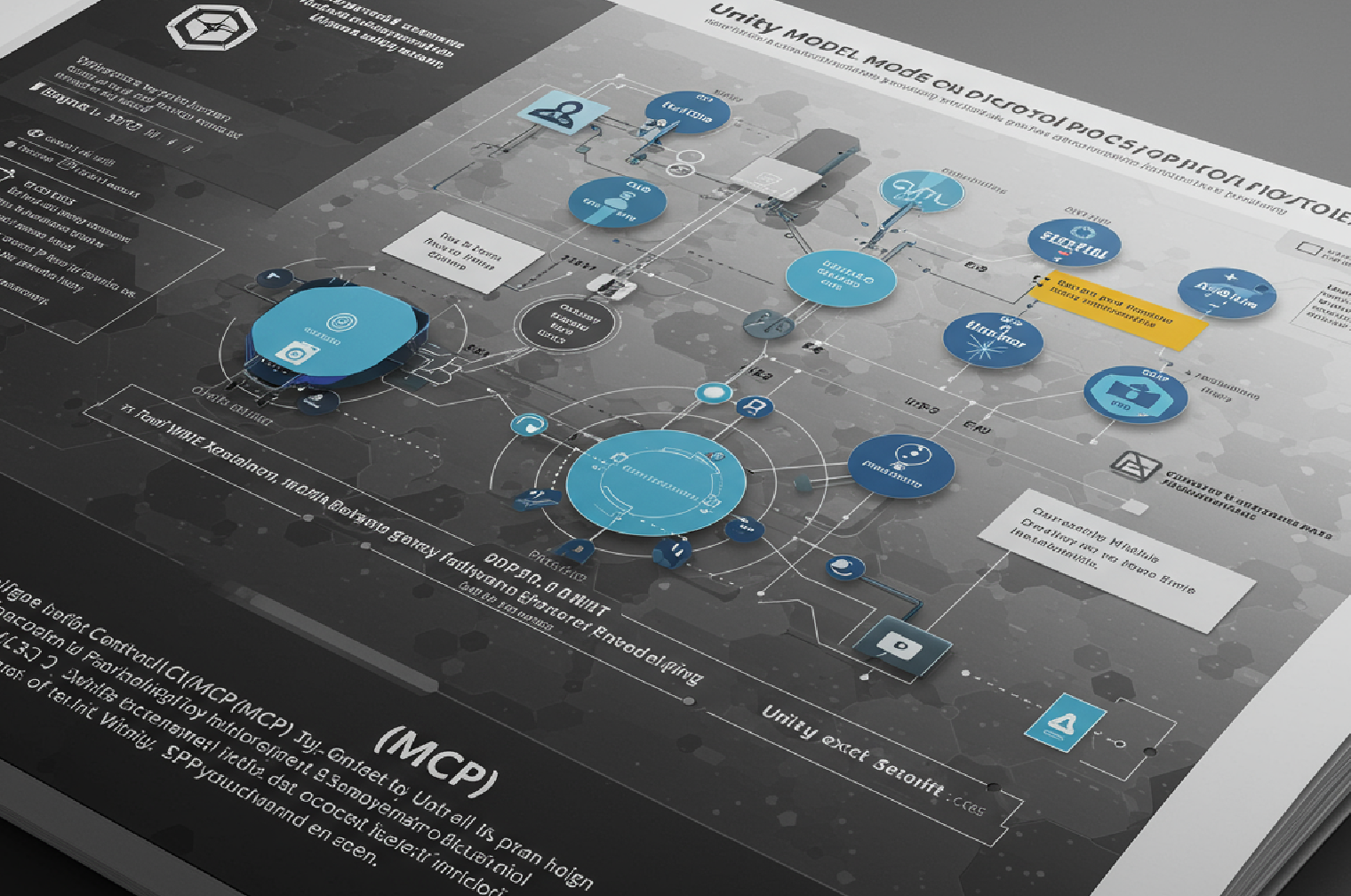
Unity MCP operates through the Model Context Protocol framework, which enables secure, two-way connections between AI tools and data sources.

The architecture follows a straightforward client-server model where Unity acts as the MCP server, exposing game development capabilities to AI-powered MCP clients like Claude Desktop.

This bidirectional communication enables real-time interaction between Unity environments and Large Language Models, facilitating the seamless automation I have implemented across numerous client projects.

The protocol’s standardized interface eliminates the need for custom integrations, addressing a challenge I have helped countless organizations overcome in their digital transformation journeys.

Experience Next-Level Game Development with Unity MCP

Elevate your gaming projects by adopting Unity Model Context Protocol through ViitorCloud’s expert solutions, ensuring efficient and innovative development.

ViitorCloud’s Unity MCP Implementation Expertise

Through my leadership of ViitorCloud’s digital experience team, I have developed comprehensive Unity MCP deployment strategies that deliver measurable results.

Our approach combines technical expertise with business acumen, ensuring investments in Unity Model Context Protocol generate sustainable competitive advantages.

Our implementation methodology addresses the complete development lifecycle, from initial assessment through ongoing optimization.

Whether you are exploring game development automation or seeking to accelerate existing workflows, Unity MCP offers unprecedented opportunities for innovation and efficiency.

The future of game development lies in the seamless integration of AI assistance and creative vision that Unity Model Context Protocol enables. As someone who’s guided numerous organizations through technology adoption, I believe Unity MCP represents essential infrastructure for sustainable development success.

If you are ready to transform your development process with Unity MCP, contact us now and learn how ViitorCloud can guide your implementation journey toward greater efficiency and innovation.

Creating Immersive Customer Journeys with Digital Experiences in Real Estate

Digital experiences in real estate are no longer a luxury but a necessity for businesses looking to thrive in this competitive market. As buyers increasingly turn to online platforms to begin their property search, real estate companies must create engaging, immersive, and personalized digital journeys to capture their attention and guide them toward a successful transaction.

According to the 2023 Home Buyers and Sellers Generational Trends Report, a staggering 96% of home buyers utilize the internet to search for homes. This demonstrates the critical importance of establishing a robust online presence and delivering exceptional digital experiences in real estate to meet customers where they are.

What Is the Customer Journey in Real Estate?

A customer journey map is a visual representation of every interaction a customer has with a product, service, or brand. In real estate, this map encompasses all stages, from initial inquiry to post-sale support. Understanding this journey is crucial for identifying key touchpoints and optimizing the overall customer experience.

Stages of the Real Estate Customer Journey

  • Awareness: The customer becomes aware of their need for a new property and begins initial research online.
  • Consideration: The customer explores different properties, compares options, and seeks more detailed information.
  • Decision: The customer narrows down their choices, visits properties, and makes a final decision.
  • Purchase: The customer completes the transaction, secures financing, and finalizes the purchase.
  • Post-Purchase: The customer receives ongoing support, manages their property, and potentially becomes a repeat customer or advocate.

Digital Transformation in Real Estate

Digital transformation refers to integrating digital technologies across all aspects of a business to improve processes, customer experiences, and overall efficiency.

In real estate, this transformation encompasses several key areas:

  • Enhanced Customer Experience: Digital tools enable 24/7 access to property listings, allowing customers to search independently and schedule viewings at their convenience.
  • Personalization: Companies can tailor their offerings based on individual customer preferences, enhancing satisfaction and loyalty.
  • Streamlined Operations: Automation of routine tasks reduces manual work for agents, allowing them to focus on building relationships with clients.
  • Data-Driven Decision Making: Real-time analytics empower firms to make informed decisions based on market trends and consumer behavior.

The potential economic impact of digital transformation in real estate is substantial. According to McKinsey, the industry could see productivity gains ranging from $110 billion to $180 billion through the adoption of generative AI technologies alone.

Discover Digital Experiences in Real Estate

Explore how our solutions transform customer journeys.

The Role of Immersive Technologies 

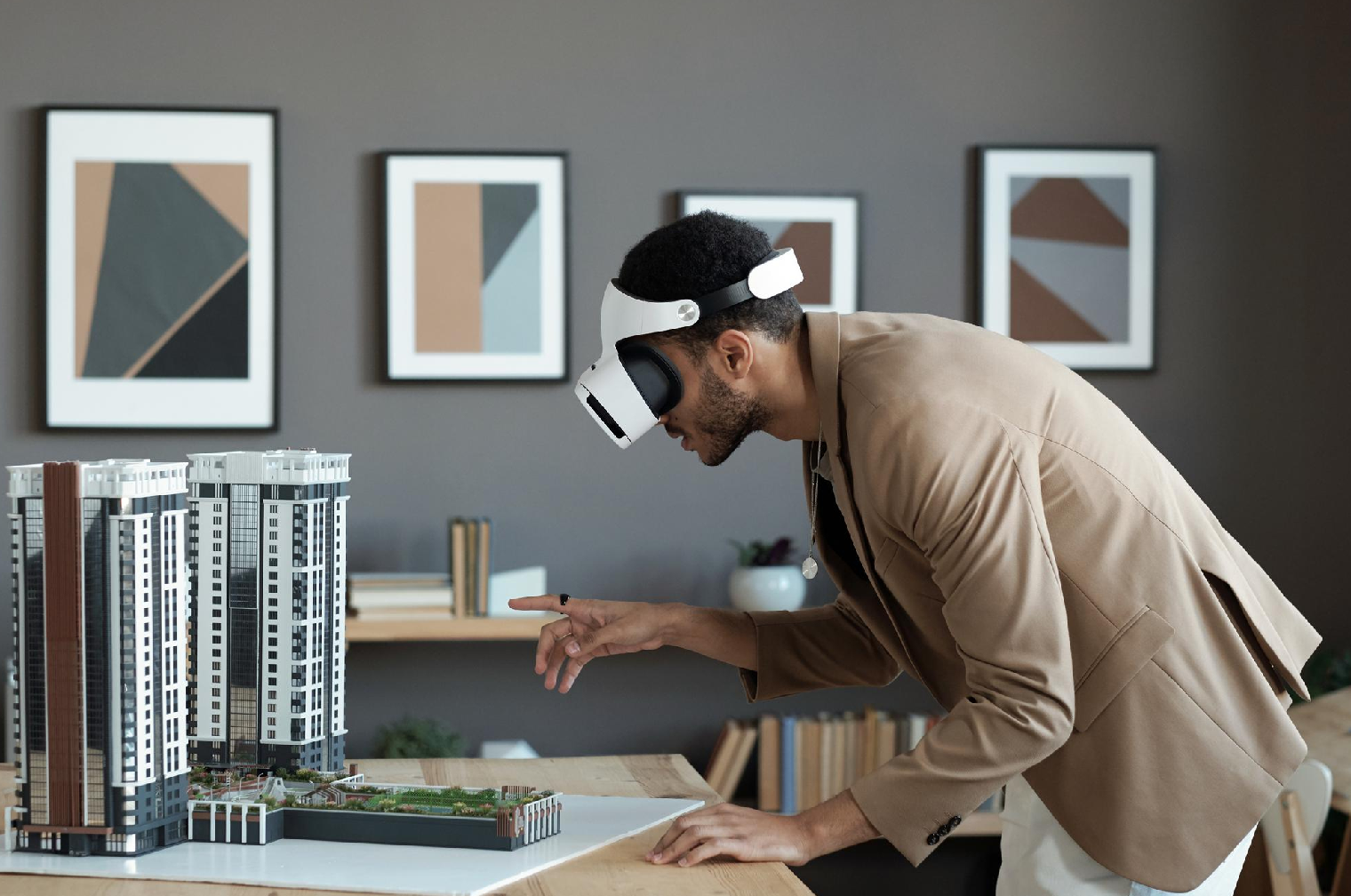
Immersive technologies such as VR and AR play a crucial role in enhancing digital experiences in real estate. These tools allow potential buyers to visualize properties in ways that traditional marketing methods cannot achieve.

Virtual Reality Tours

VR technology enables prospective buyers to take virtual tours of properties from anywhere in the world. This immersive experience provides a realistic view of the property’s layout and features, significantly reducing the time spent on physical showings. Statistics show that 42% of real estate professionals use VR tools for property tours, illustrating its growing importance in the industry.

Augmented Reality Applications

AR applications can overlay digital information onto physical spaces, allowing customers to visualize how a property might look with different furnishings or renovations. This capability fosters emotional connections between buyers and properties, making them more likely to proceed with a purchase.

Interactive Touchpoints

Creating interactive touchpoints throughout the customer journey is vital for maintaining engagement. For instance, using LED walls or touchscreen displays at property showings can provide dynamic presentations that highlight key features and amenities.

Personalizing the Customer Journey

Personalization is a cornerstone of effective digital experiences in real estate. By leveraging data analytics and AI, companies can create tailored experiences that resonate with individual clients.

Customer Journey Mapping

Mapping out the customer journey allows businesses to identify key touchpoints where they can enhance interactions. By understanding each stage—from initial inquiry through post-sale support—real estate firms can optimize their processes and communication strategies.

Utilizing Data Analytics

Data analytics tools enable companies to gather insights into customer behavior and preferences. This information can be used to personalize marketing efforts, ensuring that clients receive relevant property recommendations based on their unique needs.

Implementing AI Solutions

AI-driven chatbots can provide instant responses to customer inquiries, improving engagement while freeing up agents’ time for more complex interactions. Furthermore, AI can analyze market trends to offer predictive insights that help clients make informed decisions.

Building an Integrated Digital Ecosystem

To maximize the benefits of digital experiences in real estate, companies must create integrated digital ecosystems that facilitate seamless interactions between all stakeholders involved in property transactions.

Cloud-Based Solutions

Implementing cloud-based platforms allows for centralized data management and streamlined communication between agents, buyers, sellers, and other parties involved in transactions. This approach enhances transparency and efficiency throughout the buying process.

Smart Contracts and Blockchain Technology

Blockchain technology offers secure transaction methods through smart contracts that automate various aspects of property deals. This innovation reduces paperwork while enhancing trust between parties involved in transactions. Our solution, EveryCRED, can perfectly be used here.

Real-Time Transaction Tracking

Real-time tracking tools provide visibility into transaction progress for all parties involved. This transparency helps manage expectations and fosters trust among clients who are often anxious during significant financial decisions like purchasing a home.

Mobile Applications

With mobile devices becoming integral to daily life, developing user-friendly mobile applications is crucial for enhancing digital experiences in real estate.

Mobile-Friendly Platforms

Over 80% of potential homebuyers begin their property search using mobile apps. Therefore, ensuring that your platform is optimized for mobile use is essential for reaching this audience effectively.

Features That Enhance User Experience

Incorporating features such as virtual tours, interactive floor plans, and real-time communication capabilities within mobile applications significantly improves user experience. These functionalities make it easier for clients to engage with listings while providing agents with valuable insights into client preferences.

Elevate Your Business with Digital Experiences in Real Estate

Enhance your client experience today with expert digital tools.

Strategies for Creating Immersive Customer Journeys with Digital Experiences

Here’s how to create personalized digital customer journeys:

  1. Personalization: Tailor the customer experience to individual preferences and needs. Use data analytics to understand customer behavior and provide personalized recommendations, content, and offers.
  1. Omnichannel Presence: Maintain a consistent brand experience across all digital channels, including website, mobile app, social media, and email.
  1. Interactive Content: Engage customers with interactive content such as virtual tours, 3D models, videos, and quizzes.
  1. Seamless Communication: Provide real-time support and communication through chatbots, live chat, and video conferencing.
  1. Data-Driven Insights: Continuously monitor and analyze customer data to identify areas for improvement and optimize the customer journey.

Case Study: SoReal by ViitorCloud

Our product, SoReal, exemplifies how innovative digital solutions can transform the real estate landscape by enhancing customer experience and increasing sales. SoReal integrates 3D technologies into a cohesive platform designed specifically for real estate professionals.

By utilizing SoReal’s capabilities:

  • Agents can provide personalized virtual tours tailored to individual client preferences.
  • Buyers can visualize properties with customizable features before making a decision.
  • The platform facilitates seamless communication between agents and clients throughout the buying process.

This comprehensive approach not only enhances customer satisfaction but also drives higher conversion rates by creating engaging experiences that resonate with modern buyers. You can check it here: https://soreal.space/.

Transform Customer Journeys with Digital Experiences in Real Estate

Experience innovation that drives results for your business.

Final Words

Digital experiences in real estate are transforming the way properties are bought and sold. By embracing technologies like VR, AR, 3D, and AI, real estate companies can create immersive customer journeys that attract, engage, and convert potential buyers.

For businesses looking to enhance their digital capabilities in this competitive market, ViitorCloud offers innovative solutions through SoReal—designed specifically to elevate customer experiences while increasing sales potential. Contact us now to get a free consultation, and let’s build a customized solution for you.

Marketing in the Metaverse: A New Opportunity for Businesses

The concept of marketing in the metaverse has now become a new thing for businesses to connect with consumers in immersive, virtual environments. The Metaverse, a collective virtual space that merges augmented reality (AR), virtual reality (VR), and blockchain technologies, is transforming how brands engage with their audiences.

By 2030, the global metaverse market is expected to reach $936.6 billion. This growth shows an opportunity for marketers and businesses to take advantage of virtual worlds and create unique, interactive experiences for end-users.

The metaverse has become a new digital space where companies can build brand presence, host virtual events, and even sell digital goods. Brands such as Nike, Coca-Cola, and Gucci have already launched innovative campaigns within these virtual spaces. To become future-ready, marketing in the metaverse is important today and companies like ViitorCloud can help businesses with that. Let’s discuss this concept in detail.

Why Marketers/Businesses Should Care About the Metaverse

The adoption of immersive digital experiences is reforming consumer behavior, particularly among Millennials and Gen Z. These younger generations are highly engaged with platforms like Roblox, Fortnite, and VR environments. They spend more time in virtual worlds, socializing, shopping, and attending virtual events.

For instance, Roblox has over 79.5 million daily active users, with 60% of them using the platform for non-gaming activities such as shopping. This growing engagement highlights the importance of targeting these key demographics through metaverse marketing.

Moreover, technologies like virtual reality (VR) and augmented reality (AR) are playing a crucial role in shaping consumer behavior. AR allows users to visualize products in their real-world environment before making a purchase decision. For example, the IKEA Place app lets customers place virtual furniture in their homes.

Similarly, non-fungible tokens (NFTs) are revolutionizing digital ownership by allowing consumers to buy exclusive digital assets tied to brands. These technologies enable marketers to create personalized and immersive experiences that resonate deeply with tech-savvy consumers.

Explore New Opportunities with Metaverse Marketing!

Embrace the future of marketing in the metaverse and connect with your audience in immersive ways. Discover our Metaverse Services & Solutions to elevate your brand today.

Important Metaverse Marketing Strategies

As brands venture into the metaverse, several key strategies are important and effective for marketing in the metaverse:

1. Native Advertising

Native advertising refers to seamlessly integrating brand elements within existing virtual environments without disrupting the user experience. A prime example is Deliveroo’s campaign on Animal Crossing, where players received surprise deliveries from virtual riders along with promo codes redeemable in real life. This campaign garnered over three million in-game engagements within its first hour.

2. Digital Collectibles and NFTs

Brands are increasingly using NFTs to offer exclusive digital collectibles that enhance brand loyalty. For instance, Nike’s Nikeland on Roblox allows users to purchase digitized Nike gear for their avatars. Similarly, Budweiser has launched limited-edition NFT beer cans that grant owners access to exclusive content and events.

3. Direct-to-Avatar (D2A) Economy

The D2A economy refers to selling virtual goods directly to avatars within the metaverse. Fashion brands like Balenciaga and Gucci have capitalized on this trend by offering high-end virtual clothing for avatars on platforms like Fortnite and Roblox. These digital goods not only enrich user avatars but also serve as status symbols within the virtual world.

4. Virtual Events

Virtual events are becoming a popular way for brands to reach global audiences without geographical constraints. For example, Travis Scott’s concert in Fortnite attracted over 12 million viewers worldwide. Brands can host product launches, conferences, or concerts in these virtual spaces to create memorable experiences that drive engagement.

Virtual Marketplaces and Social Commerce

The rise of virtual marketplaces within the metaverse allows users to buy, sell, and trade digital goods such as avatars, clothing items, and NFTs. These marketplaces provide an immersive shopping experience where users can interact with products before making a purchase. For instance, Ralph Lauren’s virtual boutique on Roblox enables users to try on outfits virtually before buying them for their avatars.

Plus, social media platforms are integrating with the metaverse to offer seamless brand interactions. Platforms like Instagram have introduced features like digital collectibles. This integration enhances social commerce by enabling users to discover and purchase products within their favorite social platforms.

Build Brand Communities in the Metaverse

One of the most powerful aspects of marketing in the metaverse is the ability to build authentic brand communities. Instead of relying on traditional advertising methods, brands can engage with existing communities within virtual worlds. For instance, Wendy’s created its Wendyverse inside Meta’s Horizon Worlds platform. By offering interactive experiences such as fantasy-themed breakfasts and flying biscuit adventures, Wendy’s fostered a sense of community among its fans while generating over 650 million media impressions.

In addition to branded content, user-generated content plays a very important role in community-focused marketing campaigns. Platforms like Animal Crossing encourage players to create custom designs or host events that promote brand engagement organically. This way, brands can build long-lasting relationships with their audience.

Step into the Metaverse and Transform Your Marketing Strategy!

Stand out from the crowd with next-gen marketing in the metaverse. Partner with us for innovative solutions that capture attention and drive results.

Immersive Brand Experiences

In the metaverse, experiential marketing takes center stage as brands aim to create immersive experiences that captivate users’ attention. These experiences can range from interactive product trials using AR/VR technologies to fully immersive events like concerts or fashion shows.

For instance, cosmetics retailer Sephora’s VR app allows users to try on makeup virtually before purchasing it. This not only enhances customer confidence but also reduces return rates by ensuring that customers are satisfied with their purchases. Similarly, brands like Louis Vuitton have launched interactive games where players can explore brand history while collecting exclusive NFTs.

By offering such personalized customer journeys with AR/VR/MR technologies, brands can create memorable experiences to boost customer loyalty.

Challenges and Opportunities for Marketers

While marketing in the metaverse offers exciting opportunities for innovation and engagement, it also presents several challenges:

What Are Challenges

  • High Expectations for Innovation: Consumers expect more interactive experiences in the metaverse. Brands must continuously innovate to stay relevant.
  • Technical Complexities: Developing immersive VR/AR experiences requires significant technical expertise and investment.
  • Data Privacy Concerns: As users spend more time in virtual worlds, concerns about data privacy and security become paramount.

New Opportunities

  • First-Mover Advantage: Brands that enter the metaverse early have the opportunity to establish themselves as pioneers in this new space.
  • Deeper Customer Engagement: The immersive nature of the metaverse allows for more meaningful interactions between brands and consumers.
  • New Revenue Streams: Selling virtual goods or NFTs opens up new revenue streams for businesses looking to capitalize on digital ownership trends.

Ready to Make Waves in the Metaverse?

Maximize your brand’s reach with marketing in the metaverse. Let ViitorCloud guide your business through this exciting new space with tailored solutions.

SEO and Searchability in the Metaverse

As brands establish their presence within virtual environments, being visible or discoverable is more important. Just like traditional websites rely on SEO strategies for visibility on search engines like Google, brands must optimize their content for searchability within the metaverse.

Visual search technologies will play a key role in helping users discover branded content through AR-based searches. Additionally, creating high-quality AR content optimized for specific platforms will enhance brand visibility across different metaverse ecosystems.

How ViitorCloud Can Help for Marketing in the Metaverse

We offer innovative solutions that meet your business needs. A team of experts at ViitorCloud specializes in developing immersive digital experiences where brands can connect with customers in unprecedented ways.

We help you design unique digital narratives with:

  • Virtual Showrooms: Transforming your products into interactive 3D models for a try-before-you-buy experience.
  • Virtual Events: Hosting product launches or exclusive events within virtual spaces, engaging users globally without geographical constraints.
  • Engaging Campaigns: Using platforms like Decentraland or Roblox to create branded games or interactive experiences that boost brand visibility.

With the integration of data analytics and artificial intelligence, we make sure your metaverse initiatives are not only visually stunning but also strategically sound, providing measurable outcomes. Trust ViitorCloud to redefine your brand’s presence in the virtual world with proven strategies for marketing in the metaverse.

Empower Your Brand with Metaverse Marketing!

Dive into marketing in the metaverse to engage your audience like never before. Start your journey with ViitorCloud’s expert Metaverse Services & Solutions.

Conclusion

Marketing in the metaverse offers future opportunities for businesses willing to embrace innovation while addressing challenges such as technical complexities or data privacy concerns. ViitorCloud is equipped with all the expertise to help businesses from various industries embrace the metaverse and establish their presence with proper strategies for marketing in the metaverse. Contact us for customized Metaverse Solutions, or connect with us on LinkedIn.


Frequently Asked Questions

Brands can use the metaverse for immersive product showcases, virtual events, and interactive customer engagement.

The future involves more personalized, experiential marketing with AI-driven insights, VR/AR, and NFT integration.

Yes, through virtual billboards, product placements, and branded experiences within virtual environments, businesses can advertise in the metaverse.

The Metaverse market is a digital economy where users can buy, sell, and trade virtual goods, services, and even real estate.

How a Metaverse Consulting Company Can Transform Your Business

The word ‘Metaverse’ was coined by Neal Stephenson in his sci-fi novel Snow Crash. FYI, it refers to a virtual shared space where the physical and digital worlds come together. As technology advances at lightning speed nowadays, the metaverse is not just a futuristic idea anymore – it’s here, and businesses need to embrace it to stay ahead of the game.

However, it takes work for businesses to use the Metaverse to their advantage. To fulfill such requirements, a metaverse consulting company would be a great help. Metaverse consulting companies help businesses to adopt metaverse solutions that enrich customer experience.

Here, we have discussed the role of metaverse consulting and why people in business should go to expert metaverse solution providers.

The Metaverse: What Is It?

So, before we explore the role of metaverse consulting companies, it is important to examine the metaverse’s current state. A report by Citi states that the metaverse economy could be worth between $8 trillion to $13 trillion by 2030. Major tech companies like Facebook, Microsoft, and Apple have already invested in developing their own metaverse platforms.

The metaverse is a big virtual world that combines different technologies like VR (virtual reality), AR (augmented reality), AI (artificial intelligence), and the IoT (Internet of Things). These technologies work together to create digital experiences that feel real and interactive, where everything is interconnected. It blurs the line between real physical and virtual worlds.

Transform your digital landscape today! Partner with us for tailored Metaverse Solutions that drive growth and innovation.

The Role of Metaverse Consulting Companies

Metaverse consulting companies play an important role as guides and enable businesses looking to embrace the metaverse. So, the best metaverse consulting company, like ViitorCloud, offers services to help businesses from various industries understand, strategize, and implement metaverse initiatives.

Here’s how they do it:

1. Strategy Development and Roadmap

One of the primary ways a metaverse consulting company can transform your business is by helping you develop a strategy and roadmap for your metaverse journey.

This involves:

  • Analyze your current capabilities
  • Metaverse goals
  • Create a proper implementation plan

For instance, a retail business might work with metaverse consultants to develop a strategy for creating virtual showrooms, which allow customers to try on clothes virtually or visualize furniture in their homes before purchasing.

2. Identify and Prioritize Use Cases

Metaverse consulting firms can help businesses identify use cases according to specific requirements and goals.

This might include:

  • Virtual collaboration and remote work solutions
  • Engaging customer experiences
  • Training and education platforms
  • Virtual product demos

A study by PwC estimates that VR and AR technologies, key components of the metaverse, have the potential to add $1.5 trillion to the global economy by 2030. By identifying the right use cases, Metaverse service providers can help you tap into this growth potential.

3. Technology Selection & Integration

With various metaverse platforms and technologies available, metaverse solutions providers help businesses choose the most suitable solutions for their needs.

They help in:

  • Evaluation and selection of appropriate technologies
  • Development, deployment, and integration of metaverse solutions with existing systems.
  • Addressing technical challenges

For example, a metaverse consulting company can help a manufacturing company implement digital twin technology. Creating virtual replicas of production facilities helps to optimize operations and train staff more effectively.

4. User Experience Design

It is obvious that metaverse enriches user experience, but to create such engaging experiences, metaverse consulting firms can help.

They develop:

  • Immersive design principles:
  • User journey mapping
  • Accessibility considerations

For instance, a real estate company can get metaverse consultancy services to design virtual property tours that are visually stunning and easy to navigate. Such things enhance user experiences.

5. Data Strategy and Analytics

The role of a metaverse consulting firm is not limited to the implantation of this technology. Since metaverse generates vast amounts of data, they help leverage this data for better decision-making.

Metaverse consulting companies can help you:

  • Develop a data strategy
  • Implement analytics tools
  • Data insights for decision-making

According to Gartner, by 2026, 25% of people will spend at least one hour a day in the metaverse for learning, recreation, work, entertainment, shopping, and social media. This will generate lots of data that can be used to gain competitive advantages.

6. Security and Privacy Considerations

Just like any digital platform, privacy and security should be fundamental in the metaverse.

Tech consulting companies can help in:

  • Development of security protocols
  • Ensure compliance
  • Implementation of identity management solutions

For instance, a financial institution can get help from a metaverse consulting agency to develop secure virtual banking environments that protect sensitive customer information while rendering immersive experiences.

7. Talent Development and Change Management

Adopting metaverse technologies often requires new skills and training within an organization.

Metaverse consulting companies can support:

  • Skills assessment and training
  • Change management strategies
  • Recruitment strategies

A survey by Accenture found that 71% of executives believe the metaverse will positively impact their organizations, but only 42% believe their organizations will be metaverse pioneers. This gap shows the importance of talent development and change management in metaverse adoption.

8. Continuous Support

Metaverse consulting firms offer ongoing support and guidance to help businesses adapt to the evolving metaverse landscape and optimize their virtual presence.

They offer:

  • On-going support
  • Technical help in metaverse operations
  • Future planning with this technology

For example, a furniture retailer can get help from a Metaverse consulting services agency to make changes or update their platform with Metaverse software development. Reputed consulting firms usually provide such continuous support.

Empower your business with cutting-edge Metaverse Solutions designed for success. Connect with our experts now.

How a Metaverse Consulting Company Transforms Business Operations

The Metaverse presents numerous opportunities for businesses to transform their operations and gain a competitive edge.

Here are some key areas where metaverse consulting companies can make a significant impact:

The metaverse allows businesses to create engaging and personalized customer experiences. Consulting firms can help develop virtual storefronts, product demos, and interactive customer service platforms. For example, a furniture store could let customers explore and customize their products in a realistic 3D environment before buying.

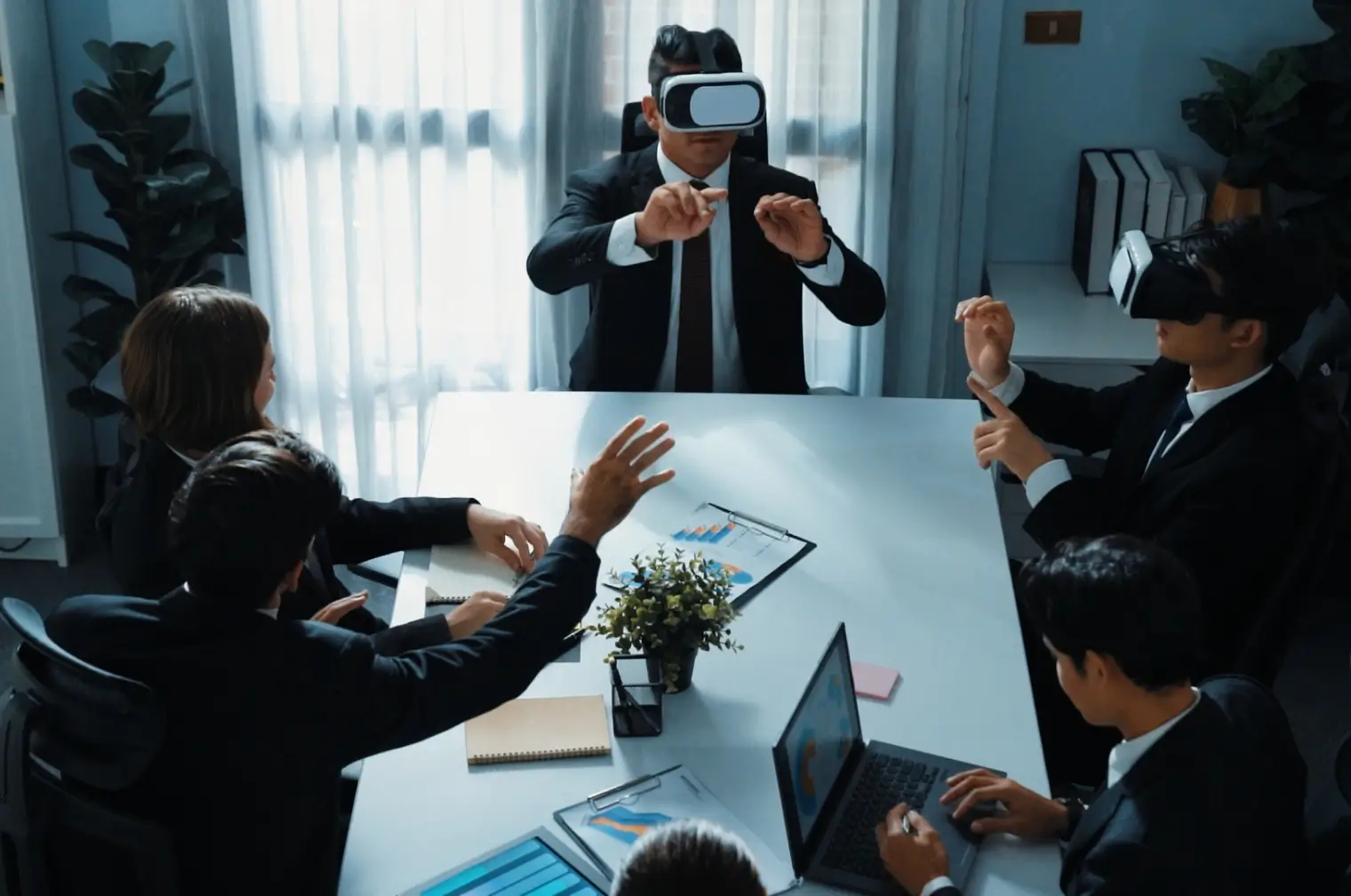
Virtual collaboration platforms in the metaverse can revolutionize how teams work together, regardless of their physical location. Consulting companies can assist in creating virtual offices, conference rooms, and training facilities that foster seamless communication and collaboration. This can lead to increased productivity, reduced travel costs, and better decision-making processes.

The metaverse can make supply chain operations more efficient by allowing real-time monitoring, simulation, and optimization. Consulting firms can help businesses create digital twins of their supply chain, allowing them to spot bottlenecks, test scenarios, and make decisions based on data. This can lead to lower costs, better efficiency, and more resilience.

The metaverse offers new ways to market and build a brand. Consulting companies can help businesses create engaging virtual experiences, such as branded games, events, and product launches. These experiences can create buzz, increase brand awareness, and build customer loyalty in ways that traditional marketing channels can’t match.

There are Some Challenges

While the metaverse presents numerous opportunities, businesses should consider some important things:

  1. Technological Limitations: The metaverse relies on advanced technologies that may not be fully developed or widely available yet. Businesses must carefully assess the feasibility and scalability of their metaverse projects.
  2. Privacy and Security: The metaverse involves collecting and processing a lot of data, so businesses must prioritize data privacy and security. Consulting firms can help develop strong security frameworks and ensure compliance with relevant regulations.
  3. Ethical Concerns: The metaverse also raises ethical questions around issues such as identity, ownership, and governance. So, businesses understand these complexities and make sure their virtual presence follows their values and social responsibilities.

Take your business to the next level with ViitorCloud’s Metaverse Consulting Services. Let’s build your future together.

Conclusion

The metaverse represents a fundamental shift in how businesses operate and interact with customers, employees, and partners. Metaverse consulting companies are important in helping organizations embrace the latest technologies.

However, choosing the right companies becomes even more important. ViitorCloud has been offering consulting services to businesses since 2011. We have successfully completed metaverse projects for our clients and facilitate our services according to your requirements and goals.

Contact us to find out how your businesses can benefit from metaverse technology with our services.


Frequently Asked Questions!

The Metaverse offers businesses enhanced customer engagement, global reach, innovative marketing opportunities, immersive product demonstrations, virtual events, and new revenue streams through virtual goods and services.

Metaverse consulting services provide expertise in metaverse technologies, trends, and best practices to help businesses develop tailored strategies, unlock the metaverse’s potential, and gain a competitive edge.

A metaverse consultant like ViitorCloud provides strategic guidance to businesses looking to embrace the metaverse. It helps with technology selection, experience design, integration, monetization strategies, and navigating the complex metaverse world.

The Importance of Digital Experience Monitoring Solutions

Digital experience monitoring solutions have become an important tool for businesses. Today, we all use various apps and websites for everything. We use various digital services, from shopping, booking tickets, and banking to ordering food online. However, when we face any issue in an app or site, we tend to ignore it the next time.

So, as a businessperson, it is important to make sure that your customers have a good experience when they use your website or app. In order to improve customer experience, businesses need to monitor user experience through digital experience monitoring (DEM) solutions. Here, we will discuss the importance of digital experience monitoring solutions and everything you need to know.

What is Digital Experience Monitoring?

Digital Experience Monitoring is a way to keep an eye on how well your website, app, or other tool is working for your users.

It involves tracking things like:

  • How fast your pages load
  • If there are any errors or problems
  • How users interact with your website or app

By monitoring these things, you can quickly find and fix any issues that might be making it hard for your customers to use your digital services. However, you will need digital experience monitoring solutions that will help you with this.

Digital Experience Monitoring solutions are advanced software platforms that allow you to track, analyze, and optimize the end-user experience. They provide real-time insights into your users’ behavior and experience with your services.

Check: How AI is Helping Healthcare Reduce Costs and Improve Efficiency

Enhance your customer experience now. Discover how Digital Experience Monitoring can elevate your business. Get started today!

Why is Digital Experience Monitoring Important?

DEM is important for businesses for many reasons. Let us give you an example. You want to buy a pair of shoes and visit an online store. Now, if its pages are taking forever to load and buttons need to be fixed even if you tap them multiple times.

You will not buy from that website or app even if the price is cheaper than other options. In fact, a second delay in mobile page load can decrease the conversion rate by 20%.

This is why Digital Experience Monitoring is so important.

  • It helps you keep your customers happy by making sure your website or app works well.
  • It can help you increase sales by making it easier for people to buy things from you online.
  • It lets you find and fix problems instantly, so your customers don’t have to deal with them.

In a survey by Gartner, it was found that by 2026, at least 60% of infrastructure and operations (I&O) leaders will use DEM to measure apps, services, and endpoint performance from the user’s viewpoint. This shows the importance of DEM in the digital world.

How Does Digital Experience Monitoring Work?

Digital experience monitoring solutions or tools look at many different things to give you a full picture of your digital services.

Here are some main areas they focus on:

1. Real Customer Experience

These tools watch how real customers use your website or app. They see how long pages take to load if customers can finish what they’re trying to do, and how customers move around your site.

2. Pretend Customer Tests

The tools also run tests that act like customers using your site. This helps to find problems before real customers do. It’s like having a robot customer test your site all the time.

3. Network Checkups

Sometimes, problems come from the internet connection, not your website. DEM tools check if the network is causing any issues.

4. App Health Checks

If you have an app, these tools make sure it’s running smoothly with Application Performance Monitoring (APM). They look for things like error messages or slow responses.

5. Device Checks

People use different devices like phones, tablets, and computers. DEM tools make sure your digital services work well on all of these.

Also Read: How Data Analytics Consulting Can Help Small Businesses Grow

Revolutionize customer interactions now. Utilize advanced monitoring solutions that deliver real results. Let’s discuss our strategy!

What Are the Benefits of Digital Experience Monitoring Solutions?

When you use DEM solutions, it can help your business in many ways.

Here are its benefits:

By making sure your website or app works well, you can keep your customers happy and come back for more.

If your website or app is easy to use, people are more likely to buy things from you.

Digital experience monitoring solutions help you find and fix problems quickly so your website or app can be up for a while.

When everyone can see how your website or app is doing, it is easier for different teams to work together to make things better.

These solutions help you make your website or app faster and smoother to use.

If your website or app works better than your competitors, you will have a big advantage.

Check: 11 AI Applications in Logistics Every Entrepreneur Should Know

How Can You Start Using Digital Experience Monitoring?

If you want to start using Digital Experience Monitoring for your business, here are some steps you can take:

Step #1: Figure Out What is Important – Think about what parts of your website or app are most important to your customers and your business.

Step #2: Choose the Right Tools – There are a lot of different Digital Experience Monitoring solutions out there. Pick ones that will work well for your business.

Step #3: Set Some Goals – Decide what you want to achieve with Digital Experience Monitoring. This will help you track your progress.

Step #4: Keep an Eye on Things – Use your Digital Experience Monitoring tools to keep track of how your website or app is doing. If you see any problems, fix them right away.

Step #5: Work Together – Make sure everyone in your company knows how important Digital Experience Monitoring is.

Boost your business efficiency. Optimize every digital touchpoint with our expert monitoring services. Discover the benefits!

How to Pick the Right DEM Solutions for Your Business

While picking a Digital Experience Monitoring solution, you need to ask yourself these six questions:

  • Can it grow with your business?
  • Does it integrate with your current IT infrastructure and tools?
  • Is it easy to use?
  • Can you customize it to fit your needs?
  • Does it give you easy-to-understand reports and analytics?
  • Will the service provider help you if you have problems?

ViitorCloud, with over a decade of experience, helps businesses with the right digital experience monitoring solutions. With our customized DX monitoring solutions, you can track user behavior in real-time and make decisions accordingly.

Problems in DEM Solutions Implementation

Everything we explained above shows how important digital experience monitoring solutions are, but there can be problems in implementing these solutions. From privacy to ethics, there can be several challenges:

Make sure the tool follows the rules about protecting customer information. Make sure your DEM solutions comply with data protection regulations.

DEM solutions give you a lot of information & data. Have strategies to use it well.

Some people might not like being watched. Explain how the tool helps everyone do better.

High-end DEM solutions services can be expensive. Make sure the benefits are worth the cost.

Boost your digital presence. Transform your customer experience with our monitoring solutions. Partner with us today!

Conclusion

Hence, it is important for businesses to employ digital experience monitoring solutions in order to check how customers are interacting with their websites and apps. With the right DEM tools, it is easy to find issues with the apps/websites and employ the right solutions for them to improve customer satisfaction and increase conversion rate. With ViitorCloud, you will find the best DEM solutions. You can contact us to learn how you can monitor and improve your digital experience.

Frequently Asked Questions

Digital experience monitoring (DEM) tracks how websites and apps perform for users. It helps businesses to find and fix issues to provide a better online experience.

DEM is crucial to make sure websites and apps work well, make customers happy, increase sales, and stay competitive.

When choosing DEM tools, consider your company’s needs, setup, and goals. Look for solutions that track performance, identify issues, and help optimize the user experience.

Role of artificial intelligence in art preservation and restoration

Art preservation stands as a fundamental pillar in safeguarding our cultural heritage, ensuring that the legacy of humanity’s creativity endures through the ages. Using Artificial intelligence in art preservation brings new and innovative ways to safeguard our cultural treasures. Let’s learn more about the impact and benefits of AI-driven art preservation.

AI’s role in art conservation: digitizing and documenting art

By creating digital copies of art, we can ensure that it is accessible to future generations, even if the original artwork is lost or damaged. What’s more, digital documentation can help us to better understand and appreciate art.

Having digitized and documented art offers many benefits, including:

  • Increased accessibility: Digital art can be accessed by anyone with an internet connection, regardless of their location.
  • Improved security: Digital art can be easily backed up and stored in a secure location. This helps to protect art from theft, loss, and damage.
  • Better understanding of the art: Digital documentation can provide us with a wealth of information about art, such as its provenance, materials, and condition.

AI for detecting and assessing damage to art

Many different types of damage can occur to art, including:

  • Physical damage: Such as tears, punctures, cracks, and scratches caused by accidents, mishandling, or any other environmental factors.
  • Chemical damage: Fading, discoloration, and corrosion can be caused by exposure to pollutants, acids, or alkalis.
  • Biological damage: Damage caused by insects, mold, and fungi due to poor storage conditions or exposure to pests.

Detecting damage to art can be challenging for some reasons. For instance, chemical damage can be very subtle and difficult to spot with the naked eye. Also, art can be very delicate and can be easily damaged by improper handling.

AI can be used to detect and assess damage to art more accurately and efficiently than traditional methods.

AI-powered tools can be used to:

  • Identify and classify damage: They can be used to automatically identify and classify damage to artworks, reducing the time and effort required to detect and assess damage.
  • Quantify damage: They can be used to determine the size and depth of cracks or the amount of fading to make informed decisions about conservation treatments.
  • Predict future damage: They can be used to predict future damage to artworks based on their condition and environment.

Using AI to detect and assess damage to art offers many benefits, including:

  • Early detection of damage: AI-powered tools can help to detect damage to art earlier than traditional methods.
  • Improved decision-making about conservation treatments: They can provide art restorers with more information about the damage to an artwork.
  • Reduced costs: Automated art conservation, powered by AI, helps to reduce the costs of detecting and assessing damage to art by automating some of the tasks involved in the process.

AI for restoring and repairing art

Art restoration with AI is the process of restoring damaged or deteriorated artworks to their original condition. There are many different types of art restoration and repair treatments, depending on the type of damage and the materials used in the artwork.

AI can be used to restore and repair art with greater precision and accuracy than traditional methods.

AI-powered tools can be used to:

  • Identify and map damage: AI art restoration tools can be used to automatically identify and map damage to artworks. This information can then be used to develop targeted restoration treatments.
  • Guide inpainting: Art restoration with AI tools can be used to guide inpainting by suggesting colors and patterns that are consistent with the original artwork.
  • Reverse-engineer painting techniques: Analyzing the brushstrokes and colors used in the artwork can then be used to develop more effective restoration treatments.

Using AI to restore and repair art offers many benefits, including:

  • Improved quality of restoration treatments: By providing more precise and accurate information about the artwork.
  • Reduced risk of damage to the art: By guiding inpainting and reverse-engineering painting techniques.
  • Increased accessibility to art restoration services: By automating some of the tasks involved in the process.

AI for creating virtual reconstructions of art

Virtual reconstructions of art are digital representations of artworks that can be viewed and interacted with in a virtual environment. Virtual reconstructions can be used to preserve art by creating a backup of the artwork in case it is lost or damaged.

Virtual reconstructions can also be used to make art more accessible by allowing people to view and interact with artworks from anywhere in the world.

Using AI to create virtual reconstructions of art offers several benefits, including:

  • Increased accessibility to art: It can make art more accessible to people by allowing them to view and interact with artworks from anywhere in the world.
  • Improved understanding of art: It can help people to better understand art by providing them with different perspectives on the artworks.
  • Preservation of art that is at risk of loss or destruction: It can be used to preserve art that is at risk of loss or destruction by creating a backup of the artwork.

Case studies of artificial intelligence in art preservation

Preserving artwork using AI has led to several remarkable successes, reshaping the way we perceive the restoration process. For instance, the “Rembrandt Project” utilized AI algorithms to analyze and reconstruct a new Rembrandt painting, imitating the style and technique of the renowned artist.

Similarly, the Louvre Museum in Paris employed AI to restore “The Virgin and Child with Saint Anne,” effectively reconstructing damaged portions and enhancing the overall viewing experience.

These instances demonstrate the potential of artificial intelligence in art restoration, recreating lost elements, reviving the original charm of the artworks, and expanding our understanding of the artists’ techniques.

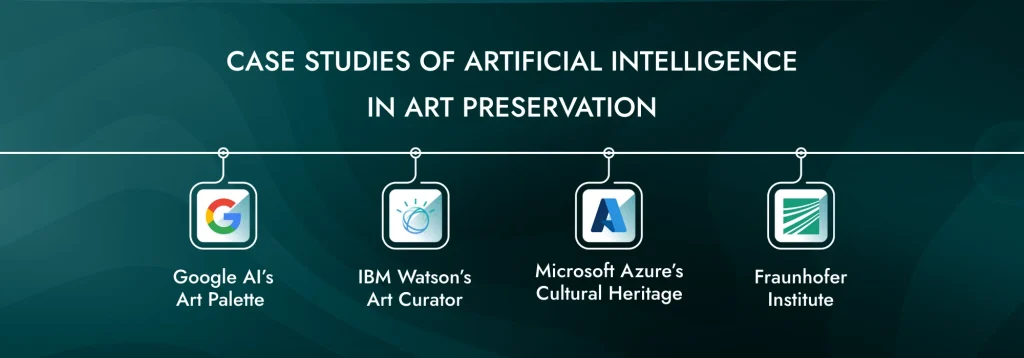
Case Studies of Artificial Intelligence in Art Preservation

Here are a few examples of artificial intelligence in art preservation:

  • Google AI’s Art Palette project uses AI to identify and analyze the pigments used in paintings. This information can be used to better understand the painting’s history and provenance, as well as to develop more effective conservation treatments.
  • IBM Watson’s Art Curator project uses AI to help museums catalog and manage their collections. AI can be used to automatically identify objects in photographs, transcribe handwritten documents, and generate descriptions of artwork.
  • Microsoft Azure’s Cultural Heritage Imaging project uses AI to digitize and restore historical photographs. AI can be used to remove noise from images, correct color fading, and even fill in missing pixels.
  • Fraunhofer Institute for Secure Information Technology’s AI-powered art restoration system uses AI to restore paintings with greater precision and accuracy than traditional methods. AI can be used to identify and remove damaged areas of a painting, and to reconstruct the original image using data from other similar paintings.

Utilizing AI in art preservation revolutionizes the conservation process, offering advanced tools for digitization, damage detection, and restoration.

To conclude

AI can be used to digitize and document art, detect and assess damage to art, restore and repair art, and create virtual reconstructions of art. In short, it has changed the way we preserve art and cultural treasures. In the future, we can expect to see AI-powered tools that are even more sophisticated and effective at preserving art.

Several organizations are working to develop and implement AI-powered solutions for art preservation. If you are looking for one, ViitorCloud makes the right choice. Experience the transformative power of AI art preservation solutions with us. Connect for a visionary approach to safeguarding art!

Frequently asked questions

AI in art preservation involves digitizing, documenting, detecting, and restoring artworks, ensuring their accessibility, security, and longevity.

AI art restoration aids in identifying, mapping, and guiding inpainting, enhancing precision and reducing the risk of damage to artworks.

Automated art conservation with AI offers early detection of damage, improved decision-making for restoration treatments, and cost reduction in the detection process.

Yes, AI can create virtual reconstructions, increase art accessibility, enhance understanding, and preserve artworks at risk of loss or destruction.

Yes, projects like the “Rembrandt Project” and the Louvre Museum’s restoration of “The Virgin and Child with Saint Anne” showcase the success of AI art restoration and preservation.

How AR can be used for augmented reality engineering solutions

Today, Augmented Reality (AR) has emerged as one of the most significant futuristic technologies used across many industries, including engineering. The integration of augmented reality engineering solutions can unlock a realm of possibilities, fundamentally altering how professionals design, construct, and maintain various structures and systems.

AR overlays digital information onto the real world, enabling engineers to visualize and interact with their designs in a more immersive and intuitive way. This can help to improve the accuracy, efficiency, and safety of engineering projects.

Applications of AR in engineering

Augmented reality (AR) is being applied in a wide range of engineering fields, including architecture, manufacturing, and construction. By transforming traditional approaches and enhancing various fields, AR has made substantial strides in the engineering sector.

Let’s understand the role of AR in engineering:

Applications of AR in Engineering

Architecture

Augmented reality in engineering is revolutionizing the way blueprints and designs are visualized. Using AR applications, architects can overlay digital models onto physical spaces. This allows them to see how the design will look and feel in the actual space, and to make necessary adjustments before construction begins.

Such a visualization not only aids in improving the design process but also facilitates better communication with clients and stakeholders by providing them with a realistic preview of the final product.

For example, an architect can show a client how their new home will look on their property, or they can collaborate with engineers to ensure that the design is feasible and meets all applicable codes and standards.

Manufacturing

AR is optimizing assembly line processes in manufacturing industries. Through AR-powered engineering solutions, workers receive step-by-step visual guidance overlaid onto the physical work environment.

This guidance significantly reduces errors, enhances productivity, and accelerates the learning curve for new processes or machinery. Workers can access critical information in real-time, ensuring accuracy in complex assembly tasks.

Construction

AR can be used to visualize the layout of construction sites. This can help to improve the efficiency of construction operations and to reduce the risk of errors. By using AR, engineers and workers can detect potential safety risks, such as underground utilities or structural weaknesses, before initiating construction.

This proactive approach not only minimizes risks but also ensures a safer working environment for on-site workers, significantly reducing accidents and project delays. AR can also be used to train workers in new construction techniques.

Training and education

Today, a large number of companies are leveraging AR to enhance training and education for engineers, For instance:

Boeing utilizes AR technology to train aircraft mechanics, offering digital experiences on wiring and repairing airplanes.

Siemens employs AR to train factory workers, guiding them through the assembly of complex machines with step-by-step interactive instructions.

Autodesk incorporates AR to educate students on engineering concepts, such as thermodynamics and fluid mechanics, providing an interactive learning environment.

Big brands led engineering innovation with AR

Let’s explore how leading brands have embraced AR, revolutionizing their engineering processes:

BMW: visualizing prototypes with precision

This popular automobile brand has integrated augmented reality software with its product data management system. This integration allows them to visualize and interact with true-to-scale prototypes, offering an in-depth understanding before finalizing designs for manufacturing.

BASF: leveraging digital twin technology for on-site precision

BASF has adopted augmented reality engineering solutions, through the implementation of digital twins. Engineers at BASF use AR to visualize planned pipelines on-site, ensuring accurate assessments of their intended functionality. AR aids in on-site monitoring, enabling swift identification of any design faults before they escalate into larger problems.

Lockheed Martin: enhancing aircraft assembly with ar integration

This global aerospace and defense company has embraced augmented reality to optimize its aircraft assembly processes. By integrating AR technology into their assembly lines, they can overlay digital schematics and instructions onto physical aircraft components in real time. This innovative approach reduces the likelihood of errors and improves overall efficiency while resulting in substantial cost savings.

Implementing an augmented reality engineering solution

The process of implementing an augmented reality engineering solution typically involves the following steps:

  • Identify the specific engineering needs and goals for the business or project. What are the specific challenges that the business or project is facing? How can AR be used to address these challenges?
  • Choose the right AR platform and hardware. There are a variety of AR platforms and hardware devices available on the market. It is important to choose the right platform and hardware for the specific needs of the business or project.
  • Develop or customize the AR solution. Partner with a reputable AR solutions provider company like ViitorCloud to build a custom AR engineering solution.
  • Deploy and train your workforce on the AR solution. Once the AR solution is developed, the users need to be trained on how to use it.

Starting augmented reality development

If you are considering implementing an augmented reality engineering solution, there are many companies like ViitorCloud that offer AR development services.

In the engineering field, AR is being used to revolutionize design, manufacturing, construction, and training processes. Engineers are increasingly leveraging AR to innovate and enhance their processes, leading to more efficient and effective solutions.

Conclusion

As the tech landscape continues to evolve, the future of engineering through AR presents an unparalleled horizon of possibilities. AR is not just a futuristic concept but a present-day reality shaping how engineers design, build, and innovate. ViitorCloud is at the forefront of this AR-led innovation in the field of engineering.

If you are looking for ways to improve the efficiency, accuracy, and safety of your engineering projects, consider building a custom augmented reality engineering solution that addresses these needs. Choose ViitorCloud as your partner for AR integration in engineering and embrace the future today!

Frequently asked questions

Augmented reality in engineering is revolutionizing designs, simulations, and safety assessments across the industry, transforming the way engineers visualize and interact with complex structures.

Applications of AR in engineering significantly enhance efficiency, accuracy, and safety, propelling the industry toward innovative solutions and streamlined processes.

Augmented reality in engineering optimizes processes by offering step-by-step visual guidance, reducing errors in complex assembly tasks, and improving overall productivity.

Applications or AR in engineering span across diverse sectors, from architecture to manufacturing and construction.

Engineers can get started with augmented reality by using existing AR platforms and hardware, or by developing their own AR applications.

How virtual reality HSC training solution is increasing safety

Health, Safety, and Environment (HSE) training is necessary for protecting the integrity of organizations and the well-being of individuals in the evolving field of workplace safety.

Although these approaches have shown some success, they often struggle to deliver fully immersive and captivating learning environments. However, with the integration of a virtual reality HSE training solution, the landscape of learning experiences is revolutionized.

Digital experience solutions, specifically those powered by virtual reality (VR) technology, are revolutionizing HSE training. VR offers a whole new level of education, transforming how we approach workplace safety. Let’s delve deeper into the importance of immersive HSE training in VR and how it’s reshaping our perspective on safety in the workplace.

Importance of virtual reality for HSE training

Before we explore virtual reality in HSE solution development, let’s first understand why HSE training is important.

Health, safety, and environmental considerations are supreme in any industry.

A workplace that prioritizes these aspects is not only compliant with regulations but also fosters a culture of care and responsibility among its employees.

Here are some key reasons why HSE training is vital:

  • Safety First: The primary goal of Virtual Reality HSE Training Solution is to prevent accidents and injuries. Proper training equips employees with the knowledge and skills to identify and mitigate potential hazards, ensuring a safe working environment.
  • Compliance: Virtual Reality HSE training solution helps in ensuring compliance, which is not only a legal requirement but also essential for reputation management.
  • Risk Reduction: Comprehensive HSE training reduces the risk of accidents, which can result in financial losses, downtime, and damage to a company’s image.
  • Employee Well-being: When employees feel safe at work, their morale and job satisfaction improve. A safe working environment also reduces absenteeism and turnover rates.
  • Compliance with Regulations: Utilizing a Virtual Reality HSE Training Solution helps organizations comply with regulatory requirements by ensuring that employees are adequately trained in handling safety protocols, emergency response procedures, and environmental protection measures.

Limitations of traditional HSE training

Classroom-based HSE solution development with PowerPoint presentations has been the norm for decades.

While these traditional methods cover the required knowledge aspects, they have limitations when it comes to building skills and shaping behaviors.

Passively sitting through lectures and presentations often leads to low engagement and poor retention of information.

Additionally, classroom training lacks realism and makes it difficult for employees to apply learnings to real-life hazardous situations.

Traditional methods are unable to simulate risk scenarios like working from heights, confined spaces, fire hazards, chemical spills, etc.

This leaves employees underprepared to face dangers in the workplace.

Need for immersive VR HSE training

Virtual reality based HSE solution development provides highly realistic, interactive and engaging learning experiences.

VR training simulations expose employees to life-like hazardous scenarios and dynamic risk environments.

This helps imprint safe behaviors and build muscle memory on correct emergency response procedures.

VR technology offers complete flexibility and control over the training environment.

Various high-risk situations like working at heights, electrical accidents, fire hazards, etc. can be accurately simulated without any real danger.

This enables employees to prepare for emergencies and prevent accidents.

Research shows that VR training improves learning outcomes by up to 75% compared to conventional methods.

As employees retain more information, the ROI of VR training investments also becomes significantly higher.

Developing virtual reality HSE training solution

The first step is identifying the specific HSE training needs of employees based on work hazards.

For example, VR fire safety drills will be a priority for manufacturing units. On the other hand, construction companies may need VR training for elevation-related risks.

The training content must accurately replicate real work environments and standard operating procedures.

The VR simulators and scenarios have to provide realistic visuals, auditory and other sensory cues for maximum immersion.

It is crucial to integrate VR training with existing learning management systems (LMS) and e-learning programs.

This enables seamless training delivery and unified reporting. Tracking employee performance data across VR and other mediums provides vital insights.

Leading companies like ViitorCloud are pioneering VR solutions tailored to the HSE needs of different industries.

Our offerings like Immerse Virtual Reality Training provide video game-like immersion combined with real-world hazards for the best learning outcomes.

Success stories of organizations that used VR for HSE training

Ensuring a safe work environment is crucial for any business. This is where virtual reality (VR) comes in as a game-changing technology for HSE solution development.

Success Stories of Organizations that Used VR for HSE Training

TakeLeap

TakeLeap is using the Immerse VR training solution to deliver highly engaging fire safety drills across its manufacturing units.

Employees are put through emergency scenarios on the factory floor and taught how to operate fire extinguishers and hoses.

VR training is being credited for a 57% improvement in fire safety compliance.

Ttro

Ttro has deployed VR simulators to train its developers on handling radioactive isotopes and chemical spills in an R&D facility.

Employees appear for VR tests before getting lab access. This has led to 63% fewer accidents due to improved safety behaviors.

Strivr

Strivr has used Virtual Reality HSE Training Solution for construction crews on fall protection, trenching hazards, PPE usage and other critical safety topics.

Their proprietary 360-degree VR video training has reduced incidents by 52% across projects.

Conclusion

Virtual reality has proven to be a disruptive innovation for occupational safety and HSE compliance training.

The immersive simulations and life-like experiences lead to stronger learning outcomes.

Considering the immense benefits, investing in customized Virtual Reality HSE Training Solutions is highly recommended for businesses today.

Frequently asked questions

By using Virtual Reality for HSE Training, trainees can engage in hands-on training, making it more engaging and memorable.

Virtual reality can improve HSE training by allowing trainees to practice dangerous tasks without the risk of physical harm, reducing the likelihood of accidents in real-life situations.

The future trends for virtual reality HSE training solutions include advancements in technology, such as haptic feedback devices and full-body motion tracking, to create more realistic and interactive training experiences.

Virtual Reality HSE Training Solution enhances trainee engagement and retention by providing an immersive and interactive learning experience. VR training can be conducted remotely, allowing trainees to access training modules from anywhere, at any time.