5 ways augmented reality can step-up your marketing game

We all know that Augmented Reality (AR) is a buzzword these days; however, is it effective? Are marketers focusing on this new shiny technology? Indeed AR is an innovative technology that has proven to be a valuable, profitable, and effective marketing tool. Marketers are using AR technology for several good reasons, and here you will know the reasons.​

Deloitte found that about 90% of enterprises with an annual turnover of $100 million to $1 billion have started using AR or VR technology.

Generally, AR is connected with cranial, ultra-futuristic displays, as we have seen in movies like The Terminator. But, more aware of hardware is indeed where we see the notion of AR heading.

The mix of information-heavy and mobile computing and user-generated services has built a robust background for new AR applications that presumes the boundaries on what potential and possibilities we thought.

The growth of mobile computing and microprocessors has completely transformed AR from a tech fiction pipedream to crucial technology.

According to The Drum reports, Augmented Reality can grab people’s attention for more than 85 seconds, increase click-through rates to purchase by 33%, and improve interaction rates by 20%.

It is not a big deal if we say that businesses have realized the potential of AR as a strong marketing tool. The early adopters of technology can bring profits and revenue to their business in less time.

Also, Purch conducted a pool for smaller firms, which discloses that 10% of the marketers are using AR technology while 72% are already planning to use it in the future.

AR has become a brand differentiator as it has made your brand unique and stable for a long time. IT has offered lots of convenience and a new level of speed with enhanced brand impressions.
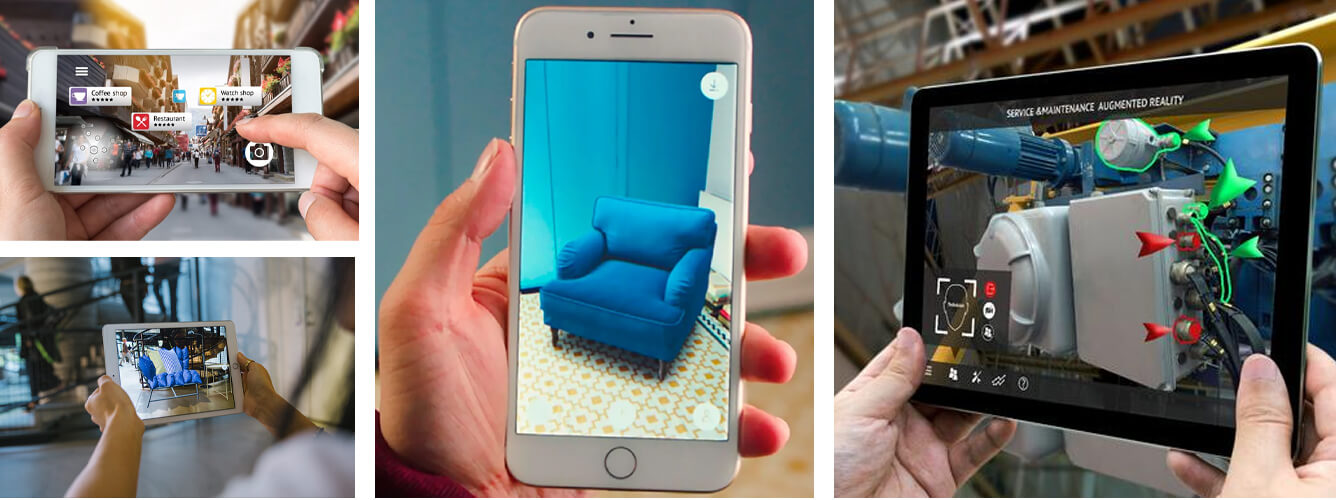
image

Let’s check how Augmented Reality helps you in marketing your business:

Focus on core business strategy According to Markets and Markets research, the AR marker is predicted to achieve $117.4 billion by 2022. Irrespective of the medium you prefer, it is vital that the brand’s strategy and messaging always top your considerations in any advertising or marketing campaign. It shows that marketers should stay steady and innovative when it comes to bringing augmented reality into the role. Therefore, you must be focused on promoting the unmatched value of the product/service instead of the cool & latest effect.

Localized promotion

Localized promotional bring huge profit opportunities to your business & build stimulation of their potential clients in localized vicinity. You can turn lots of ideas into reality that’ll be dedicated to what your clients often do around you and their searching pattern. The tourism industry is gaining huge benefits from it.

Product placements

In highly dense areas, businesses spend a significant amount on marketing and promotional activities; however, with AR, the brands are getting new trends and means of marketing for their users. Thus, it has become essential for big brands to become a part of such innovative technology experiences in the augmented or virtual worlds. AR has offered several new ways of marketing.

Allow customers to see products in real-time

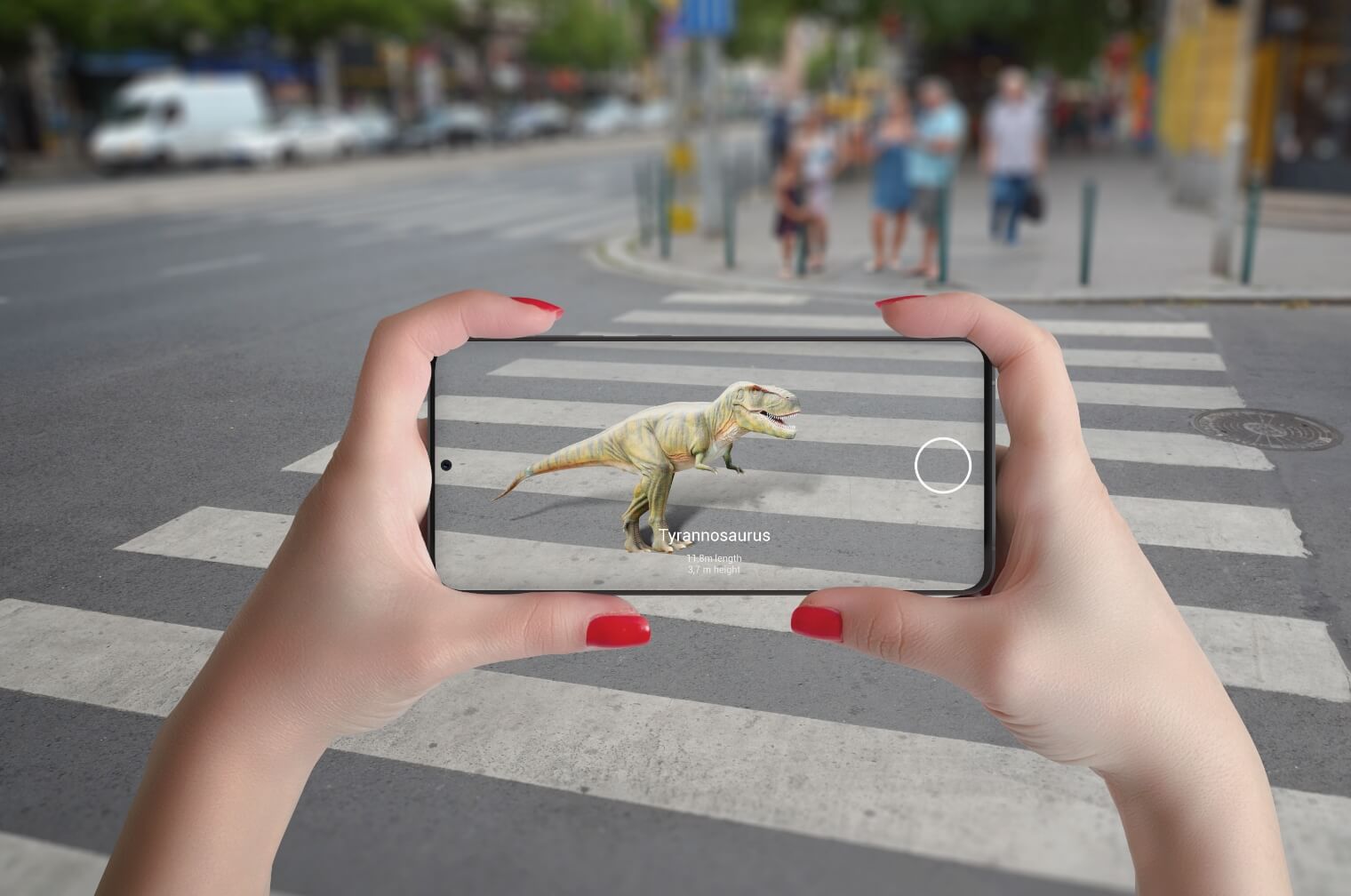
The introduction of AR technology and tools supported the eCommerce industry in different ways. As customers, you can get the chance to try the products before you buy them; it offers a highly intuitive experience to users and improves conversion rates. It also assists businesses to improve their service quality, and customer experience, improve products’ visibility and increase your business revenue. Companies like Lego and IKEA have followed AR in their business and have achieved tremendous success. Using AR in your eCommerce business can also help you create a bridge between your customers and the eCommerce platform.

Creating a whisper around your brand

AR can serve as a valuable asset, both directly and indirectly, within your online marketing strategy. Whether you’re debuting a new product or not, leveraging augmented reality technology can amplify your brand’s visibility and credibility among your desired audience. By delivering an immersive digital experience to your users, you can generate substantial excitement surrounding your startup or new brand. Utilizing AR has the potential to provide customers with a memorable encounter with your brand.

    Finally, we can say that augmented reality is playing a crucial role in transforming ways of marketing for businesses. With rapidly increasing users of tablets and smartphones, the technology is revolutionizing in a required a compelling way.
    Superior software, robust apps, and superfast bandwidth are indeed going to build new wonders in different kinds of AR solutions. The motto of AR companies is to bring customers’ attention and retain their engagement with this fascinating technology which can be ultimately utilized to build zestful marketing campaigns.


    An overview into the augmented reality cloud: unleashing a digital revolution

    An Augmented Reality (AR) cloud is a technology that tends to build immersive and highly intuitive experiences by unifying digital and physical worlds. Moreover, it can also be termed a spatial or real-time 3D map paved onto the real world.

    AR Cloud allows experiences and information to be shared, tied or augmented to specific physical locations to persist and occur across devices and apps. In the near future, companies will develop custom versions that will enable them to advertise their unmatched approaches and features effortlessly.

    In Reality, they will do the same things: upload and connect data in the cloud to intelligent and handheld devices that will enable AR devices to become an easy gateway for new avatars in this domain of Reality overlaid with interactive virtual information.

    According to Statista, “The majority of users (about 43%) will come from gaming and entertainment domain; however, significant services including engineering 14% and healthcare, i.e., 15% are striking AR market fast.

    Ar cloud has emerged as one of the widely used amalgamations of existing processes and technologies, including:

    1. Edge Computing, & 5G Connectivity, IoT   Expectations of people for internet speed have increased with the intervention of 5G technology. Gigabit connectivity is not easy to offer data nearly to the intelligent edge of the existing network where several data processing and computation must occur.
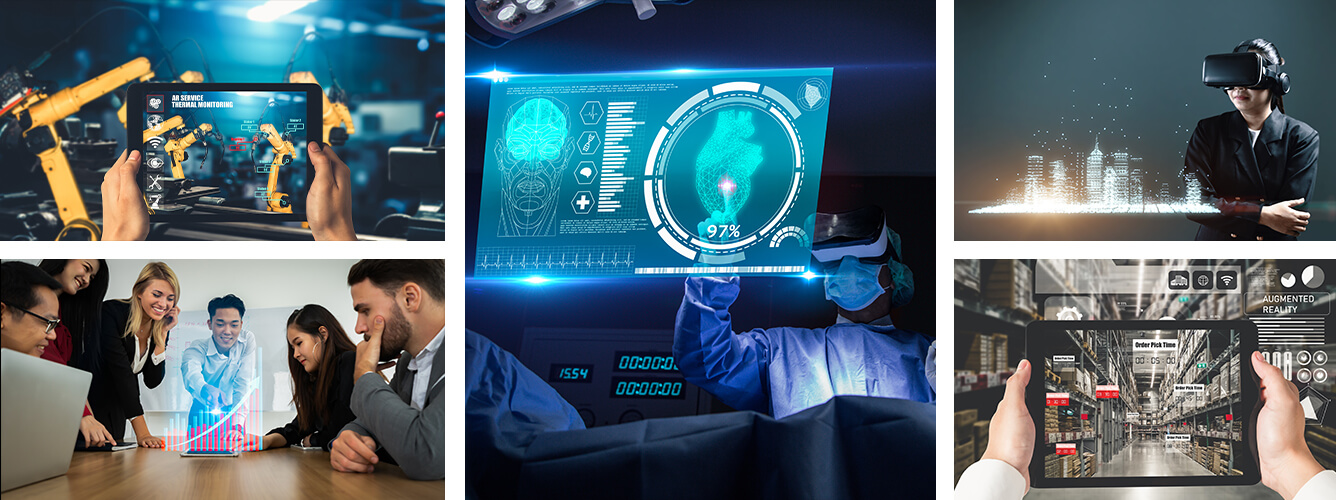
    2. Industrial Manufacturing Augmented Reality has several use cases for manufacturing industries. AR wearable assists technicians to measure changes, identify unsafe conditions, review information related to industrial functions in real-time. Google Glass Enterprise Edition provides AR-enabled solutions in healthcare, manufacturing, logistics and more industries.
    3. Digital-first Business Models Many retail organizations will need to include augmented Reality and adapt the business model’s capabilities to their offered services. A seamless and intuitive digital experience journey to a customer will be the base to provide a universal and real-time experience in the physical and digital world.
    4. Packaged Business Capabilities (PBC) PBC incorporates APIs, services, event channels, and data schema to provide intuitive and immersive business functionality without any external dependency. In addition, well-defined and structured capabilities are offered via technology to identify a particular business function.
    5. AR in Computer Vision Delivery of AR and data-intensive computation overlays will need more efficient and intelligent models, paving the clear path for the methods of Digital Twins and Advanced Computer Vision (two of the highly efficient and emerging technology trends as per Gartner reports).
    6. Healthcare AR will also impact the healthcare industry in conducting different medical processes in a precise manner. With the AR cloud, doctors and medical practitioners can also make models for several diseases like tumours, cancer and then make better decisions to treat or remove them. The handheld devices will work more efficiently and provide better results to reduce the risks.
    7. In-Store Marketing Supermarkets are growing at rocket speed and using AR for advertising. AR versions of celebrities and brand ambassadors could be approaching products at supermarkets in the future. AR technology assists in making marketing more efficient, cost-effective and profitable. These instances show the potential for AR cloud, yet they are still moderately separated experiences. All in all, even though they are collaborative, they exist autonomously with one another and are not a component of a comprehensive experience. Indeed AR cloud solutions offered by professional augmented reality development company will require an ecosystem system to convey scalable, persistent and collaborative experiences.
    image

    The future of AR cloud applications

    One of the significant issues in AR adaption is the lack of off-the-shelf and scalable solutions – despite all such solutions being built purposefully to solve a set of specific problems. AR cloud experiences will intensify all such hindrances in different manners by requiring scalability while being ubiquitous, collaborative, and persistent.

    By 2021, Gartner assumes AR cloud will be among the top four most useful immersive technologies.

    While AR cloud still needs time to reach the mainstream, tech professionals implement this in their business processes. For example, App Clips by Apple can be utilized as anchors for an AR cloud system. It is activated by pointing your phone’s camera at App Clip codes, NFC tags, or QR codes.

    Final words

    AR applications are intended towards getting tremendous growth in the future. Lots of other augmented reality applications will add more functionalities and features to improve their user experience.

    AR cloud technology will power up more businesses and assists them in creating next-generation applications. The AR cloud will allow users to access and interact easily with distinctive components of the Metaverse too.

    An Augmented Reality (AR) cloud is a technology that tends to build immersive and highly intuitive experiences by unifying digital and physical worlds. Moreover, it can also be termed a spatial or real-time 3D map paved onto the real world.

    AR Cloud allows experiences and information to be shared, tied or augmented to specific physical locations to persist and occur across devices and apps. Shortly, companies will develop custom versions that will enable them to advertise their unmatched approaches and features effortlessly.

    In Reality, they will do the same things: upload and connect data in the cloud to intelligent and handheld devices that will enable AR devices to become an easy gateway for new avatars in this domain of Reality overlaid with interactive virtual information.

    According to Statista, “The majority of users (about 43%) will come from gaming and entertainment domain; however, significant services including engineering 14% and healthcare, i.e., 15% are striking AR market fast.

    AR cloud has emerged as one of the widely used amalgamations of existing processes and technologies, including:

    1. Edge Computing, & 5G Connectivity, IoT   Expectations of people for internet speed have increased with the intervention of 5G technology. Gigabit connectivity is not easy to offer data nearly to the intelligent edge of the existing network where several data processing and computation must occur.
    2. Industrial Manufacturing Augmented Reality has several use cases for manufacturing industries. AR wearable assists technicians to measure changes, identify unsafe conditions, review information related to industrial functions in real-time. Google Glass Enterprise Edition provides AR-enabled solutions in healthcare, manufacturing, logistics and more industries.
    3. Digital-first Business Models Many retail organizations will need to include augmented Reality and adapt the business model’s capabilities to their offered services. A seamless and intuitive digital experience journey to a customer will be the base to provide a universal and real-time experience in the physical and digital world.
    4. Packaged Business Capabilities (PBC) PBC incorporates APIs, services, event channels, and data schema to provide intuitive and immersive business functionality without any external dependency. In addition, well-defined and structured capabilities are offered via technology to identify a particular business function.image
    5. AR in Computer Vision Delivery of AR and data-intensive computation overlays will need more efficient and intelligent models, paving the clear path for the methods of Digital Twins and Advanced Computer Vision (two of the highly efficient and emerging technology trends as per Gartner reports).
    6. Healthcare AR will also impact the healthcare industry in conducting different medical processes in a precise manner. With the AR cloud, doctors and medical practitioners can also make models for several diseases like tumours, cancer and then make better decisions to treat or remove them. The handheld devices will work more efficiently and provide better results to reduce the risks.
    7. In-Store Marketing Supermarkets are growing at rocket speed and using AR for advertising. AR versions of celebrities and brand ambassadors could be approaching products at supermarkets in the future. AR technology assists in making marketing more efficient, cost-effective and profitable. These instances show the potential for AR cloud, yet they are still moderately separated experiences. All in all, even though they are collaborative, they exist autonomously with one another and are not a component of a comprehensive experience. Indeed AR cloud solutions offered by professional augmented reality development company will require an ecosystem system to convey scalable, persistent and collaborative experiences.

    The future of AR cloud applications

    One of the significant issues in AR adaption is the lack of off-the-shelf and scalable solutions – despite all such solutions being built purposefully to solve a set of specific problems. AR cloud experiences will intensify all such hindrances in different manners by requiring scalability while being ubiquitous, collaborative, and persistent.

    By 2021, Gartner assumes AR cloud will be among the top four most useful immersive technologies.

    While AR cloud still needs time to reach the mainstream, tech professionals implement this in their business processes. For example, App Clips by Apple can be utilized as anchors for an AR cloud system. It is activated by pointing your phone’s camera at App Clip codes, NFC tags, or QR codes.

    Final words

    AR applications are intended towards getting tremendous growth in the future. Lots of other augmented reality applications will add more functionalities and features to improve their user experience.

    AR cloud technology will power up more businesses and assists them in creating next-generation applications. The AR cloud will allow users to access and interact easily with distinctive components of the Metaverse too.

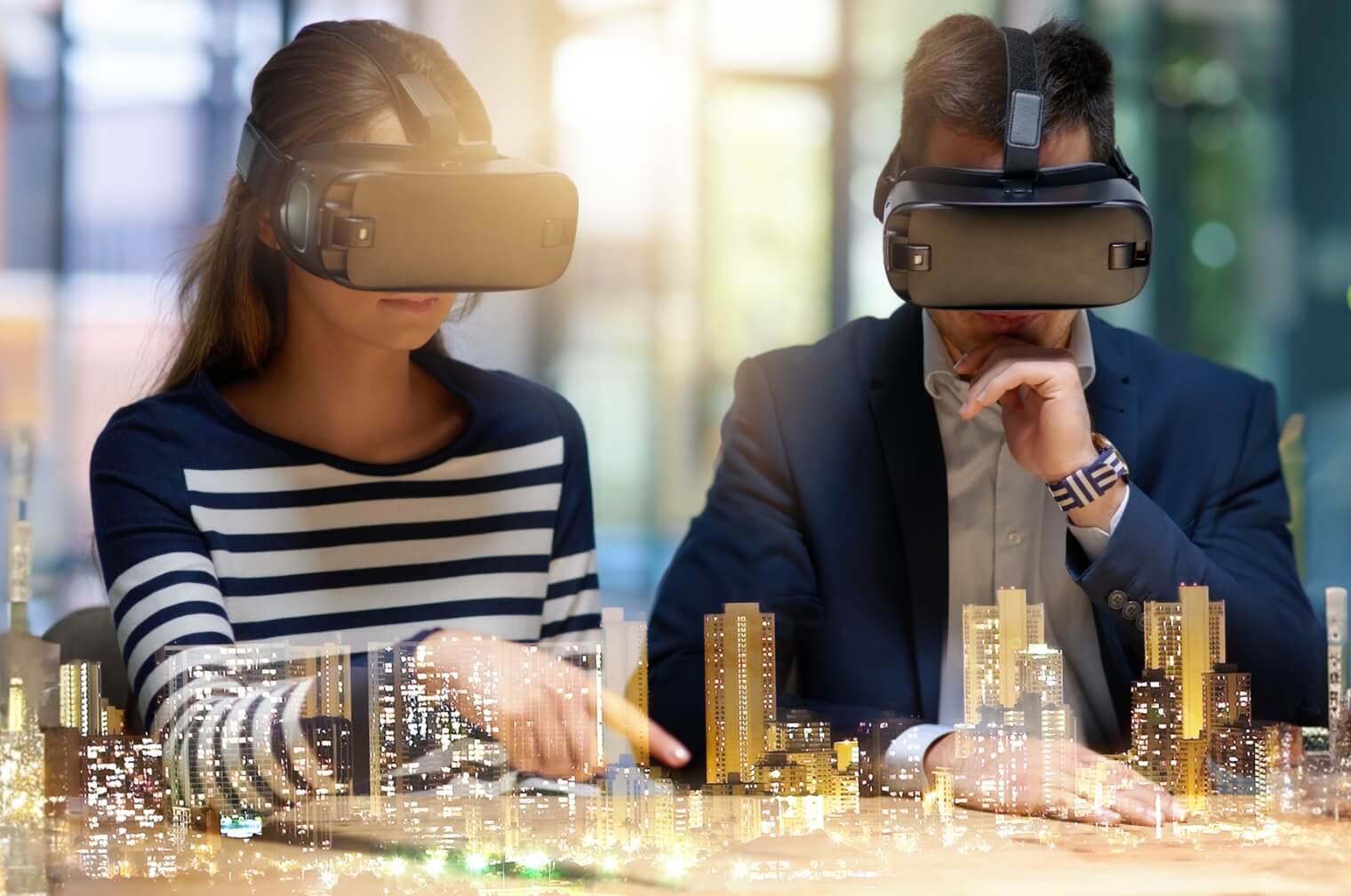
    How immersive technologies can save real estate during the present crisis?

    Owing to the current ongoing pandemic of COVID-19 and the resulting lockdown, potential buyers are stuck at home and the way to move outside from home, which has vastly affected the relationship between buyer-seller in all business domains.

    But this turning situation has needed both the demand and supply sides to adapt to the best and newer ways to look at the real estate sector. The current crisis has also forced stakeholders, vendors, and business owners to increase the use of technology and other digital platforms to improve sales in this sector.

    Undoubtedly immersive vr for real estate developers are facing a very challenging situation and working around it to attract buyers, mainly using tech-based solutions in the current situation.

    Indeed, the lockdown has vastly impacted site visits and physical communication with real estate developers; real estate businesses are investing massive amounts in digital platforms incorporating modern ways to provide the physical experience of the property and book that online with comfort at home.

    Online booking platforms, drone shoots, and virtual tours are getting more attention and prominence due to the increasing number of online buyers.

    Role of immersive technologies in real estate

    Immersive technologies such as virtual and augmented reality offer the real estate industry a unique opportunity to provide potential buyers with an engaging and interactive experience. These technologies offer an alternative to traditional open houses and property viewings, enabling prospective buyers to view properties worldwide.

    Using immersive technologies in real estate has several benefits. They offer a more immersive and engaging experience that can save time, effort, and money for both buyers and sellers. They can also help real estate businesses to stand out in a crowded market, differentiate themselves from competitors, and cater to a broader range of clients.

    Real estate and the AR/VR market

    According to research from Goldman Sachs, Augmented Reality (AR) and Virtual Reality (VR) are expected to be an $80 billion market by 2025. VR is expected to generate $2.6 billion by 2025 alone in the real estate market. In the same year, more than 1,25,000 real estate agents will utilize VR to showcase homes to buyers with annual spending of $5,000, and it will grow yearly by 10%.

    Step into the Future of Real Estate Business With
    Immersive Technologies!

    Get A FREE Quote!

    Start-ups and well-established companies are eagerly adopting immersive technologies to support their businesses and make them durable during the current crisis. Additionally, the real estate sector will be one of the biggest recipients of VR-like technologies such as virtual showcases, virtual property tours, 3D- designs of interiors, exteriors, and engineering visualization.

    One of the core benefits of VR technology is it ensures virtual co-locations of teams. When there is no space for physical meetings to ensure the primary messages, immersive technologies make it easy to transfer our best work cultures and project designs into the virtual world, to retain efficiency and reliability.

    All such benefits are related to the lockdown period: up to 2/3 of all real estate projects suffer from cost and time overruns due to several issues like communication gaps, and it has become a big challenge for realtors. It is also a painful condition for all architects and designers – the gap between on-paper and end-product designs.

    One of the simple reasons for this gap is the incompetence of clients to observe space and designs from the 2D media of renderings and drawings, and rapid iterations to meet their expectations become a highly chargeable tool for the industry resources.

    The impact of immersive vr on real estate marketing and sales

    The impact of immersive virtual reality (VR) on real estate marketing and sales has been significant. VR has revolutionized the way properties are showcased, allowing potential buyers to experience them in a more engaging and realistic manner. Here are some key ways in which VR has influenced the immersive VR for real estate industry

    How VR is transforming real estate marketing

    VR is changing the way properties are marketed to potential buyers. With Immersive VR for real estate, potential buyers can take virtual tours of properties without physically visiting them. This is especially useful in the current climate, where in-person tours may not be possible or safe. VR also allows buyers to experience a property’s spatial layout and scale in a way that traditional photographs cannot.

    Case studies of VR adoption in the real estate industry

    Several real estate companies have successfully adopted VR technology to improve their marketing and sales efforts. For example, Sotheby’s International Realty uses VR to give potential clients virtual tours of luxury properties. Zillow offers a virtual staging service that allows sellers to transform an empty home into a fully furnished one. These success stories show that VR can be a powerful tool for real estate businesses solution.

    Benefits of immersive technologies

    Immersive technologies can play a significant role in making the real estate sector more powerful and profitable. – by empowering virtual tours, empowering the stakeholders to make better decisions, offering a global reach and saving time and money through a modern transformative way of feeling, experiencing, reviewing, and updating projects even before the development phases.

    Convenience

    It is predicted that buyers want the technology to look at homes independently in the current situation. While agents need the technology to showcase their projects to buyers and generate demand on both sides.

    Here VR-like immersive technology offers a more immersive and real-life experience without the time commitment and inconvenience of physically visiting the real estate properties for customers looking to purchase.

    Feedback

    The VR-like immersive technology solutions capture and record the specific areas of the property where buyers spend most of their time. Also, it can offer more valuable feedback to realtors about user preferences.

    Confidence

    Virtual visits to homes could boost the buying process by enhancing the confidence of potential home buyers. Virtual visits enable buyers to experience the property and make quick decisions if it fits with their requirements.

    The confidence that comes from immersive technology is vital to customers, as indicated by the Forbes survey. The Forbes survey shows that 77% of all home buyers affirmed that virtual tours play a vital role in making quick buying decisions.

    Challenges for immersive technologies in real estate

    Challenges in implementing immersive technologies in real estate can include cost, technical expertise, and user adoption. However, the benefits of using immersive technologies to market and sell properties can outweigh these challenges.

    By creating a compelling and engaging experience for potential buyers, real estate businesses can increase sales and gain a competitive advantage in their markets.

    Immersive technologies have the potential to revolutionize the real estate industry, offering new ways to market, sell and showcase properties to prospective buyers. While there are still some challenges to overcome, the benefits of immersive technologies in real estate are clear. As we navigate the current crisis, embracing these technologies can help real estate businesses adapt to the new normal and stay ahead in a rapidly changing industry.

    Conclusion

    Before adopting immersive technologies factors, real estate businesses should consider their target market and the technology’s cost-effectiveness. Our immersive technology solutions include using the technology effectively according to the client’s willingness to adapt the technology.

    In the future, intelligent, sophisticated, and immersive technologies will significantly drive more sales and potential buyers to real estate developers. Innovations and virtual technologies create more possibilities, improve customer experience, offer worldwide reach, save money, and bring more efficiency to the real estate sector.

    Frequently asked questions

    Immersive technologies are advanced technologies that create a highly interactive and engaging experience for the user, such as virtual or augmented reality.

    Immersive technologies can provide virtual property tours, virtual staging, and even virtual reality property viewings, all of which can be done remotely, making buying and selling the property even during social distancing.

    To integrate immersive technologies into your real estate business, you will need to research and invest in the necessary hardware and software and develop a strategy for implementation and marketing.

    While immersive technologies can significantly reduce the need for in-person visits and make the process more efficient.

    Why smartphone gaming is the future

    Will mobile gaming be the future of gaming? It certainly looks as though this is the case. Mobile gaming is gaining immense popularity because it can be played anywhere and at any time. They also give the player an intense gaming experience that immerses them in the mobile game. As a result, mobile gaming will replace desktop gaming at an unprecedented level. Just give it a few years. After all, smartphones are constantly evolving and are improving in the technologies and devices needed for better, smarter, and more intense gaming experiences.

    The mobile gaming industry is lucrative.  According to Nielsen’s SuperData Research, mobile games brought in $64.4 billion in revenue in 2019 alone. That was almost  60%  of the revenue of the entire gaming industry!

    Big tech companies are noticing. That’s why giants like Google and Microsoft are working to increase the power and number of mobile games that they make. Other companies are following in their footsteps. Smartphone gaming is becoming so popular so quickly that it promises to transform the entire gaming industry, its protocols, and rules in a short time.

    gaming-future-collage

    The Global System for Mobile Communications Association (GSMCA) is an independent organization representing the interests of mobile network operators worldwide. It projects that  89% of Indonesians and 78% of Indians  will be using smartphones by 2025.

    1. Expect better graphics and controls All it will take is for more established players to enter the industry. Then mobile developers will put a lot of research and development money and effort into developing newer generations of devices that are much more efficient and much more powerful than the earlier models of smartphones. In addition, expect them to improve the graphics and overall performance to offer gamers the best mobile gaming experiences. The newer generation of smartphones and other mobile devices will have more storage capacity and longer-lasting batteries. This will accommodate the needs of those who wish to play games while offline for several hours. Expect to see collaboration from mobile game developers to develop responsive games. Many controls and features may either disappear or merge to provide an interrupted view of the game. This will make for a better gaming experience. Some people are not interested in syncing devices and games. That’s why gaming and mobile device developers concentrate on designing games where everything will fit on a very small mobile device screen. Quality in terms of games matters because the competition is fierce.
    2. 5G will drive real-time multiplayer gaming Telecoms companies are working night and day to bring 5G technologies to the world. This will have a profound impact on gaming, and especially on multiplayer gaming. Indeed, 5G will take multiplayer gaming to a whole new level’ in terms of speed and longer battery power. They say that 5G is approximately ten times faster than 4G. This is crucial to multiplayer gaming. Mobile internet speed will increase dramatically, and congestion will decrease. 5G comes with lower latency, and this will allow batteries to stay charged for much longer. Loading games that need the Internet to operate will occur at the speed of light (literally!). There is a huge spike in demand for real-time multiplayer games. These include dealer casinos and multi-gaming tournaments. Fast-speed Internet is crucial because it can play a key role in determining who will win and lose these games. Mobile companies are recognizing the power of 5G. They are using its lower latency to create apps that run seamlessly. For example, Apple announced in 2019 that it would make its chipsets in-house via Intel’s modem business. The objective was to support 5G. This will improve the quality and size of Smartphone gaming.
    3. AR/VR will gradually be accepted. People know about AR and VR. Many even find these to be fascinating. That said, neither has taken off in popularity. True, Pokemon GO ran off these technologies, but that didn’t result in a large-scale usage of AR/VR. One of the reasons for this is that developers find it hard to integrate AR/VR into gaming and especially mobile gaming. One major challenge is the high price. Samsung partnered with Oculus in 2015. The objective was to create the smartphone-empowered Gear VR for $99. Google and LG followed suit with similar products. However, not much in either progress or development has been seen in this area since then. Developers are not developing new AR/VR technologies for gaming. One of the reasons for this is because there is no real audience for these technologies. The current headsets are bulky and not powerful enough to support the new technologies anyway. Only time will tell if this will change!

    Mobile gaming will grow in popularity in the future. It may soon be the dominant form of gaming. Both genders enjoy playing mobile games in equal numbers and percentages. Mobile games are played on apps on mobile devices, and that’s why they’re becoming more popular. Developers are noticing and are developing newer generations of games that are superior and more diverse. They’re also improving mobile games to play well on newer devices with more advanced technology.

    The benefits and potential of augmented reality revealed

    The billion-dollar industry, Augmented Reality (AR), has completely changed the way people interact with their physical environment. With an immersive user experience, AR has opened many possibilities for businesses across the world, irrespective of their niche and the services they offer.

    AR is enhancing information on multiple sensory devices. It is generally paired and used with artificial intelligence to assist businesses in enhancing their staff performance and cut costs.

    Augmented Reality is one of the best immersive and revolutionary technologies that superimpose virtual reality over the real world. Currently, augmented reality deals with live computer-originated imagery. However, it is a widely known technology utilized in different industries for a varied number of purposes.

    According to IDC, “AR/VR spending to increase $18.8 billion in 2020, a 78.5% increase. Also, IDC predicts that the lion’s share of this spending to be done in the commercial sector.

    Let’s check the benefits of Augmented Reality (AR):

    1. AR enhances customer experience As we can see, lots of companies are suffering from ROI, and they are continuously seeking to improve their condition. Here Augmented Reality can help you in enhancing your business performance and ROI. AR can be developed into mobile apps, it can be built into the products like automobiles, or it can also involve Magi Leap Googles or HoloLens. A big list of companies using AR in their business processes and products to enhance customer experience, workplace training, attract customers to purchase products, and an interactive and immersive experience. Lots of studies show that more companies will use AR and leverage its benefits with an Augmented Reality development company.
    2. Technology is noticeable as well as unique Today customers are seeking differentiation and convenience – which is where AR can assist you. There is no need to have a specific business background to implement AR and enter the market. Indeed, there are many technologies and tools available to assist you in surprising your customers; however, using a buzzing technology like AR is advantageous in different manners. AR helps you give something unique and noticeable that your competitors don’t have yet. When you use AR, you take a step ahead in the success of your business. It is better to offer a unique customer experience and get attention from them by using AR.
    3. Improve user engagement What is brand popularity? What do you think about user engagement in your business products and services? Initially, AR was largely used for the gaming and entertainment industry; however, it has expanded its width to more industries with the changing time and supporting them in different ways. As a result, AR is continuously improving user engagement and enhancing your ROI. According to a study, “In the year 2020, 83.1 million US consumers were using AR on a monthly basis. Store signage, scannable product labels, interactive ads, and others are some of the ways AR is helping you increase user engagement. In addition, AR delivers information in a snackable and quick way to engage users in your business. All business leaders working on improving user engagement, here AR comes in. User engagement works as a gateway to lots of benefits. For more profit, business reach, customer loyalty, and enhanced performance, AR is the best bet. Moreover, if you want to make your business established and stable, choose AR. It is quite challenging to implement it in business processes; however, you can easily achieve your decided target with AR with the right tools and expert hands. So, hire augmented reality developer to get the full benefits of this immersive technology.
    4. AR is a decent tool for content marketing Content is king. For all online businesses, content is superior and plays a vital role in business development. By implementing AR, you will be able to create high-quality content to improve your business presence on the web. But you should also consider customer’s pain points and cure their issues in less time. By doing so, you can easily unleash the real power of AR technology.
    img

    Know the merits of Augmented Reality

    AR, as one of the best immersive technologies, has brought lots of benefits to businesses. It has already become an essential part of the gaming and entertainment industry. Augmented Reality app developers are investing their best efforts to get the best possible outcomes from it.

    Let’s check some of the best merits of AR:

    1. AR apps are very convenient, time-saving, and can be used on the go. Therefore, you can use them very quickly to achieve your business motives.
    2. AR enables businesses to drive users’ attention and increase their engagement to increase sales of products and services. In this way, AR assists in increasing your profits.
    3. As an immersive technology, AR contributes to the popularity and value of brands, services, and products.
    4. AR apps are created with the motto to meet a growing market’s needs, which is a perfect platform to meet potential customers.
    5. There is no need to have social media tools; this is a highly functional and affordable option to lots of existing social media channels.

    The benefits associated with augmented reality are seamless and limitless. It brings many undeniable advantages to businesses. It transforms the way you interact, serve, and introduce new content to your customers. But, of course, AR is not a cheap technology in any manner. Therefore, it is essential to think about its implementation cost before you invest in it.

    Finally, AR is bringing new opportunities in the 21st Century; why not adopt it now!

    How immersive technology is changing the world

    Immersive technologies such as AR (Augmented Reality) and VR (Virtual Reality) are currently overtaking the whole world with rock speed. Immersive technologies have reached the top point with huge acceptance by enterprises worldwide.

    Businesses across the world are moving their focus from niche and pilots offerings to standardized and modern strategies packed in prototypes mainly intended for industrialization.

    Over the five years, game developers, advertising agencies, construction companies, the automobile sector has shown a huge interest in immersive technologies. Such tech upgrades seem new; however, experimentation with such technologies has been taking place since the 1960s.

    Some predictions and market analysis by experts show that in the next decade, add-ons in digital reality- a mix of virtual reality, 360°, augmented reality, mixed reality and other immersive technologies will lead to more intuitive, interactive and natural ways to make our lives better.

    Literally, our ways of interacting with digital devices and information will alike no longer be hardware devices and screens; however, emotions, gazes and gestures.

    AR has rapidly emerged just from an experiment to a staple in media, education, automobile, games, and entertainment, and 67% of businesses are adopting it into their business operations.

    Know how immersive technology is changing the world?

    1. Immersive tech covering the gaming arena In the last five years, we have seen a big comeback of immersive technology, playing a major role across different industries, mainly the gaming industry. Screen technologies, processing and graphics have enhanced rapidly over the last decade, and these improvements have offered new ways to develop immersive and enthralling experiences. When it comes to gaming, such tech advances have offered a new and creative medium to game developers. According to Statista, “VR gaming revenue is estimated to reach $19.5 billion by 2025; therefore,
      game lovers will continue to see new VR-powered and advanced gaming experience. Immerse tech is enabling game developers and other innovators in creating more powerful and interactive apps for the users. Some studies show that this immersive environment may increase pain thresholds and enhance memory recall.
    2. Giving immense boost in the retail industry There is a huge potential in the retail business if they look ahead to opting for advanced technologies such as AR, VR, mixed reality etc. The demand will increase more in the coming time because using technologies in processes assist in increasing and growing business profits. Implementing immersive technologies in retail assist not only retailers but also consumers in getting better customer experience along with reduced buying cost. For retailers and other investors, emerging technologies vastly improve customers’ involvement, experience and engagement. To get a perfect tech solution in your retail business, hire the best immersive technology company. VR like technology is offering new heights to customer engagement by providing virtual tours to the store. Lots of retail industries are integrating technologies in their business operations. Indeed it is the very quick acceptance and implementation of the technology in the retail industry.
    3. Re-framing the entertainment industry In the future, VR is predicted to change the entertainment industry – bringing games and videos to life and provide you with a different interactive experience while watching them. 66% of consumers are interested in Virtual Reality for audio, video and TV shows. The potential of VR has grown in the entertainment industry in very less time. Indeed it will revolutionalise the way we book hotel rooms, select holiday destinations, and buy automobiles.
    4. Transforming workplaces and enhancing teamwork Immersive technologies can help you lower downtime and make the workplaces safer. AR is known for its huge potential to offer easy access to technical manuals and information via simple visual interfaces. VR also has huge potential to empower workplaces and helps remote teams to collaborate easily to work on interrelated projects.
    5. Marketing and communications The best immersive technology company know-how emerging technologies can impact marketing and communication in your organization. Such techs offer powerful tools to communicate with clients and teams, additionally helps in market services and products to potential clients. AR and VR technology can attract a new audience and take required actions that are effective for marketing the products. For example, location-based Virtual Reality can assist in developing profitable and dedicated marketing plans to strengthen engagement and send positive brand messaging.
    6. Impact of AR/VR on businesses AR and VR both empower businesses in different ways. AR supports businesses with real-time decision making via visualization of content and virtual prototyping. AR will easily transform the business structure and processes in no time, the most vital transformation for business innovations being AR development for wearables and smart devices. Businesses hire the best immersive technology company to enhance their business operations and provide the best-in-class customer experience. When it comes to VR, it affects businesses internally and externally. The estimated market of virtual reality in the healthcare industry is $7 billion by 2026; we will see more changes and an increase in the adoption of VR technology. With the immersive technology VR now businesses can receive non-pixelated faces and clearer interactions during video chat sessions and online meetings.
    image

    Tech developers and innovators are rapidly working in enhancing the capabilities of immersive technologies. Indeed AR, VR and MR will bring more transformation in business operations. Undoubtedly, immersive techs are revolutionizing and helping the business in different ways.

    For an immersive future, businesses can rely on immersive technologies. Immersive technologies are profitable assets to streamlining business operations, identifying customers, analyzing market and competitors, interacting with the customers and nurturing employees.

    How unity3d became a game-development beast?

    With the advances in gaming technology, the real-time response, graphics, animation and other parameters have also advanced. Many competitors in the market are trying to get more users to use their game development platforms to build games. Unity3D, developed by Unity Technologies, is one such game engine.

    It is a most popular game development engine cum editor used by game developers around the globe. You can create video games and simulation for personal computers, websites and mobiles using Unity3D. Even though the name is Unity 3D, it still has tools for developing a 2D game. Game developers favour it, as it comes with a set of powerful animation tools to create their choice of 3D cutscenes/animations.

    Unity is a fusion of three things, namely; game engine, IDE and a code editor. With the game design ready, you input the graphics and animations in the IDE. Then you put code in the code editor to generate a game that runs in multiple environments.The ability to run in multi-environments is one of the features of Unity3D. Thus, a game developed by Unity 3D can run similarly on iPad and Windows.

    Unity has been around for about 16 years now and has been updating ever since. It has a massive user base and a lot of resources. Easy documentation and tutorials are helpful for beginners. Also, it has a good community base online. That is one of the reasons why beginners start with Unity3D.

    About 34% free games on Google Play and Apple Play store, have been developed by Unity. Using Unity3D game engine, game developers have created games that have about 500+ gamers across the globe. This number is increasing every year.

    image

    You may wonder as to what is so great about Unity3D. In this blog, we understand how Unity3D became a Game-Development Beast. The following advantages will explain why Unity3D is so popular among programmers and artists.

    1. Cross-platform features Unity3D makes it possible for game developers to build, manage and deploy games across multiple platforms. Using Unity3D, developers can provide over twenty-five different platforms across smartphones, personal computers, AR, VR and many more. Due to this flexibility, game developers choose Unity3D for building their games.
    2. Effective and reliable Based on a 2018 report, Unity technologies and its game engine Unity3D had 40% market share in mobile gaming, developed using Unity3D game engine. It had about 60% market share in AR and VR. Thus, you can see how a majority of game developers go for it. It also shows how reliable and effecting this game development platform is.
    3. Great features Unity3D comes with a great set of features, like play mode, good visual quality, high definition audio, smooth frame rate, timeline story tools, flexible animation system, advanced memory profiling and so many more. TAll these features make Unity3D a powerful tool for creating games. It is like a whole package for game development.
    4. Multiple rendering Unity3D being one of the best game development engines has won several awards for game rendering and deployment. It is good with both 2D and 3D rendering models.
    5. Play mode This feature lets the developer do iterative editing. The developer can test and see if the game is functioning in the right manner or not. If there are any bugs or glitches, the developer can pause the game and fix it. By using Play Plus Mode, the developer can attain frame to frame referencing.
    6. Developer community Unity3D has an online community that provides all the developers a common platform to share their ideas and suggestions. These ideas help improve the system. It also helps the new users of Unity3D get help from other developers.
    7. Multiplayer systems Unity 3D platform provides an easy way to build real-time multiplayer games. Using this platform, developers can customize the game faster. This platform enables you to develop multiplayer games that make use of matchmakers and relay servers.
    8. Great visual experience Unity3D provides a great platform to create games with good visuals. As compared to other platforms, Unity is less complicated and easy when it comes to its application.
    9. Analytics Unity3D comes with inbuilt analytics that any user can see in the editor. Analytics lets you discover insights about the game that enables you to develop a better one.
    10. Affordable license The free version of Unity3D has many features, but the Pro version has an advanced set of features. Depending on the number and types of features you need, the price can go up to a few million dollars. Though Unity3D is the most preferred game development platform, it is still available at an affordable price.
    11. Beginner-friendly Unity3D is designed in such a manner that it is easier for users to learn it. Along with that, users have access to tutorials, resources and documentation which helps them use the Unity3D platform for game development. The presence of an online community lets them clear their doubts.
    12. Coding in multiple languages With Unity3D, you can use any language for coding, like, C#, JavaScript and BOO. You can use any of these three languages for coding in Unity3D.
    13. Asset store It has a lot of pre-designed assets in its asset stores. This asset store enables users to buy assets as per their needs.

    Due to the mentioned advantages, unity3D has become a Game-Development beast. It is an all-in-one package for game developers to build the best games. They can import games developed from other platforms which reduce their work on redoing certain things. There is no doubt that all these features make Unity3D stand out amongst its competitors.

    It is a very user-friendly platform which lets users build games with flexibility. Unity is a good game development engines that make it easy to build games, especially for beginners. It will help you be a better game developer. If you want to create a game with the best graphics, visuals and so on, Hire Unity3d Developer, Hire Unity3d Developer India now.

    We have a professional team of developers who have the needed experience and expertise for building games using Unity3D. If you want to Hire Unity3d Developer, Hire Unity3d Developer India then do contact us.