What are the advantages and disadvantages of artificial intelligence (AI)?

Given the state of technology today, AI dominates headlines, sparking debates about its potential risks and rewards. Its omnipresence in daily consumer life underscores its value for businesses across the globe. Yet, amidst this rapid evolution, one crucial question looms: will AI emerge as a transformative force for societal good or signal impending challenges?

Walk through the advantages and disadvantages of AI in this blog, and apply it in your business accordingly.

What are the advantages and disadvantages of AI?

Before walking through the pros and cons of AI, let’s understand what AI is. It is a program that is capable of learning and reasoning. Any program that performs a task we would typically expect a human to perform can be considered artificial intelligence.

While artificial intelligence has numerous advantages, it also has some disadvantages. Artificial Intelligence benefits include increased efficiency through task automation, data analysis for informed decisions, support with medical diagnostics, and the evolution of self-driving vehicles. The disadvantages of AI include job displacement, ethical issues about bias and privacy, security problems from hacking, and a lack of human-like creativity and empathy.

Let us start with the pros of artificial AI.
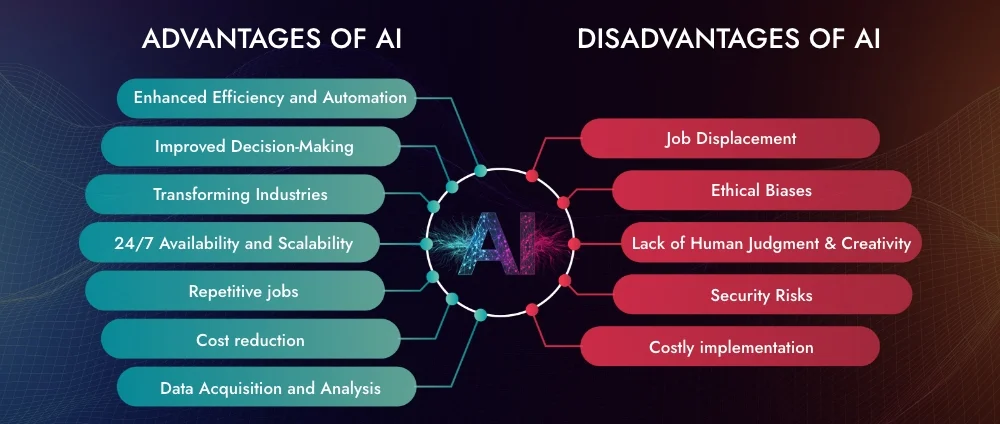
Advantages and Disadvantages of AI

Advantages of AI (Artificial Intelligence)

Everyone understands that AI gives firms an advantage. Precedence Research projects the U.S. AI market size to reach around $594 billion by 2032. That’s a compound annual growth rate of 19% from 2023. The advantages of AI applications have the potential to drastically transform a number of future areas or businesses, including the following:

Enhanced efficiency and automation

AI excels at repetitive tasks, freeing up human time and resources. A study by McKinsey Global Institute estimates that AI could contribute up to $12 trillion to the global economy by 2030. Think of AI-powered robots handling complex assembly lines in factories or intelligent algorithms streamlining data analysis for businesses.

Improved decision-making

AI can study huge amounts of data to spot patterns and trends imperceptible to the human eye. This allows companies and organizations to make data-driven decisions, improving resource distribution and streamlining procedures.

Transforming industries

AI is transforming numerous sectors. In healthcare, AI-powered diagnostics aid early disease detection, while in finance, AI algorithms streamline risk assessment and fraud prevention.

24/7 availability and scalability

Many studies have shown that humans are productive for only 3 to 4 hours daily. Humans need breaks and time off to maintain a healthy work-life balance. However, AI is capable of working indefinitely without interruption. They think far faster than humans and can complete numerous jobs simultaneously with correct outcomes. They can even tackle demanding, repetitive tasks with the help of AI algorithms.

Repetitive jobs

Even the most intriguing career has its share of tedious or repetitive tasks. These could include tasks like entering and analyzing data, creating reports, confirming information, etc. Using an artificial intelligence program can relieve individuals of the boredom of repeated activities, freeing up their energy for more creative work.

Cost reduction

As previously said, AI can work around the clock and provide more value on the same day as a human worker. Furthermore, because AI may assist in automating manual and monotonous jobs, it frees personnel to perform more skilled tasks. This finally adds value for the end user or consumer.

Data acquisition and analysis

When it comes to data processing, the amount of data generated far outstrips humans’ ability to grasp and analyze it. AI algorithms can help digest more significant amounts of complex data, making it more usable for analysis.

Disadvantages of AI ( Artificial Intelligence )

With all the benefits of AI outlined above, implementing AI for your organization may be a no-brainer. However, it is also essential to consider the potential drawbacks of such a significant adjustment. Adopting AI has numerous advantages, but drawbacks include setup costs and degradation over time.

Job displacement

A significant concern surrounding AI is its potential to automate jobs currently performed by humans. While some jobs may be replaced, others will be created, requiring new skill sets to work alongside AI systems.

A robot is one example of an AI application displacing jobs and increasing unemployment (in some circumstances). As a result, some argue that chatbots and robots will always be able to replace humans, increasing the likelihood of unemployment.

Ethical biases

The quality of AI algorithms depends on the data they are trained on. Biased data sets can lead to discriminatory outcomes in areas like loan approvals or recruitment. Mitigating bias in AI development is crucial for ensuring fairness and ethical use.

Lack of human judgment and creativity

While AI is excellent at data analysis and automation, it needs more human capacity for critical thinking, creativity, and emotional intelligence. Human oversight and collaboration will remain essential in tasks requiring these skills.

Security risks

As AI becomes more sophisticated, the potential for misuse by malicious actors becomes a concern. Robust cybersecurity measures are essential to safeguard AI systems from hacking and manipulation.

Costly implementation

The most significant and obvious disadvantage of integrating AI is its development can be exceedingly expensive. The cost of using AI varies depending on what you need it for. According to one estimate, the cost of a fully developed AI solution ranges between $20,000 to millions of dollars for most firms.

The expense is offset later when the AI is completely integrated and can assist in optimizing the procedure. However, the upfront expense might be scary, if not prohibitive.

Get ready to develop AI solution that used in daily life?

How is Artificial Intelligence used in daily life?

AI is already deeply ingrained into our everyday experiences. From the time you wake up to a smart alarm clock to personalized recommendations on your favorite streaming service, AI is silently working behind the scenes. Here are a few examples:

  • Smartphones: Facial recognition for unlocking your phone, personalized news feeds, and voice assistants like Siri or Google Assistant all leverage AI.
  • Transportation: Ride-hailing apps like Uber and Lyft utilize AI algorithms to optimize routes and predict traffic patterns.
  • Streaming Services: The recommendations you see on Netflix or Spotify are powered by AI, analyzing your viewing habits and preferences.

How does AI benefit the future generations?

AI can potentially transform various fields, impacting future generations in various ways. Here’s a glimpse into the possibilities:
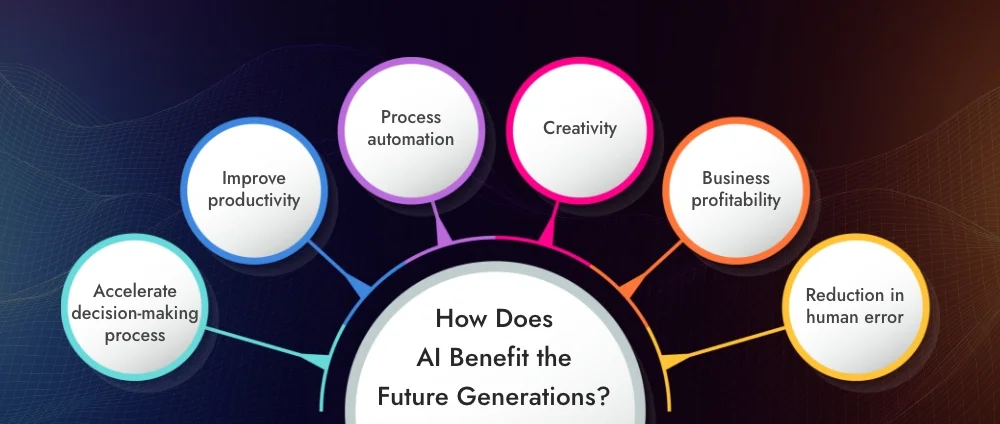
How does AI benefit the future generations
  • Accelerate decision-making process: AI helps people make decisions faster by quickly analyzing vast amounts of data.
  • For example, AI can analyze medical records in healthcare to help doctors diagnose diseases more accurately and promptly.
  • Improve productivity: AI automates repetitive tasks, allowing people to focus on more complex and creative work.
  • For instance, in manufacturing, AI-powered robots can assemble products faster and more efficiently than humans alone.
  • Process automation: AI automates tasks that would otherwise require human intervention, saving time and reducing errors.
  • For example, in customer service, AI-powered chatbots can handle routine inquiries, freeing up human agents to handle more complex issues.
  • Creativity: AI can assist in generating new ideas and solutions by analyzing existing data and patterns.
  • For instance, in music composition, AI algorithms can generate original pieces based on a musician’s style and preferences.
  • Business profitability: AI helps businesses optimize operations, reduce costs, and identify new revenue opportunities.
  • For example, AI-powered recommendation engines in retail can increase sales by suggesting personalized products to customers based on their preferences and purchase history.
  • Reduction in human error: AI systems are less prone to making mistakes than humans, leading to more accurate outcomes.
  • For example, in finance, AI algorithms can detect fraudulent transactions with greater accuracy and speed than human analysts.

This is just a glimpse into AI’s vast potential. Responsible development is crucial as AI evolves to ensure a brighter future for future generations.

Maximize the advantages of AI with ViitorCloud

As organizations embrace AI, they must commit to openness, justice, and data privacy, ensuring that the transformative power of AI is used properly.

Given this, ViitorCloud recognizes the promise of AI and aims to guide businesses embarking on their journey to digital transformation through AI. From strategic AI consultancy to custom AI solutions, we provide focused assistance to businesses at every stage of their journey with our expert-led digital transformation services. We offer comprehensive Artificial Intelligence services to empower businesses to utilize AI for increased efficiency, data-driven decision-making, and a competitive edge. Our team of AI experts can help you develop personalized AI solutions to your specific needs.

Do you need a team of AI experts to support your digital transformation efforts? Let’s team up. Contact ViitorCloud today for a consultation!

Frequently asked questions

Artificial intelligence is woven into the fabric of our daily lives. It personalizes our online experiences by recommending products we might like or suggesting news articles relevant to our interests. In healthcare, AI assists doctors in analyzing medical images for faster diagnoses and helps develop personalized treatment plans.

AI offers a multitude of benefits. Automating repetitive tasks can increase efficiency, freeing human time and resources for more complex endeavours. AI algorithms can analyze vast amounts of data to identify patterns and trends, leading to improved decision-making across various fields.

While AI holds immense potential, there are also potential drawbacks to consider. One concern is job displacement, as AI automates tasks previously performed by humans. Another challenge is ensuring the ethical use of AI, as algorithms can perpetuate existing biases if not carefully designed and monitored.
How does AI work? The basics you should know in 2024

Artificial Intelligence is a rapidly growing technology aiming to replicate human intelligence digitally. It helps computer devices receive inputs, understand them, and give solutions to problems like the human brain.

Various industries, from tech, health, and education to finance, are using AI technology to make impactful developments. The technology has the potential to contribute to tech, health, transport, and many other industrial applications, where humans may give inaccurate results and might be at life-threatening risk.

Here is a detailed overview of how AI works, as well as its concept, components, and applications. Walk through it to see how it will help you transform your business.

How does AI work?

According to Accenture predictions, AI will improve workforce efficiency and business profitability by 38% in the next 10 years, starting in 2024. Then What is AI? It is complex yet helpful for businesses. Then how does it work? To present it in simple words, it combines large datasets with various processing algorithms. Then, it learns the behavior patterns of datasets and manipulates algorithms.

You might be wrong if you consider AI to be based on a few algorithms. However, it is based on a machine-learning model. Let’s find out how AI works in the following steps:

Input

As with every other system or algorithm, input is the first step for AI. Here, the person handling AI for business operations needs to collect the necessary inputs to feed to AI to get proper output.

This input can be of any form, like text, video, image, voice, etc. However, whatever input the AI algorithm receives should be understandable. Further, you should also provide the expected output from the given input.

Processing

In the second step, AI starts processing input and decides to modify it according to the given output command. For this, AI interprets pre-programmed input data and identifies behavior patterns of data in real-time based on specific AI technology.

Data outputs

Once the AI technology completes data processing, it predicts data outputs. Then, it defines whether the output is valid or not.

Adjustments

If there is any mistake in data output, the technology can learn and correct results accordingly. In this step, it is possible to provide inputs to correct mistakes.

Assessments

After completing the assigned prompt, it is time to assess the output. In the assessment phase, AI can analyze the output data and make predictions. Further, it gives suggestions if you want to repeat the algorithm again.

What are the basic components of artificial intelligence?

AI can help businesses gain insights into daily operations that they can not understand easily. Furthermore, it can help businesses perform daily tasks quickly and efficiently. After knowing how does AI work, let’s go through the basic components of it. Here are a few important components of AI you should understand.

Learning

In AI, learning occurs when computer systems or machines memorize new data. Recent developments in machine learning allow enhancements in predictive and prescriptive analytics using operational data.

AI reasoning

Artificial intelligence has the ability to make inferences while applying command-based reasoning. Mainly, it uses inductive and deductive reasoning.

Problem-solving

AI is primarily used for its problem-solving and data manipulation ability. You can also use it for development purposes.

Perception

It is when a new sense organ, like artificial or real, scans the environment. Once an AI system receives elements of the environment, the perceiver will study various objects, collect their features, and identify relationships.

Language processing

Artificial intelligence will process language for autocorrects and spell checks. For this process, the system will use neural networks, scan large text bodies, and find issues like language irregularities and misspelled words.

Concepts of AI

Not every type of artificial intelligence is suitable for all businesses, datasets, and processes. Consider the following 4 main concepts of AI, and choose one that suits your business requirements.

Reactive machine

This AI concept can respond to real-time data. However, it has some restrictions, like the inability to build memory or store information.

Due to restrictions, you can’t use it to analyze data based on past experiences. However, it can be used to filter spam messages from inboxes or organize data from new clients.

Limited memory

This AI concept can store some data and use it to learn and use stored data to perform new tasks.

After processing information, it can study real-time data and make observations and predictions.

Theory of mind

It is a more advanced AI concept compared to limited memory. It can store data and make observations of real-time data.

However, it has not yet been fully developed. As the name suggests, it can respond to human behavior and emotions.

Self-aware

This advanced AI concept takes the theory of mind further. It processes information, saves it, and uses it while making decisions.

Along with its ability to store memory and understand human emotions, it can also make use of self-awareness while processing.

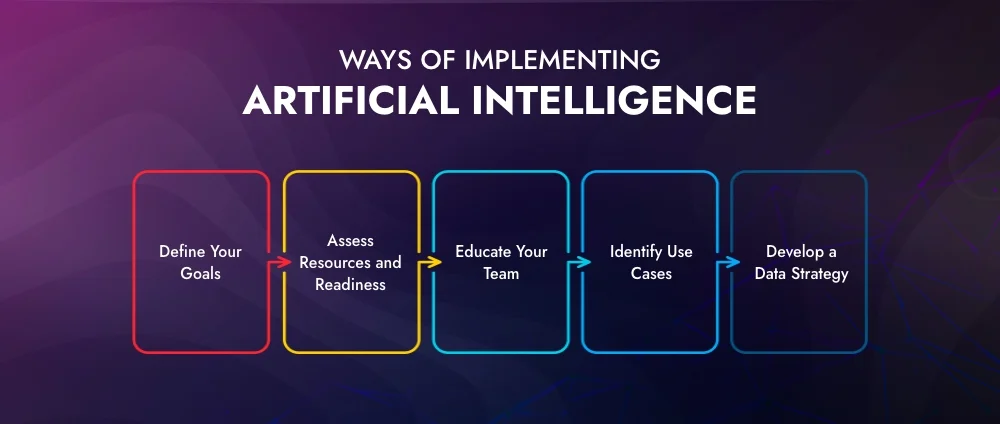
Ways of implementing AI

AI execution is an iterative process. It is crucial to adapt and reform your approach depending on your business requirements,

Although you will get significant advantages from AI tools, they also have some restrictions due to a lack of training data. Hence, humans should be responsible for decision-making and bringing creativity while implementing it. Here are a few steps on how you can use AI in your business.

Ways of implementing AI

Define your goals

Before using AI for your business operations, it is necessary to define business objectives and goals clearly. These aims should be important because they will give direction to your business output.

Setting clear goals keeps you focused while applying AI and helps stakeholders to understand what you want. With these goals, you can also measure the success and performance of AI application exercises.

Assess resources and readiness

Gauge your firm’s readiness for AI execution. The primary step is to ensure that you have all the required resources to adopt AI in your workflow,

Consider the data you have with the format, and see if it is enough to train the AI system. Since data quality reflects the accuracy of the ML model, make sure to feed filtered and accurate data.

Educate your team

For successful AI integration, You should understand technology fundamentals and educate your team. Alongside learning the basics of technology, learn about applications, AI concepts, machine learning, data science, deep learning, prompt engineering, etc.

Then, some practice of these processes should be done before exploring real projects. Further, restrict yourself and your team to one-time learning. It is a continuous process, so keep it constant.

Identify use cases

Recognize certain use cases of AI that can offer tangible benefits to businesses.

Further, explore areas where artificial intelligence can improve decision-making, efficiency, and client experience.

Develop a data strategy

During the assessment process, to see if your business is ready for AI, you must have enough data. It will help you train the AI model perfectly with precise and accurate data in enough quantity.

Therefore, a proper data strategy for data collection, storage, validation, and governance must be built. Hence, make sure to determine all the required data collection, storage, and cleaning steps.

Choose the right AI technologies and tools

Now, we know how does artificial intelligence works. Now, let’s see some right tools and technologies. There are thousands of AI tools and technologies in the market; for instance, you have Gemini, Midjourney, Adobe AI photo editor, AI image generator in Canva, etc. However, these technologies are more used in marketing.

These tools and technologies may not help your business. Then what to do? Don’t worry! ViitorCloud is here to help you with AI development services for your business. You can expect us to develop customized AI models that meet your business needs.

Ready to choose the right AI technologies and tools?

Our expert makes it easy to select the best options for your business.

Develop and train AI models

AI has been the fastest-growing industry recently. You can explore many AI tools or develop your own custom model. After exploring existing tools from the market, you may find that no tool is helping you. In this case, you can hire us for your AI development needs,

Once we develop the tool, you can start training it according to your requirements and available data. After completing training, start using the custom AI tool.

Pilot testing and evaluation

It is not good to put AI tools into production immediately after development. Instead, a series of trials in controlled conditions will be performed to check accuracy and performance. Gather feedback from pilot tests to make necessary improvements.

Once you collect audits from trials of developed AI models, make the required adjustments and modifications. After that, your AI tool will be ready for deployment.

Deploy and integrate

After going through all the above processes, you can finally use the developed AI model in production. Hence, integrate the model into your business workflows according to requirements; while deploying the tool, make sure to do it seamlessly by checking the compatibility.

Optimize and improve

Consistently track the performance of the AI solution and see if it is working properly. If it is not working as per your expectations, optimize technical adjustments and improve the performance of your solution.

Transform your business with AI

Adopting artificial intelligence is not an option; it is a dire need to thrive in this rapidly growing business era. Hence, businesses wanting to gain competitive advantage and sustainable growth must consider collaborating with AI development companies like Viitor Cloud and leveraging the full potential of this technology.

Whether you wish to develop a customized AI tool, chatbot, video solution, AI assistance, etc., for your business requirements, our advanced AI development services can help you achieve your goals very soon. Then, Why are you waiting? Partner with us now and mold your business in different dimensions.

Frequently asked questions

In learning, AI employs various algorithms to personalize content, study data, improve problem-solving ability, improve critical thinking, and share feedback. With adaptive learning, AI customizes learning experiences to individual requirements, fostering retention and deeper understanding.

In real life, artificial intelligence provides various benefits, like location tracking, image recognition, fraud detection, etc. By employing various AI algorithms, AI helps in task automation, making informed decisions, improving accuracy and efficiency, optimizing processes, etc.

Artificial Intelligence is not replacing any business. However, it is improving processes with data analysis and automation. Further, enhancing decision-making and efficiency gives businesses a competitive edge and sustainability.

What is Artificial Intelligence? Is AI taking over human activities?

Have you ever thought of something called a machine performing human activities? Probably not, but today, it is the case where machines, like computers, are replicating human intelligence. What is it called? Artificial intelligence. Then, what is artificial intelligence technology?

It is essentially about teaching computers and machines to think and act like humans. It involves enabling them to understand language, recognize patterns, solve problems, and make decisions in ways similar to ours. Let us dive deep and understand it in detail, its pros and cons, types, applications, etc.

What is artificial intelligence?

AI is like teaching machines to do tasks that humans usually do, like learning, solving problems, making decisions, and being creative. AI is like teaching machines to think and act like humans, but defining exactly what it is takes work. A recent study by PwC predicts that AI could contribute up to $15.7 trillion to the global economy by 2030.

At its core, AI means machines that can learn, make decisions, and take action, even in new situations they haven’t encountered before. Some people think of AI as robots with human-like intelligence and personality, but today’s Artificial Intelligence definition is far from that. It’s more about solving problems and adapting to new situations. Regular computer programs repeat the same tasks in the same way every time. They need help adapting to new situations.

AIs, on the other hand, can learn and solve more complex problems, even ones they’ve never faced before. Companies must teach computers on every road and intersection in the race to build driverless cars. Instead, they’re creating programs that can react to real-world situations using sensors, even if they’re new. We still need to have brilliant AI, like in sci-fi movies. What we have now is called weak AI or narrow AI. It’s good at specific tasks but can only do some things. So, when you hear about Artificial Intelligence, be cautious. Only some things labeled as AI are knowledgeable.

Why is artificial intelligence important?

AI rapidly transforms industries by automating repetitive tasks, freeing human time and resources. From robots handling complex assembly lines in factories to AI chatbots offering 24/7 customer service, AI streamlines operations and enhances efficiency. Beyond automation, AI excels at processing massive datasets, providing valuable insights that empower better decision-making. Businesses can utilize AI to personalize marketing campaigns, develop targeted treatments in healthcare, or predict weather patterns for environmental initiatives.

This data-driven approach fosters innovation across various fields. AI is accelerating drug discovery, aiding climate research, and even contributing to scientific breakthroughs in astronomy and genomics by analyzing vast amounts of data that might elude human observation. Generative AI tools further expand possibilities, offering applications in education, marketing, and product design. 80% of smartphone users interact with AI daily through features like voice assistants and smart recommendations.

The rise of AI isn’t just about efficiency and insights; it also creates entirely new business models. Take Uber, for example, which connects riders with taxis through a mobile app—a concept unimaginable without AI’s ability to connect users and resources in real time. Leading companies like Google, Apple, Microsoft, and Meta heavily rely on AI to power their core operations and stay competitive. AI technology is shaping the future, from Google’s search engine algorithms to self-driving cars and advancements in natural language processing.

The future of work with AI

While AI automates specific tasks, it also creates new opportunities. New roles are emerging in AI development, data analysis, and human-computer interaction. As AI meaning continues to evolve, future workers will need a combination of human skills like creativity, critical thinking, social intelligence, and a solid understanding of AI.

What are the types of artificial intelligence?

Researchers are exploring more sophisticated forms of artificial intelligence and grappling with defining intelligence and consciousness more precisely.

What are the types of artificial intelligence
  • Reactive machines: These are basic AI systems that react only to immediate stimuli, like playing chess, without any memory of past events.
  • Limited memory machines: These AI systems have a limited understanding of past events, allowing them to interact more with the world, such as self-driving cars adjusting their speed based on past observations.
  • Theory of mind machines: These hypothetical AI systems would understand the world and its other entities, representing an early form of artificial general intelligence.
  • Self-aware machines: The most advanced type of AI, these machines would understand the world, others, and themselves, akin to achieving artificial general intelligence. However, this level of AI is currently a distant possibility.

Advantages and disadvantages of AI

People are afraid of AI, and that makes sense. There are many real concerns about it. AI has a wide range of applications that have the potential to alter the way we work and live. While many of these innovations, such as self-driving cars, virtual assistants, and wearable gadgets in healthcare, are lovely, they also present numerous concerns. It’s a complex picture that frequently evokes opposing images: utopia for some, dystopia for others. The reality is likely to be far more complex. Below, you’ll find a brief list of AI’s potential advantages and disadvantages.

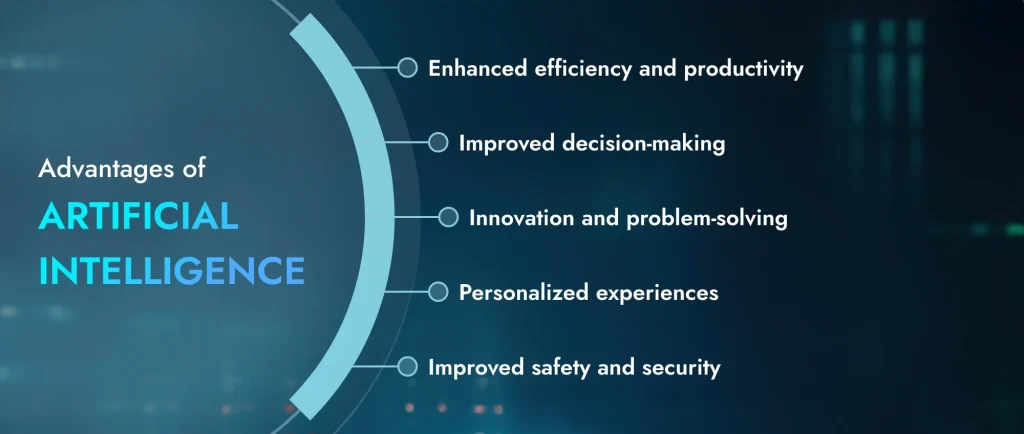
Advantages of artificial intelligence

AI significantly benefits across sectors, transforming processes and improving outcomes with its capabilities. AI’s impact is expanding, driving advancement and change through increased efficiency and productivity, as well as improved decision-making and innovation.

Advantages of artificial intelligence

Enhanced efficiency and productivity

AI is increasingly automating repetitive tasks that were once the domain of human labor. This frees up valuable human time and resources, allowing us to focus on more strategic endeavors.

Examples:

  • Manufacturing: AI-powered robots can handle complex assembly lines with greater precision and speed than humans. This increases production output, reduces errors, and improves overall efficiency.
  • Customer service: AI-powered chatbots can handle routine customer inquiries 24/7, freeing up human representatives for more complex issues that require a personal touch. This leads to shorter wait times and improved customer satisfaction.

Improved decision making

Traditional decision-making often relies on limited data or human intuition. AI, however, thrives on vast troves of data. AI algorithms can analyze enormous datasets, identifying hidden patterns and trends that might escape human observation. This empowers organizations to make data-driven decisions, leading to better outcomes.

Examples:

  • Finance: AI can analyze financial data to identify potential risks and investment opportunities. This allows financial institutions to make more informed investment decisions and offer personalized financial advice to clients.
  • Healthcare: AI can analyze medical records and imaging data to assist doctors in diagnosing diseases with greater accuracy. This can lead to earlier diagnoses and more effective treatment plans, ultimately improving patient outcomes.

Innovation and problem solving

AI has the potential to tackle complex problems that have long challenged humanity. Its ability to process vast amounts of information and identify patterns opens doors to groundbreaking innovations in diverse fields.

Examples:

  • Medicine discovery: AI can analyze molecular structures to accelerate the development of new medications, leading to faster breakthroughs in the fight against diseases.
  • Climate change: AI can analyze climate data and simulate potential solutions for sustainability challenges. This can help us develop more effective strategies to mitigate the effects of climate change.

Personalized experiences

AI is transforming how we interact with technology by creating personalized experiences. Recommendation systems powered by AI algorithms learn your preferences and suggest products, content, or services tailored specifically for you.

Examples:

  • eCommerce: AI can analyze your purchase history and browsing behavior to recommend products you might be interested in. This personalizes the shopping experience and increases the likelihood of a purchase.
  • Education: AI-powered tutoring systems can adapt to a student’s learning pace and style, providing a more personalized learning experience that caters to their strengths and weaknesses.

Improved safety and security

AI-powered systems can enhance security measures and assist in hazardous tasks, reducing risks to human safety and safeguarding valuable assets. AI technologies offer proactive solutions to various safety and security challenges using advanced algorithms and real-time data analysis.

Examples:

  • Cybersecurity: AI can detect and prevent cyberattacks by analyzing network traffic patterns and identifying suspicious activity. This helps organizations protect their valuable data from cyber threats.
  • Dangerous Jobs: AI-powered robots can perform hazardous tasks in industrial settings, such as handling dangerous materials or working in extreme environments. This reduces the risk of injuries to human workers.

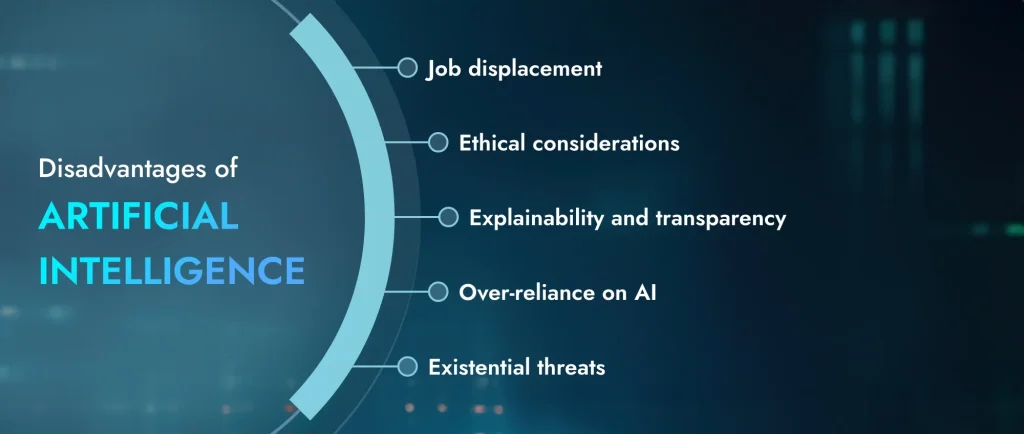
Disadvantages of artificial intelligence

AI technologies bring numerous benefits but present several challenges and drawbacks that society must address. It will help you fully harness their potential while mitigating their negative impacts.

Disadvantages of artificial intelligence

Job displacement

AI automates tasks, boosting efficiency but raising concerns about job displacement. Industries like manufacturing and customer service may see job losses as AI handles repetitive work. Retraining programs are crucial, focusing on skills that complement AI. Cultivating creativity, critical thinking, and social intelligence will be key for future job prospects.

Ethical considerations

AI algorithms are only as good as the data they’re trained on. Biased data can lead to biased AI systems perpetuating discrimination in areas like loan approvals, hiring practices, or facial recognition software. The potential for AI to be used for malicious purposes, such as autonomous weapons, or mass surveillance, raises ethical concerns.

It is crucial to develop ethical frameworks for AI development and deployment. This includes promoting transparency and accountability in AI algorithms, ensuring fairness, and preventing discrimination.

Explainability and transparency

Understanding how AI systems reach decisions can be complex, often shrouded in layers of algorithms and data. This lack of transparency can hinder accountability and raise concerns about potential misuse.

What if an AI-powered loan approval system only accepts loan applications with a clear explanation? This lack of transparency makes it difficult to identify and address potential biases within the system. Researchers seek ways to develop “explainable AI” systems that clearly explain their decisions. This will be crucial for building trust in AI and ensuring its responsible use.

Over reliance on AI

Dependence on AI for critical tasks without proper human oversight can pose risks. While powerful, AI systems can only sometimes handle complex situations that require nuanced human judgment and ethical considerations.

If an AI-powered stock trading algorithm makes high-risk decisions without human supervision, it could result in significant financial losses. A balanced approach is essential. Human oversight and expertise should complement AI systems, ensuring responsible decision-making and mitigating potential risks.

Existential threats

Some experts express concerns about the potential for superintelligence – AI surpassing human intelligence in all aspects. While this is a highly speculative scenario, it raises questions about the potential risks posed by AI that might not align with human values.

This is a topic of ongoing debate among AI researchers and philosophers. Some believe safeguards and ethical frameworks can prevent such risks, while others advocate for careful consideration of the long-term implications of superintelligence.

What are some examples of AI technology, and how is it used today?

Artificial intelligence used every day is already integrated into many aspects of our daily lives. Here are just a few examples of how we use AI everyday.

  • Self-driving cars: Self-driving cars interpret sensor data using AI algorithms. They navigate roads autonomously. AI processes information in real-time. It makes split-second decisions to steer, accelerate, and brake. The goal is safer and more efficient transportation.
  • Virtual assistants: Virtual assistants like Siri, Alexa, and Google Assistant rely on NLP and machine learning. They understand user commands and provide relevant responses. These assistants help with setting reminders, answering questions, and controlling devices. Their goal is to assist users with various activities.
  • Recommendation systems: Recommendation systems analyze user data to suggest personalized content or products. Platforms like Netflix use collaborative filtering and content-based algorithms. These algorithms tailor recommendations to individual tastes. The goal is to enhance user experience and engagement.

Are you looking to apply AI in your business operations but are stuck due to a lack of time and resources for artificial intelligence? Contact us today for AI development services.

Key takeaways

  • AI refers to the replication of human intelligence using machines.
  • AI can potentially revolutionize various industries where human life is at risk.
  • Different types of AI exist, like self-driven cars, chatbots, virtual assistance, research and development, etc.
  • AI offers numerous advantages but also raises ethical and practical concerns.
  • AI integration is already widespread in many technologies we use daily.

Frequently asked questions

Artificial General Intelligence (AGI) is a speculative type of AI with human-level intelligence and the ability to learn and apply knowledge across various domains.

Artificial Intelligence can be broadly categorized into two main types: Narrow AI (task-specific) and Artificial General Intelligence (human-level intelligence).

Artificial Intelligence was created to automate tasks, augment human abilities, solve complex problems, and advance knowledge across various domains.

In industries, AI technology automates tasks, improves decision-making, and enhances efficiency through applications like personalized recommendations, fraud detection, and predictive maintenance.

Why are ethics in artificial intelligence required for maintaining balance?

Artificial Intelligence (AI) is rapidly advancing and its impact on society is becoming more pronounced. As AI technology becomes more intelligent and autonomous, it raises essential questions regarding AI ethics and human values.

The intersection of AI and ethics is a complex and multifaceted topic.

It requires careful consideration of the ethics of AI such as how AI systems are designed, and their implications on privacy, bias, transparency, accountability, and the overall well-being of individuals and communities.

we will delve into the intricate world of ethics in artificial intelligence, exploring the complexities, challenges, and potential solutions for ensuring AI and human values.

Understanding the ethics in artificial intelligence

According to the report, by 2025, as many as 97 million people will work in the AI space and the AI market size is expected to grow by at least 120% year-over-year.

This shows that Ethics in Artificial Intelligence are a crucial aspect to consider when developing and implementing AI systems.

The Ethical Concerns of AI are multi-faceted and involve various issues such as privacy, bias, accountability, and transparency.

These complexities highlight the importance of understanding the ethical issues of AI to navigate the ever-evolving landscape of technological advancements while still prioritizing and upholding human values.

Importance of AI ethics principles in the technological age

In today’s technological age, AI has become increasingly integrated into various aspects of our lives, making the ethics of AI more important.

As AI development progresses and exerts increasing influence on our society, it becomes imperative to prioritize ethics. This ensures that the creation and utilization of AI align with our fundamental societal values.

It is important to drive the complexities of AI and human values responsibly and ethically, so it doesn’t compromise our core principles while embracing the advancements of AI technology.

Defining AI ethics and its role in society

AI ethics refers to the principles and guidelines that govern the responsible use of artificial intelligence technologies within society. Understanding artificial intelligence’s meaning is essential for ensuring that these technologies are implemented in a way that is ethical and beneficial for all.

This involves establishing norms for how the ethics of AI systems should be designed, developed, deployed, and used to ensure they align with our societal values.

It is through ethical concerns of AI that we can navigate the complexities of human ethics in Artificial Intelligence, ensuring that technological advancements are aligned with our societal goals and principles.

Incorporation of human values

By incorporating human values into the design process, we can promote fairness, accountability, transparency, inclusivity, and overall trust in AI systems.

By prioritizing Ethics in Artificial Intelligence, we can mitigate risks associated with biased algorithms, data privacy breaches, and other ethical concerns that arise from AI implementations.

Ethical considerations of using artificial intelligence

Artificial intelligence (AI) not only brings about technological advancements but also raises important ethical questions that need to be addressed.

One such concern is the issue of privacy and data security. With AI systems having access to massive amounts of data, ensuring the privacy and security of this information becomes crucial.

Additionally, there is a need for Ethics in Artificial Intelligence for programming and monitoring to prevent the perpetuation of biases and discrimination.

The potential impact of AI on employment is another ethical consideration, as automation can lead to job displacement and economic inequality.

Finally, Ethics in Artificial Intelligence Concerns present challenges in terms of accountability and transparency, as the algorithms powering AI systems can be complex and difficult to understand.

Human values and AI

By integrating AI and Human Values, we can establish a framework that guides machines toward responsible decision-making. This can help prevent potential biases and discrimination from being perpetuated by AI systems.

By including a wide range of voices and experiences, we can avoid any unintended biases and promote inclusivity of Ethics in Artificial Intelligence.

The establishment of ethical guidelines and frameworks can provide a clear roadmap for the implementation of human values in AI, ensuring that these values are upheld throughout the development and use of this transformative technology.

AI and privacy concerns

Artificial intelligence (AI) has revolutionized the way we interact with technology, but it also brings with it a host of concerns, particularly when it comes to privacy.

AI systems can collect and analyze vast amounts of personal data, which raises important questions about how this information is stored, shared, and protected.

Privacy concerns in AI revolve around issues such as data security, consent, and transparency in algorithms.

Ethical concerns of AI play a crucial role in ensuring privacy rights and protecting sensitive information.

The role of data privacy in AI development

Data privacy is a crucial aspect in the development of artificial intelligence as it promotes trust between users and AI systems.

By protecting individuals’ privacy, it enables responsible collection and use of data for training AI models.

Moreover, data privacy safeguards are necessary to address potential biases and discrimination in ensuring the morality of AI.

Mitigating risks of data breaches and unauthorized access

Minimizing the risks of data breaches is of utmost importance when it comes to the ethical concerns of AI.

The potential consequences of data breaches can be harmful and have far-reaching implications, underscoring the need for stringent access controls.

By adopting privacy-enhancing technologies such as differential privacy, the likelihood of re-identification attacks on user data can be significantly reduced, further safeguarding individuals’ privacy and promoting responsible AI usage.

Importance of regular audits

Regular audits and monitoring play a vital role in identifying vulnerabilities and ensuring compliance with privacy regulations in the context of AI applications.

By prioritizing data privacy, we can ensure that AI systems operate in an ethically responsible and accountable manner while promoting the greater good for all.

Future of AI ethics

Artificial intelligence ethics is a rapidly evolving field that is gaining increasing attention as AI technologies continue to advance.

Ethical considerations in AI will become even more complex as AI systems become increasingly autonomous and capable of making decisions without human intervention.

The future of AI ethics will require interdisciplinary collaboration between experts from various fields, including philosophy, computer science, law, and social sciences.

By bringing together diverse perspectives, we can develop comprehensive frameworks and guidelines that address the ethical challenges posed by AI technologies and safeguard human values in the increasingly complex AI landscape.

Conclusion

Navigating Ethics in Artificial Intelligence by Incorporating human values is essential to ensure that they align with societal needs and uphold human rights.

By considering potential implications and involving diverse stakeholders in shaping responsible AI practices, we can create an AI future that not only benefits society but also upholds human values and respects our collective ethical concerns over the morality of AI.

Frequently asked questions

The pillars of AI ethics are the foundational principles that guide the development and deployment of AI systems. These pillars include Transparency, Fairness, Privacy, Accountability, and Robustness.

The ethical challenges of AI include biased algorithms, lack of transparency, privacy concerns, job displacement, and accountability for errors.

Educating the public about the ethical issues of AI can be done through public awareness campaigns, accessible resources, and interdisciplinary education.

How AI museum tour app solutions can change visitors’ experience

Imagine walking into a museum and being greeted by a personalized tour guide who knows your interests such that they can tailor the tour experience for you. Well, this is the future of museum tours, thanks to AI museum tour app solutions.

AI development solutions are transforming museum tours, creating unique and engaging experiences for each visitor. By leveraging machine learning (ML) to analyze visitor data and preferences, these AI-powered museum tour apps personalize the journey, allowing visitors to explore at their own pace.

How AI museum tour apps work

AI museum tour apps typically work by collecting data on visitors’ interests, such as the types of art they like, the historical periods they’re interested in, and the amount of time they have to spend at the museum.

Collecting this data enables these apps to create an itinerary that includes the exhibits that the visitor is most likely to enjoy. Such apps for museum tours can also provide information about the exhibits, such as their history and significance.

Key features of AI museum tours apps

AI museum tour app solutions come with a range of features to enhance the visitor experience:

  • Interactive maps: AI museum tour apps can help visitors navigate the museum and find the exhibits they’re interested in.
  • Audio and video guides: AI museum tour apps can provide visitors with audio and video guides that provide information about the exhibits.
  • Gamification: AI museum tour apps can include gamification elements to make the experience more fun and engaging for visitors.

Benefits of navigating museums through AI apps

Art venues that embrace AI for museum tours can reap numerous benefits:

  • Enhanced Visitor Engagement: Personalized experiences captivate visitors, making them more likely to explore the museum’s offerings.
  • Data Insights: AI can collect data on visitor behavior, helping museums understand their audiences better.
  • Cost Efficiency: AI apps can reduce the need for guided tours and printed materials.

Developing an AI museum tour app solutions

Museums play a significant role in preserving our cultural heritage. They house invaluable collections of art, artifacts, and objects that may offer a glimpse into the past, present or future. AI-backed museum tour apps provide a range of features and functionalities that cater to the unique needs of museum visitors and businesses.

Understanding the unique needs of AI museum tours

AI museum tours have many unique needs that must be considered when developing an app solution. These include:

  • Personalization: AI museum tour apps should be able to personalize the tour experience for each visitor based on their interests, preferences, and time constraints.
  • Accuracy: AI museum tour apps should provide accurate and up-to-date information about the museum’s collection and exhibits.
  • Accessibility: AI museum tour apps should be accessible to all visitors, regardless of their age, abilities, or language skills.

Key features required for an effective AI museum tour app

Some of the key features required for an effective AI museum tour app include:

  • Personalized tour recommendations: The app should be able to recommend exhibits and tours based on the visitor’s interests and preferences.
  • Gamification elements: The app can include gamification elements, such as quizzes and challenges, to make the experience more fun and engaging for visitors.
  • Multilingual support: The app should be available in multiple languages to accommodate a global audience.

As an AI developer, the alchemy of code transforms museum visits into personalized odysseys, enhancing the exploration of art and culture with precision and innovation.

Importance of user-friendly interfaces and accessibility features

User-friendly interfaces and accessibility features are crucial components of an effective AI museum tour app.

Here’s why they are important:

  • Enhanced usability: A well-designed interface enables visitors to navigate the app effortlessly, find relevant content, and make the most of their museum visit.
  • Accessibility for all: Incorporating accessibility features such as text-to-speech capabilities for visually impaired users, adjustable font sizes, and compatibility with assistive technologies ensures that everyone can access and enjoy the app’s content.

Case study of top museum app

Today, AI-driven solutions are reshaping the way visitors engage with art and history. Explore the transformative journey of museums into the digital era through personalized and innovative technologies.

Louvre museum app case study

The Louvre Museum app is a comprehensive guide to the Louvre Museum located in Paris, France. This AI Museum tour app solutions provides visitors with personalized recommendations, real-time navigation, and in-depth information about the museum’s vast collection.

The app uses a variety of factors, such as the visitor’s interests, past visits, and current location, to recommend exhibits that they are likely to enjoy. The app also allows visitors to create their own custom tours, which can be saved and shared with friends and family, resulting in more personalized museum tours with AI.

Benefits for museum visitors

The app has benefited museum visitors in several ways, including:

  • Increased engagement
  • Improved learning
  • Improved accessibility

Benefits for business owners

The app has also benefited the museum financially by:

  • Increasing visitor satisfaction
  • Improving visitor spending
  • Collecting data on visitor behavior

Empower your museum’s journey into the future with ViitorCloud’s expertise in AI-driven museum tour app development. Let’s embrace the future!

How to get started with AI museum tours

If you’re a museum owner interested in AI-driven museum tour app development, here are some key tips to consider:

  1. Define Your Objectives: Clearly outline your goals and expectations for building an AI-backed app for museum tours.
  2. Research and Partner: Explore Museum tour app development companies that can leverage their mastery in AI and app development to bring your vision to life.
  3. Training and Maintenance: Ensure that your staff is well-trained in using and maintaining the app to provide seamless experiences for visitors.
  4. Promotion and Education: Inform your visitors about the new AI-powered features and educate them on how to use the app effectively.

Take the first step towards an immersive AI-powered museum experience with ViitorCloud. Partner with us to craft personalized, cutting-edge museum tours and captivate your audience.

Summing up

Latest tech Innovations in museum apps have redefined how visitors engage with cultural heritage, offering personalized, immersive experiences. Museum owners who wish to stay ahead of the curve should seriously consider adopting AI museum tour apps. With the right strategy and technology, you can create tailored journeys that captivate visitors and leave a lasting impression.

Take the first step toward a more engaging and informative museum experience – collaborate with ViitorCloud today. The right AI museum tour app solutions can bring numerous benefits, including increased engagement, data insights, and cost efficiency. Start your journey into the world of AI museum tour apps and witness the transformation for yourself. It’s time to revolutionize the way your visitors explore your museum’s treasures.

Frequently asked questions

It is a museum that uses AI to enhance the visitor experience by offering personalized recommendations, real-time navigation, and in-depth information about the museum’s collection.

You can use AI to analyze the visitor’s interests, past visits, and current location to create custom tours that allow visitors to explore the museum at their own pace and discover new things.

AI is constantly evolving and so are the possibilities it could bring. In the future, AI museum tours could become more personalized and engaging.

AI can be used in museums to provide personalized recommendations, real-time navigation, in-depth information, custom tours, visitor behavior analysis, and new ways for visitors to learn and experience.

Google launches gemini AI, boost your productivity and creativity

Artificial intelligence keeps getting better day by day by making machines smarter and more capable.
Tech giant Google launched its latest creation: Gemini on 13th December to be accessible to users and developers.

Gemini is a major step toward AI development solution, it’s a groundbreaking multimodal AI model used to transform the way we interact. This means that in the future, machines could understand and work with all kinds of information, like words, pictures, and sounds, much more easily.

What is gemini AI?

To explain the essence of Gemini AI more simply, imagine an AI that can not only understand complex text and code but can also analyze images, interpret audio, and even combine these modalities to solve problems and generate creative outputs.

Built on a massive dataset and trained using Google’s powerful Tensor Processing Units (TPUs), Gemini possesses remarkable capabilities:

  • Multimodal Understanding: Gemini AI can process and interpret information from various sources, including text, code, images, and audio, allowing it to gain a more comprehensive understanding of the world around it.
  • Advanced Reasoning and Problem-Solving: Gemini can analyze complex data, identify patterns, and draw logical conclusions, enabling it to tackle intricate problems and generate creative solutions.
  • Natural Language Processing: Gemini excels at understanding and responding to natural language, making it ideal for tasks like conversational AI, machine translation, and text summarization.
  • Code Generation and Analysis: Gemini can not only understand and generate code but also analyze existing code, identify errors, and suggest improvements, making it a valuable tool for software developers.

Benefits of gemini AI: a multifaceted revolution

The potential applications of Gemini are vast and far-reaching, impacting various sectors and enriching our lives in countless ways:

Enhanced search and information retrieval

Gemini is a search engine that can understand the nuances of your query and retrieve relevant information from a variety of sources, including images, videos, and audio recordings.

Gemini promises to revolutionize the way we search for and consume information.

Personalized education and learning

A learning assistant powered by Gemini can tailor educational content to individual needs, adapting to different learning styles and providing personalized feedback.

This could democratize access to quality education and make learning more engaging and effective.

Enhanced creativity and productivity

Gemini can assist in creative endeavors like writing, music composition, and design, offering new ideas and generating unique content.

It can also automate repetitive tasks, boosting productivity and freeing up time for more creative pursuits.

Improved healthcare and medical research

Gemini can analyze medical images, interpret medical data, and even assist in medicine discovery, contributing to advancements in healthcare and potentially saving lives.

Different versions of gemini AI

The current version is known as Gemini 1.0. and the model comes in 3 different sizes. Here’s a breakdown of the key differences of Gemini AI versions.

FeatureUltraProNano
PowerHighestHighModerate
Resource RequirementsHighModerateLow
Ideal Use CasesComplex tasks, research, and professional applicationsBusiness applications, scaling across tasksPersonal use, everyday tasks
Ideal consumerOutperforms ChatGPT-4 in various benchmarksIdeal for businesses and organizationsDesigned for personal use and everyday tasks

Challenges and considerations

While Gemini’s potential is undeniable, it’s crucial to acknowledge the challenges and considerations associated with such powerful AI technology:

Bias and Fairness: Ensuring that AI models like Gemini are free from bias and discrimination is critical.

  • Careful data selection, training procedures, and evaluation methods are necessary to mitigate potential biases.

Explain ability and Transparency: Understanding how AI models arrive at their conclusions is crucial for building trust and ensuring responsible development.

  • Efforts are underway to develop methods for explaining Gemini’s reasoning and decision-making processes.

Security and Privacy: Protecting sensitive data and ensuring the security of AI systems is paramount.

  • Robust security measures and ethical guidelines are necessary to prevent misuse and safeguard user privacy.

Use cases gemini AI

Some of the top use cases of Google Gemini AI are:

Use Cases Gemini AI
  • Boosting Creativity: Writers can brainstorm story ideas, musicians can generate custom melodies, and designers can receive AI-powered suggestions for their projects.
  • Scientific research: Gemini can analyze vast amounts of data, identify patterns and trends, and even generate hypotheses for further investigation.
  • Education: Gemini can personalize learning experiences, provide feedback on student work, and even answer complex questions in real-time.
  • Customer service: Gemini can handle customer inquiries and provide support in a natural and engaging way.
  • Automating Tasks: Repetitive tasks, like data entry or code analysis, can be handled by Gemini, freeing up human time for more strategic work.
  • Breaking Language Barriers: Real-time, accurate translation across languages in text, speech, and even sign language becomes possible, fostering global communication and collaboration.

Can I build my own AI like gemini?

Creating an AI model like Gemini involves complex processes that demand specialized knowledge.

Can I Build My Own Gemini AI Like Gemini

However, the world of AI development is progressing quickly and becoming more user-friendly. Various open-source tools and frameworks exist for constructing and training AI models.

These resources empower individuals and organizations to delve into AI possibilities without having to replicate the extensive infrastructure supporting Gemini.

Viitorcloud can be your one-step solution for requirements like this. Our experienced developers know their way around in developing customized solutions.

Cost of innovation

The cost of Gemini AI development is significant, requiring access to vast computational resources, expertise in AI research and development, and large datasets.

The increasing availability of cloud-based computing platforms and open-source tools is making AI development more accessible and affordable for smaller organizations and individuals.

Initiatives like Google’s AI Residency program and open-sourcing AI research findings further contribute to democratizing AI development and fostering innovation.

Conclusion

The launch of Gemini AI Development marks a significant milestone in the history of AI, entering in a new era of multimodality and unlocking a world of possibilities.

As we grapple with the challenges and navigate the ethical considerations, the potential benefits of Gemini AI are undeniable.

From personalized education and enhanced healthcare to creative collaboration and revolutionized search, Gemini holds the promise of changing our lives and shaping the future of AI in ways we can only begin to imagine.

Frequently asked questions

Gemini AI analyzes and combines information from text, images, audio, and more, giving it a richer understanding of the world.

Key features of Gemini AI Development are multimodality, advanced reasoning, natural language processing, and code generation/analysis.

Gemini is available in beta version and not available publicly so, costs are under development.

Gemini opens doors for personalized experiences, creative collaborations, and revolutionized search, democratizing AI development solutions.

How oil and gas metaverse solution bring change to the industry?

The concept of metaverse is getting acknowledged as the digital landscape is evolving daily. As the metaverse spreads its wings in various industries, Oil and Gas also experience the effect of Immersive Technology.

The metaverse is a collective virtual shared space that intervenes in the lines between physical and virtual worlds.

Traditionally, the oil and gas app development industry has been characterized by its high-risk environments, complex operations, and substantial reliance on data and communication.

Oil and gas metaverse solutions display an intriguing chance for innovation and transformation.

Understand the metaverse

The metaverse is a combination of various technologies, including Virtual Reality (VR), Augmented Reality (AR), Mixed Reality (MR), Blockchain, and more.

VR creates immersive, computer-generated, virtual environments, while AR overlays digital information onto the real world.

MR combines the features of both AR and VR, enabling the interaction of digital and physical objects. It is particularly useful for visualizing and inspecting products in real-time.

Blockchain technology ensures secure and transparent transactions within the Metaverse Development Company.

How the metaverse is changing the oil and gas industry

The oil and gas industry has been a crucial part of the global economy for a long time, providing the energy necessary for different sectors and driving economic growth.

However, in recent years, the industry has encountered several challenges, such as fluctuating oil prices and growing environmental concerns.

The oil and gas metaverse solution has come out as a transformative power, bringing new possibilities and reshaping the operations of the oil and gas industry.

With advancements in technology, ViitorCloud has created a world of opportunity by keeping the metaverse in its hands

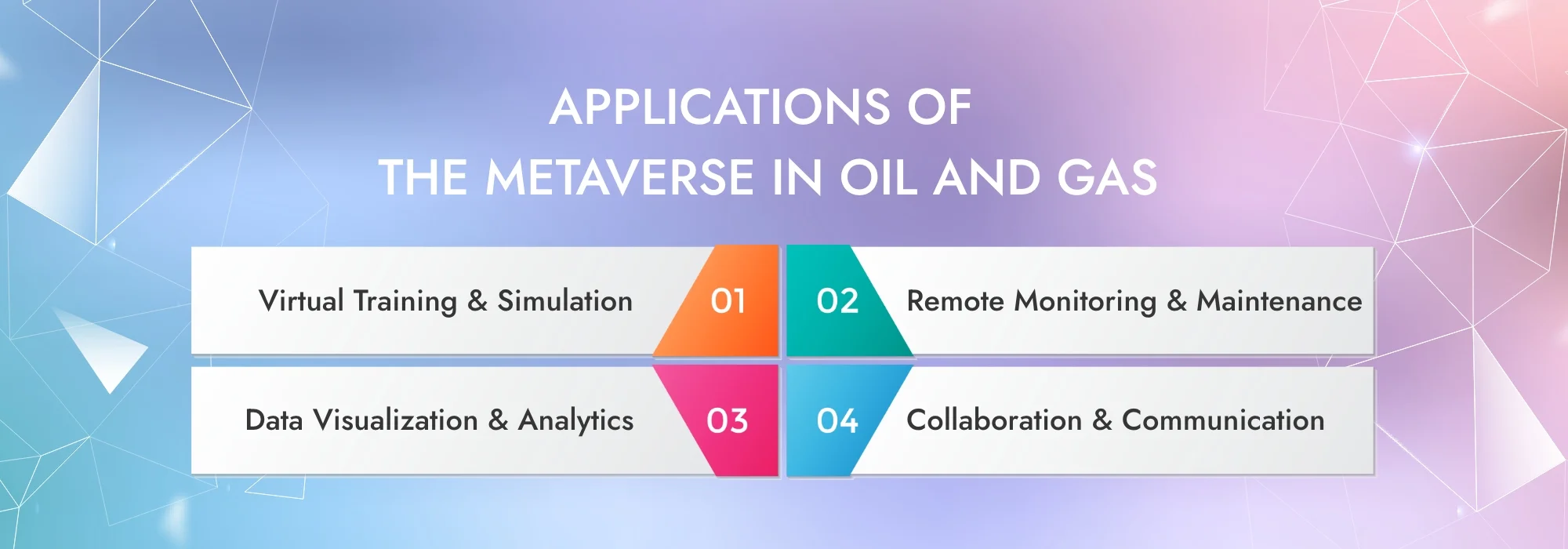
Applications of the metaverse oil and gas development

With its immersive and interactive nature, the metaverse offers numerous applications that can greatly benefit the oil and gas metaverse development.

Applications of the Metaverse Oil and Gas Development
  • Virtual Training and Simulation:

This Oil and Gas Metaverse industry involves a high-risk environment, and that’s why ensuring the safety and competency of employees is very important.

With VR, employees can be trained in emergency response protocols and equipment handling by creating artificial scenarios and without exposure to the risks involved.

This improves safety and also saves costs associated with traditional training methods.

  • Remote Monitoring and Maintenance:

AR can be utilized for remote monitoring and maintenance in the Oil and gas metaverse solution.

AR applications provide real-time insights regarding the conditions of the assets, which helps in determining proactive maintenance and minimizing downtime. This way the need for on-site visits, time, and resources are saved in the oil and gas app development.

Technicians can access step-by-step instructions and visual aids through AR glasses or mobile devices, enabling them to perform complex tasks with greater efficiency.

  • Data Visualization and Analytics:

With the help of immersive technologies, such as virtual reality and augmented reality, data can be visualized more intuitively and interactively.

By creating virtual representations of oil fields, reservoirs, and pipelines, geologists and engineers can gain a deeper understanding of the data they are working with.

This allows for better analysis and interpretation, leading to more informed decision-making.

  • Collaboration and Communication:

Virtual meeting spaces and collaboration tools within the metaverse allow global teams to connect and work together in a more immersive and engaging manner to become effective and engaging.

Furthermore, immersive environments allow for brainstorming sessions that go beyond traditional video conferencing, allowing for more innovative and collaborative problem-solving.

Challenges and considerations in metaverse oil and gas

Incorporating the metaverse into the oil and gas industry has its own share of challenges and considerations. Some of these challenges are:

Challenges in metaverse oil and gas

  • Data Security and Privacy: The oil and gas industry deals with sensitive and critical data. Ensuring data security and privacy within the metaverse is a paramount concern.
  • High Initial Costs: Creating and maintaining a presence in the oil and gas metaverse solution can be costly, including the development of virtual oil rigs and operational environments.
  • User Training and Adoption: Training the existing workforce to navigate and operate within the metaverse includes ensuring that employees are comfortable with new virtual tools and environments.
  • Connectivity and Bandwidth: The oil and gas industry often operates in remote areas, so ensuring reliable and high-speed internet connections can be problematic.

Considerations in metaverse oil and gas

  • Remote Operations: The oil and gas metaverse solution can enable remote monitoring and control of oil and gas operations. Companies can manage rigs, pipelines, and facilities from anywhere, reducing the need for physical presence and improving safety.
  • Training and Simulation: Oil and gas metaverse solutions can help in practicing emergency response, equipment maintenance, and troubleshooting in a virtual environment, enhancing their skills without physical risk.
  • Collaboration and Communication: Virtual meeting spaces and collaborative tools in the metaverse can facilitate better communication between geographically dispersed teams, allowing for quicker decision-making and problem-solving.
  • Data Visualization: The metaverse can provide advanced data visualization tools, allowing professionals to interact with complex data sets in immersive 3D environments. This aids in data analysis and decision-making.

Case studies of oil and gas metaverse solution

The oil and gas industry is embracing technology, including the metaverse, to improve operations, safety, and efficiency.

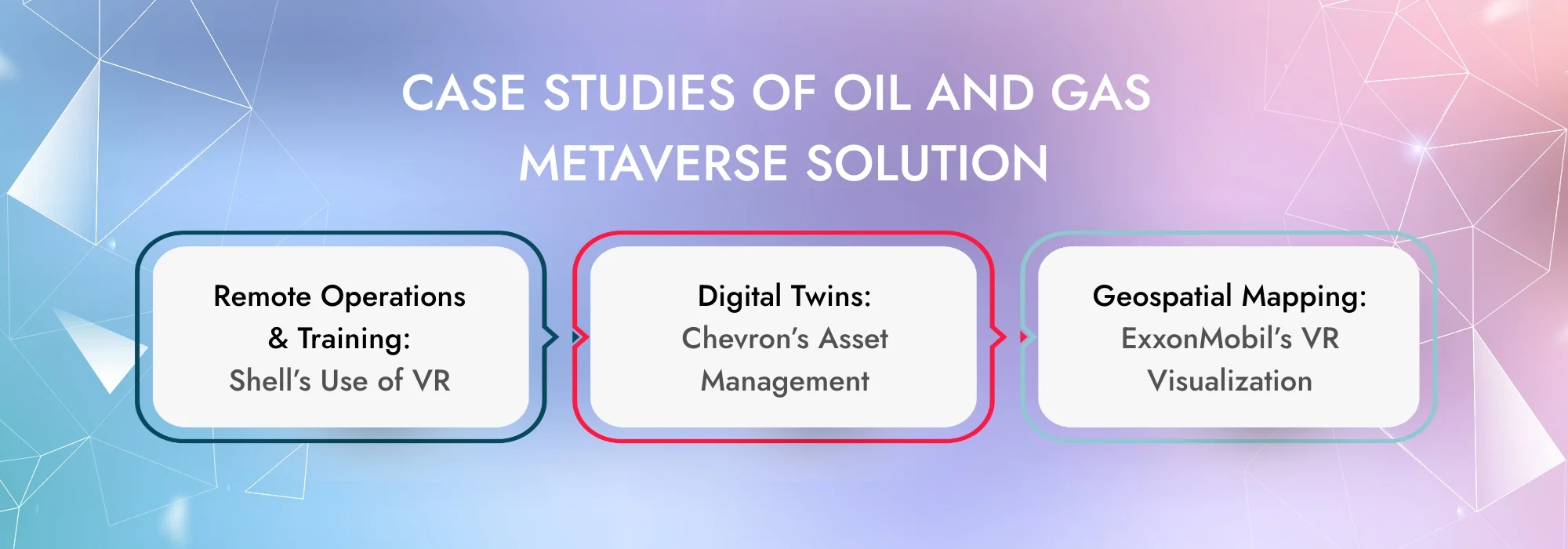
Case Studies of Oil and Gas Metaverse Solution

Remote operations and training: shell’s use of VR

Shell has implemented virtual reality (VR) and augmented reality (AR) for remote operations and training.

They use immersive technologies to provide realistic training scenarios and allow experts to guide field operators remotely.

Digital twins: chevron’s asset management

Chevron employs digital twin technology, a concept closely related to the metaverse, to create a virtual replica of physical assets.

This enables real-time monitoring, predictive maintenance, and efficient resource management in cooperation with oil and gas metaverse solutions.

Geospatial mapping: exxonmobil’s VR visualization

ExxonMobil utilizes VR for geospatial mapping and reservoir visualization.

Engineers and geologists can immerse themselves in data-rich 3D models, enabling better decision-making regarding exploration, drilling, and reservoir management.

Conclusion

Metaverse technology is arising with the potential to revolutionize Metaverse Oil and gas development in many ways.

Oil and gas metaverse solutions have the potential to improve efficiency, safety, and sustainability. It can also help the industry to attract and retain new talent.

With the Exciting Possibilities of metaverse Transform Your Industry and stay ahead of the game!

Frequently asked questions

Oil and Gas Metaverse can reduce costs by enabling remote operations, training, and collaboration, as well as by optimizing operations through data visualization and analytics.

Metaverse Oil and gas development can improve efficiency by streamlining workflows, automating tasks, and reducing downtime.

Metaverse Oil and Gas offers many benefits, including improved efficiency, reduced costs, increased safety, and enhanced sustainability.

Future trends for the metaverse in oil and gas include the development of more immersive and interactive applications, the integration of artificial intelligence and machine learning, and the increasing use of metaverse for remote operations and training.

Collaboration between AI and human values goes a long way

Artificial Intelligence (AI) has made remarkable strides in recent years, transforming various aspects of our lives.

From autonomous vehicles to virtual personal assistants, AI and human values are becoming increasingly evident.

Further, we will delve into the convergence of AI and human values, emphasizing the growing significance of integrating these values into AI systems.

Building a foundation of human values within AI technology is not just a moral imperative; it’s a necessity for the betterment of our society and the future of technology.

Current approaches to incorporating human values into AI

AI is becoming a bigger part of our lives. But making sure that AI helping humans is essential.

There are three main ways to do this: value alignment, value-sensitive design, and value extrapolation.

Value alignment means making AI follow human values

Think about self-driving cars: they are programmed to keep passengers safe while avoiding harm to others.

This way, they balance individual and group values.

Value-sensitive design is about getting ethics and values into the AI design process

Ethicists and other experts help in building AI so that it respects our values.

For example, when making chatbots or virtual assistants, they work with experts to make sure these systems understand and respect diverse human values.

Value extrapolation is a bit like AI guessing our values based on data

For example, when you watch videos on a platform, AI tries to recommend similar videos you might like.

It’s trying to guess your values by what you’ve watched before.

Let’s look at the advantages and limitations of AI approaches:

Advantages

  • Value alignment makes AI systems more adaptable to different human values, making them better for everyone.
  • Value-sensitive design helps avoid conflicts between AI and human values by getting experts involved in the design process.
  • Value extrapolation personalizes our experiences with AI, offering us content or services we might like based on our past choices.

Limitations

  • Implementing these approaches can be difficult, as they often need complex programming and a deep understanding of human values.
  • Sometimes, it’s challenging to predict and understand all the values of a diverse group of people.

Finally, there are examples of ai helping humans to bring the best value.

For instance, some chatbots are designed to provide emotional support with empathy. Content recommendation systems filter out harmful content and prioritize user privacy.

Benefits of AI helping humans

AI and human values have brought many benefits in various domains.

Here are some key points highlighting the positive aspects of AI and human values and how it has improved industries and daily life:

Efficiency and Productivity: AI-powered automation and machine learning algorithms have significantly increased efficiency and productivity in industries such as manufacturing, logistics, and customer service.

Tasks that were once time-consuming and labor-intensive can now be completed quickly and accurately with the integration of AI and human values.

Enhanced Healthcare: AI has revolutionized healthcare by improving diagnostics, treatment planning, and patient care.

Machine learning algorithms can analyze vast amounts of medical data to detect patterns and make accurate predictions, leading to early disease detection and personalized treatment plans.

AI-powered robotic systems have also assisted surgeons in performing complex procedures with precision.

Smart Personal Assistants: Virtual assistants like Siri, Alexa, and Google Assistant have become an integral part of daily life, providing convenience and assistance.

These AI-powered personal assistants can perform various tasks such as setting reminders, answering questions, playing music, and controlling smart home devices, making our lives easier and more efficient.

Improved Safety and Security: AI has played a crucial role in enhancing safety and security measures. Facial recognition systems and surveillance cameras powered by AI algorithms help in identifying potential threats and preventing crimes.

AI-powered cybersecurity systems can detect and respond to cyber threats in real-time, protecting sensitive data and digital infrastructure.

By ensuring transparency, fairness, and accountability in AI decision-making processes, we can harness the power of AI to align with human values such as privacy, fairness, and social good.

Prospects and innovations in human values in AI

The future of AI and human values holds immense promise. Ongoing research is exploring innovative ways to make AI systems more aligned with diverse human values.

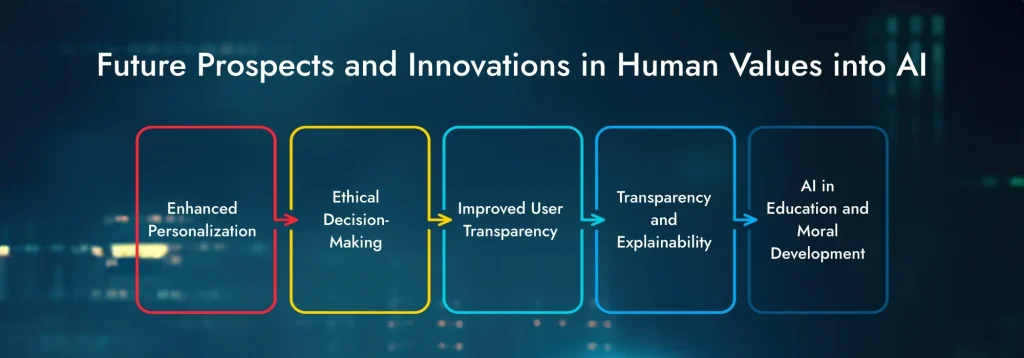
Future Prospects and Innovations in Human Values into AI

By Integrating values into AI, we can expect:

  • Enhanced Personalization: AI systems will better understand and adapt to individual values, offering more tailored experiences and services.
  • Ethical Decision-Making: AI will play a crucial role in solving complex ethical dilemmas, and making choices that align with societal values and ethical norms.
  • Improved User Transparency: Future AI systems will be designed to be more transparent, allowing users to understand and influence the values governing AI behavior.
  • Transparency and Explainability: AI will be designed to provide clear explanations for its decisions, making it understandable to the average user. This will enhance trust and allow users to actively influence the values and decision-making processes of AI.
  • AI in Education and Moral Development: Interactive AI tutors and educational tools will not only teach subjects but also impart values, fostering a more responsible and empathetic society.

The future prospects and innovations in building human values in AI systems represent a vision of technology that is deeply intertwined with our ethical, moral, and cultural principles.

It’s a future where AI becomes a force for the betterment of humanity, a companion in our quest for ethical decision-making, and a tool for addressing global challenges while respecting individual and collective values.

How ViitorCloud is building human values into AI

ViitorCloud, a leading Immersive technology company, has been at the forefront of incorporating human values into AI.

We understand that AI should not only be a tool but a responsible and empathetic companion for humans and hence ViitorCloud is committed to building AI and human values that respect individual values and cultural diversity.

Our AI development services prioritize a human-centric approach. We collaborate closely with experts through extensive research and development and incorporate continuous user feedback. This ensures that the AI solutions we create are not only effective but also aligned with human values.

Wrap up

The integration of AI and human values is a crucial step towards a more ethical and inclusive future.

As technology continues to evolve, ViitorCloud stands as an example of a company dedicated to this vision.

As we move forward, it’s essential to remain vigilant, collaborative and committed to realizing this vision for a more ethical and value-driven future.

Frequently asked questions

AI has the potential to enhance productivity, improve healthcare outcomes, and advance scientific research.

Ethical principles, such as fairness, transparency, and accountability, should be embedded to align with AI and human values.

Future trends in the field of AI ethics are Increased regulation, Ethical considerations in AI development, Bias mitigation, Explain ability and transparency, AI governance, Human-centric AI, and international collaboration

AI can be used to develop advanced surveillance systems, autonomous vehicles, and predictive policing algorithms, which can help prevent accidents and protect human lives.

How fintech blockchain solutions is revolutionizing businesses?

The world of finance is transforming with a drastic shift, driven by the integration of blockchain technology into financial technology, or fintech.

Blockchain, known for its connection with cryptocurrencies like Bitcoin, is proving to be a game-changer for the financial industry.

With Fintech Blockchain Solutions data becomes nearly tamper-proof, and safeguards sensitive information from fraud and manipulation.

It doesn’t matter if you’re a financial professional, an entrepreneur, a technology enthusiast, or simply curious about the collaboration of blockchain and fintech, this blog will guide you into understanding the future of finance.

Benefits of fintech blockchain solutions

At its core, blockchain is a distributed ledger technology that records transactions across a network of computers in a secure, transparent, and tamper-resistant manner.

In the fintech landscape, blockchain ensures data security and integrity in financial transactions, which eventually reduces the risk of fraud and errors.

With blockchain, fintech companies can build a foundation of trust that is fundamental to the finance industry.

Empowering security and trust:

Blockchain eliminates the need for intermediaries, putting users in direct control of their transactions.

It prevents unauthorized access and manipulation of financial data, ultimately fostering trust among users.

Transparency

Every transaction on a blockchain is recorded in a public ledger that is accessible to all participants in the network.

This transparency builds trust and confidence among users, as they can independently verify the integrity of transactions.

Smart contracts

Smart contracts are self-executing contracts with the terms of the agreement directly written into code.

They automate various financial processes, such as insurance claims, loan approvals, and trade settlements, reducing the need for intermediaries and the associated costs.

Auditability

The immutability of blockchain records makes audits more straightforward and trustworthy. Regulators and auditors can easily trace transactions and verify compliance with financial regulations.

Reduced fraud

Blockchain’s security features and transparency make it a less appealing target for fraudsters.

It becomes more challenging for bad actors to manipulate or alter financial records.

Financial inclusion

Blockchain technology can help extend financial services to underserved populations around the world.

By providing access to banking and payment services through mobile devices, it can bridge the financial inclusion gap.

Cost efficiency and reduction

Blockchain’s ability to eliminate intermediaries has significant cost-saving implications for both fintech companies and customers.

Companies can reduce operational costs, and customers benefit from lower transaction fees.

Fintech industry blockchain solutions

Fintech Industry Blockchain solutions are the driving force behind the fintech sector’s transformation, promising to make financial transactions more secure, efficient, and accessible than ever before.

This new way of financial services is unlocking new possibilities for financial inclusion and accessibility on a global scale. These fintech blockchain solutions are defining the future of finance.

Fintech Industry Blockchain Solutions

Smart contracts and automation

Smart contracts have the terms of contracts directly written into code which makes them self-executing agreements.

In fintech, smart contracts automate financial agreements and transactions, reducing the need for intermediaries. They ensure efficiency and accuracy, as code is the law.

Real-life examples explain how smart contracts are changing fintech applications by simplifying complex processes.

Tokenization of assets

Asset tokenization involves converting ownership rights of physical assets into digital tokens on a blockchain.

This innovation allows fractional ownership, making assets more accessible and tradable. Real estate and stock tokenization examples showcase how this benefits investors and fintech companies alike.

Decentralized finance (DeFi) innovations

Decentralized finance (DeFi) is disrupting traditional financial services.

DeFi platforms offer decentralized lending, borrowing, and exchanges, democratizing access to financial services.

This innovation empowers individuals worldwide, eliminating barriers and intermediaries in finance.

Fintech’s efficiency with blockchain

Blockchain’s decentralized and immutable ledger system has proven to be a game-changer in streamlining financial operations.

The incorporation of blockchain technology in fintech is revolutionizing the way financial operations are conducted, offering a future where financial transactions are secure and also significantly more efficient.

Streamlining cross-border payments

Cross-border payments have long been marred by inefficiencies in traditional systems.

Blockchain resolves these challenges by enabling fast, secure, and cost-effective international transactions.

Cryptocurrencies and stablecoins play a significant role in this transformation, offering alternatives to traditional currencies.

Enhanced transparency and traceability

Blockchain’s transparency ensures real-time access to transaction histories for customers.

This transparency is particularly valuable in supply chain finance, trade finance, and fintech applications. It facilitates trust and accountability, reducing the risk of disputes and fraud.

Fintech’s transparency via blockchain

In the world of financial technology (fintech), transparency is a fundamental necessity. Blockchain technology emerges as a focal point in ensuring this transparency.

Fintech’s Transparency via Blockchain is paving the way for a more reliable, secure, and user-centric future in finance.

Building trust through transparency

Blockchain’s transparent nature fosters trust between fintech companies and their clients.

Case studies underscore how transparent financial operations positively impact customer satisfaction and loyalty.

When customers can independently verify transactions and data, trust naturally follows.

Financial inclusion and accessibility

Blockchain technology has the power to promote financial inclusion by providing banking services to the unbanked and underbanked populations.

Real-world examples of fintech blockchain solutions showcase how individuals worldwide gain access to financial services and opportunities previously out of reach.

Conclusion

The integration of blockchain consulting services into fintech is nothing short of a revolution. Fintech Blockchain Solutions empower security, trust, cost efficiency, and transparency.

Embrace Fintech’s Blockchain Revolution, and be a part of the future of finance, where transparency and efficiency reign supreme.

Contact ViitorCloud today to be a part in the Fintech’s Blockchain Revolutionary journey.

Frequently asked questions

What is blockchain in fintech?

Blockchain can be used to record transactions in a secure and temper-proof way. Blockchain is a distributed ledger technology.

How is blockchain used in fintech?

It is being used in fintech in a variety of ways, including Payments, Remittances, Asset management, and Identity management.

How does blockchain improve the efficiency of fintech businesses?

Blockchain improves the efficiency of fintech businesses by reducing costs, improving security, and increasing transparency.

What is the future of blockchain in the fintech industry?

The future of blockchain in the fintech industry is very bright. Blockchain for fintech has the potential to revolutionize the way financial services are delivered.

AI transportation solution transforming the industry in 5 ways

Transportation has always played a vital role in shaping societies and economies from the earliest days.

However, as we look towards the future, the transportation industry is on the verge of a technological revolution.

AI transportation Solution is the driving force behind this transformation, with the AI transport industry set to redefine the way we move and connect.

Autonomous vehicles: redefining mobility

Autonomous vehicles, often referred to as self-driving cars, are ready to improve the way we move from point A to point B.

These vehicles, equipped with artificial intelligence, sensors, and powerful algorithms, can drive themselves with minimal human intervention.

ChallengesSolutions
RegulationsImproved Safety
Public TrustReduced Accidents
Ethical ConsiderationEnhanced Accessibility

Benefits of AI in transportation

AI (Artificial Intelligence) is offering numerous benefits that are reshaping the way we move people and goods.

Here are five benefits:

  1. Improved Safety: AI plays a pivotal role in enhancing safety on our roads.
    • Advanced driver-assistance systems (ADAS) powered by AI can detect potential collisions, assist with lane-keeping, and even facilitate autonomous driving.
  1. Efficient Traffic Management: AI-driven traffic management systems are making our road networks more efficient.
    • AI algorithms analyze traffic patterns and adjust signal timings in real-time to reduce congestion.
  1. Enhanced Predictive Maintenance: It can predict when maintenance is needed, preventing breakdowns and ensuring vehicles are in optimal working condition.
    • This predictive maintenance reduces downtime, increases vehicle lifespan, and lowers operational costs.
  1. Optimized Logistics and Supply Chain: Route optimization, load planning, and demand forecasting are made more efficient with AI.
    • Companies can deliver goods faster and with less environmental impact, as AI helps in optimizing delivery routes and schedules.
  1. Eco-Friendly Transportation: Electric and autonomous vehicles, which often rely on AI for navigation and decision-making, are reducing the carbon footprint of transportation.
    • AI can also encourage the adoption of ride-sharing and public transit, further reducing emissions.

Smart infrastructure and traffic management

Smart infrastructure takes traffic management to the next level, bringing benefits for both urban planners and commuters.

Here’s what makes Smart Transportation and AI an important element in modern traffic management:

  • Smart infrastructure, equipped with advanced technologies and AI, combines the power of real-time data analysis and predictive modeling to reshape our daily commutes.
  • It enables real-time traffic analysis, allowing authorities to predict traffic patterns, identify congestion points, and optimize traffic signals. This data-driven approach ensures a smoother, more efficient flow of vehicles on the road.
  • By reducing congestion and optimizing routes, it minimizes vehicle idling, subsequently decreasing emissions and promoting eco-friendly transportation practices.
  • Cities like Singapore, Amsterdam, and Barcelona are embracing smart traffic management systems, resulting in less environmental impact by reducing emissions and promoting eco-friendly practices.

Artificial intelligence in transportation is not just about efficiency, but it’s a significant step toward greener and healthier urban development.

Logistics and supply chain optimization

Artificial intelligence has found a home in logistics and supply chain management.

  • Efficient Routes and Reduced Costs: AI algorithms calculate the most efficient routes for shipping, reducing transportation costs and ensuring goods reach their destination swiftly.
  • Predictive Analytics: AI-driven predictive analytics are indispensable in inventory management, accurately forecasting demand and optimizing stock levels.
  • Sustainability in Logistics: Embracing green transportation initiatives powered by AI helps in reducing the carbon footprint. This environmentally responsible approach aligns with modern expectations of businesses to operate in an ecologically friendly manner.

The integration of AI is a necessity in the dynamic world of logistics and supply chain management.

Public transportation 2.0: enhancing commuter experience

Public transportation is getting a much-needed upgrade through AI solutions.

  • AI transportation solution in public transportation are changing the game by predicting ridership patterns and optimizing schedules, making the daily commute more efficient and convenient.
  • The user experience has been vastly improved with real-time updates, digital ticketing, and personalized services tailored to individual preferences.
  • Beyond convenience, there are significant environmental benefits as AI-driven public transportation initiatives are encouraging more people to choose buses and trains over individual cars, ultimately reducing carbon footprints.
  • These enhancements of Artificial Intelligence transportation solution have a profound social impact, especially for differently abled individuals and seniors who now have greater accessibility and ease of use, ensuring that public transportation truly serves everyone in the community.

Future challenges and ethical considerations

As AI reshapes the transportation landscape, ethical considerations and challenges emerge. Privacy concerns arise as vast amounts of personal data are collected for various transportation solutions, requiring a careful balance between convenience and privacy.

There are also fears of job displacement as automation and AI threaten traditional roles, raising questions about the impact on the workforce.

Different countries have varying sets of rules, and ensuring consistency and adherence across borders is no small task.

Establishing a sticking framework that governs the operation and safety standards for autonomous vehicles globally is essential

Governments and international organizations play a vital role in shaping the future of transportation.

They are responsible for drafting and implementing the regulatory frameworks that will define the rules of the road for AI-driven transportation systems.

By collaboration and setting ethical guidelines, they can ensure that technology evolves in a safe, reliable, and efficient manner, paving the way for a transportation landscape that benefits all.

Conclusion

AI transportation Solution is not just about making our commutes easier; it’s about creating a future that is more sustainable, efficient, and inclusive.

To harness the full potential of AI in transportation, continued research, innovation, and collaboration is imperative. Together, we can build a brighter and more connected world.

Frequently asked questions

How is AI changing transportation?

AI is revolutionizing transportation by enabling the development of autonomous vehicles, optimizing traffic management systems, enhancing safety measures, and improving overall efficiency.

How is AI used in transportation?

AI transportation solution are used through autonomous vehicles, traffic management systems, and predictive maintenance to prevent breakdowns and enhance reliability.

How does AI enable autonomous vehicles?

AI enables autonomous vehicles by using sensors, cameras, and machine learning algorithms to perceive and interpret the environment, make decisions, and navigate without human intervention.

What are some examples of AI transportation solutions that are currently in use?

Some of examples of AI transportation solutions are Self-driving cars and trucks, Traffic management systems, Vehicle maintenance and diagnostics, Fleet management, and public transportation:

How can AI transportation solution help transportation industries?

Artificial Intelligence transportation solutions can help the transportation industry improve efficiency, reduce costs, and enhance safety.