How AI is Helping Healthcare Reduce Costs and Improve Efficiency

The healthcare sector is facing data overload, rendering traditional software systems incapable of effectively handling, evaluating & extracting meaningful information.

Artificial Intelligence development and integration could significantly reduce inefficiencies, enabling a more efficient and cost-effective healthcare ecosystem. The Internet of Medical Things (IoMT), Machine Learning (ML), and Deep Learning (DL) AI-driven technologies are transforming patient safety, hospital administration, drug development, and treatment decision-making, which then enhances healthcare delivery.

These innovations make operations run smoothly and enhance diagnosis and treatment accuracy, thus resulting in AI-driven cost reduction in healthcare and improving efficiency for better performance across the healthcare sector. How does healthcare cost optimization with ViitorCloud AI solution work?

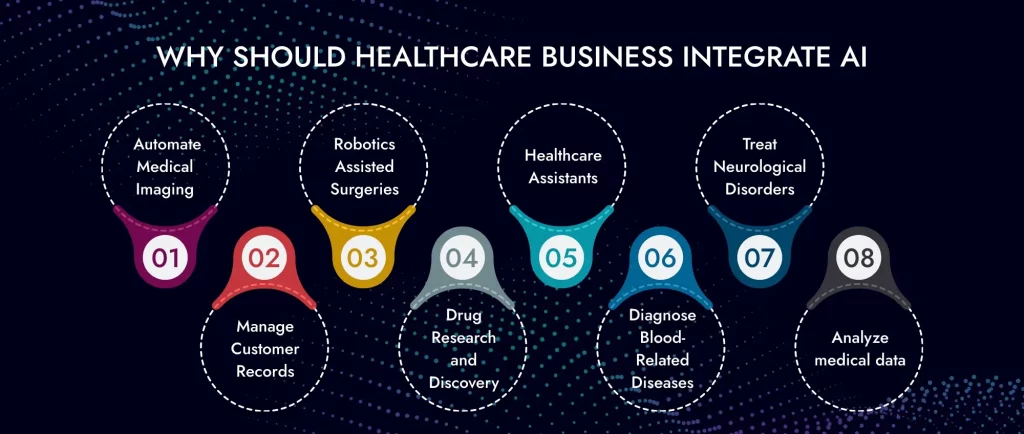
Why Should Healthcare Businesses Integrate AI?

Artificial Intelligence transforms healthcare services by enhancing efficiency and lowering costs while improving patient care.

AI-powered solutions are changing everything from administrative tasks to clinical decisions within healthcare organizations. The discussion will explore what AI does in health care, highlighting various applications’ benefits and strategies for integration.
Integrate AI in Healthcare Businesses

1. Automate Medical Imaging

AI-powered solutions in scanning and ultrasound technology are enhancing the accuracy of medical imaging.

AI can analyze and interpret complex imaging data using deep learning algorithms, providing more precise and reliable results. This reduces the likelihood of human error and ensures that critical conditions are detected early.

2. Manage Customer Records

Healthcare workers spend a lot of time on paperwork and administrative stuff. For example, Generative AI can support note-taking by clinicians at work, manage customer records or provide content summaries, ensuring every patient file is complete. It can also facilitate accurate coding through departments’ interconnectivity during billing cycles.

3. Robotics Assisted Surgeries

With AI-driven robots operating machinery in surgeries, navigating through otherwise delicate body organs and tissues is now possible. This process helps minimize blood loss during surgeries, prevents infections, and reduces pain post-surgery.

AI ensures surgical equipment reaches hospitals on time, making this operation more efficient even during emergencies.

4. Drug Research and Discovery

AI is transforming drug research and discovery by significantly speeding up development. Machine learning algorithms can analyze vast datasets to identify potential drug candidates, predict their efficacy, and optimize chemical structures. This reduces the time and AI-driven cost reduction in healthcare associated with traditional drug discovery methods.

AI can predict how new drugs interact with biological systems, allowing researchers to anticipate potential side effects and efficacy issues before clinical trials. By leveraging AI, pharmaceutical companies can make more informed decisions about which drug candidates to pursue, increasing the likelihood of successful outcomes.

5. Healthcare Assistants

These systems help to manage patient records, schedule appointments, and process insurance claims faster. Automation saves time through these data management activities, hence minimizing errors within hospitals, which generally leads to increased productivity among staff.

6. Diagnose Blood-Related Diseases

AI can help in creating personalized treatment plans for patients with blood-related diseases.

By analyzing individual patient data, including genetic information and treatment responses, AI systems can recommend tailored therapies that are most likely effective for each patient. This personalized approach improves treatment outcomes and reduces healthcare cost optimization with AI.

7. Treat Neurological Disorders

AI is also contributing to the development of innovative therapies for neurological disorders.

For example, AI-driven brain-computer interfaces are being developed to help patients with paralysis regain movement. These interfaces use machine learning to interpret and translate brain signals into actions, offering new hope for patients with severe neurological impairments.

8. Analyze medical data

There is a substantial proportion of errors in how people take medicine among outpatients. For instance, up to 70% of patients fail to adhere to prescribed insulin, as Nature Medicine Journal shows.

Stress can be monitored by using this tool to monitor patients who misuse their insulin pens or inhalers. A recent survey showed that 64% of patients would be comfortable with AI providing around-the-clock support, so clinical staff should focus on human-based care.

READ: Artificial Intelligence in Healthcare: How AI is Utilized in the Healthcare Industry

Transform your Healthcare Operations with AI. Use AI to reduce costs and improve efficiency. Partner with ViitorCloud for tailor-made AI solutions.

How Can Our AI Solution Reduce Costs for Your Healthcare Organization?

Significant financial constraints in the global healthcare industry result in between 20% and 30% of healthcare spending being wasted on inefficiencies. This amounts to an annual wastage of around $1,100 to $1,700 per person in the top 15 countries, with the least spent on healthcare at $120 per person for the last 50 countries.

It is crucial to address these inefficiencies as they potentially impact patients’ lives, and AI-powered solutions offer several opportunities to reduce outlays and improve the quality of care. In this article, we shall examine various ways AI can save healthcare costs.

ViitorCloud AI Solution Reduce Costs for Your Healthcare Organization

1. Treatment Choice Guidance

AI can revolutionize clinical decision-making by drawing upon large patient outcomes datasets. Health providers are adopting standardization approaches for recording patient outcome data, which AI systems could analyze to identify trends and recommend best-suited treatments based on individual profiles of patients.

Such a personalized approach would help improve treatment effectiveness and minimize complications, which were discussed earlier, that are major cost drivers within different health systems.

2. Personalized Care

By solving an individual’s medical issues through personal patient data, AI ensures that effective and efficient treatments are applied, reducing cases of ineffective treatments and associated post-treatment complications.

Through optimizing treatment choices, better patient outcomes can be achieved at reduced costs due to artificial intelligence.

3. Automated Repetitive Tasks

For example, CT scans and other diagnostic tests are performed repetitively, and AI performs better than humans because it performs high-volume tasks well. The repetitive nature of such tasks often makes them prone to errors; hence, their accuracy and speed are improved if done using AI systems instead.

For instance, coronary aneurysms, brain bleeds, and malignant tissues within mammograms are certain conditions detected more accurately than human radiologists by some algorithms created by artificial intelligence.

4. Early Detection

To ensure effective treatment and cost savings, early diagnosis is essential. AI can process and analyze vast amounts of data quickly, enabling earlier detection of diseases. For example, AI has proven to be 99 percent accurate in reviewing mammograms thereby allowing for much earlier detection of breast cancer.

In osteoporosis, AI might identify early indicators, such as vertebral fractures, often missed by human diagnosis thus reducing long-term costs associated with managing the late stages of the disease.

5. Accelerated Drug Development

The period taken and the cost incurred during drug development can be significantly reduced by AI. By simulating millions of possible drug combinations and analyzing them using artificial intelligence algorithms that predict their efficacy against different diseases AI eliminates the need for expensive physical tests.

For instance, existing drugs have been repurposed to fight Ebola through artificial intelligence; this accelerated the development process, saving lives and other resources.

6. Optimized Clinical Trials

AI for cost-effective healthcare enhances clinical trial efficiency through biomarker monitoring platforms and the analysis of large patient datasets.

Therefore, gene-level identification of diseases and more precise selection of patients for trials can be done through artificial intelligence. Additionally, it lowers overall costs since data from at-home devices becomes available, resulting in fewer clinic visits.

7. Wearable Technology and Health Monitoring

Wearable technology provides real-time information on health parameters like heart rate or sleep patterns. People can get a health status report plus potential risks based on such details if AI analyzes them.

8. Chronic illness treatment

Mobile applications that are AI-supported can give tailored health advice and suggestions to those who have constant illnesses. Wearing these applications is a great step forward in reducing the number of hospital visits, thereby decreasing healthcare costs.

Patients with well-detailed health information are empowered to make choices, resulting in healthy lifestyles and reduced healthcare costs.

9. Fraud Detection

The healthcare industry loses about $380 billion annually to fraud, Medicare, and Medicaid abuse. AI healthcare cost optimization examines various health insurance trends that alert medical professionals to suspicious activities such as fraudulent claims for services not provided, unbundling procedures, and unnecessary tests.

ALSO READ: How AI Is Transforming Healthcare Startups: Key Benefits and Insights

Improve healthcare with AI innovation. Empower your healthcare business with AI. Collaborate with ViitorCloud to drive efficiency.

Successful healthcare startups who use AI in their Business

This is a revolution in the healthcare sector spurred by the integration of artificial intelligence (AI) and advanced technologies. Here, we focus on 3 emerging companies: Neko Health, Insitro, and LifeLensHealth which have made huge contributions to this field.

With its sophisticated AI technology and cutting-edge sensor technology, Neko Health is changing how people think about prevention. Neko Health also conducts non-intrusive whole-body scans collecting extensive medical data to help you get a complete picture of your health.

Neko Health’s Body Scan service uses more than 70 sensors to analyze over 50 million data points per person. Artificial Intelligence eliminates laborious manual regulatory compliance reporting through automation allowing this company to be per complex laws guiding health systems moderation expenses.

Insitro has employed machine learning to innovate drug discovery and development processes. Using genetic clinical phenotypic data fusion enables Insitro to make highly predictable models.

They create in vitro disease models that mimic human clinical results using patient-derived stem cells, genome editing, and machine learning algorithms. This has enabled the identification of previously unknown sub-categories of diseases and interventions that promote health, hence a large stride towards personalized medicine and focused treatments.

Due to enhanced AI diagnostic accuracy and cost efficiency, LifeLens is gaining attention in the diagnostics sector. The initial test costs have decreased by almost 30% thanks to optimizing the diagnosis process within it.

Such an increase would result in yearly savings worth over $5 million. Faster and better quality diagnoses help medical professionals and ensure prompt detection and prevention for patients, thus contributing to better health conditions and lesser expenses on long-term treatment.

ALSO SEE: How AI Is Redefining Healthcare: 11 Transformative Applications

Implement AI to optimize healthcare costs. AI is key to the improvement of healthcare. Let ViitorCloud assist you in the seamless implementation of the most appropriate solutions.

How can ViitorCloud help Healthcare with AI Solutions?

In today’s fast-changing world artificial intelligence is important for the success of businesses. Via collaboration with ViitorCloud, a leading AI development company, firms within the healthcare sector can leverage this revolutionary technology and reduce AI healthcare cost optimization.

Using advanced AI development services that ViitorCloud offers to healthcare companies, they can create tailor-made tools based on artificial intelligence to improve their operational efficiency and streamline their supply chain management. Such things include predictive analysis, real-time tracking, and automated route planning among others such as intelligent inventory management that can be transformed using AI integration strategy in healthcare processes.

Ensuring sustainable growth, increased accuracy, and better service delivery through using AI in healthcare with ViitorCloud. Why wait? Partner with ViitorCloud today and move on a journey to transform your healthcare business with cutting-edge AI solutions.

Frequently Asked Questions

AI reduces healthcare costs by improving diagnosis accuracy, optimizing treatment plans, and automating administrative tasks, thus minimizing unnecessary treatments, hospital stays, and operational inefficiencies.

AI optimizes healthcare industries by enhancing data analysis, streamlining workflows, personalizing patient care, and improving decision-making through predictive analytics, leading to better outcomes and resource utilization.

AI improves efficiency in healthcare by automating routine tasks, assisting in early diagnosis, reducing human error, and providing real-time patient data, allowing healthcare professionals to focus more on direct patient care.
How AI Is Redefining Healthcare: 11 Transformative Applications

In the healthcare industry, challenges such as accurate disease diagnosis, patient engagement, data security, workforce shortages, and medical errors are significant limitations. At ViitorCloud, we understand that these issues can seem uncontrollable. That’s why we offer advanced AI solutions customized to address each of these pain points effectively.

Our AI-powered healthcare solutions go beyond just technology—they’re designed to transform your operations and upgrade patient care. By using advanced data analysis, AI-driven drug discovery, remote monitoring, and predictive analytics, we designate healthcare providers to work more efficiently and deliver better outcomes. Our virtual health assistants streamline patient interactions, while our AI tools optimize operational workflows, guaranteeing that your healthcare facility runs smoothly and securely.

At ViitorCloud, we don’t just implement AI—we integrate it seamlessly into your healthcare ecosystem, driving innovation and improving lives. Let us show you how our expertise in AI development can help you control the full potential of AI in healthcare, transforming your services and boosting patient satisfaction. Explore the top applications of AI in healthcare with ViitorCloud and take the first step toward a smarter, more efficient future for your healthcare business.

AI Application in Healthcare

In the global market, the value of AI in USD is 20.9 billion in 2024, estimated to reach USD 148.4 billion by 2029. AI in healthcare applications offers various benefits to patients and healthcare providers. It helps healthcare organizations detect diseases and helps in personalized treatment and decision-making. AI provides accurate information, which helps improve the healthcare industry.

Let’s understand the applications of AI in healthcare in detail.

AI Application in Healthcare

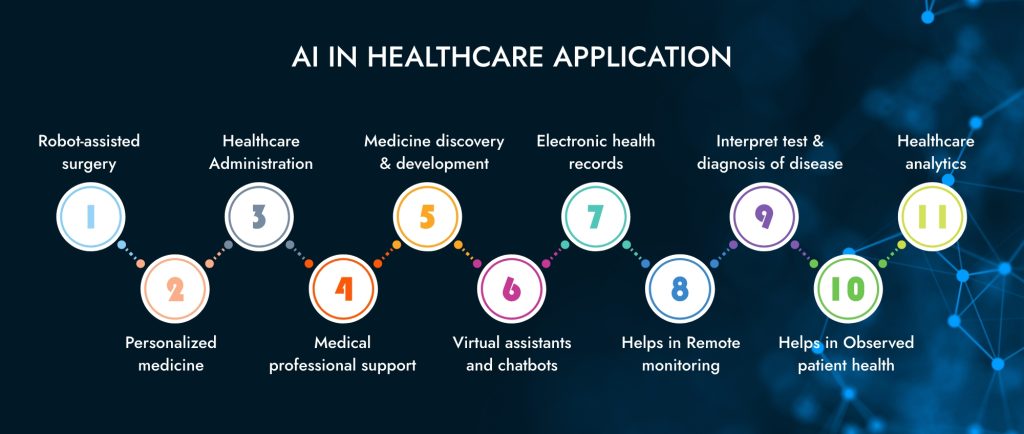
1. Robot-Assisted Surgery

AI algorithms made the surgery procedure smooth and efficient. The surgeon can remotely control the robotic arm equipment with AI, enhancing accuracy during risk and complex procedures. Additionally, it opens the opportunity for the invasive surgeon, reduces the risk of errors, and shortens the period of patient recovery.

A robotic surgery system includes a mechanical and camera arm with a surgical instrument attached. A surgeon controls the arms from a control center, and it can see the 3D view of the surgical site. This is the way AI applications in healthcare are helpful to healthcare organizations.

2. Personalized Medicine

AI helps create personalized medicine by providing patients with information such as lifestyle choices, medical issues, and environmental factors. As a result, patients’ health improved, and they started to focus on their health by eating healthy food and exercising. Furthermore, by analyzing the data, AI helps prevent disease and improve the patient’s overall health. The data analysis includes lifestyle choices, genetic predispositions, and environmental factors.

Additionally, AI can analyze patient outcomes of the treatment, which helps refine and optimize the treatment plans. This process ensures that patient outcomes are improving over time. Moreover, implementing AI in personalized medicine improves patients’ health.

3. Healthcare Administration

The medical facility providers are friendly and helpful, but excellent services are not provided due to structural barriers. The structural obstacles include scheduling, confirming, or rescheduling appointments. It is solved with AI as it helps improve the scheduling process. Also, AI simplifies the billing and claim process. When businesses streamline the rote functions, it reduces errors and frees workers to focus on essential tasks.

For instance, an AI chatbot helps handle patient inquiries and responds quickly based on information such as patients’ electronic medical records. As a result, patients are satisfied.

4. Medical Professional Support

AI in healthcare applications helps diagnose diseases, treat them, provide patient care, and make decisions. AI analyzes medical data, patient records, and lab results and uses scans to diagnose the disease. As a result, healthcare providers can give personalized treatment to patients. Additionally, AI helps in decision-making by providing real-time guidance during complex times or challenging disease diagnoses.

Furthermore, AI provides medical education to healthcare providers with access to information. The information is in case studies, medical literature, and virtual simulations. This helps healthcare providers stay updated with the latest medical information and improve their clinical skills.

5. Medicine Discovery and Development

AI uses machine learning algorithms to analyze chemical and biological data to identify medicine efficiency. Also, it uses machine learning algorithms to create predictive models that estimate properties like toxicity, solubility, and bioavailability. These models improve the efficiency and safety of drug candidates. AI helps discover new the­rapeutic for existing drugs, reducing costs and time. Also, it helps identify new uses for medications.

Additionally, AI helps discover similar diseases, people, and characteristics through biomarker identification and predictive­ modeling. As a result, personalized treatment is provided to patients, leading to a higher success rate in drug development and improving patient outcomes. It is one of the most important applications of AI in healthcare.

6. Virtual Assistants and Chatbots

A virtual assistant is one of the healthcare AI solutions that satisfies the customer. Customer satisfaction is essential in healthcare and can be provided by quickly solving queries. AI virtual assistants solve customers’ queries 24/7 without having any load on staff workers. Also, chatbots engage with customers who are friendly, like human beings, and transfer communication to another channel if anything is required.

Virtual assistance helps healthcare organizations respond to 5000 customers at a single time. Also, it reduces patients waiting time to solve their queries, and virtual assistants provide personalized interaction to the patient with their name. Additionally, chatbots provide accurate information based on research instead of false information.

7. Electronic Health Records

Electronic health records provide the healthcare organization with details about patients. The details of the patient’s medical history include medical conditions, laboratory test results, demographic data, treatments, and more. AI has made this process efficient and productive in healthcare. The AI tools have transformed the unstructured data of medical records and insurance claims into structured data.

Additionally, AI can identify patterns of diseases and provide personalized treatment to patients. As a result, patient outcome improves. Furthermore, AI’s ability to analyze data to offer diagnosis assistance, disease progress, prognosis, and treatment recommendations helps healthcare providers make the right decision.

8. Helps in Remote Monitoring

Remote patient monitoring with AI helps in the real-time monitoring of patient health, which helps in the early detection of disease. AI continuously monitors patient essential signs, medication adherence, and key health indicators, which detect disease early. Another benefit of remote monitoring is that it provides personalized treatment plans. As a result, healthcare costs are reduced, and the need for hospitalization.

Furthermore, remote monitoring helps patients self-manage as they can monitor their health. Also, patients can make informed decisions about their health and communicate effectively with healthcare providers.

9. Interpret Test and Diagnosis of Disease

Artificial intelligence analyzes medical data to interpret patterns and provide predictions regarding disease. For this analysis, AI uses various medical tools. The AI transforms radiology tools to detect the disease in image form with X-rays and MRIs. In pathology, AI analyzes laboratory test results and tissues. The AI software assists in examining slides and identifying anomalies and cellular patterns. As a result, cancer cells can be detected.

Furthermore, AI systems assist healthcare providers in making personalized treatment plans for cardiac patients. Additionally, AI analyzes brain scans to detect complex neurological conditions. It also detects abnormalities in MRI and CT scans efficiently and accurately.

10. Helps in Observing Patient Health

AI uses machine learning and data analytics to analyze data from electronic health records and medical imaging to get insights into patient diseases, predict health trends, and detect anomalies. Also, real-time monitoring helps prevent diseases before they occur in the patients.

Additionally, AI helps in remote patient monitoring, where doctors can assist patients in remote areas where patients do not need to travel. Ultimately, observation of patient health helps create accessible healthcare solutions.

11. Healthcare Analytics

Healthcare analytics is one of the important AI applications in healthcare. The compass of machine learning, data analytics, and artificial intelligence helps get insights into diseases and patterns. When diseases are known, AI provides personalized treatment to improve patient outcomes. AI helps predict the risk of diseases in patients before disease occurs so the patient’s life can be saved.

Additionally, healthcare analytics is vital for improving operational efficiency and resource allocation in healthcare organizations. It analyses resource allocations, staff patterns, and patient flows, which helps optimize healthcare workflow, reduce wait time, and satisfy patients.

Also Read: How AI Is Transforming Healthcare Startups: Key Benefits and Insights

Ready to transform healthcare with AI? Partner with ViitorCloud for advanced AI solutions tailored to your healthcare needs.

How Viitorcloud’s AI Solutions Help to Reduce Healthcare Cost

At ViitorCloud, we don’t just integrate AI into healthcare, we revolutionize it. By using our progressive healthcare AI solutions, your business can exceptionally reduce costs while expanding access to underserved communities. Here’s how our applications of AI in healthcare can transform your operations and upgrade patient care.

Our AI tools are designed to optimize your administration process, automating everything from appointment scheduling to claims processing and billing. By reducing manual errors and cutting overhead, our solutions free up your healthcare professionals to focus on what matters most patient care while also pushing down operational costs.

Our AI solutions bring healthcare to your patients, no matter where they are. Remote monitoring allows patients to receive top-tier care from the comfort of their homes, preventing the need for costly and time-consuming travel. This not only enhances accessibility but also significantly reduces costs, all while improving health outcomes.

Misdiagnoses are costly and can lead to unnecessary treatments. Our AI-driven diagnostic tools provide accurate, timely diagnoses, empowering your healthcare professionals to make informed decisions that save your patients money and deliver better outcomes.

Efficient resource management is critical in healthcare, and our AI solutions make it seamless. By analyzing patient data, we help you predict staffing needs, manage patient admissions, and streamline inventory management, ensuring resources are allocated efficiently and costs are minimized.

Every patient is unique, and their treatment should be too. Our AI analyzes individual patient data to develop personalized treatment plans, leading to better patient outcomes and reduced costs associated with ineffective treatments.

Our AI chatbots provide round-the-clock support, offering patients basic information and guidance. This reduces the burden on emergency services, cuts costs, and ensures patients receive the care they need when they need it whether it’s a simple consultation or an urgent in-person visit.

Prevention is better and cheaper than cure. With our AI, you can run targeted health campaigns that identify and mitigate the risk of chronic diseases before they escalate. By focusing on prevention, you can reduce treatment costs and allocate resources more effectively.

With ViitorCloud create a healthier, more efficient future for your healthcare business. Our AI development services are tailored to meet your specific needs, helping you achieve your business goals while delivering the highest quality care.

Bring AI innovations to your healthcare practice. Collaborate with ViitorCloud to integrate AI applications that revolutionize patient care.

How can ViitorCloud assist with your healthcare challenges using an AI solution?

Artificial intelligence is revolutionizing healthcare by addressing critical challenges like disease diagnosis, medical discovery, virtual health assistance, and remote monitoring. But to use the power of AI, you need a partner who understands your unique needs and can deliver tailored solutions.

At ViitorCloud, we specialize in developing and integrating advanced AI applications that help healthcare organizations operate more efficiently and provide exceptional patient care. With our AI development services, your healthcare business can seamlessly incorporate innovative applications that enhance your operations and drive better outcomes.

Ready to transform your healthcare business? ViitorCloud is here to make it happen. Let’s work together to bring your vision to life with AI solutions that deliver real results. Contact us today to get started.

Frequently Asked Questions

AI in healthcare has the potential to transform the healthcare industry by improving patient outcomes, providing patient safety, and diagnosing diseases. Additionally, it helps get affordable healthcare and is accessible to health care in rural or underserved areas.

AI is useful in healthcare for diagnosing diseases and analyzing medical data such as X-rays, MRIs, and CT scans. It is also helpful in transcribing medical documents, drug discovery and development, and improving administration efficiency.

The applications of AI in healthcare are robotic-assisted surgery, personalized medicine, healthcare administration, medical professional support, drug discovery and development, and more. This application makes life easy for healthcare organizations.

In the healthcare industry, AI solutions are disease diagnosis with image analysis, virtual assistants for patient support, predictive analysis for early health detection, remote monitoring, and virtual chatbots to solve patient queries. It is the way AI solves problems in the healthcare industry.

How AI Is Transforming Healthcare Startups: Key Benefits and Insights

ViitorCloud AI solutions have altered healthcare startups, and drive industry innovation. Our AI-driven approach improves diagnosis processes, and personalized treatments, streamlining administrative tasks to improve operational performance, patient health, and satisfaction.

ViitorCloud’s Artificial Intelligence solutions advance accessibility and reduce the cost of providing quality healthcare services. Our predictive analytics predict the early spread of diseases, thus avoiding large-scale effects and saving lives. With the constant evolution in the healthcare industry, our AI expertise reshapes startup ventures that stand at the front line of innovation.

Partnering with ViitorCloud gives a clear implementation of the full benefits of AI in healthcare. Our solutions are designed based on the requirements of the industry: everyday care of patients, pandemics, and unexpected situations. It is time to team up and transform your health business into a difference-maker using advanced AI technology.

Why AI in Healthcare Matters and How Viitorcloud Can Help

In the healthcare industry, the stakes are extremely high – it’s a sector where every decision can impact lives. The integration of AI isn’t just an advancement; it’s a revolution that transforms patient care and operational efficiency. With ViitorCloud’s modern AI solutions, we provide a lifeline to healthcare professionals, assisting them in making crucial decisions and improving patient outcomes.

Our AI technologies assign healthcare workers like nurses, doctors, and support staff by offering accurate diagnostic tools and personalized treatment plans. Imagine having the ability to swiftly diagnose diseases and tailor treatments to individual needs, all while ensuring data is securely tracked for future reference. ViitorCloud’s AI solutions make this a reality, streamlining processes and providing actionable insights.

Furthermore, our AI systems excel in predicting the spread of diseases and analyzing vast amounts of data from various sources, including healthcare records and governmental databases. This capability is invaluable during pandemics or other unpredictable situations, allowing for timely and informed responses.

Read: AI business ideas for Entrepreneurs and Startups

Transform your healthcare startup with AI solutions! Partner with ViitorCloud for cutting-edge AI development services. Let’s innovate together.

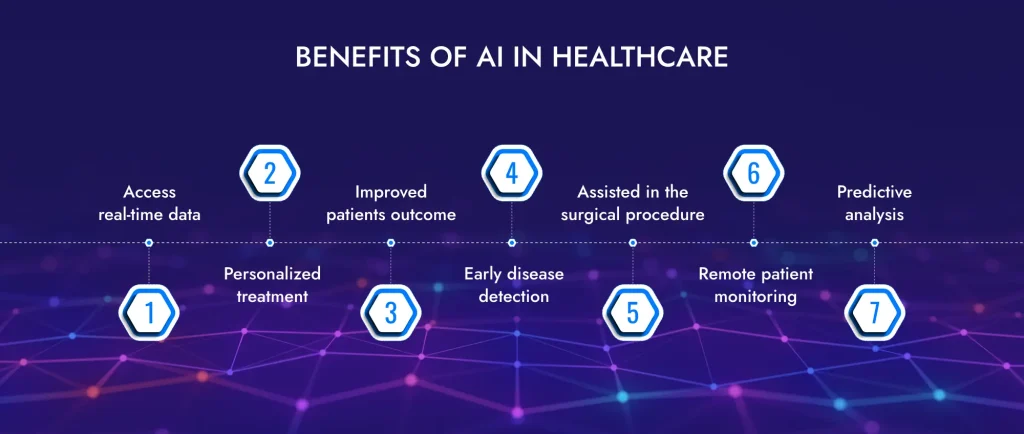
Benefits of AI in Healthcare

According to the Statista forecast, the healthcare AI market will reach US $188 billion by 2030. With this number forecast, you can integrate AI in healthcare and get accuracy, customer satisfaction, and other benefits.

Let’s understand in detail the benefits of AI in healthcare:

Benefits of AI in Healthcare

1. Access Real-Time Data

Real-time data in healthcare provides access to professionals and patient data, which helps them make decisions. The decision-making is related to patients’ treatment and diet plans. Furthermore, real-time data access to the patient helps patients understand their health issues. So they can put effort into improving their overall health.

2. Personalized Treatment

According to diagnosed health issues, AI helps build personalized treatment for patients according to their needs. The needs depend on lifestyle and medical history. Personalized treatment improves patient engagement and satisfies the patients regarding their treatment. For instance, the AI platform Ada Health is useful in patient input and medical repositories to generate health insights and recommendations for treatment for patients on a health journey.

3. Improved Patient Outcome

AI-powered uses predictive analytics and monitoring to identify potential risks in healthcare and prevent the risk in healthcare. For instance, the predictive models of AI and ML detect patient drug reactions. As a result, healthcare providers can take preventive measures and treat patients accordingly.

4. Early Disease Detection

AI has transformed the healthcare industry through early disease detection. Early disease detection is possible by analyzing datasets such as biomarker levels, genetic profiles, and clinical symptoms. For instance, AI-powered tools efficiently detect diseases such as cancer or neurodegenerative diseases. One of the benefits of AI in healthcare is that it prevents diseases from spreading among patients.

5. Assisted in the Surgical Procedure

One of the benefits of AI in healthcare is that it assists in surgical procedures for the patient’s safety. These surgical procedures are achieved by integrating machine learning algorithms and computational intelligence. Additionally, it helps surgeons with laser-sharp accuracy and efficiency. For instance, AI uses surgical robots to assist in surgical procedures.

6. Remote Patient Monitoring

AI is using RPM solutions to supercharge wearable devices and IoT sensors to collect patients’ real-time health data. As a result, healthcare providers constantly monitor patients’ difficult signs, activity levels, and symptoms. Machine learning algorithms analyze the data to detect deviations in health and prevent health risks. For instance, the RMP solution detects heart problems and blood pressure to prevent heart attacks and other fearful diseases.

7. Predictive Analysis

AI benefits healthcare by analyzing large amounts of healthcare data, including medical history, patient demographics, and environmental factors. Also, predictive models help accurately predict disease onset or progression. For instance, predictive models efficiently determine chronic diseases such as cardiovascular ailments or diabetes with lifestyle changes or early prediction.

Also Read: Artificial Intelligence in Healthcare: How AI Is Utilized in the Healthcare Industry

Unlock the potential of AI in healthcare. Accelerate your startup’s success with customized AI solutions from ViitorCloud.

Challenges Faced by Ventures When Choosing AI Solutions for Healthcare Startups

Healthcare organizations use AI in nursing assistance, disease diagnosis, disease treatment, robotic surgery, and precision medicine. According to one KPMG survey, 53% of executives believe AI adoption helps in the leading healthcare industry. However, to implement AI without issues, challenges need to be solved.

Let’s understand in detail the challenges ventures face when choosing AI solutions for healthcare startups.

Challenges Faced by Ventures When Choosing AI Solutions for Healthcare Startups

Data privacy is one of the biggest challenges in AI for Healthcare Startups. Protecting the data from misuse, theft, and malware issues is important in the healthcare industry as it is sensitive personal data. The data includes medical records, DNA samples, fingerprints, and health-related data.

Moreover, AI is useful here as it detects unusual access patterns, which prevents data breaches. Furthermore, an AI technique ensures data protection during storage and transmission. Additionally, the operating system and software must be constantly updated to minimize cyberattacks. Zero trust should be implemented in the system. As a result, AI makes data privacy successful.

The data of every patient is important for healthcare organizations. When patients refuse to give their data, it is difficult for organizations to build data with AI systems. As a result, healthcare organizations and the government create compliance, which builds patient trust to give the data. For example, the Healthcare Information Portability and Accountability Act was passed to maintain standards and keep patients’ data confidential.

This regulation helps build trust among patients so they can share the data freely without any stress. Additionally, the integration of AI and blockchain secures the transmission and storage of patient data to improve privacy and security. It is one of the biggest challenges in AI for Healthcare Startups.

In other industries, machine needs are less, but in the healthcare industry, the use of machines is highest for diagnosing health problems and giving treatment. For instance, various tools, like ventilators, scanners, ECG machines, and X-ray machines, are useful for diagnosing health issues and treating patients.

It is difficult for healthcare companies to identify the appropriate use case for IoT. As a result, healthcare people need to understand different machines to determine the use case. Additionally, they need to consult with vendors about how quickly and simply an AI solution can be integrated into the machine. The vendors can be selected based on generic or vertical solutions, cost-effectiveness, and healthcare business objectives.

AI technology provides results based on input data, making understanding how algorithms work difficult. In some cases, the diagnosis of diseases needs to be corrected, making accountability difficult for the healthcare industry. This type of challenge is known as a black box.

This problem can be solved by using explainable AI. The explainable AI helps in understanding the output of the AI systems by bringing transparency. The transparency took place with a post-hoc method, which consists of four components such as targets, drivers, namely, estimators, and explainable family.

Educating staff about AI systems and their capabilities bridges the skill gap in healthcare organizations. Hospitals and individual experts can conduct training sessions to train staff on AI systems. After giving information to staff, patients must know about the treatment of AI systems.

When patients have information, they can trust AI treatment. For example, robotic surgery provides benefits to patients, such as minimal scarring, shorter hospital stays, lower blood loss, and reduced pain. Patients will not fear getting robotic surgery when these benefits and information are known to them.

Also See: How to implement AI in your business: 7 easy steps

Empower your startup with AI expertise. Leverage ViitorCloud’s AI solutions to drive innovation in healthcare.

Transform Your Healthcare Business With ViitorCloud’s AI Solutions

Are you ready to overcome healthcare challenges with progressive AI solutions? ViitorCloud is here to transform your healthcare operations. Our AI-driven innovations can forecast and diagnose diseases, providing personalized treatments that elevate patient care to new heights.

At ViitorCloud, with our AI development services, we integrate advanced AI technology to streamline your operations, reduce costs, and boost revenue growth, all while upgrading the overall patient experience. Our team of professional experts delivers impactful solutions tailored to optimize your healthcare business.

Don’t settle for the ordinary when you can achieve extraordinary results. Partner with ViitorCloud and transform your healthcare startup into a powerhouse of innovation and efficiency. Reach out today and start on your journey toward a smarter, healthier future with ViitorCloud.

Frequently Asked Questions

An example of AI in healthcare is the Google AI model, which analyzes mammogram images to determine breast cancer accurately. As a result, early cancer diagnosis prevents problems in patients and improves patients lives.

The leading companies applying AI to healthcare are Google, GE Healthcare, Siemens Healthineers, Canon Medical Systems, Aidoc, Microsoft, Merative, and Philips.

AI used in healthcare increases speed and accuracy. Also, AI benefits in healthcare for diagnosing health issues with CT scans, X-rays, and MRIs. Additionally, AI helps provide treatment to patients who have been diagnosed with health problems.

AI benefits the healthcare industry by diagnosing diseases in real-time and providing personalized patient treatment. Further, AI will help in surgical procedures, predictive analysis, and remote patient monitoring.

Artificial Intelligence in Healthcare: How AI is Utilized in the Healthcare Industry

Healthcare is experiencing a revolution with the rapid advancements in Artificial Intelligence in healthcare. At ViitorCloud, we specialize in controlling the power of AI to transform patient care and streamline administrative processes for providers, payers, and pharmaceutical organizations.

Imagine a future where AI not only assists but changes the way we diagnose diseases. Our advanced AI algorithms are already outperforming radiologists by identifying malignant tumors and aiding in the construction of costly clinical trial cohorts. These advancements are just the beginning.

While the full potential of AI in healthcare may take years to evolve, ViitorCloud is here to help you lead the charge. We offer tailored solutions to automate aspects of care and overcome barriers to AI implementation. Let us be your partner in transforming healthcare. Our AI Development Services boost your business and stay ahead in this rapidly developing industry.

What is AI in Healthcare?

Artificial Intelligence in healthcare isn’t just about modern technology—it’s about transforming how healthcare professionals and patients experience care. At ViitorCloud, we strengthen AI technologies like machine learning, natural language processing, and deep learning to provide robust solutions that allow healthcare providers to upgrade their services.

Suppose a world where doctors can make accurate diagnoses faster, healthcare administrators can access critical patient information with ease, and patients receive personalized treatments on time. That’s the power of AI in healthcare, and it’s precisely what we deliver. Our AI solutions streamline resource management and enable a proactive approach to patient care, ensuring you stay ahead in this rapidly evolving industry.

The global AI healthcare market is booming, with a projected value of $188 billion by 2030. This growth, highlighted by a CAGR of 37% from 2022 to 2030, is a testament to the transformative potential of AI in revolutionizing healthcare delivery and administration. At ViitorCloud, we’re not just keeping up with these advancements; we’re leading the charge. With us control the power of Artificial Intelligence in healthcare to transform your operations and improve patient outcomes.

Ready to Transform Your Healthcare Solutions? Let’s Talk AI!

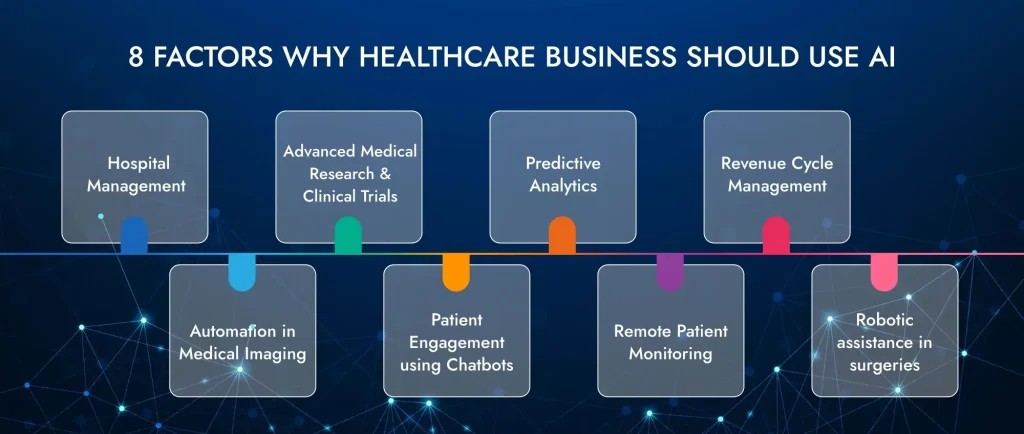
8 Factors Why Healthcare Businesses Should Use AI

Transformative changes across different parts of patient care, as well as administrative processes, have been brought about by Artificial Intelligence (AI) to transform the health industry.

8 Factors Why Healthcare Business Should Use AI

1. Hospital Management

The optimization of operations within different health systems as well as revenue cycle management through means such as artificial intelligence (AI) can lead to improved efficiency. A major problem solved through AI-enabled tools is capacity management which has been worsened by staffing shortages and the COVID-19 pandemic.

2. Automation in Medical Imaging

AI enhances medical imaging by improving screening, risk assessment, and precision medicine. Clinicians are now able, with high accuracy, to diagnose diseases by using a deep neural network-based detection system for COVID-19, an AI-driven tool.

Speedy and accurate analysis of imaging data by AI is becoming incredibly vital both in emergency scenarios and when integrated into devices worn on the body.

3. Advanced Medical Research and Clinical Trials

AI improves medical research and clinical trials by optimizing trial design, participant screening, and data analysis.

Artificial intelligence models can process vast datasets, identify patterns, and predict outcomes, thereby speeding up research. Privacy security and model validation are key to successfully incorporating AI into clinical trials.

4. Patient Engagement Using Chatbots

Personalization of communication along with timely information is one of the ways that AI has improved patient engagement. For example, AI chatbots could sort out patients’ questions hence reducing doctors’ workload as well as increasing satisfaction among patients.

Additionally, predictive analytics tools are being used for patient outreach based on clinical risk assessment data which again enhances patient engagement leading to improved results also known as ROI.

5. Predictive Analytics

Predictive analytics has revolutionized healthcare by permitting providers to forecast outcomes and create interventions instead of waiting for them to occur.

Health management and value-based care delivery are some of the areas in which AI-driven predictive models have been used. In a recent study, an ML-based model accurately predicted suicide risk justifying the use of predictive analytics in preventive care.

6. Remote Patient Monitoring

Remote patient monitoring (RPM) technologies backed up by AI are providing ways for continuous collection and analysis of patient data.

AI-driven RPM tools play a key role in hospital-at-home programs, allowing for real-time monitoring, and immediate intervention. Such tools can forecast complications while alerting healthcare workers about their dangers.

7. Revenue Cycle Management

AI is making revenue cycle management much easier by handling such laborious processes as claims processing and medical coding.

The workload on healthcare professionals gets lightened with administrative tasks being made less burdensome through AI-assisted tools that encourage concentration on patient care, for example, Mount Sinai’s autonomous medical coding technology implementation has greatly improved efficiency in pathology cases.

8. Robotic Assistance in Surgeries

The health workforce is being augmented by AI-powered robots by assisting them during surgeries and other regular activities.

Robotic surgery enhances dexterity and precision, leading to better surgical outcomes. Early diagnosis and treatment of patients are supported by the use of pre-operative assessment tools using AI-enabled surgery robotics.

Boost Patient Care with Advanced AI Solutions!

How is AI Useful in Your Healthcare Business?

Changes across different parts of hospital tasks as well as administrative processes have been done with the help of Artificial Intelligence (AI). AI regulates healthcare through various applications. Let’s discuss it below in detail:

  • Medical Diagnosis: AI, particularly machine learning, enhances diagnostic accuracy by analyzing medical data.
  • Treatment Planning: AI assists in creating personalized treatment plans based on patient data and medical research.
  • Patient Care: The technology enables interaction with patients answering questions about their health condition and reminding them to take medicines.
  • Surgical Assistance: By giving real-time guidance and analysis during procedures that enhance precision while reducing errors
  • Medicine Development: It conducts medicine discovery at a faster pace due to the analysis of huge data sets predicting Medicine efficacy along with side effects.

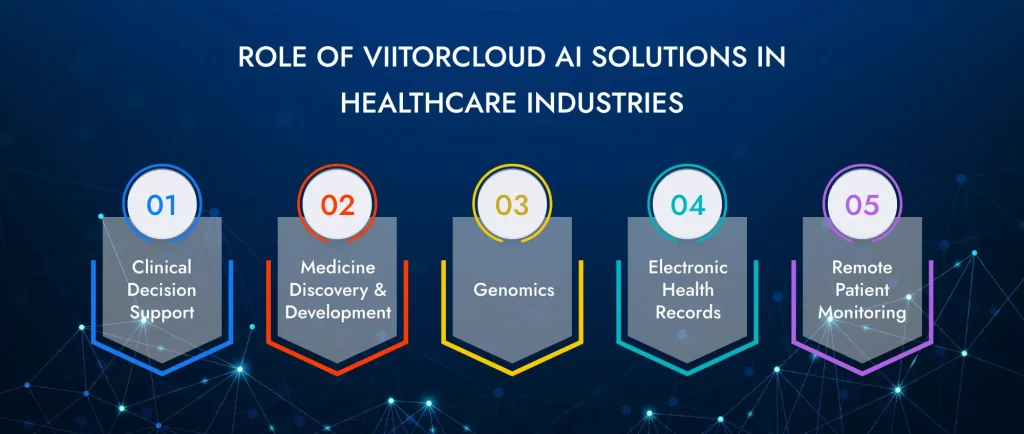
Role of Viitorcloud’s AI Solutions in Healthcare Industries

AI provides opportunities to assist in reducing human error, help medical professionals and staff, and offer patient services 24/7.

Let us discuss the role of AI in the healthcare sector:

Role of ViitorCloud AI Solutions in Healthcare Industries

According to a Report, the clinical decision support systems market worldwide will reach $1.4 billion in 2026 being driven mainly by solutions based on AI technologies.

These systems are anticipated to reduce diagnostic mistakes by 25% as well as adverse incidents due to medicine consumption by 66%, thus improving patient care services and cost-cutting programs.

Numbers speak volumes when it comes to the impact of artificial intelligence on Medicine discovery. In 2020, the AI in Medicine Discovery Market was valued at $449.3 million and is projected to reach $4,815.1 million by 2027, with a CAGR of 33.5% from 2020 to 2027.

AI-driven Medicine discovery platforms have shortened the process by up to fifty percent and decreased costs by approximately seventy percent.

AI is being massively adopted in EHRs whose global market is expected to be worth at least $33.41 billion by the year 2027 with a CAGR of around 19.5% from year 2020-2027.

This includes data extraction and legacy data conversion which can save healthcare organizations up to 70%, reducing errors and improving operational efficiency.

With genomic analysis tools driven by AI, studies have shown an increase of up to thirty percent in accuracy for tumor profiling and improved treatment outcomes by twenty percent for genetically driven diseases.

AI-powered healthcare RPM solutions have the potential to reduce hospital readmissions by 30% and cut healthcare costs through early intervention plus personal care management services by around 25% percent.

Unlock the Future of Healthcare with AI Expertise.

How to Implement Our AI Solutions in Healthcare?

Implementing AI solutions offers many benefits. Here is how to implement AI healthcare solutions.

  • Look for Use Cases: You have to start by looking out for use cases where artificial intelligence can tackle current problems or improve medical proceedings.
  • Evaluate Quality of Data: It is important to evaluate the availability and quality of data necessary for training and deploying AI models. This would mainly involve selecting suitable artificial intelligence in healthcare technologies based on the identified use cases as well as the availability of data.
  • Create AI Solutions: Develop AI healthcare solutions internally or in collaboration with external suppliers and artificial intelligence companies like us that create or purchase AI applications for specific healthcare requirements. Bring proven AI rollouts to multiple departments or care facilities in order to achieve maximum impact and value.

Future of AI in the healthcare industry

At ViitorCloud, we provide AI healthcare solutions that are changing the industry and covering the way for a more advanced and personalized healthcare experience. Our advanced technology powers telemedicine apps, making them invaluable tools for patients, specifically those dealing with mental health challenges like autism. Through Emotion AI, we offer sophisticated speech analysis that can identify mental illnesses such as dementia, depression, and Down syndrome by detecting subtle changes in speech patterns.

We specialize in creating personalized healthcare treatments by using vast amounts of healthcare data to customize services for individual needs. Our solutions include wearables like wristbands, sensorized insoles, and smart jackets, which monitor vital parameters such as heart rate, blood pressure, and calorie expenditure. These data points feed into AI-enabled apps that deliver tailored diet plans and workout programs, ensuring optimal health outcomes.

ViitorCloud is at the forefront of the rising trend toward Ambient Intelligence (AmI). We seamlessly integrate AI, IoT, Big Data, and other technologies into comprehensive healthcare solutions. Our AI healthcare automation services streamline patient consultations, automate emergency care support, and enable continuous monitoring, resulting in exceptional patient care.

Our AI-driven insights are revolutionizing the diagnosis and treatment of chronic diseases. For instance, our technology can analyze whole-heart computational models to understand conditions like ventricular arrhythmia, enabling personalized treatment approaches that enhance patient outcomes.

Empower Your Healthcare Business with AI Innovation.

How ViitorCloud AI Services Streamline Your Healthcare Venture?

In today’s fast-evolving healthcare landscape, embracing artificial intelligence isn’t just an option; it’s essential for staying ahead. ViitorCloud offers top-notch AI development services, empowering healthcare businesses to harness the full potential of this transformative technology.

With us, you can seamlessly integrate artificial intelligence in healthcare to streamline operations, elevate patient care, and secure sustainable growth. Whether it’s creating AI-powered chatbots, innovative video solutions, or intelligent AI assistants, we tailor our solutions to meet your unique needs.

Don’t just adapt—lead the way. Partner with ViitorCloud today and embark on a transformative journey, making your healthcare business future-ready with cutting-edge AI solutions. Let’s revolutionize healthcare together!

Frequently Asked Questions

AI can help with diagnosis, personalized treatment, patient tracking, and administrative tasks to make medical practitioners more efficient and assist them in decision-making.

AI improves diagnostic accuracy, personalized treatment planning, workflow optimization, patient monitoring, and Medicine discovery collectively enhancing overall healthcare outcomes.

AI makes administrative processes efficient, optimizes resource utilization, prevents medical errors, and increases operational efficiency thereby reducing the cost of health delivery.

The testing as well as regulation of AI in the sector ensure that patients are secure through privacy issues as well as data security hence minimizing the risk associated with its implementation.

How AI is helping logistics companies reduce costs and improve efficiency

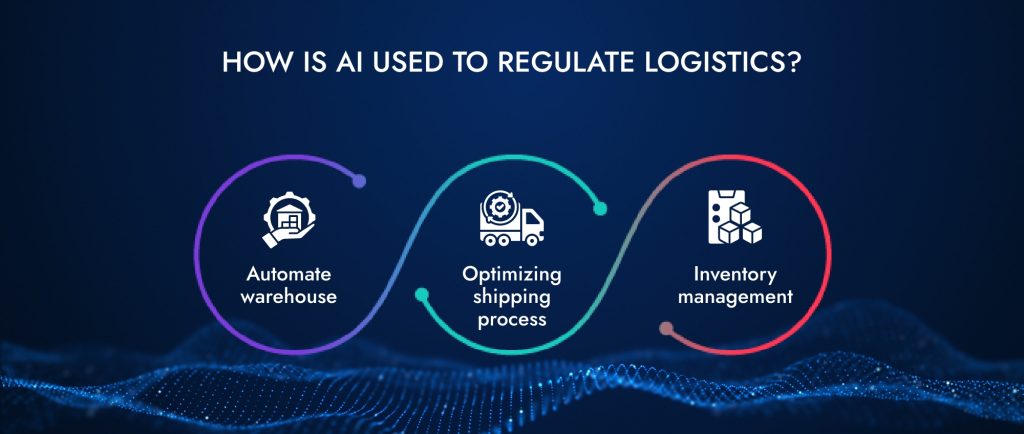
Supply chain and logistics are important to the global economy, providing seamless movement of goods across the globe. AI has significantly enriched this sector by analyzing data related to routes, transportation, weather, and more, helping to ensure timely product delivery.

Artificial intelligence has transformed the supply chain and logistics industries by optimizing costs and streamlining operations. AI solutions can automate tasks, optimize routes, reduce expenses, and enhance customer experiences. Moreover, AI empowers businesses to improve their logistics operations, leading to greater efficiency and effectiveness.

Let’s explore how AI is transforming logistics, cutting costs, and boosting operational efficiency. This exploration will highlight why choosing ViitorCloud’s advanced AI services can be a game-changer for your business goals.

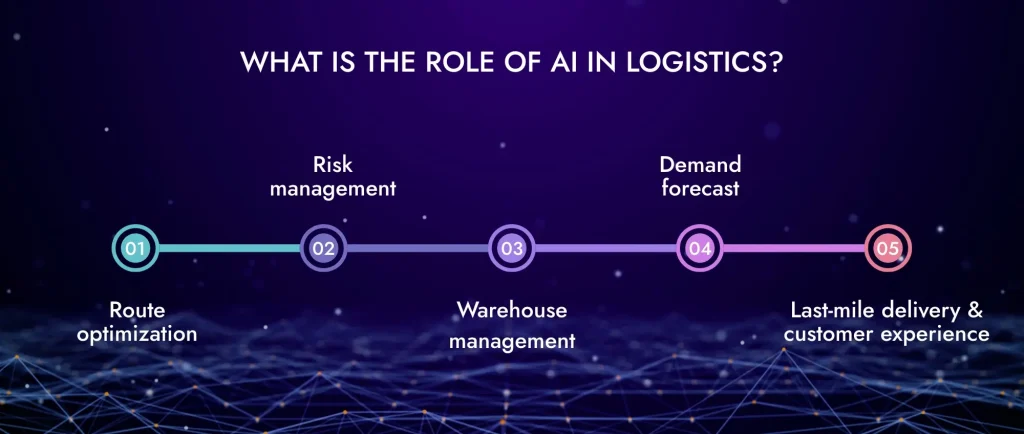
What is the role of artificial intelligence in logistics?

AI and machine learning have revolutionized the logistics industry, bringing about in-depth changes. According to Meticulous Market Research, AI in the supply chain market is projected to reach $41.23 billion by 2030. These advancements are reshaping logistics processes, driving down costs, and boosting efficiency. While AI initially focused on automation, machine learning now plays a crucial role in gathering and analyzing data. This data is invaluable for spotting trends and making informed decisions.

Let’s explore more into how AI is transforming logistics.

Role of AI in Logistics

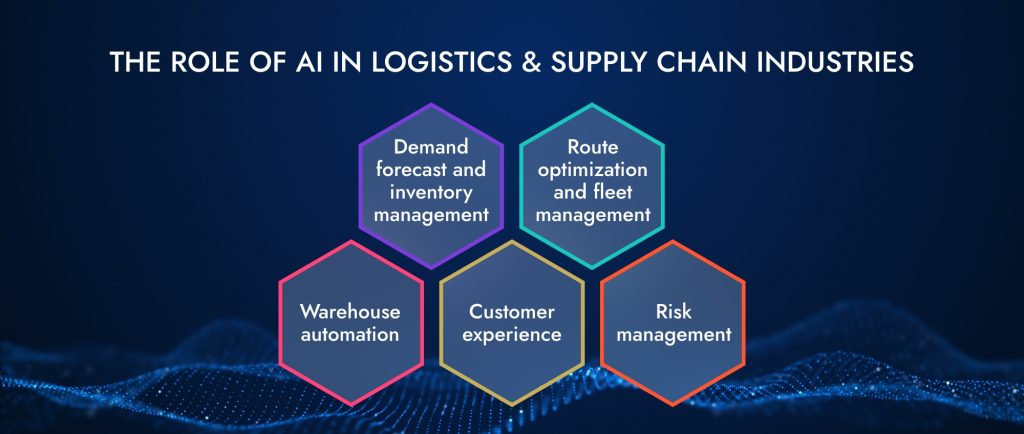
1. Route optimization

AI power solution uses data to analyze traffic, weather reports, real-time location tracking, and other data to find the best routes. Also, some technology predicts when drivers take a break for food, stop for fuel, and start their route. As a result, time was saved, and the cost was reduced.

2. Risk management

In supply chain management, there is a lot of risk and uncertainty. It can be solved with AI technology. AI tools help analyze historical data and apply statistical modeling to forecast risk factors. The risk factors include weather conditions, warehouse space, freight volume, inventory requirement, and truck driver capacity. Based on these risk factors, forecast companies can plan things in the logistics industry to mitigate the risk.

3. Warehouse management

Managing the volume of loading and unloading in a warehouse takes a lot of work. AI has simplified these processes, such as sorting and labeling the inventory. Also, it speeds up these processes and minimizes the errors in loading and unloading.

4. Demand forecast

AI can collect large amounts of data and analyze historical data, market trends, and external factors to forecast the demand for a product. The demand forecast helps optimize inventory, reduce carrying costs, and improve customer satisfaction. AI algorithms continuously provide information based on real-time data, and your work depends on that forecast.

5. Last-mile delivery and customer experience

Predictive analytics helps identify delivery issues, reduces delays, and improves customer experience. Also, its tracking systems provide customers with accurate updates on their orders, enhancing communication and building customer trust.

Read: Powerful AI use cases in logistics industries

Optimize your logistics with AI

Boost efficiency and reduce expenses with tailored AI solutions. Start your journey with ViitorCloud today.

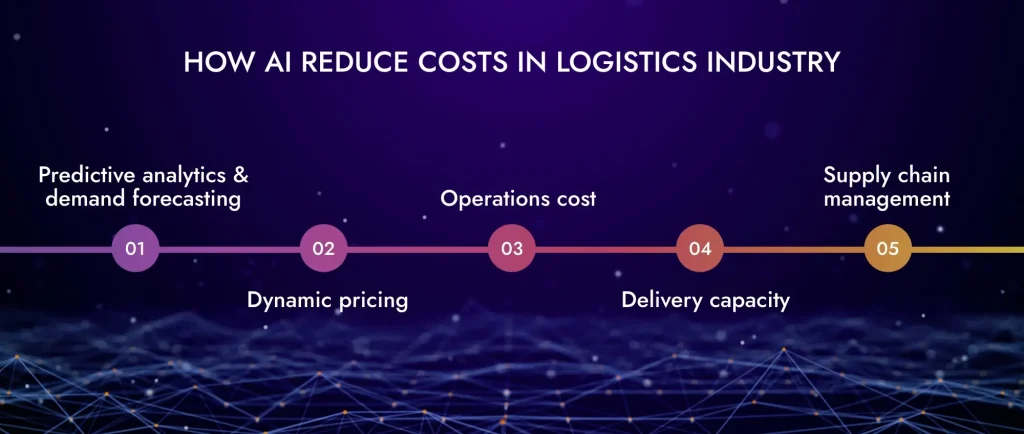
How AI reduce costs in the logistics industry

When used in the logistics industry, AI streamlines the process with automation and analysis, reducing costs.

Let’s understand how AI is useful in the logistics industry in reducing costs.

AI Reduce Costs in Logistics Industries

1. Predictive analytics and demand forecasting

AI helps predict the demand for the product by analyzing historical data, market trends, and external variables. This helps firms optimize inventory levels and reduce overstocking, saving logistics business costs and time. It also predicts unexpected disruptions and market shifts.

2. Dynamic pricing

AI helps in fixing the price with dynamic pricing. It adjusts prices to maximize sales and profits by assessing data such as market trends, competitor pricing, and customer purchase patterns. Additionally, AI-powered dynamic pricing increases the profit margins and satisfies the customers.

3. Operations cost

Route planning is possible with AI, which saves money on penalties while the product is delayed. Also, it saves money on vehicle upkeep, extends lifespan, and minimizes repair costs by reducing travel distances. It is the way AI logistics cost optimization is possible with operation cost.

4. Delivery capacity

AI optimizes the logistics to increase the delivery capacity without investing in more resources. It helps manage the delivery by identifying the efficient routes and maximum vehicle uses. Additionally, the increase in delivery leads to the company’s overall revenue.

5. Supply chain management

AI can streamline the network by offering visibility, boosting demand forecasts, and optimizing inventory levels. Also, AI can estimate demand by analyzing data from various sources. This data helps estimate consumer input, sales patterns, and external factors such as economic conditions or weather.

When a company can analyze demand trends, it can manage inventory levels, reduce the risk of overstocking, and lower carrying costs.

Also Read: 11 AI applications in logistics every entrepreneur should know

Revolutionize your logistics with AI

Transform your logistics with advanced AI technology. Let’s boost your business together.

How AI can improve efficiency in logistics

AI is automating and streamlining the logistics process. With technology such as natural language processing and machine learning, it is possible to access and understand data on a large scale. AI correlates the data to assist businesses in implementing AI for cost-effective supply chain strategies in logistics in the following ways:

In the logistics industry, it is essential to balance the supply and demand of the product. However, it becomes difficult to keep balance because of shifting patterns, complex data, wrong projections, and changing client expectations. AI integration strategy in the supply chain helps to analyze and understand real-time information for inventory management. Also, it monitors products inside and outside of the warehouse to reduce the cost of overstocking products. AI also predicts shipping delays and other supply chain and logistics issues.

AI-powered solutions include automated vehicles like self-driving drones and trucks, which carry the commodity from one place to another, increasing efficiency and reducing costs. Also, AI algorithms help detect traffic, optimize routes, and adapt to changing driving circumstances. This saves fuel and drive safety and boosts overall operation efficiency. Furthermore, It eliminates the need for driver rest and increases the operation’s productivity in logistics.

AI solutions can predict maintenance by proactively using real-time data and machine learning to identify problems before problems arise. The problems include the breakdown of machines and equipment in the operations. Also, the continuous monitoring of equipment performance helps discover trends and abnormalities in the equipment that break down the equipment. AI monitoring allows the logistics industry to maintain equipment, decrease downtime, and improve efficiency.

Also See: What are the benefits of AI in logistics startups?

Transform logistics with intelligent AI solutions

Authorize your logistics business with AI-driven insights and automation. Contact ViitorCloud for a consultation.

How does ViitorCloud help logistics with AI solutions?

AI transforms the logistics industry by automating processes, analyzing and managing inventory, and optimizing operations. It minimizes downtime, enhances driver safety, increases inventory management accuracy, and streamlines warehouse and supply chain planning. This not only boosts efficiency and productivity but also significantly improves logistics performance.

At ViitorCloud, our AI development service is designed to revolutionize your logistics operations. We specialize in automating manual tasks in warehouses and manufacturing, making your supply chain efficient, profitable, and agile. By implementing AI technology, we help you optimize logistics costs and enhance overall operational effectiveness. Partner with us, and let our expert team take your logistics operations to new heights with our advanced AI solutions.

Frequently asked questions

AI-driven cost reduction in logistics is possible by optimizing delivery routes, predicting maintenance needs to minimize downtime, and decreasing overstocking of the product. AI can analyze the data, so this prediction is possible.

AI optimizes logistics industries by identifying barriers in the supply chain, automating repetitive tasks, and optimizing inventory levels and delivery routes. When repetitive tasks are automated, it saves a lot of time for businesses, and they can focus on important business tasks in the logistics industry.

AI analyses and interprets the data in real-time to monitor goods inside and outside the warehouse. Also, proper inventory management helps reduce risk. Additionally, AI improves the quality standard.

Powerful AI use cases in logistics industries

ViitorCloud’s AI development service is revolutionizing the logistics industry. From automating operations to optimizing supply chains for faster product delivery, we provide tailored AI solutions that elevate customer satisfaction and streamline your logistics business.

Imagine controlling predictive analytics to improve demand forecasting, or deploying autonomous vehicles to save time and reduce costs. Our AI-powered systems navigate complex routes effortlessly, guaranteeing your products reach their destination swiftly.

Join us as we explore why leading logistics companies are adopting AI and explore 7 AI use cases in logistics. With ViitorCloud’s expertise, your business is going to stay ahead of the curve, achieving exceptional efficiency and growth.

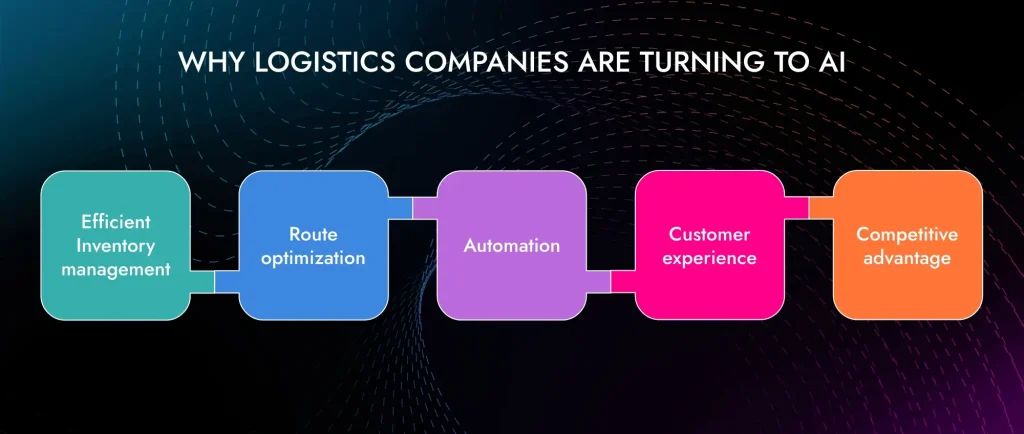
Why logistics companies are turning to AI

AI innovations help various businesses in the world achieve sustainable growth. It allows enterprises to boost management capabilities and organize work in the company. A report by McKinsey, predicts that AI will create a new logistics world by 2030 as it continues to automate repetitive tasks and solve the problems that arise in the logistics industry. Let’s understand in detail why logistics companies are turning to AI.

Logistics companies are turning into AI

Al helps track customer demand using past data, leading to inventory management. As a result, labor costs for manual inventory management are reduced. Also, AI helps with predictive maintenance for inventory and risk management to ensure efficient supply chain operations.

Route optimization is possible with AI as it can analyze datasets to understand traffic patterns, weather conditions, road networks, and delivery schedules. Also, AI helps adjust the route to unforeseen conditions and ensures fast delivery of products with the help of the right path. Additionally, route optimization reduces fuel consumption and cost of delivery.

AI automation increases efficiency by optimizing routes and scheduling inventory management, reducing cost and delivery times. Automation helps sort, pack, and reduce human errors. Also, chatbots solve customers’ queries anytime, which improves the customer experience.

AI chatbots solve queries and offer instant support to the customer. Also, predictive analysis anticipates customer needs, provides personalized recommendations and communicates efficiently. AI builds trust and confidence in customers with transparency in communication.

AI helps the logistics business by automating the task of analyzing customer data to optimize the route, inventory, and warehouse management. Also, data analysis provides insights for optimizing operations, resource allocation, and informed decision-making. The collaboration of AI technology in logistics improves logistics performance and delivers a competitive edge.

This is how AI logistics solutions work in the logistics industry.

Also Read: Benefits of AI in Logistics Startups

ViitorCloud’s advanced AI solutions can streamline your operations, cut costs, and enhance efficiency. Reach out to ViitorCloud for our AI services tailored to your logistics requirements.

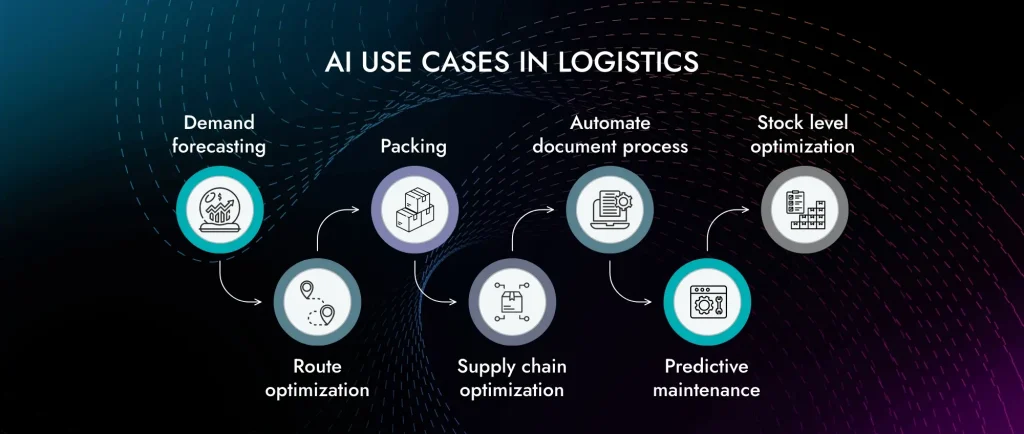
AI use cases in logistics

AI is changing the logistics industry, from optimizing the warehouse system to optimizing delivery routes and predictive maintenance. It helps businesses to improve efficiency, reduce costs, and increase profit.

Let’s understand in detail the AI use cases in logistics.

AI use cases in Logistics Industries

1. Demand forecasting

The first AI logistics use case is Demand forecasting. AI analyzes the history of customer data, weather patterns, predictive analysis, and regional events to forecast demand for products in the market. This demand forecasting helps improve costs, supply chain management, and customer satisfaction.

2. Route optimization

When the product is delivered with a manual plan, it leads to inefficiency and increased cost. While the AI algorithms analyze factors such as traffic patterns, fuel consumption, road conditions, and delivery points. Based on analysis, AI generates an efficient route for product delivery, reducing costs and travel time. Also, helps the environment to be sustainable. Route optimization is one of the logistics use cases that reduces the cost of the logistics business.

3. Packing

AI can analyze a significant amount of data and identify patterns; AI software is used to assist in packing the items with the carrier rates. Using AI in packing increases efficiency and reduces error and handling time. Packing the item in a box is difficult because of various factors, such as the size and shape of the box, weight, and fragility. AI helps solve packing issues by using data to create a 3D model of the box and items, and this model determines the efficient and less costly way to pack items in the box. Packing is one of the AI use cases in logistics that makes packing work efficiently.

4. Supply chain optimization

Supply chain work is complex and time-consuming, and human error is more prevalent. However, AI is more intelligent and efficient in managing the supply chain. Because it forecasts the demand for products, predicts maintenance, manages the supply chain relation, and optimizes route planning.

5. Automate document process

AI logistics use cases automate document processes where AI helps automate the manual and time-consuming documentation process in logistics. It uses systems like Optical Character Recognition and Natural Language Processing to read, understand and extract information from digital and physical documents. As a result, data entry work becomes fast, and manual errors are reduced, decreasing time and cost.

6. Predictive maintenance

One of the AI logistics use cases is predictive maintenance. Predicting the machine’s maintenance is difficult, but AI has made it easy. Al algorithms analyze data from the sensor on equipment and identify patterns of machine breakdown. This saves maintenance costs and time. Also, AI logistics solutions detect damaged goods while delivering goods. As a result, minimized losses happen, and customers are satisfied.

7. Stock level optimization

AI analyzes historical sales data and real-time demand data to predict the stocking requirements of the product in the business. This reduces overstocking inventory and stockouts and improves customer satisfaction and cost. Also, makes the operation efficient and profitable.

It is how the AI use cases in logistics improve the productivity and efficiency of logistics business.

Read: AI Applications in Logistics for Entrepreneurs

Are you prepared to push your logistics business to new heights? Partner with ViitorCloud for advanced AI services that boost growth and improve operational prowess.

How ViitorCloud helps logistics industries

Incorporating AI into your logistics business has modernized operations and customer service. With AI algorithms, you can optimize routes, automate warehouse operations, upgrade inventory management, and improve delivery efficiency. Additionally, AI increases supply chain visibility and supports better decision-making processes.

At ViitorCloud, an AI development service company, we specialize in transforming logistics businesses with advanced AI solutions. Our expert team understands your unique needs and provides tailored AI integration to push productivity and efficiency in your operations. Partner with us to boost your business and achieve steady growth. Contact us for a consultation and optimize your logistics industry with AI today.

Frequently asked questions

The impact of AI on logistics operations is to enhance the supply chain by analyzing factors such as sales data, cost, production schedules, and lead time. This analysis helps businesses to determine reorder level and stock level.

The use of AI in logistics is to analyze the data, optimize the route, and deliver the product on time. Also, AI helps reduce the overstocking of products in a warehouse by forecasting demand and predicting maintenance to make the logistics operation work smoothly.

AI is used in logistics solutions to optimize the operation of the supply chain, such as machine learning to manage inventory, predict demand, and optimize delivery routes. As a result, the cost and efficiency of the business are reduced.

11 AI applications in logistics every entrepreneur should know

Artificial intelligence has an impact on the logistics industry. It gives companies the data insights they need to make better choices and boost their productivity. AI lets businesses tackle problems before they happen taking steps to save time and money.

AI plays a part in groundbreaking changes in robotics and machine automation in logistics. Advanced AI features, like natural language processing, help with many understanding tasks. These include following verbal instructions, decoding unstructured data, and interpreting customer requests.

ViitorCloud’s AI development services can take your logistics operations to new levels of effectiveness and new ideas. We help you reach your business targets with our advanced AI solutions.

AI in logistics: Challenges and considerations

Almost everyone agrees that AI will cause a revolution in the logistics industry making it run more and boosting productivity. But the path to this change has its share of hurdles. Let’s look at some of the obstacles AI needs to clear to improve logistics processes. ViitorCloud has expertise when it comes to AI development, and we can help your company tackle these issues and get your operations running like clockwork.

The complete AI system is based on cloud technology and requires a large bandwidth for its operation. To include AI in the system, the companies have to spend a lot of money on their hardware which will significantly increase their cost of operation.

With the introduction of new technologies, every business has a clear mindset to improve the productivity of their business by absorbing maximum benefit from the new technology. As AI systems are quite complex they require proper strategy and detailed discussion, which will create problems for the companies.

The periodic maintenance of AI systems and their network management costs a good amount to the company. AI technologies require good investment in the initial stages and any component failure in the technology requires a good amount to get replaced.

Adopt the future of logistics with AI-driven solutions. Reach out to ViitorCloud to explore customized AI applications for your logistics challenges. Schedule a Consultation!

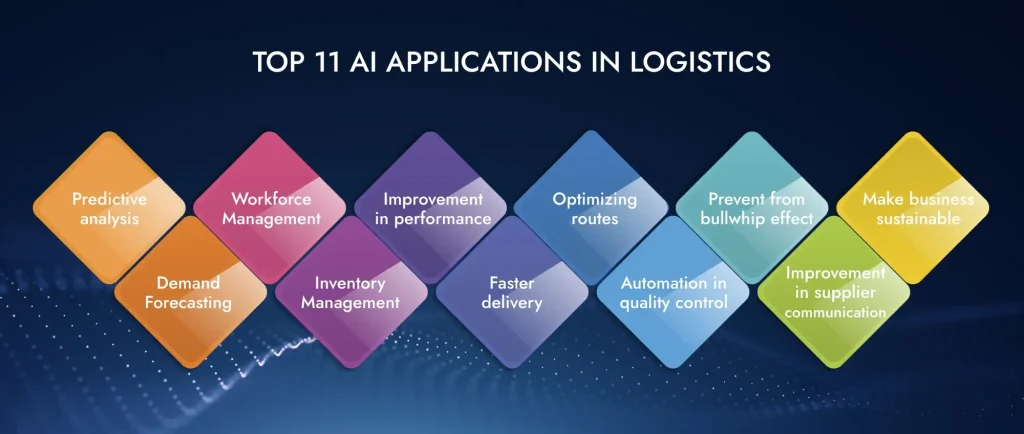
Top 11 AI applications in logistics

According to the Retail and consumer goods executives polled in 2023, artificial intelligence has the most effective implementation in the logistics industry. This data shows how effectively artificial intelligence will work in the future in the logistics industry. Now let us find out the top 11 AI applications in logistics and how AI is beneficial in logistics to make tasks easy.

Top 11 AI Applications in Logistics

1. Predictive analysis

For streamlining processes and control over inventory, demand prediction has many things to offer as it is primarily based on past data, which can be used to understand the demands. In this process, artificial intelligence can provide efficiency as it is easier to analyze data through AI. Also, with the inclusion of AI, the chances of making errors will be reduced to a significant level which will ultimately improve productivity.

The prediction of future events and strategic management of shipment is another important advantage of using AI in logistics.

2. Demand forecasting

It is quite difficult in the logistics industry to make accurate estimates of demands, and through AI, it will be easier for inventories to manage the supply of goods. Also, AI in logistics applications will assist the inventories to optimize the discounts depending on the in-stock and out-of-stock products.

In the present world, almost every old business in the industry like Logistics, is using Big Data technology to drive their business, and the use of predictive analysis with artificial intelligence is very helpful in making calculative decisions. New AI business ideas along with highly demanding products, and the use of artificial intelligence in logistics will help the companies manage the products that are out of the trend or unsold.

3. Workforce management

The complete logistics industry is dependent on their labor force as skilled labor is the need in the industry, but sometimes, the assignment of the wrong task to the wrong person results in less efficiency. To counter this issue, artificial intelligence helps in managing the workforce as this technology ensures that the tasks are assigned according to the skill of the employee. This technology allows the company to understand the training program best suited for the new hires and monitor their performance.

The appropriate assignment of tasks helps the employee to work on his strengths and the improved efficiency of the worker helps the company to become more productive. So, it proves to be a win-win situation for both the company and the worker.

4. Inventory management

With applications of AI in logistics, companies can focus on selling strategies instead of looking for inventory management manually. With artificial intelligence, the business can examine the data files that include customer behaviors and make predictions of the popular products that the company has to store in large numbers. With such predefined inventories, businesses can operate better and more optimally. According to McKinsey, the usage of artificial intelligence can reduce supply chain failures by 30% and warehouse management costs by 40%.

Many large businesses like Amazon are investing heavily in the automation of their warehouses and inventory systems. For such purposes, Amazon has taken the help of sponsorships and innovation strategies. Implementing AI in businesses aids in automating their warehouse inventory systems.

5. Improvement in performance

With a human workforce, it is not possible to analyze data every time and create relations between the unfiltered data and the future strategy. For this reason, the application of AI in the logistics industry has proven that this technology is far more efficient than we think. When it comes to building new strategies, the company has to consider many factors like weather conditions and major sites of sales.

With artificial intelligence, it becomes easier as the technology will analyze all the internal and external factors that will affect sales and make predictions according to it.

6. Faster delivery

The primary objective of every logistics company is to improve their delivery systems by ensuring faster deliveries. Artificial intelligence has improved the speed, locations, and desire of buyers to purchase the product frequently by ensuring faster deliveries. The risk of delivery failure has been reduced significantly with this technology which can’t be achieved through a human workforce.

Through the application of AI in the logistics industry, it becomes easier to predict the exact date of deliveries depending on the destination as all the processes become automated. The tracking systems become more advanced and real-time even in the case of air travel.

7. Optimizing routes

For the logistics industry, optimization of routes is one of the most effective paths as it helps in creating more optimized delivery time schedules, better fuel cost cuttings, improving driver safety measures through data, and improvement in delivery timings.

The AI-based algorithms can easily analyze traffic conditions through GPS and provide information about road closures. Also, to enhance safety, these algorithms can update the company about accidents and weather conditions of the delivery route.

8. Automation in quality control

The quality of the product is the only thing that matters for any company, and for that purpose, the company spends a significant amount on quality control teams. Through AI-based computer vision systems, the whole process of quality checks becomes automated, and these systems can work tirelessly so that they will create a big impact on the productivity of the company.

These automated systems are used by some of the big names like BMW use these automated quality check systems for scanning their finished cars in the assembly line.

9. Prevent from bullwhip effect

In the logistics industry, the bullwhip effect has a very important role in disturbing the business and making their supply chains fluctuate. This is the phenomenon that occurs when there is an issue on one side of the supply, and due to its continuity, it gets amplified to the next stages and ultimately leads to a major disturbance.

Through applications of AI in logistics, this problem can easily be tackled by the company as the technology completely operates on data. Once any problem is detected at one stage, the whole supply chain gets updated, preventing backlogs and stock problems. Current AI business trends can address various challenges through the implementation of AI in the field of logistics.

10. Improvement in supplier communication

In logistics, the communication between the company and the supplier is quite important and the AI technology offers robotic process automation that helps in automating the communications with the supplier. These communications include payment reminders and invoice sharing, as failure in these communications can cause negative impacts on the production and shipment of consignments.

11. Make business sustainable

Sustainability is the new concern of many companies as supply chain management creates indirect emissions and through AI, these operations will become more sustainable and greener. Some of the best examples of AI in logistics examples are AI-optimized vehicles used by one of the largest logistics companies DHL. They are optimizing their vehicles using AI and making them greener and more sustainable.

Ready to integrate AI into your logistics business? Partner with ViitorCloud to implement advanced AI applications and stay ahead of the competition. Get Started Now!

How does ViitorCloud help your logistic challenges with an AI solution?

The logistics and supply chain management industry poses major limitations, with big names like Echo Global Logistics, Covariant C3.ai, and Delhivery often failing to create a lasting and helpful ecosystem. These companies might be good at selling their services, but they don’t always give you the full package of solutions you’re after.

That’s why ViitorCloud’s AI solutions are different. We at ViitorCloud don’t just tackle your logistical problems; we offer continuous support and fresh ideas. Our AI-powered logistics solutions aim to boost your work and make sure you get the best outcomes in no time.

To get advanced AI technology solutions just for your logistics needs, reach out to ViitorCloud now. Our skilled AI development experts can help you hit your business targets with spot-on accuracy and support.

Frequently asked questions

AI is primarily used in the delivery of products to the customer, optimization in selecting the right carrier, and monitoring the shipment. These services help the business to improve productivity and better management of resources.

AI can be used in inventory management, optimization of routes, customer services, and forecasting demands. The inclusion of AI enables the business to be more customer-oriented and gives them the opportunity to provide more services.

AI can be used in supply chain management as it helps in the scalability of business, reduces the cost of training new hires, and manages the warehouses efficiently.

What are the benefits of AI in logistics startups?

In recent years, innovative technologies have sparked profound transformations in the logistics sector. Among these, Artificial Intelligence stands out as a game-changer, revolutionizing how businesses optimize and manage their supply chains.

AI’s ability to process vast amounts of data, make intelligent decisions, and forecast outcomes has made it an indispensable tool in logistics. By 2025, AI and machine learning (ML) are expected to be the most widely adopted technologies in the industry.

The journey of AI development services began in the 1950s, gaining significant traction in 2022 with the public release of ChatGPT. The impact of AI on businesses that have embraced it is undeniable, and your logistics startup can also reap these benefits.

AI’s role in logistics has brought remarkable advancements to the entire process. In 2022, the global AI logistics market size surpassed $7.95 billion. According to Straits Research, this market is projected to reach $240 billion by 2031. The continuous growth of digital technologies, international trade, and e-commerce has amplified the use of AI, making logistics the backbone of these industries.

A report by the United Nations Conference on Trade and Development highlighted the significant growth in global trade for goods and services. In 2021, the total global trade reached $28.5 trillion, with many companies leveraging AI to enhance their logistics and supply chain management.

By partnering with ViitorCloud, your logistics startup can unlock unparalleled advantages through AI integration. Our advanced AI solutions are tailored to streamline operations, reduce costs, and significantly enhance efficiency.

Here are the seven key benefits of integrating AI in logistics that you need to know.

Top 7 benefits of AI in Logistics you need to know

Here are the 7 ways logistics companies benefit it’s from transforming supply chain and logistics operations to enhancing supply chain management with AI Solutions.

7 benefits of integrating AI in Logistics

1. Complicated Implementation is Simplified

Integration and linking of AI Solutions for Logistics is a challenging task. However, with experts like ViitorCloud technology partners, enhancing implementation is simpler. Delete the difficulties like data complexity, and system compatibility issues are sorted through an intelligent approach.

The team has logistics experts who plan and test systems for simpler adoption. Although implementing AI within the logistics sector requires initial work, the benefits appear right away. Logistics companies can realize the immense potential of AI by combining the right technology partner with a practical strategy, as demonstrated by the success of Global Logistics Group, which facilitates streamlined adoption.

2. Improved Data Quality

One of the benefits of AI in Logistics is data quality enhancement. There are innumerable capabilities in AI such as Machine Learning and Natural Language Processing help a logistics company obtain, sort, and organize accurate data information.

AI is more precise than ever thanks to faster, better global connections, and when used in logistics, it will make shipping more efficient in using its data. Through risk avoidance and the development of more effective solutions, AI optimizes resources and reduces expenses. Enriched data, when combined with the synergy of humans and machines, can tell an organization precisely where, when, and for how long to deploy personnel and resources from across multiple locations.

3. Bridge the skills gap

One of the most exciting benefits of AI in Logistics is skill upgrading. Now, your employees can upgrade skills like intelligent process automation or predictive analytics to leverage the maximum benefit of AI. Leading organizations sponsor vital tech conferences and tech hackathons to integrate AI as an integral part of business. Logistics Partners like ViitorCloud give post-deployment solutions through consultants and remotely.

Retraining employees proactively reduces business interruption and increases user adoption of AI systems. Additionally, enabling automated operations frees up staff to concentrate on higher-value tasks.

4. Track Shipments

One of the benefits of AI in Logistics is tracking your shipments. With smart chatbots, track your shipments in a fraction of a minute. Just provide your tracking ID or purchase order number can be used to get the real status of your inventory or shipment. Also, there are customer service representatives trained with the help of AI to give customers real-time responses for shipments. They give perfect insights and hence, enhance overall customer relationship management for you.

5. Effective Decision Making

Don’t regret making use of AI while making accurate decisions. The logistics department is supposed to make accurate decisions during volatile market situations. AI is empowered to make crystal clear decisions while analyzing real-time data insights. For instance, automated warehouses manage shipment schedules, rearrange inventories, storage capacity calculation, suitable staffing, and lots more. Moreover, AI is empowered to detect abnormalities and optimize operations in real-time speed. There are several AI business ideas for logistics startups. With ViitorCloud, you can hire an expert engineers panel who can make algorithms to meet industry demands.

6. Optimize Transport

Shippers face several challenges in the transportation sector, such as increased costs and delivery delays. Artificial Intelligence determines the best transportation route to cut down on delivery times, fuel consumption, and expenses while simultaneously raising customer satisfaction by evaluating data in real-time on weather, traffic, and other factors. This is one of the benefits of AI in Logistics.

7. Smart Roads

You read it right. Some companies developed censored highways and monitored outgoing and incoming vehicles. Also, AI keeps track of road damage and passing vehicles.

Additionally, smart roads can improve passenger and driver safety. Drivers can choose the safest and most expedient route by receiving phone notifications about accidents and traffic jams.

Additionally, businesses that need to move consumer goods efficiently from point A to point B will find value in road monitoring technologies.

This technology benefits both businesses and regular commuters:

  • Explains circumstances that may cause orders to be delayed.
  • Anticipates traffic bottlenecks before they occur
  • Assists retailers in avoiding crowded areas
  • Suggests different routes to ensure on-time order delivery

Ready to take your logistics startup to the next level? Leverage ViitorCloud’s advanced AI technologies. Schedule a consultation with our experts now!

Challenges Faced by Businesses when Choosing AI in Logistics

ViitorCloud’s AI solutions have revolutionized logistics startups by addressing their toughest and most critical challenges. Our advanced AI services have led to significant improvements in efficiency, accuracy, and overall operational effectiveness. While it’s impossible to claim every challenge has been eliminated, our innovative AI solutions consistently drive substantial reductions in operational hurdles, helping logistics startups thrive in a competitive market.

We already know during the toughest periods like Brexit, and the COVID-19 pandemic, trade sanctions complicated the supply chain and logistics support. This is because the companies lacked the resources to fulfill the demands of the end consumer.

Here, our AI Solutions in Logistics play a key role. It teaches you to plan things and delete supply chain challenges gradually. It gives solutions to real problems.

There are still some challenges faced when choosing AI in Logistics:

It’s an old-school definition of technology and machines that reduce human efforts. However, still, humans lack trust in technology. AI is a strong but relatively new concept, especially in Eastern countries of the world. Companies hesitate to adopt it despite knowing its innumerable benefits. In reality, Our AI Solutions in Logistics can make significant improvements in the overall supply chain process.

AI Solutions can cause higher operational and technology costs. ViitorCloud has optimized Logistics solutions that help businesses save money by improving planning, forecasting, and inventory management.

AI needs precise data to function well, develop accurate algorithms, and predict models. Before implementing AI in the supply chain, minimize data-related issues and limitations to access accurate and real-time data in the system.

Unlock the potential of your logistics startup with our AI-driven solutions. Get in touch with us to explore how we can help you stay ahead of the competition.

How does ViitorCloud overcome logistics challenges with an AI Solution?

In today’s fast-paced world, transforming the supply chain and logistics processes with AI is essential. Artificial Intelligence companies revolutionize critical logistics operations such as automation, customer management, predictive analysis, and strategic planning. For logistics startups aiming for targeted growth, incorporating AI is no longer optional—it’s a necessity.

Partnering with ViitorCloud, a leader in AI Logistics Solutions, ensures you leverage AI’s full potential.

AI enhances agility, optimizes route maps, streamlines workflows, reduces costs, and sharpens supply chain strategies. By choosing ViitorCloud as your technology partner, you guarantee maximum ROI and drive innovation in your logistics operations. Connect with us to begin your AI journey and achieve optimized strategic objectives for your business.

Frequently asked questions

Our ChatBots in logistics companies can be one beneficial AI solution in Logistics as they can give real-time answers to the client’s queries like inventory details, delivery status to the ultimate destination, etc.

We are one of the leading Logistics AI development companies in the world that reshapes logistics and supply chains by optimizing routes and enhancing analysis. We also focus on automating supply chain processes for our clients. Delhivery is a famous integrated logistics company that uses AI algorithms to optimize its delivery routes. Likewise, DHL has Cubicycle – an AI-powered tool improving route plans in urban regions.

Our AI in Logistics significantly improves and streamlines processes across inventory management, distribution of goods, supply chain, and predictive analysis. We help a company to enhance customer relationship management. Moreover, our solutions reduce operational costs and improve data analysis.

Applications and use cases of AI in logistics in 2024

The logistics industry should efficiently transport products across various states and countries so the sector can contribute to the economy and increase bilateral trade. AI optimizes the route and automates vehicles, helping to transport products smoothly and efficiently to various places.

The logistics industry uses the whole supply chain process, from procuring raw materials to transporting and distributing them. Using AI-powered logistics reduces operation costs and increases productivity and seamless operations. Also, automating the process reduces errors and delays in transporting products.

Here, in detail, take the overview of AI logistics and the Impact of AI in logistics industry. It also provides information on the role of artificial intelligence technologies in the logistics industry and how AI is implemented in the logistics industry.

What is AI in logistics?

In logistics, AI uses algorithms and machine learning to automate tasks and optimize logistics processes. Also, AI helps predict future production, customer demand forecasts, and transportation routes, leading to efficient resource use and reduced costs.

AI is using self-driving drones and trucks to carry products from one place to another which is reducing the cost and increasing efficiency. Furthermore, it eliminates the need for drivers for the logistics process.

Impact of AI on the logistic Industry

Consumer demand is constantly changing, so it is essential to digitalize the logistics process. AI and machine learning used in supply chain management bridge the gap and provide error-free supply chain management from sourcing the raw material to delivering the end product to the customer. Additionally, according to the statistics, The global AI in logistics industry was valued at USD 7.96 billion in 2022. Projections indicate that it is poised to reach $19.89 billion by 2031, representing a substantial growth trajectory at a CAGR of 45.93% during the forecast period from 2023 to 2031. Let’s look at the impact of AI on the logistics industry.

AI helps analyze historical data and predict the demand for products, which helps maintain the inventory of products and optimize logistics operations. The optimizing operations reduces the risks and increases the profit of the business. Additionally, predictive analysis helps strategically plan shipments through optimized routes.

In AI, machine learning algorithms allow AI to sort and segregate the packages for damages, faults and more. This technique is the basis of integrating computers with cameras and processing. Also, AI helps quickly load and offload packages with the help of robots in warehouses. All the activities AI is doing save time and cost of human labor.

AI helps forecast the fastest route to the destinations and deliver the product within a minimum time. Also, package damage is reduced as AI can analyze the data quickly, enhancing experience and profitability.

AI can handle large volumes of data in logistics effectively and efficiently. Also, analysis helps you stay ahead of the curve by predicting risks like bad weather conditions, broken roads, etc.

Ready to take your logistics to the next level? ViitorCloud offers customized AI solutions designed to streamline your operations and drive growth.

How is AI used to regulate logistics?

AI helps in regulating the logistics process. The process where the company ensures the product in demand is manufactured timely and distributed efficiently. Because of this, transportation costs are reduced, and money is saved.

Let us understand in detail How AI is used in logistics.

AI used to regulate logistics

1. Automate warehouse

One of the global e-commerce stores, Amazon, requires quick and intricate logistics solutions, so they speed up their money to get advanced AI and robotics to make automated warehouses. Amazon invests in AI-powered process automation warehouses, recruiting top experts, buying businesses, etc. Depending on your business size and type, you can use AI in a warehouse in the logistics industry. It is the way Amazon uses AI logistics automation in business.

2. Optimizing shipping process

AI helps forecast efficient shipping routes, which provides cost-effective and faster shipping routes using the machine graph theory. It is helpful for businesses that have various clients because shipping route costs will be low, and it provides maximum reach to clients. Additionally, AI can forecast traffic on roads and busy days on roads. It is the way AI for logistics efficiency improves in operation.

3. Inventory management

A company can devote full attention to selling the goods instead of inventory management, as AI helps in inventory management. AI can analyze large amounts of customer data, understand customer preferences and interests, and determine which product demand will be in the market. As a result, the company can prepare the product in advance and stock the product appropriately rather than depending on real-time demand.

The role of AI in logistics and supply chain industries

AI technology is transforming every industry, and logistics is also part of it. In logistics, AI helps optimize operations, automate route and demand forecasts, and increase efficiency.

Let’s understand the role of AI in logistics and supply chain industries.

The role of AI in logistics and supply chain industries

1. Demand forecast and inventory management

AI helps analyze historical data, market trends, and external factors to forecast product demand, optimize inventory, reduce carrying costs, minimize stockouts, and improve customer satisfaction.

2. Route optimization and fleet management

AI identifies traffic patterns, weather conditions, and delivery priorities to optimize the route. Also, fleet management is possible through monitoring vehicle conditions, predicting maintenance, and automated scheduling.

3. Warehouse automation

ML algorithms analyze data from cameras, sensors and RFID tags to optimize storage places, increase picking accuracy and reduce operation costs. It is the way AI logistics automation is used in warehouses.

4. Customer experience

Predictive analytics helps identify delivery issues, reduce delays, reroute shipments and improve customer experience. Al delivery tracking system provides accurate information on their order, which builds trust.

5. Risk management

AI helps detect emerging risks, such as supplier delays, natural disasters, or geopolitical events. This allows companies to take proactive measures and minimize disruptions to reduce risks.

Empower your logistics and supply chain operations with AI-driven senses and automation. ViitorCloud provides industry-leading AI services that deliver measurable results.

How do we implement AI solutions in supply chain and logistics?

Implementing AI solutions in supply chain and logistics involves several steps, from data collection to training models. Let’s understand in detail.

Implement AI solutions in supply chain and logistics

1. Define objective and scope

The objective of implementing AI in business should be clear. Also, it is essential to identify specific areas where AI can provide value, such as route optimization, inventory management, demand forecasting, and predictive maintenance.

2. Data collection

The collection of the right data is essential for the business as it helps with decision-making. You can gather the relevant data from sources such as historical sales, weather, transportation, and other relevant information. Also, ensure data quality is good.

3. Data integrate

After data collection, integrate the data from different sources to build a unified dataset. Technologies like transform and load processes, extract, clean, and merge the data are used for that.

4. Choose AI technologies

After data integration, select the right AI technology based on your objective. The common technologies are deep learning, machine learning, computer vision and natural language processing. Also, depending on the complexity of business requirements, choose between pre-existing AI-powered logistics solutions or build custom models.

5. Model development

After choosing AI technology, develop a model for supply chain and logistics. The models include route optimization algorithms, demand forecasting models, and predictive maintenance models. Also, use frameworks such as Cikit-learn for traditional machine learning and TensorFlow for deep learning.

6. Training

After model development, divide the dataset into testing and training sets to check the performance. Also, train your model using hyperparameters and training data to achieve optimal performance. Additionally, validate the model using testing datasets.

7. Integrate with existing systems

Integrate AI model into existing logistics and supply chain systems. Also, collaborate with IT teams and deploy APIs to communicate between systems.

8. Monitoring and maintenance

Monitor the model system continuously, and if you find any issues, make improvements. Also, regular update models use new data to ensure it remains relevant and accurate.

9. Scale and optimize

Once operating AI solutions, consider it to scale in the logistics supply chain. Also, optimize algorithms based on feedback and performance evaluations.

10. Compliance and security

AI compliance should be implemented with regulations, especially concerning data privacy and security. Also, AI provides security to sensitive data and AI models.

Transform your logistics with AI. ViitorCloud offers AI solutions to streamline supply chain operations, enhance efficiency, and reduce costs.

Large companies and startups implementing AI in logistics

AI in business helps to solve complex problems using technology. According to recent surveys, 36% of businesses of different sizes have implemented AI for logistic processes and supply chains. AI is the key component in the logistics industry to make work efficient and cost savings.

The e-commerce leader company Amazon uses AI in its logistics operations. It helps with accurate demand forecasting and optimizes inventory management. Also, AI automates the warehouse system where robots pack, pick, and sort items, which reduces errors and increases efficiency.

ClearMetal is using AI to improve the efficiency of logistic operations with predictive analysis. The AI algorithms accurately track the shipping of products, predict, and manage the complex dynamic container of logistics. The implementation of AI eliminates unnecessary expenses linked with mismanagement of goods, underutilized shipping containers, and idle assets. It is a clear example of how AI logistics is used to save logistics costs.

Grey Orange combines robotics with machine learning to pick, sort, and pack goods accurately and quickly. Also, AI automates repetitive tasks, reducing human errors and speeding up the delivery timeline. AI frees human beings from such repetitive tasks so they can focus on strategic areas and operate more efficiently.

Future of AI in the supply chain and logistics industry

The future of AI in the supply chain and logistics will bring big changes in the industry. It will automate vehicles in logistics to increase efficiency in the transportation of goods.

Let’s understand the future of AI in the supply chain and logistics industry.

Future of AI in the supply chain and logistics industry

1. Automates vehicles

The automation of vehicles in logistics will increase in future, leading to more efficient and safe transportation of products. Also, self-driving drones and trucks reduce the need for human drivers and improve the accuracy and speed of deliveries.

2. Increase adoption

The adoption of AI logistics solutions will increase as companies understand the benefits of using AI. The AI in logistics improves efficiency, reduces costs, and enhances customer experience.

3. Predictive analyst

The predictive analyst plays an essential role in the logistics industry. AI tools can analyze large amounts of data to predict customers’ demand, optimize routes and prevent disruptions before they occur. As a result, efficiency increases in the logistics industry and makes work smooth.

4. Provide safety and security

AI uses biometric identification, facial recognition, and machine learning technology to enhance safety and security in the logistics and supply chain industry. It helps in reducing the risk of theft, fraud, and terrorism.

5. Sustainability

AI helps create sustainability in the logistics industry. It helps reduce emissions, optimize routes, and promote efficient energy usage to reduce the industry’s environmental impact.

Epmliment AI to optimize logistics and supply chains for operational excellence and growth. ViitorCloud offers tailored AI solutions to meet your business’s unique needs.

How do ViitorCloud AI services streamline your logistics operations?

AI logistics automation helps in streamline logistics operations by automating vehicles such as trucks and drones. Also, AI analyzes traffic patterns and weather conditions to optimize routes and deliver the product at the right time to customers, which satisfies them. Additionally, the demand forecast of the product helps in stocking the product at a warehouse, which reduces the operation cost in the supply chain.

We, Viitorcloud, an AI development service company, have worked with multiple clients to provide diverse solutions in the digital world, and we are happy to help you in the same way. Our professional experts listen to your problem carefully, understand it, and provide you with solutions that meet your business needs. Contact our AI experts to start or scale your business and streamline the supply chain process with AI in logistics.

Frequently asked questions

The role of artificial intelligence in logistics and supply chain is to forecast the demand for product and inventory management. Also, it helps in warehouse automation, route optimization and fleet management, risk management and customer experience.

Examples of AI that can optimize supply chains are risk management, knowledge capture, supplier selection, inventory optimization, and supplier relationship management. Also, AI-automated vehicles such as drones and trucks reduce the need for human beings.

AI logistics solutions help reduce overhead costs in the logistics industry by identifying cost-effective shipping routes, reducing transportation costs and improving delivery times. Also, AI helps evaluate and manage suppliers and enhance customer experiences.

AI helps reduce costs in the logistics industry by analyzing the data to predict product demand and stock products in the warehouse. Also, optimize routes of roads so timely delivery can take place, which saves time.

The benefits of Artificial intelligence in logistics and supply chain operations are improving warehouse efficiency, reducing operation costs, predicting inventory management, and improving security. Also, provide time delivery of products and forecast the demand for products.

AI business ideas for Entrepreneurs and Startups

Implement artificial intelligence technologies into your business, it’s no longer optional, but it has become necessary in today’s competitive market. ViitorCloud allows companies to control AI not only for routine tasks but also to simplify and streamline core business processes.

It is not just a problem-solving entity but also an engine for the growth and innovation of the business. New development and solving problems that have been bothering you are both within our reach. Let entrepreneurs use AI to go against global issues and really push forward with what is possible in a business idea.

Why wait to launch on your AI journey? Start collaborating with ViitorCloud to explore industry-specific AI solutions that are likely to drive your business to new elevations. Be it integrating efficiency into the operations, pushing escalations in customer experience, or driving innovation using AI-powered products – acquire the power to drive business growth with AI.

Why should you consider starting an AI business?

AI is not the trend, it is a game changer in today’s fast-moving business world. Without controlling AI power, one can hardly stay ahead of the competition. At ViitorCloud, we provide advanced AI solutions tailored to boost your business. Our team of highly qualified professionals will guarantee that you utilize AI to the fullest for competitive advantages. 86% of those CEOs incorporate the use of AI technology into their daily activities, which goes to prove that AI is the future and will drive innovation and growth forward.

AI assists small and medium enterprises by bringing along with it improved operational productivity. It saves businesses a lot of valuable time and resources through automation and data analysis. AI will automate repeated tasks to free the team from working on core tasks like creativity and strategy. For instance, running inventory or processing information about customers with the help of AI simplifies these operations.

AI has been particularly useful in SME sectors, most of which are bound to have denied resources for analyzing data. Our AI solutions help collect and analyze this data to give useful insights and directions that can limelight the market and its dynamics, competitors, and customers to arrive at fast-paced business decisions upon market changes. For example, this is used in retail businesses to come up with the optimum product management system that will help in accurately predicting demand to cut down costs.

Businesses should be very decisive in the progressive domain of today. AI can turn over a new leaf in decision-making by giving in-depth analytics and predictive capabilities. It helps in the analysis of market data, trends, consumer behavior, and changes that the industries might undergo, besides competitor actions. It identifies growing demand, thus promoting businesses to stay ahead of the curve. Leaders influence AI to model business operations and visualize the outcomes of various strategies, providing full analyses of costs, revenues, and risks.

In the dynamic business environment, leaders are urged to make data-driven and analytical decisions. Our AI elevates rigorous analysis, risk assessment, financial forecasting, expense optimization, and resource allocation in a company to minimize its costs and maximize return on investment; this is specifically advantageous in the case of small and medium-sized enterprises.

AI uses previous sales data, seasonal fluctuations, and other external factors to predict the demand for a particular product or service; this helps the business in product planning and other marketing activities.

AI holds the key to delivering personalized recommendations, content, and customer engagement for resolution of their problems through chatbots and voice bots. For instance, chatbots are very instrumental in responding with quick answers to customer queries 24×7 and also provide instant support for the resolution of problems. AI can be used in retail environments to educate customers about services and answer questions about products. Furthermore, AI makes it possible for businesses to track all customers’ purchase records, requirements, and interests to provide personalized recommendations that will assist in raising sales while keeping the customer satisfied.

Due to this, our AI solutions enable businesses to review customer feedback and react to it with a view to improving their products or services. For instance, a boutique would use AI to analyze the reviews on its social media page and accordingly improve the service offered. Furthermore, the AI has been engaged substantially in supporting businesses to analyze customer profiles and behaviors in making personalized marketing campaigns, hence improving conversion rates and customer engagement. Of note, AI also identifies possible customer problems way before they happen with sentiment analysis, enabling the making of solutions before issues come into play.

Effective cost management is more important in small and medium-sized businesses. By our AI-based technologies can manage the costs, resource allocation, and decrease the operation expense of the companies. Artificial intelligence will change formal process of the business into efficient and less resource consuming operations. For example, AI can be applied in manufacturing-related industries by simplifying supply-chain operations through condensing the time and resources used in transporting goods.

Our artificial intelligence solutions help to identify the unproductive business operation functions, allowing timely improvement in decision-making. For example, marketing agencies track on time whether advertisements work using AI. If they see that he is targeting the wrong people or it is just too low of a return, they may therefore adjust accordingly for better results in advertising.

In every competitive business, it is a requirement to constantly innovate and grow to achieve desirable success.

Our AI technology helps businesses identify the gaps created by the unsatisfied needs of targeted customers through the analysis of vast volumes of data. For example, e-commerce platforms can use AI for customer behavior analysis to recommend personalized shopping experiences.

Applying our AI solutions will save time and help required for research and development processes through automation and process optimization. For understanding, AI can identify any potential medicinal substances present within chemical compounds in just a few moments, this feature is very important in the development of new drugs.

Use the potential of AI to drive your business to outstanding success. ViitorCloud provides AI services designed to transform your visions into reality. Contact us for a consultation today.

What are the most profitable AI startup ideas?

AI technology helps businesses in achieving new levels of success and staying ahead of competitors. Let’s explore the most profitable AI startup ideas because AI is the future.

The most profitable AI startup ideas

1. Retail assistance solutions

AI helps the retail industry by analyzing raw data and providing customer insights. It provides an understanding of customers related to different market demographics and their behavior and habits so that personalized recommendations can be sent. As a result, sales can increase.

The AI retail market will reach $40.74 billion by 2030, and it helps retail businesses enhance customer experience and increase sales. It becomes the best AI idea for a company to start.

2. Recruitment App

AI technology helps in recruitment so businesses can create recruitment platforms. The platforms filter and shortlist individuals based on keywords and job descriptions. Because of this, human resource professionals save time and money to evaluate resumes, conduct interviews, and forecast the right candidates. Additionally, recruitment platforms reduce the recruitment cost of manually screening the resumes and minimize the risk of hiring the wrong candidates. It is one of the automated business ideas.

3. AI healthcare platform

All healthcare tools can transform the medical ecosystem, paving the gap between doctors and patients. The AI healthcare apps help professionals diagnose patients’ problems and provide treatment plans and patient care.

AI-related business ideas for healthcare have helped three subsets of the health sector: patients, doctors, and healthcare agencies. It helps with appointments for doctors, patient health tracking, and AI-backed automation in EHR. Starting a healthcare business is one AI startup idea.

4. AI marketing app

AI collects and analyzes customer behavior, habits, and interests data. Then, AI tools deliver customized messages to individuals based on Analyzed data. Also, AI optimizes efficient marketing campaigns.

AI tools help create short and long-form content for marketing purposes. The content includes video and image captions, social media posts, blogs, website content, and email subject lines. Marketing is one of the best AI businesses to start.

5. Logistics and supply chain management solutions

Business ideas with AI are helpful in supply chain and logistics to improve productivity and efficiency, optimize operations, and reduce business costs. It is possible with Al algorithms as they predict product demand, optimize routes and monitor inventory.

6. AI e-learning platform

AI is helpful in the education industry in online mode as it analyzes learner behavior and preferences and provides content accordingly. Also, it creates personalized learning paths that provide knowledge to learners and engage them during the education with an understanding of their strengths, weaknesses, and preferences.

It is also helpful in examinations as it can detect suspicious behavior of students with web cameras, web browsers, and microphones, and it can use a keystroke analysis to understand the movement in the system. Education is one of the automated business ideas.

7. AI smart Finance robotics process automation app

AI technology helps the finance industry by automating repetitive finance tasks such as invoice processing, reconciliation, and tax filing. Also, AI analyzes large volumes of data to identify trends and help forecast future outcomes, allowing investors to invest and evaluate risk. It is also helpful in cybersecurity, identifying fraudulent transactions.

AI helps to create finance apps that automate business tasks, saving time and cost, reducing errors, and improving business compliance. Finance is one of the automated business ideas.

8. AI Cybersecurity App

The AI cybersecurity market will reach $93.75 billion by 2030. So, it is the best AI idea for business. AI technology uses machine learning algorithms to identify cyber threats and protect businesses against malware and security attacks while protecting business-sensitive information.

These are the eight AI business ideas to implement AI in your business.

Don’t just let your AI business idea remain a dream; collaborate with ViitorCloud, and turn your concept into reality. Our AI services ensure that your startup not only succeeds but excels.

How can ViitorCloud help Entrepreneurs to build AI startups?

Reshape your business with the power of AI solutions by ViitorCloud. Thereafter, it shall be the quality of data acquisition that would greatly position the success of AI experiences. If high in quality, it would build a basis for informed decisions by firms, customize customer experiences, and smoothen operations to create a dynamic competitive setting.

When your business looks towards building advanced and developed AI solutions, ViitorCloud is your ideal partner. In AI development services, our proficiency guarantees enhanced efficiency, productivity, and maximum returns on investment. Partner with us for assurance over helping your AI startup ideas come to life and achieving a competitive edge in the marketplace.

Choose ViitorCloud for your requirements associated with AI development and watch your business succeed.

Frequently asked questions

The businesses you can start with AI are e-commerce, retail, education, health, IT, finance, real estate, and human resources. This business uses AI technology to automate tasks and improve efficiency and productivity.

To start an AI-based business idea, discuss the ideas, vision, and business goals with skilled AI professionals who will guide you in the development process and provide the best solutions for your business needs.

The cost of building an AI-based business solution depends on several factors. These factors include the cost of development, complexity of the app, location and time of the app development firm, and features integrated into the app.