10 Ways AI will Improve Customer Experience in 2024?

Artificial intelligence uses in customer experience is increasing because AI technology such as chatbots, digital learning, and machine learning are helpful in delivering fast, personalized, efficient, and proactive experiences at scale. Also, AI analyses customer data and divides the segments based on demographics, behaviors and interests so businesses can deliver personalized experiences and improve sales.

The AI tools such as Chatgpt, customer chatbots, Zendesk and Balto are used in customer support. These tools do not just satisfy customers but help businesses build marketing strategies that lead to increased sales.

Let’s understand in detail how AI will improve customer experience and know the steps to use AI to deliver customer experience. Additionally, you will understand how big companies use AI customer experience.

What is an AI customer experience?

Artificial intelligence in customer experience refers to using AI technology in customer interaction, customer satisfaction, and streamlining business operations. The technologies used in AI are machine learning, predictive analytics, natural language processing, and robotic process automation.

AI helps provide personalized recommendations to customers based on a large amount of data, browsing patterns, purchase history, and the customer’s social media behavior. This in-depth analysis helps businesses understand individual customer preferences and, based on that, provide personalized recommendations.

Why are businesses using AI for customer experience?

Businesses are using AI in customer experience to enhance productivity and efficiency. Also, for various reasons, let’s examine why businesses use AI customer experience.

why are businesses using AI for customer experience

Scalability

AI can handle a large volume of queries together, which benefits businesses and helps them grow rapidly.

Improve productivity and efficiency.

AI can solve customer dairy inquiries and customer issues. As a result, customer service agents can focus on complex issues. This leads to improving productivity and efficiency in the business.

Data-driven insights

AI can collect large amounts of data together and analyze the customer data. While analyzing, it provides valuable insights into customer behavior, preferences, and interests, leading to improved marketing strategies and personalized recommendations.

Proactive service

AI can predict future customer issues and problems, as businesses can proactively solve the problems.

Personalized experience

AI can analyze the customer data where they came to know the purchase history behavior of customers. As a result, they can provide personalized recommendations to customers.

According to a Forbes report 79% of personalized service is more important than customized marketing.

How AI can improve customer experience

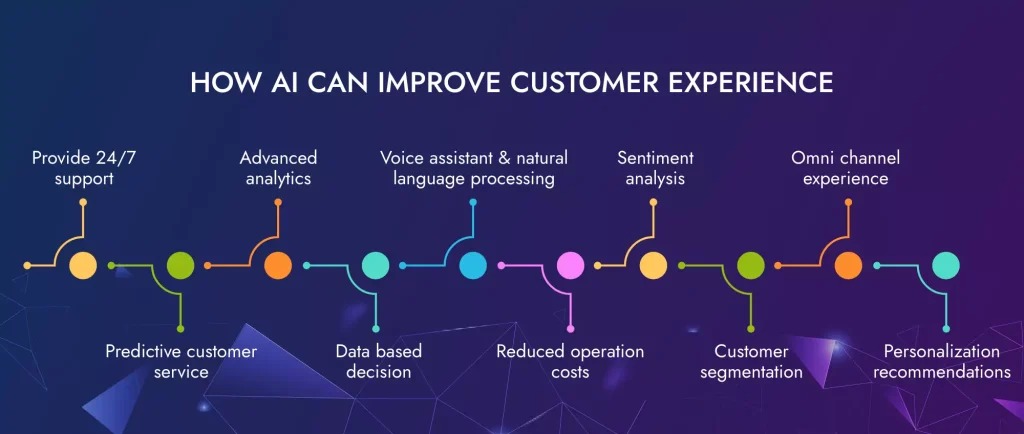
AI can improve customer experience and enhance productivity with digital service. AI has grabbed the attention of businesses in customer experiences because it automates the process. Let’s understand in detail How AI can improve customer experience.
how AI can improve customer experience

Provide 24/7 support

Everything is digital nowadays, so customers need solutions to their queries immediately. Conversational AI is useful because it behaves like human beings in conversations, solving customer queries at any time, like on weekends or late at night when a customer care person is not working. Also, it helps customer agents to focus on more complex tasks.

AI also helps customer agents provide speedy replies, as AI can generate replies based on the context of the conversation. These features help customer agents teams respond quickly, decrease handle times, and reduce wait times.

Predictive customer service

AI can collect large volumes of data, analyze it, and predict future customer behavior. For example, it may predict that the customer will purchase the dress as the customer’s birthday is approaching. So businesses can proactively reach out to the customer and suggest a dress for the birthday. It will enhance the customer experience with the brand.

Advanced analytics

AI algorithms can handle large amounts of data and insights humans can miss. This analysis helps identify customers’ wants, anticipate future needs, and highlight areas where improvement can occur in customer experience. However, this anticipation creates a risk with generative AI.

The risks, such as privacy infringements, unintended biases in data, and misleading output, impact the decision-making process of the business. Because of these, you need to monitor things to get the benefits of AI analytics while mitigating these risks.

Data based decision

AI helps in gaining deep insight into the data. The deep insights are in the form of identifying patterns, customer preferences, and behaviors in real-time. As a result, businesses can personalize their interactions with customers, providing tailored solutions that give customer satisfaction and loyalty.

Additionally, deep AI insight helps businesses optimize their services or products and build better marketing strategies that align with customer expectations, which satisfies customer experience. This provides long-term success to the businesses.

Voice assistant and natural language processing

Voice assistants such as Alexa, Google Assistant, and Siri are becoming popular. These voice assistants help answer questions, place orders, control devices, and provide personalized assistance based on customer history preferences. The voice assistant is possible because of natural language processing.

Reduced operation costs

AI in customer experience can reduce operation costs by automating tasks, eliminating the need for additional tools, training, or staff, and deflecting interactions through self-service.

Sentiment analysis

AI analyzes customer reviews, social media posts, emails and other sources to understand the sentiment behind the words. This helps businesses to understand how customers feel and think about products or services. As a result, improvement could take place in areas where needed.

Customer segmentation

AI helps segment the data based on various segments, such as preferences, demographics, and behaviors. It allows businesses to deliver personalized experiences that improve the outcome. Also, it helps businesses to provide highly targeted marketing campaigns and improve the relevance of their messaging.

Omni channel experience

AI can combine multiple data sources, such as online platforms, mobile apps, in-store interactions, and social media channels, creating a seamless user experience. This allows users to switch effortlessly between these channels and continue their activities without interruptions.

Personalization recommendations

Artificial intelligence uses machine learning algorithms to analyze customers’ past behavior, preferences, and interests of customers. The AI system recommends a product or service that satisfies customers when this pattern is recognized.

For example, a customer usually purchases non-fiction books, and AI recommends a book to the customer, which then satisfies the customer and leads to sales for the business.

This way, AI and customer experience work together.

73% of business believe AI can positively impact the customer experience.

Steps to use AI for delivering better customer experience

We know AI is improving customer service in the business with technology, data, and human insights. Let’s see the steps to use AI to deliver a better customer experience.

Design a customer experience strategy

Before understanding how to use AI in the customer experience business, business people have to understand their customer experience, vision, and strategy. Once businesses know the vision, tell the team about your business expectations and design a strategy.

Plan and analyze the customer journey

Businesses have to analyze their customer journey from pre-sales to customer support. Depending on that, they need to plan things and deliver an AI-based Omni channel customer experience.

Understand the AI solution

Understanding which AI solutions will be implemented in your business is essential. The implementation depends on business needs and expectations. The different AI solution forms are virtual assistants, computer vision, recommendation engines, predictive search engines, sentimental analyzing tools, etc.

Decide to buy or create an AI solution

When it is decided which AI solution will integrate into your business. The next step is to choose to buy or create an AI solution. Businesses can create AI solutions if they have qualified an in-house team or partner with an excellent artificial intelligence company. But if businesses don’t have time and a qualified team, then go for the option of buying AI solutions.

Track and monitor success

Once businesses integrate AI solutions in business or buy AI solutions in business, you can’t sit ideally; you must track the performance and how AI satisfies the customer. If things are not working, businesses can make adjustments to the strategy.

These are the following steps to implement in the business to deliver better AI customer experiences.

3 best AI customer experience examples

You know how AI is improving and delivering a better customer experience. Let’s look at how famous brands are using AI in their business.

Amazon

Amazon is one of the brands known to deliver the best customer experience. It has also adopted AI personalization product recommendations in its eCommerce shopping experience.

The personalization product recommendations help Amazon analyze customer behavior, purchase history, items in the wishlist, and items in the cart and get to know what other customers are buying. This personalized ai solutions satisfies the customer and increases Amazon’s sales.

Starbucks

Starbucks is using the AI tool Deep Brew to enhance its customer experience. The tools help in predictive analysis and machine learning to personalize marketing messages, manage store-level inventory, and give customers loyalty to Starbucks. For instance, tools help predict customer orders based on location, customer last order, weather, and other factors.

Sephora

Sephora is a cosmetic brand that uses a Virtual artist app to enhance customer experience. The app uses augmented reality, allowing customers to virtually try various makeup products on their faces to make the right purchase decisions. Also, it is fun for customers to try multiple makeup products without applying them to their skin.

Revolutionize customer experience with ViitorCloud

AI has revolutionized the customer experience in today’s digital world. The revolution has impacted various industries, where continuous enhancement of digital assets with technology is being done. The technology used in AI for customer service experience enhances personalization and improves efficiency and engagement.

When you are ready to use AI in customer experience, Viitorcloud will help you as it has a deep understanding of customer requirements and expertise in AI services. Firstly, we understood the client market, developed market and interaction strategies, and delivered AI services to the clients.

Connect with our expert today to develop AI power customer service that improves your business’s productivity and efficiency.

Frequently asked questions

The role of artificial intelligence in customer experience is to provide personalized recommendations, predictive analysis, 24/7 customer support, enhanced communication, and automate routine tasks.

AI is beneficial for the customer’s experience as it provides real-time assistance and proactive engagement, improves communication with customers, and improves the efficiency of the customer agent.

AI improves customer experience with personalized product recommendations, solves customers’ queries, and provides voice assistance. Also, AI helps reduce errors, perform customer segmentation, and use advanced analytics.

AI impacts customer experience through automated email conversations and predictive analysis and provides customer insights. Also, it improves the productivity and efficiency in customer support.
How to create an AI model for enterprises: An enterprise perspective

The dream of machines with human-like intelligence (AI) has long-fired imaginations. Today, the digital revolution makes it a reality. Data is the fuel, algorithms, and tools. Businesses must embrace AI to thrive.

Build custom AI models to solve customer problems, optimize operations, and personalize experiences. But how can you profit from this opportunity for your business?

Intelligent AI models hold the key to solving specific business problems. These are savvy systems that have been educated on your particular data. An AI model is an excellent tool for simplifying complex processes and augmenting human capabilities by achieving new levels of efficiency and accuracy.

This guide will give you the knowledge on how to create an AI model and propel your business into a brighter future.

What is an intelligent AI model for enterprises?

An intelligent AI model is a computer program that mimics human cognitive functions like learning and problem-solving. It achieves this by analyzing vast amounts of data, identifying patterns, and making predictions. These models can be applied across diverse areas, from optimizing logistics to automating customer service interactions. A recent McKinsey report for productivity and growth estimates that AI could contribute up to $15.7 trillion to the global economy by 2030.

An intelligent AI application or model is distinguished by its capacity to learn, reason, comprehend, adapt, interact, solve problems, and produce reliable results. One of the examples of intelligent AI models is ChatGPT, a language model that can write human-like prose in response to commands and recognize objects, people, and scenarios in photographs.

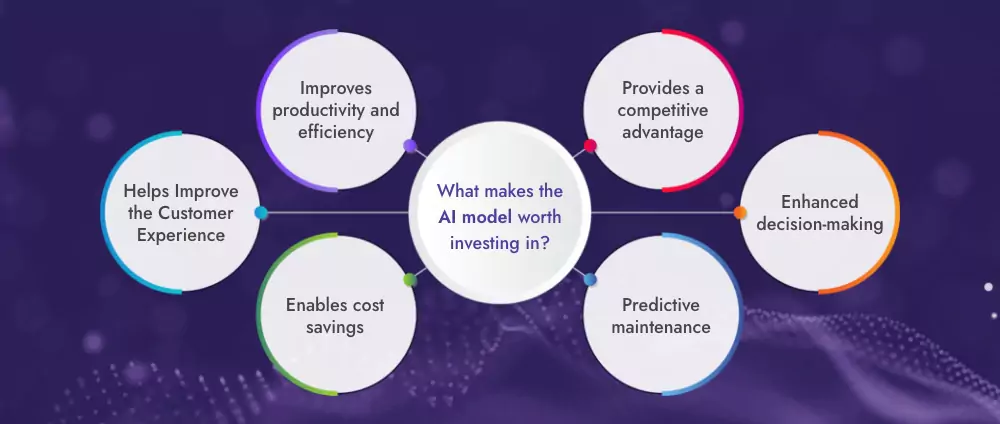
What makes the AI model worth investing in?

Investing in intelligent AI models is a strategic move for your enterprise. Custom AI model development can have a transformative impact on various aspects of your business operations.

Here are several compelling reasons why it’s worth your investment.

What makes the AI model worth investing in

Helps improve the customer experience

AI-powered solutions, like virtual assistants, personalized recommendations, and chatbot development services, enhance customer interactions.

They contribute to an improved overall user experience.

Improves productivity and efficiency

AI software is intended to streamline processes, automate rule-based tasks, and maximize resources. By automating monotonous jobs with AI, you can focus on more strategic activities in your business.

Enables cost savings

Advanced AI models and technology reduced operational expenses dramatically by simplifying labor-intensive operations and allocating resources more efficiently.

Over time, the successful application of AI models for enterprises has resulted in various financial benefits for large-scale enterprises.

Provides a competitive advantage

Building an AI model gives businesses a competitive advantage by allowing them to innovate at the leading edge.

AI software and technology can enable new product creation and business models, expanding the potential for long-term business success.

Enhanced decision-making

AI models for enterprises analyze vast datasets, uncovering hidden insights that inform better business decisions.

Predictive maintenance

Anticipate equipment failures and prevent costly downtime with AI-powered predictive maintenance.

The global AI market is expected to grow from $62.35 billion in 2020 to $733.7 billion by 2027.

How to create an AI model for enterprises

We’ve shown the power of custom AI model development to transform your business. Now, let’s break down the development process in depth, putting theoretical power into real steps:

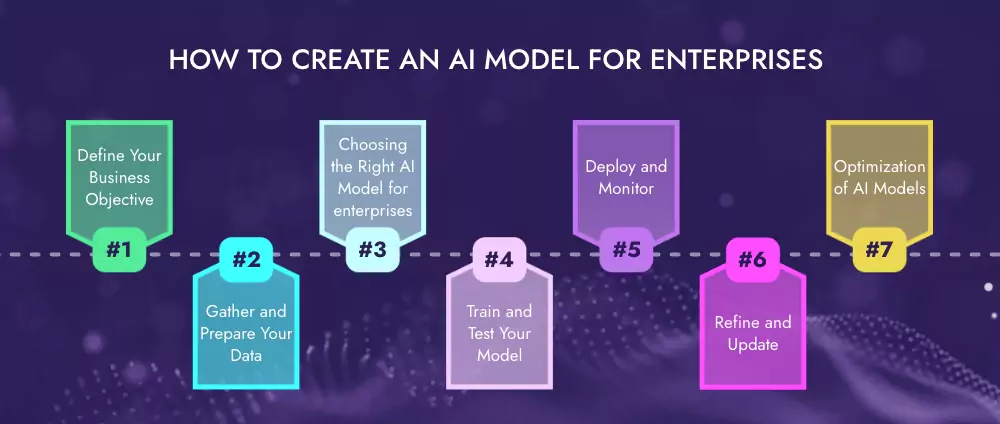
How to create an AI model for enterprises

#1 Define Your Business Objective

To truly advance our AI project, you must delve into the core of our operations rather than settling for aspirations of “improved efficiency.” Let’s focus on pinpointing:

  • Finding what’s slowing us down: Take a close look at where you’re hitting roadblocks. Is it taking forever to process loan applications? Or are you losing too many customers? Once you figure that out, you can start fixing it.
  • Automating the boring stuff: You probably have dull and repetitive tasks. Let technology handle those for you. Things like typing in data or setting up appointments can be automated, giving you more time for the important stuff.
  • Using AI to make better decisions: AI can help us make better decisions. It could warn you when equipment might break or help you run your marketing in a way that grabs more attention.

The more precise your objective, the more targeted and effective your intelligent AI model development will be.

#2 Gather and prepare your data

Think of your data as the source for your AI. The quality and quantity of data directly impact the performance of your model. Here’s what you need to consider:

  • Relevance: Does your data directly address the problem you’re trying to solve? Irrelevant data can skew your results.
  • Accuracy: Your data needs to be spot-on. Mistakes in your data can mess up your AI, so keep it clean.
  • Sufficiency: You don’t want too little or too much data. Too little, and your AI won’t learn properly. Too much, and it could take more time to learn.

Data Cleaning and Preprocessing: This often involves identifying and removing outliers, formatting data consistently, and handling missing values.

#3 Choosing the right AI model for enterprises

AI models are vast, with different models excelling at specific tasks. Here’s a simplified breakdown of some common choices:

  • Classification: It organizes things into categories, like how a spam filter sorts emails into “spam” or “not spam.”
  • Regression: Guesses numbers. Think of it like predicting how much you’ll sell next month based on past sales.
  • Clustering: Finds groups. It’s like sorting your customers into different groups based on things they have in common.
  • Natural language processing (NLP): Understands language. For example, chatbots that can chat with customers and understand what they’re saying.

Understanding these categories and researching available models will help you select the one best suited to your objective.

#4 Train and test your model

This is where the magic happens! You’ll use your chosen AI model and prepare data for training purposes. Here’s a simplified overview:

  • Training: The model analyzes your data, learning patterns, and relationships. Imagine studying for an exam.
  • Testing: Like a school exam, you test the model’s performance on unseen data. Does it accurately predict outcomes or categorize data points?
  • Iteration: This usually isn’t a one-time thing. Depending on how the testing goes, you might need to tweak your model, like changing its settings, or even try a different one altogether.

#5 Deploy and monitor

Once your AI model is trained and tested, it’s time to integrate it into your existing workflows. This might involve:

  • Developing an application: This allows your model to interact with your existing systems and users.
  • Setting up monitoring tools: Track the model’s performance in real-world scenarios. Is it delivering the expected results?

#6 Refine and update

AI models are not static creatures. As your business evolves and new data becomes available, you must retrain and update your model to maintain optimal performance. Think of it as keeping your AI running smoothly.

#7 Optimization of AI models

Dropout, regularization, and batch normalization are optimization approaches that can improve the AI model’s performance. Furthermore, fine-tuning individual hyperparameters like learning rate, batch size, or network depth might help achieve better outcomes.

Transform your enterprise with our expert AI model development services.

Considerations while creating AI models for enterprises

As companies decide to construct an AI model, it is critical to consider various factors to ensure its success. We’ve identified a few factors that influence the custom AI model-building process:

Structure and sacrifice ability of AI models

Enterprise AI models require a significant amount of computer resources. Investing in scalable infrastructure while developing AI models is critical to correctly managing the training and deployment processes. Cloud-based solutions such as Azure, AWS, and Google Cloud are known for their scalability and flexibility.

Data security and privacy

Sensitive information is typically found in company data. When developing an AI model, it is critical to integrate robust privacy and security safeguards to secure sensitive data.

Generative AI

As AI technology advances, generative AI development services have emerged as a critical trend.

ChatGPT is an example of a generative AI model capable of producing text, pictures, and code. This movement creates new potential for innovative problem-solving, automation, and the creation of distinctive content within enterprises.

Regulatory compliance

Regulations vary by industry. While developing an AI model, you must ensure it complies with applicable industry standards and data protection legislation such as HIPAA and GDPR.

Ethical considerations

Be mindful of potential biases in your data and design your model for fair and ethical outcomes.

Build intelligent AI model development solutions with ViitorCloud

To create an AI model, organizations must first identify their goals and what they want to provide their customers. A proper roadmap must be established to ensure that the custom AI model development for enterprise processes is fluid and practical.

ViitorCloud’s expertise in designing an AI model highlights the need to create a data-driven culture, define business objectives, and use the appropriate AI technology.

Our professional experts can provide innovative solutions for developing various AI models that will assist your company in growing, innovating, and becoming more efficient. Collaborate with us to experience AI’s transformative capacity to increase productivity, promote economic growth, and remain ahead of the curve.

At ViitorCloud, we offer comprehensive AI development services to guide you through every stage of the AI model creation process. Our team of experts will help you design, develop, and deploy a custom AI model tailored to your specific needs.

Ready to unlock your enterprise AI solutions? Contact us today to discuss your project!

Frequently asked questions

The impact of AI on organizations is broad and significant:

  • Enhanced customer experience: Personalized AI-enabled interactions increase customers’ experiences through personalized recommendations and adequate customer support.
  • Increased productivity: AI automates repetitive tasks, streamlining operations and freeing up human resources for critical initiatives.

An intelligent AI model for businesses examines multiple data sets with modern algorithms and machine learning. It learns from previous data trends, correlations, and insights as it trains. Following training, it integrates into business operations, automating procedures, anticipating outcomes, and generating data-driven recommendations.

AI models recognize patterns using natural language processing, computer vision, and machine learning. Intelligent AI models also employ decision-making algorithms to learn from their training, collect and assess data points, and then apply their knowledge to achieve their objectives.

AI models have a wide range of applications across industries. Here are a few examples: Manufacturing, Retail, Finance, Healthcare, and Customer service. Enterprise AI solutions can gain a significant competitive advantage and unlock new possibilities for growth and innovation.

How AI is used to develop next-gen mobile apps

AI has made a remarkable journey from the confines of tech giants like IBM and Amazon to becoming an integral part of everyday life, especially through mobile devices. Its influence is profound and far-reaching.

Through AI’s various branches like Machine Learning, Predictive Analysis, and Deep Learning, businesses operating on mobile platforms have achieved unprecedented levels of personalization. This extends not only to the features they offer but also to their marketing strategies. AI has become the driving force behind the evolution of next-gen apps, defining a new standard for enterprises navigating the digital landscape.

Yet, the impact of AI extends beyond these realms.

Why AI in mobile app development is a game-changer

A recent Forbes report highlights that 63% of mobile app developers already use AI in some form. This surge in adoption isn’t surprising when you consider the unique capabilities AI brings to the table:

  • Personalization: AI can analyze user data to understand preferences and behavior patterns. This allows apps to deliver hyper-personalized experiences, boosting engagement and satisfaction.
  • Predictive analytics: AI can predict user needs and recommend relevant actions or content before they know they need it. This proactive approach leads to a more intuitive and seamless user experience.
  • Enhanced security: AI-powered security features can detect and prevent fraudulent activity in real-time, safeguarding user data and protecting against cyber threats.
  • Voice and image recognition: AI can power features like voice assistants and image recognition, enabling natural and intuitive interaction with mobile apps.

By using these capabilities, AI opens the way for the development of next gen apps that are:

  • More intelligent: They can expect user needs and adapt to individual preferences.
  • Highly engaging: They deliver personalized experiences that keep users returning for more.
  • Seamless and intuitive: They offer a frictionless user experience with features like voice commands and image recognition.
  • Secure and reliable: They use advanced AI-powered security measures to protect user data.

How to develop next gen mobile apps using AI

Allied Industry research predicts that by 2030 the global mobile artificial intelligence (AI) industry will be worth $84.80 billion. So, how to use AI in mobile apps and create an innovative app? Here’s a roadmap to follow:

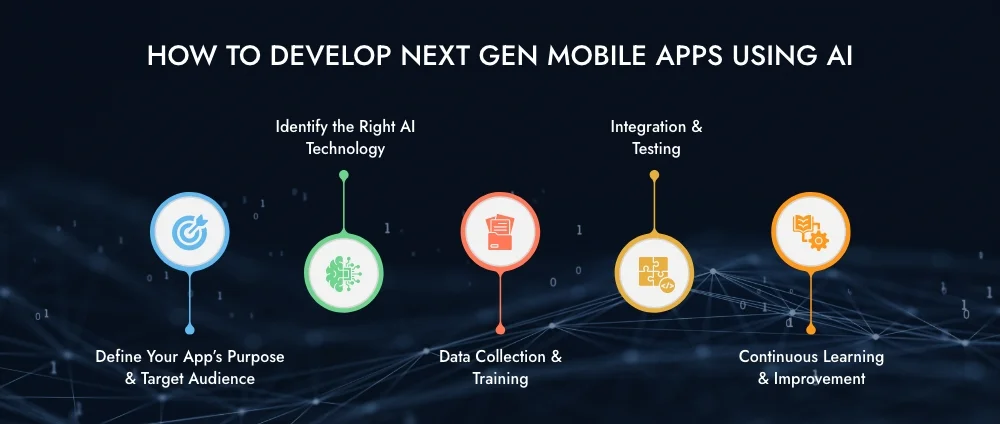
How to develop next gen mobile apps using AI
  • Define your app’s purpose and target audience: Clearly articulate the problem your app solves and who it benefits. This will guide your choice of AI functionalities.
  • Identify the right AI technology: Depending on your app’s core features, explore various AI options, such as machine learning, natural language processing, or computer vision.
  • Data collection and training: Gather high-quality data relevant to your app’s functionalities and use it to train your AI models effectively.
  • Integration and testing: Seamlessly integrate the trained AI models into your app and rigorously test their performance to ensure accuracy and reliability.
  • Continuous learning and improvement: AI models rely on continuous learning. Implement tools to gather user data and feedback to refine your AI models over time.

Get ready to develop next-gen mobile apps powered by AI?

Use cases of AI in mobile app

AI applications in mobile apps are numerous and constantly increasing. Here are some attractive use cases:

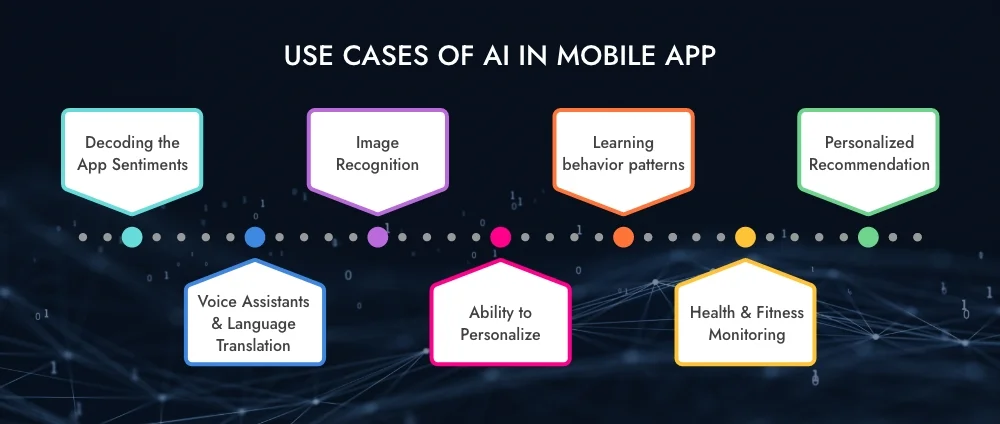
Use cases of AI in mobile app

Decoding the app sentiments

AI’s Sentiment Analysis feature monitors conversations about your app on different platforms such as social media, forums, and review sites. It analyzes the language used by users to determine their sentiments, whether positive, negative, or neutral. Tracking these discussions offers valuable insights into user interactions and preferences.

This analysis helps identify trends, patterns, and areas for improvement within the app. For instance, it can highlight frequently mentioned features users appreciate or complaints about certain functionalities. This information is crucial for understanding user satisfaction levels and guiding decisions for future updates and enhancements to the app.

Voice assistants and language translation

Mobile apps commonly use voice assistants like Siri, Google Assistant, and Amazon Alexa. They perform tasks, answer questions, and give recommendations. The voice recognition market is expected to reach $26.79 billion by 2025. Siri, for example, can set reminders, send messages, make calls, and provide info based on voice commands.

Language translation apps use AI to translate between languages in real-time. Google Translate, for instance, offers accurate translations in both written and spoken form.

Image recognition

AI algorithms in mobile apps analyze images from the camera for augmented reality, visual search, and object recognition.

Google Lens employs AI-powered image recognition to identify objects, landmarks, and products, delivering relevant information and search results.

Ability to personalize

AI enables taxi booking apps to send discount messages at the right time and restaurant apps to suggest preferred food items, enhancing user experience. This AI feature grants brands access to user location and device usage data, including active times, preferred apps, social interactions, and visited platforms.

With this information, companies can tailor discounts and cashback offers within the app based on individual preferences and behaviors. AI takes personalization to a new level, reshaping customer relationship management strategies.

Learning behavior patterns

Platforms often use AI to understand users’ buying habits for smoother interactions. For example, Snaptravel, a hotel booking service, uses NLP and machine learning to chat with users naturally. If the chatbots face issues, humans step in to teach them.

AI also helps detect fraud in online payments by analyzing credit card details and purchase history. If a purchase doesn’t match a user’s spending, AI flags it as potentially fraudulent.

Health and fitness monitoring

Mobile apps with AI capabilities collect and analyze user data on physical activities, sleep, nutrition, and vital signs for insights into health and fitness. These apps offer personalized workout routines, nutrition plans, and lifestyle adjustments based on individual data. They monitor health patterns, provide early warnings, and suggest preventive measures.

Tracking user behaviors like exercise consistency, sleep, and nutrition promotes healthy habits. Through reminders, goal tracking, and habit-forming techniques, AI helps users stay accountable and make positive lifestyle changes.

Personalized recommendation

Mobile apps use AI to offer personalized recommendations by analyzing user preferences and behaviors. AI algorithms and data analysis help apps understand individual interests and provide relevant content.

Amazon employs AI to tailor product suggestions based on browsing and purchase history, boosting sales. Spotify uses AI to generate personalized music recommendations by analyzing listening habits and user data. This customization enhances user experience and engagement with the app.

Real-time examples of how to use AI in mobile app

AI has been applied in various real-world circumstances, changing several industries. Some best AI examples are:

  • E-commerce apps use AI to provide personalized product suggestions and customer service chatbots. For example, Amazon’s app uses AI to make product recommendations based on user activity.
  • Healthcare apps use AI for patient monitoring, diagnosis, and personalized health recommendations. Apps such as Babylon Health use artificial intelligence to provide medical consultations based on a user’s medical history and general knowledge.
  • Google Maps and Waze employ artificial intelligence (AI) to analyze traffic data and make real-time travel suggestions.
  • Social media apps like Instagram and TikTok use AI to personalize content and increase user engagement through tailored feeds and suggestions.
  • Logistics companies leverage AI to optimize supply chain management, route planning, and inventory management. For instance, companies like FedEx employ artificial intelligence algorithms to streamline package delivery routes and reduce shipping costs.
  • In Information Technology, AI is used for network security, anomaly detection, and data analysis. Companies like Cisco utilize AI-powered solutions to identify and mitigate cybersecurity threats in real-time, enhancing overall network resilience.
  • Within the Public sector, AI is employed for various purposes, such as fraud detection, resource allocation, and citizen services. Government agencies utilize artificial intelligence technologies to detect fraudulent activities in welfare programs and optimize the allocation of public resources for maximum efficiency.
  • In Finance, AI is revolutionizing the industry with applications in fraud detection, risk assessment, and automated trading. Financial institutions like JP Morgan Chase utilize AI algorithms to analyze market trends and make data-driven investment decisions, leading to increased profitability and reduced risk exposure.

Next-gen business transformations start from ViitorCloud

The potential of AI in next gen app development is boundless. At ViitorCloud, we’re at the forefront of this transformation, helping businesses utilize AI to create intelligent, engaging, and future-proof mobile apps. Our team of experienced AI developers and mobile app specialists can guide you through every step of the development process, ensuring your AI-powered app is a resounding success.

Ready to use AI’s power and craft a next-generation mobile app? Partner with ViitorCloud and enjoy the transformative power of AI in app development. Contact ViitorCloud today and schedule a consultation to discuss your requirements for AI development services!

Frequently asked questions

The future of AI in app development is inspiring. We can expect even more refined AI models that can learn and adapt at an unexpected pace. This will lead to more personalized, intuitive, and intelligent mobile apps seamlessly integrating with our lives.

AI mobile app development is fundamentally changing the industry by shifting the focus from generic experiences to hyper-personalized ones. AI empowers apps to understand and anticipate user needs, increasing user engagement and satisfaction.

Artificial intelligence-based app development requires machine learning engineers, data scientists, software developers, and other technical experts, depending on the project requirements. Because of these, project costs may vary every time. You can contact our sales team to learn more.

When choosing an AI mobile app development company, consider its experience with AI development, the specific AI technologies it specializes in, and its portfolio of successful AI-powered apps. Finding a company that understands your app’s vision and can guide you through the entire development process.

What are the advantages and disadvantages of artificial intelligence (AI)?

Given the state of technology today, AI dominates headlines, sparking debates about its potential risks and rewards. Its omnipresence in daily consumer life underscores its value for businesses across the globe. Yet, amidst this rapid evolution, one crucial question looms: will AI emerge as a transformative force for societal good or signal impending challenges?

Walk through the advantages and disadvantages of AI in this blog, and apply it in your business accordingly.

What are the advantages and disadvantages of AI?

Before walking through the pros and cons of AI, let’s understand what AI is. It is a program that is capable of learning and reasoning. Any program that performs a task we would typically expect a human to perform can be considered artificial intelligence.

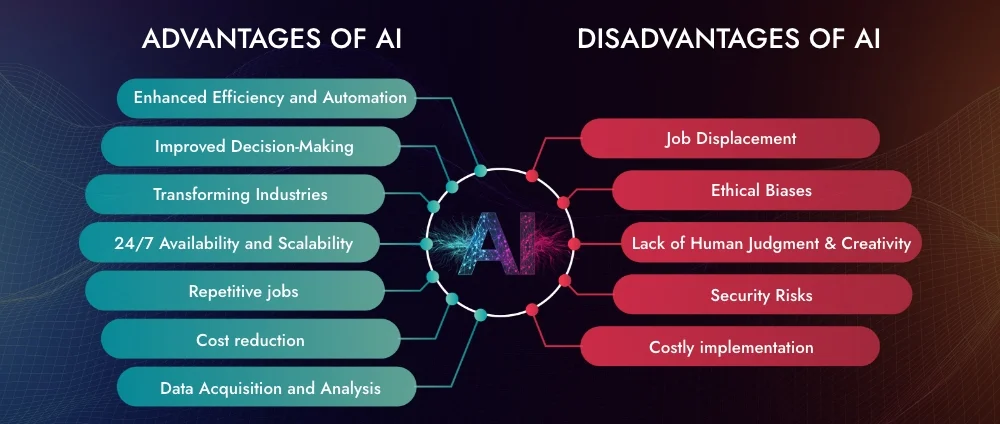
While artificial intelligence has numerous advantages, it also has some disadvantages. Artificial Intelligence benefits include increased efficiency through task automation, data analysis for informed decisions, support with medical diagnostics, and the evolution of self-driving vehicles. The disadvantages of AI include job displacement, ethical issues about bias and privacy, security problems from hacking, and a lack of human-like creativity and empathy.

Let us start with the pros of artificial AI.

Advantages and Disadvantages of AI

Advantages of AI (Artificial Intelligence)

Everyone understands that AI gives firms an advantage. Precedence Research projects the U.S. AI market size to reach around $594 billion by 2032. That’s a compound annual growth rate of 19% from 2023. The advantages of AI applications have the potential to drastically transform a number of future areas or businesses, including the following:

Enhanced efficiency and automation

AI excels at repetitive tasks, freeing up human time and resources. A study by McKinsey Global Institute estimates that AI could contribute up to $12 trillion to the global economy by 2030. Think of AI-powered robots handling complex assembly lines in factories or intelligent algorithms streamlining data analysis for businesses.

Improved decision-making

AI can study huge amounts of data to spot patterns and trends imperceptible to the human eye. This allows companies and organizations to make data-driven decisions, improving resource distribution and streamlining procedures.

Transforming industries

AI is transforming numerous sectors. In healthcare, AI-powered diagnostics aid early disease detection, while in finance, AI algorithms streamline risk assessment and fraud prevention.

24/7 availability and scalability

Many studies have shown that humans are productive for only 3 to 4 hours daily. Humans need breaks and time off to maintain a healthy work-life balance. However, AI is capable of working indefinitely without interruption. They think far faster than humans and can complete numerous jobs simultaneously with correct outcomes. They can even tackle demanding, repetitive tasks with the help of AI algorithms.

Repetitive jobs

Even the most intriguing career has its share of tedious or repetitive tasks. These could include tasks like entering and analyzing data, creating reports, confirming information, etc. Using an artificial intelligence program can relieve individuals of the boredom of repeated activities, freeing up their energy for more creative work.

Cost reduction

As previously said, AI can work around the clock and provide more value on the same day as a human worker. Furthermore, because AI may assist in automating manual and monotonous jobs, it frees personnel to perform more skilled tasks. This finally adds value for the end user or consumer.

Data acquisition and analysis

When it comes to data processing, the amount of data generated far outstrips humans’ ability to grasp and analyze it. AI algorithms can help digest more significant amounts of complex data, making it more usable for analysis.

Disadvantages of AI ( Artificial Intelligence )

With all the benefits of AI outlined above, implementing AI for your organization may be a no-brainer. However, it is also essential to consider the potential drawbacks of such a significant adjustment. Adopting AI has numerous advantages, but drawbacks include setup costs and degradation over time.

Job displacement

A significant concern surrounding AI is its potential to automate jobs currently performed by humans. While some jobs may be replaced, others will be created, requiring new skill sets to work alongside AI systems.

A robot is one example of an AI application displacing jobs and increasing unemployment (in some circumstances). As a result, some argue that chatbots and robots will always be able to replace humans, increasing the likelihood of unemployment.

Ethical biases

The quality of AI algorithms depends on the data they are trained on. Biased data sets can lead to discriminatory outcomes in areas like loan approvals or recruitment. Mitigating bias in AI development is crucial for ensuring fairness and ethical use.

Lack of human judgment and creativity

While AI is excellent at data analysis and automation, it needs more human capacity for critical thinking, creativity, and emotional intelligence. Human oversight and collaboration will remain essential in tasks requiring these skills.

Security risks

As AI becomes more sophisticated, the potential for misuse by malicious actors becomes a concern. Robust cybersecurity measures are essential to safeguard AI systems from hacking and manipulation.

Costly implementation

The most significant and obvious disadvantage of integrating AI is its development can be exceedingly expensive. The cost of using AI varies depending on what you need it for. According to one estimate, the cost of a fully developed AI solution ranges between $20,000 to millions of dollars for most firms.

The expense is offset later when the AI is completely integrated and can assist in optimizing the procedure. However, the upfront expense might be scary, if not prohibitive.

Get ready to develop AI solution that used in daily life?

How is Artificial Intelligence used in daily life?

AI is already deeply ingrained into our everyday experiences. From the time you wake up to a smart alarm clock to personalized recommendations on your favorite streaming service, AI is silently working behind the scenes. Here are a few examples:

  • Smartphones: Facial recognition for unlocking your phone, personalized news feeds, and voice assistants like Siri or Google Assistant all leverage AI.
  • Transportation: Ride-hailing apps like Uber and Lyft utilize AI algorithms to optimize routes and predict traffic patterns.
  • Streaming Services: The recommendations you see on Netflix or Spotify are powered by AI, analyzing your viewing habits and preferences.

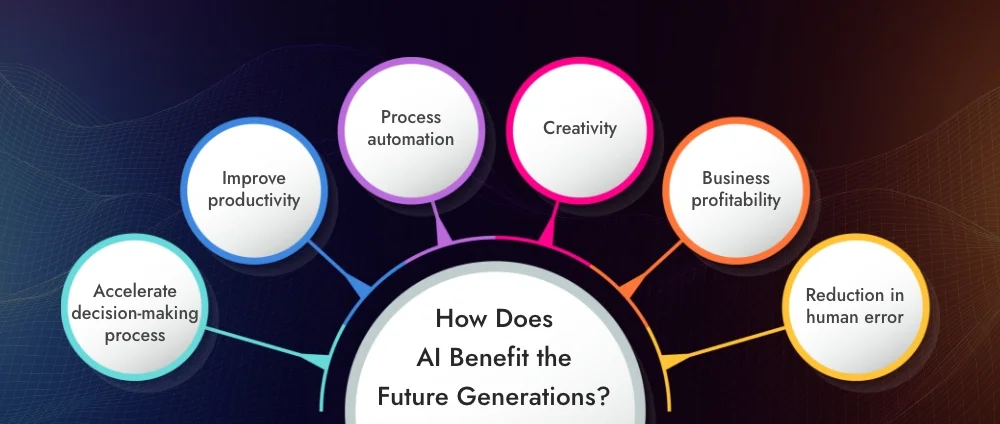
How does AI benefit the future generations?

AI can potentially transform various fields, impacting future generations in various ways. Here’s a glimpse into the possibilities:

How does AI benefit the future generations
  • Accelerate decision-making process: AI helps people make decisions faster by quickly analyzing vast amounts of data.
  • For example, AI can analyze medical records in healthcare to help doctors diagnose diseases more accurately and promptly.
  • Improve productivity: AI automates repetitive tasks, allowing people to focus on more complex and creative work.
  • For instance, in manufacturing, AI-powered robots can assemble products faster and more efficiently than humans alone.
  • Process automation: AI automates tasks that would otherwise require human intervention, saving time and reducing errors.
  • For example, in customer service, AI-powered chatbots can handle routine inquiries, freeing up human agents to handle more complex issues.
  • Creativity: AI can assist in generating new ideas and solutions by analyzing existing data and patterns.
  • For instance, in music composition, AI algorithms can generate original pieces based on a musician’s style and preferences.
  • Business profitability: AI helps businesses optimize operations, reduce costs, and identify new revenue opportunities.
  • For example, AI-powered recommendation engines in retail can increase sales by suggesting personalized products to customers based on their preferences and purchase history.
  • Reduction in human error: AI systems are less prone to making mistakes than humans, leading to more accurate outcomes.
  • For example, in finance, AI algorithms can detect fraudulent transactions with greater accuracy and speed than human analysts.

This is just a glimpse into AI’s vast potential. Responsible development is crucial as AI evolves to ensure a brighter future for future generations.

Maximize the advantages of AI with ViitorCloud

As organizations embrace AI, they must commit to openness, justice, and data privacy, ensuring that the transformative power of AI is used properly.

Given this, ViitorCloud recognizes the promise of AI and aims to guide businesses embarking on their journey to digital transformation through AI. From strategic AI consultancy to custom AI solutions, we provide focused assistance to businesses at every stage of their journey with our expert-led digital transformation services. We offer comprehensive Artificial Intelligence services to empower businesses to utilize AI for increased efficiency, data-driven decision-making, and a competitive edge. Our team of AI experts can help you develop personalized AI solutions to your specific needs.

Do you need a team of AI experts to support your digital transformation efforts? Let’s team up. Contact ViitorCloud today for a consultation!

Frequently asked questions

Artificial intelligence is woven into the fabric of our daily lives. It personalizes our online experiences by recommending products we might like or suggesting news articles relevant to our interests. In healthcare, AI assists doctors in analyzing medical images for faster diagnoses and helps develop personalized treatment plans.

AI offers a multitude of benefits. Automating repetitive tasks can increase efficiency, freeing human time and resources for more complex endeavours. AI algorithms can analyze vast amounts of data to identify patterns and trends, leading to improved decision-making across various fields.

While AI holds immense potential, there are also potential drawbacks to consider. One concern is job displacement, as AI automates tasks previously performed by humans. Another challenge is ensuring the ethical use of AI, as algorithms can perpetuate existing biases if not carefully designed and monitored.

How does AI work? The basics you should know in 2024

Artificial Intelligence is a rapidly growing technology aiming to replicate human intelligence digitally. It helps computer devices receive inputs, understand them, and give solutions to problems like the human brain.

Various industries, from tech, health, and education to finance, are using AI technology to make impactful developments. The technology has the potential to contribute to tech, health, transport, and many other industrial applications, where humans may give inaccurate results and might be at life-threatening risk.

Here is a detailed overview of how AI works, as well as its concept, components, and applications. Walk through it to see how it will help you transform your business.

How does AI work?

According to Accenture predictions, AI will improve workforce efficiency and business profitability by 38% in the next 10 years, starting in 2024. Then What is AI? It is complex yet helpful for businesses. Then how does it work? To present it in simple words, it combines large datasets with various processing algorithms. Then, it learns the behavior patterns of datasets and manipulates algorithms.

You might be wrong if you consider AI to be based on a few algorithms. However, it is based on a machine-learning model. Let’s find out how AI works in the following steps:

Input

As with every other system or algorithm, input is the first step for AI. Here, the person handling AI for business operations needs to collect the necessary inputs to feed to AI to get proper output.

This input can be of any form, like text, video, image, voice, etc. However, whatever input the AI algorithm receives should be understandable. Further, you should also provide the expected output from the given input.

Processing

In the second step, AI starts processing input and decides to modify it according to the given output command. For this, AI interprets pre-programmed input data and identifies behavior patterns of data in real-time based on specific AI technology.

Data outputs

Once the AI technology completes data processing, it predicts data outputs. Then, it defines whether the output is valid or not.

Adjustments

If there is any mistake in data output, the technology can learn and correct results accordingly. In this step, it is possible to provide inputs to correct mistakes.

Assessments

After completing the assigned prompt, it is time to assess the output. In the assessment phase, AI can analyze the output data and make predictions. Further, it gives suggestions if you want to repeat the algorithm again.

What are the basic components of artificial intelligence?

AI can help businesses gain insights into daily operations that they can not understand easily. Furthermore, it can help businesses perform daily tasks quickly and efficiently. After knowing how does AI work, let’s go through the basic components of it. Here are a few important components of AI you should understand.

Learning

In AI, learning occurs when computer systems or machines memorize new data. Recent developments in machine learning allow enhancements in predictive and prescriptive analytics using operational data.

AI reasoning

Artificial intelligence has the ability to make inferences while applying command-based reasoning. Mainly, it uses inductive and deductive reasoning.

Problem-solving

AI is primarily used for its problem-solving and data manipulation ability. You can also use it for development purposes.

Perception

It is when a new sense organ, like artificial or real, scans the environment. Once an AI system receives elements of the environment, the perceiver will study various objects, collect their features, and identify relationships.

Language processing

Artificial intelligence will process language for autocorrects and spell checks. For this process, the system will use neural networks, scan large text bodies, and find issues like language irregularities and misspelled words.

Concepts of AI

Not every type of artificial intelligence is suitable for all businesses, datasets, and processes. Consider the following 4 main concepts of AI, and choose one that suits your business requirements.

Reactive machine

This AI concept can respond to real-time data. However, it has some restrictions, like the inability to build memory or store information.

Due to restrictions, you can’t use it to analyze data based on past experiences. However, it can be used to filter spam messages from inboxes or organize data from new clients.

Limited memory

This AI concept can store some data and use it to learn and use stored data to perform new tasks.

After processing information, it can study real-time data and make observations and predictions.

Theory of mind

It is a more advanced AI concept compared to limited memory. It can store data and make observations of real-time data.

However, it has not yet been fully developed. As the name suggests, it can respond to human behavior and emotions.

Self-aware

This advanced AI concept takes the theory of mind further. It processes information, saves it, and uses it while making decisions.

Along with its ability to store memory and understand human emotions, it can also make use of self-awareness while processing.

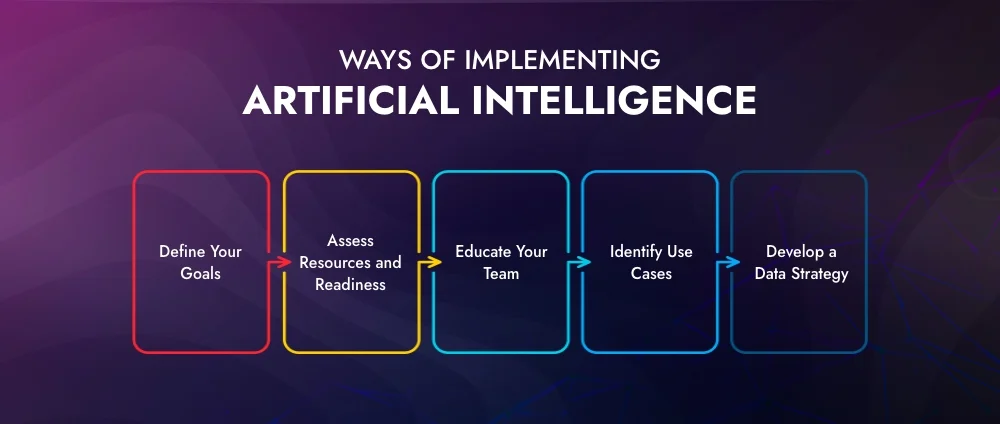
Ways of implementing AI

AI execution is an iterative process. It is crucial to adapt and reform your approach depending on your business requirements,

Although you will get significant advantages from AI tools, they also have some restrictions due to a lack of training data. Hence, humans should be responsible for decision-making and bringing creativity while implementing it. Here are a few steps on how you can use AI in your business.

Ways of implementing AI

Define your goals

Before using AI for your business operations, it is necessary to define business objectives and goals clearly. These aims should be important because they will give direction to your business output.

Setting clear goals keeps you focused while applying AI and helps stakeholders to understand what you want. With these goals, you can also measure the success and performance of AI application exercises.

Assess resources and readiness

Gauge your firm’s readiness for AI execution. The primary step is to ensure that you have all the required resources to adopt AI in your workflow,

Consider the data you have with the format, and see if it is enough to train the AI system. Since data quality reflects the accuracy of the ML model, make sure to feed filtered and accurate data.

Educate your team

For successful AI integration, You should understand technology fundamentals and educate your team. Alongside learning the basics of technology, learn about applications, AI concepts, machine learning, data science, deep learning, prompt engineering, etc.

Then, some practice of these processes should be done before exploring real projects. Further, restrict yourself and your team to one-time learning. It is a continuous process, so keep it constant.

Identify use cases

Recognize certain use cases of AI that can offer tangible benefits to businesses.

Further, explore areas where artificial intelligence can improve decision-making, efficiency, and client experience.

Develop a data strategy

During the assessment process, to see if your business is ready for AI, you must have enough data. It will help you train the AI model perfectly with precise and accurate data in enough quantity.

Therefore, a proper data strategy for data collection, storage, validation, and governance must be built. Hence, make sure to determine all the required data collection, storage, and cleaning steps.

Choose the right AI technologies and tools

Now, we know how does artificial intelligence works. Now, let’s see some right tools and technologies. There are thousands of AI tools and technologies in the market; for instance, you have Gemini, Midjourney, Adobe AI photo editor, AI image generator in Canva, etc. However, these technologies are more used in marketing.

These tools and technologies may not help your business. Then what to do? Don’t worry! ViitorCloud is here to help you with AI development services for your business. You can expect us to develop customized AI models that meet your business needs.

Ready to choose the right AI technologies and tools?

Our expert makes it easy to select the best options for your business.

Develop and train AI models

AI has been the fastest-growing industry recently. You can explore many AI tools or develop your own custom model. After exploring existing tools from the market, you may find that no tool is helping you. In this case, you can hire us for your AI development needs,

Once we develop the tool, you can start training it according to your requirements and available data. After completing training, start using the custom AI tool.

Pilot testing and evaluation

It is not good to put AI tools into production immediately after development. Instead, a series of trials in controlled conditions will be performed to check accuracy and performance. Gather feedback from pilot tests to make necessary improvements.

Once you collect audits from trials of developed AI models, make the required adjustments and modifications. After that, your AI tool will be ready for deployment.

Deploy and integrate

After going through all the above processes, you can finally use the developed AI model in production. Hence, integrate the model into your business workflows according to requirements; while deploying the tool, make sure to do it seamlessly by checking the compatibility.

Optimize and improve

Consistently track the performance of the AI solution and see if it is working properly. If it is not working as per your expectations, optimize technical adjustments and improve the performance of your solution.

Transform your business with AI

Adopting artificial intelligence is not an option; it is a dire need to thrive in this rapidly growing business era. Hence, businesses wanting to gain competitive advantage and sustainable growth must consider collaborating with AI development companies like Viitor Cloud and leveraging the full potential of this technology.

Whether you wish to develop a customized AI tool, chatbot, video solution, AI assistance, etc., for your business requirements, our advanced AI development services can help you achieve your goals very soon. Then, Why are you waiting? Partner with us now and mold your business in different dimensions.

Frequently asked questions

In learning, AI employs various algorithms to personalize content, study data, improve problem-solving ability, improve critical thinking, and share feedback. With adaptive learning, AI customizes learning experiences to individual requirements, fostering retention and deeper understanding.

In real life, artificial intelligence provides various benefits, like location tracking, image recognition, fraud detection, etc. By employing various AI algorithms, AI helps in task automation, making informed decisions, improving accuracy and efficiency, optimizing processes, etc.

Artificial Intelligence is not replacing any business. However, it is improving processes with data analysis and automation. Further, enhancing decision-making and efficiency gives businesses a competitive edge and sustainability.

What is Artificial Intelligence? Is AI taking over human activities?

Have you ever thought of something called a machine performing human activities? Probably not, but today, it is the case where machines, like computers, are replicating human intelligence. What is it called? Artificial intelligence. Then, what is artificial intelligence technology?

It is essentially about teaching computers and machines to think and act like humans. It involves enabling them to understand language, recognize patterns, solve problems, and make decisions in ways similar to ours. Let us dive deep and understand it in detail, its pros and cons, types, applications, etc.

What is artificial intelligence?

AI is like teaching machines to do tasks that humans usually do, like learning, solving problems, making decisions, and being creative. AI is like teaching machines to think and act like humans, but defining exactly what it is takes work. A recent study by PwC predicts that AI could contribute up to $15.7 trillion to the global economy by 2030.

At its core, AI means machines that can learn, make decisions, and take action, even in new situations they haven’t encountered before. Some people think of AI as robots with human-like intelligence and personality, but today’s Artificial Intelligence definition is far from that. It’s more about solving problems and adapting to new situations. Regular computer programs repeat the same tasks in the same way every time. They need help adapting to new situations.

AIs, on the other hand, can learn and solve more complex problems, even ones they’ve never faced before. Companies must teach computers on every road and intersection in the race to build driverless cars. Instead, they’re creating programs that can react to real-world situations using sensors, even if they’re new. We still need to have brilliant AI, like in sci-fi movies. What we have now is called weak AI or narrow AI. It’s good at specific tasks but can only do some things. So, when you hear about Artificial Intelligence, be cautious. Only some things labeled as AI are knowledgeable.

Why is artificial intelligence important?

AI rapidly transforms industries by automating repetitive tasks, freeing human time and resources. From robots handling complex assembly lines in factories to AI chatbots offering 24/7 customer service, AI streamlines operations and enhances efficiency. Beyond automation, AI excels at processing massive datasets, providing valuable insights that empower better decision-making. Businesses can utilize AI to personalize marketing campaigns, develop targeted treatments in healthcare, or predict weather patterns for environmental initiatives.

This data-driven approach fosters innovation across various fields. AI is accelerating drug discovery, aiding climate research, and even contributing to scientific breakthroughs in astronomy and genomics by analyzing vast amounts of data that might elude human observation. Generative AI tools further expand possibilities, offering applications in education, marketing, and product design. 80% of smartphone users interact with AI daily through features like voice assistants and smart recommendations.

The rise of AI isn’t just about efficiency and insights; it also creates entirely new business models. Take Uber, for example, which connects riders with taxis through a mobile app—a concept unimaginable without AI’s ability to connect users and resources in real time. Leading companies like Google, Apple, Microsoft, and Meta heavily rely on AI to power their core operations and stay competitive. AI technology is shaping the future, from Google’s search engine algorithms to self-driving cars and advancements in natural language processing.

The future of work with AI

While AI automates specific tasks, it also creates new opportunities. New roles are emerging in AI development, data analysis, and human-computer interaction. As AI meaning continues to evolve, future workers will need a combination of human skills like creativity, critical thinking, social intelligence, and a solid understanding of AI.

What are the types of artificial intelligence?

Researchers are exploring more sophisticated forms of artificial intelligence and grappling with defining intelligence and consciousness more precisely.

What are the types of artificial intelligence
  • Reactive machines: These are basic AI systems that react only to immediate stimuli, like playing chess, without any memory of past events.
  • Limited memory machines: These AI systems have a limited understanding of past events, allowing them to interact more with the world, such as self-driving cars adjusting their speed based on past observations.
  • Theory of mind machines: These hypothetical AI systems would understand the world and its other entities, representing an early form of artificial general intelligence.
  • Self-aware machines: The most advanced type of AI, these machines would understand the world, others, and themselves, akin to achieving artificial general intelligence. However, this level of AI is currently a distant possibility.

Advantages and disadvantages of AI

People are afraid of AI, and that makes sense. There are many real concerns about it. AI has a wide range of applications that have the potential to alter the way we work and live. While many of these innovations, such as self-driving cars, virtual assistants, and wearable gadgets in healthcare, are lovely, they also present numerous concerns. It’s a complex picture that frequently evokes opposing images: utopia for some, dystopia for others. The reality is likely to be far more complex. Below, you’ll find a brief list of AI’s potential advantages and disadvantages.

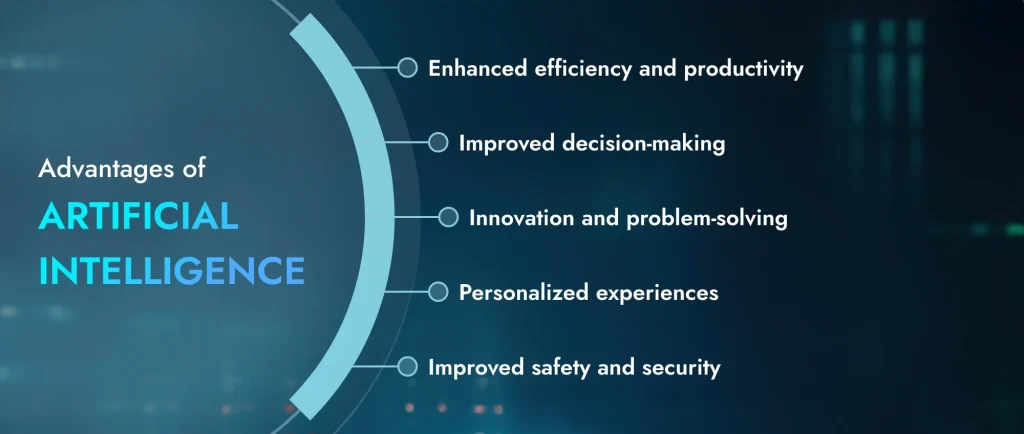
Advantages of artificial intelligence

AI significantly benefits across sectors, transforming processes and improving outcomes with its capabilities. AI’s impact is expanding, driving advancement and change through increased efficiency and productivity, as well as improved decision-making and innovation.

Advantages of artificial intelligence

Enhanced efficiency and productivity

AI is increasingly automating repetitive tasks that were once the domain of human labor. This frees up valuable human time and resources, allowing us to focus on more strategic endeavors.

Examples:

  • Manufacturing: AI-powered robots can handle complex assembly lines with greater precision and speed than humans. This increases production output, reduces errors, and improves overall efficiency.
  • Customer service: AI-powered chatbots can handle routine customer inquiries 24/7, freeing up human representatives for more complex issues that require a personal touch. This leads to shorter wait times and improved customer satisfaction.

Improved decision making

Traditional decision-making often relies on limited data or human intuition. AI, however, thrives on vast troves of data. AI algorithms can analyze enormous datasets, identifying hidden patterns and trends that might escape human observation. This empowers organizations to make data-driven decisions, leading to better outcomes.

Examples:

  • Finance: AI can analyze financial data to identify potential risks and investment opportunities. This allows financial institutions to make more informed investment decisions and offer personalized financial advice to clients.
  • Healthcare: AI can analyze medical records and imaging data to assist doctors in diagnosing diseases with greater accuracy. This can lead to earlier diagnoses and more effective treatment plans, ultimately improving patient outcomes.

Innovation and problem solving

AI has the potential to tackle complex problems that have long challenged humanity. Its ability to process vast amounts of information and identify patterns opens doors to groundbreaking innovations in diverse fields.

Examples:

  • Medicine discovery: AI can analyze molecular structures to accelerate the development of new medications, leading to faster breakthroughs in the fight against diseases.
  • Climate change: AI can analyze climate data and simulate potential solutions for sustainability challenges. This can help us develop more effective strategies to mitigate the effects of climate change.

Personalized experiences

AI is transforming how we interact with technology by creating personalized experiences. Recommendation systems powered by AI algorithms learn your preferences and suggest products, content, or services tailored specifically for you.

Examples:

  • eCommerce: AI can analyze your purchase history and browsing behavior to recommend products you might be interested in. This personalizes the shopping experience and increases the likelihood of a purchase.
  • Education: AI-powered tutoring systems can adapt to a student’s learning pace and style, providing a more personalized learning experience that caters to their strengths and weaknesses.

Improved safety and security

AI-powered systems can enhance security measures and assist in hazardous tasks, reducing risks to human safety and safeguarding valuable assets. AI technologies offer proactive solutions to various safety and security challenges using advanced algorithms and real-time data analysis.

Examples:

  • Cybersecurity: AI can detect and prevent cyberattacks by analyzing network traffic patterns and identifying suspicious activity. This helps organizations protect their valuable data from cyber threats.
  • Dangerous Jobs: AI-powered robots can perform hazardous tasks in industrial settings, such as handling dangerous materials or working in extreme environments. This reduces the risk of injuries to human workers.

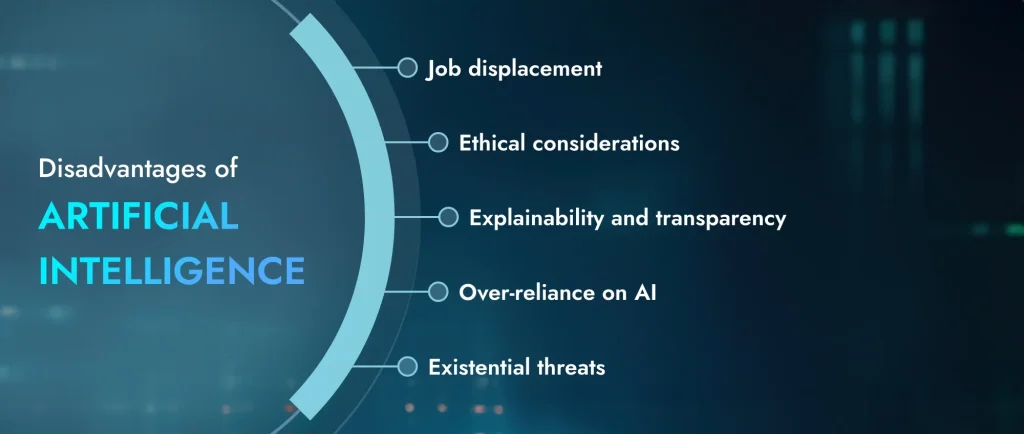
Disadvantages of artificial intelligence

AI technologies bring numerous benefits but present several challenges and drawbacks that society must address. It will help you fully harness their potential while mitigating their negative impacts.

Disadvantages of artificial intelligence

Job displacement

AI automates tasks, boosting efficiency but raising concerns about job displacement. Industries like manufacturing and customer service may see job losses as AI handles repetitive work. Retraining programs are crucial, focusing on skills that complement AI. Cultivating creativity, critical thinking, and social intelligence will be key for future job prospects.

Ethical considerations

AI algorithms are only as good as the data they’re trained on. Biased data can lead to biased AI systems perpetuating discrimination in areas like loan approvals, hiring practices, or facial recognition software. The potential for AI to be used for malicious purposes, such as autonomous weapons, or mass surveillance, raises ethical concerns.

It is crucial to develop ethical frameworks for AI development and deployment. This includes promoting transparency and accountability in AI algorithms, ensuring fairness, and preventing discrimination.

Explainability and transparency

Understanding how AI systems reach decisions can be complex, often shrouded in layers of algorithms and data. This lack of transparency can hinder accountability and raise concerns about potential misuse.

What if an AI-powered loan approval system only accepts loan applications with a clear explanation? This lack of transparency makes it difficult to identify and address potential biases within the system. Researchers seek ways to develop “explainable AI” systems that clearly explain their decisions. This will be crucial for building trust in AI and ensuring its responsible use.

Over reliance on AI

Dependence on AI for critical tasks without proper human oversight can pose risks. While powerful, AI systems can only sometimes handle complex situations that require nuanced human judgment and ethical considerations.

If an AI-powered stock trading algorithm makes high-risk decisions without human supervision, it could result in significant financial losses. A balanced approach is essential. Human oversight and expertise should complement AI systems, ensuring responsible decision-making and mitigating potential risks.

Existential threats

Some experts express concerns about the potential for superintelligence – AI surpassing human intelligence in all aspects. While this is a highly speculative scenario, it raises questions about the potential risks posed by AI that might not align with human values.

This is a topic of ongoing debate among AI researchers and philosophers. Some believe safeguards and ethical frameworks can prevent such risks, while others advocate for careful consideration of the long-term implications of superintelligence.

What are some examples of AI technology, and how is it used today?

Artificial intelligence used every day is already integrated into many aspects of our daily lives. Here are just a few examples of how we use AI everyday.

  • Self-driving cars: Self-driving cars interpret sensor data using AI algorithms. They navigate roads autonomously. AI processes information in real-time. It makes split-second decisions to steer, accelerate, and brake. The goal is safer and more efficient transportation.
  • Virtual assistants: Virtual assistants like Siri, Alexa, and Google Assistant rely on NLP and machine learning. They understand user commands and provide relevant responses. These assistants help with setting reminders, answering questions, and controlling devices. Their goal is to assist users with various activities.
  • Recommendation systems: Recommendation systems analyze user data to suggest personalized content or products. Platforms like Netflix use collaborative filtering and content-based algorithms. These algorithms tailor recommendations to individual tastes. The goal is to enhance user experience and engagement.

Are you looking to apply AI in your business operations but are stuck due to a lack of time and resources for artificial intelligence? Contact us today for AI development services.

Key takeaways

  • AI refers to the replication of human intelligence using machines.
  • AI can potentially revolutionize various industries where human life is at risk.
  • Different types of AI exist, like self-driven cars, chatbots, virtual assistance, research and development, etc.
  • AI offers numerous advantages but also raises ethical and practical concerns.
  • AI integration is already widespread in many technologies we use daily.

Frequently asked questions

Artificial General Intelligence (AGI) is a speculative type of AI with human-level intelligence and the ability to learn and apply knowledge across various domains.

Artificial Intelligence can be broadly categorized into two main types: Narrow AI (task-specific) and Artificial General Intelligence (human-level intelligence).

Artificial Intelligence was created to automate tasks, augment human abilities, solve complex problems, and advance knowledge across various domains.

In industries, AI technology automates tasks, improves decision-making, and enhances efficiency through applications like personalized recommendations, fraud detection, and predictive maintenance.

How artificial intelligence will change business forever?

The world is changing very rapidly; businesses, irrespective of their size, are growing with innovations. Undoubtedly, technology is the backbone of our modern industries. We generate a lot of data while using the internet that businesses and data analysts monitor and capitalize on.

Thanks, Artificial Intelligence (AI) enables organizations to utilize the lion’s share of this data. The emergence of artificial intelligence has enabled people to build their brand presence and value just with the right methods and suitable solutions. AI is automating data mining and data analysis.

It adopts and experiences the characteristics of human intelligence and implements them in machine or computer-friendly language. AI automation empowers businesses by assisting them in making better decisions.

The market research firm IDC estimated that the worldwide AI market would achieve half $500 Billion by 2024. This data shows how frequently businesses are adopting AI technology to leverage the maximum benefits.

Importance of AI

Artificial Intelligence is termed as the intelligence demonstrated by machines. In today’s competitive age, AI has emerged as one of the fastest-growing technologies. It is the simulation of human intelligence in machines intended to experience, learn, and perform human-like tasks.

Industries which hire AI developers to implement AI in their business operations are more competitive. The advanced data analysis process, capabilities of fraud detection and better customer management make such businesses profitable and sustainable. Artificial Intelligence is a great way to find the best solutions to complex business issues.

Artificial intelligence examples

  1. Self-driving cars
  2. Natural Language Processing (NLP) tools
  3. Social media monitoring
  4. Smart assistants
  5. Conversational marketing bot
  6. Disease mapping
  7. Virtual travel booking agent
  8. Automated financial investing
  9. Manufacturing robots
  10. Proactive healthcare management
  11. Inter-team chat tool

Vital role of AI in business

AI is the most trending technology in the business world. It is a proven technology that is highly profitable and fruitful for modern-day industries in multiple ways. To better utilize AI, you need to make proper business plans and strategies.

According to a study commissioned by Avanade, a survey of 500 IT and business leaders worldwide disclosed that they estimate to see 33% hikes in their revenue as a fruitful outcome of smart technologies.

How AI will change business forever?

AI is poised to revolutionize businesses in profound ways, fundamentally changing the way we operate, compete, and innovate. Here are some ways AI will change business forever:

Market and customer insights

What is the vital factor in company growth? Isn’t it market and customer insights? Definitely, one of the basic reasons for constant advancements in AI technology is its capability of data mining. It helps businesses in finding different patterns of data. This data enables us to know the customer’s behavior, issues, and requirements.

For small organizations or startups, AI is no less than a boon as it assists them explores lots of opportunities in different fields. With proper customer insights, they can easily analyze the data before launching the product. It is vital to hire AI developers to leverage maximum benefits and better business growth.

image

According to a study,80% of the data generated through different online platforms are unstructured. Analyzing unstructured data will be one of the most vital factors for all businesses in the next decade.

AI also empowers the marketing process and helps companies to make proper strategies with relevant information. The data collected assists companies to convert visitors into potential customers. In this manner, it enables to reduce the marketing and advertising cost.

Virtual assistance

A wide range of industries is already using AI for virtual assistance. Chatbots are the best examples of virtual assistance. It has become the widely used vertical for customer service in today’s world.

Many people don’t consider it a good idea to interact with a machine as sometimes it doesn’t give suitable answers. However, there is also good potential in machine-driven customer service.

For example, when you raise insurance queries, AI-enabled customer service can be used to answer some of the easy questions such as the name, age, type of insurance etc. Chatbots are widely used by businesses to interact with their customers effectively.

However, human-based customer service can also focus on more queries and complex issues. Technologists predict that virtual assistance and Chatbots could become an essential part of all businesses and even our lives to provide next-level customer service in the near future.

Automation process

Technology is increasing at rocket speed. With automation tools, it becomes easy to perform business processes easily and quickly. You should hire an AI developer to leverage the benefits of such automation tools in your business operations with AI.

The transformative influence of AI solutions is evident across diverse industries including hospitality, retail, and education. These algorithms and machines operate continuously, without the need for breaks, enhancing efficiency. From automation tools to robotic assistants, AI empowers and complements human efforts in various capacities.

Improve the recruitment process

Don’t get surprised if we say that AI is now assisting businesses in their recruitment process. It automates the recruitment of candidates in the company. AI assists in quickly shortlisting the applications by automatically accepting or rejecting those as per the company’s requirements.

In this way, AI saves a lot of time and money required in the recruitment process. It also ensures transparency in the shortlisting process. It is not limited here as AI can also take care of other tasks of recruitment.

Personalized customer experience

AI assists businesses in offering a more personalized and enhanced experience to their customers. It helps you analyze a large amount of data accurately and easily identify information patterns such as credit scores, buying choices, browsing history, and other threads.

AI has no limit as it analyzes millions of data every day. Predictive analysis is helpful for businesses to engage with their customers. It enables the creation of a unique form of customer engagement for every transaction.

Even industries can personalize their sale cycles with AI-based applications. Indeed they can easily engage the suitable customer at the right time with the right content.

AI is profitable and fruitful for all business sizes. Indeed, AI processes and tools will offer more benefits to businesses in the next decades. Companies using AI are achieving a new milestone of success by offering perfect solutions to different problems.

How artificial intelligence can support your mobile apps?

Artificial Intelligence, in today’s day and age, is much more than a buzzword in the field of technology. Technology experts and developers across the globe are looking for innovative ways to introduce AI (Artificial Intelligence) and machine learning in the applications, software and systems being used by people on day to day basis. One of the biggest reasons that developers are seeking viable ways to integrate artificial intelligence into various systems is the innumerable benefits offered by AI. Right from providing valuable insights to details about how users can be engaged in better ways, there are many aspects of AI that enable it to deliver a multi-dimensional wide-ranging impact. Being able to perform cognitive functions somewhat like humans, AI has proved itself quite useful for countless mobile apps in various domains and niches.

Many AI development companies are these days focusing on leveraging the data-centric benefits offered by artificial intelligence including:

  1. Close analysis of the data patterns among users
  2. Deriving detailed information about how the apps are being used and driving worthwhile insights
  3. Generating a colossal amount of resourceful information
  4. Providing outstanding personalization to users

Artificial intelligence powering mobile applications with unsurpassed benefits

With mobile applications becoming one of the most convenient and widely used pieces of technology, every organization is looking for ways to revolutionize their mobile apps and introduce progressive features in them in order to keep their customers engaged. Over the past few years, the mobile apps and the user experience arena have undergone significant changes, and with a pandemic hitting the world, our dependency on mobile applications has grown ever further.

Whether you are looking to buy some stuff online or want to contact your bank, whether you want to order groceries or ordering food online, whether you are playing some games or are looking for some information, mobile apps powered by Artificial Intelligence would definitely make your experience pleasant and enhance convenience in multiple ways.

How does AI enhance and support mobile applications?

AI Enables User Analysis and Reasoning To Enhance User Experience

Artificial Intelligence enables reasoning ability in the applications. The AI-based reasoning tools learn from human logic and try to apply that to enhance the user experience. The AI-powered apps work on analyzing the app usage in diverse situations and aspects and then applying the logic to make it convenient for the user to use the application. One of the good instances of this is the Starbucks app that analyses the user’s routine and ordering pattern and then aids the users by suggesting a customized routine.

Another example can be Amazon’s or Myntra’s mobile app that records the user’s activities and buying patterns to suggest similar products and saves users time to explore the products and browse the catalogs.

Any company seeking to develop an intuitive mobile app that makes it easier for the user should look forward to hiring an AI developer to explore this domain.

Assistance-oriented applications and usage of chatbots

Another incredible way in which a number of AI development companies is leveraging artificial intelligence is by developing applications integrated with assistive systems such as chatbots. With its superior adaptive learning models and capability to manage colloidal amounts of data, AI can make any mobile app incredibly intuitive.

Whether you want to book an appointment through a mobile app, looking for specific information or need assistance with payment, chatbots can help you anytime without human involvement. Your customers can get all the information they need, at any time and to any amount of detail.

Using artificial intelligence to make your mobile application secure

No one can deny the increasing number of cyber-attacks that are happening across the globe. The number of cyber-attacks is only increasing and also, and the amount of information we save & share through our smartphones is also on the rise. This implies that our personal or financial information is always at risk unless some robust measures are applied to secure it. What can be a better way of applying information security and making our mobile apps secure than using ever-evolving artificial intelligence?

If you are planning to develop an app for your business, it is highly recommended to hire an AI developer, who can integrate the app with advanced AI-based threat management systems. Machine learning and artificial intelligence can be leveraged to deploy security mechanisms like face recognition, fingerprint identification, app usage analytics, etc. and also, AI is capable of deriving information that can be used to figure out the unauthorized access of applications.

Using AI to develop apps integrated with the Internet of things

By combining artificial intelligence and the Internet of Things, the AI developer company can deliver a highly personalized experience for users that is bound to enhance customer loyalty. Today a lot of smart devices are capable of collecting and transmitting huge amounts of data in real-time.

The mobile apps powered by AI tools can leverage this real-time data to deliver a customer experience that is second to none. For example, if you are in a new city and looking for some help, an app or search engine that can deliver you results by tracking your real-time location and other search terms being used by you would certainly make things much easier for you.

This would be even more advantageous if you are in a different country and their language is different. Any IOT-integrated smart app can help in translating sentences without lag and support easier communication in a foreign language. There are multiple innovation-oriented ways in which an app developer can integrate these two amazing technologies to deliver mobile apps that are not only smarter and fast, but, do a lot of things intuitively.

To conclude, Artificial Intelligence, indeed is presenting the technology world with countless possibilities and innumerable ways for delivering value to the end user. Undoubtedly, when used in mobile app development, artificial intelligence can not only drive revenues for businesses but also deliver an astounding user experience.

Businesses looking to hire AI developers for their mobile apps should consider these benefits and must look for innovative ways to deploy machine learning to develop ever-evolving intelligent apps that can keep on increasing their scope of knowledge through continuous learning