7 Innovative AI Use Cases in Information Technology

In today’s rapidly developing landscape, businesses grapple with complex IT challenges—ranging from managing intricate operations to ensuring scalability and reliability. The integration of new technologies often adds to this complexity. But with ViitorCloud’s AI solutions, these hurdles become growth opportunities.

By implanting artificial intelligence into your IT operations, ViitorCloud empowers your business to tackle these challenges head-on. From real-time problem identification to predicting future issues and streamlining data management, our AI solutions optimize your IT infrastructure and operations systems, ensuring you stay ahead of the curve.

Curious about the AI use cases in information technology? Want to see how AI is revolutionizing IT operations? Let’s then dive into the details and understand everything. At ViitorCloud, we not only guide you through understanding AI in information technology but also deliver tailored AI development services that align with your business goals.

Why AI is Revolutionizing Information Technology & How ViitorCloud Can Help Your Business Thrive

AI in information technology isn’t just a trend—it’s a transformation. At ViitorCloud, we harness the power of AI to elevate your IT infrastructure, making it more efficient, strategic, and innovative. Our AI development services streamline repetitive tasks, freeing your team to focus on what matters most—driving your business forward. With our advanced AI solutions, we enhance operational processes, enabling your business to solve problems smarter and faster.

READ: Benefits of AI in Information Technology for Startups

Explore AI Use Cases in Information Technology with Us

AI Use Cases in Information Technology

According to the NextMSC, the global AI market will reach $207.9 billion in 2023. AI in information technology improves the IT industry’s operation, efficiency, and productivity.

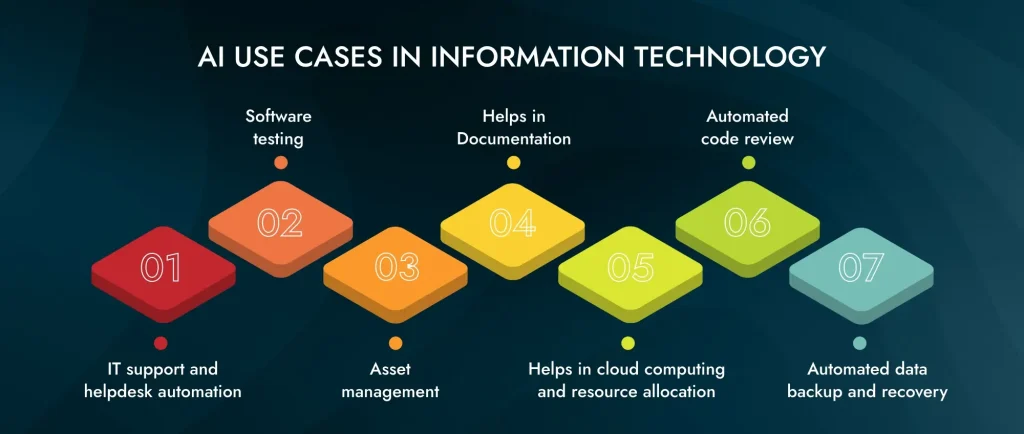
Here are the AI use cases in information technology that enhance the IT business:
AI Use Cases in Information Technology

1. IT Support and Helpdesk Automation

IT support and helpdesk automation solve the issues and streamline the user interaction process. Employees who go through technical issues raise a support request through the chatbot. These automation systems categorize the issue based on its severity and nature. When a problem can be solved with automation, it is solved, and if it needs the help of a human, then a ticket is raised to the appropriate IT personnel to solve the issue.

As a result, efficiency improves in the IT department, and professional people can focus on complex tasks. IT support is one of the AI use cases in IT operations, which improves operations.

2. Software Testing

AI use cases in information technology play a vital role in software testing by automating and improving the testing process. It helps generate test cases, predict areas of code of instability, and adjust the testing strategies based on changing project requirements. This application advances the testing life cycles, ensures fast feedback to developers, and reduces the time to release software testing.

Additionally, AI identifies complex tasks and detects bugs and performance issues. Also, it automates repetitive tasks so the tester can focus on essential testing areas.

3. Asset Management

IT asset management involves tracking and managing assets in the entire lifecycle of IT, including hardware, software, and licenses. It also automates asset discovery, monitors patterns, and predicts when assets need maintenance or replacement. Additionally, AI helps IT professionals maintain necessary inventory and reduce the risk of unnecessary procurement, which saves costs. However, AI asset management ensures compliance with software license agreements and regulatory requirements.

4. Helps in Documentation

The combination of machine learning and natural language processing automates the documentation and classifies the document. As a result, organizing and searching for relevant information becomes accessible. Additionally, extracting critical insights from documents provides quick access to essential details. Moreover, AI chatbots and virtual assistance immediately answer customer and IT team queries from the documentation.

Additionally, the valuable feature of AI is that it provides update-based articles that analyze the latest trends, development needs in IT, and issues. These improve IT support efficiency, resolve issues faster, and reduce downtime. It is a way AI information technology use cases make the documentation process simple and effective.

5. Helps in Cloud Computing and Resource Allocation

According to Mordor Intelligence, the cloud AI market will expand from USD 51.04 billion in 2023 to USD 207.40 billion by 2028. AI analyzes the resource usage patterns, workload demands, and performance metrics to allocate CPU, memory, and storage resources as required. When resources match workload requirements, AI helps companies avoid oversupply and underutilization of resources, save costs, and improve the performance of the applications.

Additionally, AI identifies cost-saving opportunities to optimize storage uses in cloud environments. This application enhances the reliability, scalability, and cost-efficiency of cloud computing.

6. Automated Code Review

AI analyzes the software code, bugs, security vulnerabilities, and deviations from coding standards. This approach improves software development quality by addressing risks early in the process and creating a more secure, reliable, and maintained codebase. This tool provides feedback for improvement, expedites the software development lifecycle, and improves the efficiency of software engineering processes. It is one of the important information technology use cases in IT operations.

7. Automated Data Backup and Recovery

It is one of the AI information technology solutions that solves data backup and recovery problems. AI automates the scheduling and execution to ensure the timely and efficient creation of data backup and recovery and reduce the risk of human error. When there is a system failure or data loss, the automation recovery process of AI helps restore the information and minimizes downtime.

Additionally, companies can enhance the disaster recovery capability by automating important tasks, protecting essential data, and maintaining business continuity. It is one of the important information technology use cases in the IT business.

ALSO READ: Top 5 Applications of AI in Information Technology

Discover How AI Transforms IT—Let’s Innovate Together for Your Business

How do we implement AI information technology operations?

When implementing AI in the IT industry, IT operations become effective. This AI innovation ensures proactive management and frees resources for strategic initiatives.

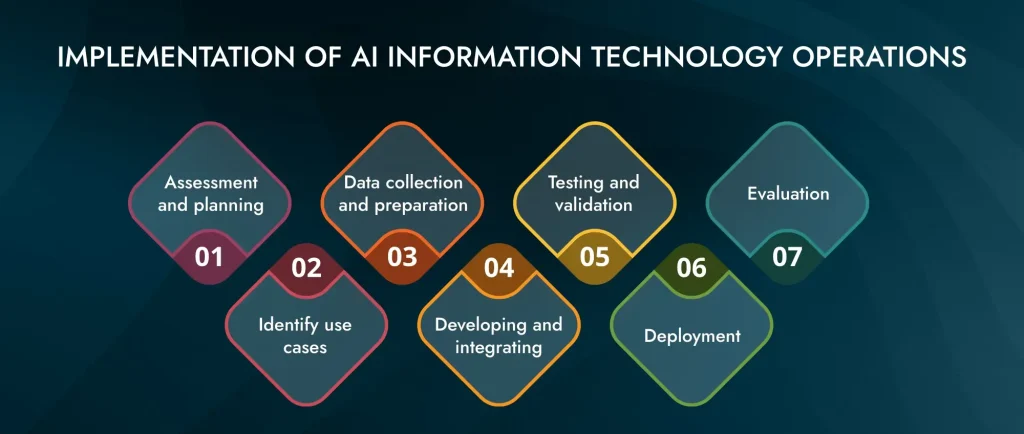
Let’s understand the process of implementing AI use cases in IT operations:
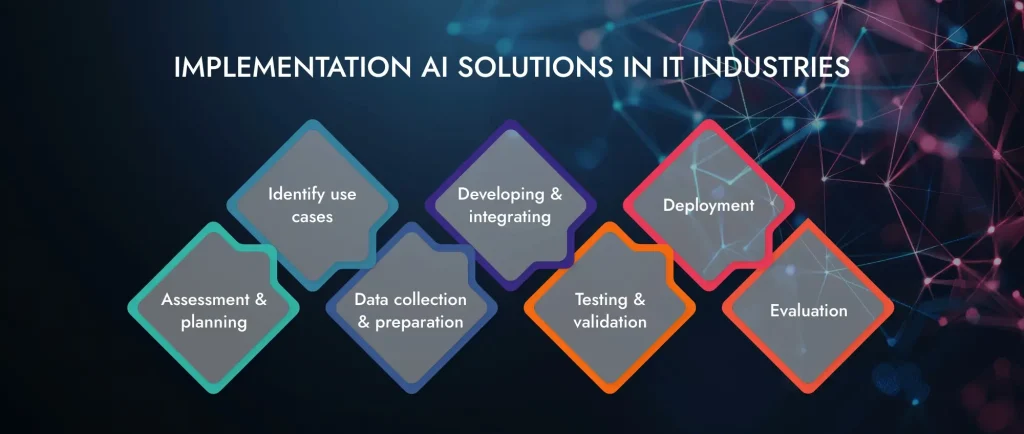
Implementation of AI Information Technology Operations

Clearly defining the objective of the business helps implement AI in IT operations. The objectives include improving efficiency, providing security, or optimizing the allocation of resources. Also, evaluating the current IT infrastructure, such as existing technologies, team skill sets, and data quality, is essential to identify the readiness for AI integration.

It is necessary to identify use cases such as automated monitoring, predictive maintenance, or detection of security threats. When use cases are identified, IT teams can solve the specific problem in the business and help assess the feasibility of implementing AI. Additionally, identifying use cases helps identify challenges and risks for AI implementation. The risks include data privacy, regular compliance, security, and ethical considerations.

Data collection is important for businesses to analyze. The data includes historical data, performance metrics, and other data sources. Also, quality and reliable data are essential for the company to analyze.

Collaborate with data scientists and IT professionals to develop and train AI models. Also, AI should be integrated with existing systems to improve workflow, ensure compatibility, and minimize distribution for ongoing operations.

Once the AI model is developed, it is essential to test and validate it. For the testing, create a controlled environment where AI models can be tested. Feedback will also be received based on testing. Performance analysis is possible during the testing phase, and improvement will occur in the AI model.

Once the AI model in IT is tested and validated, implement it on a smaller scale or in a specific department without expanding into a broader operation. After implementing it on a smaller scale, monitor the tools to track the performance of systems and provide support for the operations.

The last is to evaluate the AI model. In this step, the performance of AI models is assessed regularly with the defined objectives and key performance indicators ( KPI). After evaluation, improve and optimize the system based on performance feedback and operation changes as per requirements.

These are 7 steps to implementing AI information technology use cases in the IT industry.

SEE: Cost Optimization in IT with Artificial Intelligence

Harness AI Use Cases in Information Technology to Elevate Your Business

How Can Viitorcloud Help IT Industries with AI?

In the developing IT sector, staying ahead of the curve requires more than just adapting to changes—it means leading the charge with innovative solutions. That’s where ViitorCloud comes in, offering tailored AI solutions designed to elevate your IT business to new heights.

From automating routine tasks to enhancing software testing and optimizing IT support, AI transforms the way businesses operate. But beyond the technical advantages, the real power of AI lies in its ability to empower decision-makers, streamline operations, and drive growth.

At ViitorCloud, we don’t just provide AI development services—we partner with you to unlock the full potential of AI use cases in information technology. Our team of AI experts listens to your unique challenges, understands your vision, and crafts bespoke AI strategies that align with your business goals. We’re not just here to implement AI; we’re here to transform your business, making it more efficient, more competitive, and more successful.

When you’re ready to take your IT business to the next level, ViitorCloud is ready to make it happen. With our expertise and commitment to excellence, you can trust us to deliver AI solutions that work for you. So don’t wait—reach out to ViitorCloud today, and let’s start building the future of your IT business together.


Frequently Asked Questions

The impact of AI on information technology is to streamline the IT operation process, enhance decision-making, and improve efficiency in data management. Also, it helps to reshape the future of the IT industry.

AI used in information technology are automating technical tasks, assisting in IT management, and helping in IT documentation. Additionally, AI helps in software testing, automated code review, data backup and recovery, cloud computing, and resource allocations.

AI is an example of natural language processing used in information technology as it helps interact with the customers, provides customer support, and automates the responses. It enhances the user experience and improves efficiency in real time.

How AI is Helping IT Companies to Improve Efficiency and Reduce Costs

In today’s fiercely competitive landscape, adopting cutting-edge technology is no longer optional—it’s essential. ViitorCloud is here to help your business achieve unparalleled efficiency and significant cost savings through Cost Optimization in IT with Artificial Intelligence.

AI is at the forefront of this transformation, offering powerful tools to enhance your operational effectiveness while slashing expenses. With ViitorCloud’s AI Development Services, we harness the potential of Machine Learning (ML), Natural Language Processing (NLP), and Intelligent Process Automation (IPA) to drive your business forward.

Our tailored AI Solutions empower you to automate critical activities, improve decision-making, and streamline operations, resulting in remarkable cost savings. Choose ViitorCloud to navigate this technological revolution and achieve your Information Technology business goals.

The Role of Artificial Intelligence in Information Technology

Artificial Intelligence has brought exceptional efficacy and innovation in the information technology sector.

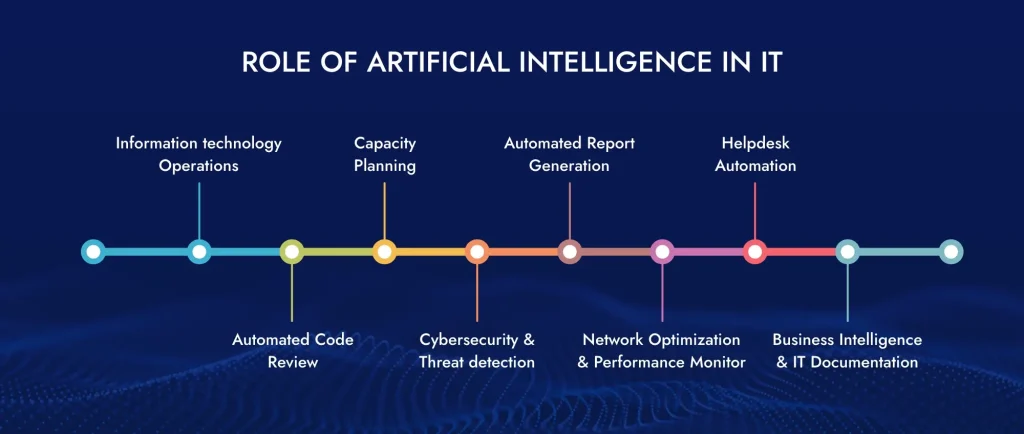
Let’s check out how cost optimization in IT with Artificial Intelligence operates:

The Role of Artificial Intelligence in Information Technology

1. IT Operations

By analyzing real-time data from various sources, AI optimizes system reliability, performance in IT operations, and resource allocation. It forecasts issues, automatically allocates resources, and identifies optimization opportunities across on-premises and cloud environments.

By automating routine tasks AI minimizes downtime and reduces operational expenses.

2. Automated Code Review

Automated code review tools using artificial intelligence examine software codebase, identifying possible bugs, security vulnerabilities, or deviations from coding standards.

This proactive approach improves software development quality by dealing with potential risks early, resulting in a more secure, reliable, and maintainable codebase.

Through swift feedback provision showing areas for enhancement, AI-driven code review tools expedite the software development life cycle.

3. Capacity Planning

AI algorithms play a crucial role in capacity planning by analyzing historical data or usage patterns that forecast future resource requirements. This capability enables IT professionals to strategically plan their infrastructure upgrades to ensure the optimal allocation of resources required for present and future needs.

These algorithms help organizations identify potential performance bottlenecks allowing companies to address possible issues before they affect operations proactively.

4. Cybersecurity and Threat detection

Artificial intelligence has significantly improved cybersecurity and threat detection, boosting organizational resilience against cyber risks.

The AI in the cybersecurity market is projected to grow from approximately 24 billion U.S. dollars in 2023 to about 134 billion U.S. dollars in 2030. AI monitors anomalies or suspicious activities that might indicate security breaches by analyzing network traffic, system logs, and user behavior.

In the real-time analysis of large volumes of data; AI-driven systems can detect emerging threats, malware, or intrusion attempts which could otherwise go undetected by traditional security measures. Once a possible threat is detected, AI can send alerts, automate incident response actions, isolate affected devices, or block malicious activities. This proactive approach significantly strengthens an organization’s cybersecurity posture by mitigating risks, reducing response times, and safeguarding sensitive data and resources from cyberattacks.

5. Automated Report Generation

The avant-garde AI IT Operations dominate in automating report generation to ensure accuracy and consistency in performance and compliance documentation.

It also enables efficient processing of large data sets thereby minimizing errors, elevating reliability, and facilitating strategic decision making. IT professionals can concentrate on essential tasks while strengthening operational efficiency and compliance standards.

6. Network Optimization & Performance Monitor

In achieving optimization in network performance and technology monitoring, artificial intelligence is essential. Network traffic pattern analysis by AI-driven algorithms helps to detect anomalies and predict potential bottlenecks before they interfere with operations.

This proactive approach ensures better network efficiency and reliability for smooth business operations and user experience.

7. Helpdesk Automation

Through automated ticketing, issue resolution, user query handling using chatbots, and virtual assistants, help desk automation powered by AI changes IT support processes.

In their responses to the user questions, these algorithms rely on this AI support to solve generic questions and forward complex issues to human agents efficiently. Consequently, support operations are streamlined through this automation, reducing response times and enhancing customer satisfaction.

8. Business Intelligence & IT Documentation

In business intelligence (BI), AI improves data analytics capabilities by pulling insights from large datasets, generating actionable reports, and analyzing trends visually.

AI-driven BI tools automate the report generation process, which can also predict market movements based on historical and real-time analysis to identify opportunities for expanding businesses.

Moreover, it automates IT documentation tasks such as sorting out information into categories or indexing them, ensuring that IT professionals make it available whenever needed.

READ: AI in Information Technology: Transform IT Services with AI

Optimize IT Costs with AI Solutions

Discover how AI can streamline your IT operations and cut costs. Start your AI journey with ViitorCloud today.

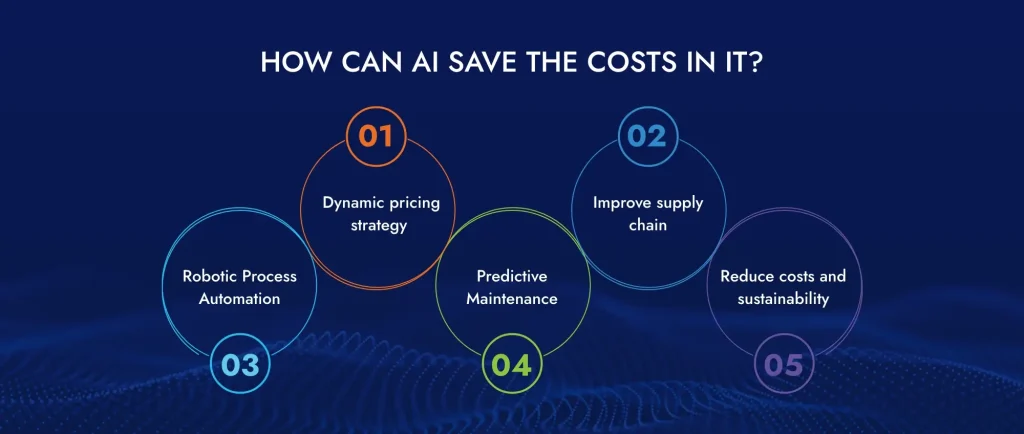
How Can AI Save the Costs in Information Technology?

Optimize your business and maximize efficiency with ViitorCloud’s AI development services. AI not only saves valuable time for you and your team, but it also drives significant advantages across various industries. With our tailored AI solutions, we help you achieve cost optimization in IT, allowing your business to thrive in today’s competitive landscape.

Let us explain how artificial intelligence contributes significantly to cost-cutting:

AI Can Save the Costs in Information Technology

By employing ML models businesses can fine-tune prices dynamically to maximize revenue while remaining competitive thanks to AI-powered pricing algorithms that offer dynamic pricing strategies based on real-time market conditions, customer behavior, and competitor analysis.

Moreover, these algorithms detect price gouging or leakage, thereby improving profitability because they can also identify pricing anomalies. Most importantly, retailing will change remarkably.

Use AI to predict the amount of demand, improve supply chain and efficient inventory management, and reduce downtime through predictive maintenance.

Failure patterns are analyzed by AI algorithms using historical data and sensor readings that enable proactive maintenance scheduling thereby extending asset lifespan and lowering operating costs. Gartner estimates that by 2025, as many as 80% of customer service organizations in the retail sector will rely on generative AI for personalized experiences.

Use AI to forecast demand, improve supply chain efficiency, manage inventory, and reduce downtime through predictive maintenance.

Cost savings can be achieved by employing AI to automate tasks utilizing artificial intelligence-based solutions such as Robotic Process Automation (RPA). This helps to streamline workflows so that repetitive, rule-based activities like data entry, invoice processing, and customer support can be managed.

Manual intervention is removed, reducing errors and faster task completion, allowing employees to focus on high-value work. A good example is students purchasing their photos online rather than having them taken manually.

AI-driven predictive maintenance allows businesses to anticipate equipment failures before they occur, thus avoiding costly downtimes or unscheduled maintenance. With the help of AI algorithms that analyze historical data, sensor readings, and other relevant factors, this enables the identification of patterns indicating potential failure points.

This proactive approach enables planned maintenance, thereby reducing operational costs due to the extended life span of critical assets or optimal maintenance schedule.

Artificial intelligence-based management systems optimize energy consumption rates based on historical data like weather patterns and building occupancy levels.

Thus, companies can reduce expenses while improving their operations and increasing their carbon footprint. Among other things, these solutions provide options for conserving energy, including resetting HVAC settings or making a better schedule for your machinery, leading to substantial cost savings while promoting sustainable development.

ALSO READ: Benefits of AI in Information Technology for Startups

Maximize IT Savings with Artificial Intelligence

Implement AI to achieve cost optimization in IT. Let ViitorCloud help you reduce costs and boost efficiency.

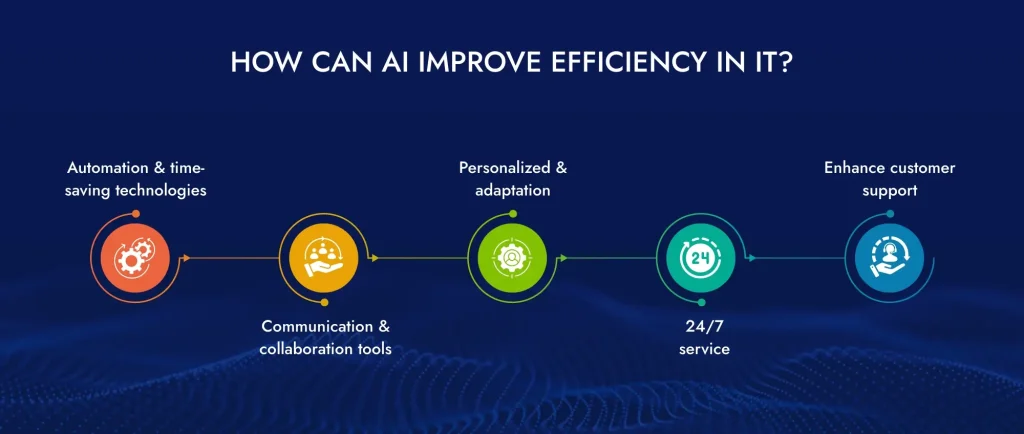
How Can AI Improve Efficiency in Information Technology?

Leverage ViitorCloud’s AI solutions to optimize your IT operations and unlock their complete potential. Imagine transforming routine tasks into automated processes, optimizing costs, and boosting productivity—all with the power of artificial intelligence. Our AI development services are designed to enhance communication, streamline collaboration, and drive real results for your business.

Here we are explaining how artificial intelligence can improve efficiency in information technology:

AI Improves Efficiency in Information Technology

Automation and time-saving technologies are at the forefront of AI’s capabilities in improving IT efficiency. By leveraging AI-powered automation, organizations can streamline repetitive tasks such as data entry, system monitoring, and routine maintenance.

Robotic Process Automation (RPA) which is an application of AI carries out this process much quicker than humans whilst being more accurate thereby releasing a lot of human resources to do more strategic jobs. This means fewer mistakes will be made leading to shorter processes hence it saves so much time making employees highly productive.

Through enhancing communication and collaboration tools AI has made it easier for IT departments to work with each other no matter where they are located. Smarter features like real-time translation, automatic meeting scheduling, or advanced search capabilities have been incorporated into platforms like Microsoft Teams, Slack, or Google Workspace thanks to AI technology.

These tools analyze communication patterns and suggest optimal ways to connect with team members, ensuring that everyone is on the same page and collaborators get their things done faster through such ways. It also helps greatly when used repetitively so that it would facilitate collaborative efforts as well as make these teams understand one another. Otherwise, AI can be used to automate such communication tasks as sending reminders or summarizing meeting notes, thus making team members more productive.

IT services are so tailor-made by AI that the needs of users and organizations are met. Some machine learning algorithms enable AI to analyze user behavior and preferences, which will help in customizing content delivery, recommendations, and support.

For instance, the UI of software applications can be changed by AI based on personal usage patterns; this helps improve overall satisfaction levels among users. This implies that it adopts a dynamic approach following real-time data for IT management solutions and strategies that boost performance while increasing resource allocation.

This one characteristic of AI is its ability to serve throughout. In practical terms, it means that since AI systems do not have bodily fatigue, they can be working at any time with support and monitoring being available constantly. This feature is especially useful in IT departments that require high availability and uptime.

In addition, these tools monitor events as they occur versus after their occurrence has escalated into significant disruptions. Moreover, AI-powered chatbots or virtual assistants are always there to assist customers leading to immediate interactions with auto-decision-making.

It delivers faster, more accurate, and better personalized assistance than traditional customer support methods. To facilitate this ability, NLP (natural language processing) technology in AI-enabled chatbots allows them to respond to questions ranging from those related to troubleshooting technical problems up to frequently asked queries by customers.

Future predictions benefit from prior engagements plus other valuable customer details while customized support services rely on such feedback. By automating simple tasks associated with answering clients’ questions human operators become available for handling complex issues hence improving efficiency at all levels of production for customer satisfaction.

SEE: Top 5 Applications of AI in Information Technology

Transform IT Efficiency with AI-Driven Cost Optimization

Reduce operational costs and improve performance with AI. Partner with ViitorCloud for customized AI development.

Boost Your IT Business with ViitorCloud’s AI-powered Solutions

In today’s fast-paced IT landscape, achieving cost optimization with artificial intelligence is no longer just an option—it’s a necessity. ViitorCloud’s AI Development Services are designed to help your business enhance productivity, cut costs, and stay ahead of the competition.

Our expert-driven AI solutions empower your company to automate routine tasks, improve performance, and predict potential challenges before they become costly problems. Whether you’re looking to streamline operations or implement advanced predictive maintenance systems, ViitorCloud has the perfect solution tailored to your needs.

With ViitorCloud’s AI-powered strategies, your firm can unlock the true potential of cost-effective information technology. Our AI Solutions are not just about adopting AI but about integrating it seamlessly into your business processes, ensuring that your company remains efficient, competitive, and profitable.

No matter where your IT firm stands on the technological spectrum, ViitorCloud will help you harness the power of AI to optimize costs and drive your business forward. Choose ViitorCloud’s AI Solutions to transform your operations and achieve your business goals today.


Frequently Asked Questions

AI reduces IT costs by doing the following: automating repetitive tasks, reducing human error, improving predictive maintenance, and optimizing resource allocation. As a result, operational expenses are cut down, and downtime decreases, making it easier to use IT infrastructure effectively.

It optimizes them through streamlining operations, automating repetitive functions, strengthening cybersecurity measures, and using advanced data analytics. This leads to improved decision-making, enhanced resource planning, increased productivity, and a more adaptive and flexible IT environment.

It improves efficiency through the automation of processes, real-time data analysis, prediction and prevention of potential problems, and optimized management of resources. This leads to quick problem-solving, better-performing system performance, and more efficient IT operations.

Top 5 AI Applications Transforming Information Technology

Information technology has problems such as data breaches, cybersecurity threats, issues between software and hardware systems, system downtime, and inefficient IT infrastructures. Due to this problem, inefficiency has arisen in the IT industry.

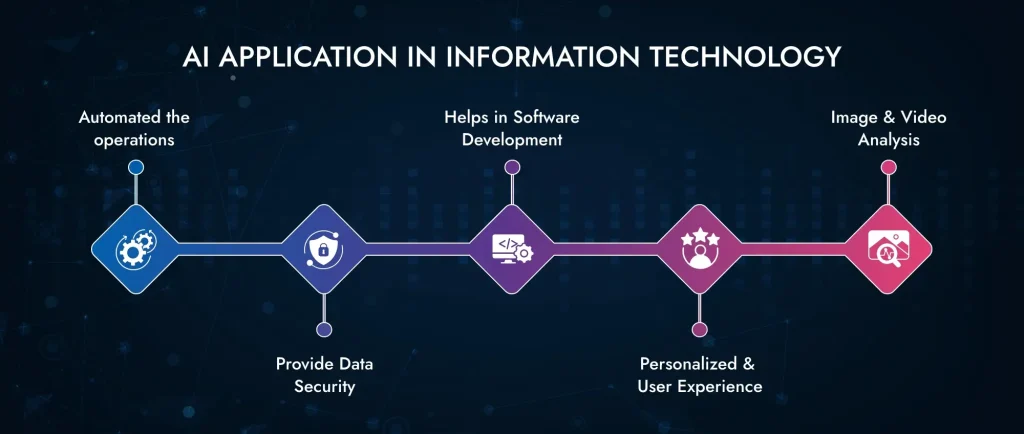
Applications of AI in information technology help solve all the problems with automation, data security, personalized user experience, software development, and image and visual analytics. Additionally, the operation process optimizes, and IT operations efficiency and productivity improve.

Let’s dive into the details of AI in information technology applications and how Artificial Intelligence potentially reduces costs in the information technology industry.

Artificial Intelligence Applications in Information Technology

According to the statistics, the AI market will reach $190 billion by 2025. Many applications of AI solve issues in different industries. Applications of AI in information technology help solve IT industry problems with applications such as automation, data security, software development, and more.

Let’s study the applications in detail.

Top 5 Applications of AI in Information Technology

1. Automated the Operations

IT operations are an essential concept in the IT industry, and they are used to manage system performance, deploy new services or products, improve security, and reduce downtime. IT Operations Automation is a technology process that automates IT operations and management. It helps in enhancing productivity and reduces costs by automating manual tasks. Also, AI helps increase effectiveness, responding quickly to issues and increasing the reliability of IT infrastructure.

2. Provide Data Security

Data security is one of the most important assets of the information technology industry. It helps keep customers’ confidential data and company secrets. Data security is important legally and operation-wise. AI helps data security by identifying unknown threats, which can create severe network damage. Additionally, it helps identify cyberattack faults and threat prevention and detects unusual behavior that develops viruses or malware in the systems. This is how Data security Applications of AI in information technology are useful.

3. Helps in Software Development

AI can analyze vast amounts of software-related data and recommend upgrades and enhancements for machine learning. This helps software developers keep the software system upgraded and improves its quality. Additionally, AI automates various software programmers’ tasks, one of which is to automate software developer tasks. The task of generating code and testing is automated. This is the way software development Applications of AI in information technology is useful.

4. Personalized and User Experience

An AI software application helps deliver a personalized user experience. AI analyzes the data to understand behavior patterns and provide recommendations to a user. Also, AI tailors content for the user and interacts with individuals to meet user preferences. This type of personalization improves engagement and satisfaction and creates long-term relationships.

5. Image and Video Analysis

Computer vision combines machine learning, computer science, and image processing to develop systems that interpret and analyze visual data. It helps enhance security with biometric authentication systems. It streamlines the process in the IT industry and automates repetitive visual tasks, which improves efficiency.

These all are the AI in information technology examples of applications that help in improving productivity in the IT industry.

READ: AI in Information Technology: Transform IT Services with AI

Innovation with AI in IT

Ready to implement AI solutions in your Information Technology processes? Partner with ViitorCloud for cutting-edge development.

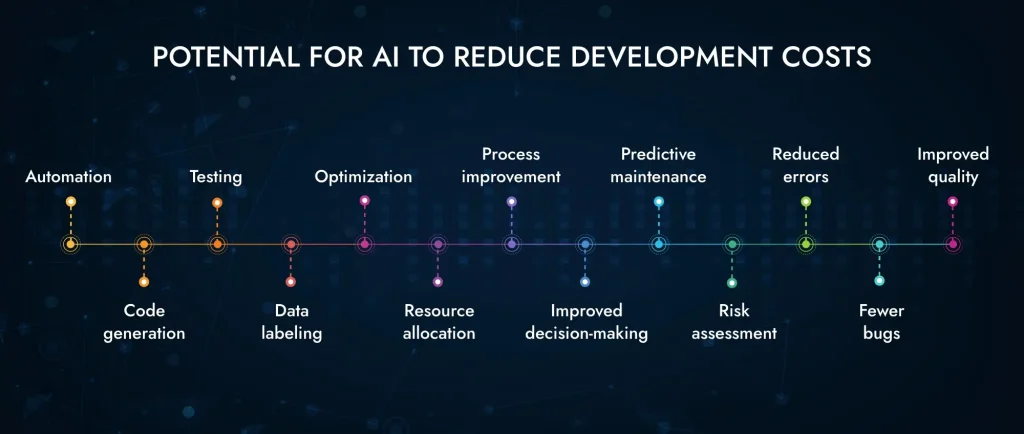
Potential for AI to Reduce Development Costs

AI is useful in reducing the cost of operations and helps employees focus on important tasks as it automates manual work. Let’s understand AI in information technology applications which reduce development costs.

Potential for AI to Reduce Development Costs

AI can automate software developers’ tasks, which improves their efficiency and productivity. The task is generating code snippets, testing, and data labeling. It saves time and helps in focusing on critical tasks.

AI tools such as code generators and auto plugins can increase the code generation speed. Natural Language Processing helps convert specifications into code snippets that reduce manual coding efforts and errors. As a result, a developer can focus on problem-solving tasks and streamlining the development process.

AI plays an important role in software testing. AI testing tools automatically generate, execute, and analyze test results. As a result, test coverage improves, and the accuracy of test outcomes improves.

Data labeling provides annotated datasets such as images, videos, and text that train algorithms to perform tasks automatically. It ensures accuracy and data relevance to enhance model performance in natural language processing, predictive analytics, and image recognition applications. This data labeling helps perform tasks from automated customer services to complex data analytics.

Optimization in the IT industry is improving various aspects of operations, efficiency, and decision-making, which leads to reduced costs. Let’s understand in detail.

AI optimizes allocating resources such as storage, cloud instances, and processing power based on performance and workload demands. It ensures efficient resource use, which cuts down unnecessary costs.

AI identifies inefficiency in IT operations and workflows, then optimizes workflows and automates repetitive tasks to streamline operations and improve productivity.

AI analytics provide insights into IT operations, user behaviors, and performance metrics. These insights help make informed business decisions regarding software investment, resource allocation, and IT strategy, decreasing the cost in the IT industry. Also, it helps in predictive maintenance and risk assessment such as follows:

AI has a large amount of data, which helps predict hardware failures and system issues before they occur. This approach prevents costly downtime and emergency repairs that reduce maintenance costs.

AI in IT helps identify vulnerabilities and threats and mitigate the risk of threats on the system. Additionally, AI analyzes vast amounts of data to detect anomalies and patterns and take proactive measures to protect systems, data, and operations. It is a way for decision-making to improve in the IT industry.

Minimizing errors in IT operations not only saves time but also reduces overall operational costs. Ensuring that systems and processes are error-free helps organizations improve productivity and operational efficiency. Additionally, reducing errors can lead to better user experiences, increased customer satisfaction, and a more reliable IT infrastructure. Therefore, investing in error-reduction strategies can yield significant long-term benefits for businesses.

AI helps identify fewer bugs through automated testing and data validation techniques. Also, it helps analyze code, predict issues, and monitor system behavior in real time. As a result, early detection and error reduction improve software quality in Information technology.
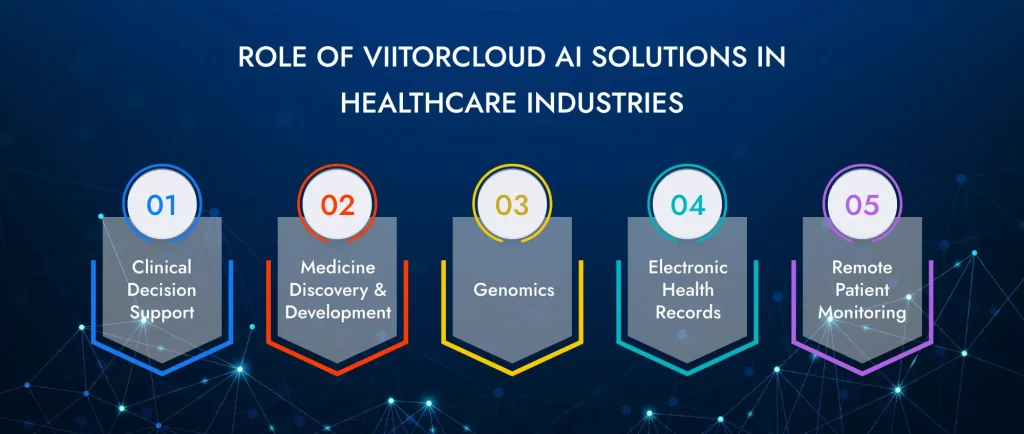
To improve quality, AI rigorous data validation, robust model training, and monitoring continuously. Also, it implements AI models, regularly updates AI models, and ensures reliability and transparency.

These all are the AI in information technology examples which help reduce IT industry costs.

ALSO READ: Benefits of AI in Information Technology for Startups

Elevate Your IT with AI Expertise

Enhance your IT capabilities with our tailored AI services. Let’s make your Information Technology smarter.

How Can Viitorcloud Help Your It Challenges with an AI Solution?

Innovations in the application of AI in information technology help solve problems in the Information Technology industry. AI can analyze large amounts of software-related data to update the software system and predict its failure. Also, it provides a personalized user experience by analyzing the behavior patterns and user behavior.

We, Viitorcloud, an AI development service company, integrate AI into information technology to improve efficiency in the operations and workflow process. AI also optimizes resource allocation and helps improve decision-making. As a result, cost is reduced. Our expert team provides impactful AI solutions to improve efficiency and productivity.

If you are looking for someone to help you with IT challenges with an AI solution, do not look further. Contact us today and integrate AI solutions into information technology to solve the problems in your IT business.

Frequently Asked Questions

The perspectives of AI in information technology examples are the automation of repetitive tasks, the help in decision-making, and the prediction of trends and behavior in data patterns. Also, it detects and responds to cyberattacks.

AI is used in information technology to detect threats, provide IT support, predict maintenance, and optimize the network. Also, AI helps in IT documentation, cloud computing, and resource allocations. The use of AI improves efficiency in operations and the IT industry.

The AI in information technology applications includes data security, IT operation automation, software development, image and video analysis, and personalized user experience. It helps in improving efficiency and productivity.

Information technology AI solutions include automating operations, detecting and responding to threats, and analyzing the data for insights. Also, it provides personalized customer experiences to increase efficiency and reduce costs.

How Can AI Be Beneficial to Information Technology Startups?

Between endless opportunities and persistent competition, many young technology companies are standing in a critical position. What’s the best way for them to make themselves unique from other competitors who are also after the same market? How can they stay strong in the face of changing challenges? The most important question is how these entities can encourage innovation and growth.

Start-up owners may find themselves faced with the challenging task of maneuvering through resource constraints, market competition, scaling hurdles as well as regulatory challenges. Nevertheless, artificial intelligence (AI) provides a solution that is powerful enough for them to confidently confront these challenges. This article discusses the benefits of AI in information technology.

Why Does AI in Information Technology Matter?

For quite some time now, artificial intelligence has been around. The advent of AI has radically shifted how repetitive tasks are handled within the IT industry. Robotic Process Automation (RPA) allows for the automation of ordinary and repetitive tasks so that valuable human resources are freed up to focus on more strategic and creative activities that enhance efficiency while significantly reducing chances for errors.

Chatbots and voice-activated systems like AI-powered virtual assistants have revolutionized customer service in the IT industry. AI matters immensely in information technology because it drives efficiency, enhances decision-making, improves customer service, and promotes cybersecurity.

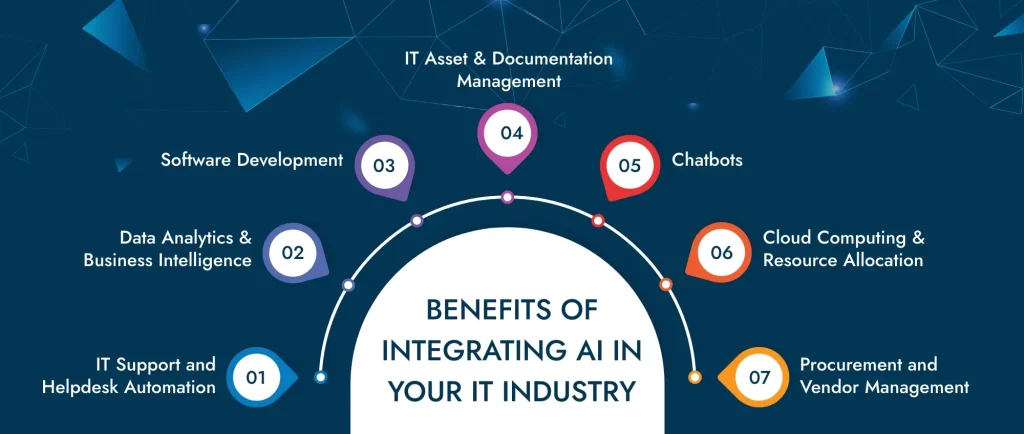
7 Benefits of Integrating AI in your IT Industry

Artificial intelligence is revolutionizing the industry through task automation. This shift increases efficiency and empowers IT experts to dedicate more time to innovation and strategic development.

Here are some of the benefits of AI in information technology:

7 Benefits of AI in Information Technology

1. IT Support and Helpdesk Automation

IT support and helpdesk automation revolutionize user assistance and issue resolution. A user who experiences a technical problem can go to a self-service website or chatbot for a support request. The system automatically categorizes and prioritizes the problem based on its severity and nature.

Automated responses provide immediate solutions for common issues, reducing resolution times significantly. If humans must intervene to address a problem, the ticket will be redirected by the system to the appropriate IT staff member, leading to a quick but accurate response.

Generally, this automation improves overall service efficiency and helps IT professionals deal with complex tasks while being responsive, thus making the IT support ecosystem user-friendly.

2. Data Analytics & Business Intelligence

The applications of artificial intelligence (AI) have transformed data analytics as well as business intelligence. AI-driven algorithms enable organizations to extract valuable insights from large volumes of complex data sets, thereby discovering trends, patterns, and correlations that might otherwise remain hidden.

These insights facilitate data-driven decision-making across various business functions. Market changes, customer behaviors, operational needs, etc can all be predicted by AI-powered predictive analytics, hence helping businesses anticipate future trends. Also, different types of prescriptive analytics provide business teams with recommendations for optimizing their work and improving production effectiveness.

AI in business intelligence can visualize data, automate report creation, and extract more meaning from historical data. With AI’s natural language processing (NLP), users can ask questions about data as though they were speaking to another person – making it easier for non-technical audiences to access the data.

READ: Data Analytics Consulting Helps Small Businesses to Grow

3. Software Development

AI for IT startups has simplified writing software programs by automatically generating code instead of manually performing this task. The computer algorithms used in AI analyze code patterns, allowing them to create mini codes, thus reducing the time spent designing routine program tasks.

This shortens the development cycles, enabling programmers to shift their attention to more difficult and creative aspects of code writing. This AI-powered code writing also helps to maintain a consistent coding standard at all times throughout the codebase. It is important to note that such an application of AI will improve productivity while reducing errors and enabling software developers to produce high-quality code faster.

4. IT Asset & Documentation Management

Augmented by artificial intelligence (AI), IT asset management is crucial for effectively managing and optimizing the IT resources of an organization. This includes tracking and controlling IT assets through their whole lifecycle, such as hardware, software, and licenses.

Artificial intelligence automates the detection process of assets, keeps track of usage trends, and forecasts when fixes or replacements are necessary for them. In so doing, IT professionals have accurate stock records, thus minimizing chances of under-utilization or unwarranted expenditures, which translates into significant savings.

5. Chatbots

Immediate answers from AI-driven chatbots are changing the face of information technology support. Hence, these chatbots can understand users’ requests with NLP (natural language processing) without wasting time on troubleshooting problems but instead see how quickly they can fix them.

So this speeds up support processes significantly, reducing response times substantially and leading to a good user experience. Thus, chatbots care for common inquiries while freeing human agents from mundane tasks, improving overall support performance.

According to Forbes Advisor, ChatGPT was the most talked about innovation in Artificial Intelligence during the 2022 fall season; within five days after its launch in November 2022, it attracted over one million users. Based on several reports, it has increased productivity by 14% among tech companies’ staff through AI applications, confirming the readiness of IT to incorporate AI.

With their ability to learn iteratively, they gain effectiveness as they evolve and adapt better to users’ changing needs, enhancing the quality of IT support services. As a result, it provides fast and accurate technical assistance thus leading to high customer satisfaction rates thereby making an IT infrastructure more flexible and agile.

6. Procurement and Vendor Management

AI in information technology procurement and vendor management uses artificial intelligence to improve the acquisition of AI development services and IT products from external suppliers. Organizations need to leverage data when selecting vendors, optimizing contract terms and pricing, tracking costs, assessing the performance of vendors, and managing the risks involved.

Automating routine activities while providing actionable insights based on service level agreements (SLAs) and contractual terms are ways that AI helps organizations reduce costs while increasing efficiency with strong vendor relationships.

7. Cloud Computing and Resource Allocation

This enables faster cloud computing optimization by applying AI approaches to resource allocation in cloud infrastructure, enhancing how efficiently this can be done at a low cost. For example, these systems powered by artificial intelligence continuously analyze workload profile demands and other resource consumption patterns alongside key performance indicators (KPIs) to optimize CPU time allocation and memory utilization, including storage capacity, where necessary.

Real-time matching between demand levels for resources available for supply leads to significant savings by avoiding under-utilization or over-provisioning thereby enhancing application performance. Similarly, AI recognizes ways to save costs, such as proposing more affordable types or advising on storage usage optimization in the cloud.

Through this, cloud computing platforms’ scalability, cost-effectiveness, and dependability are improved; hence, organizations meet their IT needs while retaining control over expenditure on the cloud. Successful implementation involves integrating cloud management platforms with regular adjustments to accommodate changing workloads and resource demands.

Transform Your IT Startup with AI Solutions

Implement AI to drive innovation and efficiency in your IT business. Let’s get started.

3 Challenges IT startups face while choosing the right AI solution

Adopting AI in information technology offers startups a significant edge but comes with several challenges. Here are three critical obstacles startups often encounter when integrating AI into their IT infrastructure:

Startups must handle massive volumes of data to train AI models effectively. Ensuring the data is accurate, clean, and relevant is daunting. Inadequate or poor-quality data can lead to accurate predictions and reliable AI outputs.

94% of data, privacy, and security professionals prioritize compliance with data privacy regulations within their organizations. With increasing data privacy regulations like GDPR and CCPA, startups must ensure their data management practices comply with legal standards. Mishandling personal or sensitive information can result in hefty fines and damage to the company’s reputation. Startups need robust systems to store and integrate data from various sources.

Managing data silos and ensuring seamless data flow between different departments and applications is essential for effective AI implementation.

The AI landscape evolves quickly, with new algorithms, tools, and frameworks emerging regularly. Startups often need help to keep pace with these advancements, which can make their AI solutions obsolete if not continually updated.

Advanced AI technologies often require significant hardware, software, and investment from skilled personnel. Typically operating with limited budgets, startups may need help to allocate resources for cutting-edge AI infrastructure.

Implementing AI requires machine learning, data science, and software engineering expertise. Finding and retaining talent with these specialized skills can be difficult for startups that need brand recognition or resources to attract top professionals.

Moving to the cloud is often necessary for leveraging AI effectively, but this migration can be complex and resource-intensive. Startups must ensure their data is securely and efficiently transferred to cloud platforms without disrupting business operations.

Choosing the right AI and cloud service providers is crucial. Startups must evaluate vendors based on their technological capabilities, cost, reliability, and support services. Managing relationships with multiple vendors and ensuring they meet the startup’s evolving needs can be challenging.

Startups need AI solutions that can scale with their growth. However, not all vendors offer the flexibility to adapt to changing business needs. Startups must carefully assess whether potential vendors can provide scalable solutions that align with their long-term objectives.

READ: Cloud Migration Consultancy Services for Your Businesses

Empower Your IT Business with AI Expertise

Adopt AI to stay ahead in the competitive IT landscape. See how we can help.

How Can ViitorCloud Overcome IT Challenges with an AI solution?

Ready to take your information technology startup to the next level?

Adopting AI isn’t just an option—it’s the game-changer you need. From automating routine tasks to delivering advanced data analytics, AI is the key to unlocking efficiency, optimizing resources, and driving innovation. Imagine transforming customer interactions and securing cybersecurity, all while setting your startup on a path to sustainable growth and a competitive edge.

At ViitorCloud, we don’t just offer AI development services; we provide tailored solutions that address the unique challenges of IT startups. We’re here to help you harness the full benefits of AI in information technology. With ViitorCloud by your side, you’re not just adopting AI—you’re adopting the future. Partner with us, and watch your startup thrive in today’s dynamic tech landscape.

Ready to see the difference? ViitorCloud’s AI solutions are just what your startup needs.

Frequently Asked Questions

AI is used in IT for automated network monitoring, which detects and resolves issues in real-time, enhancing system reliability and reducing downtime.

Major companies like IBM, Google, Microsoft, and Amazon are leading the AI advancements in information technology, offering innovative AI-driven solutions and services.

AI automates repetitive tasks, enhances cybersecurity, optimizes resource allocation, provides predictive maintenance, and improves data management.

AI helps the IT industry by increasing efficiency, reducing costs, enhancing security, enabling advanced data analytics, and automating routine processes, allowing professionals to focus on more complex tasks.

AI in Information Technology – How Artificial Intelligence is Used in IT

In the recent market, managing the IT infrastructure is difficult as numerous applications and databases operate independently. Also, doing the work manually consumes time and increases inefficiency. Artificial Intelligence is helpful in the IT business in overcoming these difficulties and automating manual tasks.

Additionally, AI analyzes the data, provides insights into the business operations, and system, and helps monitor the business performance. As a result, ViitorCloud AI Solution empowers enterprises to optimize operations, increase operation efficiency, and deliver uninterpreted customer support with chatbots.

The integration of AI into IT infrastructure helps in sustainable growth. Let’s dive into how AI impacts the IT industry, the role of Artificial intelligence in information technology, and more information.

Impact of AI on the Information Technology Industry

AI information technology helps solve and optimize the challenges in the IT industry. It enables developers to enhance productivity, improve efficiency, and ensure quality in the IT industry.

However, let’s understand the impact of AI on the IT industry.

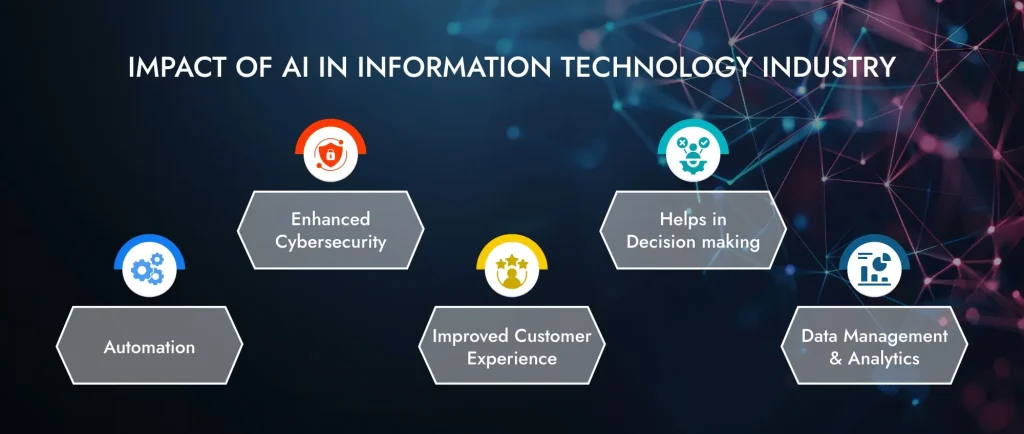
Impact of AI in Information Technology Industry

1. Automation

AI in automation is streamlining the operation process in the IT industry. It helps monitor networks, system testing, and system maintenance to automate the work with machine learning and AI algorithms. As a result, there is an improvement in efficiency and a reduction in human errors. Because of this automation, IT professionals can focus on complex strategies and work and grow their businesses.

2. Enhanced Cybersecurity

Cybersecurity threats are attacking the IT industry system, where AI is helping to fight against threats and malicious activities. AI helps as it can detect anomalies, patterns, and vulnerabilities, respond to cybersecurity threats, and protect the data and system.

3. Improved Customer Experience

AI IT solutions are transforming the IT industry with the help of virtual assistants and chatbots. This system helps understand the customer, respond to customer queries, provide personalized assistance, and troubleshoot common issues. The natural language process works as a human being to enhance customer satisfaction and reduce response time for the query.

4. Helps in Decision-making

AI can collect and analyze the data to identify patterns and provide recommendations for decision-making. As a result, IT professionals can make the right decisions regarding resource allocations, strategic planning, and system upgrades. Also, AI predicts failure before it arises, so proactive measures can be taken to avoid failure.

5. Data Management and Analytics

AI algorithms can analyze vast amounts of data in seconds and provide insights humans avoid. Data analytics helps decision-making, provides data-driven strategies, and improves operations efficiency. Additionally, AI solutions predictive analysts optimize the resources, forecast trends, and improve the planning of IT infrastructure to help the IT industry stay ahead of the competition.

READ: Artificial Intelligence in Business: An Intelligent Approach for Digital Transformation

Transform Your IT Infrastructure with AI

How is AI used in information technology?

Using AI in information technology improves efficiency and productivity in operations. Also, it reduces the cost and saves time. Additionally, it helps make decisions by analyzing data.

Let’s understand how to use information technology in AI in detail.

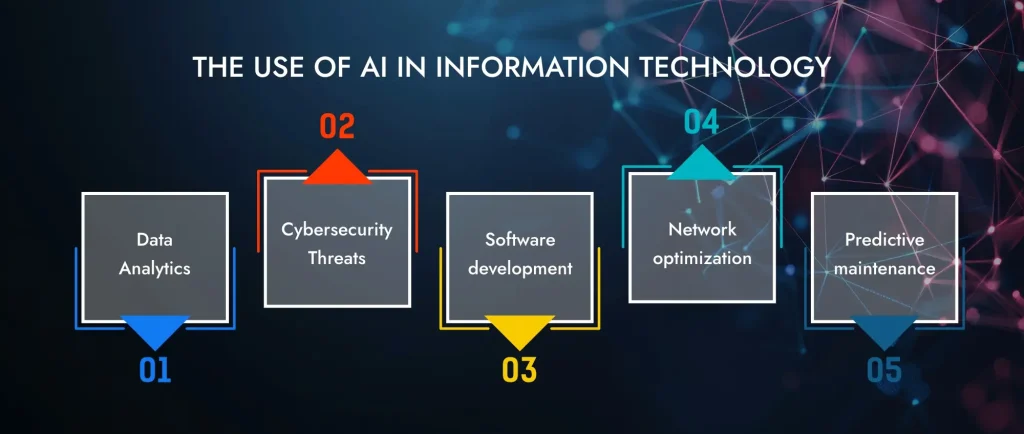
The Use of AI in Information Technology

1. Data Analytics

AI can collect large amounts of data, analyze complex data, and uncover trends and patterns. These insights help businesses to make business decisions. Additionally, predictive analytics helps forecast future trends and anticipate customer behavior, market changes, and operation needs. Furthermore, perspective analytics provide actionable strategies to optimize the business process.

In the IT industry, Al assists in automating report generation and data visualization and uncovers deeper insights from past data. As a result, core business people can make the right business decisions.

2. Cybersecurity Threats

AI helps cybersecurity by monitoring network traffic, user behavior, and systems logs to identify anomalies and suspicious activities and identify security risks. It also analyzes large amounts of data to identify malware and emerging threats that go unnoticed with traditional security measures.

After the identified threat, AI provides alerts, automates incident response actions, detaches affected devices, and blocks malicious activities. This approach enhances cybersecurity in organizations by reducing response time, mitigating risks, and safeguarding sensitive data from cyberattacks.

3. Software Development

AI streamlines the code generation process for the repetition of the process. It can analyze patterns in existing codes, automatically generate code snippets, and reduce manual effort for routine programming tasks. As a result, programmers can focus on more complex tasks in the business.

Additionally, AI generates code that promotes adherence to the coding standards. Also, using Artificial intelligence in the information technology industry improves productivity, minimizes errors, and helps software developers deliver high-quality code

4. Network Optimization

Artificial intelligence in IT evaluates user behavior, system performance, and network optimization, allowing organizations to identify and address issues quickly. It helps identify bottlenecks and adjust configuration to improve network performance and user experience and reduce downtime.

Additionally, network optimization with AI improves network reliability and efficiency, improves productivity, and satisfies the user.

5. Predictive Maintenance

AI can analyze large amounts of data and find the issues in the hardware systems. It analyzes data from historical records, sensors, and other sources to predict problems or failures in the hardware systems. The issues or failures include storage devices, servers, or networking equipment.

Additionally, identifying issues helps in the maintenance and replacement of the systems. Also, it prevents unexpected downtime and minimizes issues during the operations. It reduces maintenance and repair costs and provides reliability in the IT industry.

ALSO READ: How to Implement AI in Your Business: 7 Easy Steps

Role of Artificial Intelligence in Information Technology Industries

AI transforms IT industries by automating routine tasks, analyzing data, and solving IT issues. As a result, efficiency is improved, resources are optimized, and operations in information technology work smoothly.

Let’s know in detail the role of artificial intelligence in IT industries

Automate routine tasks such as system monitoring, software updates, and data backups. Also, AI algorithms and machine learning can predict the failure of AI models to detect anomalies in the system. This automation helps improve operations and efficiency, minimize the downtime of machines, and help in the proper allocation of resources. As a result, business owners can focus on planning and strategic activities.

AI analyzes vast data, predicts system failures and customer needs, and optimizes resource allocations and maintenance. As a result, efficiency improves, and costs are reduced. AI helps stay ahead of the competition by providing insights that help improve operations and strategic planning in the IT industry.

Advanced system programming in AI develops complex algorithms and frameworks to improve artificial intelligence functions. It combines low-level task systems with high-level AI functions to enhance scalability and performance in the IT industry. Engineers work on parallel computing and kernel-level programming and optimize memory management to solve complex AI models.

SEE: What Are the Top Trends in AI for Businesses?

Enhance IT Operations with AI Innovation

How to Implement AI Solutions in IT?

Implementing AI solutions in IT integrates machine learning and natural language processing to automate tasks, optimize operations, and improve decision-making. Also, it transforms the business through strategic planning and data infrastructure.

Implementation AI Solutions in IT Industries

1. Assessment and Planning

You have defined the objective of implementing AI in IT operations. The objectives of the business are improving security, improving efficiency, and optimizing the utilization of resources. This objective helps in planning to implement Artificial intelligence in information technology. Also, the IT infrastructure, such as data quality, team skillsets, and technology, must be evaluated to prepare for AI integration.

2. Identify Use Cases

Identifying the use cases in the IT industry is essential as they give value to the business. It includes tasks like predictive maintenance, automated monitoring, and threat detection in security.

3. Data Collection and Preparation

When you have to implement AI in the business, data collection is essential. The data includes historical data, performance metrics, and other data sources such as AI. Also, clean and preprocess the data to provide quality and reliable data provide excellent input data.

4. Developing and Integrating

Once the data collection is complete, the AI model is developed depending on the selected algorithms. It involves the collaboration of IT professionals and data scientists to build the AI model. Also, AI should be integrated into existing IT systems and workflow to operate the operations system of the IT industry smoothly.

5. Testing and Validation

After developing an AI model and integrating AI into the system, testing the AI model is important. It is important to learn how to work in real-world scenarios so that the environment can be created for testing. Once testing is completed, take the feedback and implement it in the AI model to improve the performance during the testing phase.

6. Deployment

Implement the AI solutions in the business at a smaller scale or in one department; after that, expand to other departments or businesses. When implemented one by one, AI is smoothly implemented in the business, and employees can easily adopt AI. Additionally, monitoring tools can be used to track performance in real time and provide support during the ongoing operation process.

7. Evaluation

After monitoring the performance, evaluate the performance depending on the business objectives and KPIs. If any changes are needed based on performance feedback, implement them, improve the AI system, and optimize the AI systems.

ALSO SEE: AI Business Ideas for Entrepreneurs and Startups

Future of AI in the Information Technology Industry

Artificial intelligence is an important concept of the future. According to the research, the AI market is anticipated to reach $190 billion by 2025. Until 2021, global spending on AI will be $57.6 billion, while 75% of businesses will use AI technology apps.

Let’s understand the future of AI in the information technology industry in detail.

Data protection is important in business and government organizations. Companies and governments collect large amounts of data from the public. The data is personal, financial, or confidential. This data needs to be protected. Otherwise, lots of schemes can take place in the market. AI solves data security problems, as it identifies data breaches and threats with the help of AI algorithms and machine learning.

AI automation helps minimize manual work and reduce human interference. Also, AI goes into deep learning applications to automate backend processes in IT, so cost is reduced and human interference is minimized. As a result, the efficiency and productivity of IT businesses improve.

AI tools help in providing accurate tests related to the testing of applications. Also, AI helps software engineers use the right tools to fix bugs and issues in the application and adjust them automatically during the development cycle. Ultimately, AI optimizes the quality assurance process, improves software reliability, and improves efficiency in the IT industry.

Optimize Your IT Systems with AI Power

How Does Viitorcloud Streamline Your IT Processes?

The information technology industry plays a crucial role in changing the world. AI innovation helps streamline the IT process by automating routine tasks, optimizing operations, personalized user experiences, and improving decision-making. Keeping IT organizations ahead of the competition in the changing technology world is essential.

We, Viitorcloud, an AI development service company, help adopt Artificial intelligence in the information technology business. Our team of experts helps streamline the operation process by integrating AI into your business, as we are a trusted partner in AI technology. Partner with Viitorcloud to implement AI in the business, achieve objectives, and streamline the IT process.

Frequently Asked Questions

The role of Artificial intelligence in information technology helps automate routine tasks, predictive analytics, and advance programming systems. As a result, cost is reduced, improving efficiency and productivity in the IT industry.

AI-powered information technology solutions can detect threats in the systems and protect the system. Also, it helps analyze the data to predict customer behavior, operation needs, market changes, and forecast trends. As a result, AI improves information technology.

AI helps IT to reduce costs by reducing human errors, optimizing resource allocations, optimizing operational expenses, and satisfying the customer.

Natural language processing is used in chatbots to solve customer queries, respond to customers on time, and improve customer service—also, it personalized interactions with the customers.

AI technology is safe when used correctly to ensure the systems are developed and deployed responsibly. Developers must consider ethical rules and privacy concerns when designing AI systems.

Innovative AI Use Cases in Healthcare Industries

The integration of Artificial Intelligence (AI) in the healthcare sector represents not only a casual development but rather a transformative force with the potential to profoundly reshape medical methodologies and enhance patient experiences. The increasing complexities of diseases and the rapid growth of data have made AI development in healthcare indispensable to cater to the demand for precision, improved effectiveness, and personalized attention to health matters.

As we stand at the threshold of this medical evolution, it’s easy to see why AI in healthcare has become so crucial. Medical data has exploded like a supernova, completely inundating human analytical capacity and insight. These AI healthcare use case solutions can detect complex patterns, predict diseases before they strike, and uncover treatment pathways once lost within massive amounts of medical data.

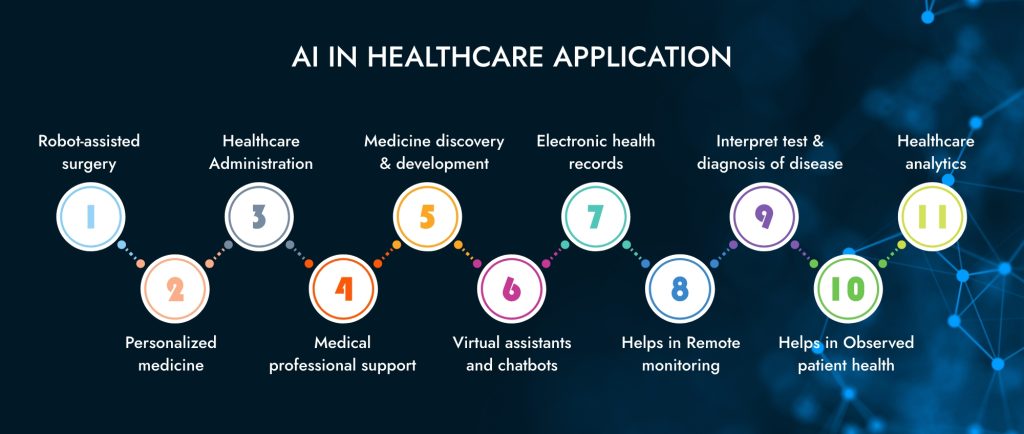
AI takes advantage of extensive data from different sources, such as medical records, images, tests, and sensors, making it more effective and precise in medical interventions. ViitorCloud explores 11 innovative AI use cases in the healthcare industry.

Why is the Healthcare Sector Turning into AI?

The healthcare sector is turning increasingly towards AI for various compelling reasons.

According to Precedence Research (2021), the worldwide artificial intelligence market size for healthcare was valued at USD 15.1 billion in 2022, with a projection beyond USD 187.95 billion by 2030, representing an outstanding CAGR (Compound Annual Growth Rate) of 37%. North America alone demonstrated significant prominence, with a market value of USD 6.8 billion in 2022.

An overwhelming amount of medical information is being produced today, including electronic health records, imaging studies, genetic profiles, and patient-generated data. The list continues ad infinitum (and beyond). The efficient analysis would take humans longer than forever since too much information is generated daily.

Big datasets can be quickly processed and analyzed by algorithms developed for artificial intelligence, revealing hidden patterns or insights that some might miss if left to human analysts.

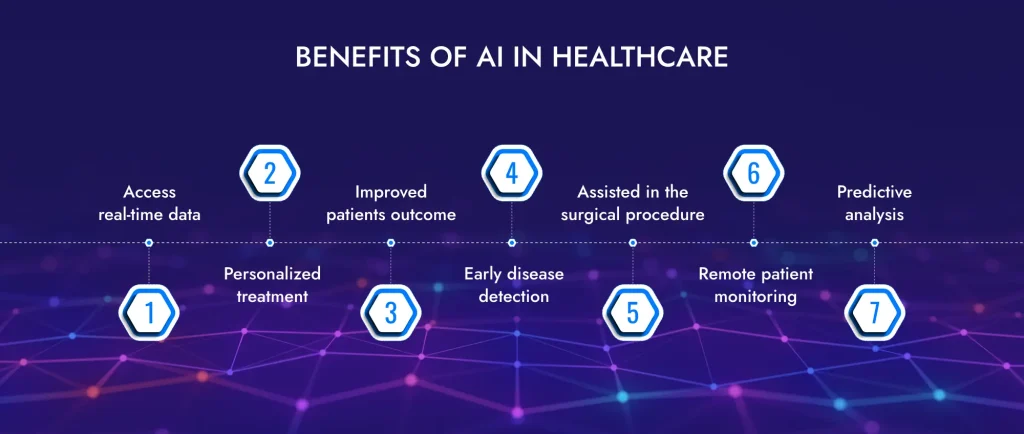
AI technology stands out as one potential game-changer across multiple aspects of health care:

  • Diagnostic accuracy intensification
  • Individualized treatment
  • Efficiency improvement
  • Prediction and prevention of diseases
  • Promotion of research, patient involvement in care, dealing with staff deficiency
  • Cost reduction as well as remote delivery

With the ongoing advancements in AI technology, its integration into healthcare will transform how medical care is delivered and received resulting in improved patient outcomes and more efficient health systems.

READ: How AI Is Transforming Healthcare Startups: Key Benefits and Insights

Upgrade Healthcare with Artificial Intelligence. Capitalize on the potential of AI within your healthcare solutions. Collaborate with our team to integrate advanced AI technologies into your organization.

AI in Healthcare: Top 11 Use Cases

AI is transforming healthcare delivery by improving diagnostic accuracy, which leads to enhanced patient care. Below are 11 pioneering use cases where AI has greatly affected healthcare.

1. Medical Imaging

Medical imaging is a major application area for artificial intelligence (AI) in health care. AI can precisely analyze medical images, including computed tomography (CT) scans, magnetic resonance imaging (MRI), and X-rays, providing physicians with crucial insights about patients’ conditions. This technology significantly enhances the accuracy and speed of diagnoses, ultimately improving patient outcomes.

A recent survey by European Radiology Experimental indicates that more than half of global healthcare leaders anticipate significant growth in AI’s role in monitoring and diagnosis. AI algorithms excel in analyzing radiology images, such as X-rays and CT scans, to assist in diagnosing diseases like pneumonia and tuberculosis. These AI tools improve diagnostic efficiency and patient outcomes by providing faster and more accurate interpretations.

AI in medical imaging is transforming healthcare by enhancing diagnostic accuracy and speed. From identifying lung nodules and osteoporosis to detecting brain tumors, Alzheimer’s, and diabetic retinopathy, AI’s capabilities are vast and impactful.

2. Personalized Treatment

The healthcare revolution underwent a paradigm shift with personalized treatment. With the help of AI algorithms that analyze the medical history of patients in addition to their genetics and even habits like diet and exercise regimen for disease risk prediction and guidance on individualized treatment strategies, this technology provides personalized care, which increases patient outcomes and overall health as well. The following are some specific examples of AI applications in healthcare.

The other way AI can be used within this field is by remotely monitoring patients’ condition changes. As an illustration, heart rate and blood pressure data could be analyzed by AI algorithms to identify possible pre-symptoms of heart diseases. This is useful in managing chronic conditions like diabetes.

Furthermore, wearable devices powered by AI can monitor vital signs continuously and detect significant changes that require immediate intervention by doctors to prevent complications. Artificial intelligence (AI) integration in healthcare has transformed personalized treatment delivery systems, thus making them more precise, effective, and customized per patient needs.

3. Electronic Health Records (EHRs)

Modern healthcare delivery depends heavily on electronic health records (EHRs) which are increasingly being managed through AI technologies. Medical professionals can use artificial intelligence to analyze large amounts of medical data for patterns and trends that help with the prevention and treatment of diseases.

For instance, AI can screen EHR data to identify patients at high risk of developing certain diseases – thereby enabling the formulation of targeted prevention strategies.

4. Detect Fraud Cases

AI plays a key role in identifying healthcare fraud by analyzing large volumes of medical and billing information for irregularities or inconsistencies. It establishes baseline behaviors and flags deviations such as overcharging or unnecessary procedures. Machine learning algorithms improve over time, enhancing the accuracy of identifying fraudulent claims.

Besides, AI may also use different sources to discover relationships that would have otherwise been overlooked saving many resources for health systems (so they do not lose money), stopping losses from misappropriation cases thus emphasizing real patient care. For example, AI can detect billing patterns indicative of fraud, such as duplicate billing or charges for services not rendered, helping to prevent healthcare fraud and ensuring appropriate patient care.

5. Virtual Assistants & Chatbots

AI-powered virtual assistants as well as chatbots are crucial components in remote patient care provision since they assist individuals during diagnoses while freeing up physicians’ time for complex problem-solving activities like diagnosis.

Such smart tools provide personal advice concerning health matters and various forms of aid whenever required by patients themselves. Some hours are taken up within your day before you get your feedback regarding the prescription you want on either side effects or interaction with other types of medications. Also, virtual caregivers can give information about the disease symptoms and home remedies or mention when medical help is required.

Additionally, AI-driven personal assistants and chatbots take care of appointment scheduling and other administrative duties, thus reducing the burden on healthcare workers and enhancing patient satisfaction. They enable patients to request appointments or seek information about scheduled ones through chatbots.

ALSO READ: How AI Is Redefining Healthcare: 11 Transformative Applications

6. Remote Patient Care

Remote patient care employs AI-fueled technology to deliver healthcare services and also monitor patients irrespective of their location. This priority is focused on convenience, accessibility, and prompt interventions with improved patient outcomes while lowering the costs of healthcare. Patients receive live medical attention, share health data, and be guided in remote treatments.

Healthcare providers use AI to interpret this information and look for any early signs of potential problems. Such a complete but distant approach promotes proactive care, reduces hospital stays, and enhances health effectiveness. For example, using an AI algorithm a diabetic can manage his/her glucose level continuously via a wearable device.

7. Medical Research & Data Analysis

Medical research requires extensive analysis of data to unearth disease insights regarding treatment options as well as patient outcomes. Scientists leverage statistics plus AI algorithms when amassing and interpreting big datasets thereby revealing patterns, correlations, or possible breakthroughs.

This data-driven method expedites discoveries, helps drug development, and improves clinical practice. For instance, investigators may obtain patient records together with clinical trial results among other genetic data concerning the new cancer remedy’s efficacy).

The researchers will then identify whether certain genetic markers suggest which patients might respond positively to the treatment using statistical methods along with artificial intelligence algorithms. This ensures targeted personalized therapies that would improve outcomes for patients who are less likely to benefit from unnecessary treatments. By analyzing data, medics arrive at a result where medical intervention becomes much more precise than before in terms of both its quality as well as its effectiveness.

8. Clinical Decision-Making Processes

AI in healthcare is a great promise for clinical decision-making and helps healthcare professionals to make accurate diagnoses. AI use cases in healthcare analyses comprehensive patients’ data including medical records, lab results, past treatments, and medical images such as MRIs and X-rays. Doctors combine their knowledge with AI tools that process vast amounts of data, which help identify models or possible treatment outcomes.

9. Optimize Hospital Resources

Hospital resource optimization involves predictive analytics in determining the most effective use of resources within a healthcare institution especially focusing on bed management and staffing. The AI use cases in healthcare systems employ sophisticated algorithms that consider historical data, current patient loads, and other variables to predict hospital resource requirements in the future.

A predictive analytics model for bed management helps forecast patient admissions, discharges, and transfers ensuring there are adequate beds available whenever needed. Equally, when it comes to AI healthcare solutions to staff the system foresees patient inflows assigning them corresponding personnel to avoid cases of understaffing or overstaffing.

10. Automate Patient-Reported Outcome Collection

The automation of the collection of Patient-Reported Outcomes (PROs) through AI chatbots is transforming healthcare data gathering across various settings. The intelligent chatbot approach allows direct communication between these machines and patients who talk about their well-being, side effects from the treatments they undergo, and life quality generally speaking.

AI use cases in healthcare software can engage patients in a natural conversation style hence collecting essential health information without necessarily having healthcare providers involved hence reducing their workload burden while enhancing patient engagement.

AI healthcare solution mechanization helps achieve both convenience in reporting outcomes by the patients as well as precise time-bound information for clinicians thus leading to informed clinical decisions and personalized care plans that eventually enhance patient outcomes besides satisfaction.

11. Address Staffing Challenges and Burnout

AI integration into healthcare staffing deals with two problems at once related to the distribution of the workforce and the burning out of personnel.’ AI applications enable hospitals to accurately project inflow of patients when deciding on how many staffers should be on shift ensuring that staff does not get overwhelmed by patient care.

AI use cases in healthcare enables hospitals to streamline schedules and distribute workloads evenly among their healthcare workers thus preventing scenarios of burnout and encouraging better work-life balance. Moreover, AI can reveal patterns as regards staffing crises so that proper preventive measures are taken to relieve healthcare workers from stress.

SEE: How AI is Helping Healthcare Reduce Costs and Improve Efficiency

Drive innovation within the healthcare sector by adopting the power of AI-driven insights and efficiency. Let’s discuss how we can help you lead in the industry with advanced AI applications.

How Does ViitorCloud Boost Healthcare Operations With AI?

The integration of AI in healthcare marks the beginning of an era characterized by innovation, efficiency, and individualized patient treatment. It ranges from improving medical imaging analysis to predicting patient outcomes through streamlining administrative tasks; AI has changed how healthcare is done globally.

ViitorCloud is leading in this field as its transformative role in healthcare operations through AI stands out. As a result of these, faster detection like that of cancer or breakage becomes possible thanks to which ViitorCloud achieves optimization of medical imaging diagnostics using advanced AI technologies.

We also have personalized treatment recommendations based on extensive patient data with consequent improvement in clinical outcomes as well as increased customer satisfaction with our AI development services.

For a future-proof healthcare strategy powered by AI, partner with ViitorCloud to find the full potential of technology in healthcare operations.

Frequently Asked Questions

AI boosts healthcare operations by optimizing resource allocation, enhancing diagnostic accuracy, automating administrative tasks, remote patient care, clinical decision-making processes, managing patient information, improving patient support, and improving efficiency and patient care.

AI aids diagnosis through image analysis; recommends personalized treatment plans based on patient information such as history & current conditions; and remotely monitors patients thereby enhancing delivery standards alongside improved health outcomes.

An example is AI analyzing medical images like CT scans to detect anomalies, aiding in early diagnosis and treatment planning, improving patient prognosis, and reducing healthcare costs.

How AI is Helping Healthcare Reduce Costs and Improve Efficiency

The healthcare sector is facing data overload, rendering traditional software systems incapable of effectively handling, evaluating & extracting meaningful information.

Artificial Intelligence development and integration could significantly reduce inefficiencies, enabling a more efficient and cost-effective healthcare ecosystem. The Internet of Medical Things (IoMT), Machine Learning (ML), and Deep Learning (DL) AI-driven technologies are transforming patient safety, hospital administration, drug development, and treatment decision-making, which then enhances healthcare delivery.

These innovations make operations run smoothly and enhance diagnosis and treatment accuracy, thus resulting in AI-driven cost reduction in healthcare and improving efficiency for better performance across the healthcare sector. How does healthcare cost optimization with ViitorCloud AI solution work?

Why Should Healthcare Businesses Integrate AI?

Artificial Intelligence transforms healthcare services by enhancing efficiency and lowering costs while improving patient care.

AI-powered solutions are changing everything from administrative tasks to clinical decisions within healthcare organizations. The discussion will explore what AI does in health care, highlighting various applications’ benefits and strategies for integration.

Integrate AI in Healthcare Businesses

1. Automate Medical Imaging

AI-powered solutions in scanning and ultrasound technology are enhancing the accuracy of medical imaging.

AI can analyze and interpret complex imaging data using deep learning algorithms, providing more precise and reliable results. This reduces the likelihood of human error and ensures that critical conditions are detected early.

2. Manage Customer Records

Healthcare workers spend a lot of time on paperwork and administrative stuff. For example, Generative AI can support note-taking by clinicians at work, manage customer records or provide content summaries, ensuring every patient file is complete. It can also facilitate accurate coding through departments’ interconnectivity during billing cycles.

3. Robotics Assisted Surgeries

With AI-driven robots operating machinery in surgeries, navigating through otherwise delicate body organs and tissues is now possible. This process helps minimize blood loss during surgeries, prevents infections, and reduces pain post-surgery.

AI ensures surgical equipment reaches hospitals on time, making this operation more efficient even during emergencies.

4. Drug Research and Discovery

AI is transforming drug research and discovery by significantly speeding up development. Machine learning algorithms can analyze vast datasets to identify potential drug candidates, predict their efficacy, and optimize chemical structures. This reduces the time and AI-driven cost reduction in healthcare associated with traditional drug discovery methods.

AI can predict how new drugs interact with biological systems, allowing researchers to anticipate potential side effects and efficacy issues before clinical trials. By leveraging AI, pharmaceutical companies can make more informed decisions about which drug candidates to pursue, increasing the likelihood of successful outcomes.

5. Healthcare Assistants

These systems help to manage patient records, schedule appointments, and process insurance claims faster. Automation saves time through these data management activities, hence minimizing errors within hospitals, which generally leads to increased productivity among staff.

6. Diagnose Blood-Related Diseases

AI can help in creating personalized treatment plans for patients with blood-related diseases.

By analyzing individual patient data, including genetic information and treatment responses, AI systems can recommend tailored therapies that are most likely effective for each patient. This personalized approach improves treatment outcomes and reduces healthcare cost optimization with AI.

7. Treat Neurological Disorders

AI is also contributing to the development of innovative therapies for neurological disorders.

For example, AI-driven brain-computer interfaces are being developed to help patients with paralysis regain movement. These interfaces use machine learning to interpret and translate brain signals into actions, offering new hope for patients with severe neurological impairments.

8. Analyze medical data

There is a substantial proportion of errors in how people take medicine among outpatients. For instance, up to 70% of patients fail to adhere to prescribed insulin, as Nature Medicine Journal shows.

Stress can be monitored by using this tool to monitor patients who misuse their insulin pens or inhalers. A recent survey showed that 64% of patients would be comfortable with AI providing around-the-clock support, so clinical staff should focus on human-based care.

READ: Artificial Intelligence in Healthcare: How AI is Utilized in the Healthcare Industry

Transform your Healthcare Operations with AI. Use AI to reduce costs and improve efficiency. Partner with ViitorCloud for tailor-made AI solutions.

How Can Our AI Solution Reduce Costs for Your Healthcare Organization?

Significant financial constraints in the global healthcare industry result in between 20% and 30% of healthcare spending being wasted on inefficiencies. This amounts to an annual wastage of around $1,100 to $1,700 per person in the top 15 countries, with the least spent on healthcare at $120 per person for the last 50 countries.

It is crucial to address these inefficiencies as they potentially impact patients’ lives, and AI-powered solutions offer several opportunities to reduce outlays and improve the quality of care. In this article, we shall examine various ways AI can save healthcare costs.

ViitorCloud AI Solution Reduce Costs for Your Healthcare Organization

1. Treatment Choice Guidance

AI can revolutionize clinical decision-making by drawing upon large patient outcomes datasets. Health providers are adopting standardization approaches for recording patient outcome data, which AI systems could analyze to identify trends and recommend best-suited treatments based on individual profiles of patients.

Such a personalized approach would help improve treatment effectiveness and minimize complications, which were discussed earlier, that are major cost drivers within different health systems.

2. Personalized Care

By solving an individual’s medical issues through personal patient data, AI ensures that effective and efficient treatments are applied, reducing cases of ineffective treatments and associated post-treatment complications.

Through optimizing treatment choices, better patient outcomes can be achieved at reduced costs due to artificial intelligence.

3. Automated Repetitive Tasks

For example, CT scans and other diagnostic tests are performed repetitively, and AI performs better than humans because it performs high-volume tasks well. The repetitive nature of such tasks often makes them prone to errors; hence, their accuracy and speed are improved if done using AI systems instead.

For instance, coronary aneurysms, brain bleeds, and malignant tissues within mammograms are certain conditions detected more accurately than human radiologists by some algorithms created by artificial intelligence.

4. Early Detection

To ensure effective treatment and cost savings, early diagnosis is essential. AI can process and analyze vast amounts of data quickly, enabling earlier detection of diseases. For example, AI has proven to be 99 percent accurate in reviewing mammograms thereby allowing for much earlier detection of breast cancer.

In osteoporosis, AI might identify early indicators, such as vertebral fractures, often missed by human diagnosis thus reducing long-term costs associated with managing the late stages of the disease.

5. Accelerated Drug Development

The period taken and the cost incurred during drug development can be significantly reduced by AI. By simulating millions of possible drug combinations and analyzing them using artificial intelligence algorithms that predict their efficacy against different diseases AI eliminates the need for expensive physical tests.

For instance, existing drugs have been repurposed to fight Ebola through artificial intelligence; this accelerated the development process, saving lives and other resources.

6. Optimized Clinical Trials

AI for cost-effective healthcare enhances clinical trial efficiency through biomarker monitoring platforms and the analysis of large patient datasets.

Therefore, gene-level identification of diseases and more precise selection of patients for trials can be done through artificial intelligence. Additionally, it lowers overall costs since data from at-home devices becomes available, resulting in fewer clinic visits.

7. Wearable Technology and Health Monitoring

Wearable technology provides real-time information on health parameters like heart rate or sleep patterns. People can get a health status report plus potential risks based on such details if AI analyzes them.

8. Chronic illness treatment

Mobile applications that are AI-supported can give tailored health advice and suggestions to those who have constant illnesses. Wearing these applications is a great step forward in reducing the number of hospital visits, thereby decreasing healthcare costs.

Patients with well-detailed health information are empowered to make choices, resulting in healthy lifestyles and reduced healthcare costs.

9. Fraud Detection

The healthcare industry loses about $380 billion annually to fraud, Medicare, and Medicaid abuse. AI healthcare cost optimization examines various health insurance trends that alert medical professionals to suspicious activities such as fraudulent claims for services not provided, unbundling procedures, and unnecessary tests.

ALSO READ: How AI Is Transforming Healthcare Startups: Key Benefits and Insights

Improve healthcare with AI innovation. Empower your healthcare business with AI. Collaborate with ViitorCloud to drive efficiency.

Successful healthcare startups who use AI in their Business

This is a revolution in the healthcare sector spurred by the integration of artificial intelligence (AI) and advanced technologies. Here, we focus on 3 emerging companies: Neko Health, Insitro, and LifeLensHealth which have made huge contributions to this field.

With its sophisticated AI technology and cutting-edge sensor technology, Neko Health is changing how people think about prevention. Neko Health also conducts non-intrusive whole-body scans collecting extensive medical data to help you get a complete picture of your health.

Neko Health’s Body Scan service uses more than 70 sensors to analyze over 50 million data points per person. Artificial Intelligence eliminates laborious manual regulatory compliance reporting through automation allowing this company to be per complex laws guiding health systems moderation expenses.

Insitro has employed machine learning to innovate drug discovery and development processes. Using genetic clinical phenotypic data fusion enables Insitro to make highly predictable models.

They create in vitro disease models that mimic human clinical results using patient-derived stem cells, genome editing, and machine learning algorithms. This has enabled the identification of previously unknown sub-categories of diseases and interventions that promote health, hence a large stride towards personalized medicine and focused treatments.

Due to enhanced AI diagnostic accuracy and cost efficiency, LifeLens is gaining attention in the diagnostics sector. The initial test costs have decreased by almost 30% thanks to optimizing the diagnosis process within it.

Such an increase would result in yearly savings worth over $5 million. Faster and better quality diagnoses help medical professionals and ensure prompt detection and prevention for patients, thus contributing to better health conditions and lesser expenses on long-term treatment.

ALSO SEE: How AI Is Redefining Healthcare: 11 Transformative Applications

Implement AI to optimize healthcare costs. AI is key to the improvement of healthcare. Let ViitorCloud assist you in the seamless implementation of the most appropriate solutions.

How can ViitorCloud help Healthcare with AI Solutions?

In today’s fast-changing world artificial intelligence is important for the success of businesses. Via collaboration with ViitorCloud, a leading AI development company, firms within the healthcare sector can leverage this revolutionary technology and reduce AI healthcare cost optimization.

Using advanced AI development services that ViitorCloud offers to healthcare companies, they can create tailor-made tools based on artificial intelligence to improve their operational efficiency and streamline their supply chain management. Such things include predictive analysis, real-time tracking, and automated route planning among others such as intelligent inventory management that can be transformed using AI integration strategy in healthcare processes.

Ensuring sustainable growth, increased accuracy, and better service delivery through using AI in healthcare with ViitorCloud. Why wait? Partner with ViitorCloud today and move on a journey to transform your healthcare business with cutting-edge AI solutions.

Frequently Asked Questions

AI reduces healthcare costs by improving diagnosis accuracy, optimizing treatment plans, and automating administrative tasks, thus minimizing unnecessary treatments, hospital stays, and operational inefficiencies.

AI optimizes healthcare industries by enhancing data analysis, streamlining workflows, personalizing patient care, and improving decision-making through predictive analytics, leading to better outcomes and resource utilization.

AI improves efficiency in healthcare by automating routine tasks, assisting in early diagnosis, reducing human error, and providing real-time patient data, allowing healthcare professionals to focus more on direct patient care.

How AI Is Redefining Healthcare: 11 Transformative Applications

In the healthcare industry, challenges such as accurate disease diagnosis, patient engagement, data security, workforce shortages, and medical errors are significant limitations. At ViitorCloud, we understand that these issues can seem uncontrollable. That’s why we offer advanced AI solutions customized to address each of these pain points effectively.

Our AI-powered healthcare solutions go beyond just technology—they’re designed to transform your operations and upgrade patient care. By using advanced data analysis, AI-driven drug discovery, remote monitoring, and predictive analytics, we designate healthcare providers to work more efficiently and deliver better outcomes. Our virtual health assistants streamline patient interactions, while our AI tools optimize operational workflows, guaranteeing that your healthcare facility runs smoothly and securely.

At ViitorCloud, we don’t just implement AI—we integrate it seamlessly into your healthcare ecosystem, driving innovation and improving lives. Let us show you how our expertise in AI development can help you control the full potential of AI in healthcare, transforming your services and boosting patient satisfaction. Explore the top applications of AI in healthcare with ViitorCloud and take the first step toward a smarter, more efficient future for your healthcare business.

AI Application in Healthcare

In the global market, the value of AI in USD is 20.9 billion in 2024, estimated to reach USD 148.4 billion by 2029. AI in healthcare applications offers various benefits to patients and healthcare providers. It helps healthcare organizations detect diseases and helps in personalized treatment and decision-making. AI provides accurate information, which helps improve the healthcare industry.

Let’s understand the applications of AI in healthcare in detail.

AI Application in Healthcare

1. Robot-Assisted Surgery

AI algorithms made the surgery procedure smooth and efficient. The surgeon can remotely control the robotic arm equipment with AI, enhancing accuracy during risk and complex procedures. Additionally, it opens the opportunity for the invasive surgeon, reduces the risk of errors, and shortens the period of patient recovery.

A robotic surgery system includes a mechanical and camera arm with a surgical instrument attached. A surgeon controls the arms from a control center, and it can see the 3D view of the surgical site. This is the way AI applications in healthcare are helpful to healthcare organizations.

2. Personalized Medicine

AI helps create personalized medicine by providing patients with information such as lifestyle choices, medical issues, and environmental factors. As a result, patients’ health improved, and they started to focus on their health by eating healthy food and exercising. Furthermore, by analyzing the data, AI helps prevent disease and improve the patient’s overall health. The data analysis includes lifestyle choices, genetic predispositions, and environmental factors.

Additionally, AI can analyze patient outcomes of the treatment, which helps refine and optimize the treatment plans. This process ensures that patient outcomes are improving over time. Moreover, implementing AI in personalized medicine improves patients’ health.

3. Healthcare Administration

The medical facility providers are friendly and helpful, but excellent services are not provided due to structural barriers. The structural obstacles include scheduling, confirming, or rescheduling appointments. It is solved with AI as it helps improve the scheduling process. Also, AI simplifies the billing and claim process. When businesses streamline the rote functions, it reduces errors and frees workers to focus on essential tasks.

For instance, an AI chatbot helps handle patient inquiries and responds quickly based on information such as patients’ electronic medical records. As a result, patients are satisfied.

4. Medical Professional Support

AI in healthcare applications helps diagnose diseases, treat them, provide patient care, and make decisions. AI analyzes medical data, patient records, and lab results and uses scans to diagnose the disease. As a result, healthcare providers can give personalized treatment to patients. Additionally, AI helps in decision-making by providing real-time guidance during complex times or challenging disease diagnoses.

Furthermore, AI provides medical education to healthcare providers with access to information. The information is in case studies, medical literature, and virtual simulations. This helps healthcare providers stay updated with the latest medical information and improve their clinical skills.

5. Medicine Discovery and Development

AI uses machine learning algorithms to analyze chemical and biological data to identify medicine efficiency. Also, it uses machine learning algorithms to create predictive models that estimate properties like toxicity, solubility, and bioavailability. These models improve the efficiency and safety of drug candidates. AI helps discover new the­rapeutic for existing drugs, reducing costs and time. Also, it helps identify new uses for medications.

Additionally, AI helps discover similar diseases, people, and characteristics through biomarker identification and predictive­ modeling. As a result, personalized treatment is provided to patients, leading to a higher success rate in drug development and improving patient outcomes. It is one of the most important applications of AI in healthcare.

6. Virtual Assistants and Chatbots

A virtual assistant is one of the healthcare AI solutions that satisfies the customer. Customer satisfaction is essential in healthcare and can be provided by quickly solving queries. AI virtual assistants solve customers’ queries 24/7 without having any load on staff workers. Also, chatbots engage with customers who are friendly, like human beings, and transfer communication to another channel if anything is required.

Virtual assistance helps healthcare organizations respond to 5000 customers at a single time. Also, it reduces patients waiting time to solve their queries, and virtual assistants provide personalized interaction to the patient with their name. Additionally, chatbots provide accurate information based on research instead of false information.

7. Electronic Health Records

Electronic health records provide the healthcare organization with details about patients. The details of the patient’s medical history include medical conditions, laboratory test results, demographic data, treatments, and more. AI has made this process efficient and productive in healthcare. The AI tools have transformed the unstructured data of medical records and insurance claims into structured data.

Additionally, AI can identify patterns of diseases and provide personalized treatment to patients. As a result, patient outcome improves. Furthermore, AI’s ability to analyze data to offer diagnosis assistance, disease progress, prognosis, and treatment recommendations helps healthcare providers make the right decision.

8. Helps in Remote Monitoring

Remote patient monitoring with AI helps in the real-time monitoring of patient health, which helps in the early detection of disease. AI continuously monitors patient essential signs, medication adherence, and key health indicators, which detect disease early. Another benefit of remote monitoring is that it provides personalized treatment plans. As a result, healthcare costs are reduced, and the need for hospitalization.

Furthermore, remote monitoring helps patients self-manage as they can monitor their health. Also, patients can make informed decisions about their health and communicate effectively with healthcare providers.

9. Interpret Test and Diagnosis of Disease

Artificial intelligence analyzes medical data to interpret patterns and provide predictions regarding disease. For this analysis, AI uses various medical tools. The AI transforms radiology tools to detect the disease in image form with X-rays and MRIs. In pathology, AI analyzes laboratory test results and tissues. The AI software assists in examining slides and identifying anomalies and cellular patterns. As a result, cancer cells can be detected.

Furthermore, AI systems assist healthcare providers in making personalized treatment plans for cardiac patients. Additionally, AI analyzes brain scans to detect complex neurological conditions. It also detects abnormalities in MRI and CT scans efficiently and accurately.

10. Helps in Observing Patient Health

AI uses machine learning and data analytics to analyze data from electronic health records and medical imaging to get insights into patient diseases, predict health trends, and detect anomalies. Also, real-time monitoring helps prevent diseases before they occur in the patients.

Additionally, AI helps in remote patient monitoring, where doctors can assist patients in remote areas where patients do not need to travel. Ultimately, observation of patient health helps create accessible healthcare solutions.

11. Healthcare Analytics

Healthcare analytics is one of the important AI applications in healthcare. The compass of machine learning, data analytics, and artificial intelligence helps get insights into diseases and patterns. When diseases are known, AI provides personalized treatment to improve patient outcomes. AI helps predict the risk of diseases in patients before disease occurs so the patient’s life can be saved.

Additionally, healthcare analytics is vital for improving operational efficiency and resource allocation in healthcare organizations. It analyses resource allocations, staff patterns, and patient flows, which helps optimize healthcare workflow, reduce wait time, and satisfy patients.

Also Read: How AI Is Transforming Healthcare Startups: Key Benefits and Insights

Ready to transform healthcare with AI? Partner with ViitorCloud for advanced AI solutions tailored to your healthcare needs.

How Viitorcloud’s AI Solutions Help to Reduce Healthcare Cost

At ViitorCloud, we don’t just integrate AI into healthcare, we revolutionize it. By using our progressive healthcare AI solutions, your business can exceptionally reduce costs while expanding access to underserved communities. Here’s how our applications of AI in healthcare can transform your operations and upgrade patient care.

Our AI tools are designed to optimize your administration process, automating everything from appointment scheduling to claims processing and billing. By reducing manual errors and cutting overhead, our solutions free up your healthcare professionals to focus on what matters most patient care while also pushing down operational costs.

Our AI solutions bring healthcare to your patients, no matter where they are. Remote monitoring allows patients to receive top-tier care from the comfort of their homes, preventing the need for costly and time-consuming travel. This not only enhances accessibility but also significantly reduces costs, all while improving health outcomes.

Misdiagnoses are costly and can lead to unnecessary treatments. Our AI-driven diagnostic tools provide accurate, timely diagnoses, empowering your healthcare professionals to make informed decisions that save your patients money and deliver better outcomes.

Efficient resource management is critical in healthcare, and our AI solutions make it seamless. By analyzing patient data, we help you predict staffing needs, manage patient admissions, and streamline inventory management, ensuring resources are allocated efficiently and costs are minimized.

Every patient is unique, and their treatment should be too. Our AI analyzes individual patient data to develop personalized treatment plans, leading to better patient outcomes and reduced costs associated with ineffective treatments.

Our AI chatbots provide round-the-clock support, offering patients basic information and guidance. This reduces the burden on emergency services, cuts costs, and ensures patients receive the care they need when they need it whether it’s a simple consultation or an urgent in-person visit.

Prevention is better and cheaper than cure. With our AI, you can run targeted health campaigns that identify and mitigate the risk of chronic diseases before they escalate. By focusing on prevention, you can reduce treatment costs and allocate resources more effectively.

With ViitorCloud create a healthier, more efficient future for your healthcare business. Our AI development services are tailored to meet your specific needs, helping you achieve your business goals while delivering the highest quality care.

Bring AI innovations to your healthcare practice. Collaborate with ViitorCloud to integrate AI applications that revolutionize patient care.

How can ViitorCloud assist with your healthcare challenges using an AI solution?

Artificial intelligence is revolutionizing healthcare by addressing critical challenges like disease diagnosis, medical discovery, virtual health assistance, and remote monitoring. But to use the power of AI, you need a partner who understands your unique needs and can deliver tailored solutions.

At ViitorCloud, we specialize in developing and integrating advanced AI applications that help healthcare organizations operate more efficiently and provide exceptional patient care. With our AI development services, your healthcare business can seamlessly incorporate innovative applications that enhance your operations and drive better outcomes.

Ready to transform your healthcare business? ViitorCloud is here to make it happen. Let’s work together to bring your vision to life with AI solutions that deliver real results. Contact us today to get started.

Frequently Asked Questions

AI in healthcare has the potential to transform the healthcare industry by improving patient outcomes, providing patient safety, and diagnosing diseases. Additionally, it helps get affordable healthcare and is accessible to health care in rural or underserved areas.

AI is useful in healthcare for diagnosing diseases and analyzing medical data such as X-rays, MRIs, and CT scans. It is also helpful in transcribing medical documents, drug discovery and development, and improving administration efficiency.

The applications of AI in healthcare are robotic-assisted surgery, personalized medicine, healthcare administration, medical professional support, drug discovery and development, and more. This application makes life easy for healthcare organizations.

In the healthcare industry, AI solutions are disease diagnosis with image analysis, virtual assistants for patient support, predictive analysis for early health detection, remote monitoring, and virtual chatbots to solve patient queries. It is the way AI solves problems in the healthcare industry.

How AI Is Transforming Healthcare Startups: Key Benefits and Insights

ViitorCloud AI solutions have altered healthcare startups, and drive industry innovation. Our AI-driven approach improves diagnosis processes, and personalized treatments, streamlining administrative tasks to improve operational performance, patient health, and satisfaction.

ViitorCloud’s Artificial Intelligence solutions advance accessibility and reduce the cost of providing quality healthcare services. Our predictive analytics predict the early spread of diseases, thus avoiding large-scale effects and saving lives. With the constant evolution in the healthcare industry, our AI expertise reshapes startup ventures that stand at the front line of innovation.

Partnering with ViitorCloud gives a clear implementation of the full benefits of AI in healthcare. Our solutions are designed based on the requirements of the industry: everyday care of patients, pandemics, and unexpected situations. It is time to team up and transform your health business into a difference-maker using advanced AI technology.

Why AI in Healthcare Matters and How Viitorcloud Can Help

In the healthcare industry, the stakes are extremely high – it’s a sector where every decision can impact lives. The integration of AI isn’t just an advancement; it’s a revolution that transforms patient care and operational efficiency. With ViitorCloud’s modern AI solutions, we provide a lifeline to healthcare professionals, assisting them in making crucial decisions and improving patient outcomes.

Our AI technologies assign healthcare workers like nurses, doctors, and support staff by offering accurate diagnostic tools and personalized treatment plans. Imagine having the ability to swiftly diagnose diseases and tailor treatments to individual needs, all while ensuring data is securely tracked for future reference. ViitorCloud’s AI solutions make this a reality, streamlining processes and providing actionable insights.

Furthermore, our AI systems excel in predicting the spread of diseases and analyzing vast amounts of data from various sources, including healthcare records and governmental databases. This capability is invaluable during pandemics or other unpredictable situations, allowing for timely and informed responses.

Read: AI business ideas for Entrepreneurs and Startups

Transform your healthcare startup with AI solutions! Partner with ViitorCloud for cutting-edge AI development services. Let’s innovate together.

Benefits of AI in Healthcare

According to the Statista forecast, the healthcare AI market will reach US $188 billion by 2030. With this number forecast, you can integrate AI in healthcare and get accuracy, customer satisfaction, and other benefits.

Let’s understand in detail the benefits of AI in healthcare:

Benefits of AI in Healthcare

1. Access Real-Time Data

Real-time data in healthcare provides access to professionals and patient data, which helps them make decisions. The decision-making is related to patients’ treatment and diet plans. Furthermore, real-time data access to the patient helps patients understand their health issues. So they can put effort into improving their overall health.

2. Personalized Treatment

According to diagnosed health issues, AI helps build personalized treatment for patients according to their needs. The needs depend on lifestyle and medical history. Personalized treatment improves patient engagement and satisfies the patients regarding their treatment. For instance, the AI platform Ada Health is useful in patient input and medical repositories to generate health insights and recommendations for treatment for patients on a health journey.

3. Improved Patient Outcome

AI-powered uses predictive analytics and monitoring to identify potential risks in healthcare and prevent the risk in healthcare. For instance, the predictive models of AI and ML detect patient drug reactions. As a result, healthcare providers can take preventive measures and treat patients accordingly.

4. Early Disease Detection

AI has transformed the healthcare industry through early disease detection. Early disease detection is possible by analyzing datasets such as biomarker levels, genetic profiles, and clinical symptoms. For instance, AI-powered tools efficiently detect diseases such as cancer or neurodegenerative diseases. One of the benefits of AI in healthcare is that it prevents diseases from spreading among patients.

5. Assisted in the Surgical Procedure

One of the benefits of AI in healthcare is that it assists in surgical procedures for the patient’s safety. These surgical procedures are achieved by integrating machine learning algorithms and computational intelligence. Additionally, it helps surgeons with laser-sharp accuracy and efficiency. For instance, AI uses surgical robots to assist in surgical procedures.

6. Remote Patient Monitoring

AI is using RPM solutions to supercharge wearable devices and IoT sensors to collect patients’ real-time health data. As a result, healthcare providers constantly monitor patients’ difficult signs, activity levels, and symptoms. Machine learning algorithms analyze the data to detect deviations in health and prevent health risks. For instance, the RMP solution detects heart problems and blood pressure to prevent heart attacks and other fearful diseases.

7. Predictive Analysis

AI benefits healthcare by analyzing large amounts of healthcare data, including medical history, patient demographics, and environmental factors. Also, predictive models help accurately predict disease onset or progression. For instance, predictive models efficiently determine chronic diseases such as cardiovascular ailments or diabetes with lifestyle changes or early prediction.

Also Read: Artificial Intelligence in Healthcare: How AI Is Utilized in the Healthcare Industry

Unlock the potential of AI in healthcare. Accelerate your startup’s success with customized AI solutions from ViitorCloud.

Challenges Faced by Ventures When Choosing AI Solutions for Healthcare Startups

Healthcare organizations use AI in nursing assistance, disease diagnosis, disease treatment, robotic surgery, and precision medicine. According to one KPMG survey, 53% of executives believe AI adoption helps in the leading healthcare industry. However, to implement AI without issues, challenges need to be solved.

Let’s understand in detail the challenges ventures face when choosing AI solutions for healthcare startups.

Challenges Faced by Ventures When Choosing AI Solutions for Healthcare Startups

Data privacy is one of the biggest challenges in AI for Healthcare Startups. Protecting the data from misuse, theft, and malware issues is important in the healthcare industry as it is sensitive personal data. The data includes medical records, DNA samples, fingerprints, and health-related data.

Moreover, AI is useful here as it detects unusual access patterns, which prevents data breaches. Furthermore, an AI technique ensures data protection during storage and transmission. Additionally, the operating system and software must be constantly updated to minimize cyberattacks. Zero trust should be implemented in the system. As a result, AI makes data privacy successful.

The data of every patient is important for healthcare organizations. When patients refuse to give their data, it is difficult for organizations to build data with AI systems. As a result, healthcare organizations and the government create compliance, which builds patient trust to give the data. For example, the Healthcare Information Portability and Accountability Act was passed to maintain standards and keep patients’ data confidential.

This regulation helps build trust among patients so they can share the data freely without any stress. Additionally, the integration of AI and blockchain secures the transmission and storage of patient data to improve privacy and security. It is one of the biggest challenges in AI for Healthcare Startups.

In other industries, machine needs are less, but in the healthcare industry, the use of machines is highest for diagnosing health problems and giving treatment. For instance, various tools, like ventilators, scanners, ECG machines, and X-ray machines, are useful for diagnosing health issues and treating patients.

It is difficult for healthcare companies to identify the appropriate use case for IoT. As a result, healthcare people need to understand different machines to determine the use case. Additionally, they need to consult with vendors about how quickly and simply an AI solution can be integrated into the machine. The vendors can be selected based on generic or vertical solutions, cost-effectiveness, and healthcare business objectives.

AI technology provides results based on input data, making understanding how algorithms work difficult. In some cases, the diagnosis of diseases needs to be corrected, making accountability difficult for the healthcare industry. This type of challenge is known as a black box.

This problem can be solved by using explainable AI. The explainable AI helps in understanding the output of the AI systems by bringing transparency. The transparency took place with a post-hoc method, which consists of four components such as targets, drivers, namely, estimators, and explainable family.

Educating staff about AI systems and their capabilities bridges the skill gap in healthcare organizations. Hospitals and individual experts can conduct training sessions to train staff on AI systems. After giving information to staff, patients must know about the treatment of AI systems.

When patients have information, they can trust AI treatment. For example, robotic surgery provides benefits to patients, such as minimal scarring, shorter hospital stays, lower blood loss, and reduced pain. Patients will not fear getting robotic surgery when these benefits and information are known to them.

Also See: How to implement AI in your business: 7 easy steps

Empower your startup with AI expertise. Leverage ViitorCloud’s AI solutions to drive innovation in healthcare.

Transform Your Healthcare Business With ViitorCloud’s AI Solutions

Are you ready to overcome healthcare challenges with progressive AI solutions? ViitorCloud is here to transform your healthcare operations. Our AI-driven innovations can forecast and diagnose diseases, providing personalized treatments that elevate patient care to new heights.

At ViitorCloud, with our AI development services, we integrate advanced AI technology to streamline your operations, reduce costs, and boost revenue growth, all while upgrading the overall patient experience. Our team of professional experts delivers impactful solutions tailored to optimize your healthcare business.

Don’t settle for the ordinary when you can achieve extraordinary results. Partner with ViitorCloud and transform your healthcare startup into a powerhouse of innovation and efficiency. Reach out today and start on your journey toward a smarter, healthier future with ViitorCloud.

Frequently Asked Questions

An example of AI in healthcare is the Google AI model, which analyzes mammogram images to determine breast cancer accurately. As a result, early cancer diagnosis prevents problems in patients and improves patients lives.

The leading companies applying AI to healthcare are Google, GE Healthcare, Siemens Healthineers, Canon Medical Systems, Aidoc, Microsoft, Merative, and Philips.

AI used in healthcare increases speed and accuracy. Also, AI benefits in healthcare for diagnosing health issues with CT scans, X-rays, and MRIs. Additionally, AI helps provide treatment to patients who have been diagnosed with health problems.

AI benefits the healthcare industry by diagnosing diseases in real-time and providing personalized patient treatment. Further, AI will help in surgical procedures, predictive analysis, and remote patient monitoring.

Artificial Intelligence in Healthcare: How AI is Utilized in the Healthcare Industry

Healthcare is experiencing a revolution with the rapid advancements in Artificial Intelligence in healthcare. At ViitorCloud, we specialize in controlling the power of AI to transform patient care and streamline administrative processes for providers, payers, and pharmaceutical organizations.

Imagine a future where AI not only assists but changes the way we diagnose diseases. Our advanced AI algorithms are already outperforming radiologists by identifying malignant tumors and aiding in the construction of costly clinical trial cohorts. These advancements are just the beginning.

While the full potential of AI in healthcare may take years to evolve, ViitorCloud is here to help you lead the charge. We offer tailored solutions to automate aspects of care and overcome barriers to AI implementation. Let us be your partner in transforming healthcare. Our AI Development Services boost your business and stay ahead in this rapidly developing industry.

What is AI in Healthcare?

Artificial Intelligence in healthcare isn’t just about modern technology—it’s about transforming how healthcare professionals and patients experience care. At ViitorCloud, we strengthen AI technologies like machine learning, natural language processing, and deep learning to provide robust solutions that allow healthcare providers to upgrade their services.

Suppose a world where doctors can make accurate diagnoses faster, healthcare administrators can access critical patient information with ease, and patients receive personalized treatments on time. That’s the power of AI in healthcare, and it’s precisely what we deliver. Our AI solutions streamline resource management and enable a proactive approach to patient care, ensuring you stay ahead in this rapidly evolving industry.

The global AI healthcare market is booming, with a projected value of $188 billion by 2030. This growth, highlighted by a CAGR of 37% from 2022 to 2030, is a testament to the transformative potential of AI in revolutionizing healthcare delivery and administration. At ViitorCloud, we’re not just keeping up with these advancements; we’re leading the charge. With us control the power of Artificial Intelligence in healthcare to transform your operations and improve patient outcomes.

Ready to Transform Your Healthcare Solutions? Let’s Talk AI!

8 Factors Why Healthcare Businesses Should Use AI

Transformative changes across different parts of patient care, as well as administrative processes, have been brought about by Artificial Intelligence (AI) to transform the health industry.

8 Factors Why Healthcare Business Should Use AI

1. Hospital Management

The optimization of operations within different health systems as well as revenue cycle management through means such as artificial intelligence (AI) can lead to improved efficiency. A major problem solved through AI-enabled tools is capacity management which has been worsened by staffing shortages and the COVID-19 pandemic.

2. Automation in Medical Imaging

AI enhances medical imaging by improving screening, risk assessment, and precision medicine. Clinicians are now able, with high accuracy, to diagnose diseases by using a deep neural network-based detection system for COVID-19, an AI-driven tool.

Speedy and accurate analysis of imaging data by AI is becoming incredibly vital both in emergency scenarios and when integrated into devices worn on the body.

3. Advanced Medical Research and Clinical Trials

AI improves medical research and clinical trials by optimizing trial design, participant screening, and data analysis.

Artificial intelligence models can process vast datasets, identify patterns, and predict outcomes, thereby speeding up research. Privacy security and model validation are key to successfully incorporating AI into clinical trials.

4. Patient Engagement Using Chatbots

Personalization of communication along with timely information is one of the ways that AI has improved patient engagement. For example, AI chatbots could sort out patients’ questions hence reducing doctors’ workload as well as increasing satisfaction among patients.

Additionally, predictive analytics tools are being used for patient outreach based on clinical risk assessment data which again enhances patient engagement leading to improved results also known as ROI.

5. Predictive Analytics

Predictive analytics has revolutionized healthcare by permitting providers to forecast outcomes and create interventions instead of waiting for them to occur.

Health management and value-based care delivery are some of the areas in which AI-driven predictive models have been used. In a recent study, an ML-based model accurately predicted suicide risk justifying the use of predictive analytics in preventive care.

6. Remote Patient Monitoring

Remote patient monitoring (RPM) technologies backed up by AI are providing ways for continuous collection and analysis of patient data.

AI-driven RPM tools play a key role in hospital-at-home programs, allowing for real-time monitoring, and immediate intervention. Such tools can forecast complications while alerting healthcare workers about their dangers.

7. Revenue Cycle Management

AI is making revenue cycle management much easier by handling such laborious processes as claims processing and medical coding.

The workload on healthcare professionals gets lightened with administrative tasks being made less burdensome through AI-assisted tools that encourage concentration on patient care, for example, Mount Sinai’s autonomous medical coding technology implementation has greatly improved efficiency in pathology cases.

8. Robotic Assistance in Surgeries

The health workforce is being augmented by AI-powered robots by assisting them during surgeries and other regular activities.

Robotic surgery enhances dexterity and precision, leading to better surgical outcomes. Early diagnosis and treatment of patients are supported by the use of pre-operative assessment tools using AI-enabled surgery robotics.

Boost Patient Care with Advanced AI Solutions!

How is AI Useful in Your Healthcare Business?

Changes across different parts of hospital tasks as well as administrative processes have been done with the help of Artificial Intelligence (AI). AI regulates healthcare through various applications. Let’s discuss it below in detail:

  • Medical Diagnosis: AI, particularly machine learning, enhances diagnostic accuracy by analyzing medical data.
  • Treatment Planning: AI assists in creating personalized treatment plans based on patient data and medical research.
  • Patient Care: The technology enables interaction with patients answering questions about their health condition and reminding them to take medicines.
  • Surgical Assistance: By giving real-time guidance and analysis during procedures that enhance precision while reducing errors
  • Medicine Development: It conducts medicine discovery at a faster pace due to the analysis of huge data sets predicting Medicine efficacy along with side effects.

Role of Viitorcloud’s AI Solutions in Healthcare Industries

AI provides opportunities to assist in reducing human error, help medical professionals and staff, and offer patient services 24/7.

Let us discuss the role of AI in the healthcare sector:

Role of ViitorCloud AI Solutions in Healthcare Industries

According to a Report, the clinical decision support systems market worldwide will reach $1.4 billion in 2026 being driven mainly by solutions based on AI technologies.

These systems are anticipated to reduce diagnostic mistakes by 25% as well as adverse incidents due to medicine consumption by 66%, thus improving patient care services and cost-cutting programs.

Numbers speak volumes when it comes to the impact of artificial intelligence on Medicine discovery. In 2020, the AI in Medicine Discovery Market was valued at $449.3 million and is projected to reach $4,815.1 million by 2027, with a CAGR of 33.5% from 2020 to 2027.

AI-driven Medicine discovery platforms have shortened the process by up to fifty percent and decreased costs by approximately seventy percent.

AI is being massively adopted in EHRs whose global market is expected to be worth at least $33.41 billion by the year 2027 with a CAGR of around 19.5% from year 2020-2027.

This includes data extraction and legacy data conversion which can save healthcare organizations up to 70%, reducing errors and improving operational efficiency.

With genomic analysis tools driven by AI, studies have shown an increase of up to thirty percent in accuracy for tumor profiling and improved treatment outcomes by twenty percent for genetically driven diseases.

AI-powered healthcare RPM solutions have the potential to reduce hospital readmissions by 30% and cut healthcare costs through early intervention plus personal care management services by around 25% percent.

Unlock the Future of Healthcare with AI Expertise.

How to Implement Our AI Solutions in Healthcare?

Implementing AI solutions offers many benefits. Here is how to implement AI healthcare solutions.

  • Look for Use Cases: You have to start by looking out for use cases where artificial intelligence can tackle current problems or improve medical proceedings.
  • Evaluate Quality of Data: It is important to evaluate the availability and quality of data necessary for training and deploying AI models. This would mainly involve selecting suitable artificial intelligence in healthcare technologies based on the identified use cases as well as the availability of data.
  • Create AI Solutions: Develop AI healthcare solutions internally or in collaboration with external suppliers and artificial intelligence companies like us that create or purchase AI applications for specific healthcare requirements. Bring proven AI rollouts to multiple departments or care facilities in order to achieve maximum impact and value.

Future of AI in the healthcare industry

At ViitorCloud, we provide AI healthcare solutions that are changing the industry and covering the way for a more advanced and personalized healthcare experience. Our advanced technology powers telemedicine apps, making them invaluable tools for patients, specifically those dealing with mental health challenges like autism. Through Emotion AI, we offer sophisticated speech analysis that can identify mental illnesses such as dementia, depression, and Down syndrome by detecting subtle changes in speech patterns.

We specialize in creating personalized healthcare treatments by using vast amounts of healthcare data to customize services for individual needs. Our solutions include wearables like wristbands, sensorized insoles, and smart jackets, which monitor vital parameters such as heart rate, blood pressure, and calorie expenditure. These data points feed into AI-enabled apps that deliver tailored diet plans and workout programs, ensuring optimal health outcomes.

ViitorCloud is at the forefront of the rising trend toward Ambient Intelligence (AmI). We seamlessly integrate AI, IoT, Big Data, and other technologies into comprehensive healthcare solutions. Our AI healthcare automation services streamline patient consultations, automate emergency care support, and enable continuous monitoring, resulting in exceptional patient care.

Our AI-driven insights are revolutionizing the diagnosis and treatment of chronic diseases. For instance, our technology can analyze whole-heart computational models to understand conditions like ventricular arrhythmia, enabling personalized treatment approaches that enhance patient outcomes.

Empower Your Healthcare Business with AI Innovation.

How ViitorCloud AI Services Streamline Your Healthcare Venture?

In today’s fast-evolving healthcare landscape, embracing artificial intelligence isn’t just an option; it’s essential for staying ahead. ViitorCloud offers top-notch AI development services, empowering healthcare businesses to harness the full potential of this transformative technology.

With us, you can seamlessly integrate artificial intelligence in healthcare to streamline operations, elevate patient care, and secure sustainable growth. Whether it’s creating AI-powered chatbots, innovative video solutions, or intelligent AI assistants, we tailor our solutions to meet your unique needs.

Don’t just adapt—lead the way. Partner with ViitorCloud today and embark on a transformative journey, making your healthcare business future-ready with cutting-edge AI solutions. Let’s revolutionize healthcare together!

Frequently Asked Questions

AI can help with diagnosis, personalized treatment, patient tracking, and administrative tasks to make medical practitioners more efficient and assist them in decision-making.

AI improves diagnostic accuracy, personalized treatment planning, workflow optimization, patient monitoring, and Medicine discovery collectively enhancing overall healthcare outcomes.

AI makes administrative processes efficient, optimizes resource utilization, prevents medical errors, and increases operational efficiency thereby reducing the cost of health delivery.

The testing as well as regulation of AI in the sector ensure that patients are secure through privacy issues as well as data security hence minimizing the risk associated with its implementation.