AI-Powered Predictive Analytics in Healthcare: Transforming Patient Care Delivery

AI-powered predictive analytics in healthcare is revolutionizing how medical professionals deliver patient care. This technology is transforming reactive healthcare approaches into proactive, prevention-focused strategies. The AI for predictive healthcare market is also experiencing unprecedented growth, expanding from $11.69 billion in 2025 to an expected $47.93 billion by 2030.

This evolution isn’t merely a technological trend but represents a fundamental shift from reactive medicine to proactive, prevention-focused healthcare delivery. For healthcare executives and decision-makers, understanding and implementing AI-powered predictive analytics is about staying competitive and reimagining how patient care is conceptualized and delivered.

ViitorCloud has already delivered digital solutions to clients from the healthcare industry. So, here we are going to discuss the importance of AI-powered predictive analytics in the healthcare industry and why we can be your best partner for this.

What is AI-Powered Predictive Analytics in Healthcare?

AI-powered predictive analytics in healthcare leverages sophisticated algorithms to analyze vast amounts of patient data and forecast potential health events before they occur.

This technology processes historical and real-time information from diverse sources—electronic health records, medical imaging, wearable devices, and more—to identify patterns imperceptible to human observation.

Unlike traditional healthcare analytics that explains past trends, predictive analytics focuses on anticipating future outcomes, enabling proactive interventions rather than reactive treatments.

For healthcare organizations, this represents a drastic shift from treating illnesses to preventing them, fundamentally altering care delivery models while optimizing resource allocation.

Read: Generative AI in Healthcare: Advancing Diagnostics and Patient Care

Enhance Patient Outcomes with AI​

Implement AI-Powered Predictive Analytics in Healthcare to anticipate patient needs and improve care delivery.​

How is Predictive Analytics Revolutionizing Disease Detection and Prevention?

There are many benefits of AI in healthcare but one of the most powerful applications of AI-driven analytics is early disease detection. Advanced algorithms can identify subtle patterns signaling disease development long before obvious symptoms manifest. For instance, predictive models analyze patient data to detect early indicators of chronic conditions like diabetes or heart disease, enabling preventative interventions that significantly improve outcomes.

These systems continuously learn from new data, enhancing their predictive accuracy over time. This capability is particularly valuable for mid-size healthcare providers who don’t necessarily have specialized expertise in rare conditions but can leverage AI to identify potential issues by instantly comparing patient data against millions of records worldwide.

What Role Does Predictive Analytics Play in Resource Optimization?

For healthcare executives concerned with operational efficiency and cost management, predictive analytics offers transformative solutions.

AI-powered forecasting tools optimize resource allocation by predicting patient admission surges, length of stay, and staffing requirements. For instance, hospitals use predictive models to anticipate bed capacity needs, enabling more efficient scheduling and deployment of medical personnel.

These insights help healthcare facilities function more like advanced command centers, with real-time dashboards highlighting bottlenecks, predicting issues, and coordinating care delivery.

Also Check: Digital Transformation Roadmap for Healthcare: How to Start and Scale Successfully

Optimize Healthcare Operations​

Utilize AI-Powered Predictive Analytics in Healthcare to streamline processes and reduce operational costs.​

How Does AI-Powered Analytics Enhance Clinical Decision Making?

Clinical decision support powered by predictive analytics provides healthcare professionals with real-time information and evidence-based recommendations. When integrated with existing clinical workflows, these systems offer immediate insights that enhance diagnostic accuracy and treatment planning.

For example, AI can analyze a patient’s genetic profile, medical history, and response to previous treatments to suggest personalized therapeutic approaches with the highest probability of success. This capability is particularly valuable in time-sensitive situations, where faster-informed decisions can significantly impact patient outcomes.

Must Read: How AI Agents in Healthcare Are Transforming Medical Services

What Benefits Can Healthcare Organizations Expect from Implementing Predictive Analytics?

The implementation of AI-powered predictive analytics yields multiple benefits that directly impact both patient outcomes and organizational performance.

Healthcare institutions can expect improved diagnostic accuracy, with AI systems detecting patterns that humans might overlook. Operational efficiency increases through streamlined workflows and optimized resource allocation, while cost savings materialize through reduced readmissions and prevention of unnecessary procedures.

Enhanced patient safety results from early detection of potential adverse events, and accessibility improvements emerge through remote monitoring capabilities.

For organizations transitioning to value-based care models, predictive analytics identifies high-risk patients for preventive interventions, helping providers succeed in risk-sharing contracts while avoiding financial penalties.

Personalize Treatment Plans with AI Insights​

Leverage AI-Powered Predictive Analytics in Healthcare to tailor treatments and enhance patient satisfaction.​​

How Can Scalable Cloud Systems Support AI Implementation While Reducing Costs?

Modernizing infrastructure through scalable cloud-based platforms is essential for organizations seeking to implement robust predictive analytics solutions. Cloud systems eliminate the need for extensive on-premises infrastructure investment while providing the computational power necessary for sophisticated AI algorithms. These platforms offer flexibility to scale analytics capabilities based on demand, ensuring cost-effectiveness while maintaining performance.

Cloud-based solutions also facilitate seamless integration between different healthcare systems, enabling comprehensive data analysis across previously siloed information sources.

For decision-makers concerned with both innovation and fiscal responsibility, cloud infrastructure provides the ideal foundation for AI implementation—reducing capital expenditures while establishing the technical architecture necessary for advanced analytics capabilities.

Check: How Cloud Computing Is Transforming the Healthcare Industry

Transform Your Healthcare Organization with ViitorCloud’s AI Solutions

We engineer AI-first software and platforms for various industries, and healthcare is no exception. We offer cutting-edge AI-powered predictive analytics in healthcare that drive digital transformation.

Our solutions improve diagnostic processes, enable personalized treatments, and streamline administrative tasks, enhancing operational performance, patient health, and satisfaction. ViitorCloud’s AI technology facilitates early disease detection through predictive analytics, preventing widespread effects and saving lives.

Our approach includes developing advanced AI algorithms for medical image analysis and disease diagnosis, creating custom telemedicine platforms for virtual consultations, building blockchain-based EHR systems, implementing IoT-enabled remote monitoring, designing powerful analytics platforms, and providing cloud migration services.

By partnering with ViitorCloud, healthcare organizations can fully implement the benefits of AI, transforming their businesses into difference-makers through advanced technology tailored to industry requirements. So contact us now at support@viitor.cloud or digital@viitorcloud.com and our expert will get back to you to offer a complimentary consultation.

Transform Healthcare Delivery​

Adopt AI-Powered Predictive Analytics in Healthcare to revolutionize patient care and stay ahead in the industry.​​​​

Bottom Line

The integration of AI-powered predictive analytics in healthcare represents a complete reimagining of how care is delivered. By using these powerful tools, healthcare organizations can shift from reactive treatment to proactive prevention, improving patient outcomes while optimizing operational efficiency and reducing costs. For forward-thinking healthcare leaders, the time to embrace this transformation is now.

Connect with us on LinkedIn for exclusive insights and the latest evolutions in AI-Powered Predictive Analytics. Together, let us prepare for the future.


Data Engineering Solutions for Logistics: Harnessing Big Data for Smarter Decisions

For the successful supply chain management, efficiency and agility are important factors. Increasing demand for e-commerce, rising global trades, and continuously increasing consumer demand for quick deliveries have become among the major contributing factors to the exponential growth of the logistics industry. According to a recent report by Precedence Research, the global logistics sector is among the fastest-growing industries in the next eight years.

However, traditional, manual processes struggle to keep pace with increasingly complex supply chains. This is where data engineering solutions for logistics become essential, empowering organizations to transform vast amounts of data into actionable insights that drive efficiency, reduce costs, and enhance customer satisfaction across the entire supply chain. A high-performing supply chain is linked to revenue growth for 79% of companies.

The logistics industry is awash in data. From transportation and warehouse management systems to GPS tracking and customer relationship management (CRM) platforms, the sheer volume and variety of data can be overwhelming. However, within this data deluge lies the potential to optimize every facet of logistics operations. Data engineering provides the tools and techniques to harness this potential, turning raw data into valuable insights that enable smarter, data-driven decisions.

But how exactly can data engineering solutions for logistics revolutionize the way businesses operate? Let’s answer the main questions and explore the transformative power of data in the logistics industry.

Why is Data Engineering Important for Modern Logistics?

Data engineering is very important for modern logistics because it helps companies manage and analyze large amounts of data from various sources. Industry experts recognize data engineering as a problem-solving technology that enables companies across different sectors to optimize their operations. In logistics, this involves handling data from transportation systems, GPS tracking, and warehouse management systems.

Here’s why it’s so important:

  • Find Out Bottlenecks: Data engineering techniques enable companies to identify trends and patterns, which supports better business decisions. For example, if a company faces delivery delays, data engineering can pinpoint the root causes by analyzing data from GPS tracking or warehouse management systems.
  • Better Customer Service: Logistics companies can enhance customer satisfaction by providing accurate, timely information about delivery statuses. In today’s competitive market, where customers expect high-quality service, this is particularly crucial.
  • Operational Efficiency: Data engineering facilitates real-time visibility into the supply chain, enabling demand forecasting through predictive analytics and making route planning and inventory management more efficient.
  • Data-Powered Decisions: Replacing traditional approaches with data-driven strategies that rely on concrete evidence and real-time information improves the accuracy of decisions.
  • Transparency: Big data helps make the most of resources and improve transparency, which boosts efficiency.

A report reveals that 93% of shippers and 98% of third-party logistics business owners believe big data analysis plays a major role in making smart decisions.

Also Read: How AI is helping logistics companies reduce costs and improve efficiency

Transform Your Logistics

Leverage our Data Engineering Solutions for Logistics to streamline your operations and drive smart decisions.

What are the Main Benefits of Data Engineering Solutions for Logistics?

Data engineering offers many benefits to the transportation and logistics industry, including supply chain optimization, real-time visibility, cost reduction, and risk management. Companies that embed big data analytics in their operations are more likely to experience significant improvements.

According to an Accenture survey, around 50 to 60 percent of companies using big data experienced improvements in order-to-delivery times, supply chain efficiency, demand-driven operations, cost-to-serve, and customer/supplier relationships.

Here’s a detailed look at the key advantages:

  • Supply Chain Optimization: Data engineering helps identify bottlenecks and inefficiencies in the supply chain. By analyzing data from GPS tracking systems and warehouse management systems, companies can pinpoint the root causes of delays and develop effective solutions.
  • Real-Time Visibility: With live tracking and monitoring, logistics companies can oversee the movement of goods in real-time. This information, combined with traffic and weather data, enables managers to plan and schedule deliveries efficiently.
  • Cost Reduction: Data engineering offers multiple avenues for cost savings. By optimizing delivery routes, reducing fuel consumption, and predicting maintenance needs, companies can significantly lower their operational expenses.
  • Customer Service: Providing customers with accurate and timely information about their deliveries enhances the customer experience and builds loyalty. This is particularly important in today’s competitive market, where customers have high expectations.
  • Risk Management: Data engineering tools assist in fraud detection, disaster recovery, and compliance with regulations. These tools enable organizations to identify suspicious activities, develop contingency plans, and minimize disruptions during emergencies.
  • Predictive Maintenance: AI-powered data engineering solutions can predict maintenance needs by proactively using real-time data and machine learning. This helps identify potential equipment breakdowns, reduce downtime, and improve overall efficiency.

Check: How Blockchain for Logistics Enhances Traceability and Efficiency

How Does Big Data Enhance Operational Efficiency in Logistics?

Big data analytics in logistics enhances operational efficiency through real-time optimization of routes and schedules. Automated transportation management systems use intelligent software to control fleets, schedule shipments, and automate routine tasks seamlessly.

Route Optimization

Analyzing data from vehicle sensors, weather reports, and traffic updates helps find the most efficient delivery routes. For example, UPS uses the ORION system to optimize delivery routes, saving approximately 10 million gallons of fuel annually.

Real-Time Package Tracking

FedEx integrates the Internet of Things (IoT) with its data engineering framework, providing real-time updates on package location, handling conditions, and estimated delivery times. 

Efficient Warehousing

Big data provides warehouse managers with detailed insights into loading, carrying, and unloading goods. It also helps understand changes in customer behavior, allowing managers to improve routes and scheduling deliveries, thus boosting warehouse throughput.

Predictive Maintenance

DHL uses noise sensors for predictive maintenance of sorter machines and IoT sensors for vehicle monitoring. This helps prevent maintenance issues and cut costs.

Drive Smarter Decisions

Empower your supply chain with our innovative Data Engineering Solutions and harness big data for efficiency.

What are the Key Benefits of Implementing Data Engineering in Logistics?

Implementing data engineering solutions for logistics offers numerous tangible benefits:

i) Improved Operational Efficiency

AI algorithms evaluate large datasets to identify trends and optimize processes, reducing the time and resources spent on logistics management. Companies using AI-powered tools have seen operational improvements of up to 30%.

ii) Reduced Costs

By finding the most efficient delivery routes and tracking vehicle conditions, companies can reduce fuel consumption, prevent breakdowns, and optimize carrier management.

iii) Enhanced Customer Satisfaction

Real-time visibility into shipment tracking and improved accuracy of delivery updates enhance customer experiences. Addressing potential supply chain issues early on also improves customer satisfaction.

iv) Better Supply Chain Visibility

Data engineering provides a clear, real-time view of the entire supply chain, enabling better decision-making and quicker responses to disruptions.

v) Effective Risk Management

Data engineering tools assist in fraud detection, disaster recovery, and compliance with regulations and industry standards.

vi) Increased Transparency

Big data helps make the most of resources and improves transparency, which boosts efficiency.

Must Read: 11 AI applications in logistics every entrepreneur should know

What Role Does Predictive Analytics and AI Play in Logistics?

Predictive analytics leverages historical data and machine learning algorithms to forecast future outcomes and trends. In logistics, this capability is invaluable for anticipating demand, optimizing inventory levels, and preventing potential disruptions.

1. Demand Forecasting

AI can analyze historical sales data, market trends, and seasonal variations to predict product demand accurately. This enables companies to stock the right products in the right quantities, reducing storage costs and minimizing waste.

2. Predictive Maintenance

By continuously monitoring equipment performance and identifying anomalies, AI can predict when maintenance is required. This proactive approach reduces downtime and extends the lifespan of critical assets.

3. Real-Time Decision-Making

AI provides advanced decision support systems that analyze vast amounts of data and offer optimal solutions in seconds. For example, AI algorithms interpret current traffic conditions, fuel costs, vehicle capacities, and delivery schedules to optimize fleet operations.

4. Risk Management

Artificial intelligence helps detect emerging risks such as supplier delays, natural disasters, or geopolitical events. This allows companies to take proactive measures to minimize disruptions and ensure business continuity.

5. Security

By analyzing patterns and anomalies in data, organizations can detect and prevent fraudulent activities such as theft and counterfeiting.

Optimize Your Operations

Experience seamless logistics with expert Data Engineering Solutions for Logistics that fuel growth and agility.

How Can Data Integration Overcome Logistics Challenges?

Data integration is crucial for logistics and supply chain management in today’s interconnected world. Integrating data across various systems can be challenging, especially in the complex cross-border e-commerce logistics service sector, leading to delays, errors, and other issues that can impact business efficiency and profitability.

  • Siloed Systems: Integrating systems using a middleware platform or integration software can connect all logistics applications and make them work together seamlessly.
  • Inaccurate Data: Using well-tested data integration software with a stable database ensures data accuracy and consistency across all systems.
  • Lack of Visibility: Choosing data integration software with fully-fledged data analytics and reporting tools provides real-time visibility into logistics operations, enabling informed decisions and corrective actions.

Also Check: The Role of Digital Product Engineering in Logistics Innovation

How Can ViitorCloud Help Logistics Businesses with Data Engineering Solutions?

Data engineering solutions for logistics can optimize inventory, improve delivery accuracy, and enhance customer satisfaction. Our expert team at ViitorCloud can transform your logistics operations with tailored solutions.

We are experts in data engineering solutions for logistics that help organizations leverage data to optimize their supply chains. We design efficient data pipelines, implement predictive analytics models, and leverage AI-driven technologies for supply chain optimization. With a focus on long-term partnerships and adaptability, we empower businesses to achieve sustainable growth through data-driven insights.

Partner with us, and let our expert team take your logistics operations to new heights with our advanced AI solutions.

Innovate with Confidence

Partner with ViitorCloud and unlock transformative Data Engineering Solutions tailored for logistics excellence.

Final Thoughts

Data Engineering solutions for logistics are transforming the industry by enabling smarter, data-driven decisions. Embracing these advanced technologies is crucial for logistics companies aiming to enhance efficiency, reduce costs, and improve customer satisfaction. As the digital logistics market continues to expand, data engineering will be essential for staying competitive and achieving sustainable growth.

Connect with us on LinkedIn for exclusive insights and the latest evolutions in Data Engineering from ViitorCloud. Together, let us prepare for the future.
Data Engineering in Healthcare: Unlocking the Power of Predictive Analytics

By 2020, the global healthcare sector generated 2.3 zettabytes of data daily, but only a small percentage of this data was analyzed effectively. This gap is where data engineering in healthcare emerges as the unsung hero.

By 2034, the predictive analytics market in healthcare is projected to reach $154.61 billion, driven by innovations in machine learning and AI. But behind every accurate prediction lies a robust data engineering framework: pipelines that clean, transform, and unify electronic health records (EHRs), wearable device outputs, and genomic data into actionable insights.

For instance, hospitals using predictive analytics can reduce readmission rates, saving millions annually. However, this success hinges on data engineering teams building infrastructure capable of processing real-time data streams while ensuring compliance with HIPAA and GDPR.

Let’s explore how data engineering in healthcare is reshaping medicine and how ViitorCloud can be the best partner in this endeavor.

What is Data Engineering?

Data engineering encompasses the design, construction, testing, and maintenance of data architectures. These architectures enable organizations to collect, store, process, and analyze data at scale. In healthcare, data engineering is crucial for integrating diverse data sources, ensuring data quality, and making data accessible for analysis and decision-making.

Key Components of Data Engineering in Healthcare 

  • Data Integration: Healthcare data comes from a variety of sources, including electronic health records (EHRs), claims data, medical devices, and wearable sensors. Data integration involves combining data from these disparate sources into a unified and consistent format.
  • Data Warehousing: A data warehouse is a central repository for storing large volumes of structured and semi-structured data. In healthcare, data warehouses are used to store patient data, financial data, and operational data.
  • ETL Processes: Extract, transform, and load (ETL) processes are used to extract data from source systems, transform it into a consistent format, and load it into a data warehouse or data lake.
  • Data Quality: Ensuring data quality is critical in healthcare, as inaccurate data can lead to incorrect diagnoses, ineffective treatments, and increased costs. Data engineers are responsible for implementing data quality checks and data validation procedures.
  • Data Governance: Data governance establishes policies and procedures for managing data assets. In healthcare, data governance is essential for ensuring data privacy, security, and compliance with regulations such as HIPAA.

Transform your future with Data Engineering in Healthcare. Leverage ViitorCloud’s expert solutions to power your predictive analytics and drive smarter decisions.

What Makes Data Engineering in Healthcare Unique?

Healthcare data is heterogeneous, unstructured, and time-sensitive. Unlike retail or finance, a single patient’s record might include MRI scans (DICOM files), doctor’s notes (free text), lab results (tabular data), and wearable metrics (IoT streams).

Data Engineering in Healthcare must:

  1. Standardize formats: Convert DICOM images, PDF reports, and FHIR/HL7 feeds into unified schemas.
  1. Ensure interoperability: Merge legacy systems (e.g., Epic, Cerner) with modern cloud platforms.
  1. Prioritize latency: Critical care systems require sub-second processing for alerts like sepsis or cardiac arrest.

Important Aspects of Healthcare Data Engineering

1. Scalable Data Pipelines 

Modern healthcare relies on ETL (Extract, Transform, Load) and ELT (Extract, Load, Transform) pipelines. While ETL suits structured EHR data, ELT handles unstructured inputs like clinician notes using NLP.

2. Storage Solutions: Lakes vs. Warehouses

  • Data lakes (e.g., AWS S3) store raw genomics and imaging data.
  • Warehouses (e.g., Snowflake) host cleaned datasets for analytics.

3. Governance and Security

Data engineering in healthcare requires encryption at rest/in transit, role-based access, and audit trails.

Elevate your business using Data Engineering in Healthcare. ViitorCloud refines your data into actionable insights that enhance predictive accuracy and operational efficiency.

Applications of Predictive Analytics in Healthcare with Data Engineering

Data engineering in healthcare provides the fuel for predictive models through:

  • High-quality training data
  • Real-time data streams
  • Multimodal data fusion

Here, how

Better Patient Outcomes

  • Early Disease Detection: Predictive models can identify patients who are at high risk of developing chronic diseases such as diabetes, heart disease, and cancer. This allows healthcare providers to intervene early and prevent the onset of these diseases.
  • Personalized Treatment Plans: Predictive analytics can be used to develop personalized treatment plans based on a patient’s individual characteristics and medical history. This can lead to more effective treatments and better patient outcomes.
  • Reducing Hospital Readmissions: Predictive models can identify patients who are at high risk of being readmitted to the hospital. This allows hospitals to provide targeted interventions to prevent readmissions, such as medication reconciliation and post-discharge follow-up.

Operational Efficiency

  • Optimizing Resource Allocation: Predictive analytics can be used to optimize the allocation of resources such as hospital beds, staff, and equipment. This can lead to reduced costs and improved efficiency.
  • Predicting Hospital Bed Occupancy: Data from hospital computer systems can be combined with manually reported data to predict hospital bed occupancy. However, data latency issues need to be addressed to ensure the data is up to date.
  • Streamlining Supply Chain Management: Predictive models can forecast demand for medical supplies and equipment, allowing hospitals to optimize their inventory levels and reduce waste.

Fraud and Abuse

  • Identifying Fraudulent Claims: Predictive analytics can be used to identify fraudulent claims and prevent healthcare fraud and abuse.
  • Claim Denial Prediction: Machine learning models can predict claim denials, helping healthcare providers address potential issues before they occur.

AI, ML, and IoMT Are the Future of Data Analytics

AI-Driven Diagnostics

Google’s AI detects breast cancer from mammograms with 99% accuracy—2x faster than radiologists.

Internet of Medical Things (IoMT)

Smart inhalers and ECG patches will generate 80% of healthcare data by 2030, requiring edge computing pipelines.

Blockchain for Security

Estonia’s blockchain-based EHR system reduced data breaches.

Optimize your healthcare outcomes with Data Engineering in Healthcare. Trust ViitorCloud’s innovative solutions to streamline data, boost predictive analytics, and grow your business.

ViitorCloud’s Services for Data Engineering in Healthcare

We provide comprehensive data analytics and data engineering services to help healthcare organizations unlock the power of their data. We specialize in data engineering solutions tailored for healthcare.

Our team of experts can assist you with data integration, data warehousing, ETL processes, data quality, and data governance. With 13+ years of experience in AI and cloud engineering, we help hospitals and pharma giants alike innovate faster.

Contact us to learn more about how we can help you improve patient care, reduce costs, and enhance operational efficiency.

The Bottom Line

Data engineering in healthcare is the backbone of modern, data-driven healthcare systems. By addressing the challenges of data silos, quality, privacy, and the need for skilled professionals, healthcare organizations can fully use the potential of predictive analytics and data engineering. Experts like ViitorCloud can be your best guide and partner when looking for data analytics.

Connect with us on LinkedIn for unique insights and the latest updates on Data Engineering Services from ViitorCloud! Together, let’s get ready for the future!

Data Engineering in Logistics: Optimize Inventory, Deliveries, and Customer Service

Agility and efficiency are important for any business today, so supply chain management is a critical pillar for success. A recent report by Precedence Research predicts that the global logistics industry will be the fastest-growing sector between 2024 and 2033. This exponential growth is fuelled by the rise of e-commerce, expanding global trade, and increasing consumer demand for rapid deliveries. However, as supply chains become more complex, traditional, manual processes struggle to keep pace.

This is where data engineering in logistics emerges as an important aspect. Data engineering empowers organizations to transform vast amounts of data into actionable insights, driving efficiency, cost reduction, and enhanced customer satisfaction across the entire supply chain. A high-performing supply chain is linked to revenue growth for 79% of companies. By using the power of data engineering in logistics, businesses can optimize inventory levels, streamline delivery routes, enhance procurement strategies, and gain deeper customer insights.

ViitorCloud helps logistics businesses to become future-ready with our data engineering capabilities and expertise in providing digital solutions. Here, we will discuss the strategies for building robust data-driven supply chain analytics platforms, focusing on the crucial role of data engineering in logistics.

Understand the Data of Your Supply Chain

Before building a data-driven supply chain, understanding the diverse data generated within your logistics ecosystem is paramount. The supply chain is a rich source of information, and data engineering in logistics helps to use this data effectively.

Various systems and technologies contribute to this data landscape, including:

  • Warehouse Management Systems (WMS): These systems provide real-time data on inventory levels, stock movements, warehouse space utilization, and picking and packing activities.
  • Transportation Management Systems (TMS): TMS offers data on shipment status, carrier performance, delivery routes, and transportation costs.
  • Customer Relationship Management Systems (CRM): CRM systems capture valuable information about customer order history, preferences, and communication logs, providing insights into demand patterns and customer satisfaction.
  • Point-of-Sale (POS) Systems: POS systems capture real-time sales data, revealing crucial information about customer buying behavior and product popularity.
  • Internet of Things (IoT) Sensors: IoT sensors, embedded in vehicles, warehouses, and even individual packages, can provide real-time data on location, temperature, and environmental conditions, adding another layer of visibility to the supply chain.

The sheer volume and variety of this data can be daunting. However, data engineering in logistics provides the tools and techniques to transform this data chaos into valuable insights.

Streamline Your Logistics with Expert Data Engineering Solutions

Data Engineering in Logistics can optimize inventory, improve delivery accuracy, and enhance customer satisfaction. Let ViitorCloud’s expert team transform your operations with tailored solutions.

Build a Robust Foundation: Data Engineering Best Practices in Logistics

Best practices for creating a reliable supply chain analytics platform, focusing on data engineering principles to ensure accurate insights, efficient data flow, and a scalable system for logistics operations.

1. Define Your Needs/Requirements 

The first step in employing data engineering in logistics is to establish a clear vision of what you aim to achieve with your supply chain analytics platform. This clarity will guide data collection and analysis efforts, ensuring the platform meets your unique requirements.

Some common goals for supply chain optimization include:

  • Improving Inventory Management: Real-time insights into inventory levels across warehouses can help optimize stock placement and predict demand fluctuations, minimizing stockouts and overstocking.
  • Optimizing Delivery Routes: Analyzing historical traffic patterns, weather conditions, and delivery times can identify the most efficient routes for shipments, leading to faster delivery times and reduced transportation costs.
  • Enhancing Procurement Strategies: Using data on supplier performance, lead times, and material costs helps identify reliable and cost-effective suppliers, leading to a streamlined procurement process.
  • Gaining Customer Insights: Analyzing customer order history, preferences, and feedback provides a deeper understanding of demand patterns, allowing businesses to personalize offerings and improve customer satisfaction.
  • Predicting and Mitigating Disruptions: Utilizing historical data and predictive analytics can identify potential disruptions like weather events or supplier delays, allowing companies to take proactive measures and minimize their impact.

2. Design Efficient and Scalable Data Pipelines

Data pipelines are the lifelines of your supply chain analytics platform, enabling the seamless flow of data from various sources to your analytical tools. Effective data pipelines ensure that data is collected, processed, and delivered in a timely and reliable manner.

Considerations for data pipeline design:

  • Choose the Right Architecture: Decide between ETL (Extract, Transform, Load) and ELT (Extract, Load, Transform) based on your specific needs and data volume.
  • Data Transformation Techniques: Implement data cleaning, standardization, and enrichment processes to prepare data for analysis.
  • Orchestration Tools: Utilize orchestration tools like Apache Airflow to automate and schedule data pipeline tasks for smooth data flow.

3. Prioritize Data Quality

Data engineering in logistics emphasizes data quality, as inaccurate or incomplete data can lead to flawed insights and poor decision-making. Robust data quality measures ensure that your analytics platform is built on a foundation of reliable information.

Data Quality Practices:

  • Data Validation: Implement data validation rules to ensure data adheres to predefined criteria and formats.
  • Schema Enforcement: Define a clear schema (structure) for your data, ensuring consistency across different sources.
  • Data Lineage Tracking: Track the origin and transformation steps of your data, enabling you to identify potential errors or inconsistencies.

4. Choose the Right Tools and Technologies

The world of data engineering offers a vast array of tools and technologies. Selecting the right ones for your specific needs, data volume, and budget is crucial for successful data engineering in logistics. The right partner with experience and expertise can help you here. The ViitorCloud team has helped several businesses streamline their supply chain operations with data engineering.

Essential Tools and Technologies:

  • Big Data Processing: Tools like Apache Spark enable the efficient processing and analysis of large-scale data sets.
  • Data Warehousing: Cloud-based solutions like Snowflake and Amazon Redshift offer scalable storage and querying capabilities for your analytical data.
  • Data Orchestration: Platforms like Apache Airflow automate and schedule data pipelines, ensuring reliable data flow.
  • Data Visualization Tools: Tools like Tableau and Power BI allow you to create interactive dashboards and reports to effectively communicate insights.

5. Automate and Monitor

AI and automation play a vital role in data engineering and logistics. By automating data pipelines, you free up valuable resources, minimize human error, and ensure timely data flow. Continuous monitoring ensures that your data pipelines are functioning correctly and alerts you to any potential issues.

Benefits of Automation and Monitoring:

  • Resource Optimization: Automation frees up your team to focus on more strategic tasks like data analysis and model development.
  • Error Reduction: Automated processes minimize the risk of human error, ensuring consistent and reliable data flow.
  • Timely Insights: Automated data pipelines ensure that data is delivered to your analytics platform in a timely manner, enabling you to make decisions based on the most up-to-date information.

Boost Efficiency in Logistics with Data-Driven Insights

Maximize your supply chain potential with our advanced Data Engineering in Logistics services. Simplify inventory management, accelerate deliveries, and elevate customer service seamlessly.

Additional Considerations for Data Engineering in Logistics

Beyond the core best practices, several additional factors contribute to a successful data-driven supply chain:

  • Security: Data security is paramount. Implement robust security measures to protect sensitive information throughout the entire data lifecycle.
  • Scalability: Choose solutions that can handle increasing data loads as your business grows.
  • User Interface and User Experience (UI/UX): A user-friendly interface allows users to easily access data, generate reports, and gain insights without requiring extensive technical expertise.

ViitorCloud’s Expertise in Data Engineering in Logistics

ViitorCloud specializes in data engineering in logistics and can help your organization take advantage of data to optimize your supply chain. We help businesses design efficient data pipelines, implement predictive analytics models, and leverage AI-driven technologies for supply chain optimization. Our iterative approach ensures continuous improvement while adapting solutions to evolving market dynamics.

For instance:

  • ViitorCloud’s AI solutions enable real-time shipment tracking and anomaly detection.
  • By collaborating closely with clients, we co-develop innovative strategies that address specific operational challenges.

With a focus on long-term partnerships and adaptability, we empower businesses to achieve sustainable growth through data-driven insights. Contact us now to book a free consultation.

Achieve Operational Excellence in Logistics

Data Engineering in Logistics to drive smarter decisions and deliver outstanding results. Partner with ViitorCloud for solutions that transform your business.

Final Words

Hence, data engineering in logistics is transforming the way businesses manage their supply chains. With data-driven strategies and their implementation, organizations can achieve unprecedented levels of efficiency, transparency, and profitability.

As supply chains continue to grow in complexity, data engineering will become even more critical for success. ViitorCloud stands ready to guide organizations through this transformation with digital solutions that use the full potential of data engineering technologies. Take action for partnership and collaboration – contact us.

Connect with us on LinkedIn for exclusive insights and the latest evolutions in Data Engineering from ViitorCloud. Together, let us prepare for the future.

Reasons to Select ViitorCloud’s Data and Analytics Services for Better Decision Making

In order to survive and thrive in the dynamic world, businesses have to follow the latest trends and make decisions that are relevant to the current time and demand. This is the reason why they use data and analytics services for better decision-making, planning, and forecasting outcomes.

According to a Deloitte survey, 49% of respondents believe that data analytics improves their decision-making abilities, while 16% say it supports critical strategic initiatives. With the global data analytics market expected to reach $550 billion by 2028, organizations that use big data advanced analytics are ahead of their competitors.

However, businesses do not know how to take advantage of the available data. ViitorCloud provides the best data and analytics services that help businesses grow and innovate with proper planning and decision-making. Here, we are going to highlight the importance of data analysis for businesses and how we, at ViitorCloud can make you future-ready.

What Is Data Analysis?

The term “data analysis” explains itself – analysis of data. But in a broader term, it is a systematic process of collection, organization, and examination of raw data to extract meaningful information. The main motive is to find historical trends, identify root causes of issues, and forecast future outcomes trends, patterns, and correlations.

With the use of advanced techniques and tools such as AI, ML, and statistical modeling, data and analytics service providers transform raw data/information into valuable insights.

Data and analytics include several types:

  1. Descriptive Analytics: Shows historical data to answer “What happened?”
  1. Diagnostic Analytics: Explains the reasons behind past events to answer “Why did it happen?”
  1. Predictive Analytics: Forecasts future outcomes using historical trends to answer “What is likely to happen?”
  1. Prescriptive Analytics: It recommends actionable strategies to answer “What should we do?”

Unleash the Power of Data for Smarter Decisions!

Use ViitorCloud’s Data and Analytics Services to transform raw data into actionable insights. Discover how we drive better business outcomes with tailored analytics solutions.

Advantages of Data and Analytics for Businesses

From the above explanation, we can understand the significance of data analysis goes beyond stats and numbers. As explained, the real value of data and analytics is in its power to uncover hidden valuable insights that can be used to achieve business goals.

Here are some of the benefits of analytics for businesses:

  1. Smart Decision Making: By analyzing historical and real-time data, businesses can make decisions based on facts rather than intuition. For instance, we help our clients integrate diverse datasets to create a unified view of their operations.
  1. Revenue Growth: By uncovering market trends and opportunities, businesses can develop new products or enter untapped markets.
  1. Find Past Mistakes: Data analytics helps businesses find the reasons behind mistakes or bad decisions made in the past. This helps to avoid such mistakes in the future.
  1. Risk Management: Predictive models detect potential risks like fraud or cybersecurity threats, enabling proactive measures.
  1. Better Customer Experience: Through customer behavior analysis, businesses can personalize offerings and improve satisfaction. Retailers use our services to analyze purchasing patterns and personalized promotions.
  1. Forecasting and Planning: As data analysis offers predictive insights by showing patterns and historical trends, you can forecast market changes and find emerging opportunities. This helps you to plan better and forecast customer demands and project sales.

ViitorCloud’s data analytics consulting services are designed to foster business growth through customized, data-driven insights and strategic approaches.

Why Choose ViitorCloud’s Data and Analytics Services

As stated in the introduction, most businesses don’t have expertise in data analysis to get valuable insights from the available raw data. According to a recent study, 80% of business leaders rely on data to make informed decisions, yet nearly 41% struggle with data complexity.

Thus, it is important for businesses to hire expert data and analytics service providers like ViitorCloud.

Here are reasons to go for external expertise for data and analysis:

1. Customized Solutions for Business Needs

We specialize in offering customized data analytics solutions suitable for specific business objectives. By understanding client requirements, we design strategies that address unique challenges and enable our clients to get actionable insights and their goals.

2. Our Expertise Across Industries

With over 13 years of experience, we have served diverse industries such as retail, healthcare, finance, manufacturing, energy and retail, e-commerce, and many more. Our team of skilled professionals uses industry-specific expertise to provide innovative solutions that unlock the full potential of data.

3. We Use Advanced Tools and Techniques

We are equipped with advanced tools like predictive analytics, machine learning algorithms, and real-time dashboards to deliver meaningful insights from the data. With our expertise, businesses can forecast trends, reduce risks, and make smart decisions based on data.

4. Cost-Effective Development

ViitorCloud offers scalable engagement models that are both flexible and cost-efficient. Whether you need a dedicated team or specific project-based support, our data analytics solutions increase your ROI and minimize operational costs.

5. Fast Decision-Making

We empower businesses to make faster and more accurate decisions. Our data and analytics services and solutions improve business intelligence capabilities and enable them to stay ahead in competitive markets.

Hire data analytics developers from ViitorCloud and you get businesses access to advanced technologies and a trusted partner that will design data-based strategies.

Make Data-Driven Decisions with Confidence!

Partner with ViitorCloud’s Data and Analytics Services to uncover hidden opportunities and boost business growth. Let our experts guide your analytics journey.

Our Approach to Providing Data and Analytics Services to Businesses

We thoroughly examine and understand the needs and business goals of our clients to provide our data and analytics services. Our approach is built on collaboration, customization, solutions, and long-term vision. 

Step #1: Understand Your Objective — Our every project begins with an in-depth consultation to understand business goals, challenges, requirements, and what they want from data. 

Step #2: Assess Data Requirements We check your data infrastructure, its quality, and its sources. 

Step #3: Customized Solutions — Then, we design customized solutions using advanced techniques like AI-powered predictive analytics or real-time dashboards for data structure and organization.

Step #4: Selecting the Right Tools and Techniques — We select the right techniques and tools based on the available data, data structure, and business requirements.

Step #5: End-to-End Support — From data collection to visualization, our experts ensure seamless integration with existing systems, allowing you to gain real-time insights.

Step #6: Focus on Results – The ultimate goal is to set data and analytics with measurable business objectives such as revenue growth or operational efficiency. We help you achieve your goals based on your data.

Empower Your Business with Real-Time Analytics!

Choose ViitorCloud’s Data and Analytics Services to gain clarity, accuracy, and foresight in decision-making. Start your data transformation now.

Conclusion: Partner with Us

Now, it is evident that businesses must use the data for better decision-making, marketing campaigns, forecasting, improving customer experience, and future planning. This helps to know the customer patterns and forecast demand or changes. ViitorCloud’s data and analytics services make businesses future-ready by presenting actionable insights.

If you wish to thrive in this dynamic, competitive market with data, contact us, and we will create a customized solution that will open new doors of opportunities for you. Stay informed about the latest in technology! Connect with us on LinkedIn for valuable insights and updates that you won’t want to miss!

How Data Analytics Consulting Can Help Small Businesses Grow

Data makes and breaks businesses today. This is the reason why nearly 67% of small businesses spend $10,000 annually on data analytics on average. Several small business entrepreneurs rely on data analytics consulting services to get expert insights from the data.

Since most SMBs (small or medium-sized businesses) don’t have in-house data analytics experts, it is best to hire an experienced data analytics consulting services company like ViitorCloud. It yields high ROI for businesses, and they can make decisions supported by data, boost efficiency, and grow their overall business.

Here, we are going to show you how a trusted data analytics consultant can help your business.

What Is Data Analytics and Why Should Small Businesses Care?

All businesses produce a lot of information every day. It might be the records of sales, customer details, and even the amount of traffic your website generates. Data analytics is the process of looking at all this information to find useful patterns and ideas that can help your business do better.

Think of data analytics as a treasure map for your business. It finds hidden opportunities and allows one to avoid problems that otherwise are not visible. For small businesses, all this can prove to be very valuable information. It helps drive intelligent decisions, gaining a better understanding of customers, or sometimes it even saves money.

Why Small Businesses Need Data Analytics Consulting Services

Many small business owners know that data is important, but they have no idea how to collect, store, analyze, and extract business-needed information from data. Data analytics consulting services bridge this gap as they provide expertise, tools, and strategies to turn raw data into valuable business intelligence.

So experienced data analyst companies help you understand your business data and use it to make your business stronger.

Here are some reasons why small businesses might need help with data:

  • It can be overwhelming: There’s so much information, and it’s hard to know where to start.
  • It takes special skills: Understanding data often requires knowledge that most small business owners don’t have.
  • It can be expensive: Buying data tools and hiring full-time data experts can cost a lot of money.
  • It’s always changing: New data tools and methods come out all the time, and it’s hard to keep up.

Thus, data analytics consultants can help with all these problems. They bring the knowledge and tools you need without the high cost of doing everything yourself.

Use the growth potential using expert Data Analytics. Improve your business decision-making processes with customized analytical insights. Arrange a consultation today!

How Data Analytics Consulting Can Help Your Small Business

As the big data and business analytics market is expected to reach $665.7 billion by 2033, it is obvious that data analytics is no longer optional for small businesses that want to stay ahead of competitors. Let’s look at some specific ways data analytics consulting can help your business grow:

1. Better Decisions

Data can help you make smarter decisions for your business by providing you with a factual, realistic view—instead of guessing at what may work.

For example, let’s say that you have a small bakery:

  • Data could show you which cakes sell best on different days of the week.
  • You could use that information to determine how much to bake every day, thereby avoiding wastage and increasing sales.

A data consultant will be able to set up an easy-to-read report that provides this useful information.

2. Understand Your Customers Better

Knowing more about your customers can help you serve them better. Data analytics can reveal quite a lot about who your customers are and what they like.

For instance, if you are running a small online store:

  • Data would show you which products people often buy together.
  • You could use this to recommend related items to your customers and increase sales.
  • You can also find out at what time of the day people shop the most, thus helping you run your promotions correspondingly.

A data analytics consulting services company will help gather customer information and implement it in your business.

3. Save Money and Work Smarter

Knowing where you are wasting some money or time in your business can be said by your data. It lets you work smarter and more efficiently, thereby saving costs.

If you own a small logistics business:

  • Data could help you find the quickest delivery routes.
  • You can find out which days you need more drivers and which days you don’t. This could help you save on fuel and pay less over time.

A data consultant will take a detailed view of your business processes and find ways of making them work better.

4. Stay Ahead of Competitors

In business today, using data well will help you to have an edge over other businesses; it will enable you to spot new opportunities earlier than others.

For instance, you own a fitness studio and have an app for that:

  • Data might tell you what new fitness trends are becoming popular in your area.
  • You could use that information to offer new classes before any other gyms do.
  • You may also find out when your busy times are so you can schedule classes on dates and times that best meet demand.

Bring in a data consultant who can help you use the data to keep well out in front of your market.

5. Grow Your Business

Perhaps more importantly, using data can help you earn more. With a better understanding of your customers and making wiser decisions based on it, you can increase your sales and profit.

For instance, a small clothing store may use data to:

  • Find out the most popular of the styles and stock more of them.
  • Identify your big buyers’ group and offer special deals to these customers.
  • Determine the best times to have sales to attract the most customers.

Now, a data consultant will help you recognize those opportunities for business growth.

Check: How AI Is Redefining Healthcare: 11 Transformative Applications

Implement data-driven strategies to drive business success. Prepare your small business with actionable data insights. Get in touch with our specialists today!

What Is the Role of Data Analytics Consulting Services?

Now that you have understood the need for data analytics consulting services and how they offer data insights to make smarter decisions, it is important to understand how data constants do it.

Data analytics consulting services offer a complete solution for small businesses looking to use their data for growth and success.

1. Data Strategy Development

The first procedural step of data consultants is to help small businesses create a goal, organize the plan for collecting and managing data, and analyze it.

2. Data Management

Making sure data is accurate, accessible, and secure is crucial for effective analytics. Consultants help small businesses organize, store, and protect their data.

3. Advanced Analytics

Advanced machine learning, predictive modeling, and data mining methods are some of the techniques used by a data analytics consultant to uncover hidden insights and patterns in business data.

4. Data Visualization

They present analyzed data in a clear and visually appealing way, which is essential for effective decision-making. Consultants use data visualization tools and interactive dashboards to communicate insights to decision-makers.

5. Training and Support

Data analytics consultants would, of course, provide training and support to enable small businesses to build their own data analytics capabilities.

By partnering with data analytics consulting services companies like ViitorCloud, small businesses can access the expertise and resources needed to effectively use their data and drive business success.

Also Read: What is supply chain digital transformation and why is it important?

Advance your company with Data Analytics Consulting. Drive business expansion with tailored data-driven solutions. Schedule a consultation today!

How Small Business Can Use Data Analytics Consulting: A Roadmap

For small businesses looking to start their data analytics journey, the following steps provide a roadmap for success:

  1. Define Your Goals: The first step is to have a clear vision of what you want to achieve through data analytics. For instance, improve customer retention, optimize marketing efforts, or streamline operations.
  2. Identify Data Sources: Identify which data is relevant to your analytics initiatives. Check internal databases, customer feedback, website analytics, and external market data. If you don’t have expertise in this, a data consulting services agency will help you with this.
  3. Partner with Experts: Always choose an experienced data analytics consultant to guide your initiatives, provide training, and ensure successful implementation. (We have explained below how to select the right data consulting services company.)
  4. Choose the Right Tools: Pick the right analytical tools and platforms for the budget and requirements. These may range from very user-friendly, like Google Analytics and Tableau, to more advanced ones, such as SAS and SAP Business Intelligence.

Through these steps and collaboration with a trusted data analytics consulting partner, small businesses can confidently move into the world of data analytics and explore new opportunities.

Check: Cloud Migration Consultancy Services for Businesses: Why Should You Consider This?

How to Select the Right Data Consulting Services Company for Your Small Business?

When looking for a data consultant, consider these things:

  • Do they know your type of business? Look for someone who has helped businesses like yours before.
  • Can they do everything you need? Make sure they can help with all parts of using data, from collecting it to making it useful.
  • Can they grow with you? Choose someone who can keep helping as your business gets bigger.
  • Do they use tools you can afford? Make sure they suggest data tools that fit your budget.
  • Are they good at explaining things? They should be able to talk about data in a way that makes sense to you.

Maximize ROI with strategic Data Analytics for informed decision-making. Professional services are available for business expansion. Contact us for a complimentary consultation.

Final Thoughts

ViitorCloud’s data analytics consulting can be a big help for small businesses. It can help you understand your customers better, make smarter decisions, save money, stay ahead of competitors, and grow your business. While using data can be challenging, especially for small businesses, getting help from experts can make it much easier.

You can contact us for our data analytics services, and we will help you take advantage of the available data so that you can make decisions based on data science.

Frequently Asked Questions

Data analytics assists small businesses in making smart decisions by giving insights into customer behavior, market trends, and company performance. This can enable them to optimize their operations, reduce costs, and enhance customer experiences.

Data analytics contributes to business growth by recognizing new opportunities, predicting future trends, and helping companies stay ahead of the competition. It allows businesses to make data-driven decisions that drive revenue and profitability.

Data Analytics enables SMEs to perform their business strategy in a more efficient way by giving real-time intelligence that assists targeted marketing campaigns and the optimization of resource allocation. SMBs are empowered to make informed decisions and be agile in responding to changes within the market.

Data analytics enables a business to increase and grow its revenues by providing accurate data to the sales team, driving targeted marketing campaigns, reducing costs, and improving customer retention. This helps a company in finding growth opportunities by making data-driven decisions directly impacting the bottom line.

Data-driven marketing for b2b: the key to business success

In this era of ever-increasing business competition, having a firm grip on B2B data strategies, leveraging B2B marketing analytics, and harnessing the power of AI is no longer an option, but a strategic imperative. Data-driven marketing for B2B businesses allows you to reach the right people with the right message at the right time.

If you’re not already using data to drive your B2B marketing, now is the time to start. By following the tips in this blog post, you can learn how to collect, organize, and analyze data to improve your marketing results.

Understanding data-driven marketing for b2b

In the realm of modern marketing, the phrase “data-driven marketing” has become a buzzword, and for good reason. It represents a fundamental shift in how businesses approach their marketing efforts, particularly in the B2B space.

Data-driven marketing, in its essence, is an approach that relies on the analysis of data and actionable insights to make informed decisions about marketing strategies and campaigns.

It’s about moving away from hunches and gut feelings and embracing a more precise and evidence-based methodology. For B2B enterprises, this means using data to understand their customers, identify market trends, and measure the impact of marketing efforts accurately.

B2b data strategies: driving success through precision

The first step to data-driven marketing for B2B is to collect and organize the right data. There are several ways to do this, including:

  • Internal data: This includes data that you already have about your customers and prospects, such as CRM data, website analytics, and social media data.
  • External data: This includes data that you can purchase from third-party providers, such as firmographic data, technographic data, and intent data.

Once you have collected your data, you need to clean it and organize it into a central database. This approach will make it easier to access and analyze your data.

Here are some effective B2B data strategies that can make a significant difference:

  • Segmentation: Divide your target audience into distinct segments based on industry, company size, job roles, and past behavior to deliver right content
  • Account-Based Marketing (ABM): Data-driven insights help identify the most promising accounts and craft personalized campaigns to engage them effectively.
  • Lead Scoring: Data allows you to assign scores to leads based on their behavior, interactions, and demographic information.
  • Content Personalization: Data-driven insights enable the creation of content that resonates with specific companies or roles within those companies.
  • Predictive Analytics: B2B companies can use this strategy to anticipate customer needs and make proactive marketing decisions.
  • Marketing Automation: Automating marketing processes through data-driven triggers and workflows to ensure a consistent and personalized customer experience.

Importance of clean and accurate data in b2b marketing

The success of any data-driven marketing strategy hinges on the quality of the data it relies upon. Inaccurate or incomplete data can lead to misguided decisions, wasted resources, and missed opportunities.

On the other hand, lean and accurate data helps ensure:

  • Precision in Targeting
  • Trust and Reputation
  • Cost Efficiency
  • Compliance and Legal Considerations

Role of AI in data-driven marketing

Artificial intelligence (AI) is revolutionizing data-driven marketing. AI can help businesses to collect, organize, and analyze data more efficiently and effectively than ever before. It can also be used to automate tasks, such as targeting and personalization, and to generate insights that would be difficult or impossible to obtain manually.

ViitorCloud harnesses the power of AI in data-driven marketing for unparalleled efficiency and insightful strategies. We can help you empower your marketing with our AI-driven solutions.

Here is how AI is being used in B2B data-driven marketing:

  • Predictive analytics: It can be used to predict customer churn, lead conversion rates, and other important metrics. This information can be used to optimize marketing campaigns and to make better business decisions.
  • Content personalization: It can be used to personalize content for individual customers and prospects. This includes things like product recommendations, blog posts, and email campaigns.
  • Chatbots: AI-powered chatbots can be used to provide customer support and to engage with potential customers.

Here are key benefits of AI in data-driven marketing:

  • Improved targeting and personalization: AI can help businesses to target their marketing campaigns more effectively and to deliver more personalized messages. This can ultimately lead to a boost in sales.
  • Increased efficiency and productivity: It can automate a variety of marketing tasks, freeing up marketers to focus on more strategic initiatives.
  • Better decision-making: It can provide insights into customer behavior and market trends that would be difficult or impossible to obtain manually. This information can be used to make better business decisions.

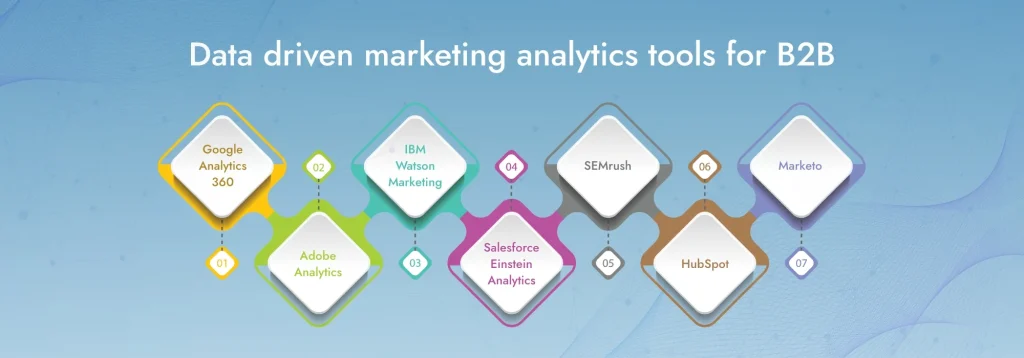
Data driven marketing analytics tools

There are a number of different data-driven marketing analytics tools that use AI to help businesses harness data. Some popular tools are:

Data Driven Marketing Analytics Tools
  • Google Analytics 360: This tool provides a comprehensive set of features for analyzing website traffic and customer behavior.
  • Adobe Analytics: This tool provides a variety of features for analyzing website traffic, marketing campaigns, and customer behavior.
  • IBM Watson Marketing: This AI-powered platform provides a variety of features for automating marketing tasks and generating insights into customer behavior.
  • Salesforce Einstein Analytics: This analytics platform provides a variety of features for visualizing and analyzing CRM data.
  • SEMrush: A comprehensive SEO and content marketing tool that provides insights into competitor data and helps improve content strategy.
  • HubSpot: A comprehensive inbound marketing and sales platform offering analytics, CRM, and marketing automation, all in one.
  • Marketo: A marketing automation platform that excels in lead management and personalized engagement.

Importance of utilizing the right tools

B2B data-driven success hinges on utilizing the right analytics tools and maintaining clean and accurate data. Selecting right tools help ensure:

  • Precision in Analysis: Data-driven marketing analytics tools allow you to scrutinize campaign performance, customer behavior, and ROI, giving you an edge in optimization.
  • Real-Time Insights: Many of these tools provide real-time data, ensuring that you can adapt your strategies on the fly to capitalize on emerging opportunities and address issues promptly.
  • Personalization: Tools like customer relationship management (CRM) platforms and marketing automation software enable advanced personalization by leveraging data to tailor content and messages to specific segments.
  • Data Integration: They often facilitate the integration of data from various sources, allowing you to create a unified view of your audience and marketing efforts.

Data-driven marketing agency: do you need one?

In the landscape of data-driven marketing, one critical decision businesses face is whether to manage their data strategies in-house or seek the expertise of a data-driven marketing agency.

Each choice has its own set of pros and cons, and determining which path to take depends on your specific needs and resources.

When to consider outsourcing data-driven marketing efforts

Considering whether to work with a data-driven marketing agency? Here are some situations in which outsourcing makes sense:

  • Limited Resources: If you lack the budget and resources to maintain an in-house team and the necessary tools, an agency can be a cost-effective solution.
  • Need for Expertise: When your business lacks expertise in data-driven marketing and you require immediate results, an agency’s specialized skills can bridge the gap.
  • Scaling Quickly: If your business is rapidly expanding and you need to scale marketing efforts without a lengthy hiring process, an agency can step in seamlessly.

Wrap up

Staying ahead of the competition and achieving your marketing objectives requires a strategic approach grounded in data and analytics. Leverage data-driven marketing for B2B to understand your target audience, personalize your messages, and measure your results.

If you’re looking for a trusted data-driven marketing agency, ViitorCloud can help. We’re an AI-driven data analytics agency that can help your business harness the power of AI-enabled data analytics to improve their marketing results.

We offer a variety of services to help you with data-driven marketing, including data collection and organization, data analysis and reporting, AI-powered insights generation, and marketing campaign development and optimization. Let’s get started and turn your marketing goals into reality.

Frequently asked questions

It is an approach that uses insights from data analysis to optimize marketing strategies and campaigns for better targeting and results in the B2B context.

It works by collecting, analyzing, and leveraging data to make informed decisions, tailor content, and measure the impact of marketing efforts in B2B marketing.

Different types of data-driven marketing in B2B include content personalization, account-based marketing, predictive analytics, and lead scoring, each catering to specific goals and audience needs.

Some of the best tools for data-driven marketing in B2B are Google Analytics, HubSpot, Adobe Analytics, SEMrush, and Tableau, offering powerful insights and analytics capabilities.

The role of AI in big data analytics: Unlocking insights

In the ever-evolving landscape of technology, the teamwork between Artificial Intelligence (AI) and Big Data Analytics has emerged as a transformative force with the potential to reshape industries, revolutionize decision-making, and drive innovation to new heights.

As the digital age continues to generate an unprecedented volume of data, understanding how AI harnesses and interprets this wealth of information is primary, as it fuels AI’s capabilities and the future of data-driven decision-making.

Understanding what is big data

Big Data refers to extremely large and complex sets of data that traditional data processing tools and methods are inadequate to handle effectively.

It encompasses a vast variety of data types, including structured (e.g., databases), semi-structured (e.g., XML, JSON), and unstructured (e.g., text, images, videos) data.

Big Data is characterized by its volume, velocity, variety, and veracity, often called the “4 Vs.”

This data is continuously generated from various sources, including social media, IoT devices, sensors, etc.

Characteristics of big data

Volume: Big Data involves massive amounts of data ranging from terabytes to petabytes and beyond.

Velocity: Data is generated and collected at incredible speeds, requiring real-time or near-real-time processing.

Variety: It encompasses a wide range of data types, from structured to unstructured, making it highly diverse.

Veracity: Data accuracy, quality, and reliability are challenging due to the diverse sources.

Importance in modern business

Informed decision-making: Big Data provides valuable insights that help organizations make data-driven decisions.

Competitive advantage: Businesses can gain a competitive edge by analyzing Big Data to identify trends, opportunities, and customer preferences.

Enhanced customer experiences: Understanding customer behavior through data analysis allows for personalized services and improved customer satisfaction.

Risk management: Big Data analytics helps identify and mitigate real-time risks, particularly in the financial and insurance sectors.

Innovation: It fuels innovation by enabling the development of new products, services, and business models.

In today’s data-driven world, Understanding the basics of Big Data is critical for businesses trying to capitalize on its potential for growth, efficiency, and competitiveness.

The collaboration: AI and big data technologies

The combination of Artificial Intelligence (AI) and Big Data in the world of cutting-edge technology has resulted in a new era in how we view and take advantage of data.

This dynamic combination is a powerful force in data analysis and decision-making.

Key AI technologies

  1. AI for Machine Learning: AI for machine learning allows systems to learn and grow from experience without being specifically programmed.

Algorithms change and evolve based on data patterns, producing predictions and recommendations.

  1. Natural Language Processing (NLP): NLP gives machines the ability to interpret and interact with human language.

It is the driving force behind chatbots, language translation, sentiment analysis, and various other applications.

  1. Deep Learning: An area of Machine Learning, Deep Learning uses artificial brains to process massive volumes of data and uncover complex patterns.

This technology is helpful in image recognition, speech recognition, and self-driving cars.

  1. AI for Data Mining: AI for data mining expedites the process and enhances the quality of insights derived from data.

It empowers organizations to make data-informed decisions, improve operational efficiency, and discover hidden opportunities that can drive growth and innovation across various sectors.

Big data technologies

  1. Hadoop: Hadoop is an open-source framework for distributed storage and processing of large datasets.

It uses a distributed file system (HDFS) and the MapReduce programming model to handle data-intensive tasks.

  1. Spark: Apache Spark is another open-source extensive data framework known for its lightning-fast data processing capabilities.

It provides in-memory data processing, making it suitable for real-time analytics and iterative algorithms.

Combining these AI for Big Data technologies has revolutionized various industries, from healthcare and finance to e-commerce and entertainment.

As organizations continue to embrace the Tools, they unlock the potential to extract valuable insights, optimize operations, and drive innovation in an increasingly data-centric world.

The use of AI in big data analytics

Artificial Intelligence (AI) has emerged as an innovative force in the constantly evolving field of data analytics, playing a critical role in realizing Big Data’s immense potential.

Here, we’ll look at the diverse use of AI in Big Data analytics, highlighting some of its most important contributions:

AI-powered data processing

  • AI algorithms excel at processing vast data with remarkable speed and accuracy.
  • They can handle unstructured data, like text and images, making them versatile for various industries.
  • AI-driven data processing automates mundane tasks, freeing up human resources for more complex analysis.

Automated data insights

  • AI systems are proficient in uncovering hidden patterns and trends within large datasets.
  • They automate the extraction of valuable insights, making data analysis more efficient.
  • By continuously learning from data, AI provides real-time insights that aid decision-making.

Real-time data monitoring:

  • AI enables organizations to monitor real-time data streams, which is crucial for fraud detection and cybersecurity applications.
  • Alerts and notifications can be generated instantly when anomalies or specific conditions are met.
  • Real-time monitoring ensures proactive responses to emerging issues or opportunities.

AI big data analytics is the key to unlocking the full potential of data, enabling organizations to make data-driven decisions, optimize processes, and gain a competitive edge in today’s fast-paced business landscape.

Benefits of AI in big data

Incorporating AI into Big Data programs isn’t an option; it’s a strategic need leading to more informed decisions, forward-thinking insights, and efficient, scalable operations.

Enhanced decision-making

  • AI-driven analytics provides decision-makers with data-driven insights, reducing reliance on intuition.
  • Predictive analytics and prescriptive recommendations aid in making informed, strategic decisions.
  • Enhanced decision-making leads to better resource allocation and improved outcomes.

Predictive analytics

  • AI’s ability to forecast future trends and outcomes is a game-changer in various domains.
  • Predictive models can optimize supply chains, anticipate customer behavior, and prevent equipment failures.
  • Businesses gain a competitive edge by acting on predictive insights.

Improved efficiency and scalability

  • AI automates repetitive tasks, enhancing operational efficiency and reducing errors.
  • Scalability is achieved by leveraging AI to handle growing data volumes and analytical demands.
  • With AI, organizations can efficiently process and analyze data at any scale.

The integration of AI with Big Data amplifies the capabilities of data analytics.

AI-powered data processing, automated insights, and real-time monitoring revolutionize data management, while the benefits of enhanced decision-making, predictive analytics, and improved efficiency drive innovation and competitiveness across industries.

The future of AI and big data integration

Big Data’s AI Solutions have the power of Artificial Intelligence to unlock the true potential of massive datasets, driving informed decision-making and innovative breakthroughs across various industries.

Predictions and trends

The future of AI and Big Data integration promises to be a transformative journey that will reshape industries, redefine processes, and unlock new opportunities. As we look ahead, several vital predictions and trends are set to shape this landscape:

  • AI-Powered Automation: AI algorithms will continue to automate data processing and analysis, making it more efficient and cost-effective.
  • Enhanced Decision-Making: Businesses increasingly rely on AI-driven insights to make data-informed decisions, improving accuracy and competitiveness.
  • Cross-Industry Collaboration: Expect more collaboration between AI and Big Data experts from different industries, leading to innovative solutions and knowledge-sharing.

Emerging technologies

The integration of big data and AI will be significantly influenced by emerging technologies such as:

  • Quantum Computing: Quantum computing’s immense processing power will enable faster data analysis and deeper insights.
  • Edge Computing: Edge computing will reduce latency and enable real-time AI analytics, particularly in IoT applications.
  • Explainable AI (XAI): With XAI, understanding AI decision-making processes will become crucial for transparency and trust.

Industry applications of AI for big data

Big Data’s AI Applications in the industry have been adapting in various areas, revolutionizing by driving innovations and efficiency.

AI and big data in healthcare

In healthcare, the integration of big data and AI holds the potential to revolutionize patient care, research, and operations:

  • Personalized Medicine: AI will analyze vast patient data to tailor treatments and medications for individual needs.
  • Early Disease Detection: Big Data analytics will identify disease patterns and outbreaks, aiding in early detection and prevention.
  • Administrative Efficiency: AI-driven administrative processes will achieve streamlined operations, reduced costs, and improved patient experiences.

AI-driven insights for retail

In the retail sector, big data and AI integration will reshape customer experiences and optimize operations:

  • Personalized Shopping: AI will provide customized recommendations based on individual preferences and behaviors.
  • Inventory Management: Big Data analytics will optimize inventory levels and supply chain efficiency.
  • Loss Prevention: AI-powered surveillance will enhance security, reducing theft and fraud.

Financial services and risk assessment

In financial services, big data and AI integration will revolutionize risk assessment and customer service:

  • Credit Scoring: AI algorithms will provide more accurate credit scores by analyzing extensive financial data.
  • Fraud Detection: Real-time Big Data analysis will detect and prevent fraudulent transactions.
  • Customer Support: Chatbots and virtual assistants will enhance customer support, improving response times and efficiency.

The future of Big Data Analytics and AI integration is poised for remarkable growth, driven by emerging technologies and applied across various industries, from healthcare to retail and financial services.

The transformative power of these technologies will redefine how businesses operate and innovate in the future.

Conclusion

The dynamic collaboration between Big Data Analytics and AI is undeniably reshaping the landscape of information analysis and decision-making.

It is an exciting journey that promises endless possibilities and underscores the pivotal role of AI as an indispensable tool in understanding the vast realms of Big Data and vice versa.

Frequently asked questions

AI can understand big data by advanced machine learning algorithms and techniques. It can process and analyze large volumes of data and identify patterns.

As technology continues to advance, AI will allow organizations to extract valuable insights and make data-driven decisions more efficiently.

AI algorithms can identify correlations and trends that lead to more accurate predictions and better decision-making.

Big data is essential in machine learning (ML) and AI applications. Big data provides training data for ML and AI systems to learn and improve performance.

Big data greatly enhances the capabilities and performance of AI systems. Big data provides the necessary raw material for AI algorithms to learn and generate valuable insights.