Transform Your Customer Experience: The Tangible Benefits of Professional Digital Experience Services

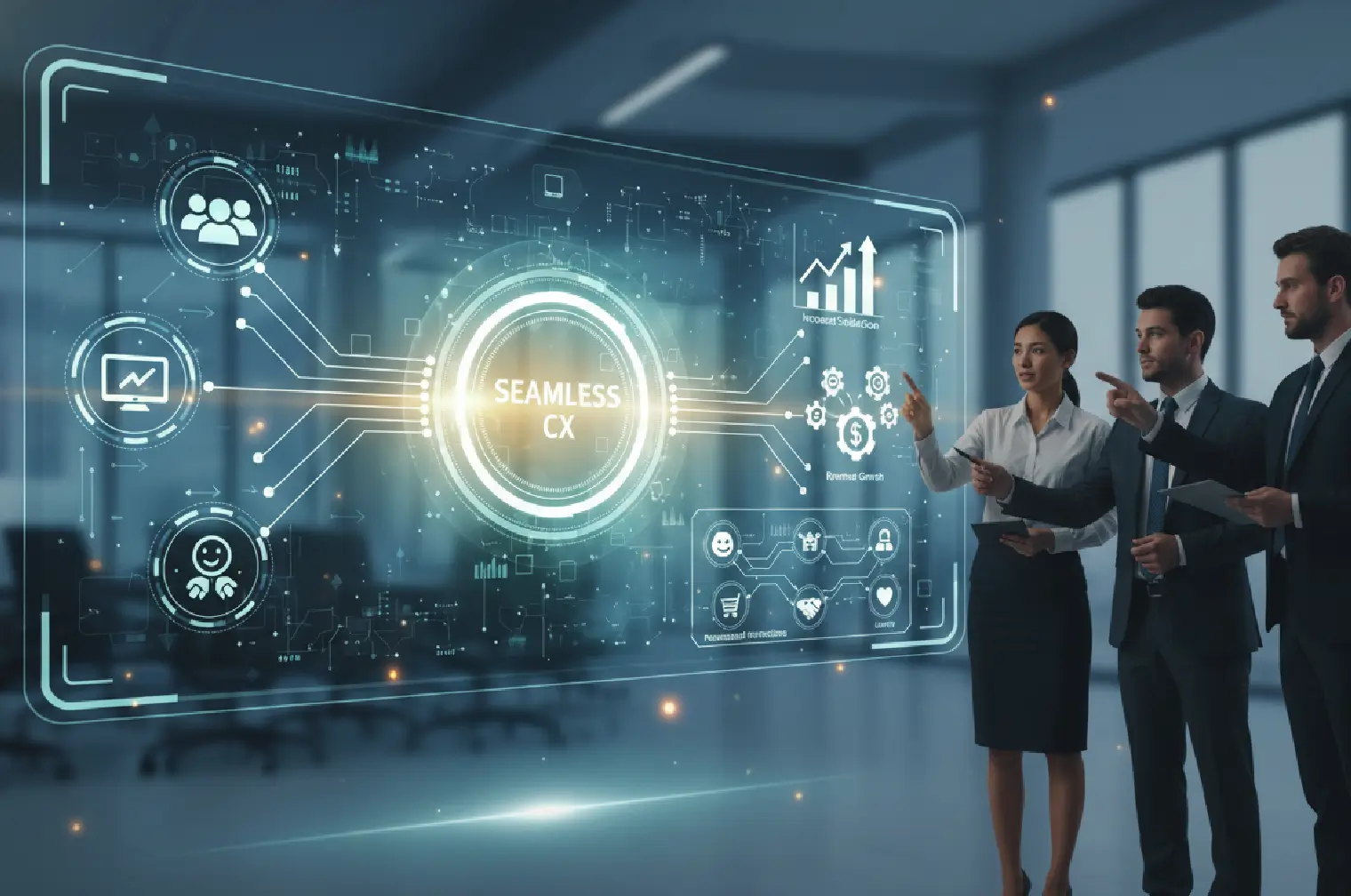
Customer experience is now the primary differentiator in competitive markets, outranking price and product in many industries. As customers move fluidly between web, mobile, social, chat, and in‑store touchpoints, only structured digital experience services can deliver the consistency and personalization they expect.

Trends such as AI customer experience, real‑time analytics, and omnichannel customer experience are reshaping how organizations design and manage every interaction. ViitorCloud combines artificial intelligence, immersive technologies, and experience design to build end‑to‑end customer experience solutions that are measurable, scalable, and future‑ready.

What are the benefits of digital experience services for business?

The core benefits of digital experience services for business include higher customer loyalty, increased revenue per customer, lower service costs, and stronger brand advocacy. When executed professionally, these services transform scattered digital touchpoints into a unified, insight‑driven journey that supports both acquisition and retention.

For CEOs and founders, an unmanaged digital customer experience often shows up as rising churn, inconsistent NPS, and support teams constantly in firefighting mode. CTOs and CX leaders struggle with legacy stacks, siloed data, and the inability to roll out omnichannel customer experience quickly enough to match evolving customer expectations. Professional customer experience consulting aligns technology, data, and design to reduce these friction points and convert CX from a cost center into a growth engine.

Elevate Your Customer Experience Today

Upgrade every digital touchpoint with ViitorCloud’s expert Digital Experience Services designed for modern businesses.

How do digital experience services work and why do they matter?

At their core, digital experience services combine strategy, design, engineering, and analytics to orchestrate every interaction a customer has with your brand. Teams start by clarifying business goals, mapping journeys, and defining KPIs, then implement platforms, integrations, and automation that bring those experiences to life.

These customer experience solutions matter because they directly influence loyalty, revenue, and operational efficiency. By implementing self‑service CX automation using AI, enterprises reduce response times, lower ticket volumes, and free human agents to handle complex, high‑value interactions. Intelligent predictive analytics in CX surfaces churn risk, propensity to buy, and service bottlenecks, enabling proactive outreach rather than reactive support. As ViitorCloud emphasizes, “AI‑driven automation is now a strategic lever to deliver faster, smarter, and more personalized engagement at scale.”

Example view: Experience levers and business impact

CX LeverImpact on Business Outcomes
AI chatbots and virtual assistants24/7 support, up to 70% reduction in support costs, and higher customer satisfaction.
Omnichannel orchestrationSeamless journeys, better conversion, more consistent brand perception.
Predictive analytics in CXReduced churn, targeted offers, optimized campaigns.
Customer journey mapping in digital CXClear visibility of gaps, prioritized roadmap, better ROI on CX investments.
Experience levers and business impact

Such an architecture answers what is digital customer experience? In practical terms, it is the sum of every digital interaction, governed by a deliberate design and powered by connected data.

How does this look in real life for modern enterprises?

ViitorCloud’s work in immersive real estate experiences illustrates how a carefully crafted digital customer experience can lift sales outcomes. Through its SoReal platform, ViitorCloud used 3D visualization and interactive tours to let buyers explore properties virtually, personalize layouts, and stay engaged throughout the decision cycle.

The result is a richer omnichannel customer experience where physical site visits are augmented by digital exploration, shortening decision cycles and improving conversion rates for developers and agents. Similar principles apply when ViitorCloud deploys AI‑enabled customer experience solutions in sectors like BFSI, logistics, and healthcare, where intelligent automation and personalization transform support, onboarding, and ongoing engagement.

Where a formal case study is not public, the pattern remains clear: strategic customer experience consulting, backed by AI and analytics, delivers measurable improvements in NPS, resolution time, and customer lifetime value. This is precisely how professional digital experience services improve customer loyalty—by making every interaction easier, faster, and more relevant.

Transform Customer Journeys with Confidence

Improve engagement, usability, and satisfaction through our tailored Digital Experience Solutions.

How does ViitorCloud deliver digital experience services end‑to‑end?

ViitorCloud follows a structured, consulting‑led model to deliver high‑impact digital experience services aligned with business and technology roadmaps. Engagements usually begin with discovery and customer journey mapping in digital customer experience, where teams analyze touchpoints, user behavior, and operational constraints to prioritize quick wins and long‑term initiatives.

Our customer experience consulting practice brings together strategists, UX specialists, AI engineers, and data experts to create an executable blueprint for experience transformation. This includes defining success metrics, choosing a suitable digital experience stack, and outlining best practices for digital customer journey mapping so that stakeholders across marketing, product, and support share a single view of the customer.

From a capabilities standpoint, ViitorCloud integrates:

  • AI‑first platforms for AI customer experience, including chatbots, intelligent routing, and recommendation engines.
  • Experience platforms and microservices architectures, drawing on digital experience platform examples such as custom headless frontends, API‑driven content, and analytics‑ready data layers.
  • Omnichannel orchestration that unifies web, mobile, social, messaging, and in‑store systems, thereby implementing omnichannel customer experience with digital CX solutions tailored to each industry.
  • Data and predictive analytics in CX to identify churn risk, optimize journeys, and power personalization engines.

ViitorCloud also embeds AI in customer experience transformation into service blueprints, designing journeys where automation handles routine paths and human teams focus on complex, emotionally sensitive cases. This approach is reinforced through continuous monitoring and optimization with digital experience monitoring solutions, ensuring that real‑world performance, not assumptions, drives further enhancements.

Conclusion

Modern buyers expect every interaction with your brand to feel intuitive, contextual, and continuous, regardless of channel or device. Professional digital experience services give enterprises the frameworks, platforms, and intelligence required to redesign journeys around these expectations and unlock the full benefits of digital experience services for business, from higher retention to more predictable growth.

Organizations that hesitate on the digital transformation of customer experience risk losing customers to more agile competitors that are already leveraging AI, analytics, and customer experience consulting to differentiate. Those that move decisively position themselves for resilient margins, stronger brand equity, and a CX foundation that can absorb new channels, regulations, and technologies with confidence.

Boost Your Customer Experience Performance

Leverage Digital Experience Services that help you streamline interactions and create lasting brand value.

Frequently Asked Questions

Digital customer experience is the total perception customers form from every interaction with your brand across digital channels such as websites, apps, chat, email, and social platforms. Professional digital experience services manage, connect, and optimize these touchpoints so the journey feels seamless, personalized, and consistent from first touch to long‑term loyalty.

AI customer experience uses technologies like machine learning, NLP, and automation to deliver faster responses, hyper‑personalized recommendations, and proactive support. By analyzing large volumes of behavioral and transactional data, AI systems enable self‑service CX automation using AI and predictive interventions that significantly improve satisfaction while lowering operational costs.

For CEOs, scalable customer experience solutions mean the organization can handle growth in users and interactions without a linear increase in headcount or complexity. Through automation, digital transformation of customer experience, and standardized journeys, digital services improve efficiency, stabilize service quality, and unlock new revenue models such as subscription or usage‑based offerings.

Customer journey mapping in digital experience is the analytical process of visualizing every step a customer takes across channels, from awareness through advocacy. It exposes friction points, duplication, and opportunity areas, giving CX teams a blueprint to prioritize digital customer experience improvements with maximum business impact.

An effective omnichannel customer experience allows customers to switch channels without repeating information, losing context, or facing inconsistent offers. When implementing omnichannel customer experience with digital CX solutions carefully, brands build trust, reduce effort scores, and make it more convenient for customers to stay, buy more, and recommend the brand to others.
How ViitorCloud Transformed Health Education with Immersive Experiences

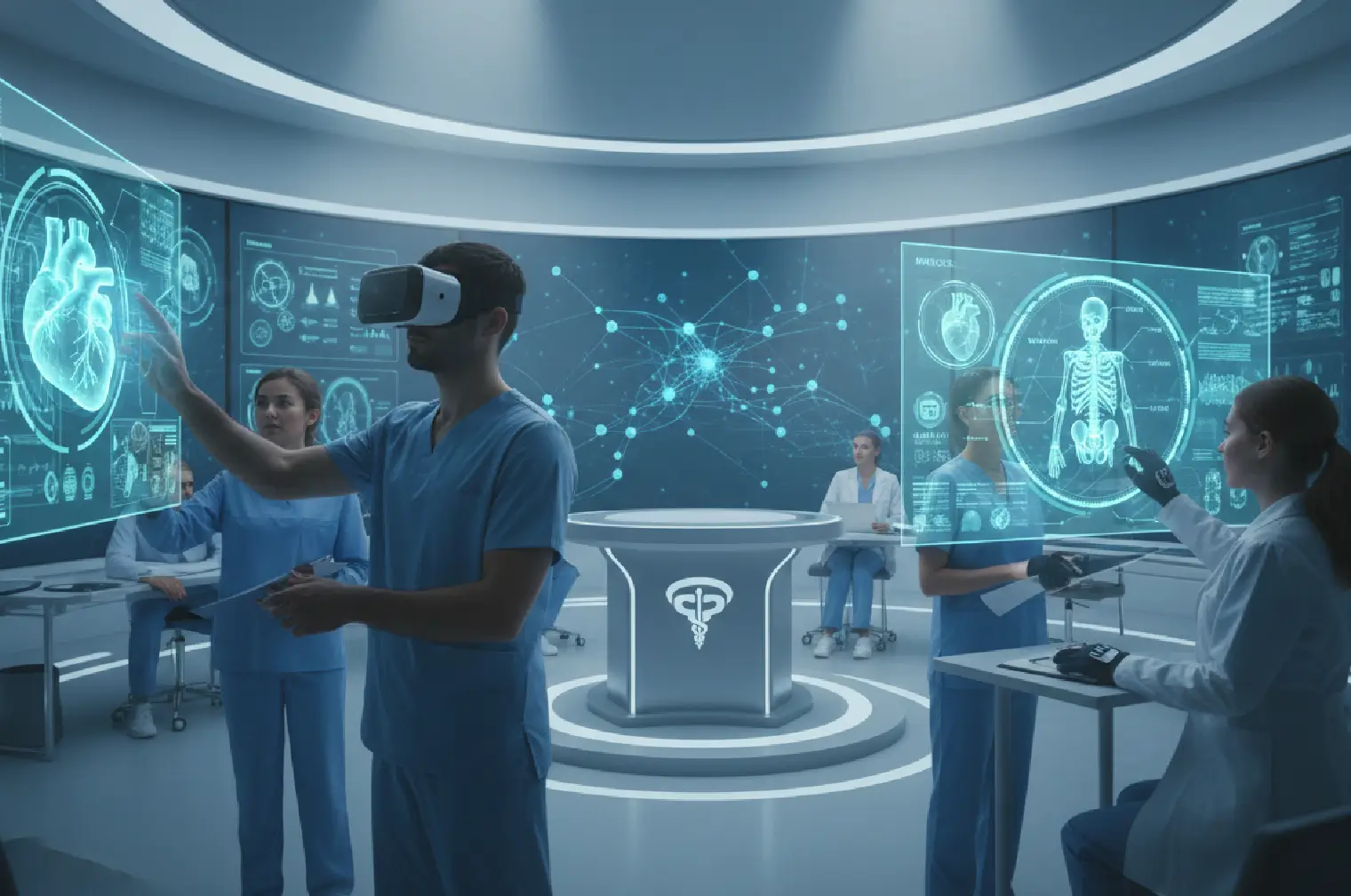
In an increasingly digital world, traditional educational methods often struggle to capture attention, especially when dealing with complex subjects like human biology and holistic health. For pioneering institutions dedicated to wellness, the challenge lies in communicating valuable health information in a way that is intuitive, visually captivating, and deeply engaging.

This was the exact challenge faced by the Jindal Naturecure Institute (JNI), a leader in modern drugless treatment specializing in naturopathy and yoga. JNI needed a partner to transform their visitor experience, shifting from simple instruction to true immersion—a transformation delivered by ViitorCloud, leveraging its expertise in digital experience consulting and immersive experiences technology.

As a leading software development company, ViitorCloud has helped over 500 startups, SMBs, and enterprises automate, scale, and stay future-ready through cutting-edge AI solutions and exceptional digital experiences. The JNI project exemplifies how ViitorCloud applies these capabilities to the healthcare sector, turning ambitious educational goals into measurable visitor engagement.

The Urgent Need for Engaging Health Education

Jindal Naturecure Institute (JNI) upholds a holistic, evidence-based approach, integrating traditional Indian wisdom with modern wellness techniques to promote natural health.

To reinforce its position as a premier destination for holistic health, JNI set forth clear objectives:

  • Educate visitors on the human body and the profound benefits of healthy living.
  • Engage visitors interactively in learning about holistic health.
  • Establish JNI as a leader in its field by showcasing a commitment to advanced interactive technology.

However, the primary hurdle was ensuring the new experiences achieved a delicate balance: they needed to be highly intuitive and visually captivating while still maintaining comprehensibility and effectively communicating valuable, complex health information. We embraced this challenge, deploying its strategic development framework that focuses on measurable outcomes and long-term partnership.

Read the full case study: Jindal Naturecure Institute Case Study

Reimagine Health Education with Immersive Learning

Elevate training outcomes through immersive experiences solutions designed with custom AI solutions for healthcare.

ViitorCloud’s Expertise in Engineering Digital Experiences

ViitorCloud approaches client challenges by designing and deploying custom solutions built to tackle complex requirements and enhance decision-making. When it comes to digital transformation, we act as an experienced digital experience consulting company, providing end-to-end services from UX design and prototyping to the development of immersive experiences.

For JNI, ViitorCloud utilized its expertise in creating bespoke immersive digital experiences. We understand that generic tools often miss edge-case realities and process nuances. Our approach involves collaborating closely with clients to co-create innovative solutions, working as a single team to turn bold ideas into reality.

Our domain expertise spans key industries, including Healthcare, where we apply transformative results tailored to the sector. Our focus on digital experience ensures we deliver personalized, interactive, and innovative digital experiences that resonate deeply with end-users.

A Phased Blueprint for Transformative Learning

Our team structured the collaboration with JNI into a meticulously executed two-phase transformation plan to ensure milestones were achievable and the final solution was comprehensive. This iterative operational model ensures continuous improvement based on feedback and evolving needs.

Phase 1: Interactive LED Screen Modules

The initial phase focused on building a foundational layer of educational content using readily accessible interactive technology.

  • We developed 15 LED screen experiences.
  • These modules focused specifically on educating visitors about various human biological systems.

Phase 2: The Future of Health Communication

The second phase introduced a highly advanced technological component, designed to maximize engagement and highlight JNI’s innovative spirit.

  • Our DX team created a dedicated 3D holographic experience focused on the critical subject of gut health.

The implementation relied on a robust technology stack, including specialized tools for 3D and 2D DesignVideo Creation, and frontend development using UnityUnreal, and Axiom Holographics.

Transform Medical Learning with Smart Digital Experiences

Integrate health education tools powered by immersive experiences and custom AI solutions to enhance skill-building.

The Core Components of Deep Engagement

The true success of the JNI Immersive Experiences lies not just in the technology used but in how ViitorCloud crafted the learning journey itself, making complex topics digestible and fun. We utilized a suite of interactive, multimedia-rich solutions to ensure the experiences were both educational and engaging.

Key elements developed by our experts included:

  • Realistic 3D Graphics: Providing lifelike representations of biological systems to aid visual understanding.
  • Engaging Animations: Utilizing dynamic visuals designed specifically to capture and retain visitor attention throughout the experience.
  • Professional Voiceovers: Guiding users seamlessly through complex health information with clear narration.
  • Interactive Quizzes: Incorporating fun, engaging quizzes designed to reinforce learning and actively promote user interaction.

This unique combination created a truly immersive learning environment, helping visitors easily grasp complex health topics and reinforcing the benefits of healthy living. By optimizing every interaction, we helped JNI build a more lasting and memorable relationship with its visitors.

Delivering Measurable Impact

ViitorCloud’s focus is on delivering measurable impact that transforms industries and propels businesses forward. For the JNI project, the outcomes immediately demonstrated the value of leveraging advanced digital experience technology in the healthcare sector.

The implemented solutions resulted in significant measurable gains:

  • Enhanced Visitor Engagement: The interactive elements led to increased interest and participation from visitors of all ages.
  • Improved Health Education: The captivating format transformed complex health topics into understandable insights, positioning JNI as a premier destination for advanced holistic health education.
  • Reinforced JNI’s Brand as a Health Leader: The novel experiences offer a fresh way for visitors to learn, solidifying JNI’s reputation as a pioneer and leader in holistic health through its commitment to advanced interactive technology.

This success story showcases our expertise not only in delivering custom digital solutions but also in applying deep domain expertise within the Healthcare industry, a sector where we also provide solutions for AI diagnostics and predictive patient care.

Scale Modern Health Education Programs

Adopt immersive experiences solutions tailored with custom AI solutions to deliver engaging, adaptive learning.

Partner with ViitorCloud for Your Next Transformation

Are you facing a challenge in client education, operational efficiency, or market differentiation? Just as we helped JNI revolutionize health education, ViitorCloud stands ready to engineer the AI-first software and platforms that will transform your business.

We are not just a vendor; we are a trusted tech partner focused on your long-term success. ViitorCloud specializes in:

  • Custom AI Solutions: Design and deployment of bespoke intelligent systems to replace gut feel with prediction and anomaly detection embedded directly in daily workflows.
  • AI-Driven Automation: Employing GenAI, Agentic AI, and RPA to streamline workflows and boost productivity.
  • System Integration & Modernization: Upgrading legacy systems and creating cloud-native architectures necessary for future-ready operations.

We pair domain insight with model design and robust architecture to ensure that your intelligent systems keep performing as data and rules evolve. Don’t let competitors close the gap; choose custom solutions now to defend margins and differentiate faster.

Start your AI journey today. See how ViitorCloud can map a path from pilot to scaled impact, quantifying ROI and de-risking your investment with clear milestones. Connect with us at support@viitorcloud.com.

Immersive Experience Centers: Why Museums Should Adopt Mixed Reality to Stay Relevant

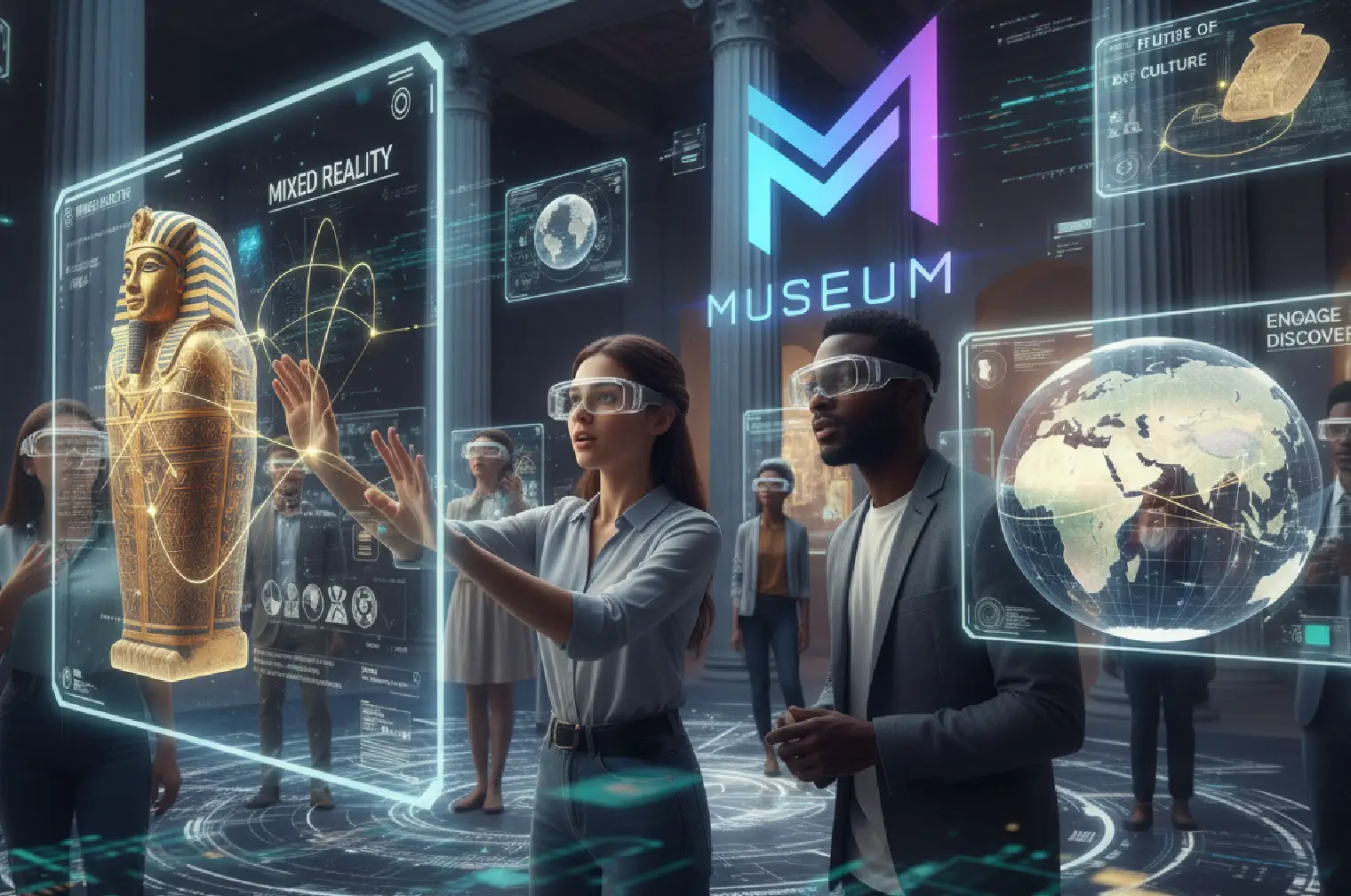
Immersive experience centers and digital experience platforms are reshaping how museums attract, educate, and retain visitors in a world where cultural consumption is increasingly hybrid, personalized, and data-informed. As visitor expectations shift toward interactive, multi-sensory, and on-demand content, mixed reality in museums has moved from experiment to essential strategy for sustained relevance and growth.

The Digital Age is Changing Everything

Museums today compete not just with parallel institutions but with a vast universe of digital media that has trained audiences to expect interactivity, immersion, and continuity between physical and virtual experiences.

ICOM’s multi-year analysis shows museums are accelerating digital investment and rethinking digital strategy, training, and content to meet these expectations, making immersive museum experiences and XR experiences in cultural heritage central to future-readiness.

UNESCO underscores that digital technologies—from 3D modeling to online platforms—are now fundamental to how culture is accessed, safeguarded, and scaled, reinforcing the need for immersive storytelling in museums that transcends location and time.

Why Static Exhibits No Longer Suffice

Pandemic-era disruptions catalyzed lasting shifts toward virtual museum experiences for visitors, with institutions rapidly amplifying online collections, interactive programming, and immersive digital exhibitions to reach remote and blended audiences.

These changes recalibrated baseline expectations: visitors now anticipate interactive layers, personalized guidance, and digital continuity before, during, and after an on-site visit, which traditional exhibits alone cannot consistently deliver.

What Immersive Experience Centers Are

An immersive experience center combines physical galleries with augmented reality, virtual reality, mixed reality, and broader XR modalities to create layered narratives that visitors can navigate and influence in real time.

By merging spatial computing, 3D visualization, and responsive content, these environments elevate collections with digital storytelling that reveals provenance, technique, and context in ways that static labels cannot replicate.

The Louvre’s “Mona Lisa: Beyond the Glass” exemplifies how virtual reality in museums can offer close, research-informed exploration of masterpieces, extending access on-site and through home VR platforms for global audiences.

Reimagine Visitor Engagement with Immersive Experience Centers

Bring stories to life through interactive environments and digital experience platforms that redefine how audiences connect with culture.

Digital Experience Platforms as the Backbone

Digital experience platforms act as the operational core that orchestrates content, personalization, and analytics across touchpoints, ensuring that immersive museum experiences are scalable, maintainable, and measurable.

Research on museum digital transformation highlights the necessity of aligning people, technology, process, customer experience, and strategy into a coherent digital readiness framework—exactly the domain where digital experience platforms for cultural institutions create leverage.

As AI becomes integral to cultural heritage technology and governance, platforms that unify content, XR assets, and audience data will enable privacy-conscious personalization and continuous improvement.

How DXPs Empower Immersive Journeys

A mature platform enables centralized content delivery to in-gallery devices, visitor apps, and virtual heritage tours, reducing duplication while enabling tailored narratives by audience segment, language, and accessibility needs.

Analytics capture engagement across channels—dwell time, interaction patterns, and learning outcomes—allowing curators and educators to refine immersive storytelling in museums based on evidence rather than intuition.

With robust APIs, a platform can integrate AR toolkits and VR engines to synchronize physical installations with digital layers, creating cohesive mixed reality in museums without fragmenting operations.

Global Use Cases and Examples

  • Louvre: Mona Lisa—Beyond the Glass, the museum’s first VR experience, offered a rare, research-driven, up-close encounter with the painting and extended access via home VR platforms.​
  • Smithsonian: Skin and Bones app animated historic skeletons with AR overlays, adding motion, anatomy insights, and scientist-led interpretation in the Bone Hall.​
  • The Met: The Met Unframed provided interactive virtual galleries with AR “take-home” art, expanding global reach during restricted access periods.​
  • Virtual heritage: High-fidelity 3D scans and LiDAR-powered reconstructions enable immersive tours of heritage sites, advancing education, conservation planning, and open access.

Transform Museums with Digital Experience Platforms

Integrate mixed reality and immersive technologies to create unforgettable, data-driven experiences for modern visitors.

ViitorCloud’s Museum Transformations

ViitorCloud supports cultural institutions with immersive storytelling, AI-enabled search, and DXP-led orchestration to unite physical and digital narratives into measurable visitor journeys. At the Museum of Art and Photography (MAP), ViitorCloud delivered an interactive “Lighting of a Lamp” inauguration experience where visitors lit virtual diyas via mobile devices, synchronized to a 92-inch LED installation with real-time data capture and engagement analytics.

The team also created a launcher for immersive digital exhibitions and seamless access to core museum web content via large-format interactive screens to deepen engagement and discovery.​

Beyond in-gallery activation, ViitorCloud applies AI-driven retrieval and pattern exploration to help visitors and educators surface thematic links across collections through intuitive, visual interfaces.

For institutions pursuing fully digital outreach, ViitorCloud’s Digital Sikh History Museum showcases an immersive repository model that scales global access to artifacts, stories, and learning pathways. These implementations demonstrate how a unified content backbone, interactive front-ends, and analytics can transform curation into living, adaptive storytelling at scale.

Benefits for Museum Directors and Partners

Immersive museum experiences increase dwell time, repeat visitation, and learning outcomes by pairing narrative depth with interaction and multi-sensory cues. Digital experience platforms unlock new revenue models—such as virtual access, premium timed content, and digitally augmented memberships—through connected ecommerce and content delivery. Accessibility improves for remote, neurodiverse, and mobility-limited audiences through adaptable interfaces, multilingual content, and persistent virtual programs.

Quick comparison

AspectTraditional exhibitsImmersive experience centers
EngagementPassive viewing limits depth and personalizationActive, participatory journeys with dynamic content
AccessOn-site only with schedule constraintsOn-site and remote, synchronous and on-demand
Data & insightLimited visitor analyticsCross-channel analytics inform content and operations
ScalabilityCostly to update and replicateContent is modular, reusable, and distributable
Traditional exhibits vs. Immersive experience centers

A Practical Roadmap to Begin

Start with a rapid digital readiness assessment across people, technology, process, customer experience, and strategy to surface gaps in content, skills, and infrastructure. Prioritize one or two high-impact pilots—such as an AR layer for a signature gallery or a VR experience tied to a blockbuster exhibition—paired with clear evaluation metrics for engagement and learning. Invest in a scalable digital experience platform and content governance model so that assets, metadata, and translations can be reused across virtual heritage tours, mobile apps, and in-gallery devices.

Build staff capability through targeted training and partnerships, reflecting ICOM’s evidence that training and digital offer expansion correlate with momentum in transformation. Leverage NEMO’s recommendations and sector exemplars to inform audience-centered design and post-visit continuity, ensuring immersive museum experiences extend well beyond the gallery. Finally, collaborate with cultural technologists who bring both technical depth and heritage sensitivity, as demonstrated in ViitorCloud’s projects that align storytelling, UX, and analytics with institutional goals.

Build the Future of Exhibitions with Immersive Experience Centers

Combine creativity and technology to design digital experience platforms that keep your museum relevant and engaging in the modern era.

Why Now and Why ViitorCloud

Adopting immersive experience centers and digital experience platforms is the most reliable path to future-proof visitor engagement, storytelling, and operations, as evidenced by global leaders like the Louvre and the Smithsonian and by sector analyses from ICOM, UNESCO, and NEMO. The institutions that will lead the next decade will integrate AR, VR, MR, and AI within governed platforms, turning collections into living, adaptive narratives accessible to global audiences.

ViitorCloud’s museum work—from AI-powered discovery at MAP to culturally resonant mixed reality ceremonies and platform-aligned exhibition management—shows how to move from isolated proof-of-concept to scalable, measurable transformation. Contact our team of digital experience experts at support@viitorcloud.com and book a complimentary consultation.

Omnichannel Retail: How AI-Powered Experience Design Drives Customer Loyalty in 2025

Modern omnichannel retail is entering a unified commerce era where AI-powered experience design becomes the engine of loyalty, profitability, and growth across every touchpoint and store aisle.  

Retail executives rank accelerating omnichannel capabilities and real-time customer visibility among 2025’s top investments, underscoring the urgency to operationalize personalization at scale.  

As journeys balloon from a handful of interactions to more than 50 across devices and locations, orchestrating consistent experiences through robust omnichannel platforms is now table stakes, not a differentiator.  

The mandate is clear: design for seamlessness, build for composability, and activate personalization with data and AI to win lifetime value in 2025. 

Omnichannel trends 2025 

Unified commerce is the next step beyond omnichannel, consolidating sales, fulfilment, and service on a single platform to cut costs and lift conversion. Only 17% of retailers rate unified capabilities as mature, yet leaders see 27% lower fulfilment costs and 18% fewer cart abandonments—evidence that integrated journeys create measurable ROI.  

Consumers now traverse 50+ touchpoints, while Gen Z’s mobile-first habits and in-store immersion reshape expectations for consistency and convenience. In 2025, operators will diversify BOPIS/BORIS, expand in-house delivery, and deploy micro-fulfilment to balance speed with cost control and loyalty gains. 

Read: How Hyper-Personalization Is Revolutionizing SaaS Product Engineering in 2025 

Redefine Customer Loyalty with Omnichannel Retail

Deliver seamless journeys and lasting engagement through ViitorCloud’s AI-Powered Experience Design built for future-ready retail brands.

Why AI personalization wins loyalty 

Consumers increasingly expect AI to make shopping intuitive, relevant, and transparent, with 71% wanting generative AI integrated into their experiences in 2025. Edge AI and real-time decisioning translate context into tailored offers and service, reducing churn and motivating higher-value behaviors across journeys.  

Customers belonged to 19 programs in 2024 but actively engaged in roughly nine, making differentiation through AI-powered value, not points, a strategic imperative.  

The lesson for leaders is to focus AI on outcome-driven personalization that elevates utility, trust, and emotional resonance at each step. 

Designing seamless journeys 

The blueprint for customer experience (CX) design in omnichannel retail starts with a unified profile, frictionless fulfilment choices, and intuitive mobile flows grounded in behavioral insight. Blending digital and physical touchpoints—BOPIS, BORIS, ship-from-store—turns stores into experience hubs and logistics assets while minimizing abandonment and balancing inventory.  

Experience designers should choreograph transitions across channels so discovery, evaluation, purchase, pickup, and service feel continuous and context-aware, particularly for mobile-first audiences. Executing that vision requires platform-level orchestration to ensure the journey performs as promised at scale, not just in prototypes. 

Platforms and architecture choices 

Unified commerce platforms and composable, headless architectures are converging to deliver omnichannel agility with enterprise-grade extensibility. Leaders seek API-first services for order management, inventory, pricing, content, and personalization to minimize integrations and keep the customer view timely and actionable.  

Modern stacks increasingly emphasize AI services at the core—merchandising optimization, agentic CX, and predictive fulfilment—rather than at the edges. The goal is a resilient, adaptable omnichannel platform that evolves with journeys, channels, devices, and algorithms without re-platforming shocks. 

Check: Data Pipeline Development for Retail with AI Solutions 

Best platforms for retail

Platform Architecture Strengths for Retail Notable recognition 
Salesforce Commerce Cloud Composable with unified data and agentic AI AI-driven personalization, unified insights, and omnichannel extensibility Leader in 2024 Digital Commerce Magic Quadrant 
Adobe Commerce Modular, scalable B2C/B2B from one platform Global experiences with unified operations across channels Featured in 2024 Digital Commerce Magic Quadrant resources 
SAP Commerce Cloud Enterprise-grade with industry accelerators Deep vertical coverage and multi-storefront control Leader designation noted in 2024 coverage 
commerce tools Headless, composable commerce services High flexibility for complex use cases at scale Leader designation noted in 2024 coverage 
Shopify (Plus) Unified POS and ecommerce on one OS Store-enabled fulfilment, mobile, and loyalty orchestration Trends and operations guidance for omnichannel 2025 
Best platforms for retail

Real-time personalization engines 

Retail-ready personalization requires an insight layer that unifies profile, context, and intent for decisions in milliseconds, then activates them across site, app, store, and service.  

Platforms embedding autonomous agents and unified data can power recommendations, content, pricing nudges, and proactive service without channel silos. With most consumers favoring AI-infused journeys, retailers that operationalize real-time personalization will deepen loyalty while driving conversion and margin mix.  

Edge AI can translate in-store behavior into tailored promotions and experiences, connecting aisle, app, and associate in a single, relevant moment. 

Read: Microservices Architecture & System Integration for Retail 

Migration playbook for product leads 

  • Baseline journeys and KPIs, identifying drop-offs and friction in discovery, cart, checkout, and fulfilment across channels. 
  • Build the data spine: real-time inventory visibility, single customer view, and privacy-by-design governance to feed AI and CX. 
  • Choose architecture: unify on a platform or compose headless services for OMS, CMS, pricing, search, and personalization.
  • Pilot high-impact flows first—BOPIS, BORIS, and real-time recommendations—with a cross-functional squad and store ops partner.
  • Scale with playbooks, observability, and A/B frameworks; institutionalize learnings and retire legacy dependencies methodically.

KPIs and ROI signals

Omnichannel shoppers spend 1.5x more monthly than single-channel shoppers, making journey performance a CEO-level growth lever. Unified commerce maturity correlates with 27% lower fulfilment costs and 18% fewer cart abandonments, tightening the loop between CX and P&L.

Track conversion, AOV, repeat rate, order cycle time, split-shipments, and return-to-exchange ratios to capture full economic impact. Emerging experience tactics such as 3D/AR can lift add-to-cart by 44% and orders by 27%, reinforcing experience design as a measurable growth driver.

Empower Omnichannel Retail with AI-Powered Experience Design

Drive loyalty, personalization, and growth with ViitorCloud’s expert AI-Powered Digital Experience Services tailored for modern retailers.

Where ViitorCloud accelerates value

ViitorCloud pairs digital experience design with omnichannel platforms to stand up AI-powered personalization retail pilots in weeks, derisking transformation with reference architectures, design systems, and model governance patterns that align to enterprise controls.

As a partner rooted in India with global delivery and U.S.-friendly collaboration, the team codifies best practices across discovery, data unification, MVP journey design, and scaled rollout so outcomes show up in conversion, AOV, and LTV quickly and repeatably.

Connect with ViitorCloud for an omnichannel assessment, an AI experience design blueprint, and a rapid pilot on preferred platforms, covering headless commerce, real-time personalization platform integration, and enterprise omnichannel solutions, then schedule a U.S. time zone discovery call to kick off a two-week roadmap sprint that focuses on measurable value, not vendor hype.

Museums of the Future: Using AI-Powered Digital Experience Platforms to Attract Gen Z Visitors

Gen Z discovers culture through short-form, mobile-first channels, which means museums must meet them with responsive, personalized storytelling powered by data and design, not static labels and linear tours.

ViitorCloud brings digital experience solutions and AI integration expertise to help institutions deploy AI-powered digital experience platforms for museums, modernizing engagement, attracting Gen Z, and crafting immersive visitor journeys from start to finish.

In practical terms, digital experience solutions for museums unify content, context, and channels so cultural narratives adapt in real time to intent, pace, and preference, creating reasons to visit, stay, and return.

Gen Z’s expectations are set by platforms that feel predictive, social, and visually rich, so adopting AI-powered museum platforms is less a trend and more a baseline for relevance.

Institutions that activate AI integration in museums gain a flywheel of insights—each interaction informs the next recommendation—turning one-time visits into ongoing relationships across web, app, and gallery touchpoints.

What do Gen Z visitors expect?

AAM’s recent framing of Gen Z engagement highlights operational behaviors—responsiveness, inclusion, co-creation—that correlate with youth relevance, reinforcing a shift from transmission to participation.

Academic analyses likewise find Gen Z favors interactive and technologically enhanced exhibits, with AR/VR and personalized content meaningfully increasing attraction and dwell time compared to static galleries.

Over 60% of Gen Z users use TikTok as a search engine, changing how audiences find exhibitions and decide what’s worth a visit. Aligning editorial calendars, formats, and in-gallery experiences with this reality means designing for shareability and continuity, not one-off campaigns, amplifying museum omnichannel engagement.

Reimagine Museum Engagement with AI-Powered Digital Experience Platforms

Bring exhibits to life and engage visitors like never before with ViitorCloud’s smart, immersive museum solutions.

How do AI platforms personalize journeys?

AI-powered digital experience platforms for museums ingest behavior signals—interests, pace, accessibility needs—to recommend exhibitions, objects, and routes, enabling museum visitor personalization that feels like a knowledgeable companion, not a script.

Conversational guides and adaptive labels translate curatorial depth to each visitor’s context, while behind the scenes, models cluster affinities to refine content sequencing and narrative arcs over time.

Personalization is delightful as well as measurable performance lift, with McKinsey research linking tailored experiences to higher satisfaction, loyalty, and revenue outcomes that cultural organizations can translate into visitation and membership growth.

Designing digital experience solutions for museums around this evidence builds trust with boards and funders by connecting AI solutions for museum outcomes to clear engagement and sustainability goals.

Where does immersion make a difference?

Immersive technology for museums—anchored in AR and VR—moves beyond spectacle when it integrates with learning objectives and collection metadata to deepen understanding and memory retention.

Emerging work in AI for immersion shows how multimodal systems tailor fidelity, pace, and narrative branches in real time, keeping attention high without overwhelming visitors.

Interactive virtual museum tours are evolving too, with AI-driven personalization adjusting paths to interests and learning styles, sustaining global reach while driving on-site intent through teasers, wishlists, and timed content unlocks.

When these channels unify with on-premise experiences, a smart museum treats remote and in-person touchpoints as one journey with a shared profile, not separate programs.

Traditional vs AI-powered museum experiences

Aspect Traditional experience AI-powered experience 
Discovery Search relies on static websites and press; social impact is incidental, not designed Discovery optimized for short video, micro-stories, and creator collabs that flow into personalized on-site paths 
Wayfinding Fixed maps and wall text with limited context-awareness Context-aware routing with adaptive pacing, accessibility options, and relevance scoring across galleries 
Content depth One-size-fits-all label copy and audio stops Layered narratives with AI-driven summaries, deeper dives, and multi-voice perspectives per visitor 
Accessibility Good intentions, limited real-time adaptation Live captioning, descriptive audio, and assistive chat that respond in the moment 
Engagement loop Visit is a one-off, little post-visit continuity Persistent profiles power follow-ups, recommendations, membership nudges, and social sharing 
Operations Manual forecasting and reactive maintenance Predictive demand, flow optimization, and proactive maintenance using AI and IoT 
Traditional vs AI-powered museum experiences

How does omnichannel engagement work?

Museum omnichannel engagement connects web, app, social, email, kiosks, and galleries through a shared content and identity backbone so journeys feel continuous.

The intent is to meet visitors where discovery starts—often social video—and help them glide into saved objects, time-based planning, and in-gallery guidance without friction, driven by digital experience solutions for museums.

Omnichannel strategies are correlated with stronger retention and higher conversion in broader CX research, and museums can adapt these principles to deepen loyalty and repeat visits with ethical data practices and transparent value exchange.

AI-powered museum platforms then operationalize this loop by learning from every click, view, and dwell to refine programming and outreach.

Check: How Custom AI Solutions Transform Digital Experiences

Transform Visitor Journeys with AI-Powered Digital Experience Platforms

Enhance storytelling and create data-driven experiences that connect visitors to culture and history seamlessly.

What about smart museum operations?

A smart museum leverages AI and IoT across prediction, identification, and optimization—forecasting demand, recognizing objects for context delivery, and tuning environmental conditions for conservation and comfort.

This backbone turns galleries into responsive spaces where content, lighting, and wayfinding adapt to visitor flow and accessibility needs without compromising curatorial integrity.

Institutions are also applying AI to maintenance, staffing, and sentiment analysis, translating real-time signals into smoother operations and higher visitor satisfaction. The compound effect is a museum that is safer, more efficient, and more resilient, funding mission priorities through better resource allocation and experience-led growth.

Visitor engagement tools to prioritize

  • Adaptive tour planners that personalize routes by interests, time, and access needs
  • Conversational guides that answer questions, summarize context, and translate in real time
  • Social-ready micro-stories and creator-aligned formats to fuel discovery loops
  • Profile-linked wishlists and reminders that connect virtual previews to on-site visits
  • Consent-forward analytics that measure impact while honoring privacy and trust

How can museums transform smoothly?

Start with a two-speed roadmap: quick wins that validate AI integration in museums—like pilot personalization on a high-traffic gallery—and a platform plan that scales content, data, and governance across the institution.

Define success metrics that matter—dwell time, satisfaction, accessibility usage, revisit rates—and connect them to funding narratives and board reporting grounded in digital experience solutions for museums.

Invest in content operations early—taxonomy, rights, accessibility overlays—so AI can reason over consistent, inclusive metadata, and establish guardrails for authenticity to protect cultural voice.

With the right integration partner, orchestration spans web, app, in-gallery systems, and data pipelines without locking into brittle stacks, enabling AI solutions for museum programs that evolve with strategy.

Elevate Museum Experiences with AI-Powered Digital Experience Platforms

Unlock personalized, interactive, and scalable digital experiences tailored for modern museums with ViitorCloud.

Choose ViitorCloud to build an AI-powered cultural destination

ViitorCloud unifies strategy, content, and engineering to deliver AI-powered digital experience platforms for museums that attract Gen Z, scale curation, and elevate accessibility—end to end from pilot to platform.

With specialized AI Integration capabilities, the team helps institutions connect immersive storytelling with measurable outcomes across discovery, visitation, and loyalty.

For directors and cultural partners, this is a pragmatic path: align mission and metrics, prototype quickly, prove value, and scale responsibly with a platform designed for omnichannel engagement and continuous learning.

Explore ViitorCloud’s digital experience services to architect a resilient, smart museum that thrives on curiosity, community, and repeat visits.

Contact us at support@viitorcloud.com and book your complimentary consultation call with our experts.

Frequently Asked Questions 

Use explicit consent, clear controls, and minimal data for maximum value, with visitor access to preferences and history at any time.

No, it scales curatorial guidance by adapting depth and sequence while preserving attributions, provenance, and editorial guardrails. 

Launch a small pilot—such as adaptive tours in one gallery—paired with success metrics and a plan to scale content ops and governance. 

Yes, real-time captioning, descriptive audio, and adaptive interfaces expand inclusion without sacrificing narrative richness. 

Interactive virtual museum tours seed intent with personalized previews, wishlists, and time-based recommendations tied to on-site experiences.

AR/VR for Healthcare Training: Productivity Gains Now

AR/VR for healthcare training is already delivering measurable productivity gains. Faster skill acquisition, fewer errors, and scalable simulation are making it one of the most effective ways to upskill clinicians without compromising patient safety.

Rigorous studies show VR-trained residents commit up to six times fewer intraoperative errors and complete procedures faster, while recent market analyses project sustained double‑digit growth for AR/VR in healthcare, underscoring both efficacy and momentum for adoption

Challenges and AR/VR as a Solution

Traditional training struggles with limited cadaver access, scheduling constraints, and variability in clinical exposure, which slows onboarding and increases reliance on high‑risk, on‑patient learning curves.

In contrast, immersive environments recreate rare events and complex procedures on demand, giving residents repeatable, feedback‑rich practice that strengthens performance and confidence before they step into the OR.

Systematic reviews conclude that AR and VR significantly enhance medical training outcomes by offering realistic, interactive environments and structured assessment loops that transfer to clinical performance.

A 2023 interventional study reported a 40% reduction in overall error rates after VR training, reinforcing the technology’s safety and productivity impact across practical skills.

Revolutionize Healthcare Training with AR/VR

Improve medical staff performance and reduce training time using ViitorCloud’s AI-Powered Digital Experience Solutions.

Productivity Gains Through AR/VR Development

Seminal randomized research demonstrated that VR-trained residents performed laparoscopic dissection 29% faster and were far less likely to injure non-target tissue than traditionally trained peers, establishing a durable evidence base for simulation-first pathways. Contemporary analyses add that VR cohorts finish procedures faster and complete more steps correctly, validating efficiency and quality gains for modern AR/VR for healthcare training workflows.

With targeted AR/VR development, teams compress time-to-competence by sequencing tasks, tracking proficiency thresholds, and delivering haptic feedback that mirrors real instrument-tissue interactions to improve motor planning and accuracy. Studies using proficiency-based simulation frameworks show substantial reductions in resident error rates during their first ten real laparoscopic cholecystectomies, translating virtual mastery into safer early-case performance.

Check this video case study: Peg Tube VR Training Solution

Training outcomes at a glance

MetricTraditional simulationAR/VR for healthcare training
Procedure speedBaseline times with limited repetition opportunities20% faster completion in controlled cohorts learning procedures
Steps completed correctlyVariable adherence to protocols under time pressure38% more steps completed correctly versus traditional training
Error ratesHigher early-case error counts on first proceduresUp to 6x fewer errors in OR after VR-based training
Early residency performanceGreater variability and on‑patient learning curvesProficiency‑based VR cuts OR error rates across first 10 cases
AR/VR for healthcare training outcomes.

The Future of AR/VR for Healthcare

Scalable, cloud‑delivered modules make AR/VR for healthcare accessible across sites, enabling remote training, asynchronous assessment, and standardized curricula that raise the floor of capability system‑wide.

As regulators catalog AR/VR-enabled medical devices and guidance evolves, organizations gain clearer pathways to adopt simulation technologies that align with safety, documentation, and quality frameworks.

Global market studies estimate AR/VR in healthcare at roughly $3.9 billion in 2024 with CAGRs above 20% through the next decade, demonstrating sustained expansion across training, planning, and therapy use cases.

In India, AR adoption in healthcare is projected to grow at over 28% CAGR through FY2032, signaling strong alignment between national digital priorities and immersive clinical education needs.

Read: How ViitorCloud is Pioneering Digital Transformation in Healthcare

Maximize Productivity with AR/VR for Healthcare Training

Enhance engagement and streamline learning with scalable, AI-Powered Digital Experience Solutions.

Digital experience is the backbone

Immersive training succeeds when it’s anchored in robust digital experience solutions that unify content pipelines, data instrumentation, identity, and analytics for measurable learning outcomes and lifecycle management.

Mature digital experience services connect engines, assets, telemetry, and LMS/EHR integrations, while AI-powered digital experience solutions personalize scenarios, automate feedback, and scale content creation for sustained ROI.

Practical delivery requires sweating details—asset pipelines, cross‑platform performance, and real‑time rendering—so simulations run reliably on headsets and mobile devices without compromising fidelity.

Teams that instrument experiences end‑to‑end with digital experience monitoring and optimization mature from pilots to enterprise programs with defensible KPIs and governance.

ViitorCloud’s Role in Shaping Training

ViitorCloud delivers end‑to‑end Digital Experience consulting and implementation—strategy, design, engineering, integration, and optimization—to operationalize AR/VR for healthcare training at scale. Our healthcare and AI thought leadership spans digital transformation, augmented reality, and clinical automation, bringing pragmatic, domain‑aware execution to immersive learning ecosystems.

AI-powered digital experience solutions accelerate scenario generation, adaptive assessment, and performance analytics, reducing content costs while tailoring progression to individual learning curves. Combined with secure integrations and workflow automation, AI augments simulation programs with decision support, structured feedback, and continuous improvement across cohorts and sites.

ViitorCloud partners with healthcare providers to design measurable, safe, and scalable training programs that fit clinical realities and regulatory expectations. The Digital Experience Services team aligns stakeholders, technology stacks, and governance so AR/VR development delivers immediate performance wins and long‑term capability building.

Check our case studies: ViitorCloud Case Studies

Transform Training with Next-Gen AR/VR

Empower your healthcare teams with immersive AR/VR for Healthcare Training powered by ViitorCloud’s AI solutions.

Final Thoughts

AR/VR for healthcare training improves speed, accuracy, and confidence while reducing early‑case errors, making it a practical lever for productivity and patient safety today. Pairing immersive modules with AI-powered digital experience services and solutions enables measurable outcomes, portfolio scalability, and continuous optimization across the enterprise—start by exploring ViitorCloud’s Digital Experience Services to plan a pilot that proves value fast. Contact our team now for a complimentary consultation.

Mobile-First Platforms in Healthcare: Designing for Accessibility and Real-Time Care Delivery

Mobile-first platforms in healthcare are digital solutions designed primarily for mobile devices that prioritize patient accessibility and enable real-time care delivery.  

These platforms represent a fundamental shift from traditional desktop-centric healthcare systems to intuitive, accessible mobile experiences that meet patients where they are most comfortable. 

The healthcare industry is experiencing unprecedented digital transformation. Mobile-first platforms in healthcare have evolved from simple appointment booking apps to comprehensive ecosystems that support chronic disease management, telemedicine consultations, and continuous health monitoring.  

This approach ensures that critical healthcare services remain accessible 24/7, regardless of location or device limitations. 

Modern healthcare consumers expect seamless digital experiences similar to those they encounter in other industries. 

By designing with mobile devices as the primary interface, healthcare organizations can deliver more personalized, responsive, and accessible care that improves patient outcomes while reducing operational costs. 

What is a Mobile-First Platform in Healthcare? 

A mobile-first platform in healthcare is a digital solution architected and designed specifically for mobile devices before being adapted for desktop or tablet use.  

This approach prioritizes the mobile user experience, ensuring optimal functionality on smartphones where most patient interactions occur. 

Unlike traditional responsive design that adapts desktop interfaces for mobile screens, mobile-first platforms are built from the ground up with mobile constraints and capabilities in mind.  

This includes considerations for touch interfaces, limited screen real estate, offline functionality, and integration with native mobile features like cameras, GPS, and push notifications. 

The global healthcare mobile application market demonstrates this shift’s significance.  

The market was valued at $114.17 billion in 2024 and is projected to reach $1,070.58 billion by 2030. This explosive growth reflects healthcare organizations’ recognition that mobile-first approaches are essential for modern patient engagement. 

Build Mobile-First Platforms in Healthcare

Deliver accessible, seamless care with ViitorCloud’s expert Digital Experience Solutions tailored for healthcare.

Why Accessibility is Crucial for Healthcare Apps 

Healthcare accessibility extends far beyond compliance requirements. Digital experience solutions for healthcare must accommodate diverse patient populations with varying technological literacy, physical abilities, and socioeconomic backgrounds. 

Mobile-first platforms in healthcare naturally enhance accessibility through intuitive interfaces that require minimal training.  

Large touch targets, simplified navigation, and voice-activated features make healthcare services available to elderly patients, individuals with disabilities, and those with limited technical experience. 

Research shows that 74% of patients express satisfaction with digital health services, indicating that well-designed mobile platforms successfully bridge accessibility gaps that traditional healthcare delivery methods often create. This satisfaction translates directly into improved patient engagement and better health outcomes. 

The Americans with Disabilities Act (ADA) compliance becomes more manageable with mobile-first design principles. Features like screen reader compatibility, high contrast modes, and customizable text sizing are easier to implement when considered from the initial design phase rather than retrofitted to existing desktop applications. 

Check: AI Co-Pilots in Healthcare: Reducing Administrative Burden and Improving Patient Outcomes 

How Mobile-First Platforms Enable It 

Real-time care delivery through mobile platforms transforms traditional healthcare from reactive to proactive. Patients can access immediate medical guidance, submit health data continuously, and receive instant feedback from healthcare providers without scheduling formal appointments. 

The introduction of 5G technology significantly enhances these capabilities. 5G networks reduce latency by up to 80% compared to 4G, enabling seamless real-time data transmission.  

This advancement allows healthcare providers to conduct high-quality video consultations, share large medical imaging files instantly, and monitor patient data streams without interruption. 

Remote patient monitoring exemplifies real-time care delivery. Patients with chronic conditions like diabetes or heart disease can transmit vital signs continuously to healthcare providers who can intervene immediately when concerning patterns emerge. This approach reduces hospital readmissions and emergency interventions while improving patient engagement and self-management. 

Push notifications serve as critical components of real-time care delivery, alerting patients to medication schedules, appointment reminders, and health status changes. These immediate communications help maintain treatment adherence and prevent health complications before they require emergency intervention. 

Benefits for Patients, Providers, and Systems 

Patient Benefits 

Mobile and AI-first platforms in healthcare empower patients to become active participants in their care journey. Self-scheduling capabilities, mobile payment options, and instant access to health records create convenience that encourages regular healthcare engagement.  

Patients can manage appointments, access test results, and communicate with providers without navigating complex phone systems or waiting for office hours. 

The psychological impact of empowerment cannot be understated. When patients can easily access their health information and communicate with providers, they develop stronger relationships with their healthcare teams and demonstrate improved treatment adherence. 

Provider Benefits 

Healthcare providers benefit from digital experience solutions through streamlined workflows and enhanced patient communication. Mobile platforms reduce administrative burden by automating routine tasks like appointment confirmations, prescription refills, and basic health screenings. 

AI-powered mobile documentation tools allow providers to focus entirely on patient interactions during consultations rather than on computer screens. This improved attention strengthens provider-patient relationships and leads to more accurate diagnoses and treatment plans. 

System-Wide Benefits 

Healthcare systems implementing mobile-first platforms experience reduced operational costs and improved efficiency metrics.  

Digital experience platforms increase growth by delivering innovative patient care experiences while reducing costs through better cross-team collaboration and simplified integrations. 

The scalability of mobile platforms allows healthcare systems to serve larger patient populations without proportional increases in staffing or infrastructure investments. Automated triage systems, self-service capabilities, and digital-first communication channels handle routine inquiries, allowing staff to focus on complex cases requiring human expertise. 

Optimize Care Delivery with Mobile-First Platforms

Streamline real-time patient engagement using ViitorCloud’s Digital Experience Solutions for better outcomes.

Challenges and Best Practices in Designing Mobile-First Healthcare Platforms 

Security and Privacy Challenges 

Mobile-first platforms in healthcare face significant security challenges due to the sensitive nature of health information and the diverse mobile device ecosystem. Healthcare organizations must implement robust encryption protocols, secure authentication methods, and comprehensive data governance policies. 

HIPAA compliance requires careful consideration of data transmission, storage, and access controls. Mobile platforms must incorporate multi-factor authentication, role-based access permissions, and audit trails that track all patient data interactions. 

Technical Integration Challenges 

Legacy healthcare systems often lack the APIs necessary for seamless mobile integration. Interoperability remains a significant barrier, with healthcare providers citing the inability to exchange data between systems as a major implementation challenge. 

Best practices include implementing API-first architectures that facilitate integration with existing electronic health records, laboratory systems, and billing platforms. Composable digital experience platforms offer flexibility by allowing healthcare organizations to integrate mobile solutions gradually without replacing entire technology stacks. 

User Experience Best Practices 

Successful mobile-first platforms in healthcare prioritize user-friendly design over feature complexity. User-friendliness is identified as an essential factor for healthcare provider satisfaction, with a lack of usability leading to platform failure. 

Design principles should include progressive disclosure of information, consistent navigation patterns, and offline functionality for areas with limited connectivity. Regular user testing with diverse patient populations ensures platforms remain accessible across different demographics and technical skill levels. 

Read: 5 Biggest Healthcare Challenges That Azure Can Help You Solve 

How Digital Experience Solutions Support Healthcare Transformation 

Digital experience solutions for healthcare provide comprehensive frameworks for modernizing patient interactions while maintaining security and regulatory compliance.  

These solutions integrate multiple touchpoints into cohesive patient journeys that span mobile apps, websites, patient portals, and in-person visits. 

Digital experience platforms (DXPs) offer integrated technology sets that support the creation, management, delivery, and optimization of healthcare experiences.  

Leading platforms enable healthcare organizations to deliver personalized content, automate patient communications, and maintain HIPAA compliance across all digital touchpoints. 

The composable approach allows healthcare organizations to implement digital experience solutions incrementally, reducing implementation risks and allowing for gradual staff training.  

Organizations can begin with mobile-first patient portals and gradually expand to include telemedicine, remote monitoring, and AI-powered health assistants. 

Digital experience in healthcare encompasses the entire patient lifecycle, from initial health awareness through treatment completion and ongoing wellness management.  

Mobile-first platforms serve as the foundation for these comprehensive experiences, ensuring consistency and accessibility across all patient interactions. 

Key Takeaways 

Mobile-first platforms in healthcare represent the future of patient engagement and care delivery. These solutions prioritize accessibility, enable real-time communication, and create seamless experiences that improve both patient outcomes and operational efficiency. 

The explosive growth of the healthcare mobile app market, from $114.17 billion in 2024 to a projected $1,070.58 billion by 2030, demonstrates the critical importance of mobile-first strategies in healthcare transformation. 

Successful implementation requires careful attention to security, user experience design, and integration with existing healthcare systems. Organizations that embrace digital experience solutions for healthcare position themselves to deliver superior patient care while reducing costs and improving operational efficiency. 

The convergence of 5G technology, AI-powered health assistants, and comprehensive digital experience platforms creates unprecedented opportunities for healthcare innovation.  

Mobile-first approaches serve as the foundation for these advanced capabilities, ensuring that healthcare remains accessible, personalized, and effective for diverse patient populations. 

Scale Your Healthcare System with Confidence

Integrate Mobile-First Platforms in Healthcare to drive growth and efficiency through advanced Digital Experience Solutions.

Transform Your Healthcare Digital Experience with ViitorCloud 

Healthcare is changing, and mobile-first experiences are now essential for patient engagement and real-time care. ViitorCloud’s Digital Experience Services help healthcare providers design secure, accessible, and impactful platforms that put patients first.  

Our expertise in digital experience solutions for healthcare ensures your organization can deliver comprehensive mobile-first platforms that improve patient outcomes while reducing operational complexity. 

Get in touch with us today to discover how ViitorCloud can help you implement mobile-first platforms that revolutionize your patient care delivery and position your organization at the forefront of healthcare innovation.

Frequently Asked Questions

A mobile-first platform in healthcare is a digital solution designed primarily for smartphones and mobile devices, then adapted for larger screens. It prioritizes mobile user experience and leverages mobile-specific features like push notifications, camera integration, and GPS functionality.

Mobile-first platforms enable real-time communication between patients and providers, continuous health monitoring, and immediate access to care resources. Patients can receive instant medication reminders, submit health data continuously, and access emergency care guidance without delays.

Healthcare accessibility ensures that all patients, regardless of physical abilities or technical literacy, can access essential care services. Mobile-first design naturally enhances accessibility through intuitive interfaces, large touch targets, and voice-activated features.

Key challenges include ensuring HIPAA compliance and data security, integrating with legacy healthcare systems, and designing user-friendly interfaces that work for diverse patient populations. Security and privacy concerns are major barriers to mobile health adoption.

Mobile platforms enable continuous monitoring of vital signs, automated medication reminders, and real-time provider communication. Patients can track symptoms, log treatments, and receive immediate feedback, leading to better treatment adherence and fewer emergency interventions.

5G networks reduce latency by up to 80% compared to 4G, enabling high-quality video consultations, instant medical image sharing, and continuous patient data streaming. This technology supports real-time care delivery and improved patient-provider communication.

Organizations should implement multi-factor authentication, role-based access controls, end-to-end encryption, and comprehensive audit trails. HIPAA-compliant cloud platforms and secure APIs are essential for protecting patient data.

Essential features include secure patient portals, telemedicine capabilities, appointment scheduling, medication management, health data tracking, and push notifications. Integration with wearable devices and offline functionality enhances platform utility.

Mobile platforms reduce administrative burden through automated scheduling, digital documentation, and streamlined patient communication. Providers can focus more attention on patient interactions rather than on computer screens.

Healthcare organizations experience reduced operational costs, improved patient satisfaction, increased engagement, and better health outcomes. The global healthcare mobile app market’s 45.2% CAGR reflects the significant return on investment.

Immersive Technologies (AR/VR/MR) Transforming Customer Experience: Beyond the Hype

Whenever we want to buy something online, we don’t directly end up on the payment page within a few minutes. We all can agree that we check its photos, videos on YouTube, reviews from Reddit, and even check comments on a YouTube video. 

But how often have you asked yourself:  

  • Will this sofa actually fit in my living room?  
  • Will these shoes look the same on me as they do in the catalog?  
  • Will training on a PDF manual actually prepare me for a high-stakes operation? 

This is the gap I see every day: digital convenience without human confidence.  

And this is exactly what immersive technologies like AR, VR, and MR are solving. They let you experience it before you commit. When presence replaces speculation, indecision drops and trust rises because interaction feels physical, situational, and consequential rather than purely informational. 

Why 2D Falls Short 

Websites, apps, and videos have done well for the last two decades. But they remain two-dimensional.  

They compress context into screens; they show features but rarely convey fit, scale, stress, timing, or risk, which are exactly the variables real decisions hinge upon.

What I mean is: 

  • They show you a sofa, but not how it blends with your walls.  
  • They explain how to use a machine, but not how it feels to operate one under stress.  
  • They teach a process, but not how it feels when something goes wrong.  

So, that missing element, presence, is where immersive tech changes the game. 

AR, VR, and MR restore context by bringing products into actual spaces and people into high-fidelity simulations where they can test scenarios, feel time pressure, and see outcomes, not just descriptions of outcomes.  

This shift from explaining to experiencing is why immersive experiences now anchor forward-looking customer journeys in retail, healthcare, automotive, industrial design, and education. 

Reimagine Customer Experience with Immersive Technologies

Deliver engaging, interactive, and future-ready experiences with ViitorCloud’s Digital Experience Solutions.

The Technology Behind the Magic (Without the Buzzwords)  

People often ask: “Is this AR or VR magic really reliable?” The answer is yes, but only if you sweat the details. 

In practice, the engine you choose makes or breaks the experience. In our work, we’ve leaned heavily on specific game engines because:  

  • It supports cross-platform deployment (mobile, web, XR headsets).  
  • It has a mature asset pipeline, which matters when your 3D models come from architects, designers, or CAD engineers.  
  • It offers real-time rendering controls that let us optimise for mid-range devices, a must in India.  

For example, when we built SoReal, a 3D real estate configurator, the first hurdle was performance. Architectural 3D models are often too heavy to run on a smartphone browser.

We had to:  

  • Reduce polygon counts without making walls and textures look “cheap.”  
  • Bake lighting to reduce GPU load.  
  • Stream textures on demand instead of loading everything at once.  

These sound like small tweaks, but they turned SoReal from a “lab demo” into a real customer-facing product that worked smoothly in a sales centre (and even on a buyer’s personal phone).  

Three Use Cases We’ve Built and Learned From  

1. Virtual Product Try-Ons  

The global examples are familiar: IKEA lets you place furniture in your home, Nykaa offers AR cosmetics try-ons.  

But here’s what we saw in our own project with SoReal: buyers didn’t just try one or two finish options. They played around with dozens of combinations—changing flooring, wall textures, even furniture placements—before making a choice.  

Lesson learned? Customers don’t just want a digital brochure. They want agency. Immersive tech gave them that agency, which in turn made them more confident to commit.  

Check SoReal Case Study  

2. Interactive Product Demos  

Product demos in PowerPoint are boring. Even videos can feel detached.  

Automotive leaders like Tata Motors and Audi are already offering immersive configurators. We saw a similar impact in the maritime sector, where we built an interactive gangway configurator. Engineers could visualise modifications, check safety compliance, and validate design changes in real-time.  

The biggest shift wasn’t visual—it was collaboration. Teams that usually argued over drawings were suddenly looking at the same 3D model, making faster and clearer decisions.  

3. Immersive Training Simulations  

This is where VR shines. You can simulate stressful, risky, or expensive environments safely.  

Globally, Walmart trains employees for the Black Friday rush in VR. In India, we built a VR training module for nurses on PEG tube operations.  

Here’s the challenge we faced: medical procedures require precision timing. A laggy VR experience can break immersion and ruin learning outcomes. We had to optimise the interaction system so that every step—hand placement, tool interaction, timing—felt natural.  

The result was amazing. Nurses practiced procedures virtually, built confidence, and made fewer mistakes when working with real patients.  

Transform Customer Experience with AR, VR & MR

Harness Immersive Technologies to build powerful digital touchpoints that inspire and connect with customers.

TryOn to BuyIn 

AR try-ons are no longer a novelty. They are mainstream customer expectations with measurable commercial impact across global retail categories.  

Industry analyses report that products with 3D/AR content can see sharp lifts in conversion and lower returns, echoing widely cited outcomes from leaders like IKEA’s Place app, where accurate, at-scale placement resolved the single biggest barrier—will it look right and fit here?  

In practice, the behavior shift mirrors what we saw in SoReal: when customers can manipulate finishes, lighting, and layouts in situ, they explore many more options and commit with greater certainty. 

Business Lens: ROI and Scale  

Yes, building 3D models and immersive apps takes investment.

But here’s where ROI shows up:  

  • Higher sales conversions  
  • Reduced training costs  
  • Shorter decision cycles  
  • Stronger customer loyalty  

VR headsets are powerful but niche. Smartphones with AR are everywhere—that’s where scale comes from.  

  • Start with one pilot use case (an AR try-on, a VR training module).  
  • Measure hard outcomes: engagement time, conversion lift, training success rate.  

Scale once ROI is proven.  

My Point of View as a Technical Lead  

Every week as a technical lead, teams arrive excited about “doing something in AR/VR,” and my advice is consistent: Don’t do it for the buzz.”  

When immersion clarifies fit, function, or risk at the precise moment of doubt, the experience becomes memorable not for its tech stack but for the confidence it created in the user’s mind.

So,  

  1. Start with the customer problem, not the tech.  
  1. Choose platforms (Unity, WebXR, Unreal) based on deployment needs, not brand names.  
  1. Accept trade-offs: high fidelity vs performance, headset immersion vs smartphone scale.  
  1. Think crawl → walk → run: 
    Crawl: Pilot one use case. 
    Walk: Integrate into your workflows. 
    Run: Scale across units and geographies.  

The opportunity is huge. Whether in retail, healthcare, or manufacturing, immersive tech can build trust, personalise journeys, and improve confidence in decision-making. But only if we build with purpose, not just polish.  

Elevate Your Brand with Immersive Technologies

Enhance customer engagement and create lasting impact with ViitorCloud’s cutting-edge digital experience expertise.

The Closing Thought  

Immersive technologies are past the demo stage. They are becoming the new language of customer experience.

In the coming years, I see the immersive economy shaped by:  

  • Smart glass AR for scale.  
  • Lightweight VR training for safety and skill-building.  
  • AI-driven content generation to cut the costs of 3D asset creation.  

The businesses that win won’t be the ones who jump on the hype, but the ones who deliver meaningful, practical experiences. Because customers don’t remember the tech stack, they remember the confidence the experience gave them.  

Want to see how we are applying this in real projects? Explore our case study.  

I am running a few minutes late; my previous meeting is running over. Schedule a meeting with me at support@viitorcloud.com, and let’s discuss how we can transform your next project (or the current one). 

AI-Powered Hyper-Personalization: Moving Beyond Segmentation to Individual Experiences

Mid- to large-scale enterprises know that “personalization” matters, but most are still stuck at coarse segments that can’t adapt to an individual’s intent in real time. At ViitorCloud, we design and deploy custom AI solutions that transform static segments into dynamic, individual-level personalization across web, mobile, and omnichannel journeys, delivering measurable gains in revenue, retention, and satisfaction through predictive, privacy-first digital experiences. Hence, it is clear that custom AI solutions elevate digital experiences by moving to hyper-personalization beyond traditional segmentation. 

Why Segmentation Isn’t Enough Anymore 

Static segments guess; individuals behave. Enterprises that excel at personalization generate materially higher business impact, research shows personalization typically drives a 10–15% revenue lift, with leaders seeing up to 40% more revenue attributed to personalization activities compared to peers.  

Consumer expectations have also shifted; large-scale studies report that most customers expect tailored interactions and feel frustrated when brands miss the mark, directly affecting consideration and repurchase behaviours.  

The takeaway is that the relevance is now a core value driver, not a nice-to-have, and it must be executed at an individual, predictive level to affect loyalty and lifetime value. 

What Changes with Hyper-Personalization? 

Hyper-personalization fuses behavioral signals, context, and real-time predictions to orchestrate each touchpoint for one person, not a cohort.  

This leap unlocks outcomes traditional segmentation cannot match: faster conversion, higher engagement, and durable loyalty over time, especially when powered by predictive AI-driven personalization that anticipates the customer’s next best action across channels.  

Leaders who operationalize this capability attribute a significantly larger share of revenue to personalization, validating the shift from static rules to learning systems. 

Check: How Hyper-Personalization Is Revolutionizing SaaS Product Engineering in 2025 

Redefine Customer Journeys with AI-Powered Hyper-Personalization

Deliver experiences tailored to individual needs and drive stronger engagement with ViitorCloud’s custom AI solutions.

ViitorCloud’s Approach: Custom AI Solutions for Predictive, Secure Digital Experiences 

ViitorCloud builds end-to-end, production-grade platforms for AI-driven personalization, from data pipelines and feature stores to predictive AI models and real-time decisioning engines, designed for scale, security, and industry compliance in BFSI, healthcare, retail, logistics, and edtech. 

Our teams integrate with enterprise ecosystems to deliver privacy-respecting, data-driven experiences that evolve continuously with your customers. 

  • Strategy and design for individual-level personalization, mapped to revenue and retention goals. 
  • Model development: next-best-action, propensity, affinity, churn risk, LTV, and sequence models tuned per channel and journey stage. 
  • Real-time decisioning and content orchestration across web, app, CRM, marketing cloud, and POS. 
  • Architecture for compliance and security (PII minimization, role-based access, auditability) aligned to regulated industries. 
  • Continuous learning loops to sustain performance lifts and mitigate model drift with transparent governance. 

Our capabilities in AI integration and recommendation systems are purpose-built to enhance intelligent customer engagement and measurable business outcomes, backed by delivery experience across AI-first platforms and digital product engineering

What Business Impact Should Leaders Expect? 

Enterprises that prioritize personalization capture outsized gains. Multiple independent studies converge on the same signal. Personalization drives double-digit revenue uplift and stronger loyalty outcomes when executed effectively.  

Consumers reward relevance, personalized communications materially increase consideration and repurchase rates, and organizations that master this discipline derive far higher revenue shares from personalization than slower-growing competitors.  

These effects accelerate with maturity, creating a compounding advantage through better data and more precise predictive models. 

Read: How Digital Transformation in Customer Experience Makes a Big Impact 

Where It Matters Most: Industry Use Cases 

Retail & eCommerce 

  • Real-time product recommendations, dynamic content, and pricing influenced by demand signals and individual behavior, improving conversion and basket size while reducing returns. 
  • Next-best-offer across channels that adapts to intent shifts in-session and post-visit. 

Banking & Financial Services (BFSI) 

  • Propensity-driven offers for cards, deposits, and wealth products with strict data governance and explainability. 
  • Intelligent nudges that increase adoption and cross-sell, while lowering cost-to-serve via precision targeting. 

Healthcare & Wellness 

  • Personalized care journeys and content, with compliant orchestration and role-based access to sensitive data. 
  • Predictive engagement to reduce no-shows and improve adherence without breaching trust boundaries. 

Logistics 

  • Client-level personalization in portals and apps: predictive ETAs, proactive exception comms, and contextual cross-sell of value-added services. 
  • Account-level insights that refine contract renewals and expand share-of-wallet. 

Unlock Growth with AI-Powered Hyper-Personalization

Boost customer satisfaction and retention by moving beyond segmentation with intelligent digital experience solutions.

How ViitorCloud Delivers: An Implementation Blueprint 

  • Define KPIs tied to revenue, retention, and experience quality; inventory data sources and consent posture; align on north-star journeys. 
  • Build privacy-first data pipelines, event capture, and identity resolution; create a feature store for low-latency inference. 
  • Train predictive AI models (propensity, churn, NBO/NBA, content ranking) and deploy a decision layer to arbitrate the next action per individual in real time. 
  • Integrate with CMS, CDP/CRM, MAP, POS, and service platforms to deliver consistent, AI-driven personalization at every touchpoint. 
  • Closed-loop experimentation, model monitoring, and explainability dashboards; policy controls for data retention, lineage, and access. 

This lifecycle ensures personalization is not a one-off campaign capability but an operating system for data-driven experiences at scale. 

“Is hyper-personalization compliant and secure at scale?” 

Yes, when engineered deliberately. ViitorCloud implements privacy-by-design with minimization, pseudonymization, consent trails, and access controls suited to regulated sectors like BFSI and healthcare.  

Our architectures enforce governance and auditability without sacrificing latency, enabling compliant individualization in production environments worldwide.  

This balance is crucial as consumers demand relevance but are sensitive to overreach; trust and transparency are foundational to sustained program success. 

Also Read: How AI-First Software and Platforms are Transforming Businesses 

Why Choose Viitorcloud for Custom AI Solutions? 

  • Built for enterprise complexity: multi-cloud, hybrid data, legacy interoperability, and global scale. 
  • Depth across AI integration, recommendation systems, and real-time orchestration for superior digital experiences
  • Outcome-first delivery, mapping models and experiences directly to revenue, retention, and CX lift, validated by industry research benchmarks. 
  • Proven capability across industries where precision, compliance, and speed-to-value matter most. 

ViitorCloud helps innovation leaders in retail, BFSI, healthcare, edtech, logistics, and travel operationalize individual-level personalization that learns from every interaction and turns each touchpoint into a growth lever. If the goal is to go beyond segments to truly personal, predictive journeys—this is the fastest path from intent to impact. 

Quick Comparison: Segmentation Vs. Individual Experiences 

Dimension Traditional Segmentation Individual-level Personalization 
Granularity Broad cohorts, static rules Person-level, real-time signals 
Intelligence Descriptive analytics Predictive & prescriptive models 
Orchestration Channel-specific, manual Omnichannel, automated decisioning 
Speed Batch updates Low-latency, event-driven 
Outcomes Marginal lift 10–15%+ revenue lift; loyalty gains 
Segmentation Vs. Individual Experiences

Deliver Individualized Experiences at Scale

Leverage AI-Powered Hyper-Personalization to connect with every customer on a deeper level.

Final Call 

If you want to build custom AI solutions that deliver predictive, compliant, and scalable digital experiences from first touch to lifelong loyalty for your business, ViitorCloud builds measurable, enterprise-grade AI-driven personalization programs that compound value over time. Let’s move beyond segmentation and create experiences as unique as every customer. Contact us at support@viitorcloud.com and schedule a complimentary consultation call with our AI expert. 

Designing AR/VR Experience Centers for Museums: A Step-by-Step Guide for Government IT Consultants

Public museums are under pressure to engage digital-native audiences, extend access beyond physical walls, and prove ROI on technology investments. But still, many institutions wrestle with static exhibits, limited interactivity, and integration complexity across legacy IT stacks.

AR/VR experience centers for museums offer a structured path to transform cultural storytelling into immersive journeys while improving accessibility, scalability, and operational efficiency for long-term impact.

This practical guide equips government IT consultants, museum directors, and public-sector innovation teams with a proven blueprint to plan, deploy, and scale immersive museum technology aligned with modernization goals and cultural heritage digitization mandates.

Why AR/VR Experience Centers for Museums are a Public-Sector Imperative

It’s a fact that museums are shifting from static displays to interactive, digital-first environments because immersive experiences demonstrably increase engagement, knowledge retention, and visitor satisfaction. And these are the main outcomes for public value and tourism growth.

Research shows AR overlays and VR presence enhance educational depth and emotional connection to collections, particularly for younger visitors accustomed to interactive media.

Virtual museum tours also remove geographic and mobility barriers, improving access for remote and differently-abled citizens when inclusive design is considered from the start.

Across sustainability agendas, immersive media can reduce overtourism and environmental strain while broadening global reach—supporting cultural preservation and SDG-aligned objectives often embedded in government modernization programs.

Together, these factors make AR/VR experience centers strategically aligned with citizen engagement, tourism, and cultural heritage digitization priorities.

Read: Immersive experiences meet success: a showcase of our immersive solutions projects

Outcomes that Matter: Tie Immersive Museum Technology to Measurable KPIs

  • Visitor engagement and dwell time: AR/VR interactivity lifts engagement and encourages deeper exploration of exhibits.
  • Learning impact: Presence and authenticity in VR correlate with higher satisfaction and educational outcomes in museum contexts.
  • Accessibility and inclusion: Virtual tours expand access for audiences with mobility constraints and diverse needs when supported by accessible UX and audio/visual guidance.
  • Tourism and sustainability: Immersive content extends reach, supports responsible tourism, and reduces physical strain on sensitive sites.
  • Revenue enablement: Extended reach and differentiated experiences can support premium programming, partnerships, and remote ticketing models.

Each of these outcomes supports government IT modernization, cultural heritage digitization, and citizen experience mandates.

Reimagine Museums with AR/VR Experience Centers

Engage visitors with immersive storytelling and next-gen digital experience centers designed for museums.

Step 1: Discovery: Establish Policy, Audience, and Collections Fit

Begin with a structured discovery that aligns AR/VR scope to cultural mission, audience segments, and policy standards for accessibility, data protection, and sustainability. Map priority collections and narratives where AR can enrich interpretation with context layers, and where VR can recreate environments or time periods inaccessible to the public.

  • Define personas: school groups, Gen Z visitors, researchers, differently-abled audiences, and remote cultural tourists.
  • Identify content candidates: artifacts with rich provenance, fragile items, reconstructions of lost architecture or events.
  • Align with modernization: ensure the program supports digital public services, tourism strategies, and preservation benchmarks.

Outcome: a policy-aligned, audience-centered roadmap for immersive experiences with clear educational objectives and accessibility goals.

Step 2: Experience Strategy: Choose the Right AR/VR Modalities

Select modalities that match the story and the setting, not just the technology.

  • AR on-site: overlay interpretive media, translations, or reconstructions on physical artifacts using mobile or glasses; ideal for layered storytelling and spatial learning.
  • VR theaters/kiosks: transport visitors to reconstructed heritage environments or behind-the-scenes collections for high-impact education.
  • Virtual museum tours: web-accessible, inclusive experiences that extend reach to remote and mobility-impaired audiences when designed with accessible guidance and multimodal aids.

Evidence supports that well-designed AR elevates satisfaction through perceived intertemporal connectedness, while VR presence drives engagement and learning—choose deliberately based on pedagogical goals.

Check ViitorCloud’s immersive education experience: https://www.instagram.com/reel/DEXbAK2BpTb/

Step 3: Technical Architecture: Integrate with Existing IT Systems

Government and museum IT ecosystems require interoperable design—avoid lock-in and ensure maintainability.

Core architectural considerations:

  • Content pipeline: photogrammetry and 3D scanning for assets; CMS for narrative layers; version control for curatorial updates.
  • Interoperability: APIs to collections databases and digital asset management; standards-based metadata for search and preservation.
  • Delivery: on-site Wi‑Fi/5G for AR streaming; edge caching for high-traffic galleries; kiosks with offline modes for resilience.
  • Security and privacy: compliant telemetry, consent management, and role-based access for staff tooling—aligned to public-sector norms.
  • Accessibility: audio descriptions, subtitles, sign language options, and guided onboarding for virtual interfaces per inclusive design guidance.

Design for modularity: start with pilot galleries and scale to campus-wide AR/VR through reusable components and content frameworks.

Step 4: Content Design: Pedagogy, Play, and Presence

Immersive success hinges on content. Combine evidence-based interpretation with interaction mechanics that encourage exploration.

  • Narrative design: multi-path stories for different age groups and languages; optional depth layers to satisfy both casual visitors and researchers.
  • Gamified learning: missions, challenges, or rewards increase participation and make complex topics approachable when executed with curatorial oversight.
  • Presence cues: spatial audio, realistic scale, and haptics (where applicable) to deepen memory and meaning in VR experiences.
  • Inclusive UX: clear onboarding, readable UI, audio descriptions, and multimodal prompts to support diverse abilities and familiarity levels.

Research links personalization and depth of content with higher engagement and knowledge acquisition—build configurable pathways and adaptive guidance into the experience design.

Build AR/VR Experience Centers for Museums

Transform cultural spaces with interactive, future-ready AR/VR solutions tailored for government initiatives.

Step 5: Accessibility and Inclusive Design by Default

Virtual museum tours and on-site immersive stations should integrate inclusive features from day one—this is a policy and ethics requirement for public institutions.

  • Provide teaching guidance and clear cues for first-time users; support keyboard/mouse alternatives and readable interfaces.
  • Offer audio description, captions, and sign language options; consider tactile and multisensory add-ons for select exhibits.
  • Ensure remote participation via web-based virtual tours with device-agnostic performance, enabling at-home learning and outreach to underserved regions.

These practices expand cultural access and align with public-sector inclusion commitments.

Step 6: Procurement and Vendor Readiness

To de-risk public procurement, standardize requirements around technical, curatorial, and operational needs.

  • Standards compliance: accessibility, data privacy, content formats, and API documentation.
  • Maintainability: clear versioning, content authoring tools for curators, and modular integrations that survive vendor churn.
  • Training and change management: staff enablement for operations, content updates, and visitor assistance workflows.
  • Evaluation plan: baseline and post-launch measurement for engagement, learning outcomes, accessibility usage, and system reliability.

Evidence-based RFPs referencing engagement, learning, and inclusion outcomes help ensure market responses meet public value criteria.

Check: The Museum of Art and Photography (MAP) – Revolutionizing Art Discovery with Interactive Pattern Search

Step 7: Pilot, Measure, and Iterate

Run a contained pilot in one gallery or collection theme to validate hypotheses and shape scaling decisions.

  • Metrics: session counts, dwell time, revisit behavior, comprehension checks, accessibility feature adoption, satisfaction ratings.
  • Qual-quant blend: combine analytics with visitor interviews and observational studies to understand behavior and barriers.
  • Iterate content and UX: reduce friction, tune difficulty, and adjust narrative layers to better serve intended personas.

Research shows personalization and accessibility options correlate with improved engagement and learning; use pilots to calibrate these variables for diverse audiences.

Step 8: Scale with a Sustainable Operating Model

Long-term success requires governance, cost control, and continuous content renewal.

  • Governance: cross-functional steering with IT, curators, education, accessibility, and visitor services.
  • Content lifecycle: plan annual refreshes tied to exhibitions and school curricula; prioritize reusable 3D assets and portable narratives.
  • Cost model: combine public funding, grants, partnerships, and premium programming; leverage virtual tours to extend reach without physical strain.
  • Sustainability: align with responsible tourism goals by offering rich offsite experiences to mitigate overtourism and protect fragile sites.

This approach ties immersive investments to policy outcomes across culture, education, and sustainability agendas.

Design Future-Ready AR/VR Experience Centers

Deliver interactive exhibits and seamless visitor engagement with our AR/VR expertise for museums.

Budgeting and ROI: Framing the Value for Public Stakeholders

Decision-makers need clarity on investment versus outcomes. Use a balanced scorecard that connects spend to measurable public value.

  • Engagement ROI: higher dwell time and repeat visits driven by immersive narratives and presence effects in VR/AR.
  • Access ROI: expanded reach to remote and mobility-impaired citizens through virtual museum tours and inclusive features.
  • Tourism ROI: broader audiences and sustainable visitation pathways aligned with heritage protection and city branding.
  • Operational ROI: reusable content, centralized asset pipelines, and modular integrations reduce the long-term cost of change.

A pilot-to-scale path with transparent metrics and inclusive design helps justify and sustain funding.

Technology Stack Snapshot: What Works in the Museum Context

  • AR layer: device-agnostic mobile AR or headset support; image/marker and spatial anchors for stable overlays.
  • VR stations: tethered or standalone kiosks with curated scenes; presence-enhancing audio and interaction models.
  • Virtual museum tours: browser-based interactive walkthroughs with structured metadata, education modules, and assistive options.
  • Data and content ops: 3D scanning/photogrammetry, DAM/CMS integration, and API bridges to collections databases.

These components enable a coherent, maintainable platform rather than one-off demos.

Also Read: Interactive LED Screen App for MAP Museum Exhibits

How ViitorCloud Partners with Government IT to Deliver AR/VR Experience Centers

ViitorCloud collaborates with government IT consultants, cultural departments, and system integrators to deliver end-to-end AR/VR Experience Centers for Museums—grounded in accessibility, interoperability, and measurable outcomes.

What this engagement includes:

  1. Strategy and discovery: policy alignment, audience modeling, curatorial fit, and accessibility planning informed by museum research.
  2. Content and experience design: AR overlays, VR reconstructions, and virtual tours built for learning, presence, and inclusion.
  3. Systems integration: standards-based APIs to collect data, CMS/DAM orchestration, secure analytics, and maintainable content pipelines.
  4. Pilot-to-scale program: iterative pilots with research-backed KPIs, staff training, and governance models for sustainable operations.

This approach de-risks modernization, accelerates time-to-value, and ensures AR/VR Experience Centers for Museums are built to last—technically, culturally, and financially.

You can check our work at https://viitorcloud.stgviitor.com/case-studies

Scale Impact with AR/VR Experience Centers for Museums

Empower communities and enhance learning by creating immersive AR/VR environments for cultural institutions.

Talk to ViitorCloud

Partner with ViitorCloud to plan, deploy, and scale AR/VR Experience Centres for Museums that meet public mandates for access, learning, and sustainability without compromising on curatorial rigour or IT integrity.

Our digital experience team brings deep experience in immersive museum technology, virtual museum tours, and government IT modernization to deliver projects that are measurable, inclusive, and future-ready.