Outsourcing software development pros and cons: is it right for your business?

No matter if you are a newly launched startup or a well-established enterprise, it is crucial to stay current with the latest technology trends to beat the market competition. According to Statista, the global IT Outsourcing sector is the primary source of revenue in the engineering services market, with a projected revenue of US$430.50bn in 2023. The revenue is anticipated to reach US$587.3bn by 2027, showing it’s the right time for outsourcing software development.

As the demand for outsourcing custom software development continues to rise, companies must carefully evaluate the pros and cons before deciding. This blog will provide you with an in-depth analysis of the pros and cons to help you make informed decisions per your business objectives.

How does software engineering outsourcing work?

Software development outsourcing refers to collaborating with a third-party software development agency to handle all or part of software development needs.
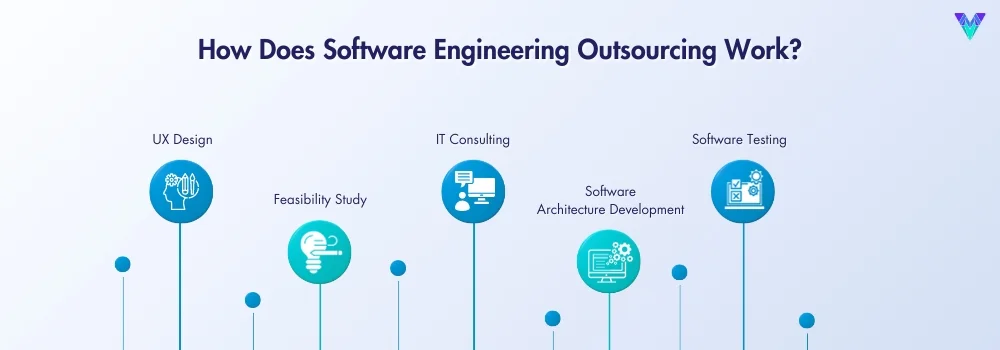
How Does Software Engineering Outsourcing Work?

Most common software development outsourcing services

Here are some most common software development services that businesses outsource:

  • UX Design: It is a process of designing user interfaces (UI) that are highly interactive and easy to use. The outsourcing company provides businesses with usability consulting, front-end development and other UX design services for TV, PC and mobile devices.
  • Feasibility Study: This refers to analyzing if your project is feasible. Outsourcing this process helps businesses save a significant amount of time and money by conducting user testing and establishing proof of concept. Companies use this service to mitigate the risk in the early phase.
  • IT Consulting: In this service, the hired software development outsourcing company provides the business with technical advice to optimally implement the tech stack for their custom software development need.
  • Software Architecture Development: It refers to designing the complete structure of the software or application. Outsourcing software architecture development helps businesses to achieve well-designed and scalable structures more quickly.
  • Software Testing: It refers to finding errors and bugs in the software. Outsourcing software testing ensures a full spectrum of software testing that helps companies get reliable and efficient software at the end of the development cycle.

Balancing in-house vs outsourcing software development can help businesses optimize their resources and stay competitive.

3 different ways to outsource software development

Now, there are mainly three types of software development outsourcing to choose from,

  1. Onshoring: Businesses choose from outsourcing companies in their city or country.
  2. Nearshoring: Businesses hire their outsourcing partner from a neighboring country.
  3. Offshoring: In this type of outsourcing, the businesses hire a software development company located in a distant country.

According to a report by Grand View Research, the global IT services sector is anticipated to reach the milestone of $1070.28 billion by 2025. And the IT outsourcing market accounts for more than 75% of the whole IT services market. What’s more interesting is that software development outsourcing is the most common of all outsourced IT services, with more than 60% of businesses outsourcing all or a part of the software development process to a third-party company.

3 basic software outsourcing models

When it comes to third-party development, there are three basic models to choose from.

  1. Staff Augmentation: In this model, businesses make an agreement with an outsourcing software development company to provide an additional team to support their existing resources. This model helps companies of all sizes scale their development teams and access a wider talent pool. Here businesses can also eliminate the cost of finding, hiring and training a new workforce.
  2. Dedicated Team: In this model, the business contracts with an outsourcing services provider company to build a team of developers who will work exclusively on the company’s project. This is the right model if you want to hire developers with specific skill sets and retain developers for future company projects.
  3. Project-Based: This is a popular option for businesses looking to complete specific projects within a determined timeframe. In this model, a company outsources software development tasks to a Software development outsourcing company that specializes in the required skills and technology. Here, the outsourcing company maintains complete control over decision-making regarding project development while keeping its clients informed through regular updates and progress reports. Project-based outsourcing is the best choice for businesses seeking short-term access to specialized resources.

Outsourcing software development pros and cons

Scaling IT infrastructure requires hiring developers, investing in tech and space and incurring high business costs, especially for smaller firms, but cost isn’t the key driver of software outsourcing anymore. There are many other attractive benefits of outsourcing software development. Let’s read.

Pros of Software Development Outsourcing
Access to wider talent Outsourcing allows companies to leverage the expertise of the best minds in the field of software development. 
More focus on core business With outsourced software development, businesses can focus on enhancing their core capabilities, grow their in-house employees’ skills, and stay up-to-date with the trends in their niche. 
Cost-efficiency outsourcing software development projects allows businesses to potentially reduce the upfront and operational costs of establishing and maintaining an in-house development team.  
Faster time-to-market With experienced software developers working on your project, you can expect faster project completion times, which can help expedite the product’s time-to-market. 
No need for micromanagement Offshoring allows businesses to focus on core competencies and delegate tasks like decision-making, project management, and progress reporting to their tech partner. 
Provide Ease in Scalability Outsourcing is an ideal way to scale up your business’s existing software capacity and access specialized talent without worrying about acquiring the necessary skills and expertise.  
Leverage the latest technology Outsourcing to global tech experts helps businesses receive a technologically advanced final product and stay relevant and competitive in their niche  
Predictable Finances Outsourcing companies usually prepare monthly, quarterly or annual project cost plans so that businesses can allocate their resources more efficiently. 
Access to specialized skills  Offshoring enables businesses to tap into developers’ expertise in particular technology domains. 
Fully protected and Quality development Outsourcing companies always guarantee the quality and reliability of the products they develop, covering everything from protecting intellectual property to meeting deadlines and associated penalties. 

Given the extensive list of benefits mentioned above, partnering with an outsourcing company appears to be an attractive solution. However, it is essential to understand both the pros and cons of outsourcing associated with the outsourcing process. Otherwise, they can affect your business negatively.

Cons of Outsourcing Software Development 
Risk of Loss of Control Outsourcing puts the project control in the hands of a remote team, making proper management and communication crucial to avoid business failure. 
Missing Deadlines IT solutions provider companies may fall behind schedule or fail to deliver the desired product on time, causing financial damage to businesses. 
Communication Challenges Poor communication may result in discrepancies and misunderstandings when dealing with offshore software development outsourcing companies. 
Unmotivated Team The outsourced team may lack the same motivation to complete the project compared to the in-house team. 
Restricted control  Outsourcing through software development companies that use freelancer may lead to communication delays, lack of progress visibility and misaligned expectations between the hiring company and development team. 
Poor Code and Documentation The chosen software firm may lack rigorous quality controls, resulting in low-quality code and documentation 
Unforeseen Expenses You must read the legal contract carefully to ensure no unexpected fees are incurred during the development. So, pay extra addition to that fine print! 
Security threat Outsourcing projects that require access to your company’s data poses a risk to data security. Misuse or passing of that information to unauthorized individuals can harm your business’s reputation in the market. 

Weigh both outsourcing software development pros and cons carefully before you make a final call. Businesses should consider the trade-offs between in-house vs outsourcing software development and choose the option that aligns best with their goals, budget, and competence. In-house teams offer greater control and customization, while outsourcing provides cost savings, scalability, and access to specialized skills.

How to successfully outsource software development?

To successfully outsource your software development project, it is important to take key steps to ensure the best possible outcome. These include:

Here Is a proven 6-step process for Outsourcing your Software Development:

  • Decide the project goal. Be specific about what you want to receive at the end of the software development process. Define the features and functionalities that the software should provide.
  • Prepare a Scope of Work (SOW) document. This document should cover the exact details of the work in the outsourcing software development project. It aims to communicate project requirements and ensure both parties understand what is expected. A comprehensive SOW is vital for successfully managing outsourcing. It helps ensure timely and budgeted project delivery and that the final product meets the client’s expectations.
  • Determine the appropriate technology stack for your project and seek potential outsourcing partners with relevant expertise and experience. Simply put, you must decide what technologies your software development project will need.
  • Appoint an experienced software engineering person to track the outsourced project development continuously. Often known as project manager, this person’s role is to ensure that the development is in line with the defined requirement, timeframe and budget.
  • Collaborate with the remote development team to avoid any kind of future roadblock. Talk to developers directly regularly for desired deliverables.
  • Have realistic expectations. Set multiple milestones and keep tracking progress to provide timely feedback to the chosen outsourcing team to ensure continued progress.

By following these steps, you can ensure that your software development project results in successful outcomes.

6 factors to consider before outsourcing software development

Outsourcing software development is often a strategic decision for many businesses, but it requires careful consideration. Here are 6 factors to keep in mind before outsourcing software development:

Software requirements

To avoid business failure resulting from outsourcing projects, it is crucial to define software development requirements adequately. A clear vision and goal will help your outsourcing partner understand your business needs and recommend the appropriate solution.

Budget

While hiring an outsourcing company, it’s important to look for one that offers services within your decided budget. Rather than choosing based on price alone, prioritize finding a qualified partner who offers a reasonable quote that meets your needs. Calculate the minimum viable product development cost to get a better understanding of potential expenses.

Communication

Effective communication is crucial when outsourcing custom software development services. Establish how you will talk to the remote team of developers before you kickstart your project. Clear communication prevents misunderstandings and ensures that the project meets long-term business goals.

Company culture

Cultural differences can be a major challenge when outsourcing a software project. Thus, it is important to ensure that the values of the outsourcing services provider company align with your own. Understanding their work culture is essential to ensure you find a motivated and successful team.

Tech expertise, resources and portfolio

Ensure the outsourcing company specializes in relevant tools and technology and has well-trained resources with experience in developing software projects similar to yours. Scrutinize their past projects to gauge their technical expertise.

Data Security

When you outsource your software development needs, ensuring the security of your data and business apps is crucial. Ensure the outsourcing company has strong security measures in place and signs a non-disclosure agreement (NDA) to protect your intellectual property (IP). Taking such allows you to maintain peace of mind and focus on your core business activities.

How much does it cost to outsource software development?

The final cost of outsourcing changes dramatically based on many factors, such as,

The geographic location of the company

Software development costs depend on a company’s geographic location affected by competition, availability of skilled labor, and standard of living. Simply put, countries with lower labor costs charge lower software development costs as they have greater availability of skilled labor. Outsourcing software development to India can be a cost-effective way to access a skilled and experienced workforce.

Let’s check out the estimated country-wise rates for software development, as reported by the Clutch.

The experience of the development team

The hourly rate of senior and junior software developers varies on parameters such as years of experience, location and challenges. The more experienced the developers are, the higher they charge. According to a survey conducted by Accelerance, the average hourly cost of hiring a software engineering developer is between $25 and $50 per hour.

The size of the project development

When calculating costs for software outsourcing, size is a critical factor. Projects may be classified as Small, Mid, or Large based on varying software development requirements, including add-on features for mid-sized applications and long project durations for Large-sized projects.

The type of development service needed

Whether you want to build the software from scratch or just need a tiny modification or feature upgrade in the existing app, the cost will change considerably.

The complexity of the project

The more complex your software development project is, the more expensive it will be to outsource it.

Outsourcing your software development project can cost anywhere between $10,000 and $250,000. Outsourcing software development to India can help businesses accelerate their time to market and reduce their overall development costs.

Top 5 software development outsourcing trends

If you are planning to outsource your software development needs, you must stay current with the latest trends in the industry to make an informed business decision. The top 5 software development outsourcing trends in the industry for 2023 to follow.

Cloud Technologies: Demand for cloud-native software dev. is on the rise. Cloud brings benefits such as precise information access and improved connectivity. The global cloud-native software dev. industry expected to reach $168.6 billion by 2025, making it a leading trend.

Agile Development: Agile dev. is widely adopted because it compartments software dev. into iterative cycles, reducing time-to-market. Companies receive user inputs at an early phase to ensure product alignment with customers’ needs. 71% of SD firms utilize agile dev. strategies.

Rise of DevOps: DevOps blends software dev. with IT operations to enhance software delivery, automation and testing resulting in improved productivity. 70% of SE companies use DevOps practice.

Impact of AI and RPA: AI and RPA automate repetitive tasks, improve productivity, and reduce mistakes. RPA streamlines operations with software robots. Outsourcing AI-powered software development can help businesses use advanced technologies without investing in infrastructure.

Value over Price: In the upcoming years, software outsourcing trends will focus on talent-based solutions, emphasizing high-quality services and specialized skills rather than cost savings. Security and compliance remain significant concerns for outsourced software development.

Key takeaways

  • IT outsourcing is a growing trend, with the global IT outsourcing market projected to reach $1070.28 billion by 2025.
  • There are three ways you can outsource: onshoring, nearshoring, and offshoring.
  • There are three basic software outsourcing models: staff augmentation, dedicated team, and project-based.
  • Outsourcing custom software development can provide your company with many benefits, such as access to a broader pool of talented resources, reduced development cost, faster time-to-market, and absolutely no need for micromanagement.
  • There are also some risks associated with outsourcing software development, such as language barriers, cultural differences, and the security of intellectual property.
  • Cloud technology integration in software development has emerged as a prominent trend
  • Agile and DevOps Practices are becoming more popular.

Frequently asked questions

It is a process of strategically collaborating with an outsourcing software services provider company to build software for your business.

For successful outsourcing, define your project requirements, research outsourcing companies, select the best fit, sign a contract, communicate regularly, test the software, and deploy it to users.

Companies these days prefer to outsource their software development mainly to achieve highly competitive, top-quality and industry-specific custom products. Outsourcing helps companies reduce the development cost without compromising the quality of the product.

Outsourcing helps companies save time, money and resources. And thus, they can focus more on the core competencies of their business to drive growth and innovation.

Well, it is a right choice for companies with limited technology expertise in-house. However, it is crucial to consider both pros and cons of it before you make a final choice. Spend ample time evaluating outsourcing partners and ensure clear communication of desired outcomes before you begin your project.

Nearshore mobile app development in mexico: advantages, challenges, and cost

If your mobile app is an integral part of your business operations, you know the challenges of finding the right team to develop and upkeep your software. The search for quality mobile app developers, coupled with the pressure to get products to market quickly, can lead to rushed hiring decisions and poor results. Nearshore mobile app development in Mexico can help you overcome these challenges.

What is nearshore mobile app development?

Nearshore app development is a software outsourcing model where businesses outsource their mobile app development requirements to companies located in neighboring countries. Based on geographic proximity, a large number of USA-based companies choose Mexico as their Software outsourcing partner.

According to a report by Clutch, in 2022, 35% of all mobile app development projects outsourced to Mexico were from the United States, 20% were from Canada, 15% were from Brazil, and 10% were from the United Kingdom. Nearshore solutions for mobile app development offer businesses the opportunity to save money and time without sacrificing quality.

Why nearshore mobile app development in mexico?

Mexico has emerged as a popular destination for nearshore software outsourcing due to its fast-growing IT sector, governmental initiatives and location. The country is home to 38 IT clusters comprising 400 software engineering outsourcing companies.

Some important facts that explain why Mexico is a popular choice for nearshore software development are:

  • The IT industry in Mexico is expected to grow at a compound annual growth rate (CAGR) of 10.6% over the next five years, reaching a market volume of $3.92 billion in 2023.
  • The country provides lucrative offers to international companies, such as no obligation to pay local or state income taxes on corporate earnings.
  • Mexico is an active member of the G20, the OECD (Organization for Economic Cooperation and Development) and the Pacific Alliance, thus capable of offering overall economic stability to its outsourcing partners.
  • As per the US-Mexico-Canada Agreement (USMCA) effective since 2020, there is a specific chapter on digital trade, allowing for cooperation in developing and integrating the digital markets of the three countries.
  • Mexico has also established fintech regulations to ensure user protection, contributing to the country’s overall attractiveness for nearshore software development.

The US and Mexico have a close and lasting business relationship, making it an even more attractive location for nearshore development.

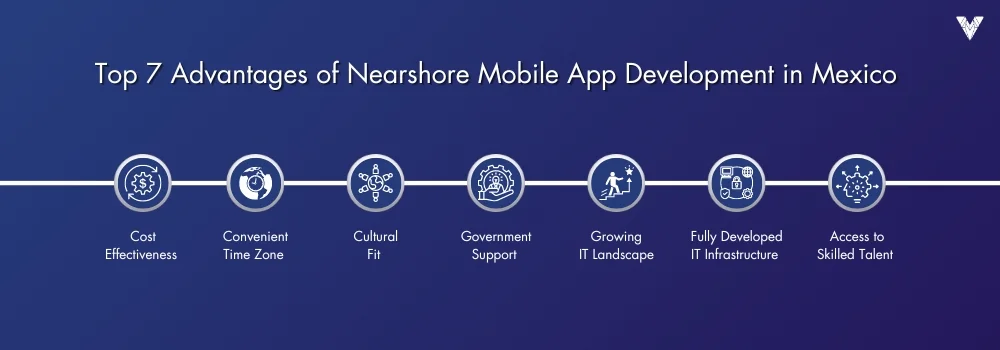
Top 7 advantages of nearshore mobile app development in mexico

Advantages of Nearshore Mobile App Development in Mexico

Working with software engineering outsourcing companies from neighboring countries enables businesses to tap into a diverse range of software development skills and experience, which ultimately helps them create an innovative and successful end product.

Overall, nearshoring is the ideal choice for businesses planning to outsource their app development needs in 2023 and beyond.

So, let’s read the top 7 benefits of nearshore app development in Mexico.

Cost-effectiveness

Nearshore mobile app development in Mexico is significantly less expensive than in its neighboring countries such as USA and Canada. The lower cost of living and salaries make nearshore outsourcing an affordable alternative for businesses. For example, the average app developer pay in the United States is $110,140 per year, while the average app developer pay in Mexico is $35,000 per year. This means that businesses can save up to 70% on developer salaries by outsourcing their mobile apps to Mexico.

Convenient time zone

Mexico’s time zones overlap with those in the US, making it easy for US-based businesses to work with Mexican teams and make potential business trips faster and more convenient.

Cultural fit

Mexico’s cultural compatibility with the USA makes it an ideal location for businesses looking for software engineering outsourcing requirements. Mexican professionals are known to be good team players who are prone to long-term commitment, making them easier to manage. Additionally, the common language and culture between Mexico and the United States reduce misunderstandings and promote effective communication.

Government support

The tech industry receives strong support from the Mexican government, which provides numerous incentives to encourage foreign investment, such as tax breaks, funding opportunities, and streamlined regulatory processes. As a result, starting and operating a business in Mexico can be a more straightforward process.

Growing IT landscape

Mexico has become a significant IT hub and an attractive option for businesses looking for nearshore software development. The country’s IT services industry is the third largest in the world and has been growing at an annual rate of 10-15%. Mexico’s strategic location provides easy access to USA markets. The IT industry in Mexico is diverse, with expertise in software development, cybersecurity, cloud computing, and innovative startups driving technological advancements.

Fully developed IT infrastructure

Mexico has become a global outsourcing hub in the past decade, thanks to its modern infrastructure. The Mexican government is actively working on enhancing transportation, IT, and energy projects, with a budget of over $14 billion (USD) announced in 2020. A developed infrastructure allows Mexico to support stable supply chains, further strengthening its position as a prime destination for software development outsourcing.

Access to skilled talent

Mexico’s education-focused governance over the last decade has led to a considerable increase in STEM graduates in the country, starting from 15.5% in 2005 to 25.9% in 2022. The country has a vast pool of talented developers who are proficient in using the latest technologies such as React Native and Flutter in mobile app development. Driving innovation through Mexican app development is a strategic move for businesses looking to tap into a talented and cost-effective workforce.

Challenges & risks of nearshore software development company in mexico

While Mexico has several advantages that make it a desirable location for the nearshore software development process, it is not without its challenges and risks.

  • Bureaucracy Challenges: The Mexican government has a complex bureaucracy and legal system, which can make it difficult to set up and operate a business in the country.
  • Protracted Hiring Process: The recruiting process in Mexico can turn into an inefficient model, due to factors, such as the lack of a relevant workforce and the high turnover rate among mobile app developers.
  • Cultural and Language Barriers: There can be some cultural and language barriers between Mexican and USA businesses, which can make it difficult to communicate seamlessly on projects.

Despite these challenges, nearshore software development in Mexico can be the right choice for businesses to build a high-quality app solution on an optimal budget. By hiring from some of the most reputable nearshore software development companies in Mexico, businesses can mitigate these challenges and take advantage of the many benefits that Mexico’s IT outsourcing industry has to offer.

Choosing the right nearshore development partner in mexico

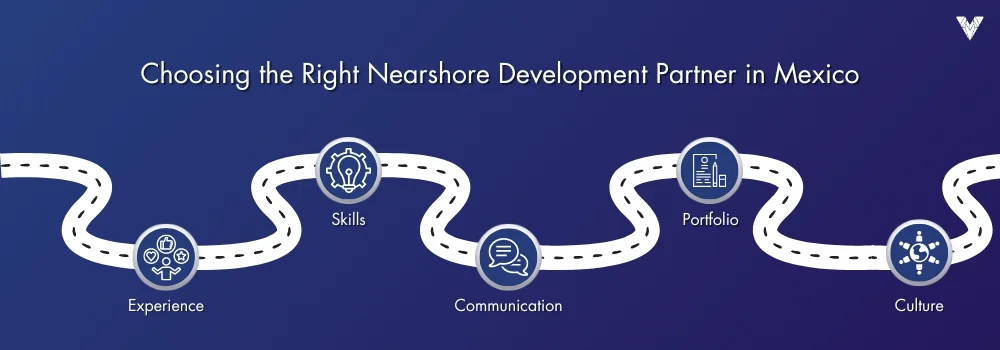
Choosing the Right Nearshore Development Partner in Mexico

Finding the right software development outsourcing partner is one of the most critical decisions businesses must make. The right nearshore software development company in Mexico can help you bring your app to market faster while partnering with the wrong company can cause delay or even complete failure of the project.

Here are a few important steps businesses must consider while searching for the best nearshore software development services provider company in Mexico.

  • Experience: Make sure the company you choose has experience in building apps for your industry or similar niche.
  • Skills: Ensure that the outsourcing partner has developers with the most relevant skills in line with your project specifications.
  • Communication: Check if the nearshore software outsourcing company understands the significance of effective communication during the app development process.
  • Portfolio: Once you have a few outsourcing companies shortlisted, study the company portfolio for each. This includes studying their previous projects, case studies and reviewing their client references. For more insight, one can also plan a visit to the company to meet the development team and understand their approach.
  • Culture: It is essential that the nearshore software development company in Mexico has the same business values and culture that you expect to meet the end goal.

By implementing these steps, you can enhance your chances of finding the right nearshore mobile app development partner in Mexico for your project.

How much does nearshore app development in mexico cost?

The price range for developing a mobile app in Mexico can fluctuate based on many factors like the app’s complexity, the development team’s experience, and the time given to complete the project. However, the cost of software development falls somewhere between $20,000 and $100,000.

Nearshore vs. Offshore mobile app development

Nearshore development may be the better option if you require higher quality and quicker delivery with better communication and a reliable partner. However, offshore development may be more beneficial due to the lower cost and larger talent pool.

Both outsourcing models have their pros and cons. The right option for you will depend upon your specific project requirements. At the end, the goal is to find an app development team who is capable of executing your project specifications and delivering successful outcomes.

Key takeaways

  • Nearshore mobile app development in Mexico is a cost-effective and time-saving option for businesses looking to outsource their app development needs.
  • Mexico has a strong IT industry with a pool of highly talented and experienced developers.
  • The Mexican government is supportive of the IT outsourcing industry and offers a number of incentives to attract international investments.
  • Businesses face many challenges and risks when they choose nearshore mobile app development in Mexico, but these can be mitigated by working with the right app development company.

Frequently asked questions

Nearshore software development is a software outsourcing model where the development team is located in a country that is geographically close to the client.

A nearshore developer refers to a software developer located in a neighboring country of the business looking for a software engineering outsourcing service.

Nearshore development offers a number of advantages, including reduced app development cost, cultural proximity and access to highly skilled resources.

Choose a nearshore software development company with a proven track record of high-quality deliverables, a team of proficient mobile app developers, and a strong commitment to quality.

The cost of nearshore software development in Mexico varies depending on various factors but the average cost usually falls between $10,000 and $50,000.

How to patent an idea for an app? Only guide you need to refer

Imagine getting an amazing idea for a new app – it’s unique, innovative, and exclusive. Secure your ideas before someone else gets your idea and gets copied.

A patent is a legal document that gives the owner the right to prevent others from using or selling the invention without prior permission. There are different types of patent applications, like utility, design, and plant.

We will discuss further the steps involved in how to patent an idea for an app, the different types of patents available, the legal requirements, and the benefits of patenting your app idea.

What is a patent?

A patent is a legal document that gives the owner extensive rights to use, create and sell an invention for a specific period.

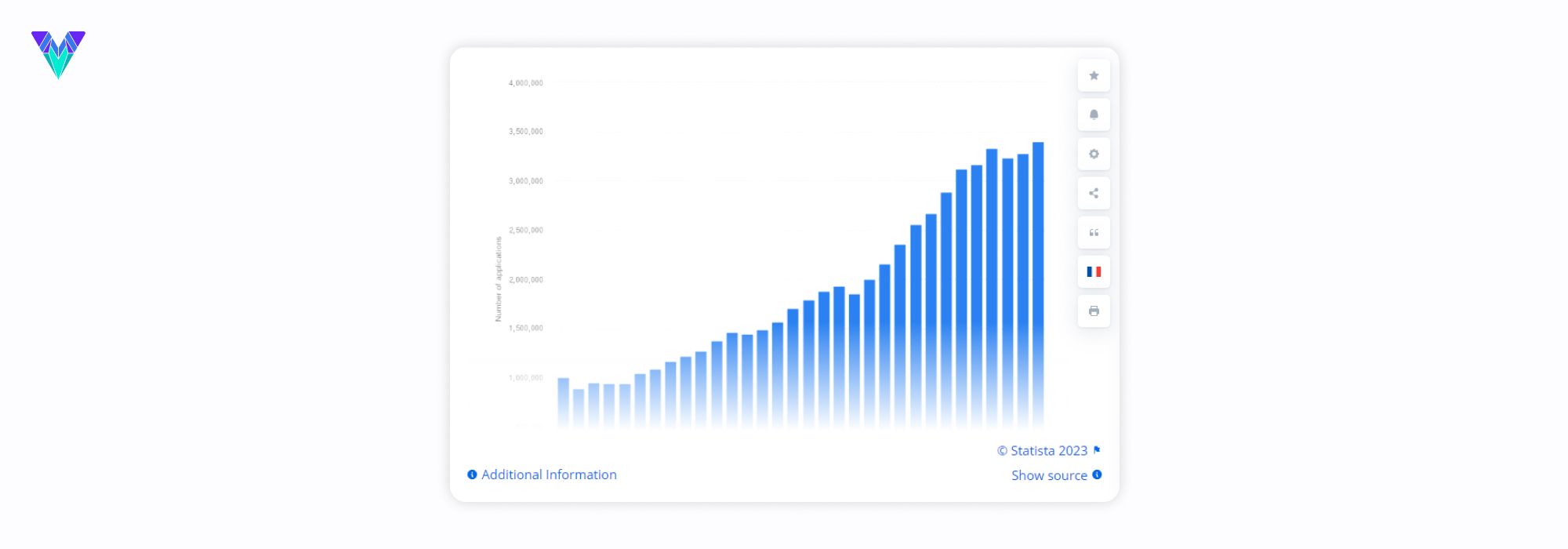
how to patent an app idea statics

According to Statista, in 2021, there were approximately 3.4 million patent applications worldwide, marking a significant increase from the previous year’s 3.28 million applications. This application surge also represents the highest number of patent applications filed globally in the past three decades.

What are the different types of patent apps?

Here are three types of patent applications

  1. Utility Patent: protects the functionality.
  2. Design patent: Protects the ornamental appearance.
  3. Plant patents: Protects the new varieties of plants that have been asexually reproduced.

The process of patenting an app idea

The process of getting a patent for an app idea involves seven steps, which are explained below:

Conduct a patentability search:

Before you file for a patent application, conduct a thorough search to ensure that your idea is exclusive, new, and is not a splitting image of any existing patents.

File a provisional patent application:

Filing a provisional patent application gives you one year to develop your invention even further. This is the easiest and quick way to secure your app idea and its filing date.

Develop a detailed invention disclosure:

A detailed invention disclosure is a must when filing for the non-Provisional patent application to describe your invention in full detail.

File a non-provisional patent application:

A non-provisional patent application is a formal one that provides legal protection for your invention.

Wait for the patent office to review your application:

After filing for the non-provisional patent application, wait for the patent office to conclude if it meets the desired requirements for a patent.

Respond to any objections or rejections from the patent office:

If, in any case, the patent office raises an objection or rejects your application, you will need to respond to these objections or rejections to continue the process.

Receive a patent or appeal a rejection:

You will receive a patent if your app idea is approved; you can appeal the decision if it is not approved.

Legal requirements for app patenting

Your invention must meet the following legal requirements to patent an app idea.

  1. Novelty: Your invention must be new and not already disclosed to the public.
  2. Non-obviousness: Your invention must not be obvious to someone skilled.
  3. Utility: Your invention must have a practical use.

The importance of patenting your app idea

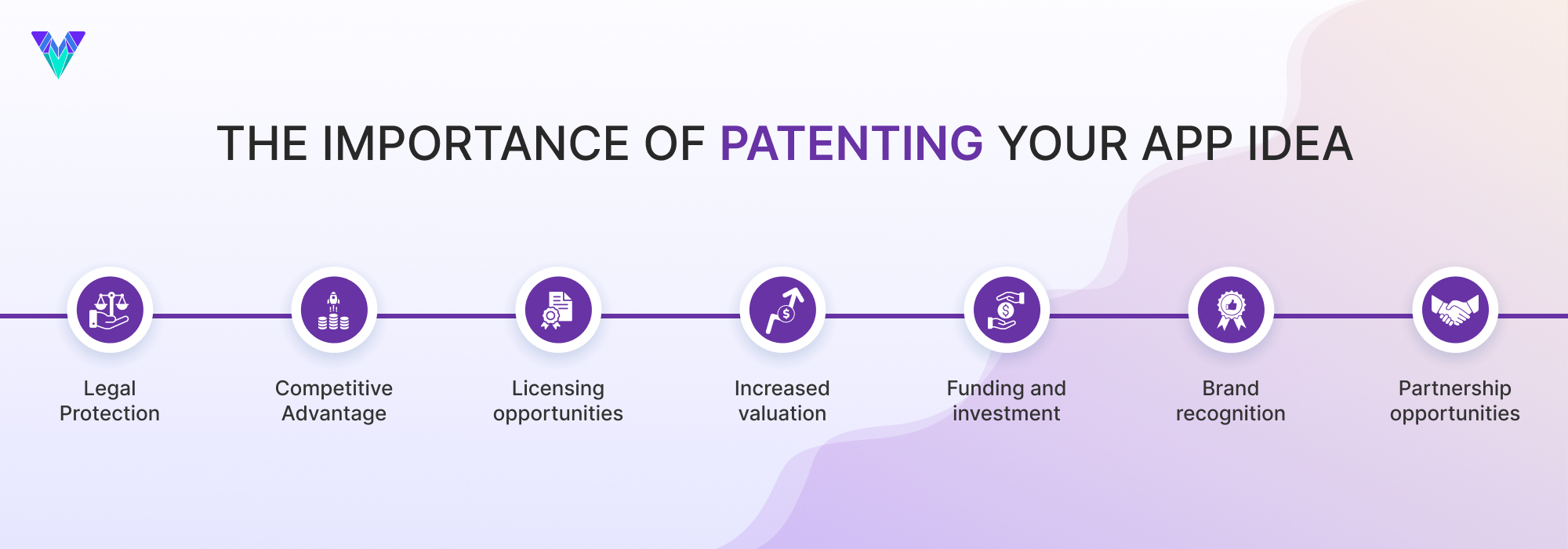
The Importance of Patenting Your App Idea

Why you should patent your app idea, to answer this question, we have listed down the importance and benefits of Patenting your app idea.

  1. Legal Protection: If your App is patented, it will give you exclusive rights to make, sell and use your innovation and prohibit others from using it.
  2. Competitive Advantage: Patenting your App can prevent others from copying or using it without prior permission.
  3. Licensing opportunities: A patent can help you license your invention to others and generate revenue.
  4. Increased valuation: A patent can increase the value of your App and make it more attractive to investors.
  5. Funding and investment: A patent can help you secure funding and attract investors interested in your unique, protected idea.
  6. Brand recognition: A patented app can establish your brand as innovative and forward-thinking.
  7. Partnership opportunities: A patent can attract partnerships and collaborations with companies interested in your app idea.

Don’t let your app idea go to waste!

Get in touch with our experts to have an incredible experience with
Customized mobile app developments.
Get a FREE consultation today!

App development and patenting

Many wonder if there’s any relation between app development and patenting. Well, App Development and Patenting are related for more than one reason.

In the process of App development, patenting an app idea should be considered as a first step. You can secure your App while developing by conducting a search and filing a provisional patent application.

The patenting process can affect your App’s development by adding additional time and costs. However, it is crucial to prioritize intellectual property protection to secure the long-term success of your App.

Common mistakes when patenting an app idea

There are a few common mistakes people make when they are patenting their App Idea:

  • Not conducting a patentability search before filing a patent application.
  • Filing a patent application way too early in the development process.
  • Not disclosing all relevant information about the invention.
  • Failing to respond to objections or rejections from the patent office on time.

However, you can avoid these mistakes by working with a patent attorney who can guide you through the process and prevent you from making mistakes.

Alternatives to patenting an app idea

If you do not want a patent for your app idea, some alternatives can protect your invention from getting stolen. But each method has its benefits and drawbacks.

  1. Trade secret protection: Trade secret protection can be less expensive but doesn’t give surety after your idea becomes public.
  2. Copyright protection: Copyright protection can only provide you legal protection to some extent, but it might not cover all the aspects of your app idea.
  3. NDA (Non-Disclosure Agreements): A document signed between you and the app development company is NDA. It prevents them from disclosing your app idea and technicalities to outsiders.

When should you patent and not patent your app or app idea?

It doesn’t matter if you developed the idea first unless you don’t file it. So, it is important to secure your idea by filing a provisional or non-provisional patent application.

  1. You should patent your App idea to secure legal protection and prevent others from copying, stealing, or using your idea without prior permission.
  2. If you have funds for your app development and separate funds for your app idea protection, you should patent your app idea.

Your App idea is only approved for patenting if it is unique and not copied from other applications. Here are the scenarios where you should not patent your app idea.

  1. You should not patent your App idea if it is an advanced version of any existing product.
  2. If your App idea is still in the development process and your team is working on the financial, legal, and technical capabilities of your App.

How do you know if your mobile app idea is eligible for patenting?

To determine if your Mobile application idea is eligible for a patent, you should consider these few critical points:

Your app idea should be unique and exclusive

You should ensure Your mobile application’s ability to work successfully in the market before you start developing it. Your App should be new and exclusive and not copied or an extended version of any other app.

Your app should be useful

Your App should be useful and perform well. It isn’t easy to get a patent if your App is not very useful.

It should be an invention

The World Intellectual Property Organization states patents are the best choice for safeguarding inventions. The chances of your app idea getting approved for the patent are higher if it solves any problem.

How much does it cost to patent an app idea?

To answer your question, “How much does it cost to patent an app idea?” It varies for different applications. However, you can get the specific cost from USPTO and find out.

Here’s the basic cost of filing a patent for an app idea:

  1. Elementary filing fee: $70-280+
  2. Patent search fee: $150-600
  3. Patent Examination fee: $180-700
  4. 3.5-year maintenance fee: $400-1600
  5. 7.5-year maintenance fee: $900-3600
  6. 11.5-year maintenance fee: $1850-7000+

Provisional patent applications can range from $2000 to $5000, and non-provisional patents from $10,000 to $15,000.

Do you believe that your creative app idea
Should be out for the world?

Get a FREE consultation from one of our experts and create a new and unique app now!
Get A FREE Quote Now!

How much time does it take to patent a mobile app

We have seen the eligibility and why you should or should not patent your app idea. Further, we will see how long it takes to patent a mobile app.

The time it takes to patent a mobile app can vary, but it typically takes 12 to 36 months (about 3 years). Often, applications get rejected, and resubmissions are done repeatedly. Based on the circumstances, this back-and-forth process can last up to 4 to 6 years.

Why patenting is not for every app owner?

Patenting is important, but it’s not useful for every owner. You should prepare before applying for a patent.

Patent blocks cost and time:

The process of filing patents ranges from 3 to 5 years and costs $30,000 on average. Also, after adding this cost to the legal cost, the Overall cost can crumple any organization financially.

Not assured protection:

Patent infringement cases are quite specific. Even the most comprehensive agreement might not offer the protection you need during the breach.

Changes in the original ideas:

It’s very natural for startups to change their original ideas and goals, but the main problem is that a patent does not protect the revised version of an invention; it only protects the original ideas. This leads to updating their patent application each time they change the app idea.

Conclusion

Finally, you can patent an application idea easily by following this guide if you have any more questions. Feel free to contact us. Being a Software development company, we are here to help you from step zero to the deployment of your application.

Frequently asked questions

The cost of a patent can vary depending on the complexity of the invention and the jurisdiction in which you are applying for a patent. In the United States, the cost of filing a patent application can range from $5,000 to $20,000 or more.

To patent an idea for an app, you need to follow a few steps. First, conduct a patent search to ensure your idea is original and not already patented. Then, prepare and file a patent application with the relevant patent office. Your application should include a detailed description of your idea and how it works.

To patent an app idea worldwide, you must file separate patent applications in each country where you wish to seek protection. This can be a complex and expensive process, so working with a qualified patent attorney with experience with international patent filings is important.

You can patent an app concept if it meets patentability requirements, such as novelty, non-obviousness, and utility. However, it is important to note that obtaining a patent for a concept may be more challenging than a fully developed invention.

To patent an idea for a mobile app, you must follow the same process as patenting any other invention. You must conduct a patent search, prepare and file a patent application, and then work with the office to obtain your patent.

Patenting an app can be complex and time-consuming, but it’s not necessarily harder than patenting any other type of invention. The key is to work with an experienced patent attorney who can guide you through the process and help ensure your invention is properly protected.