How AR can be used for augmented reality engineering solutions

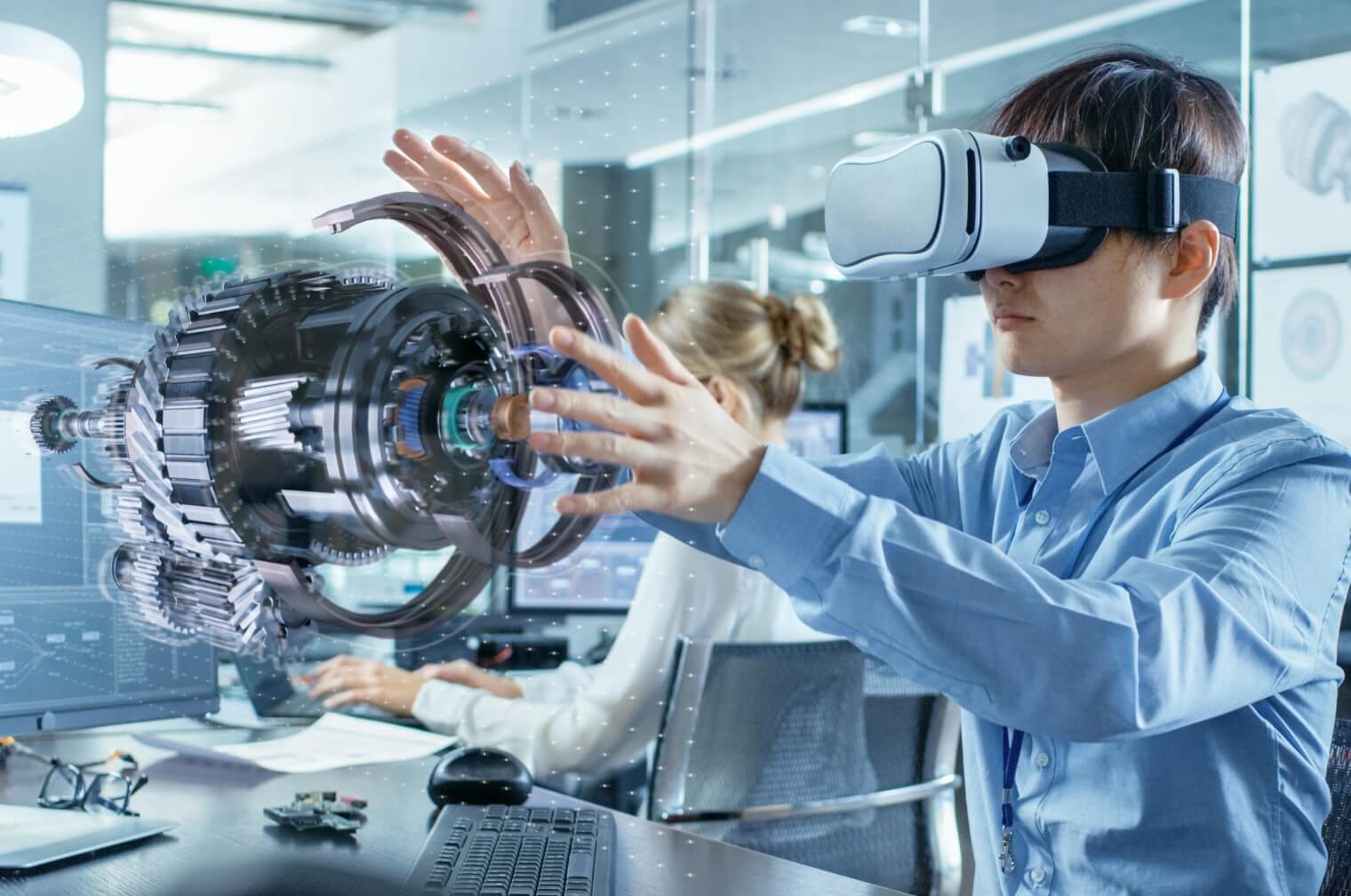
Today, Augmented Reality (AR) has emerged as one of the most significant futuristic technologies used across many industries, including engineering. The integration of augmented reality engineering solutions can unlock a realm of possibilities, fundamentally altering how professionals design, construct, and maintain various structures and systems.

AR overlays digital information onto the real world, enabling engineers to visualize and interact with their designs in a more immersive and intuitive way. This can help to improve the accuracy, efficiency, and safety of engineering projects.

Applications of AR in engineering

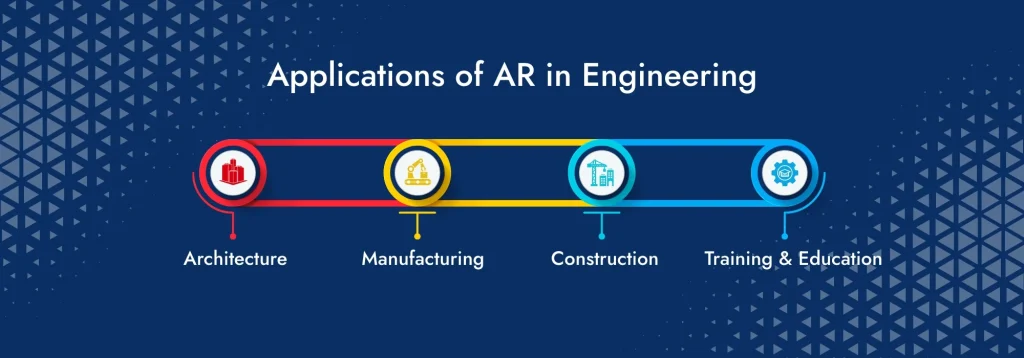
Augmented reality (AR) is being applied in a wide range of engineering fields, including architecture, manufacturing, and construction. By transforming traditional approaches and enhancing various fields, AR has made substantial strides in the engineering sector.

Let’s understand the role of AR in engineering:
Applications of AR in Engineering

Architecture

Augmented reality in engineering is revolutionizing the way blueprints and designs are visualized. Using AR applications, architects can overlay digital models onto physical spaces. This allows them to see how the design will look and feel in the actual space, and to make necessary adjustments before construction begins.

Such a visualization not only aids in improving the design process but also facilitates better communication with clients and stakeholders by providing them with a realistic preview of the final product.

For example, an architect can show a client how their new home will look on their property, or they can collaborate with engineers to ensure that the design is feasible and meets all applicable codes and standards.

Manufacturing

AR is optimizing assembly line processes in manufacturing industries. Through AR-powered engineering solutions, workers receive step-by-step visual guidance overlaid onto the physical work environment.

This guidance significantly reduces errors, enhances productivity, and accelerates the learning curve for new processes or machinery. Workers can access critical information in real-time, ensuring accuracy in complex assembly tasks.

Construction

AR can be used to visualize the layout of construction sites. This can help to improve the efficiency of construction operations and to reduce the risk of errors. By using AR, engineers and workers can detect potential safety risks, such as underground utilities or structural weaknesses, before initiating construction.

This proactive approach not only minimizes risks but also ensures a safer working environment for on-site workers, significantly reducing accidents and project delays. AR can also be used to train workers in new construction techniques.

Training and education

Today, a large number of companies are leveraging AR to enhance training and education for engineers, For instance:

Boeing utilizes AR technology to train aircraft mechanics, offering digital experiences on wiring and repairing airplanes.

Siemens employs AR to train factory workers, guiding them through the assembly of complex machines with step-by-step interactive instructions.

Autodesk incorporates AR to educate students on engineering concepts, such as thermodynamics and fluid mechanics, providing an interactive learning environment.

Big brands led engineering innovation with AR

Let’s explore how leading brands have embraced AR, revolutionizing their engineering processes:

BMW: visualizing prototypes with precision

This popular automobile brand has integrated augmented reality software with its product data management system. This integration allows them to visualize and interact with true-to-scale prototypes, offering an in-depth understanding before finalizing designs for manufacturing.

BASF: leveraging digital twin technology for on-site precision

BASF has adopted augmented reality engineering solutions, through the implementation of digital twins. Engineers at BASF use AR to visualize planned pipelines on-site, ensuring accurate assessments of their intended functionality. AR aids in on-site monitoring, enabling swift identification of any design faults before they escalate into larger problems.

Lockheed Martin: enhancing aircraft assembly with ar integration

This global aerospace and defense company has embraced augmented reality to optimize its aircraft assembly processes. By integrating AR technology into their assembly lines, they can overlay digital schematics and instructions onto physical aircraft components in real time. This innovative approach reduces the likelihood of errors and improves overall efficiency while resulting in substantial cost savings.

Implementing an augmented reality engineering solution

The process of implementing an augmented reality engineering solution typically involves the following steps:

  • Identify the specific engineering needs and goals for the business or project. What are the specific challenges that the business or project is facing? How can AR be used to address these challenges?
  • Choose the right AR platform and hardware. There are a variety of AR platforms and hardware devices available on the market. It is important to choose the right platform and hardware for the specific needs of the business or project.
  • Develop or customize the AR solution. Partner with a reputable AR solutions provider company like ViitorCloud to build a custom AR engineering solution.
  • Deploy and train your workforce on the AR solution. Once the AR solution is developed, the users need to be trained on how to use it.

Starting augmented reality development

If you are considering implementing an augmented reality engineering solution, there are many companies like ViitorCloud that offer AR development services.

In the engineering field, AR is being used to revolutionize design, manufacturing, construction, and training processes. Engineers are increasingly leveraging AR to innovate and enhance their processes, leading to more efficient and effective solutions.

Conclusion

As the tech landscape continues to evolve, the future of engineering through AR presents an unparalleled horizon of possibilities. AR is not just a futuristic concept but a present-day reality shaping how engineers design, build, and innovate. ViitorCloud is at the forefront of this AR-led innovation in the field of engineering.

If you are looking for ways to improve the efficiency, accuracy, and safety of your engineering projects, consider building a custom augmented reality engineering solution that addresses these needs. Choose ViitorCloud as your partner for AR integration in engineering and embrace the future today!

Frequently asked questions

Augmented reality in engineering is revolutionizing designs, simulations, and safety assessments across the industry, transforming the way engineers visualize and interact with complex structures.

Applications of AR in engineering significantly enhance efficiency, accuracy, and safety, propelling the industry toward innovative solutions and streamlined processes.

Augmented reality in engineering optimizes processes by offering step-by-step visual guidance, reducing errors in complex assembly tasks, and improving overall productivity.

Applications or AR in engineering span across diverse sectors, from architecture to manufacturing and construction.

Engineers can get started with augmented reality by using existing AR platforms and hardware, or by developing their own AR applications.
How VR solutions for supply chain are changing the industry?

In today’s fast-paced and highly competitive business environment, optimizing logistics and supply chain operations is more critical than ever.

Explore the VR solutions for supply chain, examining its definition, benefits, applications, challenges, and real-world case studies.

Virtual Reality Logistics, often referred to as VR Logistics or VR in logistics, is the application of virtual reality technology to streamline and enhance various aspects of supply chain management.

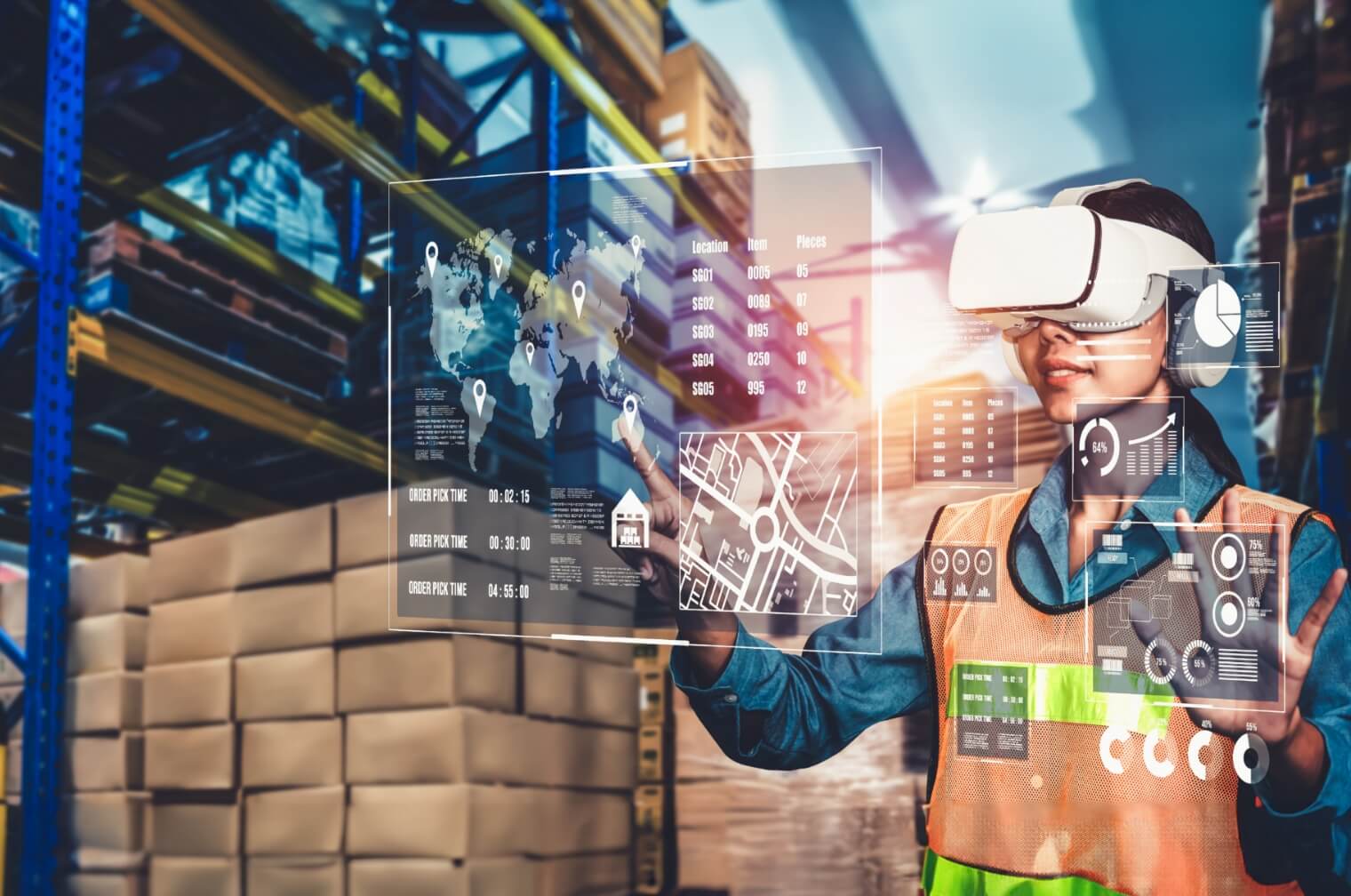
VR solutions for supply chain involve the use of VR headsets and software to create immersive, three-dimensional simulations that mimic real-world logistics scenarios.

What is a virtual reality logistics solution?

A Virtual Reality Logistics development is a comprehensive system that combines VR technology with supply chain management.

It offers a virtual environment that allows users to visualize, interact with, and analyze various logistics processes and scenarios.

Virtual reality logistics solutions use VR headsets and software to create immersive environments that replicate real-world logistics operations.

Users can navigate these virtual spaces, monitor processes, and make informed decisions in real-time.

How VR can optimize logistics and supply chain operations

VR helps businesses optimize logistics and supply chain operations by providing real-time data, creating a collaborative environment, and enabling more accurate planning.

VR solutions for supply chain enhance visibility, reduce errors, and ensure smoother operations throughout the supply chain.

Comparison Between Virtual Reality Logistics Solutions and Traditional Logistics Solutions

VR logistics solutions revolutionize traditional approaches by providing a richer digital experience. Users can navigate virtual warehouses, visualize data in real time, and gain a deeper understanding of their supply chains.

They provide a real-time, 360-degree view of operations, enabling better decision-making and optimization.

Traditional solutions, on the other hand, often rely on static reports and historical data.

Benefits of virtual reality logistics solution

VR solutions for supply chain offer a multitude of benefits that can positively impact various aspects of logistics and supply chain operations.

Improved efficiency in logistics and supply chain operations

One of the primary benefits of Virtual Reality logistics solutions is improved efficiency.

Businesses can monitor and optimize their logistics processes, reducing delays, and ensuring products reach their destinations more quickly.

Enhanced safety in warehouse and transportation management

VR solutions for supply chains can be used to train employees in safe and efficient logistics operations, reducing the risk of accidents and injuries.

It also allows for the simulation of hazardous scenarios without real-world consequences.

Reduced costs in logistics and supply chain operations

By identifying and addressing inefficiencies, Virtual Reality logistics solutions can lead to significant cost reductions in transportation, warehousing, and inventory management.

Better customer experience through improved delivery times

Faster and more accurate deliveries result in improved customer satisfaction, which can lead to increased customer loyalty and positive reviews.

Challenges and limitations of VR solutions for supply chain

While Virtual Reality logistics development offers numerous benefits, they are not without challenges. Some of the key limitations and obstacles include:

  • High Initial Costs: Implementing VR technology can be expensive, including the purchase of VR headsets and software.
  • Complex Integration: Integrating VR logistics solutions into existing systems can be complex and may require specialized IT expertise.
  • User Training: Employees may need training to use VR technology effectively.
  • Data Security: Protecting sensitive supply chain data in a virtual environment is crucial.

Overcoming these challenges involves careful planning, cost-benefit analysis, and the selection of the right technology partners. With proper training and data security measures in place, many businesses successfully implement VR logistics solutions.

Applications of virtual reality logistics solution

VR solutions for supply chain leverage the immersive and interactive nature to optimize various aspects of the supply chain.

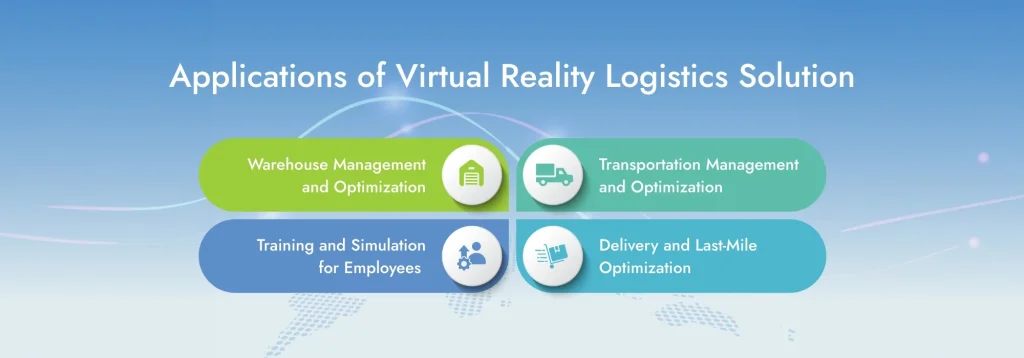
Applications of Virtual Reality Logistics Solution

Warehouse management and optimization

VR logistics solutions can be used to optimize warehouse layouts, track inventory, and improve the efficiency of storage and retrieval processes.

Transportation management and optimization

In transportation, VR can assist in route planning, vehicle tracking, and load optimization, ultimately reducing costs and improving delivery times.

Training and simulation for employees

Virtual reality is a valuable tool for employee training, particularly in safety procedures, equipment operation, and emergency response.

Delivery and last-mile optimization

For last-mile delivery challenges, Virtual reality in logistics can assist in route planning and navigation, ensuring that packages reach their final destinations more efficiently.

Case studies of VR logistics solutions

Examples of Businesses that Have Successfully Implemented Virtual Reality Logistics Development:

  1. Walmart: Walmart employs VR simulations to train its employees in various logistics scenarios, resulting in safer and more efficient operations.
  2. DHL: DHL uses VR to optimize route planning for its delivery trucks, reducing fuel consumption and emissions.
  3. Amazon: Amazon is using VR to simulate the loading and unloading of trucks in its warehouses. This VR simulation helps Amazon to identify and eliminate potential bottlenecks in its order fulfillment process.

These businesses have reported improved efficiency, enhanced safety, cost reductions, and increased customer satisfaction as direct results of implementing VR solutions for supply chain.

Conclusion

Virtual Reality Logistics Solutions have emerged as a powerful tool for optimizing logistics and supply chain operations.

They offer numerous benefits, including enhanced efficiency, safety improvements, cost reductions, and better customer experiences.

By harnessing the power of VR solutions for supply chain, businesses can streamline operations, reduce costs, enhance safety, and improve customer satisfaction.

The world of logistics is evolving, and virtual reality is leading the way. Develop your projects with such immersive technologies.

Frequently asked questions

VR can be utilized for virtual warehouse design and layout planning, allowing companies to optimize space and improve efficiency.

Virtual reality in logistics can streamline training processes, instead of investing in physical training facilities and equipment to save costs.

VR has the potential to greatly improve safety in logistics. By creating virtual environments, workers can undergo safety training in realistic scenarios without being exposed to actual risks.

Virtual reality in logistics enables teams located in different geographical locations to virtually meet and collaborate in real-time, eliminating the need for travel expenses.

AI transportation solution transforming the industry in 5 ways

Transportation has always played a vital role in shaping societies and economies from the earliest days.

However, as we look towards the future, the transportation industry is on the verge of a technological revolution.

AI transportation Solution is the driving force behind this transformation, with the AI transport industry set to redefine the way we move and connect.

Autonomous vehicles: redefining mobility

Autonomous vehicles, often referred to as self-driving cars, are ready to improve the way we move from point A to point B.

These vehicles, equipped with artificial intelligence, sensors, and powerful algorithms, can drive themselves with minimal human intervention.

ChallengesSolutions
RegulationsImproved Safety
Public TrustReduced Accidents
Ethical ConsiderationEnhanced Accessibility

Benefits of AI in transportation

AI (Artificial Intelligence) is offering numerous benefits that are reshaping the way we move people and goods.

Here are five benefits:

  1. Improved Safety: AI plays a pivotal role in enhancing safety on our roads.
    • Advanced driver-assistance systems (ADAS) powered by AI can detect potential collisions, assist with lane-keeping, and even facilitate autonomous driving.
  1. Efficient Traffic Management: AI-driven traffic management systems are making our road networks more efficient.
    • AI algorithms analyze traffic patterns and adjust signal timings in real-time to reduce congestion.
  1. Enhanced Predictive Maintenance: It can predict when maintenance is needed, preventing breakdowns and ensuring vehicles are in optimal working condition.
    • This predictive maintenance reduces downtime, increases vehicle lifespan, and lowers operational costs.
  1. Optimized Logistics and Supply Chain: Route optimization, load planning, and demand forecasting are made more efficient with AI.
    • Companies can deliver goods faster and with less environmental impact, as AI helps in optimizing delivery routes and schedules.
  1. Eco-Friendly Transportation: Electric and autonomous vehicles, which often rely on AI for navigation and decision-making, are reducing the carbon footprint of transportation.
    • AI can also encourage the adoption of ride-sharing and public transit, further reducing emissions.

Smart infrastructure and traffic management

Smart infrastructure takes traffic management to the next level, bringing benefits for both urban planners and commuters.

Here’s what makes Smart Transportation and AI an important element in modern traffic management:

  • Smart infrastructure, equipped with advanced technologies and AI, combines the power of real-time data analysis and predictive modeling to reshape our daily commutes.
  • It enables real-time traffic analysis, allowing authorities to predict traffic patterns, identify congestion points, and optimize traffic signals. This data-driven approach ensures a smoother, more efficient flow of vehicles on the road.
  • By reducing congestion and optimizing routes, it minimizes vehicle idling, subsequently decreasing emissions and promoting eco-friendly transportation practices.
  • Cities like Singapore, Amsterdam, and Barcelona are embracing smart traffic management systems, resulting in less environmental impact by reducing emissions and promoting eco-friendly practices.

Artificial intelligence in transportation is not just about efficiency, but it’s a significant step toward greener and healthier urban development.

Logistics and supply chain optimization

Artificial intelligence has found a home in logistics and supply chain management.

  • Efficient Routes and Reduced Costs: AI algorithms calculate the most efficient routes for shipping, reducing transportation costs and ensuring goods reach their destination swiftly.
  • Predictive Analytics: AI-driven predictive analytics are indispensable in inventory management, accurately forecasting demand and optimizing stock levels.
  • Sustainability in Logistics: Embracing green transportation initiatives powered by AI helps in reducing the carbon footprint. This environmentally responsible approach aligns with modern expectations of businesses to operate in an ecologically friendly manner.

The integration of AI is a necessity in the dynamic world of logistics and supply chain management.

Public transportation 2.0: enhancing commuter experience

Public transportation is getting a much-needed upgrade through AI solutions.

  • AI transportation solution in public transportation are changing the game by predicting ridership patterns and optimizing schedules, making the daily commute more efficient and convenient.
  • The user experience has been vastly improved with real-time updates, digital ticketing, and personalized services tailored to individual preferences.
  • Beyond convenience, there are significant environmental benefits as AI-driven public transportation initiatives are encouraging more people to choose buses and trains over individual cars, ultimately reducing carbon footprints.
  • These enhancements of Artificial Intelligence transportation solution have a profound social impact, especially for differently abled individuals and seniors who now have greater accessibility and ease of use, ensuring that public transportation truly serves everyone in the community.

Future challenges and ethical considerations

As AI reshapes the transportation landscape, ethical considerations and challenges emerge. Privacy concerns arise as vast amounts of personal data are collected for various transportation solutions, requiring a careful balance between convenience and privacy.

There are also fears of job displacement as automation and AI threaten traditional roles, raising questions about the impact on the workforce.

Different countries have varying sets of rules, and ensuring consistency and adherence across borders is no small task.

Establishing a sticking framework that governs the operation and safety standards for autonomous vehicles globally is essential

Governments and international organizations play a vital role in shaping the future of transportation.

They are responsible for drafting and implementing the regulatory frameworks that will define the rules of the road for AI-driven transportation systems.

By collaboration and setting ethical guidelines, they can ensure that technology evolves in a safe, reliable, and efficient manner, paving the way for a transportation landscape that benefits all.

Conclusion

AI transportation Solution is not just about making our commutes easier; it’s about creating a future that is more sustainable, efficient, and inclusive.

To harness the full potential of AI in transportation, continued research, innovation, and collaboration is imperative. Together, we can build a brighter and more connected world.

Frequently asked questions

How is AI changing transportation?

AI is revolutionizing transportation by enabling the development of autonomous vehicles, optimizing traffic management systems, enhancing safety measures, and improving overall efficiency.

How is AI used in transportation?

AI transportation solution are used through autonomous vehicles, traffic management systems, and predictive maintenance to prevent breakdowns and enhance reliability.

How does AI enable autonomous vehicles?

AI enables autonomous vehicles by using sensors, cameras, and machine learning algorithms to perceive and interpret the environment, make decisions, and navigate without human intervention.

What are some examples of AI transportation solutions that are currently in use?

Some of examples of AI transportation solutions are Self-driving cars and trucks, Traffic management systems, Vehicle maintenance and diagnostics, Fleet management, and public transportation:

How can AI transportation solution help transportation industries?

Artificial Intelligence transportation solutions can help the transportation industry improve efficiency, reduce costs, and enhance safety.

10 ways AI in manufacturing is transforming the industry

In the ever-evolving world of modern manufacturing, Industry 4.0 is a transformative approach that aims to revolutionize how we make, distribute, and use goods. Also referred to as the Fourth Industrial Revolution, it represents the coming together of advanced digital technologies to create smart factories and automated systems that work together seamlessly. And using AI in manufacturing is at the heart of this revolution.

In this blog, we will delve deep into the multifaceted role of Artificial intelligence technologies in manufacturing, exploring how they serve as the driving force behind the future of Industry 4.0 and unlock a realm of untapped possibilities.

Role of AI in manufacturing

The integration of AI into manufacturing processes has far-reaching implications for the industry’s future. Its predictive capabilities, process optimization, and collaborative robotics are reshaping traditional practices, propelling manufacturing into a new era of efficiency and precision.

In the context of Industry 4.0, AI serves as the catalyst for achieving the revolution’s objectives of enhanced productivity, increased flexibility, and more sustainable manufacturing practices. As the technological landscape continues to evolve, AI’s role in manufacturing is set to expand, unlocking a world of untapped possibilities and leading the way toward a smarter and more connected industrial future.

How AI solutions are transforming the realm of manufacturing

In the last decade, AI technology has emerged as a prominent term in the manufacturing industry, and it has gained further momentum with the recent release of the GPT-4 App and other notable AI technologies. Companies are increasingly investing in AI in manufacturing to harness the power of predictive maintenance, minimizing costly machine downtimes.

AI-based solutions are a powerful tool to overcome various internal challenges faced by the industry, including expertise shortages, complex decision-making, integration issues, and information overload.

By incorporating AI technologies in manufacturing plants, businesses can undergo a complete transformation of their operations. Let’s take a closer look at how AI is playing a crucial role in helping the manufacturing sector achieve its goals.

AI-powered data analysis: real-time decision making

AI-enabled data forecast in manufacturing is a game-changer. It empowers manufacturers with real-time insights, enabling them to make informed decisions that optimize production processes and boost profitability. By harnessing the potential of AI, manufacturers can drive their operations forward into a more efficient, agile, and competitive future.

Predictive maintenance: anticipating equipment failure

AI-powered predictive maintenance revolutionizes traditional maintenance practices by utilizing real-time data from connected equipment to predict maintenance needs. Manufacturers can identify potential equipment failures in advance, avoiding costly downtime and reducing maintenance expenses.

Quality control: enhancing product standards

Artificial intelligence technologies, such as computer vision and machine learning algorithms, have revolutionized the quality control process. By leveraging computer vision, AI systems can quickly and accurately identify defects in products, ensuring compliance with stringent quality standards.

Demand forecasting: meeting customer needs

Accurate demand forecasting is crucial for manufacturers to optimize production, minimize inventory costs, and meet customer expectations. AI algorithms can analyze historical data, market trends, and customer behavior to predict future demand accurately.

By leveraging these insights, manufacturers can adjust production schedules, optimize inventory levels, and ensure that the right products are available when customers need them. AI-powered demand forecasting also allows manufacturers to respond quickly to changing market conditions.

Process optimization: streamlining manufacturing operations

By analyzing data from various sources, including sensors, IoT devices, and production equipment, AI algorithms can identify bottlenecks, optimize workflows, and streamline operations. This leads to reduced cycle times, improved resource utilization, and enhanced overall performance. Manufacturers can leverage AI solutions to automate complex tasks, freeing up human workers to focus on more strategic and value-added activities.

Supply chain optimization: transforming manufacturing efficiency

In manufacturing, a compelling example of AI implementation lies in supply chain management. Dealing with millions of orders, purchases, materials, and ingredients manually consumes valuable time and resources. As a result, many companies are turning to AI companies to enhance their supply chain processes. The impact of AI-driven supply chain optimization is significant, leading to reduced costs, increased productivity, and improved customer satisfaction.

Autonomous vehicles: revolutionizing manufacturing logistics

Another exciting application of AI in manufacturing is the use of autonomous vehicles. Self-driving cars and trucks, equipped with AI algorithms and sensors, can automate and optimize logistics processes in manufacturing facilities. These autonomous vehicles can navigate production floors, transport materials, and optimize delivery routes, leading to increased efficiency and cost savings. By leveraging AI, manufacturers can achieve round-the-clock operations, minimize transportation costs, and improve delivery speed and accuracy.

Autonomous systems and robotics in smart factories

AI is powering the rise of collaborative robots, often known as Cobots, which play a crucial role in supporting human workers. Unlike traditional automated robots limited to repetitive tasks, they are designed to learn and adapt to various tasks.

Another area where these robots shine is in large warehouses, where they assist in locating and retrieving items efficiently. While Cobots take care of physically demanding and repetitive tasks, human workers can concentrate on complex decision-making and problem-solving.

Sustainable manufacturing

AI-based applications can help predict future energy consumption and emissions, even for upcoming shifts. Moreover, AI optimizes production processes by determining the most efficient process parameters and production sequences, further contributing to emission reduction efforts.

In the context of sustainable processes, our Co4 common platform stands as an exemplary solution. The platform predicts future energy consumption and emissions, even for upcoming shifts, enabling proactive measures for sustainability.

This futuristic solution has access to a range of common services such as electric vehicle charging, water management, energy monitoring, and carbon emissions tracking. It also includes a range of features to help users manage their energy usage and generation and ensure that everything is running smoothly.

The impact of AI in generative designs

AI has emerged as a game-changing technology in the field of generative design. By leveraging machine learning algorithms, generative design software can rapidly generate and evaluate thousands of design options, allowing manufacturers to optimize for multiple objectives such as cost, performance, and manufacturability. Furthermore, AI can also help identify and mitigate potential design flaws before production, saving valuable time and resources.

AI-powered manufacturing – the next evolution has begun!

The future of AI in manufacturing sector is incredibly promising. Companies worldwide are adopting intelligent manufacturing solutions to enhance product quality and competitiveness in the global market. As the role of AI in manufacturing continues to evolve, we can expect to see even greater improvements in efficiency, productivity, and quality across the entire industry.

Real-world companies are increasingly using AI-based solutions to revolutionize manufacturing processes. For example, General Electric (GE) has implemented an AI-powered system that analyzes data from sensors on its gas turbines to identify potential issues before they become major problems, reducing unscheduled downtime by up to 5%.

The dawn of AI evolution has arrived, and it’s just the beginning of a vast world of untapped opportunities. In manufacturing, the possibilities are limitless, and we’re only scratching the surface of what AI can truly achieve. Get ready to witness the transformation as AI reshapes the future of manufacturing like never before.

Conclusion

The fourth industrial revolution, Industry 4.0, has ushered in a new era of advanced manufacturing, where modern-day digital technologies converge to create smart factories and automated systems. At the heart of this transformative approach lies the role of AI in manufacturing, acting as a powerful tool that drives efficiency, productivity, and innovation in the manufacturing industries.

At ViitorCloud, we stand at the forefront of AI application development, driving innovation and transformation in the manufacturing industry. Our expertise in leveraging AI-powered solutions helps businesses optimize their operations, increase efficiency, and achieve a competitive edge. Embrace the power of AI with Viitorcloud, and let’s shape the future of manufacturing together.

Frequently asked questions

Industry 4.0 refers to the integration of advanced digital technologies to create smart factories and automated systems. AI plays a central role in this transformation, driving efficiency, quality, and innovation in manufacturing processes.

AI, through technologies like computer vision and machine learning, revolutionizes quality control by quickly identifying defects in products. This helps reduce waste and enhance production efficiency.

Companies can do so by identifying critical pain points, integrating AI technologies like predictive maintenance and quality control, and gradually scaling up AI’s implementation.

AI technology is extensively used in manufacturing to automate tasks, improve quality, and reduce costs. It can also be used to personalize products and services for customers.

Yes, AI-powered predictive maintenance utilizes real-time data to anticipate equipment failures and prevent costly downtime, leading to improved operational efficiency.

AI-driven supply chain optimization leads to reduced costs, increased productivity, and improved customer satisfaction.

Collaborative robots, or Cobots, powered by AI, work alongside human workers, handling tasks like heavy lifting and repetitive activities, enhancing efficiency, safety, and productivity in manufacturing factories.