
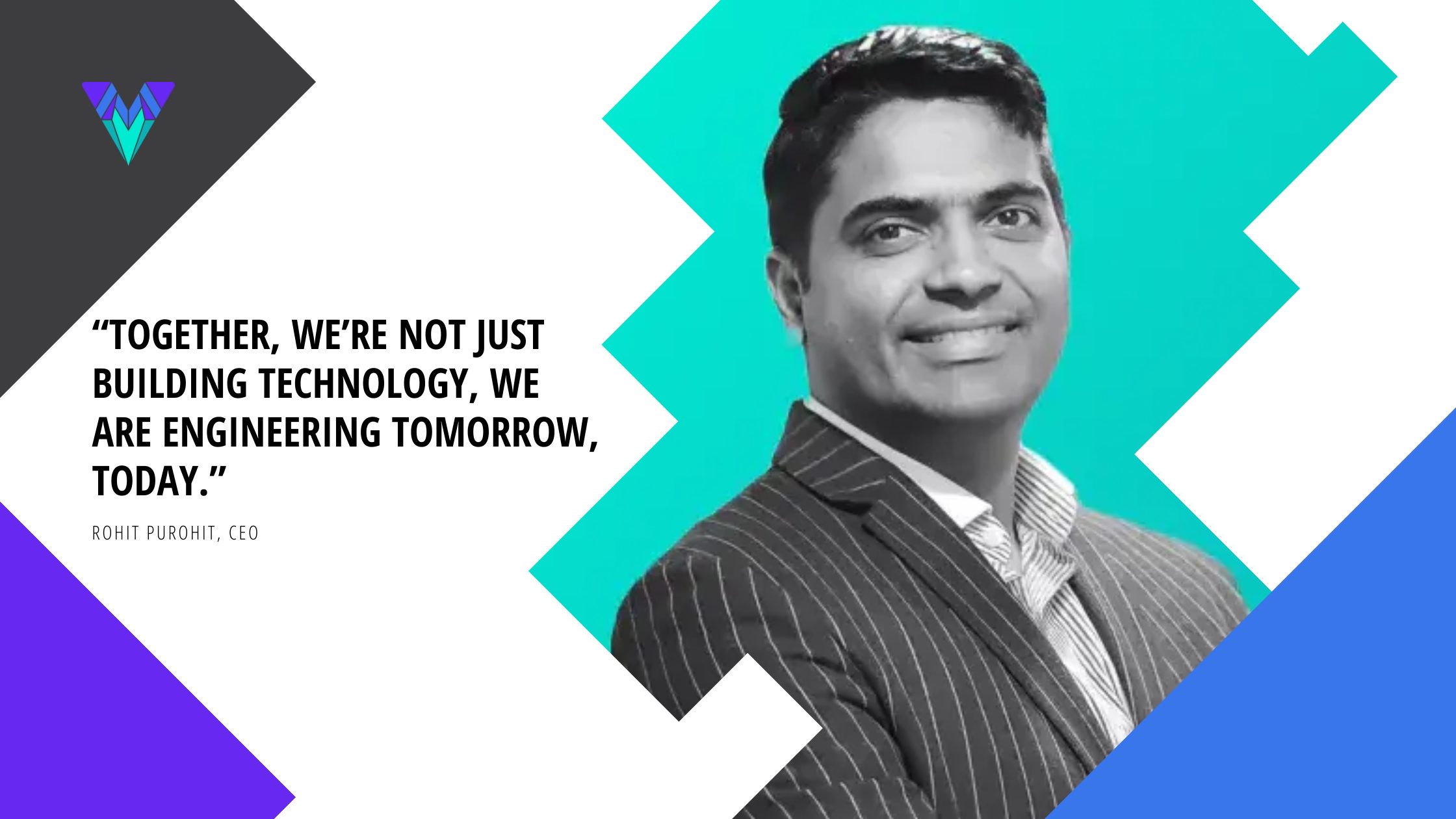
A Message from Our CEO on the 14th Anniversary of the Company

As we celebrate ViitorCloud’s 14th anniversary this week, I find myself reflecting on an extraordinary journey that began with two passionate technologists and a simple yet powerful belief: technology should empower businesses to achieve the impossible and make them future-ready.

From Vision to Global Impact

Fourteen years ago, we started with a conviction that the future belongs to those who dare to innovate.

Today, as I look at our team of brilliant minds across the USA, EU, India, and Mauritius, I see that same pioneering spirit burning brighter than ever.

We have evolved from a startup with big dreams into a global technology leader, but our core mission remains unchanged, which is to empower businesses to become future-ready through transformative digital solutions and emerging technologies.

Standing at the Intersection of Innovation and Impact

As a tech company, we follow the tech trends and also create them. Our expertise spans custom AI solutions, AI-driven automation, SaaS product engineering, system integration and modernization, and digital experiences.

But what truly sets us apart isn’t just our technical prowess; it’s our sheer commitment to quality, integrity, creativity, and social responsibility.

Through our ARISE initiative, we’ve demonstrated that technology companies have a responsibility beyond profit margins. We are leveraging our capabilities to drive sustainable solutions, support educational advancement, and create positive societal impact. This isn’t just corporate responsibility—it’s who we are at our core.

The AI Revolution: Our Path Forward

As we stand on the cusp of the most significant technological transformation in human history, I’m incredibly excited about ViitorCloud’s role in shaping this future. Artificial Intelligence isn’t just changing how we work—it’s redefining what’s possible.

Our vision is crystal clear: to harness the full potential of AI, generative technologies, and blockchain to create solutions that are not only cutting-edge but also sustainable and socially responsible.

We are not just building AI tools; we are crafting intelligent ecosystems that help businesses and people solve real-world problems. For instance, SimplerToday.ai.

From our EveryCRED blockchain-based verification solutions to our advanced generative AI development services, we are pushing boundaries while maintaining our commitment to ethical innovation.

Every solution we create is designed to solve real-world challenges while opening new possibilities for growth and transformation.

A Future Built on Partnership and Purpose

Looking ahead, I see a world where technology serves humanity’s highest aspirations. At ViitorCloud, we are committed to leading this charge with thoughtfulness, creativity, and an unwavering sense of purpose.

Our future is about more than technological advancement—it’s about creating meaningful partnerships that drive genuine business transformation.

We believe in starting small and thinking big, developing iterative solutions that evolve with our clients’ needs. Whether you are a healthcare organization looking to enhance patient outcomes, a financial services firm seeking to revolutionize customer experiences, or a logistics company aiming to optimize operations—we’re here to turn your boldest visions into reality.

The Journey Continues

As we celebrate this milestone, I want to thank every client who trusted us with their digital transformation journey, every team member who brings passion and excellence to work each day, and every partner who shares our vision of a technology-enabled future.

The past 14 years have taught us that with the right people, unwavering values, and relentless innovation, extraordinary transformations aren’t just possible, they are inevitable. But this is just the beginning.

“Together, we’re not just building technology, we are engineering tomorrow, today.”

The future is intelligent, connected, automated, and sustainable. And at ViitorCloud, we are honored to be your partners in making it a reality.

Here’s to the next chapter of innovation, impact, and endless possibilities.

The Business Case for Autonomous Software Agents and How It Will Reshape Your Organization

Agentic AI marks a new era in software development with the capabilities of independently building, managing, and deploying software. This transformation is already underway, as seen in platforms like Devin AI, GitHub Copilot, and LangChain. For business leaders, adapting to this shift is essential for maintaining competitiveness and unlocking new value.

Agentic AI: The Evolution of Intelligent Software

Agentic AI systems autonomously:

  • Interpret high-level business goals
  • Perform tasks across coding, integration, testing, and deployment
  • Interact seamlessly with tools, APIs, and other AI agents
  • Continuously adapt through real-time feedback

Devin AI can autonomously address development tickets and deploy solutions, dramatically reducing manual intervention. This shows a complete shift in how software solutions are created and maintained across industries.

Market Intelligence: The Economic Impact of Agentic AI

The economic implications of autonomous software agents are profound and measurable:

  • According to McKinsey, generative AI could add between $2.6 trillion to $4.4 trillion in annual global productivity by automating knowledge work. (McKinsey)
  • The World Economic Forum Future of Jobs Report 2025 states that 40% of employers anticipate reducing their workforce where AI can automate tasks. (World Economic Forum)
  • Gartner predicts that by 2026, more than 80% of enterprises will have used generative AI APIs or deployed generative AI-enabled applications. (Gartner)
  • In a 2023 report, Goldman Sachs estimates that generative AI technologies could raise global GDP by approximately 7%, representing around $7 trillion in economic value. (Goldman Sachs Research)
  • The enterprise agentic AI market is projected to grow at a compound annual rate of 46.2% between 2025-2030, reaching $24.50 billion by 2030. (Grand View Research)

Strategic Shifts for Key Stakeholders

1. SaaS Providers: From Products to Platforms

  • Old Model: Web-based interfaces, feature-driven development, seat-based licensing
  • New Model: API-first architecture, trust-centric frameworks, usage-based revenue models

Strategic Recommendations:

  • Transition from user interfaces to robust, accessible APIs
  • Prioritize trust, compliance, and performance over feature quantity
  • Implement clear, flexible pricing based on measurable customer outcomes

2. Technology Services Firms: From Labor to Orchestration

  • Old Model: Labor-intensive, manpower-based execution
  • New Model: AI-driven orchestration platforms and automated workflows

Strategic Recommendations:

  • Invest in proprietary AI orchestration platforms
  • Offer specialized, regulated AI operations (AgentOps) as managed services
  • Develop vertically integrated AI solutions for industries like healthcare, logistics, and finance

North America currently dominates the enterprise agentic AI market with a 39% share, driven by substantial R&D investments and the presence of major technology players. (Grand View Research)

3. Software Engineers: From Coders to Strategic Curators

  • Old Model: Manual coding and routine testing
  • New Model: Prompt engineering, system design, and AI oversight

Emerging Roles:

  • AgentOps Engineer: Manages and monitors AI agents
  • Trust Architect: Ensures ethical and unbiased AI outcomes
  • Workflow Designer: Creates efficient AI-powered business processes
  • AI Integration Engineer: Bridges AI agents with existing systems and tools

Talent Development Focus:

  • Shift hiring toward candidates skilled in abstract reasoning, systems thinking, and prompt design
  • Reskill current staff for oversight and orchestration roles

By 2030, 400-800 million individuals will need to change occupations due to AI and automation advancements. (McKinsey)

4. Organizational Implementation Strategies – Becoming AI-Native

Large Enterprises:

  • Automate internal operations across HR, finance, and legal departments
  • Build robust compliance and audit frameworks for agent governance
  • Emphasize oversight roles and train staff in agent supervision

AI-driven automation is expected to handle 30% of half of their network activities in businesses by the end of 2026. (Gartner)

SMEs:

  • Rapidly deploy custom solutions using AI-driven assistants
  • Utilize tools like Devin AI for cost-effective innovation pathways

For smaller organizations, AI implementation is very significant. According to Forbes, 65% of customers say they trust businesses that leverage AI.

Public Sector:

  • Deploy agentic AI in regulated, low-risk functions (licensing, case management)
  • Implement stringent auditability and compliance standards
  • Establish clear AI procurement and ethical use frameworks early

Labor Market Transformation

As stated, the rise of autonomous software agents is fundamentally reshaping workforce dynamics:

  • Work shifts from execution-oriented roles to delegation-based, strategic oversight positions
  • Higher demand emerges for abstract thinkers, system designers, and AI curators
  • Training focus transitions to reasoning, abstraction, and prompt engineering skills

Current labor market data indicates:

According to Goldman Sachs Research, approximately 300 million jobs could potentially be affected by AI globally. However, AI-related job postings reached 49k in the fourth quarter of 2024, with Machine Learning Engineers, Generative AI Engineers, and Computer Vision Engineers among the fastest-growing roles.

Strategic Implementation Roadmap

Immediate Actions for Key Stakeholders:

  • SaaS Companies: Shift to API-first platforms and outcome-based pricing models
  • Tech Services Firms: Monetize AI orchestration platforms, not just human labor
  • Engineering Teams: Retrain staff for AI-driven orchestration and oversight roles
  • Enterprises & Public Sector: Proactively integrate agentic AI into workflows and governance structures

Closing Insight

Agentic AI is redefining software development, much as cloud computing transformed IT infrastructure. Business leaders who embrace AI agents as collaborative team members, rather than mere tools, will set the pace and define market leadership in the decade ahead. 

As discussed, the economic potential is significant, with generative AI potentially adding $2.6-$4.4 trillion annually across numerous use cases. Organizations that recognize and adapt to this shift will surely thrive in the future.