How virtual reality HSC training solution is increasing safety

Health, Safety, and Environment (HSE) training is necessary for protecting the integrity of organizations and the well-being of individuals in the evolving field of workplace safety.

Although these approaches have shown some success, they often struggle to deliver fully immersive and captivating learning environments. However, with the integration of a virtual reality HSE training solution, the landscape of learning experiences is revolutionized.

Digital experience solutions, specifically those powered by virtual reality (VR) technology, are revolutionizing HSE training. VR offers a whole new level of education, transforming how we approach workplace safety. Let’s delve deeper into the importance of immersive HSE training in VR and how it’s reshaping our perspective on safety in the workplace.

Importance of virtual reality for HSE training

Before we explore virtual reality in HSE solution development, let’s first understand why HSE training is important.

Health, safety, and environmental considerations are supreme in any industry.

A workplace that prioritizes these aspects is not only compliant with regulations but also fosters a culture of care and responsibility among its employees.

Here are some key reasons why HSE training is vital:

  • Safety First: The primary goal of Virtual Reality HSE Training Solution is to prevent accidents and injuries. Proper training equips employees with the knowledge and skills to identify and mitigate potential hazards, ensuring a safe working environment.
  • Compliance: Virtual Reality HSE training solution helps in ensuring compliance, which is not only a legal requirement but also essential for reputation management.
  • Risk Reduction: Comprehensive HSE training reduces the risk of accidents, which can result in financial losses, downtime, and damage to a company’s image.
  • Employee Well-being: When employees feel safe at work, their morale and job satisfaction improve. A safe working environment also reduces absenteeism and turnover rates.
  • Compliance with Regulations: Utilizing a Virtual Reality HSE Training Solution helps organizations comply with regulatory requirements by ensuring that employees are adequately trained in handling safety protocols, emergency response procedures, and environmental protection measures.

Limitations of traditional HSE training

Classroom-based HSE solution development with PowerPoint presentations has been the norm for decades.

While these traditional methods cover the required knowledge aspects, they have limitations when it comes to building skills and shaping behaviors.

Passively sitting through lectures and presentations often leads to low engagement and poor retention of information.

Additionally, classroom training lacks realism and makes it difficult for employees to apply learnings to real-life hazardous situations.

Traditional methods are unable to simulate risk scenarios like working from heights, confined spaces, fire hazards, chemical spills, etc.

This leaves employees underprepared to face dangers in the workplace.

Need for immersive VR HSE training

Virtual reality based HSE solution development provides highly realistic, interactive and engaging learning experiences.

VR training simulations expose employees to life-like hazardous scenarios and dynamic risk environments.

This helps imprint safe behaviors and build muscle memory on correct emergency response procedures.

VR technology offers complete flexibility and control over the training environment.

Various high-risk situations like working at heights, electrical accidents, fire hazards, etc. can be accurately simulated without any real danger.

This enables employees to prepare for emergencies and prevent accidents.

Research shows that VR training improves learning outcomes by up to 75% compared to conventional methods.

As employees retain more information, the ROI of VR training investments also becomes significantly higher.

Developing virtual reality HSE training solution

The first step is identifying the specific HSE training needs of employees based on work hazards.

For example, VR fire safety drills will be a priority for manufacturing units. On the other hand, construction companies may need VR training for elevation-related risks.

The training content must accurately replicate real work environments and standard operating procedures.

The VR simulators and scenarios have to provide realistic visuals, auditory and other sensory cues for maximum immersion.

It is crucial to integrate VR training with existing learning management systems (LMS) and e-learning programs.

This enables seamless training delivery and unified reporting. Tracking employee performance data across VR and other mediums provides vital insights.

Leading companies like ViitorCloud are pioneering VR solutions tailored to the HSE needs of different industries.

Our offerings like Immerse Virtual Reality Training provide video game-like immersion combined with real-world hazards for the best learning outcomes.

Success stories of organizations that used VR for HSE training

Ensuring a safe work environment is crucial for any business. This is where virtual reality (VR) comes in as a game-changing technology for HSE solution development.
Success Stories of Organizations that Used VR for HSE Training

TakeLeap

TakeLeap is using the Immerse VR training solution to deliver highly engaging fire safety drills across its manufacturing units.

Employees are put through emergency scenarios on the factory floor and taught how to operate fire extinguishers and hoses.

VR training is being credited for a 57% improvement in fire safety compliance.

Ttro

Ttro has deployed VR simulators to train its developers on handling radioactive isotopes and chemical spills in an R&D facility.

Employees appear for VR tests before getting lab access. This has led to 63% fewer accidents due to improved safety behaviors.

Strivr

Strivr has used Virtual Reality HSE Training Solution for construction crews on fall protection, trenching hazards, PPE usage and other critical safety topics.

Their proprietary 360-degree VR video training has reduced incidents by 52% across projects.

Conclusion

Virtual reality has proven to be a disruptive innovation for occupational safety and HSE compliance training.

The immersive simulations and life-like experiences lead to stronger learning outcomes.

Considering the immense benefits, investing in customized Virtual Reality HSE Training Solutions is highly recommended for businesses today.

Frequently asked questions

By using Virtual Reality for HSE Training, trainees can engage in hands-on training, making it more engaging and memorable.

Virtual reality can improve HSE training by allowing trainees to practice dangerous tasks without the risk of physical harm, reducing the likelihood of accidents in real-life situations.

The future trends for virtual reality HSE training solutions include advancements in technology, such as haptic feedback devices and full-body motion tracking, to create more realistic and interactive training experiences.

Virtual Reality HSE Training Solution enhances trainee engagement and retention by providing an immersive and interactive learning experience. VR training can be conducted remotely, allowing trainees to access training modules from anywhere, at any time.
How VR construction safety solutions transform safety?

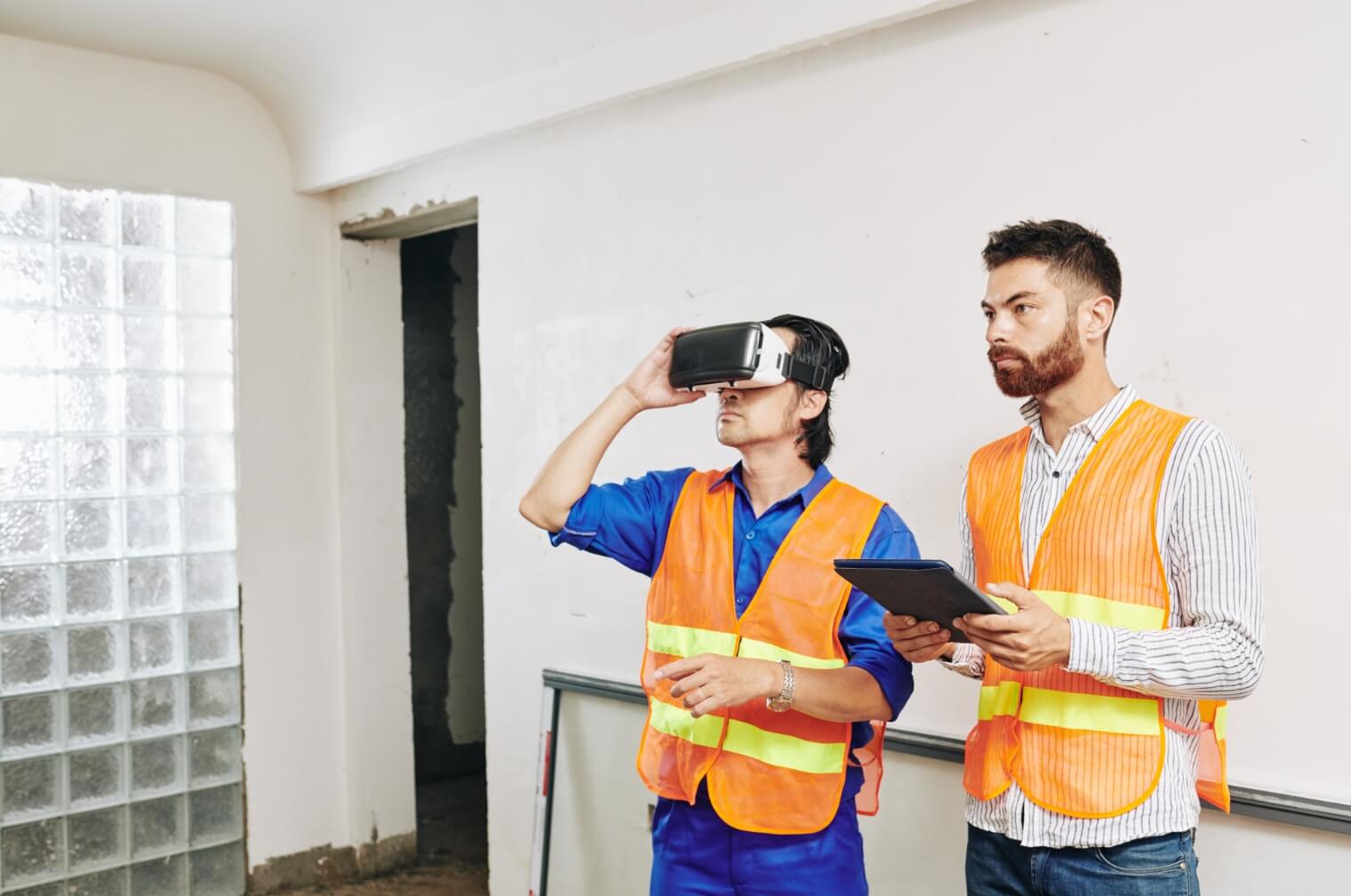
Construction Safety VR Solutions are rapidly transforming the way workers are trained to navigate the perilous world of construction sites.

VR, which stands for Virtual Reality, is a technology that creates an artificial, immersive environment for training purposes.

VR immerses trainees in realistic construction environments, allowing them to learn and practice safety protocols without real-world risks.

By providing a safe and controlled learning environment, VR construction safety solution training addresses the unique challenges of the industry.

Evaluation of VR construction safety solution training programs

Evaluating the effectiveness of Virtual Reality VR safety training Solution programs is a crucial step to ensure that your investment in this innovative technology is delivering the desired results.

Measuring learning outcomes and knowledge retention

Evaluate trainee knowledge by assessing how effectively they apply safety measures in real-world scenarios with VR construction safety solution.

Assessing behavioral change and performance improvement

Look for improved safety behaviors and performance on construction sites, as this indicates the effectiveness of VR construction safety solution.

Analyzing cost savings and efficiency gains

Analyze cost savings related to reduced injuries, accidents, and training expenses, while also measuring efficiency gains.

Reviewing user feedback and satisfaction ratings

User feedback is invaluable. Collect ratings, comments, and suggestions to continually improve VR training programs.

Realism and accuracy

Evaluate the realism and accuracy of the VR simulations in representing construction site scenarios. Assess if the virtual environment accurately reflects potential hazards, site conditions, and safety procedures.

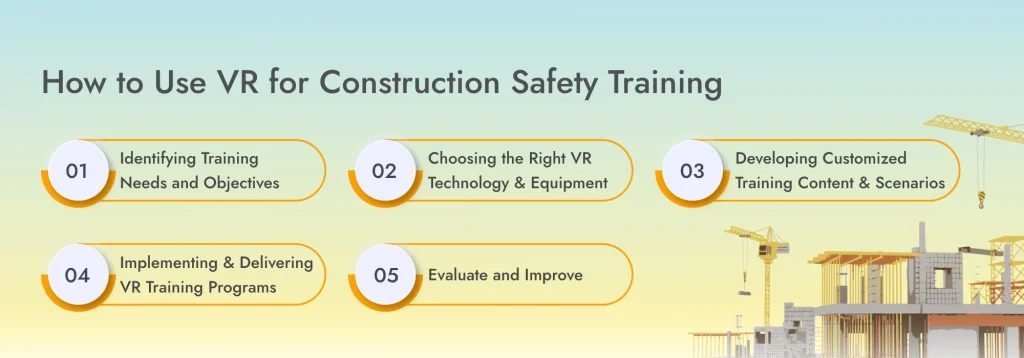
How to use VR for construction safety training

Virtual Reality (VR) has emerged as a game-changing technology for enhancing construction safety training. Here’s a step-by-step guide for Effective VR Training Techniques:

How to Use VR for Construction Safety Training

Identifying training needs and objectives

Before implementing VR training, it’s essential to identify the specific safety training needs and objectives for your construction workforce.

Choosing the right VR technology and equipment

Selecting the appropriate equipment for VR construction safety solution is crucial. Factors like cost, compatibility, and durability should be considered to ensure a seamless training experience.

Developing customized training content and scenarios

Tailoring training content to your construction projects and hazards ensures that trainees receive relevant, scenario-specific training.

Implementing and delivering VR training programs

The successful implementation of VR training involves onboarding, technical support, and training management. A clear delivery plan is crucial for trainees to access the content easily.

Evaluate and improve

Evaluate the effectiveness of the VR training program through ongoing assessment, feedback, and continuous improvement. Use evaluation results to refine the VR content, adjust training objectives, and enhance the overall training program.

Benefits of VR in construction safety training

Ensuring that construction workers are well-trained to handle the difficulties they face on the job site is important. The benefits of VR in construction are listed below.

Enhanced learning and retention

The immersive nature of VR makes training more engaging, resulting in better knowledge retention.

Digital experience services, like VR construction development, allow trainees to experience the consequences of their actions in a safe, virtual environment. This immersive training reinforces the importance of safety procedures in a way that traditional methods cannot.

Realistic and immersive training scenarios

Construction Safety VR Solutions recreates real construction environments, enabling trainees to experience realistic scenarios.

This enhances their preparedness for on-site situations and helps them develop effective safety habits.

Safe and controlled environment for practice

VR allows trainees to make mistakes and learn from them without jeopardizing their safety.

This controlled environment is ideal for mastering complex safety procedures and equipment operation.

Reduced costs and increased efficiency

Traditional safety training often involves expenses like travel, equipment setup, and physical materials.

VR construction development eliminates these costs and increases training efficiency, as it can be accessed from anywhere with compatible equipment.

Customizable training

VR allows for customizable training scenarios based on the specific needs of the trainees.

They can experience different scenarios, hazards, and procedures, allowing them to practice and master skills in a variety of situations.

Developing effective VR construction safety training programs

VR technology is offering a revolutionary approach to safety training. It provides an immersive and interactive learning experience, imitates real hazards, and offers cost-effective and customizable solutions.

With VR construction safety training programs, companies can better protect their workers, reduce incidents, and create a safer working environment.

As technology continues to advance, the construction industry must embrace these innovations to ensure the well-being of its workforce.

ViitorCloud Technologies has expertise in software development and VR application design has allowed our VR Developers to create highly realistic and effective safety training programs for the construction industry.

Conclusion

VR construction safety solution offers a groundbreaking solution to the safety challenges faced by the construction industry.

Implementing VR construction safety solutions will not only improve your workforce’s safety but also your bottom line.

By investing in Construction Safety VR Solutions, we invest in the lives and well-being of our construction workforce, making the future of construction brighter, safer, and more sustainable.

Frequently asked questions

VR can be used to improve construction safety in several ways, including Training workers on safety procedures, Identifying and mitigating hazards, and Improving communication and collaboration.

The cost of VR training for construction can vary depending on a number of factors, including the size and complexity of the training program, the type of VR equipment used, and the experience of the VR training provider.

Some of the best VR training providers for construction include STRIVR, Stantec, VR Training Alliance, HTC VIVE Enterprise, and 360Training.

Some of the benefits of using VR for construction designs are Visualizing designs in 3D, collaborating with stakeholders, Improved communication, and identifying and assessing potential problems.

How VR solutions for supply chain are changing the industry?

In today’s fast-paced and highly competitive business environment, optimizing logistics and supply chain operations is more critical than ever.

Explore the VR solutions for supply chain, examining its definition, benefits, applications, challenges, and real-world case studies.

Virtual Reality Logistics, often referred to as VR Logistics or VR in logistics, is the application of virtual reality technology to streamline and enhance various aspects of supply chain management.

VR solutions for supply chain involve the use of VR headsets and software to create immersive, three-dimensional simulations that mimic real-world logistics scenarios.

What is a virtual reality logistics solution?

A Virtual Reality Logistics development is a comprehensive system that combines VR technology with supply chain management.

It offers a virtual environment that allows users to visualize, interact with, and analyze various logistics processes and scenarios.

Virtual reality logistics solutions use VR headsets and software to create immersive environments that replicate real-world logistics operations.

Users can navigate these virtual spaces, monitor processes, and make informed decisions in real-time.

How VR can optimize logistics and supply chain operations

VR helps businesses optimize logistics and supply chain operations by providing real-time data, creating a collaborative environment, and enabling more accurate planning.

VR solutions for supply chain enhance visibility, reduce errors, and ensure smoother operations throughout the supply chain.

Comparison Between Virtual Reality Logistics Solutions and Traditional Logistics Solutions

VR logistics solutions revolutionize traditional approaches by providing a richer digital experience. Users can navigate virtual warehouses, visualize data in real time, and gain a deeper understanding of their supply chains.

They provide a real-time, 360-degree view of operations, enabling better decision-making and optimization.

Traditional solutions, on the other hand, often rely on static reports and historical data.

Benefits of virtual reality logistics solution

VR solutions for supply chain offer a multitude of benefits that can positively impact various aspects of logistics and supply chain operations.

Improved efficiency in logistics and supply chain operations

One of the primary benefits of Virtual Reality logistics solutions is improved efficiency.

Businesses can monitor and optimize their logistics processes, reducing delays, and ensuring products reach their destinations more quickly.

Enhanced safety in warehouse and transportation management

VR solutions for supply chains can be used to train employees in safe and efficient logistics operations, reducing the risk of accidents and injuries.

It also allows for the simulation of hazardous scenarios without real-world consequences.

Reduced costs in logistics and supply chain operations

By identifying and addressing inefficiencies, Virtual Reality logistics solutions can lead to significant cost reductions in transportation, warehousing, and inventory management.

Better customer experience through improved delivery times

Faster and more accurate deliveries result in improved customer satisfaction, which can lead to increased customer loyalty and positive reviews.

Challenges and limitations of VR solutions for supply chain

While Virtual Reality logistics development offers numerous benefits, they are not without challenges. Some of the key limitations and obstacles include:

  • High Initial Costs: Implementing VR technology can be expensive, including the purchase of VR headsets and software.
  • Complex Integration: Integrating VR logistics solutions into existing systems can be complex and may require specialized IT expertise.
  • User Training: Employees may need training to use VR technology effectively.
  • Data Security: Protecting sensitive supply chain data in a virtual environment is crucial.

Overcoming these challenges involves careful planning, cost-benefit analysis, and the selection of the right technology partners. With proper training and data security measures in place, many businesses successfully implement VR logistics solutions.

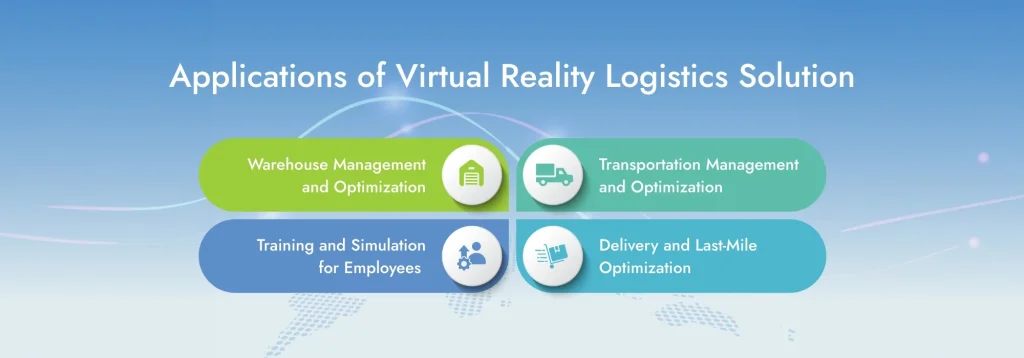
Applications of virtual reality logistics solution

VR solutions for supply chain leverage the immersive and interactive nature to optimize various aspects of the supply chain.

Applications of Virtual Reality Logistics Solution

Warehouse management and optimization

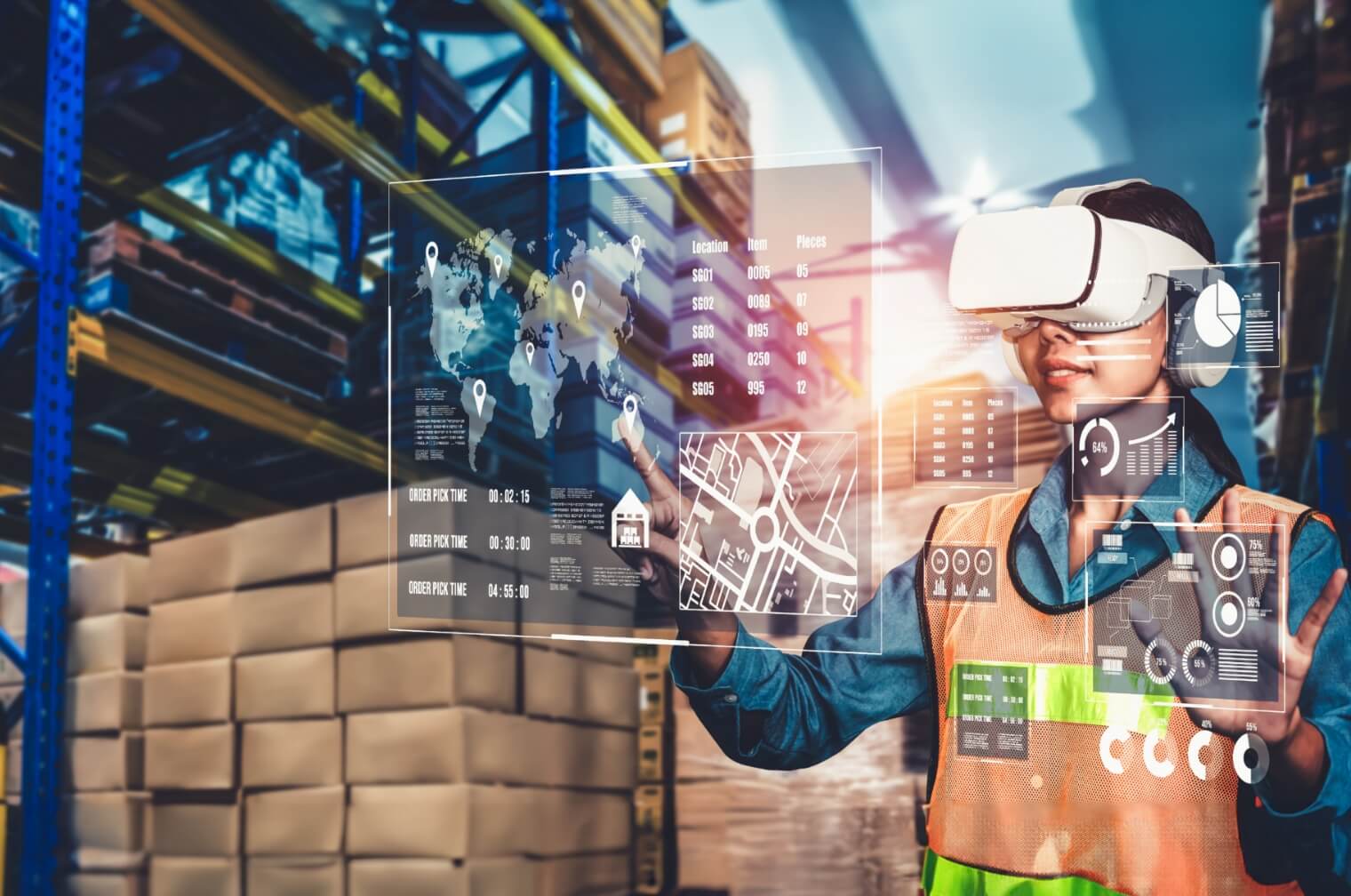
VR logistics solutions can be used to optimize warehouse layouts, track inventory, and improve the efficiency of storage and retrieval processes.

Transportation management and optimization

In transportation, VR can assist in route planning, vehicle tracking, and load optimization, ultimately reducing costs and improving delivery times.

Training and simulation for employees

Virtual reality is a valuable tool for employee training, particularly in safety procedures, equipment operation, and emergency response.

Delivery and last-mile optimization

For last-mile delivery challenges, Virtual reality in logistics can assist in route planning and navigation, ensuring that packages reach their final destinations more efficiently.

Case studies of VR logistics solutions

Examples of Businesses that Have Successfully Implemented Virtual Reality Logistics Development:

  1. Walmart: Walmart employs VR simulations to train its employees in various logistics scenarios, resulting in safer and more efficient operations.
  2. DHL: DHL uses VR to optimize route planning for its delivery trucks, reducing fuel consumption and emissions.
  3. Amazon: Amazon is using VR to simulate the loading and unloading of trucks in its warehouses. This VR simulation helps Amazon to identify and eliminate potential bottlenecks in its order fulfillment process.

These businesses have reported improved efficiency, enhanced safety, cost reductions, and increased customer satisfaction as direct results of implementing VR solutions for supply chain.

Conclusion

Virtual Reality Logistics Solutions have emerged as a powerful tool for optimizing logistics and supply chain operations.

They offer numerous benefits, including enhanced efficiency, safety improvements, cost reductions, and better customer experiences.

By harnessing the power of VR solutions for supply chain, businesses can streamline operations, reduce costs, enhance safety, and improve customer satisfaction.

The world of logistics is evolving, and virtual reality is leading the way. Develop your projects with such immersive technologies.

Frequently asked questions

VR can be utilized for virtual warehouse design and layout planning, allowing companies to optimize space and improve efficiency.

Virtual reality in logistics can streamline training processes, instead of investing in physical training facilities and equipment to save costs.

VR has the potential to greatly improve safety in logistics. By creating virtual environments, workers can undergo safety training in realistic scenarios without being exposed to actual risks.

Virtual reality in logistics enables teams located in different geographical locations to virtually meet and collaborate in real-time, eliminating the need for travel expenses.

How VR safety training can improve the oil and gas industry

In the dynamic and high-risk world of the oil and gas industry, safety is paramount. Workers often face perilous situations, complex machinery, and challenging environments that require rigorous training and preparedness.

Ensuring the well-being of employees is a top priority, and this is where VR Safety Training solution comes into play.

Let’s explore the various facets of VR safety training solutions for the oil and gas sector, its benefits, applications, challenges, and how to develop and implement VR Safety Training app development.

Overview of the oil and gas industry and its safety challenges

Virtual Reality, or VR, is an immersive technology that transports users to computer-generated environments, providing a realistic and interactive experience solution.

It has gained prominence in numerous industries, including healthcare, education, and entertainment.

From drilling rigs to refineries, employees are exposed to potential risks like fires, explosions, toxic gases, and heavy machinery accidents.

However, VR Training for Safety has proven to be a game-changer in the oil and gas sector, where its applications for safety training are transforming the way workers prepare for the challenges they may encounter.

VR Safety Training app development is non-negotiable due to the potential for catastrophic incidents.

Importance of VR in oil and gas safety training

VR technology is addressing the unique safety training needs of the oil and gas industry.

It offers a practical solution to immerse workers in realistic simulations, enabling them to practice and refine their skills without real-world risks.

The importance of VR in this context cannot be overstated, as it enhances safety measures, minimizes accidents, and ultimately saves lives.

Challenges and solutions of VR in oil and gas safety training

Challenges and LimitationsSolutions
Adoption and Implementation BarriersEnhanced Learning and Retention
Technical Challenges and Integration IssuesRealistic and Immersive Training Scenarios
Regulatory Compliance and CertificationSafe and Controlled Environment for Practice
Limited Access to Technology and ResourcesReduced Costs and Increased Efficiency

Real-life example:

There are numerous examples of companies using VR for safety training in the oil and gas industry.

Companies like Shell and BP have implemented VR safety training solution programs, reporting substantial benefits in terms of improved safety records, reduced accidents, and cost savings.

User feedback and satisfaction ratings in these programs have been overwhelmingly positive.

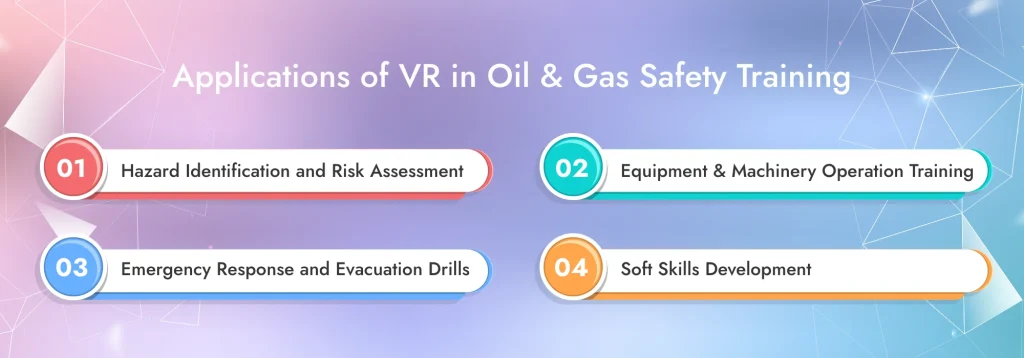
Applications of VR in oil and gas safety training

As we move forward, it is clear that VR has a pivotal role to play in the well-being of the industry and its workers. Some examples of application of VR in Oil and gas safety training are:

Applications of VR in Oil & Gas Safety Training

Hazard identification and risk assessment

VR training for safety enables employees to identify potential hazards and assess risks in a lifelike environment. This empowers them to proactively mitigate dangers, enhancing overall safety.

Equipment and machinery operation training

Operating heavy machinery and equipment in the oil and gas industry demands precision and skill.

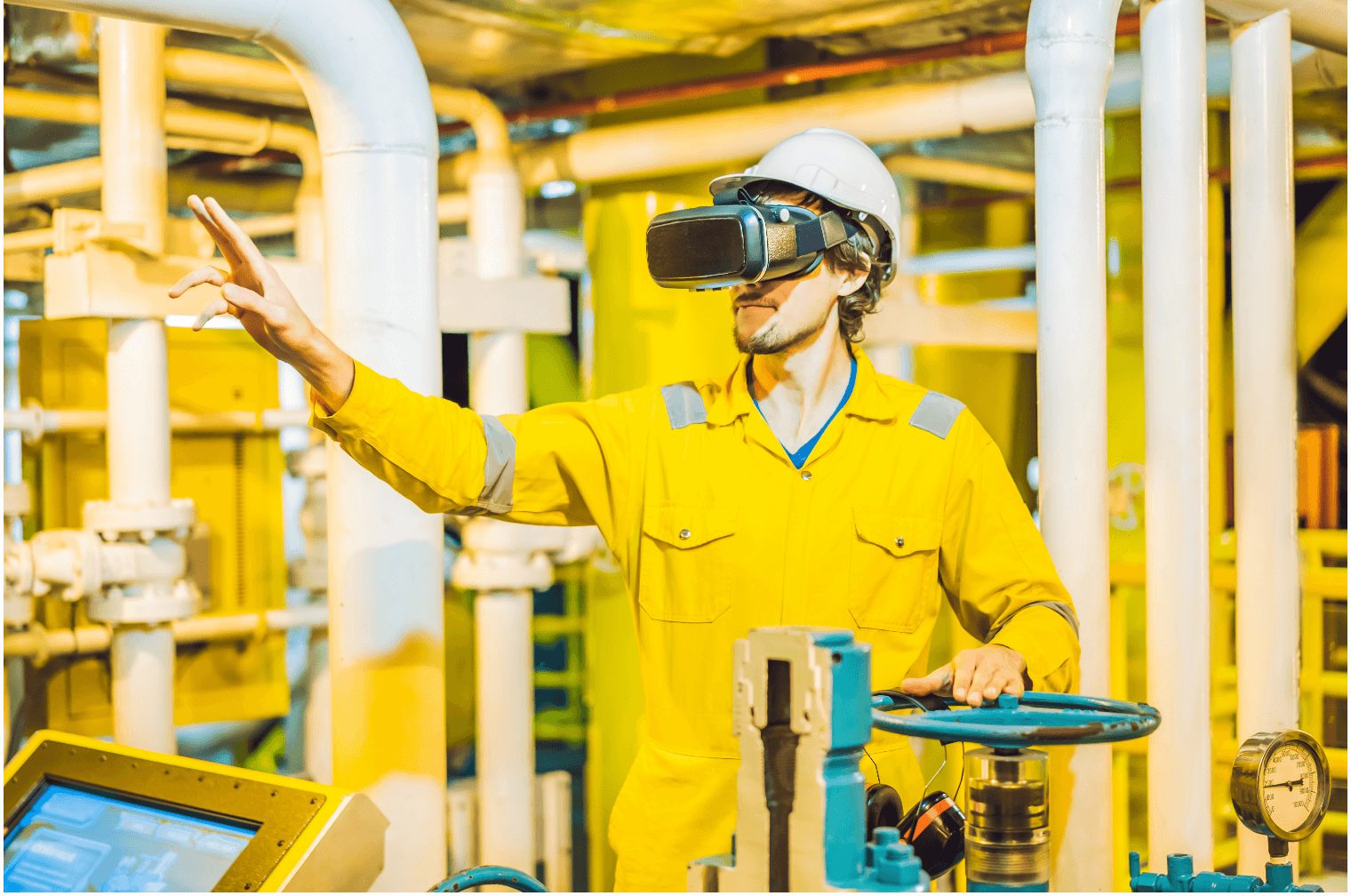
VR simulations allow workers to familiarize themselves with machinery operations without the inherent risks of hands-on training.

Emergency response and evacuation drills

Oil and gas facilities must be prepared for emergency situations.

VR allows for realistic emergency drills, helping employees practice response procedures, evacuation routes, and crisis management.

Soft skills development (communication, leadership, etc.)

In addition to technical skills, soft skills are vital for safety in the industry.

VR can simulate challenging communication and leadership scenarios, helping employees develop the necessary interpersonal skills to manage critical situations effectively.

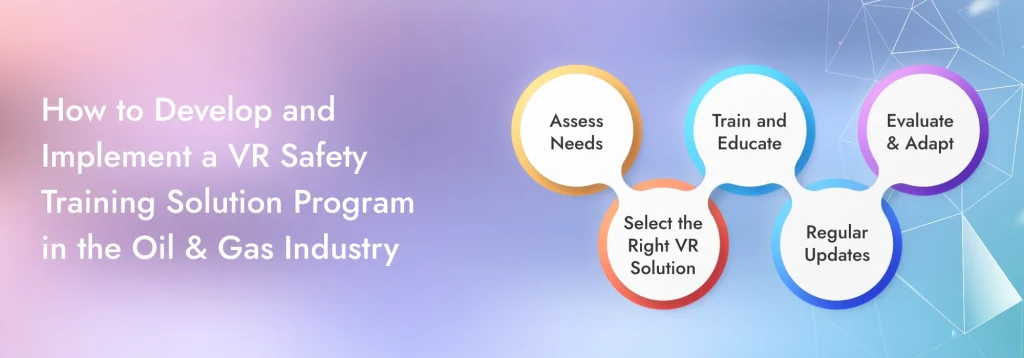
How to develop and implement a VR safety training solution program

To develop and implement a VR safety training solution program in the oil and gas sector, companies should consider the following steps:

How to Develop and Implement a VR Safety Training Solution Program in Oil & Gas Industry
  • Assess Needs: Identify specific safety training requirements and areas where VR can make the most impact.
  • Select the Right VR Solution: Choose or develop VR training programs that cater to your industry’s specific needs.
  • Train and Educate: Provide comprehensive training for employees, ensuring they are comfortable using VR technology.
  • Regular Updates: Keep VR simulations and training materials up to date to reflect industry changes and emerging risks.
  • Evaluate and Adapt: Continuously assess the effectiveness of VR training, gather feedback, and make necessary adjustments for improvement.

Conclusion

VR is revolutionizing safety training in the oil and gas industry. The benefits are clear, from enhanced learning and risk reduction to improved efficiency and cost savings.

While there are challenges to overcome, the future of VR Safety Training app development in oil and gas safety training is promising.

VR Safety Training Solutions, VR for Safe Work Environments, and VR for oil and gas safety training are no longer just catchphrases; they are vital tools for enhancing safety and protecting lives in this high-risk industry.

Embracing this technology is not just a choice; it’s a responsibility.

Frequently asked questions

VR enhances oil and gas safety by offering immersive, risk-free training scenarios that prepare workers for real-world challenges.

VR can prevent falls in oil and gas by simulating working at heights and helping workers practice safety measures in a safe, virtual environment.

Leading VR safety training solution providers for oil and gas include Honeywell, EON Reality, and Strivr for their tailored safety programs.

Virtual reality is used in safety training by creating lifelike simulations for hazard identification, equipment operation, and emergency response.

How extended reality manufacturing solutions changing the industry?

In the ever-evolving landscape of manufacturing, staying ahead of the competition and optimizing processes is vital.

Extended Reality (XR), a revolutionary technology, is paving the way for a transformative shift in the manufacturing industry.

This comprehensive guide is tailored for manufacturing professionals, including engineers, designers, production managers, and C-suite executives.

We will explore Extended Reality Manufacturing Solutions in the industry, along with applications, benefits, development, real-world examples, and best practices for successful implementation.

What is extended reality (XR)?

Extended Reality, commonly referred to as XR, is a broad term that includes various immersive technologies designed to merge the real world with the virtual one.

XR includes Augmented Reality (AR), Virtual Reality (VR), and Mixed Reality (MR).

These digital experience solutions offer distinctive interactions merging physical settings with digital components, presenting users with fresh perspectives and engagement opportunities in their environment.

Augmented reality (AR)

AR enhances the real-world environment by overlaying digital information. For instance, AR can project assembly instructions onto a physical product, aiding workers in the manufacturing process.

Virtual reality (VR)

VR immerses users in a completely digital environment. It is often used for training and simulations, allowing employees to practice complex tasks without real-world consequences.

Mixed reality (MR)

MR combines aspects of both AR and VR, enabling the interaction of digital and physical objects. It is particularly useful for visualizing and inspecting products in real-time.

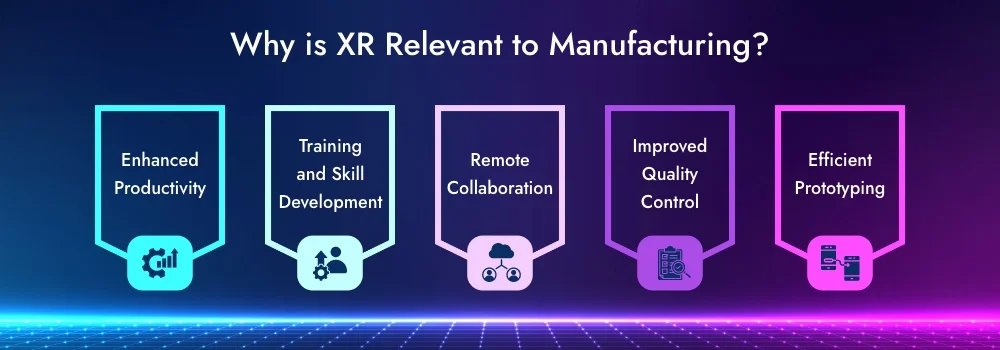
Why is XR relevant to manufacturing?

Extended reality manufacturing app development has become relevant for several compelling reasons:

XR Benefits in the Industry are spreading widely. With the below-listed XR Benefits for Manufacturers, the industry is growing rapidly by implementing XR.

Why is XR Relevant to Manufacturing
  • Enhanced Productivity: XR technologies streamline processes, reduce errors, and enhance productivity on the factory floor.
  • Training and Skill Development: XR provides a safe and cost-effective environment for training employees, especially in high-risk industries.
  • Remote Collaboration: XR enables experts to provide remote assistance, reducing downtime and minimizing travel costs.
  • Improved Quality Control: XR aids in identifying defects, and ensuring products meet stringent quality standards.
  • Efficient Prototyping: XR facilitates the rapid development and testing of prototypes, saving time and resources.

XR applications in manufacturing

Extended Reality Manufacturing Solutions is becoming a versatile tool. Some of the applications are as follows:

Product design and prototyping

Manufacturers can create and manipulate 3D prototypes, allowing for more efficient and accurate design iterations.

Virtual training and simulation

XR provides a safe environment for employees to train and simulate complex tasks, reducing the risk of accidents and errors.

Remote inspection and maintenance

Technicians can remotely inspect and maintain complex machinery, reducing downtime and improving maintenance efficiency.

Quality control and assurance

XR technologies help in identifying defects and ensuring products meet the highest quality standards.

Process optimization

Manufacturers can use XR to visualize and optimize production processes, reducing waste and improving efficiency.

Supply chain management

XR assists in tracking inventory and managing the supply chain more efficiently, ensuring products reach customers on time.

Extended reality manufacturing solutions development

Implementing extended reality manufacturing solutions is developing a structured approach:

Identify your needs and goals

Begin by identifying the specific areas in your manufacturing process that can benefit from XR. Set clear goals to measure the success of the implementation.

Choose the right XR technology for your application

Select the most suitable XR technology—AR, VR, or MR—based on the requirements of your application.

Develop or select an XR solution

Depending on the complexity of your needs, you can either develop a custom XR solution or choose from existing ones.

Integrate the XR solution into your manufacturing workflow

Ensure a seamless integration of XR into your existing processes, considering hardware, software, and user interfaces.

Train your employees to use the XR solution

Comprehensive training is crucial for the successful adoption of XR technology. Provide hands-on training to ensure your employees are comfortable with the new tools.

ViitorCloud uses Extended Reality to develop customized solutions according to your requirements.

Extended reality manufacturing solutions examples

Real-world examples of Extended Reality Manufacturing solutions are given below:

  • Boeing employs AR glasses to guide workers through the intricate process of assembling aircraft wiring, reducing errors and improving efficiency.
  • BMW utilizes VR simulations to train employees in complex production processes, ensuring they are well-prepared for real-world tasks.
  • Siemens employs AR technology to guide technicians in maintaining complex machinery, reducing downtime and saving on travel costs.
  • Ford utilizes MR to allow workers to visualize and inspect products in real-time, improving quality control and reducing errors.

Best Practices for implementing XR manufacturing solutions

Extended reality manufacturing solutions are transforming the industry. These technologies offer innovative solutions that improve efficiency, safety, and productivity.

ViitorCloud helps in the successful implementation of XR manufacturing solutions which requires careful planning and process to best practices.

Here are some key guidelines for a successful XR integration in manufacturing:

Start small and scale up gradually

Begin with pilot projects in specific areas of your manufacturing process. Once proven successful, expand XR implementation to other areas.

Get buy-in from employees and stakeholders

Involve employees and key stakeholders in the decision-making process to ensure support and enthusiasm for XR adoption.

Provide adequate training

Invest in comprehensive training programs to equip your workforce with the skills needed to effectively use XR technology.

Measure and track results

Continuously monitor the impact of XR in Smart Factories, on your manufacturing processes, and optimize performance.

Conclusion

The future of Extended Reality in manufacturing is promising. XR technologies offer innovative solutions to enhance productivity, improve quality control, and provide cost-effective training.

As manufacturing professionals, embracing XR can revolutionize your operations, keeping you at the forefront of the industry’s evolution.

Develop your projects with extended reality manufacturing solutions, because it’s not just a trend, it is here to stay.

Frequently asked questions

How to implement XR in manufacturing?

Implementing Extended Reality Manufacturing solutions involves defining needs, selecting the right technology, integrating it into workflows, and providing thorough employee training.

How does XR improve manufacturing productivity?

XR improves manufacturing productivity through streamlined processes, reduced errors, and efficient training, leading to enhanced efficiency on the factory floor.

How does XR reduce manufacturing costs?

XR reduces manufacturing costs by minimizing the need for physical prototypes, enabling remote maintenance, and lowering travel expenses through remote collaboration.

How could the manufacturing sector utilize extended reality?

The manufacturing sector can utilize extended reality for product design, training, remote collaboration, quality control, and supply chain management, among other applications.

What are some use cases of XR in manufacturing?

Some use cases of XR in manufacturing include AR-guided assembly, VR-based training simulations, MR-enhanced inspections, and AR-driven quality control.

How extended reality has reshaped the modern world

Based on the exponential rate at which technology advances, it is not difficult to picture what life will be like in ten years. Compared to the previous ten years, the globe would be radically different. All were owing to the smartphone applications, AI, and AR/VR technology that has emerged in the last ten years. But what is more recent and can transform current businesses? Extended Reality Technology (XR) is the solution. Extended Reality (XR) encompasses various distinct sorts of technological breakthroughs.

What is extended reality?

Extended Reality is a brave new frontier in technology and human connection. Augmented Reality, Virtual Reality, and Mixed Reality are all examples of extended Reality. Extended Reality is abbreviated as XR, where X is a variable that can be replaced with any of the letters A, V, or M. Extended Reality is defined as the use of immersive technology to expand Reality and merge the virtual and physical worlds.

Augmented reality: (AR)

AR app creation integrates the user’s physical environment with the digital world, enriching the real world with digital features such as words, photos, and animation. AR glasses, smartphones, and tablets might be used to experience it. For example, Pokemon Go is a game that overlays digital animals into the actual environment, while Snapchat filters add digital overlays to your photos, such as a hat or a drink.

Virtual reality (VR):

app creation integrates the user’s physical environment with the digital world, enriching the real world with digital features such as words, photos, and animation. AR glasses, smartphones, and tablets might be used to experience it. For example, Pokemon Go is a game that overlays digital animals into the actual environment, while Snapchat filters add digital overlays to your photos, such as a hat or a drink.

Mixed reality (MR):

MR Merges the real and digital worlds to create a single environment where individuals can communicate and interact in real-time. This was sensed using MR headsets. For example, Microsoft HoloLens, an MR headset, allows us to position a digital item and interact with it in an organized manner.

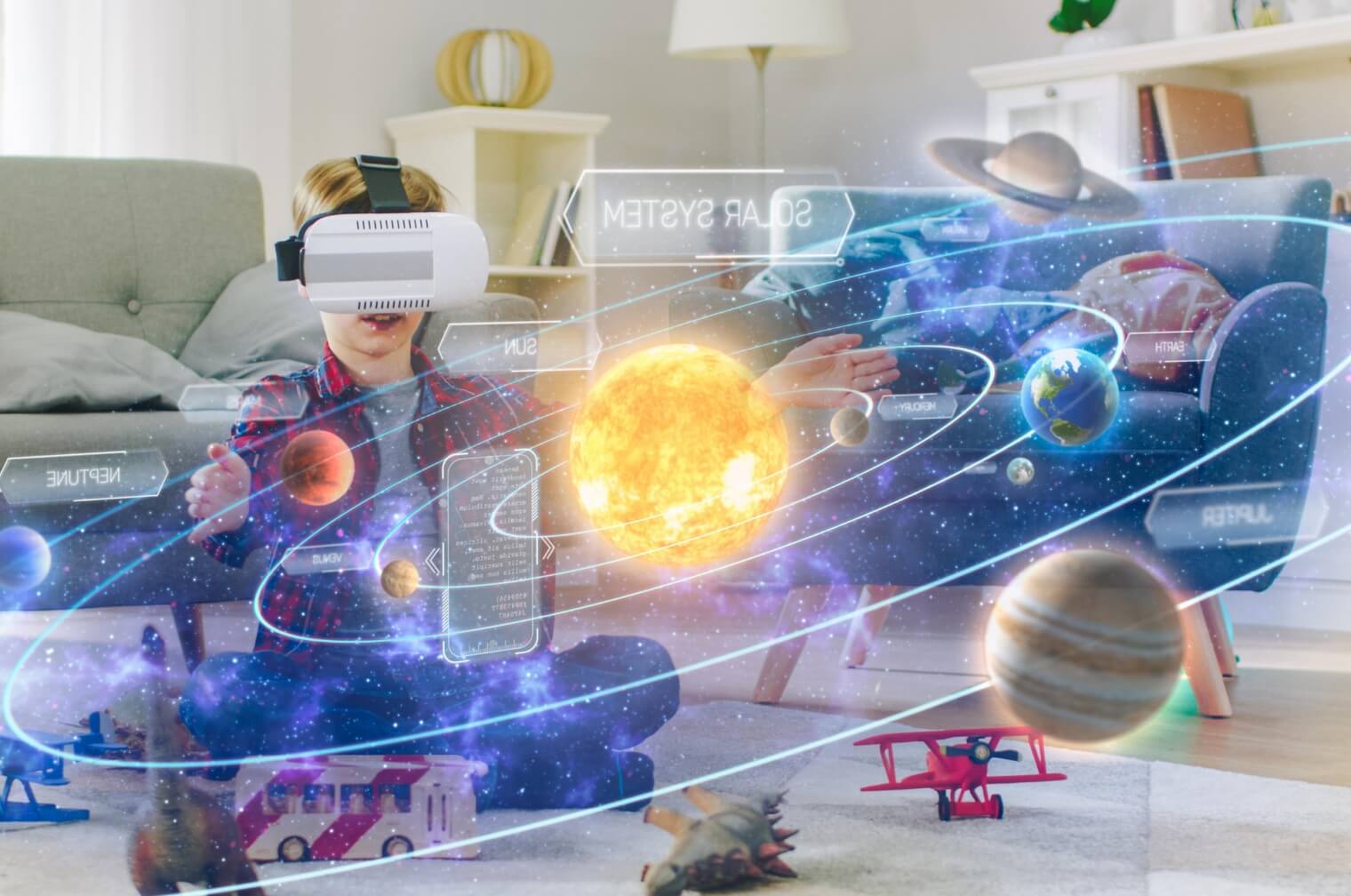
image

How did augmented reality change the world?

Let us analyze sector-wise as they benefit from XR.

Education and training:

This sector utilizes XR solutions most beneficially. NASA is vigorously trying to experiment with XR to train its employees in space station repair & maintenance.

Retail sector:

This industry is becoming more innovative by allowing people to test products before purchasing them. One of the leading watchmakers globally, Rolex, has embraced AR tech to deliver its clients the luxury of trying out virtual watches on their wrists.

Marketing:

This is another industry impacted by VR technology. Thanks to highly developed immersive marketing methods, customers may try out items and services in the virtual world.

Real estate:

XR technologies let realtors send property purchasers on virtual tours, allowing them to explore the properties without physically visiting the location. Prospective tenants or purchasers may virtually explore multiple sites in a matter of hours and decide which ones are worth seeing in person.

Entertainment:

This sector benefits XR technology by engaging with the audience by providing almost real experiences. For example, Tread water comic book series owners released an AR mobile app that enables readers to engage with characters on pages of the Tread water graphic novel in hard copies.

What are the advantages of extended reality?

Many businesses have tested extended reality, from healthcare to on-the-job training. In-person visits and telehealth exchanges that take place through an internet connection and virtual reality can assist foster a stronger physician-patient relationship. Firefighters, cops, and soldiers are all employees that may benefit from virtual reality training to rehearse emergency procedures and learn the pros and cons in a risk-free virtual environment. The entertainment environment as we know it is shifting, and producers, engineers, and film studios are taking notice. 66% of customers are interested in VR for TV, movies, and video, indicating the potential for commercial VR growth as the technology becomes more affordable.

Conclusion

As XR technology becomes more sophisticated and prevalent, it will undoubtedly influence many more sectors. How virtual reality has changed the world can be measured by the fact that the XR industry is predicted to grow to more than $9 billion by 2025, with HP leading the way. You might only think about extended reality (XR) as it applies to games. While it is true that this novel technology provides a tremendously immersive digital experience that pushes the boundaries of the gaming medium, XR has enormous promise in a variety of other sectors.

What is virtual reality and how does it work?

Virtual Reality is the future of technology with widespread applications. In simple terms, it is an immersive, simulated, real-life visual experience which utilizes a 3D environment so that the user can interact and explore the computer-generated world. It uses electronic devices such as a Virtual Reality headset or helmet to make the user feel that the objects in his or her vision is real.

Types of virtual reality:

They are mainly: non-immersive- where the user is still in control of the physical environment, semi-immersive- which provides a partially virtual environment, and fully-immersive simulations- which is the most realistic with the entire sound and sight package.

Applications of VR

The first VR head-mounted display in history emerged in the 1960s called the Sensorama by Morton Heilig which gave a bike ride digital experience on the Brooklyn streets. Jaron Lanier, founder of the Visual Programming Lab coined the term ‘Virtual Reality’.

Since then, VR has expanded its horizons to find usage in varying industries such as entertainment for immersive games, medical- for pain management and treatment of PTSD, advertising and even the military to simulate training situations for soldiers.

Advantages

It creates a realistic world, enables exploring places, makes education easier, can be used for corporate trainings and business marketing. Examples- Try before you buy such as Lacoste shoe trials and Volvo test drives.

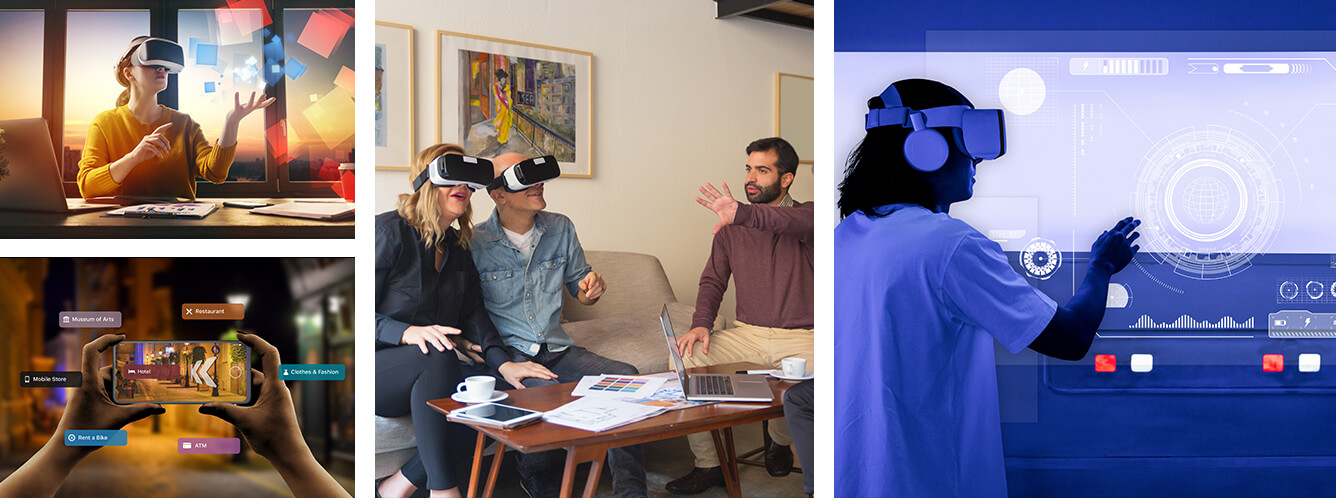
image

How does VR work?

The working of Virtual Reality depends on its VR headsets, a set of controllers and other components as extrapolated below:

  1. Technology: The devices use the computer vision technology to interpret videos and images using the surrounding visuals and location, such as those used in computing devices and mobile phones. Cameras utilize blob and edge detection or a combination of scale and template matching to make the user visualize the environment. Along with advanced cameras, high-end technologies such as Big Data, Artificial Intelligence and processing units are also used. It does not always require the internet but you need to be online to set up the VR headset, update the system or play games.
  2. Lenses:Different elements and devices serve important purposes such as the VR headset which puts a screen in front of the eyes of the user which blocks the connect with the real world and makes the experience more immersive. The screen and each eye are separated with an autofocus lens which are adjusted according to the eye positioning and movements which aids in movement tracking with respect to the display. These devices are connected to a CPU or mobile unit which transmit the visuals to the eyes via the headset lenses. The lenses play an important role as they convert the image from the flat screen into a 3D picture which is based on the type and angle of lenses within the headset. These lenses merge the two individual images into the perfect shape for our eyes to perceive it like the actual world. In reality, one can see the objects moving back and forth upon closing an eye. This makes the 3D experience more realistic and multi-dimensional.
  3. 6DOF: A sensory system – 6DOF or also known as six degrees of freedom enables the process of head tracking in VR headsets which have embedded sensors in them. This technique plots one’s head in an XYZ plane and analyses the varied possible head movements. Accelerometers, gyroscopes and magnetometers are the sensors which make 6DOF effective.
  4. Audio-system: Along with VR hardware and software devices, the audio system also becomes an essential aspect where integrated headphones are used to provide positional audio which provides a multi-dimensional sound effect by also blocking the outside noise.
  5. Types of VR Headsets: The computer can be connected to the headset using an HDMI cable but latest technology has eliminated the need for connecting cables such as in VR gaming arenas. Thus, there are tethered and wireless options today with both cheap- Google carboard and expensive options. Playstation VR, HTC Vive and Oculus Rift are the most common personal computer based options whereas Samsung Gear VR and Google Cardboard both work by utilizing a smartphone. Oculus Go and the Daydream headset are the Standalone VR options which means that only a headset is required and no additional computer or mobile phone is needed.

Other components

A number of components are involved in improving the visual quality and upgradation of technology such as frame rate, screen refresh rate and field on view. The FOV or field of view is the extent of area which can be seen by the user. A human’s normal visual angle is around 220° and the display supports movement of the eyes and head up to this natural degree. Thus, the feeding of accurate information becomes important as an incorrect FOV can cause dizziness. The impressive aspect is that it allows you to feel and look around 360 degrees which is possible due to a combination of sensors and software.

The speed of displaying the images depends on the screen refresh rate whereas the rate at which the GPU processes images per second is called the frame rate. Minimum latency or lag is desirable depending on the refresh rate such that the visuals seem real with changes in the head movements. Thus, all these components balanced together create a near-perfect VR experience. A field of view of around 200, frame rate of 90 fps, a refresh rate of 90 Hz and maximum lag of 10 milliseconds provides the best virtual reality environment with minimum disorientation, nausea and side effects.

Conclusion

Virtual reality has been projected to be the technology with the highest growth potential in the coming years. Getting into VR is definitely worth it. Almost all countries are devising a VR and AR technology and investment in it is predicted to multiply with the global virtual reality market reaching $34 billion by 2023. VR has varied applications and now, Metaverse is no longer just fiction, thanks to VR.