Top 5 Azure Cognitive Services for Building Intelligent Apps

Azure Cognitive Services is a suite of AI tools provided by Microsoft. It is designed to help developers create intelligent applications with minimal effort. Azure services offer pre-built APIs that can handle complex tasks such as language understanding, vision recognition, speech processing, and decision-making. It allows developers to integrate powerful AI capabilities in their applications without the need for deep AI expertise. According to Microsoft, over 1 million developers already used Azure Cognitive Services which makes it a trusted choice for businesses worldwide.

Azure Cognitive Services: An Overview

What is Azure Cognitive Services?

Azure Cognitive Services is a collection of AI tools and APIs provided by Microsoft. It allows developers to integrate intelligent features into their applications. Azure Services covers a wide range of functionalities which includes computer vision, natural language processing, and speech recognition. The core purpose of Microsoft Cognitive Services is to simplify the implementation of advanced AI capabilities. It makes it easy for businesses to create applications that can understand, interpret, and respond to human input meaningfully.

Core Purpose and Functions

Azure Cognitive Services offer pre-built models and algorithms that perform tasks such as:

  • Computer Vision: It analyzes and interprets visual data such as identifying objects, reading text, and recognizing faces in images.
  • Natural Language Processing (NLP): It understands and generates human language, allowing features like sentiment analysis, language translation, and text extraction.
  • Speech Recognition: It can convert spoken language into text and understand spoken commands that support voice-controlled applications.
  • Decision Making: It provides insights and recommendations based on data, such as anomaly detection and personalized recommendations.

Key Benefits of Azure Cognitive Services

  1. Enhanced Application Intelligence: Azure Cognitive Services allows developers to create smarter applications that can analyze and respond to user input with greater accuracy. This results in more interactive and engaging user experiences.
  2. Faster Time-to-Market: Pre-built models and APIs allow developers to speed up the development process which eliminates the need to build and train custom AI models. This helps bring products to the market faster.
  3. Cost Efficiency: Integrating these services can be more cost-effective compared to developing AI capabilities in-house. Azure’s scalable solutions allow businesses to pay only for what they use, reducing overall costs.
  4. Ease of Integration: Azure Cognitive Services are designed to be easily integrated into existing applications through simple APIs. This easy integration allows businesses with limited AI expertise to use advanced AI features.
  5. Scalability and Reliability: As part of Microsoft Azure Cognitive Services, these services benefit from the cloud platform’s scalability and reliability. Applications can handle varying workloads and stay operational with minimal maintenance.

Implement intelligent solutions that transform your business. Explore how ViitorCloud helps you harness Azure Cognitive Services for building intelligent apps today.

Top 5 Azure Cognitive Services

Azure Cognitive Services is a collection of cloud-based APIs that allow developers to easily add intelligent capabilities to their applications. Let’s explore the top 5 Microsoft Azure Cognitive Services that can help you to build powerful intelligent apps.

1. Vision

The Microsoft Azure Computer Vision in Cognitive Services allows your apps to interpret and understand visual data.

Key services include:

  • Computer Vision: Analyze images to identify objects, detect faces, and read text.
  • Face API: Detects, recognizes, and analyzes human faces in images.
  • Video Indexer: Extract insights like keywords, labels, and transcripts from videos.

2. Speech

The Azure Speech services allow your apps to recognize, synthesize, and translate speech in real time.

Services include:

  • Speech to Text: Transcribes audio to text in over 80 languages.
  • Text to Speech: Converts text to human-like speech in many languages.
  • Speech Translation: Translates speech to text in multiple languages.

3. Language

The Language services allow your apps to understand and respond to human language.

Key services are:

  • Language Understanding (LUIS): Adds language understanding to apps.
  • Text Analytics: Extracts insights like sentiment, key phrases, and language from text.
  • Translator Text: Translates text across 70+ languages.

4. Knowledge

The Knowledge services help you build knowledge-based apps and services:

  • QnA Maker: Creates a conversational question-and-answer layer over your data.
  • Content Moderator: Moderates text, images, and videos for adult or offensive content.
  • Academic Knowledge: Provides an API to the Microsoft Academic Graph.

5. Decision

The Decision services allow your apps to make intelligent choices:

  • Personalizer: Optimizes content and experiences based on user preferences.
  • Anomaly Detector: Detects anomalies in time series data.
  • Metrics Advisor: Monitors and diagnoses issues in time series data.

Azure Cognitive Services simplifies adding state-of-the-art AI capabilities to your applications with minimal code. These services enable you to build intelligent apps that can see, hear, speak, understand, and make decisions.

Enhance user experiences and drive innovation. Let ViitorCloud guide you in leveraging Azure Cognitive Services for building intelligent apps.

Azure Cognitive Services Use Cases

Azure Cognitive Services offers a wide range of functionalities that can be applied across various industries and applications. Let’s explore some detailed use cases showing how organizations use these services to enhance their operations and improve customer experiences.

1. Healthcare

  • Medical Imaging Analysis: Azure’s Computer Vision can analyze medical images to assist in diagnosing conditions. For instance, it can identify tumors in X-rays or MRIs, helping radiologists make quicker and more accurate decisions.
  • Speech Recognition for Patient Interaction: Speech-to-text services can transcribe doctor-patient conversations, allowing healthcare providers to focus on patient care rather than note-taking. This can also facilitate better documentation and compliance.

2. Retail and eCommerce

  • Personalized Shopping Experiences: Retailers can use the Personalizer service to recommend products based on user behavior and preferences, enhancing customer engagement and increasing sales.
  • Visual Search: Integrating the Computer Vision API enables eCommerce platforms to support image uploads for products customers want to buy, providing visual search capabilities that match the uploaded image with the available inventory.

3. Finance

  • Fraud Detection: Financial institutions can utilize anomaly detection services to monitor transactions in real time, identifying suspicious activities that may indicate fraud.
  • Customer Support Automation: Chatbots powered by Language Understanding (LUIS) can handle customer inquiries, providing instant responses to common questions and freeing up human agents for more complex issues.

4. Education

  • Interactive Learning Tools: Educational apps use Speech services to convert text to speech, making learning materials more accessible to students with visual impairments or reading difficulties.
  • Sentiment Analysis for Feedback: Text Analytics can be employed to analyze student feedback, allowing educators to gauge sentiment and improve course offerings based on student experiences.

5. Manufacturing

  • Predictive Maintenance: Analyzing sensor data with Decision services helps manufacturers predict equipment failures before they occur, reducing downtime and maintenance costs.
  • Quality Control: Computer Vision identifies defects in products on production lines, maintaining quality control and meeting standards.

6. Smart Cities

  • Traffic Management: Azure Cognitive Services can analyze video feeds from traffic cameras to monitor congestion and optimize traffic light patterns in real time, improving urban mobility.
  • Public Safety: Facial recognition capabilities can enhance security in public spaces by identifying persons of interest or tracking missing individuals.

7. Agriculture

  • Crop Monitoring: Farmers can use Computer Vision to analyze drone imagery of their fields, identifying areas that require attention, such as pest infestations or water shortages.
  • Yield Prediction: Machine learning models can be trained using historical data to predict crop yields, helping farmers make informed decisions about planting and harvesting.

8. Media and Entertainment

  • Content Moderation: Media platforms can utilize the Content Moderator service to automatically filter out inappropriate content, ensuring a safe environment for users.
  • Automatic Subtitling and Translation: Speech services can be used to generate subtitles for videos in multiple languages, making content accessible to a broader audience.

9. Travel and Hospitality

  • Real-time Translation: Travel apps can integrate Translator Text to provide real-time translation of menus, signs, and other materials, enhancing the travel experience for international visitors.
  • Personalized Recommendations: Personalizer helps travel platforms suggest personalized itineraries based on user preferences and past behavior, improving customer satisfaction.

10. Human Resources

  • Resume Screening: Text Analytics can help HR departments analyze resumes and identify the best candidates based on specific criteria, streamlining the recruitment process.
  • Employee Sentiment Analysis: Organizations can use sentiment analysis to gauge employee satisfaction through feedback surveys, helping to address issues proactively.

Integrate advanced AI capabilities into your business apps effortlessly. Partner with ViitorCloud to implement Azure Cognitive Services for building intelligent apps.

Success Stories of Companies Using Azure Cognitive Services

Numerous organizations across various industries have successfully implemented Azure Cognitive Services to enhance their operations, improve customer engagement, and drive innovation.

Let’s explore some notable success stories:

Spotify utilized Azure’s Speech Service to enhance its Soundtrap for Storytellers application. This integration allows content creators to auto-transcribe their audio tracks, streamlining the podcast editing process by enabling editing directly within the transcribed document.

Airbus uses Azure Cognitive Services, specifically the Anomaly Detector, to provide predictive maintenance for its mixed aircraft fleets. This approach helps the company address aircraft maintenance challenges more efficiently, improving operational reliability.

In the insurance sector, Nationwide developed a bot named NOVA using Azure Bot Service. This bot handles approximately 25,000 interactions monthly, assisting customers with loss claims, frequently asked questions, and password resets, which allows call center agents to focus on more complex inquiries.

Caesars Entertainment employs Azure Bot Service to deploy a text message bot that answers customer inquiries. This implementation has improved customer service efficiency across its various brands, including Harrah’s and Horseshoe.

This Canadian automotive marketplace uses Azure Cognitive Search to improve its search capabilities, launching a dealer-to-dealer auction site. The service enhances the search experience for consumers and provides better services across devices.

The Atlantic has adopted Azure Cognitive Search to digitize and catalog its 160 years of published history. This transition allows for public exploration of its archives and provides a resource for writers to connect stories and enrich their content.

Lexmark uses Azure Machine Learning to analyze data from millions of IoT-enabled printers, facilitating predictive diagnostics and improving business decision-making processes.

Schneider Electric uses Azure Machine Learning to significantly reduce the time needed to identify appropriate predictive maintenance models from one month to just one day, enhancing operational efficiency and safety.

Stay ahead in the digital age by implementing intelligent features. ViitorCloud helps you utilize Azure Cognitive Services for building intelligent apps.

Conclusion

Azure Cognitive Services provides powerful AI capabilities that transform businesses across industries. These AI-driven solutions enhance customer experiences through personalized recommendations and improve operational efficiency with predictive maintenance. Organizations use these intelligent tools to innovate faster and smarter, without needing deep AI expertise, thanks to Microsoft’s scalable, pre-built APIs.

Enhance your business with advanced AI today. ViitorCloud Technologies helps bring Azure Cognitive Services into your applications. Reach out to ViitorCloud and start improving your business with smart AI solutions!

Frequently Asked Questions

To leverage each service effectively, understand the specific capabilities of each API, integrate them into your applications based on your business needs, and continuously monitor their performance for optimization.

Industries such as healthcare, finance, retail, education, and manufacturing can greatly benefit from the capabilities of Azure Cognitive Services to enhance their operations and customer experiences.

The cost varies based on the specific services used and the volume of requests. Azure offers a pay-as-you-go model, allowing you to only pay for what you use after the free trial.

Maximize utilization by combining multiple services for enhanced functionalities, regularly updating your applications, and utilizing Azure’s monitoring tools to analyze usage patterns and optimize performance.

ViitorCloud Technologies offers expert guidance in integrating Microsoft Azure Cognitive Services into your applications, ensuring optimal setup, customization, and ongoing support specified to your business needs.

How AI is Helping IT Companies to Improve Efficiency and Reduce Costs

In today’s fiercely competitive landscape, adopting cutting-edge technology is no longer optional—it’s essential. ViitorCloud is here to help your business achieve unparalleled efficiency and significant cost savings through Cost Optimization in IT with Artificial Intelligence.

AI is at the forefront of this transformation, offering powerful tools to enhance your operational effectiveness while slashing expenses. With ViitorCloud’s AI Development Services, we harness the potential of Machine Learning (ML), Natural Language Processing (NLP), and Intelligent Process Automation (IPA) to drive your business forward.

Our tailored AI Solutions empower you to automate critical activities, improve decision-making, and streamline operations, resulting in remarkable cost savings. Choose ViitorCloud to navigate this technological revolution and achieve your Information Technology business goals.

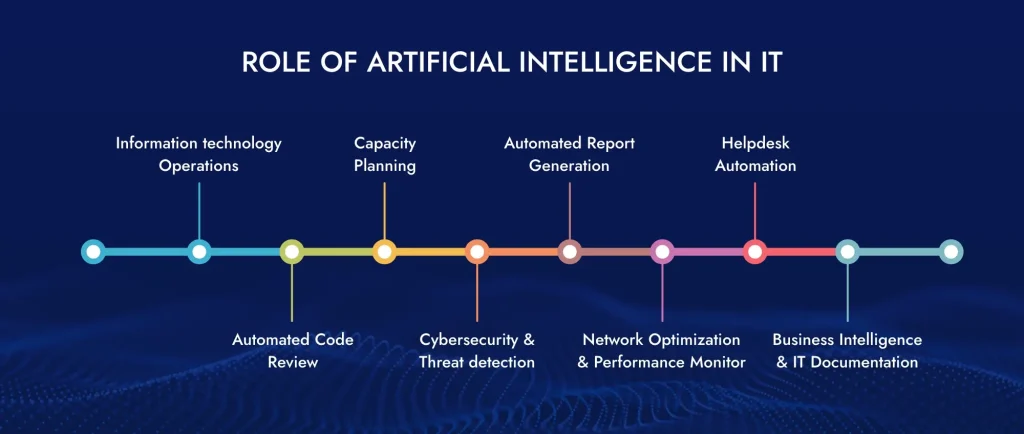
The Role of Artificial Intelligence in Information Technology

Artificial Intelligence has brought exceptional efficacy and innovation in the information technology sector.

Let’s check out how cost optimization in IT with Artificial Intelligence operates:

The Role of Artificial Intelligence in Information Technology

1. IT Operations

By analyzing real-time data from various sources, AI optimizes system reliability, performance in IT operations, and resource allocation. It forecasts issues, automatically allocates resources, and identifies optimization opportunities across on-premises and cloud environments.

By automating routine tasks AI minimizes downtime and reduces operational expenses.

2. Automated Code Review

Automated code review tools using artificial intelligence examine software codebase, identifying possible bugs, security vulnerabilities, or deviations from coding standards.

This proactive approach improves software development quality by dealing with potential risks early, resulting in a more secure, reliable, and maintainable codebase.

Through swift feedback provision showing areas for enhancement, AI-driven code review tools expedite the software development life cycle.

3. Capacity Planning

AI algorithms play a crucial role in capacity planning by analyzing historical data or usage patterns that forecast future resource requirements. This capability enables IT professionals to strategically plan their infrastructure upgrades to ensure the optimal allocation of resources required for present and future needs.

These algorithms help organizations identify potential performance bottlenecks allowing companies to address possible issues before they affect operations proactively.

4. Cybersecurity and Threat detection

Artificial intelligence has significantly improved cybersecurity and threat detection, boosting organizational resilience against cyber risks.

The AI in the cybersecurity market is projected to grow from approximately 24 billion U.S. dollars in 2023 to about 134 billion U.S. dollars in 2030. AI monitors anomalies or suspicious activities that might indicate security breaches by analyzing network traffic, system logs, and user behavior.

In the real-time analysis of large volumes of data; AI-driven systems can detect emerging threats, malware, or intrusion attempts which could otherwise go undetected by traditional security measures. Once a possible threat is detected, AI can send alerts, automate incident response actions, isolate affected devices, or block malicious activities. This proactive approach significantly strengthens an organization’s cybersecurity posture by mitigating risks, reducing response times, and safeguarding sensitive data and resources from cyberattacks.

5. Automated Report Generation

The avant-garde AI IT Operations dominate in automating report generation to ensure accuracy and consistency in performance and compliance documentation.

It also enables efficient processing of large data sets thereby minimizing errors, elevating reliability, and facilitating strategic decision making. IT professionals can concentrate on essential tasks while strengthening operational efficiency and compliance standards.

6. Network Optimization & Performance Monitor

In achieving optimization in network performance and technology monitoring, artificial intelligence is essential. Network traffic pattern analysis by AI-driven algorithms helps to detect anomalies and predict potential bottlenecks before they interfere with operations.

This proactive approach ensures better network efficiency and reliability for smooth business operations and user experience.

7. Helpdesk Automation

Through automated ticketing, issue resolution, user query handling using chatbots, and virtual assistants, help desk automation powered by AI changes IT support processes.

In their responses to the user questions, these algorithms rely on this AI support to solve generic questions and forward complex issues to human agents efficiently. Consequently, support operations are streamlined through this automation, reducing response times and enhancing customer satisfaction.

8. Business Intelligence & IT Documentation

In business intelligence (BI), AI improves data analytics capabilities by pulling insights from large datasets, generating actionable reports, and analyzing trends visually.

AI-driven BI tools automate the report generation process, which can also predict market movements based on historical and real-time analysis to identify opportunities for expanding businesses.

Moreover, it automates IT documentation tasks such as sorting out information into categories or indexing them, ensuring that IT professionals make it available whenever needed.

READ: AI in Information Technology: Transform IT Services with AI

Optimize IT Costs with AI Solutions

Discover how AI can streamline your IT operations and cut costs. Start your AI journey with ViitorCloud today.

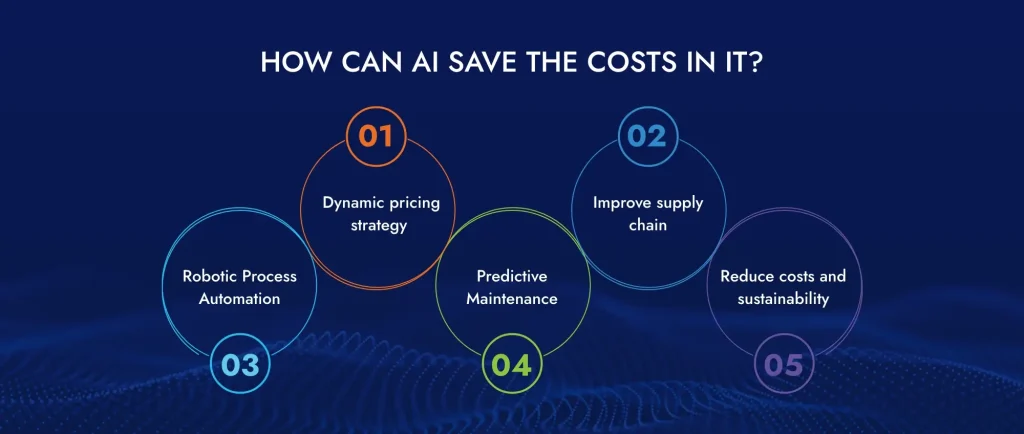
How Can AI Save the Costs in Information Technology?

Optimize your business and maximize efficiency with ViitorCloud’s AI development services. AI not only saves valuable time for you and your team, but it also drives significant advantages across various industries. With our tailored AI solutions, we help you achieve cost optimization in IT, allowing your business to thrive in today’s competitive landscape.

Let us explain how artificial intelligence contributes significantly to cost-cutting:

AI Can Save the Costs in Information Technology

By employing ML models businesses can fine-tune prices dynamically to maximize revenue while remaining competitive thanks to AI-powered pricing algorithms that offer dynamic pricing strategies based on real-time market conditions, customer behavior, and competitor analysis.

Moreover, these algorithms detect price gouging or leakage, thereby improving profitability because they can also identify pricing anomalies. Most importantly, retailing will change remarkably.

Use AI to predict the amount of demand, improve supply chain and efficient inventory management, and reduce downtime through predictive maintenance.

Failure patterns are analyzed by AI algorithms using historical data and sensor readings that enable proactive maintenance scheduling thereby extending asset lifespan and lowering operating costs. Gartner estimates that by 2025, as many as 80% of customer service organizations in the retail sector will rely on generative AI for personalized experiences.

Use AI to forecast demand, improve supply chain efficiency, manage inventory, and reduce downtime through predictive maintenance.

Cost savings can be achieved by employing AI to automate tasks utilizing artificial intelligence-based solutions such as Robotic Process Automation (RPA). This helps to streamline workflows so that repetitive, rule-based activities like data entry, invoice processing, and customer support can be managed.

Manual intervention is removed, reducing errors and faster task completion, allowing employees to focus on high-value work. A good example is students purchasing their photos online rather than having them taken manually.

AI-driven predictive maintenance allows businesses to anticipate equipment failures before they occur, thus avoiding costly downtimes or unscheduled maintenance. With the help of AI algorithms that analyze historical data, sensor readings, and other relevant factors, this enables the identification of patterns indicating potential failure points.

This proactive approach enables planned maintenance, thereby reducing operational costs due to the extended life span of critical assets or optimal maintenance schedule.

Artificial intelligence-based management systems optimize energy consumption rates based on historical data like weather patterns and building occupancy levels.

Thus, companies can reduce expenses while improving their operations and increasing their carbon footprint. Among other things, these solutions provide options for conserving energy, including resetting HVAC settings or making a better schedule for your machinery, leading to substantial cost savings while promoting sustainable development.

ALSO READ: Benefits of AI in Information Technology for Startups

Maximize IT Savings with Artificial Intelligence

Implement AI to achieve cost optimization in IT. Let ViitorCloud help you reduce costs and boost efficiency.

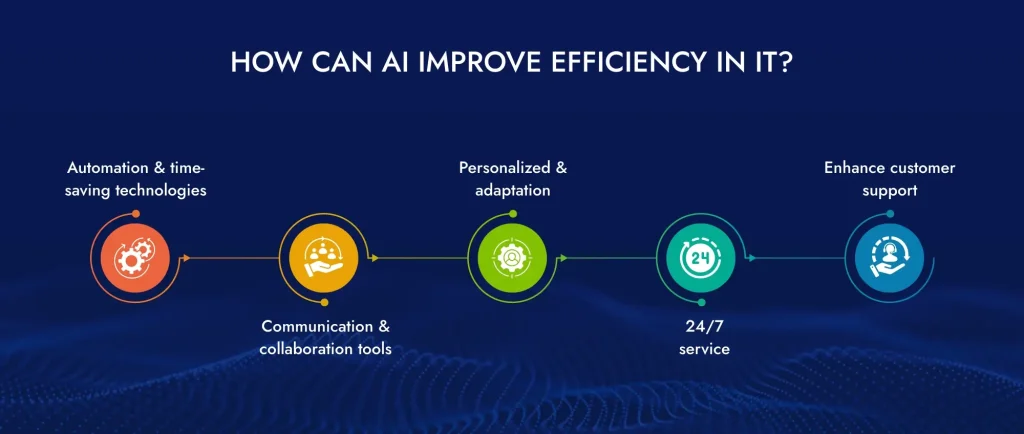
How Can AI Improve Efficiency in Information Technology?

Leverage ViitorCloud’s AI solutions to optimize your IT operations and unlock their complete potential. Imagine transforming routine tasks into automated processes, optimizing costs, and boosting productivity—all with the power of artificial intelligence. Our AI development services are designed to enhance communication, streamline collaboration, and drive real results for your business.

Here we are explaining how artificial intelligence can improve efficiency in information technology:

AI Improves Efficiency in Information Technology

Automation and time-saving technologies are at the forefront of AI’s capabilities in improving IT efficiency. By leveraging AI-powered automation, organizations can streamline repetitive tasks such as data entry, system monitoring, and routine maintenance.

Robotic Process Automation (RPA) which is an application of AI carries out this process much quicker than humans whilst being more accurate thereby releasing a lot of human resources to do more strategic jobs. This means fewer mistakes will be made leading to shorter processes hence it saves so much time making employees highly productive.

Through enhancing communication and collaboration tools AI has made it easier for IT departments to work with each other no matter where they are located. Smarter features like real-time translation, automatic meeting scheduling, or advanced search capabilities have been incorporated into platforms like Microsoft Teams, Slack, or Google Workspace thanks to AI technology.

These tools analyze communication patterns and suggest optimal ways to connect with team members, ensuring that everyone is on the same page and collaborators get their things done faster through such ways. It also helps greatly when used repetitively so that it would facilitate collaborative efforts as well as make these teams understand one another. Otherwise, AI can be used to automate such communication tasks as sending reminders or summarizing meeting notes, thus making team members more productive.

IT services are so tailor-made by AI that the needs of users and organizations are met. Some machine learning algorithms enable AI to analyze user behavior and preferences, which will help in customizing content delivery, recommendations, and support.

For instance, the UI of software applications can be changed by AI based on personal usage patterns; this helps improve overall satisfaction levels among users. This implies that it adopts a dynamic approach following real-time data for IT management solutions and strategies that boost performance while increasing resource allocation.

This one characteristic of AI is its ability to serve throughout. In practical terms, it means that since AI systems do not have bodily fatigue, they can be working at any time with support and monitoring being available constantly. This feature is especially useful in IT departments that require high availability and uptime.

In addition, these tools monitor events as they occur versus after their occurrence has escalated into significant disruptions. Moreover, AI-powered chatbots or virtual assistants are always there to assist customers leading to immediate interactions with auto-decision-making.

It delivers faster, more accurate, and better personalized assistance than traditional customer support methods. To facilitate this ability, NLP (natural language processing) technology in AI-enabled chatbots allows them to respond to questions ranging from those related to troubleshooting technical problems up to frequently asked queries by customers.

Future predictions benefit from prior engagements plus other valuable customer details while customized support services rely on such feedback. By automating simple tasks associated with answering clients’ questions human operators become available for handling complex issues hence improving efficiency at all levels of production for customer satisfaction.

SEE: Top 5 Applications of AI in Information Technology

Transform IT Efficiency with AI-Driven Cost Optimization

Reduce operational costs and improve performance with AI. Partner with ViitorCloud for customized AI development.

Boost Your IT Business with ViitorCloud’s AI-powered Solutions

In today’s fast-paced IT landscape, achieving cost optimization with artificial intelligence is no longer just an option—it’s a necessity. ViitorCloud’s AI Development Services are designed to help your business enhance productivity, cut costs, and stay ahead of the competition.

Our expert-driven AI solutions empower your company to automate routine tasks, improve performance, and predict potential challenges before they become costly problems. Whether you’re looking to streamline operations or implement advanced predictive maintenance systems, ViitorCloud has the perfect solution tailored to your needs.

With ViitorCloud’s AI-powered strategies, your firm can unlock the true potential of cost-effective information technology. Our AI Solutions are not just about adopting AI but about integrating it seamlessly into your business processes, ensuring that your company remains efficient, competitive, and profitable.

No matter where your IT firm stands on the technological spectrum, ViitorCloud will help you harness the power of AI to optimize costs and drive your business forward. Choose ViitorCloud’s AI Solutions to transform your operations and achieve your business goals today.


Frequently Asked Questions

AI reduces IT costs by doing the following: automating repetitive tasks, reducing human error, improving predictive maintenance, and optimizing resource allocation. As a result, operational expenses are cut down, and downtime decreases, making it easier to use IT infrastructure effectively.

It optimizes them through streamlining operations, automating repetitive functions, strengthening cybersecurity measures, and using advanced data analytics. This leads to improved decision-making, enhanced resource planning, increased productivity, and a more adaptive and flexible IT environment.

It improves efficiency through the automation of processes, real-time data analysis, prediction and prevention of potential problems, and optimized management of resources. This leads to quick problem-solving, better-performing system performance, and more efficient IT operations.

Healthcare Technology Consulting Services: What Are They, Need, and Importance

The world of healthcare is changing fast. New technologies are popping up all the time, and it can be hard for healthcare institutions to keep up. Hiring a healthcare technology consulting services company can be a smart decision.

As healthcare makes up almost $4.8 trillion of the whole $28 trillion US economy in the country, it seems clear that this industry is a huge part of the economy. So, to provide better care for patients, run their business more smoothly, and grow, getting help from tech consulting services is necessary.

These services help healthcare organizations figure out how to use the latest technology to improve overall operations and make futuristic decisions. 85% of healthcare CEOs and 79% of health system leaders see big changes coming, and that’s because of emerging technologies.

Here, we are going to discuss healthcare technology consulting, why it is needed, and how to implement it successfully.

So, What Exactly Are Healthcare Technology Consulting Services?

Healthcare technology consulting is all about giving expert advice and support to healthcare businesses to help them make smart choices about using technology.

Consultants work closely with healthcare companies to:

  • Figure out what the organization needs
  • Find areas where technology can help
  • Come up with a plan to use the latest technologies in a way that works best for the healthcare organization

Healthcare technology consulting services can help with lots of different things, like:

  • To Prepare Digital Health Strategy: Creating a proper guide for adding digital health solutions to the organization’s existing systems.
  • Set Up Electronic Health Records: Helping companies choose, set up, and make the most of electronic health record systems.
  • Telemedicine and Remote Patient Monitoring: Assisting companies in using video calls and remote monitoring devices to provide care to patients from a distance.
  • To Use Data Analytics to Make Decisions: Using information collected from patients and the company to make better choices and improve care.
  • Cybersecurity and Privacy Maintaining: Making sure patient information is kept private and secure in a world where more and more healthcare data is digital.
  • System Integration: Allowing different healthcare systems and people to share information and work together smoothly.
  • To Comply with Regulations: Making sure everything follows rules like HIPAA and HITECH.

By working with expert healthcare technology consultant like ViitorCloud, healthcare companies can benefit from the former’s deep knowledge, learn from the best in the business, and find new solutions to move their business forward.

READ: Technology Consulting Services for Business Success

Transform your Healthcare System today! Unlock the potential of advanced technology in healthcare with expert consulting.

Why Healthcare Technology Consulting Services Are Needed?

New technologies are constantly appearing in the market today, and within a few years, those technologies will become obsolete. It’s like a circle, and every industry needs to adopt the latest technologies to thrive in the dynamic market.

Since the healthcare industry heavily depends on technology, it must be updated with the latest tech offerings. It is convenient for them to hire a healthcare consulting services provider as it would help them embrace the future-ready technology.

Here’s why healthcare organizations increasingly turn to technology consulting services:

1. Technology Is Changing Super Fast

Medical technology is moving at lightning speed, with new things like artificial intelligence, blockchain, IoT devices, and virtual reality changing how care is given.

Healthcare organizations need expert technology consulting services to figure out which new technologies to use and how to fit them in smoothly.

2. Hard to Find Enough Staff

By 2030, the world could be short 13 million nurses, according to the International Council of Nurses. As it gets harder to find enough staff, healthcare organizations have to find ways to use technology to help out.

Healthcare technology consultants can spot opportunities to automate tasks and let healthcare professionals focus on the most important parts of their jobs.

3. Healthcare Is Becoming More Like Regular Businesses

Today’s patients want an experience that’s more like shopping, with easy-to-use digital tools, personalized service, and convenient ways to get care. Healthcare organizations need to become ‘customer-centric’ in a market that is getting more and more competitive.

The best technology consulting company in India can help make user-friendly solutions, like patient portals and mobile apps.

4. Compliance Is More Important Than Ever

A healthcare organization must follow many rules, especially around keeping data private and secure. They need to comply with HIPPA and HITECH regulations.

Top healthcare consultant companies help organizations change their systems and processes to comply with all rules and regulations.

5. It Is Important to Advantage of Data

Healthcare institutions have lots of data. With this data, they can identify areas for improvement.

By hiring healthcare consulting services, they get valuable insights from data with expert data analysis. Consulting experts use advanced data analytics tools to understand data and make informed decisions.

ALSO READ: Artificial Intelligence in Healthcare: Changing Medical Care

Optimize your Healthcare Operations! Streamline processes and improve outcomes with tailored consulting solutions.

How to Succeed with Healthcare Technology Consulting

Getting help from healthcare technology consulting services is a big investment.

Here are some tips to make sure it goes well:

Before starting a consulting project, be crystal clear about what you want to achieve and how you’ll know if it’s working. Work with your consultant to set key performance indicators (KPIs) and milestones to keep track of progress.

Look for a healthcare consulting firm with deep knowledge of the healthcare industry, a history of success, and a team-focused approach. Think about how well they fit with your organization’s culture, how they communicate, and how flexible they are.

Technology projects often fail because key people aren’t on board. Get doctors, administrators, IT staff, and patients in on the consulting process from day one to make sure the solutions meet their needs and they actually use them.

Putting in new technology means a lot of change management to make sure the switch goes smoothly. Work with your consultant to make a complete plan for training, communication, and support to get people to use the new stuff.

Technology consulting projects should keep giving value long after the work is done. Pick solutions that can grow, work well with other things, and change to meet future needs. Make sure your staff has the skills and resources to keep the technology running and improving over time.

SEE: AI Healthcare Cost Optimization and Improve Efficiency

Achieve Digital Transformation in Healthcare! Empower your healthcare business with our strategic technology solutions.

How to Find the Best Healthcare Technology Consulting Services for You

With so many healthcare technology consulting firms out there, how do you pick the right one?

Here are some things to think about:

Look for a technology consulting firm that’s been around in healthcare and has a good track record of helping organizations like yours. They should get the special challenges and rules of the industry.

Think about everything you need technology-wise, from planning and checking things out to putting things in place and giving support. Choose a consulting partner who can help you with all of that as you go through your digital transformation journey.

A lot of consulting firms are buddies with big technology vendors like Epic, Cerner, and Salesforce. These partnerships give them first dibs on new products, lots of technical know-how, and better prices and support.

The consulting firm you pick will become part of your team. Look for a partner that likes to work together and is good at communicating. They should take the time to really understand what you need and how you like to work.

ViitorCloud is one of the best healthcare technology consulting services providers in the market today. Give us a shout today to find out how we can help your organization crush it in the future of healthcare.

Revolutionize Healthcare with Technology! Collaborate with us to drive innovation in healthcare through technology.

Final Words

Healthcare technology consulting services are a must-have in the fast-changing world of healthcare. By giving expert advice and support, consultants help healthcare organizations incorporate technology to deliver better patient care, cut costs, and develop new ideas.

You can contact us to get the best healthcare technology consulting services that are made just for you. Our team of experienced consultants has a ton of industry know-how and top-notch technical skills to help you reach your digital transformation goals.


Frequently Asked Questions

A healthcare technology company creates digital solutions and software to improve healthcare. For instance, apps to track health, patient records management systems, and virtual doctor appointments.

Hiring healthcare consulting services provides expert guidance to improve your healthcare organization. Expert consultants can help make processes smoother, ensure compliance, train staff in new technology, and reduce overall costs.

ViitorCloud is a trusted partner for healthcare technology consulting. With more than a decade of experience, we know the best way to assess your needs, develop a customized plan, and smoothly implement digital solutions.

Top 5 AI Applications Transforming Information Technology

Information technology has problems such as data breaches, cybersecurity threats, issues between software and hardware systems, system downtime, and inefficient IT infrastructures. Due to this problem, inefficiency has arisen in the IT industry.

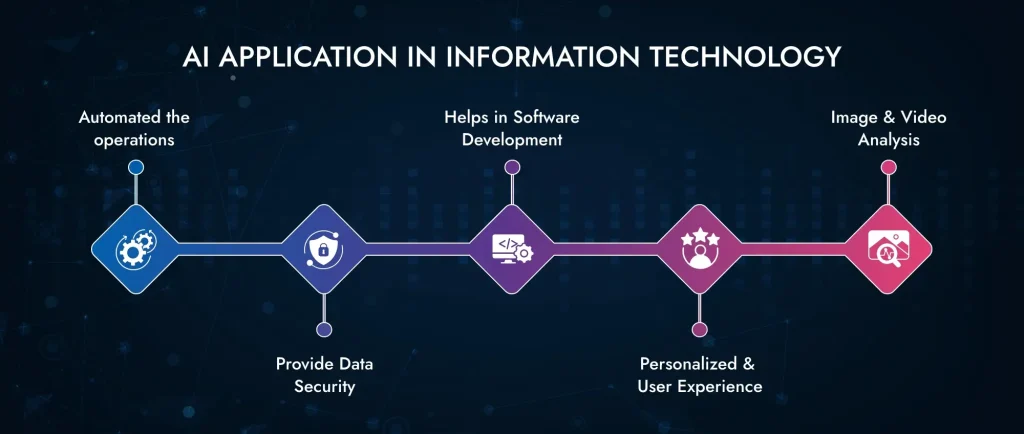
Applications of AI in information technology help solve all the problems with automation, data security, personalized user experience, software development, and image and visual analytics. Additionally, the operation process optimizes, and IT operations efficiency and productivity improve.

Let’s dive into the details of AI in information technology applications and how Artificial Intelligence potentially reduces costs in the information technology industry.

Artificial Intelligence Applications in Information Technology

According to the statistics, the AI market will reach $190 billion by 2025. Many applications of AI solve issues in different industries. Applications of AI in information technology help solve IT industry problems with applications such as automation, data security, software development, and more.

Let’s study the applications in detail.

Top 5 Applications of AI in Information Technology

1. Automated the Operations

IT operations are an essential concept in the IT industry, and they are used to manage system performance, deploy new services or products, improve security, and reduce downtime. IT Operations Automation is a technology process that automates IT operations and management. It helps in enhancing productivity and reduces costs by automating manual tasks. Also, AI helps increase effectiveness, responding quickly to issues and increasing the reliability of IT infrastructure.

2. Provide Data Security

Data security is one of the most important assets of the information technology industry. It helps keep customers’ confidential data and company secrets. Data security is important legally and operation-wise. AI helps data security by identifying unknown threats, which can create severe network damage. Additionally, it helps identify cyberattack faults and threat prevention and detects unusual behavior that develops viruses or malware in the systems. This is how Data security Applications of AI in information technology are useful.

3. Helps in Software Development

AI can analyze vast amounts of software-related data and recommend upgrades and enhancements for machine learning. This helps software developers keep the software system upgraded and improves its quality. Additionally, AI automates various software programmers’ tasks, one of which is to automate software developer tasks. The task of generating code and testing is automated. This is the way software development Applications of AI in information technology is useful.

4. Personalized and User Experience

An AI software application helps deliver a personalized user experience. AI analyzes the data to understand behavior patterns and provide recommendations to a user. Also, AI tailors content for the user and interacts with individuals to meet user preferences. This type of personalization improves engagement and satisfaction and creates long-term relationships.

5. Image and Video Analysis

Computer vision combines machine learning, computer science, and image processing to develop systems that interpret and analyze visual data. It helps enhance security with biometric authentication systems. It streamlines the process in the IT industry and automates repetitive visual tasks, which improves efficiency.

These all are the AI in information technology examples of applications that help in improving productivity in the IT industry.

READ: AI in Information Technology: Transform IT Services with AI

Innovation with AI in IT

Ready to implement AI solutions in your Information Technology processes? Partner with ViitorCloud for cutting-edge development.

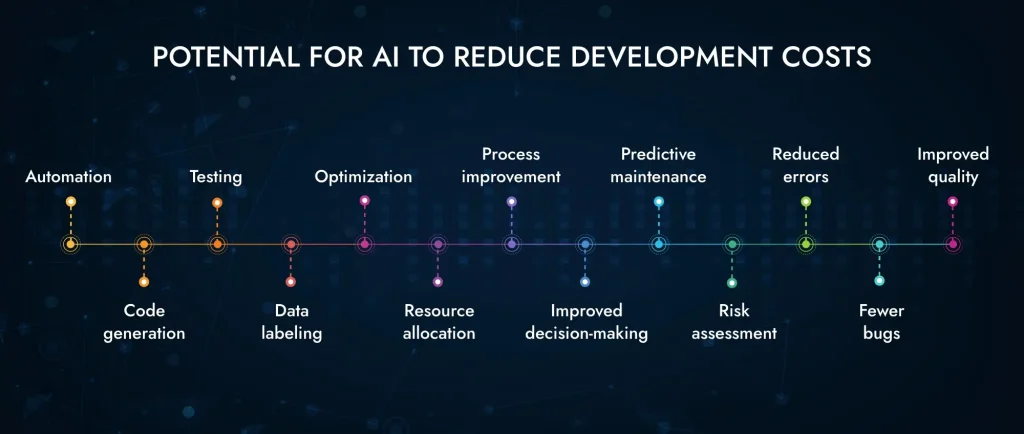
Potential for AI to Reduce Development Costs

AI is useful in reducing the cost of operations and helps employees focus on important tasks as it automates manual work. Let’s understand AI in information technology applications which reduce development costs.

Potential for AI to Reduce Development Costs

AI can automate software developers’ tasks, which improves their efficiency and productivity. The task is generating code snippets, testing, and data labeling. It saves time and helps in focusing on critical tasks.

AI tools such as code generators and auto plugins can increase the code generation speed. Natural Language Processing helps convert specifications into code snippets that reduce manual coding efforts and errors. As a result, a developer can focus on problem-solving tasks and streamlining the development process.

AI plays an important role in software testing. AI testing tools automatically generate, execute, and analyze test results. As a result, test coverage improves, and the accuracy of test outcomes improves.

Data labeling provides annotated datasets such as images, videos, and text that train algorithms to perform tasks automatically. It ensures accuracy and data relevance to enhance model performance in natural language processing, predictive analytics, and image recognition applications. This data labeling helps perform tasks from automated customer services to complex data analytics.

Optimization in the IT industry is improving various aspects of operations, efficiency, and decision-making, which leads to reduced costs. Let’s understand in detail.

AI optimizes allocating resources such as storage, cloud instances, and processing power based on performance and workload demands. It ensures efficient resource use, which cuts down unnecessary costs.

AI identifies inefficiency in IT operations and workflows, then optimizes workflows and automates repetitive tasks to streamline operations and improve productivity.

AI analytics provide insights into IT operations, user behaviors, and performance metrics. These insights help make informed business decisions regarding software investment, resource allocation, and IT strategy, decreasing the cost in the IT industry. Also, it helps in predictive maintenance and risk assessment such as follows:

AI has a large amount of data, which helps predict hardware failures and system issues before they occur. This approach prevents costly downtime and emergency repairs that reduce maintenance costs.

AI in IT helps identify vulnerabilities and threats and mitigate the risk of threats on the system. Additionally, AI analyzes vast amounts of data to detect anomalies and patterns and take proactive measures to protect systems, data, and operations. It is a way for decision-making to improve in the IT industry.

Minimizing errors in IT operations not only saves time but also reduces overall operational costs. Ensuring that systems and processes are error-free helps organizations improve productivity and operational efficiency. Additionally, reducing errors can lead to better user experiences, increased customer satisfaction, and a more reliable IT infrastructure. Therefore, investing in error-reduction strategies can yield significant long-term benefits for businesses.

AI helps identify fewer bugs through automated testing and data validation techniques. Also, it helps analyze code, predict issues, and monitor system behavior in real time. As a result, early detection and error reduction improve software quality in Information technology.

To improve quality, AI rigorous data validation, robust model training, and monitoring continuously. Also, it implements AI models, regularly updates AI models, and ensures reliability and transparency.

These all are the AI in information technology examples which help reduce IT industry costs.

ALSO READ: Benefits of AI in Information Technology for Startups

Elevate Your IT with AI Expertise

Enhance your IT capabilities with our tailored AI services. Let’s make your Information Technology smarter.

How Can Viitorcloud Help Your It Challenges with an AI Solution?

Innovations in the application of AI in information technology help solve problems in the Information Technology industry. AI can analyze large amounts of software-related data to update the software system and predict its failure. Also, it provides a personalized user experience by analyzing the behavior patterns and user behavior.

We, Viitorcloud, an AI development service company, integrate AI into information technology to improve efficiency in the operations and workflow process. AI also optimizes resource allocation and helps improve decision-making. As a result, cost is reduced. Our expert team provides impactful AI solutions to improve efficiency and productivity.

If you are looking for someone to help you with IT challenges with an AI solution, do not look further. Contact us today and integrate AI solutions into information technology to solve the problems in your IT business.

Frequently Asked Questions

The perspectives of AI in information technology examples are the automation of repetitive tasks, the help in decision-making, and the prediction of trends and behavior in data patterns. Also, it detects and responds to cyberattacks.

AI is used in information technology to detect threats, provide IT support, predict maintenance, and optimize the network. Also, AI helps in IT documentation, cloud computing, and resource allocations. The use of AI improves efficiency in operations and the IT industry.

The AI in information technology applications includes data security, IT operation automation, software development, image and video analysis, and personalized user experience. It helps in improving efficiency and productivity.

Information technology AI solutions include automating operations, detecting and responding to threats, and analyzing the data for insights. Also, it provides personalized customer experiences to increase efficiency and reduce costs.

How Can AI Be Beneficial to Information Technology Startups?

Between endless opportunities and persistent competition, many young technology companies are standing in a critical position. What’s the best way for them to make themselves unique from other competitors who are also after the same market? How can they stay strong in the face of changing challenges? The most important question is how these entities can encourage innovation and growth.

Start-up owners may find themselves faced with the challenging task of maneuvering through resource constraints, market competition, scaling hurdles as well as regulatory challenges. Nevertheless, artificial intelligence (AI) provides a solution that is powerful enough for them to confidently confront these challenges. This article discusses the benefits of AI in information technology.

Why Does AI in Information Technology Matter?

For quite some time now, artificial intelligence has been around. The advent of AI has radically shifted how repetitive tasks are handled within the IT industry. Robotic Process Automation (RPA) allows for the automation of ordinary and repetitive tasks so that valuable human resources are freed up to focus on more strategic and creative activities that enhance efficiency while significantly reducing chances for errors.

Chatbots and voice-activated systems like AI-powered virtual assistants have revolutionized customer service in the IT industry. AI matters immensely in information technology because it drives efficiency, enhances decision-making, improves customer service, and promotes cybersecurity.

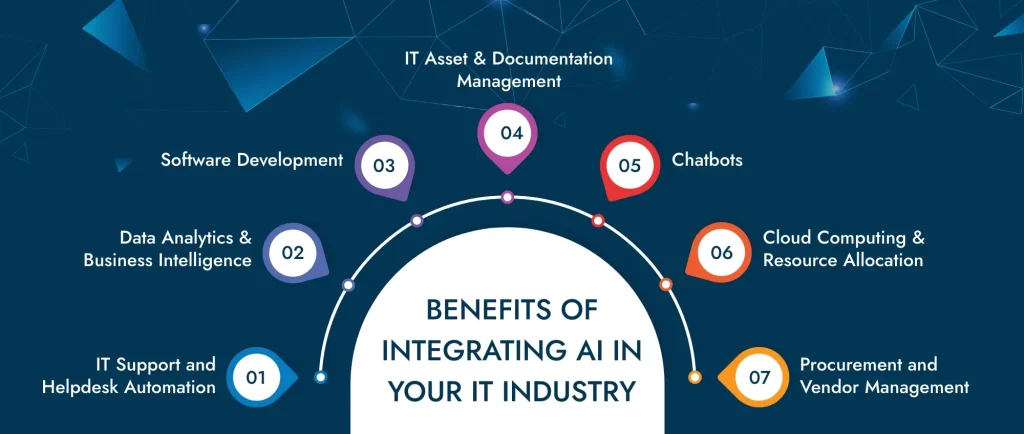
7 Benefits of Integrating AI in your IT Industry

Artificial intelligence is revolutionizing the industry through task automation. This shift increases efficiency and empowers IT experts to dedicate more time to innovation and strategic development.

Here are some of the benefits of AI in information technology:

7 Benefits of AI in Information Technology

1. IT Support and Helpdesk Automation

IT support and helpdesk automation revolutionize user assistance and issue resolution. A user who experiences a technical problem can go to a self-service website or chatbot for a support request. The system automatically categorizes and prioritizes the problem based on its severity and nature.

Automated responses provide immediate solutions for common issues, reducing resolution times significantly. If humans must intervene to address a problem, the ticket will be redirected by the system to the appropriate IT staff member, leading to a quick but accurate response.

Generally, this automation improves overall service efficiency and helps IT professionals deal with complex tasks while being responsive, thus making the IT support ecosystem user-friendly.

2. Data Analytics & Business Intelligence

The applications of artificial intelligence (AI) have transformed data analytics as well as business intelligence. AI-driven algorithms enable organizations to extract valuable insights from large volumes of complex data sets, thereby discovering trends, patterns, and correlations that might otherwise remain hidden.

These insights facilitate data-driven decision-making across various business functions. Market changes, customer behaviors, operational needs, etc can all be predicted by AI-powered predictive analytics, hence helping businesses anticipate future trends. Also, different types of prescriptive analytics provide business teams with recommendations for optimizing their work and improving production effectiveness.

AI in business intelligence can visualize data, automate report creation, and extract more meaning from historical data. With AI’s natural language processing (NLP), users can ask questions about data as though they were speaking to another person – making it easier for non-technical audiences to access the data.

READ: Data Analytics Consulting Helps Small Businesses to Grow

3. Software Development

AI for IT startups has simplified writing software programs by automatically generating code instead of manually performing this task. The computer algorithms used in AI analyze code patterns, allowing them to create mini codes, thus reducing the time spent designing routine program tasks.

This shortens the development cycles, enabling programmers to shift their attention to more difficult and creative aspects of code writing. This AI-powered code writing also helps to maintain a consistent coding standard at all times throughout the codebase. It is important to note that such an application of AI will improve productivity while reducing errors and enabling software developers to produce high-quality code faster.

4. IT Asset & Documentation Management

Augmented by artificial intelligence (AI), IT asset management is crucial for effectively managing and optimizing the IT resources of an organization. This includes tracking and controlling IT assets through their whole lifecycle, such as hardware, software, and licenses.

Artificial intelligence automates the detection process of assets, keeps track of usage trends, and forecasts when fixes or replacements are necessary for them. In so doing, IT professionals have accurate stock records, thus minimizing chances of under-utilization or unwarranted expenditures, which translates into significant savings.

5. Chatbots

Immediate answers from AI-driven chatbots are changing the face of information technology support. Hence, these chatbots can understand users’ requests with NLP (natural language processing) without wasting time on troubleshooting problems but instead see how quickly they can fix them.

So this speeds up support processes significantly, reducing response times substantially and leading to a good user experience. Thus, chatbots care for common inquiries while freeing human agents from mundane tasks, improving overall support performance.

According to Forbes Advisor, ChatGPT was the most talked about innovation in Artificial Intelligence during the 2022 fall season; within five days after its launch in November 2022, it attracted over one million users. Based on several reports, it has increased productivity by 14% among tech companies’ staff through AI applications, confirming the readiness of IT to incorporate AI.

With their ability to learn iteratively, they gain effectiveness as they evolve and adapt better to users’ changing needs, enhancing the quality of IT support services. As a result, it provides fast and accurate technical assistance thus leading to high customer satisfaction rates thereby making an IT infrastructure more flexible and agile.

6. Procurement and Vendor Management

AI in information technology procurement and vendor management uses artificial intelligence to improve the acquisition of AI development services and IT products from external suppliers. Organizations need to leverage data when selecting vendors, optimizing contract terms and pricing, tracking costs, assessing the performance of vendors, and managing the risks involved.

Automating routine activities while providing actionable insights based on service level agreements (SLAs) and contractual terms are ways that AI helps organizations reduce costs while increasing efficiency with strong vendor relationships.

7. Cloud Computing and Resource Allocation

This enables faster cloud computing optimization by applying AI approaches to resource allocation in cloud infrastructure, enhancing how efficiently this can be done at a low cost. For example, these systems powered by artificial intelligence continuously analyze workload profile demands and other resource consumption patterns alongside key performance indicators (KPIs) to optimize CPU time allocation and memory utilization, including storage capacity, where necessary.

Real-time matching between demand levels for resources available for supply leads to significant savings by avoiding under-utilization or over-provisioning thereby enhancing application performance. Similarly, AI recognizes ways to save costs, such as proposing more affordable types or advising on storage usage optimization in the cloud.

Through this, cloud computing platforms’ scalability, cost-effectiveness, and dependability are improved; hence, organizations meet their IT needs while retaining control over expenditure on the cloud. Successful implementation involves integrating cloud management platforms with regular adjustments to accommodate changing workloads and resource demands.

Transform Your IT Startup with AI Solutions

Implement AI to drive innovation and efficiency in your IT business. Let’s get started.

3 Challenges IT startups face while choosing the right AI solution

Adopting AI in information technology offers startups a significant edge but comes with several challenges. Here are three critical obstacles startups often encounter when integrating AI into their IT infrastructure:

Startups must handle massive volumes of data to train AI models effectively. Ensuring the data is accurate, clean, and relevant is daunting. Inadequate or poor-quality data can lead to accurate predictions and reliable AI outputs.

94% of data, privacy, and security professionals prioritize compliance with data privacy regulations within their organizations. With increasing data privacy regulations like GDPR and CCPA, startups must ensure their data management practices comply with legal standards. Mishandling personal or sensitive information can result in hefty fines and damage to the company’s reputation. Startups need robust systems to store and integrate data from various sources.

Managing data silos and ensuring seamless data flow between different departments and applications is essential for effective AI implementation.

The AI landscape evolves quickly, with new algorithms, tools, and frameworks emerging regularly. Startups often need help to keep pace with these advancements, which can make their AI solutions obsolete if not continually updated.

Advanced AI technologies often require significant hardware, software, and investment from skilled personnel. Typically operating with limited budgets, startups may need help to allocate resources for cutting-edge AI infrastructure.

Implementing AI requires machine learning, data science, and software engineering expertise. Finding and retaining talent with these specialized skills can be difficult for startups that need brand recognition or resources to attract top professionals.

Moving to the cloud is often necessary for leveraging AI effectively, but this migration can be complex and resource-intensive. Startups must ensure their data is securely and efficiently transferred to cloud platforms without disrupting business operations.

Choosing the right AI and cloud service providers is crucial. Startups must evaluate vendors based on their technological capabilities, cost, reliability, and support services. Managing relationships with multiple vendors and ensuring they meet the startup’s evolving needs can be challenging.

Startups need AI solutions that can scale with their growth. However, not all vendors offer the flexibility to adapt to changing business needs. Startups must carefully assess whether potential vendors can provide scalable solutions that align with their long-term objectives.

READ: Cloud Migration Consultancy Services for Your Businesses

Empower Your IT Business with AI Expertise

Adopt AI to stay ahead in the competitive IT landscape. See how we can help.

How Can ViitorCloud Overcome IT Challenges with an AI solution?

Ready to take your information technology startup to the next level?

Adopting AI isn’t just an option—it’s the game-changer you need. From automating routine tasks to delivering advanced data analytics, AI is the key to unlocking efficiency, optimizing resources, and driving innovation. Imagine transforming customer interactions and securing cybersecurity, all while setting your startup on a path to sustainable growth and a competitive edge.

At ViitorCloud, we don’t just offer AI development services; we provide tailored solutions that address the unique challenges of IT startups. We’re here to help you harness the full benefits of AI in information technology. With ViitorCloud by your side, you’re not just adopting AI—you’re adopting the future. Partner with us, and watch your startup thrive in today’s dynamic tech landscape.

Ready to see the difference? ViitorCloud’s AI solutions are just what your startup needs.

Frequently Asked Questions

AI is used in IT for automated network monitoring, which detects and resolves issues in real-time, enhancing system reliability and reducing downtime.

Major companies like IBM, Google, Microsoft, and Amazon are leading the AI advancements in information technology, offering innovative AI-driven solutions and services.

AI automates repetitive tasks, enhances cybersecurity, optimizes resource allocation, provides predictive maintenance, and improves data management.

AI helps the IT industry by increasing efficiency, reducing costs, enhancing security, enabling advanced data analytics, and automating routine processes, allowing professionals to focus on more complex tasks.

The Importance of Digital Experience Monitoring Solutions

Digital experience monitoring solutions have become an important tool for businesses. Today, we all use various apps and websites for everything. We use various digital services, from shopping, booking tickets, and banking to ordering food online. However, when we face any issue in an app or site, we tend to ignore it the next time.

So, as a businessperson, it is important to make sure that your customers have a good experience when they use your website or app. In order to improve customer experience, businesses need to monitor user experience through digital experience monitoring (DEM) solutions. Here, we will discuss the importance of digital experience monitoring solutions and everything you need to know.

What is Digital Experience Monitoring?

Digital Experience Monitoring is a way to keep an eye on how well your website, app, or other tool is working for your users.

It involves tracking things like:

  • How fast your pages load
  • If there are any errors or problems
  • How users interact with your website or app

By monitoring these things, you can quickly find and fix any issues that might be making it hard for your customers to use your digital services. However, you will need digital experience monitoring solutions that will help you with this.

Digital Experience Monitoring solutions are advanced software platforms that allow you to track, analyze, and optimize the end-user experience. They provide real-time insights into your users’ behavior and experience with your services.

Check: How AI is Helping Healthcare Reduce Costs and Improve Efficiency

Enhance your customer experience now. Discover how Digital Experience Monitoring can elevate your business. Get started today!

Why is Digital Experience Monitoring Important?

DEM is important for businesses for many reasons. Let us give you an example. You want to buy a pair of shoes and visit an online store. Now, if its pages are taking forever to load and buttons need to be fixed even if you tap them multiple times.

You will not buy from that website or app even if the price is cheaper than other options. In fact, a second delay in mobile page load can decrease the conversion rate by 20%.

This is why Digital Experience Monitoring is so important.

  • It helps you keep your customers happy by making sure your website or app works well.
  • It can help you increase sales by making it easier for people to buy things from you online.
  • It lets you find and fix problems instantly, so your customers don’t have to deal with them.

In a survey by Gartner, it was found that by 2026, at least 60% of infrastructure and operations (I&O) leaders will use DEM to measure apps, services, and endpoint performance from the user’s viewpoint. This shows the importance of DEM in the digital world.

How Does Digital Experience Monitoring Work?

Digital experience monitoring solutions or tools look at many different things to give you a full picture of your digital services.

Here are some main areas they focus on:

1. Real Customer Experience

These tools watch how real customers use your website or app. They see how long pages take to load if customers can finish what they’re trying to do, and how customers move around your site.

2. Pretend Customer Tests

The tools also run tests that act like customers using your site. This helps to find problems before real customers do. It’s like having a robot customer test your site all the time.

3. Network Checkups

Sometimes, problems come from the internet connection, not your website. DEM tools check if the network is causing any issues.

4. App Health Checks

If you have an app, these tools make sure it’s running smoothly with Application Performance Monitoring (APM). They look for things like error messages or slow responses.

5. Device Checks

People use different devices like phones, tablets, and computers. DEM tools make sure your digital services work well on all of these.

Also Read: How Data Analytics Consulting Can Help Small Businesses Grow

Revolutionize customer interactions now. Utilize advanced monitoring solutions that deliver real results. Let’s discuss our strategy!

What Are the Benefits of Digital Experience Monitoring Solutions?

When you use DEM solutions, it can help your business in many ways.

Here are its benefits:

By making sure your website or app works well, you can keep your customers happy and come back for more.

If your website or app is easy to use, people are more likely to buy things from you.

Digital experience monitoring solutions help you find and fix problems quickly so your website or app can be up for a while.

When everyone can see how your website or app is doing, it is easier for different teams to work together to make things better.

These solutions help you make your website or app faster and smoother to use.

If your website or app works better than your competitors, you will have a big advantage.

Check: 11 AI Applications in Logistics Every Entrepreneur Should Know

How Can You Start Using Digital Experience Monitoring?

If you want to start using Digital Experience Monitoring for your business, here are some steps you can take:

Step #1: Figure Out What is Important – Think about what parts of your website or app are most important to your customers and your business.

Step #2: Choose the Right Tools – There are a lot of different Digital Experience Monitoring solutions out there. Pick ones that will work well for your business.

Step #3: Set Some Goals – Decide what you want to achieve with Digital Experience Monitoring. This will help you track your progress.

Step #4: Keep an Eye on Things – Use your Digital Experience Monitoring tools to keep track of how your website or app is doing. If you see any problems, fix them right away.

Step #5: Work Together – Make sure everyone in your company knows how important Digital Experience Monitoring is.

Boost your business efficiency. Optimize every digital touchpoint with our expert monitoring services. Discover the benefits!

How to Pick the Right DEM Solutions for Your Business

While picking a Digital Experience Monitoring solution, you need to ask yourself these six questions:

  • Can it grow with your business?
  • Does it integrate with your current IT infrastructure and tools?
  • Is it easy to use?
  • Can you customize it to fit your needs?
  • Does it give you easy-to-understand reports and analytics?
  • Will the service provider help you if you have problems?

ViitorCloud, with over a decade of experience, helps businesses with the right digital experience monitoring solutions. With our customized DX monitoring solutions, you can track user behavior in real-time and make decisions accordingly.

Problems in DEM Solutions Implementation

Everything we explained above shows how important digital experience monitoring solutions are, but there can be problems in implementing these solutions. From privacy to ethics, there can be several challenges:

Make sure the tool follows the rules about protecting customer information. Make sure your DEM solutions comply with data protection regulations.

DEM solutions give you a lot of information & data. Have strategies to use it well.

Some people might not like being watched. Explain how the tool helps everyone do better.

High-end DEM solutions services can be expensive. Make sure the benefits are worth the cost.

Boost your digital presence. Transform your customer experience with our monitoring solutions. Partner with us today!

Conclusion

Hence, it is important for businesses to employ digital experience monitoring solutions in order to check how customers are interacting with their websites and apps. With the right DEM tools, it is easy to find issues with the apps/websites and employ the right solutions for them to improve customer satisfaction and increase conversion rate. With ViitorCloud, you will find the best DEM solutions. You can contact us to learn how you can monitor and improve your digital experience.

Frequently Asked Questions

Digital experience monitoring (DEM) tracks how websites and apps perform for users. It helps businesses to find and fix issues to provide a better online experience.

DEM is crucial to make sure websites and apps work well, make customers happy, increase sales, and stay competitive.

When choosing DEM tools, consider your company’s needs, setup, and goals. Look for solutions that track performance, identify issues, and help optimize the user experience.

AI in Information Technology – How Artificial Intelligence is Used in IT

In the recent market, managing the IT infrastructure is difficult as numerous applications and databases operate independently. Also, doing the work manually consumes time and increases inefficiency. Artificial Intelligence is helpful in the IT business in overcoming these difficulties and automating manual tasks.

Additionally, AI analyzes the data, provides insights into the business operations, and system, and helps monitor the business performance. As a result, ViitorCloud AI Solution empowers enterprises to optimize operations, increase operation efficiency, and deliver uninterpreted customer support with chatbots.

The integration of AI into IT infrastructure helps in sustainable growth. Let’s dive into how AI impacts the IT industry, the role of Artificial intelligence in information technology, and more information.

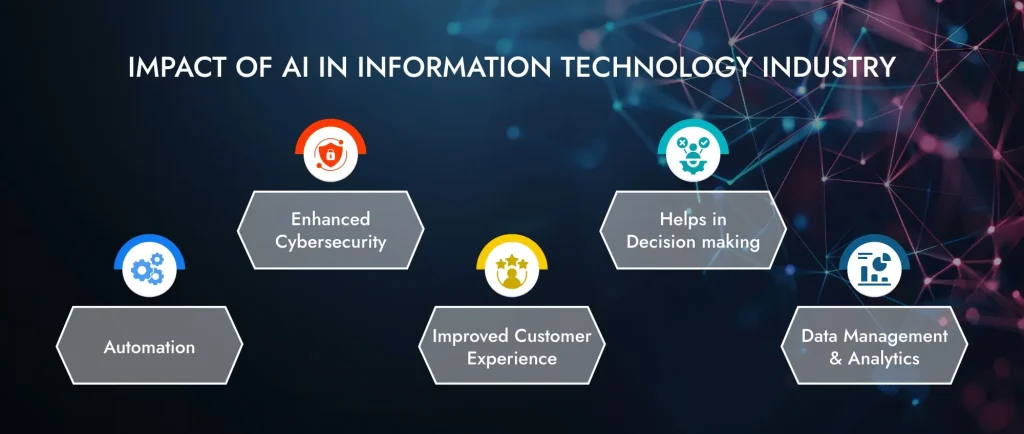
Impact of AI on the Information Technology Industry

AI information technology helps solve and optimize the challenges in the IT industry. It enables developers to enhance productivity, improve efficiency, and ensure quality in the IT industry.

However, let’s understand the impact of AI on the IT industry.

Impact of AI in Information Technology Industry

1. Automation

AI in automation is streamlining the operation process in the IT industry. It helps monitor networks, system testing, and system maintenance to automate the work with machine learning and AI algorithms. As a result, there is an improvement in efficiency and a reduction in human errors. Because of this automation, IT professionals can focus on complex strategies and work and grow their businesses.

2. Enhanced Cybersecurity

Cybersecurity threats are attacking the IT industry system, where AI is helping to fight against threats and malicious activities. AI helps as it can detect anomalies, patterns, and vulnerabilities, respond to cybersecurity threats, and protect the data and system.

3. Improved Customer Experience

AI IT solutions are transforming the IT industry with the help of virtual assistants and chatbots. This system helps understand the customer, respond to customer queries, provide personalized assistance, and troubleshoot common issues. The natural language process works as a human being to enhance customer satisfaction and reduce response time for the query.

4. Helps in Decision-making

AI can collect and analyze the data to identify patterns and provide recommendations for decision-making. As a result, IT professionals can make the right decisions regarding resource allocations, strategic planning, and system upgrades. Also, AI predicts failure before it arises, so proactive measures can be taken to avoid failure.

5. Data Management and Analytics

AI algorithms can analyze vast amounts of data in seconds and provide insights humans avoid. Data analytics helps decision-making, provides data-driven strategies, and improves operations efficiency. Additionally, AI solutions predictive analysts optimize the resources, forecast trends, and improve the planning of IT infrastructure to help the IT industry stay ahead of the competition.

READ: Artificial Intelligence in Business: An Intelligent Approach for Digital Transformation

Transform Your IT Infrastructure with AI

How is AI used in information technology?

Using AI in information technology improves efficiency and productivity in operations. Also, it reduces the cost and saves time. Additionally, it helps make decisions by analyzing data.

Let’s understand how to use information technology in AI in detail.

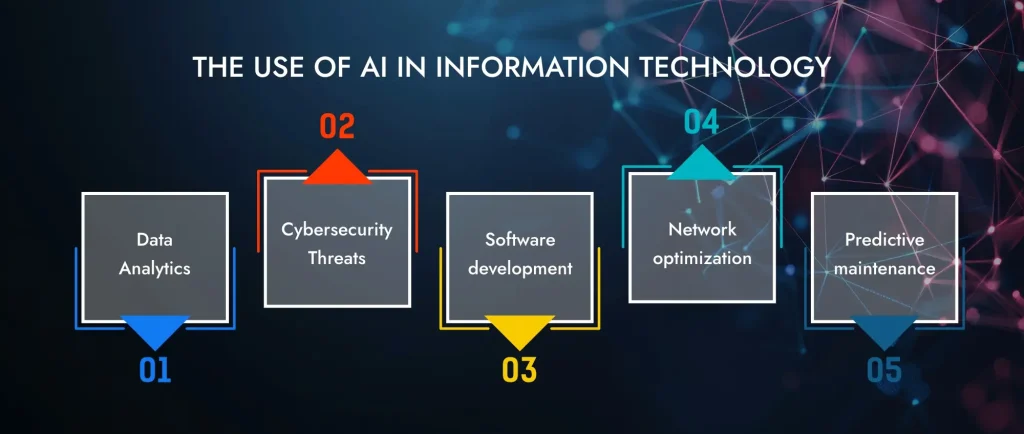
The Use of AI in Information Technology

1. Data Analytics

AI can collect large amounts of data, analyze complex data, and uncover trends and patterns. These insights help businesses to make business decisions. Additionally, predictive analytics helps forecast future trends and anticipate customer behavior, market changes, and operation needs. Furthermore, perspective analytics provide actionable strategies to optimize the business process.

In the IT industry, Al assists in automating report generation and data visualization and uncovers deeper insights from past data. As a result, core business people can make the right business decisions.

2. Cybersecurity Threats

AI helps cybersecurity by monitoring network traffic, user behavior, and systems logs to identify anomalies and suspicious activities and identify security risks. It also analyzes large amounts of data to identify malware and emerging threats that go unnoticed with traditional security measures.

After the identified threat, AI provides alerts, automates incident response actions, detaches affected devices, and blocks malicious activities. This approach enhances cybersecurity in organizations by reducing response time, mitigating risks, and safeguarding sensitive data from cyberattacks.

3. Software Development

AI streamlines the code generation process for the repetition of the process. It can analyze patterns in existing codes, automatically generate code snippets, and reduce manual effort for routine programming tasks. As a result, programmers can focus on more complex tasks in the business.

Additionally, AI generates code that promotes adherence to the coding standards. Also, using Artificial intelligence in the information technology industry improves productivity, minimizes errors, and helps software developers deliver high-quality code

4. Network Optimization

Artificial intelligence in IT evaluates user behavior, system performance, and network optimization, allowing organizations to identify and address issues quickly. It helps identify bottlenecks and adjust configuration to improve network performance and user experience and reduce downtime.

Additionally, network optimization with AI improves network reliability and efficiency, improves productivity, and satisfies the user.

5. Predictive Maintenance

AI can analyze large amounts of data and find the issues in the hardware systems. It analyzes data from historical records, sensors, and other sources to predict problems or failures in the hardware systems. The issues or failures include storage devices, servers, or networking equipment.

Additionally, identifying issues helps in the maintenance and replacement of the systems. Also, it prevents unexpected downtime and minimizes issues during the operations. It reduces maintenance and repair costs and provides reliability in the IT industry.

ALSO READ: How to Implement AI in Your Business: 7 Easy Steps

Role of Artificial Intelligence in Information Technology Industries

AI transforms IT industries by automating routine tasks, analyzing data, and solving IT issues. As a result, efficiency is improved, resources are optimized, and operations in information technology work smoothly.

Let’s know in detail the role of artificial intelligence in IT industries

Automate routine tasks such as system monitoring, software updates, and data backups. Also, AI algorithms and machine learning can predict the failure of AI models to detect anomalies in the system. This automation helps improve operations and efficiency, minimize the downtime of machines, and help in the proper allocation of resources. As a result, business owners can focus on planning and strategic activities.

AI analyzes vast data, predicts system failures and customer needs, and optimizes resource allocations and maintenance. As a result, efficiency improves, and costs are reduced. AI helps stay ahead of the competition by providing insights that help improve operations and strategic planning in the IT industry.

Advanced system programming in AI develops complex algorithms and frameworks to improve artificial intelligence functions. It combines low-level task systems with high-level AI functions to enhance scalability and performance in the IT industry. Engineers work on parallel computing and kernel-level programming and optimize memory management to solve complex AI models.

SEE: What Are the Top Trends in AI for Businesses?

Enhance IT Operations with AI Innovation

How to Implement AI Solutions in IT?

Implementing AI solutions in IT integrates machine learning and natural language processing to automate tasks, optimize operations, and improve decision-making. Also, it transforms the business through strategic planning and data infrastructure.

Implementation AI Solutions in IT Industries

1. Assessment and Planning

You have defined the objective of implementing AI in IT operations. The objectives of the business are improving security, improving efficiency, and optimizing the utilization of resources. This objective helps in planning to implement Artificial intelligence in information technology. Also, the IT infrastructure, such as data quality, team skillsets, and technology, must be evaluated to prepare for AI integration.

2. Identify Use Cases

Identifying the use cases in the IT industry is essential as they give value to the business. It includes tasks like predictive maintenance, automated monitoring, and threat detection in security.

3. Data Collection and Preparation

When you have to implement AI in the business, data collection is essential. The data includes historical data, performance metrics, and other data sources such as AI. Also, clean and preprocess the data to provide quality and reliable data provide excellent input data.

4. Developing and Integrating

Once the data collection is complete, the AI model is developed depending on the selected algorithms. It involves the collaboration of IT professionals and data scientists to build the AI model. Also, AI should be integrated into existing IT systems and workflow to operate the operations system of the IT industry smoothly.

5. Testing and Validation

After developing an AI model and integrating AI into the system, testing the AI model is important. It is important to learn how to work in real-world scenarios so that the environment can be created for testing. Once testing is completed, take the feedback and implement it in the AI model to improve the performance during the testing phase.

6. Deployment

Implement the AI solutions in the business at a smaller scale or in one department; after that, expand to other departments or businesses. When implemented one by one, AI is smoothly implemented in the business, and employees can easily adopt AI. Additionally, monitoring tools can be used to track performance in real time and provide support during the ongoing operation process.

7. Evaluation

After monitoring the performance, evaluate the performance depending on the business objectives and KPIs. If any changes are needed based on performance feedback, implement them, improve the AI system, and optimize the AI systems.

ALSO SEE: AI Business Ideas for Entrepreneurs and Startups

Future of AI in the Information Technology Industry

Artificial intelligence is an important concept of the future. According to the research, the AI market is anticipated to reach $190 billion by 2025. Until 2021, global spending on AI will be $57.6 billion, while 75% of businesses will use AI technology apps.

Let’s understand the future of AI in the information technology industry in detail.

Data protection is important in business and government organizations. Companies and governments collect large amounts of data from the public. The data is personal, financial, or confidential. This data needs to be protected. Otherwise, lots of schemes can take place in the market. AI solves data security problems, as it identifies data breaches and threats with the help of AI algorithms and machine learning.

AI automation helps minimize manual work and reduce human interference. Also, AI goes into deep learning applications to automate backend processes in IT, so cost is reduced and human interference is minimized. As a result, the efficiency and productivity of IT businesses improve.

AI tools help in providing accurate tests related to the testing of applications. Also, AI helps software engineers use the right tools to fix bugs and issues in the application and adjust them automatically during the development cycle. Ultimately, AI optimizes the quality assurance process, improves software reliability, and improves efficiency in the IT industry.

Optimize Your IT Systems with AI Power

How Does Viitorcloud Streamline Your IT Processes?

The information technology industry plays a crucial role in changing the world. AI innovation helps streamline the IT process by automating routine tasks, optimizing operations, personalized user experiences, and improving decision-making. Keeping IT organizations ahead of the competition in the changing technology world is essential.

We, Viitorcloud, an AI development service company, help adopt Artificial intelligence in the information technology business. Our team of experts helps streamline the operation process by integrating AI into your business, as we are a trusted partner in AI technology. Partner with Viitorcloud to implement AI in the business, achieve objectives, and streamline the IT process.

Frequently Asked Questions

The role of Artificial intelligence in information technology helps automate routine tasks, predictive analytics, and advance programming systems. As a result, cost is reduced, improving efficiency and productivity in the IT industry.

AI-powered information technology solutions can detect threats in the systems and protect the system. Also, it helps analyze the data to predict customer behavior, operation needs, market changes, and forecast trends. As a result, AI improves information technology.

AI helps IT to reduce costs by reducing human errors, optimizing resource allocations, optimizing operational expenses, and satisfying the customer.

Natural language processing is used in chatbots to solve customer queries, respond to customers on time, and improve customer service—also, it personalized interactions with the customers.

AI technology is safe when used correctly to ensure the systems are developed and deployed responsibly. Developers must consider ethical rules and privacy concerns when designing AI systems.

Innovative AI Use Cases in Healthcare Industries

The integration of Artificial Intelligence (AI) in the healthcare sector represents not only a casual development but rather a transformative force with the potential to profoundly reshape medical methodologies and enhance patient experiences. The increasing complexities of diseases and the rapid growth of data have made AI development in healthcare indispensable to cater to the demand for precision, improved effectiveness, and personalized attention to health matters.

As we stand at the threshold of this medical evolution, it’s easy to see why AI in healthcare has become so crucial. Medical data has exploded like a supernova, completely inundating human analytical capacity and insight. These AI healthcare use case solutions can detect complex patterns, predict diseases before they strike, and uncover treatment pathways once lost within massive amounts of medical data.

AI takes advantage of extensive data from different sources, such as medical records, images, tests, and sensors, making it more effective and precise in medical interventions. ViitorCloud explores 11 innovative AI use cases in the healthcare industry.

Why is the Healthcare Sector Turning into AI?

The healthcare sector is turning increasingly towards AI for various compelling reasons.

According to Precedence Research (2021), the worldwide artificial intelligence market size for healthcare was valued at USD 15.1 billion in 2022, with a projection beyond USD 187.95 billion by 2030, representing an outstanding CAGR (Compound Annual Growth Rate) of 37%. North America alone demonstrated significant prominence, with a market value of USD 6.8 billion in 2022.

An overwhelming amount of medical information is being produced today, including electronic health records, imaging studies, genetic profiles, and patient-generated data. The list continues ad infinitum (and beyond). The efficient analysis would take humans longer than forever since too much information is generated daily.

Big datasets can be quickly processed and analyzed by algorithms developed for artificial intelligence, revealing hidden patterns or insights that some might miss if left to human analysts.

AI technology stands out as one potential game-changer across multiple aspects of health care:

  • Diagnostic accuracy intensification
  • Individualized treatment
  • Efficiency improvement
  • Prediction and prevention of diseases
  • Promotion of research, patient involvement in care, dealing with staff deficiency
  • Cost reduction as well as remote delivery

With the ongoing advancements in AI technology, its integration into healthcare will transform how medical care is delivered and received resulting in improved patient outcomes and more efficient health systems.

READ: How AI Is Transforming Healthcare Startups: Key Benefits and Insights

Upgrade Healthcare with Artificial Intelligence. Capitalize on the potential of AI within your healthcare solutions. Collaborate with our team to integrate advanced AI technologies into your organization.

AI in Healthcare: Top 11 Use Cases

AI is transforming healthcare delivery by improving diagnostic accuracy, which leads to enhanced patient care. Below are 11 pioneering use cases where AI has greatly affected healthcare.

1. Medical Imaging

Medical imaging is a major application area for artificial intelligence (AI) in health care. AI can precisely analyze medical images, including computed tomography (CT) scans, magnetic resonance imaging (MRI), and X-rays, providing physicians with crucial insights about patients’ conditions. This technology significantly enhances the accuracy and speed of diagnoses, ultimately improving patient outcomes.

A recent survey by European Radiology Experimental indicates that more than half of global healthcare leaders anticipate significant growth in AI’s role in monitoring and diagnosis. AI algorithms excel in analyzing radiology images, such as X-rays and CT scans, to assist in diagnosing diseases like pneumonia and tuberculosis. These AI tools improve diagnostic efficiency and patient outcomes by providing faster and more accurate interpretations.

AI in medical imaging is transforming healthcare by enhancing diagnostic accuracy and speed. From identifying lung nodules and osteoporosis to detecting brain tumors, Alzheimer’s, and diabetic retinopathy, AI’s capabilities are vast and impactful.

2. Personalized Treatment

The healthcare revolution underwent a paradigm shift with personalized treatment. With the help of AI algorithms that analyze the medical history of patients in addition to their genetics and even habits like diet and exercise regimen for disease risk prediction and guidance on individualized treatment strategies, this technology provides personalized care, which increases patient outcomes and overall health as well. The following are some specific examples of AI applications in healthcare.

The other way AI can be used within this field is by remotely monitoring patients’ condition changes. As an illustration, heart rate and blood pressure data could be analyzed by AI algorithms to identify possible pre-symptoms of heart diseases. This is useful in managing chronic conditions like diabetes.

Furthermore, wearable devices powered by AI can monitor vital signs continuously and detect significant changes that require immediate intervention by doctors to prevent complications. Artificial intelligence (AI) integration in healthcare has transformed personalized treatment delivery systems, thus making them more precise, effective, and customized per patient needs.

3. Electronic Health Records (EHRs)

Modern healthcare delivery depends heavily on electronic health records (EHRs) which are increasingly being managed through AI technologies. Medical professionals can use artificial intelligence to analyze large amounts of medical data for patterns and trends that help with the prevention and treatment of diseases.

For instance, AI can screen EHR data to identify patients at high risk of developing certain diseases – thereby enabling the formulation of targeted prevention strategies.

4. Detect Fraud Cases

AI plays a key role in identifying healthcare fraud by analyzing large volumes of medical and billing information for irregularities or inconsistencies. It establishes baseline behaviors and flags deviations such as overcharging or unnecessary procedures. Machine learning algorithms improve over time, enhancing the accuracy of identifying fraudulent claims.

Besides, AI may also use different sources to discover relationships that would have otherwise been overlooked saving many resources for health systems (so they do not lose money), stopping losses from misappropriation cases thus emphasizing real patient care. For example, AI can detect billing patterns indicative of fraud, such as duplicate billing or charges for services not rendered, helping to prevent healthcare fraud and ensuring appropriate patient care.

5. Virtual Assistants & Chatbots

AI-powered virtual assistants as well as chatbots are crucial components in remote patient care provision since they assist individuals during diagnoses while freeing up physicians’ time for complex problem-solving activities like diagnosis.

Such smart tools provide personal advice concerning health matters and various forms of aid whenever required by patients themselves. Some hours are taken up within your day before you get your feedback regarding the prescription you want on either side effects or interaction with other types of medications. Also, virtual caregivers can give information about the disease symptoms and home remedies or mention when medical help is required.

Additionally, AI-driven personal assistants and chatbots take care of appointment scheduling and other administrative duties, thus reducing the burden on healthcare workers and enhancing patient satisfaction. They enable patients to request appointments or seek information about scheduled ones through chatbots.

ALSO READ: How AI Is Redefining Healthcare: 11 Transformative Applications

6. Remote Patient Care

Remote patient care employs AI-fueled technology to deliver healthcare services and also monitor patients irrespective of their location. This priority is focused on convenience, accessibility, and prompt interventions with improved patient outcomes while lowering the costs of healthcare. Patients receive live medical attention, share health data, and be guided in remote treatments.

Healthcare providers use AI to interpret this information and look for any early signs of potential problems. Such a complete but distant approach promotes proactive care, reduces hospital stays, and enhances health effectiveness. For example, using an AI algorithm a diabetic can manage his/her glucose level continuously via a wearable device.

7. Medical Research & Data Analysis

Medical research requires extensive analysis of data to unearth disease insights regarding treatment options as well as patient outcomes. Scientists leverage statistics plus AI algorithms when amassing and interpreting big datasets thereby revealing patterns, correlations, or possible breakthroughs.

This data-driven method expedites discoveries, helps drug development, and improves clinical practice. For instance, investigators may obtain patient records together with clinical trial results among other genetic data concerning the new cancer remedy’s efficacy).

The researchers will then identify whether certain genetic markers suggest which patients might respond positively to the treatment using statistical methods along with artificial intelligence algorithms. This ensures targeted personalized therapies that would improve outcomes for patients who are less likely to benefit from unnecessary treatments. By analyzing data, medics arrive at a result where medical intervention becomes much more precise than before in terms of both its quality as well as its effectiveness.

8. Clinical Decision-Making Processes

AI in healthcare is a great promise for clinical decision-making and helps healthcare professionals to make accurate diagnoses. AI use cases in healthcare analyses comprehensive patients’ data including medical records, lab results, past treatments, and medical images such as MRIs and X-rays. Doctors combine their knowledge with AI tools that process vast amounts of data, which help identify models or possible treatment outcomes.

9. Optimize Hospital Resources

Hospital resource optimization involves predictive analytics in determining the most effective use of resources within a healthcare institution especially focusing on bed management and staffing. The AI use cases in healthcare systems employ sophisticated algorithms that consider historical data, current patient loads, and other variables to predict hospital resource requirements in the future.

A predictive analytics model for bed management helps forecast patient admissions, discharges, and transfers ensuring there are adequate beds available whenever needed. Equally, when it comes to AI healthcare solutions to staff the system foresees patient inflows assigning them corresponding personnel to avoid cases of understaffing or overstaffing.

10. Automate Patient-Reported Outcome Collection

The automation of the collection of Patient-Reported Outcomes (PROs) through AI chatbots is transforming healthcare data gathering across various settings. The intelligent chatbot approach allows direct communication between these machines and patients who talk about their well-being, side effects from the treatments they undergo, and life quality generally speaking.

AI use cases in healthcare software can engage patients in a natural conversation style hence collecting essential health information without necessarily having healthcare providers involved hence reducing their workload burden while enhancing patient engagement.

AI healthcare solution mechanization helps achieve both convenience in reporting outcomes by the patients as well as precise time-bound information for clinicians thus leading to informed clinical decisions and personalized care plans that eventually enhance patient outcomes besides satisfaction.

11. Address Staffing Challenges and Burnout

AI integration into healthcare staffing deals with two problems at once related to the distribution of the workforce and the burning out of personnel.’ AI applications enable hospitals to accurately project inflow of patients when deciding on how many staffers should be on shift ensuring that staff does not get overwhelmed by patient care.

AI use cases in healthcare enables hospitals to streamline schedules and distribute workloads evenly among their healthcare workers thus preventing scenarios of burnout and encouraging better work-life balance. Moreover, AI can reveal patterns as regards staffing crises so that proper preventive measures are taken to relieve healthcare workers from stress.

SEE: How AI is Helping Healthcare Reduce Costs and Improve Efficiency

Drive innovation within the healthcare sector by adopting the power of AI-driven insights and efficiency. Let’s discuss how we can help you lead in the industry with advanced AI applications.

How Does ViitorCloud Boost Healthcare Operations With AI?

The integration of AI in healthcare marks the beginning of an era characterized by innovation, efficiency, and individualized patient treatment. It ranges from improving medical imaging analysis to predicting patient outcomes through streamlining administrative tasks; AI has changed how healthcare is done globally.

ViitorCloud is leading in this field as its transformative role in healthcare operations through AI stands out. As a result of these, faster detection like that of cancer or breakage becomes possible thanks to which ViitorCloud achieves optimization of medical imaging diagnostics using advanced AI technologies.

We also have personalized treatment recommendations based on extensive patient data with consequent improvement in clinical outcomes as well as increased customer satisfaction with our AI development services.

For a future-proof healthcare strategy powered by AI, partner with ViitorCloud to find the full potential of technology in healthcare operations.

Frequently Asked Questions

AI boosts healthcare operations by optimizing resource allocation, enhancing diagnostic accuracy, automating administrative tasks, remote patient care, clinical decision-making processes, managing patient information, improving patient support, and improving efficiency and patient care.

AI aids diagnosis through image analysis; recommends personalized treatment plans based on patient information such as history & current conditions; and remotely monitors patients thereby enhancing delivery standards alongside improved health outcomes.

An example is AI analyzing medical images like CT scans to detect anomalies, aiding in early diagnosis and treatment planning, improving patient prognosis, and reducing healthcare costs.

How Data Analytics Consulting Can Help Small Businesses Grow

Data makes and breaks businesses today. This is the reason why nearly 67% of small businesses spend $10,000 annually on data analytics on average. Several small business entrepreneurs rely on data analytics consulting services to get expert insights from the data.

Since most SMBs (small or medium-sized businesses) don’t have in-house data analytics experts, it is best to hire an experienced data analytics consulting services company like ViitorCloud. It yields high ROI for businesses, and they can make decisions supported by data, boost efficiency, and grow their overall business.

Here, we are going to show you how a trusted data analytics consultant can help your business.

What Is Data Analytics and Why Should Small Businesses Care?

All businesses produce a lot of information every day. It might be the records of sales, customer details, and even the amount of traffic your website generates. Data analytics is the process of looking at all this information to find useful patterns and ideas that can help your business do better.

Think of data analytics as a treasure map for your business. It finds hidden opportunities and allows one to avoid problems that otherwise are not visible. For small businesses, all this can prove to be very valuable information. It helps drive intelligent decisions, gaining a better understanding of customers, or sometimes it even saves money.

Why Small Businesses Need Data Analytics Consulting Services

Many small business owners know that data is important, but they have no idea how to collect, store, analyze, and extract business-needed information from data. Data analytics consulting services bridge this gap as they provide expertise, tools, and strategies to turn raw data into valuable business intelligence.

So experienced data analyst companies help you understand your business data and use it to make your business stronger.

Here are some reasons why small businesses might need help with data:

  • It can be overwhelming: There’s so much information, and it’s hard to know where to start.
  • It takes special skills: Understanding data often requires knowledge that most small business owners don’t have.
  • It can be expensive: Buying data tools and hiring full-time data experts can cost a lot of money.
  • It’s always changing: New data tools and methods come out all the time, and it’s hard to keep up.

Thus, data analytics consultants can help with all these problems. They bring the knowledge and tools you need without the high cost of doing everything yourself.

Use the growth potential using expert Data Analytics. Improve your business decision-making processes with customized analytical insights. Arrange a consultation today!

How Data Analytics Consulting Can Help Your Small Business

As the big data and business analytics market is expected to reach $665.7 billion by 2033, it is obvious that data analytics is no longer optional for small businesses that want to stay ahead of competitors. Let’s look at some specific ways data analytics consulting can help your business grow:

1. Better Decisions

Data can help you make smarter decisions for your business by providing you with a factual, realistic view—instead of guessing at what may work.

For example, let’s say that you have a small bakery:

  • Data could show you which cakes sell best on different days of the week.
  • You could use that information to determine how much to bake every day, thereby avoiding wastage and increasing sales.

A data consultant will be able to set up an easy-to-read report that provides this useful information.

2. Understand Your Customers Better

Knowing more about your customers can help you serve them better. Data analytics can reveal quite a lot about who your customers are and what they like.

For instance, if you are running a small online store:

  • Data would show you which products people often buy together.
  • You could use this to recommend related items to your customers and increase sales.
  • You can also find out at what time of the day people shop the most, thus helping you run your promotions correspondingly.

A data analytics consulting services company will help gather customer information and implement it in your business.

3. Save Money and Work Smarter

Knowing where you are wasting some money or time in your business can be said by your data. It lets you work smarter and more efficiently, thereby saving costs.

If you own a small logistics business:

  • Data could help you find the quickest delivery routes.
  • You can find out which days you need more drivers and which days you don’t. This could help you save on fuel and pay less over time.

A data consultant will take a detailed view of your business processes and find ways of making them work better.

4. Stay Ahead of Competitors

In business today, using data well will help you to have an edge over other businesses; it will enable you to spot new opportunities earlier than others.

For instance, you own a fitness studio and have an app for that:

  • Data might tell you what new fitness trends are becoming popular in your area.
  • You could use that information to offer new classes before any other gyms do.
  • You may also find out when your busy times are so you can schedule classes on dates and times that best meet demand.

Bring in a data consultant who can help you use the data to keep well out in front of your market.

5. Grow Your Business

Perhaps more importantly, using data can help you earn more. With a better understanding of your customers and making wiser decisions based on it, you can increase your sales and profit.

For instance, a small clothing store may use data to:

  • Find out the most popular of the styles and stock more of them.
  • Identify your big buyers’ group and offer special deals to these customers.
  • Determine the best times to have sales to attract the most customers.

Now, a data consultant will help you recognize those opportunities for business growth.

Check: How AI Is Redefining Healthcare: 11 Transformative Applications

Implement data-driven strategies to drive business success. Prepare your small business with actionable data insights. Get in touch with our specialists today!

What Is the Role of Data Analytics Consulting Services?

Now that you have understood the need for data analytics consulting services and how they offer data insights to make smarter decisions, it is important to understand how data constants do it.

Data analytics consulting services offer a complete solution for small businesses looking to use their data for growth and success.

1. Data Strategy Development

The first procedural step of data consultants is to help small businesses create a goal, organize the plan for collecting and managing data, and analyze it.

2. Data Management

Making sure data is accurate, accessible, and secure is crucial for effective analytics. Consultants help small businesses organize, store, and protect their data.

3. Advanced Analytics

Advanced machine learning, predictive modeling, and data mining methods are some of the techniques used by a data analytics consultant to uncover hidden insights and patterns in business data.

4. Data Visualization

They present analyzed data in a clear and visually appealing way, which is essential for effective decision-making. Consultants use data visualization tools and interactive dashboards to communicate insights to decision-makers.

5. Training and Support

Data analytics consultants would, of course, provide training and support to enable small businesses to build their own data analytics capabilities.

By partnering with data analytics consulting services companies like ViitorCloud, small businesses can access the expertise and resources needed to effectively use their data and drive business success.

Also Read: What is supply chain digital transformation and why is it important?

Advance your company with Data Analytics Consulting. Drive business expansion with tailored data-driven solutions. Schedule a consultation today!

How Small Business Can Use Data Analytics Consulting: A Roadmap

For small businesses looking to start their data analytics journey, the following steps provide a roadmap for success:

  1. Define Your Goals: The first step is to have a clear vision of what you want to achieve through data analytics. For instance, improve customer retention, optimize marketing efforts, or streamline operations.
  2. Identify Data Sources: Identify which data is relevant to your analytics initiatives. Check internal databases, customer feedback, website analytics, and external market data. If you don’t have expertise in this, a data consulting services agency will help you with this.
  3. Partner with Experts: Always choose an experienced data analytics consultant to guide your initiatives, provide training, and ensure successful implementation. (We have explained below how to select the right data consulting services company.)
  4. Choose the Right Tools: Pick the right analytical tools and platforms for the budget and requirements. These may range from very user-friendly, like Google Analytics and Tableau, to more advanced ones, such as SAS and SAP Business Intelligence.

Through these steps and collaboration with a trusted data analytics consulting partner, small businesses can confidently move into the world of data analytics and explore new opportunities.

Check: Cloud Migration Consultancy Services for Businesses: Why Should You Consider This?

How to Select the Right Data Consulting Services Company for Your Small Business?

When looking for a data consultant, consider these things:

  • Do they know your type of business? Look for someone who has helped businesses like yours before.
  • Can they do everything you need? Make sure they can help with all parts of using data, from collecting it to making it useful.
  • Can they grow with you? Choose someone who can keep helping as your business gets bigger.
  • Do they use tools you can afford? Make sure they suggest data tools that fit your budget.
  • Are they good at explaining things? They should be able to talk about data in a way that makes sense to you.

Maximize ROI with strategic Data Analytics for informed decision-making. Professional services are available for business expansion. Contact us for a complimentary consultation.

Final Thoughts

ViitorCloud’s data analytics consulting can be a big help for small businesses. It can help you understand your customers better, make smarter decisions, save money, stay ahead of competitors, and grow your business. While using data can be challenging, especially for small businesses, getting help from experts can make it much easier.

You can contact us for our data analytics services, and we will help you take advantage of the available data so that you can make decisions based on data science.

Frequently Asked Questions

Data analytics assists small businesses in making smart decisions by giving insights into customer behavior, market trends, and company performance. This can enable them to optimize their operations, reduce costs, and enhance customer experiences.

Data analytics contributes to business growth by recognizing new opportunities, predicting future trends, and helping companies stay ahead of the competition. It allows businesses to make data-driven decisions that drive revenue and profitability.

Data Analytics enables SMEs to perform their business strategy in a more efficient way by giving real-time intelligence that assists targeted marketing campaigns and the optimization of resource allocation. SMBs are empowered to make informed decisions and be agile in responding to changes within the market.

Data analytics enables a business to increase and grow its revenues by providing accurate data to the sales team, driving targeted marketing campaigns, reducing costs, and improving customer retention. This helps a company in finding growth opportunities by making data-driven decisions directly impacting the bottom line.

How AI is Helping Healthcare Reduce Costs and Improve Efficiency

The healthcare sector is facing data overload, rendering traditional software systems incapable of effectively handling, evaluating & extracting meaningful information.

Artificial Intelligence development and integration could significantly reduce inefficiencies, enabling a more efficient and cost-effective healthcare ecosystem. The Internet of Medical Things (IoMT), Machine Learning (ML), and Deep Learning (DL) AI-driven technologies are transforming patient safety, hospital administration, drug development, and treatment decision-making, which then enhances healthcare delivery.

These innovations make operations run smoothly and enhance diagnosis and treatment accuracy, thus resulting in AI-driven cost reduction in healthcare and improving efficiency for better performance across the healthcare sector. How does healthcare cost optimization with ViitorCloud AI solution work?

Why Should Healthcare Businesses Integrate AI?

Artificial Intelligence transforms healthcare services by enhancing efficiency and lowering costs while improving patient care.

AI-powered solutions are changing everything from administrative tasks to clinical decisions within healthcare organizations. The discussion will explore what AI does in health care, highlighting various applications’ benefits and strategies for integration.

Integrate AI in Healthcare Businesses

1. Automate Medical Imaging

AI-powered solutions in scanning and ultrasound technology are enhancing the accuracy of medical imaging.

AI can analyze and interpret complex imaging data using deep learning algorithms, providing more precise and reliable results. This reduces the likelihood of human error and ensures that critical conditions are detected early.

2. Manage Customer Records

Healthcare workers spend a lot of time on paperwork and administrative stuff. For example, Generative AI can support note-taking by clinicians at work, manage customer records or provide content summaries, ensuring every patient file is complete. It can also facilitate accurate coding through departments’ interconnectivity during billing cycles.

3. Robotics Assisted Surgeries

With AI-driven robots operating machinery in surgeries, navigating through otherwise delicate body organs and tissues is now possible. This process helps minimize blood loss during surgeries, prevents infections, and reduces pain post-surgery.

AI ensures surgical equipment reaches hospitals on time, making this operation more efficient even during emergencies.

4. Drug Research and Discovery

AI is transforming drug research and discovery by significantly speeding up development. Machine learning algorithms can analyze vast datasets to identify potential drug candidates, predict their efficacy, and optimize chemical structures. This reduces the time and AI-driven cost reduction in healthcare associated with traditional drug discovery methods.

AI can predict how new drugs interact with biological systems, allowing researchers to anticipate potential side effects and efficacy issues before clinical trials. By leveraging AI, pharmaceutical companies can make more informed decisions about which drug candidates to pursue, increasing the likelihood of successful outcomes.

5. Healthcare Assistants

These systems help to manage patient records, schedule appointments, and process insurance claims faster. Automation saves time through these data management activities, hence minimizing errors within hospitals, which generally leads to increased productivity among staff.

6. Diagnose Blood-Related Diseases

AI can help in creating personalized treatment plans for patients with blood-related diseases.

By analyzing individual patient data, including genetic information and treatment responses, AI systems can recommend tailored therapies that are most likely effective for each patient. This personalized approach improves treatment outcomes and reduces healthcare cost optimization with AI.

7. Treat Neurological Disorders

AI is also contributing to the development of innovative therapies for neurological disorders.

For example, AI-driven brain-computer interfaces are being developed to help patients with paralysis regain movement. These interfaces use machine learning to interpret and translate brain signals into actions, offering new hope for patients with severe neurological impairments.

8. Analyze medical data

There is a substantial proportion of errors in how people take medicine among outpatients. For instance, up to 70% of patients fail to adhere to prescribed insulin, as Nature Medicine Journal shows.

Stress can be monitored by using this tool to monitor patients who misuse their insulin pens or inhalers. A recent survey showed that 64% of patients would be comfortable with AI providing around-the-clock support, so clinical staff should focus on human-based care.

READ: Artificial Intelligence in Healthcare: How AI is Utilized in the Healthcare Industry

Transform your Healthcare Operations with AI. Use AI to reduce costs and improve efficiency. Partner with ViitorCloud for tailor-made AI solutions.

How Can Our AI Solution Reduce Costs for Your Healthcare Organization?

Significant financial constraints in the global healthcare industry result in between 20% and 30% of healthcare spending being wasted on inefficiencies. This amounts to an annual wastage of around $1,100 to $1,700 per person in the top 15 countries, with the least spent on healthcare at $120 per person for the last 50 countries.

It is crucial to address these inefficiencies as they potentially impact patients’ lives, and AI-powered solutions offer several opportunities to reduce outlays and improve the quality of care. In this article, we shall examine various ways AI can save healthcare costs.

ViitorCloud AI Solution Reduce Costs for Your Healthcare Organization

1. Treatment Choice Guidance

AI can revolutionize clinical decision-making by drawing upon large patient outcomes datasets. Health providers are adopting standardization approaches for recording patient outcome data, which AI systems could analyze to identify trends and recommend best-suited treatments based on individual profiles of patients.

Such a personalized approach would help improve treatment effectiveness and minimize complications, which were discussed earlier, that are major cost drivers within different health systems.

2. Personalized Care

By solving an individual’s medical issues through personal patient data, AI ensures that effective and efficient treatments are applied, reducing cases of ineffective treatments and associated post-treatment complications.

Through optimizing treatment choices, better patient outcomes can be achieved at reduced costs due to artificial intelligence.

3. Automated Repetitive Tasks

For example, CT scans and other diagnostic tests are performed repetitively, and AI performs better than humans because it performs high-volume tasks well. The repetitive nature of such tasks often makes them prone to errors; hence, their accuracy and speed are improved if done using AI systems instead.

For instance, coronary aneurysms, brain bleeds, and malignant tissues within mammograms are certain conditions detected more accurately than human radiologists by some algorithms created by artificial intelligence.

4. Early Detection

To ensure effective treatment and cost savings, early diagnosis is essential. AI can process and analyze vast amounts of data quickly, enabling earlier detection of diseases. For example, AI has proven to be 99 percent accurate in reviewing mammograms thereby allowing for much earlier detection of breast cancer.

In osteoporosis, AI might identify early indicators, such as vertebral fractures, often missed by human diagnosis thus reducing long-term costs associated with managing the late stages of the disease.

5. Accelerated Drug Development

The period taken and the cost incurred during drug development can be significantly reduced by AI. By simulating millions of possible drug combinations and analyzing them using artificial intelligence algorithms that predict their efficacy against different diseases AI eliminates the need for expensive physical tests.

For instance, existing drugs have been repurposed to fight Ebola through artificial intelligence; this accelerated the development process, saving lives and other resources.

6. Optimized Clinical Trials

AI for cost-effective healthcare enhances clinical trial efficiency through biomarker monitoring platforms and the analysis of large patient datasets.

Therefore, gene-level identification of diseases and more precise selection of patients for trials can be done through artificial intelligence. Additionally, it lowers overall costs since data from at-home devices becomes available, resulting in fewer clinic visits.

7. Wearable Technology and Health Monitoring

Wearable technology provides real-time information on health parameters like heart rate or sleep patterns. People can get a health status report plus potential risks based on such details if AI analyzes them.

8. Chronic illness treatment

Mobile applications that are AI-supported can give tailored health advice and suggestions to those who have constant illnesses. Wearing these applications is a great step forward in reducing the number of hospital visits, thereby decreasing healthcare costs.

Patients with well-detailed health information are empowered to make choices, resulting in healthy lifestyles and reduced healthcare costs.

9. Fraud Detection

The healthcare industry loses about $380 billion annually to fraud, Medicare, and Medicaid abuse. AI healthcare cost optimization examines various health insurance trends that alert medical professionals to suspicious activities such as fraudulent claims for services not provided, unbundling procedures, and unnecessary tests.

ALSO READ: How AI Is Transforming Healthcare Startups: Key Benefits and Insights

Improve healthcare with AI innovation. Empower your healthcare business with AI. Collaborate with ViitorCloud to drive efficiency.

Successful healthcare startups who use AI in their Business

This is a revolution in the healthcare sector spurred by the integration of artificial intelligence (AI) and advanced technologies. Here, we focus on 3 emerging companies: Neko Health, Insitro, and LifeLensHealth which have made huge contributions to this field.

With its sophisticated AI technology and cutting-edge sensor technology, Neko Health is changing how people think about prevention. Neko Health also conducts non-intrusive whole-body scans collecting extensive medical data to help you get a complete picture of your health.

Neko Health’s Body Scan service uses more than 70 sensors to analyze over 50 million data points per person. Artificial Intelligence eliminates laborious manual regulatory compliance reporting through automation allowing this company to be per complex laws guiding health systems moderation expenses.

Insitro has employed machine learning to innovate drug discovery and development processes. Using genetic clinical phenotypic data fusion enables Insitro to make highly predictable models.

They create in vitro disease models that mimic human clinical results using patient-derived stem cells, genome editing, and machine learning algorithms. This has enabled the identification of previously unknown sub-categories of diseases and interventions that promote health, hence a large stride towards personalized medicine and focused treatments.

Due to enhanced AI diagnostic accuracy and cost efficiency, LifeLens is gaining attention in the diagnostics sector. The initial test costs have decreased by almost 30% thanks to optimizing the diagnosis process within it.

Such an increase would result in yearly savings worth over $5 million. Faster and better quality diagnoses help medical professionals and ensure prompt detection and prevention for patients, thus contributing to better health conditions and lesser expenses on long-term treatment.

ALSO SEE: How AI Is Redefining Healthcare: 11 Transformative Applications

Implement AI to optimize healthcare costs. AI is key to the improvement of healthcare. Let ViitorCloud assist you in the seamless implementation of the most appropriate solutions.

How can ViitorCloud help Healthcare with AI Solutions?

In today’s fast-changing world artificial intelligence is important for the success of businesses. Via collaboration with ViitorCloud, a leading AI development company, firms within the healthcare sector can leverage this revolutionary technology and reduce AI healthcare cost optimization.

Using advanced AI development services that ViitorCloud offers to healthcare companies, they can create tailor-made tools based on artificial intelligence to improve their operational efficiency and streamline their supply chain management. Such things include predictive analysis, real-time tracking, and automated route planning among others such as intelligent inventory management that can be transformed using AI integration strategy in healthcare processes.

Ensuring sustainable growth, increased accuracy, and better service delivery through using AI in healthcare with ViitorCloud. Why wait? Partner with ViitorCloud today and move on a journey to transform your healthcare business with cutting-edge AI solutions.

Frequently Asked Questions

AI reduces healthcare costs by improving diagnosis accuracy, optimizing treatment plans, and automating administrative tasks, thus minimizing unnecessary treatments, hospital stays, and operational inefficiencies.

AI optimizes healthcare industries by enhancing data analysis, streamlining workflows, personalizing patient care, and improving decision-making through predictive analytics, leading to better outcomes and resource utilization.

AI improves efficiency in healthcare by automating routine tasks, assisting in early diagnosis, reducing human error, and providing real-time patient data, allowing healthcare professionals to focus more on direct patient care.