Tech Team Augmentation Strategies: How CTOs Can Scale Development Without Overhead

Key Takeaway:

The fastest, lowest-risk way to expand engineering capacity without fixed costs is to combine tech team augmentation strategies with a robust system integration in technology fabric so delivery scales while workflows, data, and security remain consistent end to end. This approach compresses time-to-impact versus 6–7 week hiring cycles and curbs long-term overhead from fragmented tools and technical debt that accumulate in ad‑hoc growth spurts.

Persistent talent scarcity makes pure hiring plays slow and expensive, with roughly three in four employers reporting difficulty finding the skills required for critical roles across regions and sectors in 2024–2025.

Even when roles are filled, time-to-hire for software engineers frequently stretches to a median of ~41 days, delaying delivery and leaving roadmap commitments exposed to compounding cycle-time risk.

At the same time, platform complexity is rising as portfolios span legacy, SaaS, and multi‑cloud, making point solutions brittle and reinforcing the need for an integration-first operating model to avoid duplicated work, data silos, and rising change failure rates.

In this environment, tech team augmentation strategies paired with system integration in technology shift capacity up or down on demand while protecting flow efficiency across the toolchain.

ViitorCloud helps CTOs operationalize this model by supplying vetted engineering capacity and building the integration and modernization fabric that keeps data, apps, and pipelines coherent as delivery scales, reducing risk and accelerating value realization. ViitorCloud aligns augmentation with architecture, governance, and measurable outcomes for enterprise programs.

Which tech team augmentation strategies actually work?

Start with outcome-aligned capacity mapping: define the backlog slices where external experts unblock throughput (e.g., API development, test automation, data engineering) and constrain augmentation to value-stream bottlenecks rather than generic headcount additions.

Use time‑boxed, goal-based engagements so leaders can dial capacity up or down as priorities shift, avoiding fixed overhead while locking in predictable delivery increments.

Embed augmented engineers inside product squads with shared rituals, coding standards, and definition-of-done to reduce coordination costs and improve lead time for change, instead of running isolated satellite tracks that increase rework.

Pair this with system integration in technology patterns—reusable APIs, eventing, and governed workflows—so new capacity feeds a scalable platform rather than accumulating point-to-point debt.

Read: System Integration for Tech SMBs: Unify Disparate Platforms

How should leaders balance in‑house and augmented teams?

Retain architectural decisions, security baselines, and platform ownership internally, while augmenting specialized build work, accelerators, and surge needs tied to product milestones.

This preserves institutional knowledge and guardrails while letting augmented contributors deliver feature velocity and quality without committing to permanent fixed costs.

Use a “platform-with-provisions” stance where internal platform engineering defines golden paths and reusable services, and augmented squads consume them to produce features faster and safer.

The result is fewer handoffs, higher reuse, and compounding speed gains, especially when combined with system integration in technology that standardizes data and process interfaces.

In‑house vs. augmented: where each excels

CapabilityIn‑house strengthAugmented strength
Architecture & governanceOwning standards, security, and long‑term platform roadmapsImplementing patterns at pace across services and data flows
Velocity for milestonesSustained cadence on core domainsRapid surge capacity for feature spikes and integrations
Cost profileFixed compensation and benefits overheadVariable, project‑bound spend with faster ramp-up
In‑house vs. augmented

Scale Development Without Overhead

Leverage smart Team Augmentation Strategies and expert System Integration in Technology to grow seamlessly.

Where does system integration unlock scale?

Integration turns headcount into throughput by eliminating duplicate entry, reconciling data, and automating cross‑app workflows, which boosts productivity, decision speed, and customer experience while cutting errors and rework.

Strategically, an integration fabric reduces technical debt by enabling API reuse and modular composition so new services plug in quickly without bespoke glue, lowering the total cost of ownership and speeding time to market.

Integration platform as a service (iPaaS) is expanding rapidly as organizations seek real‑time connectivity across hybrid and multi‑cloud estates to keep pace with product delivery and analytics demands.

For CTOs, anchoring tech team augmentation strategies on system integration in technology ensures additional capacity compounds value across portfolios rather than proliferating one-off connectors.

Check: Importance of Enterprise System Integration for Business Transformation

How does augmentation cut overhead yet preserve agility?

Augmentation avoids long recruiting cycles, relocation, and full-time benefits, converting fixed costs to variable opex tied to clear deliverables and timeboxes. Because teams ramp in weeks instead of months, leaders reduce opportunity cost and keep roadmaps on track, especially when synchronized with platform standards and automated pipelines.

Crucially, system integration in technology preserves agility by standardizing interfaces, data contracts, and observability, so additional contributors can deliver safely without introducing drift or brittle point‑to‑point pathways. That means more parallel work with fewer coordination tasks and faster incident recovery when changes hit production.

What best practices align augmented teams with business goals?

  • Define product outcomes, non‑functional requirements, and success metrics (e.g., lead time, change failure rate, MTTR) before onboarding, and tie SOWs to those targets for transparency and control.
  • Provide golden paths: API standards, event schemas, CI/CD templates, and security policies, so augmented contributors ship within safe, consistent rails from day one.
  • Establish shared rituals—daily syncs, demo cadence, and architecture office hours—with joint ownership of technical debt burn‑down to keep quality high and priorities aligned.

When integration guardrails and team norms are explicit, augmented squads perform as true extensions of product teams, improving predictability and stakeholder confidence without inflating management overhead.

Streamline Your Tech Team

Combine Team Augmentation Strategies with seamless System Integration in Technology to deliver faster and smarter.

What adoption challenges should CTOs expect—and how to solve them?

The most common failure modes are scattered backlogs, weak integration baselines, and unclear decision rights, which translate into rework, duplicate connectors, and cost overruns.

Solve this with an integration runway—reference architecture, API policies, data governance, and platform observability—before scaling headcount, then add capacity into the paved road.

Skills gaps also surface as teams navigate multi‑cloud and domain complexity; pair internal platform engineers with augmented specialists to coach on patterns while accelerating delivery.

Keep feedback loops tight with progressive delivery and automated testing at service boundaries so issues are caught early and learning compounds across teams.

What’s next with AI, automation, and integration—and how should leaders respond?

AI‑assisted development is shrinking some skill gaps and pushing teams to own more of the stack, which increases the importance of governed “golden paths” and reusable platform components to sustain speed without chaos.

As integration platforms add real‑time pipelines, eventing, and policy automation, expect even faster onboarding of services and data products, with iPaaS growth reflecting the enterprise shift to fabric‑based connectivity.

So, treat integration as a product, not a project; formalize platform governance; and deploy tech team augmentation strategies to capitalize on AI‑accelerated build cycles without ballooning fixed overhead.

Align these steps to measurable outcomes, cycle time, failure rate, MTTR, and data quality KPIs, so investments translate into business results quarter over quarter.

Build a Future-Ready Development Team

Use proven Team Augmentation Strategies and advanced System Integration in Technology to stay ahead of the curve.

Ready to scale without the overhead?

ViitorCloud partners with technology leaders to deliver augmentation squads, integration fabrics, and modernization programs that accelerate value while reducing risk, backed by a proven capability in system integration and cloud‑native transformation. The team brings enterprise governance, platform engineering, and outcome‑driven execution to help portfolios ship faster, safer, and smarter.

If you are looking to align augmentation with system integration in technology and scale delivery now, explore ViitorCloud’s services to architect the integration runway, add expert capacity, and hit milestone velocity without committing to long‑term fixed costs.

Contact our team at support@viitorcloud.com.
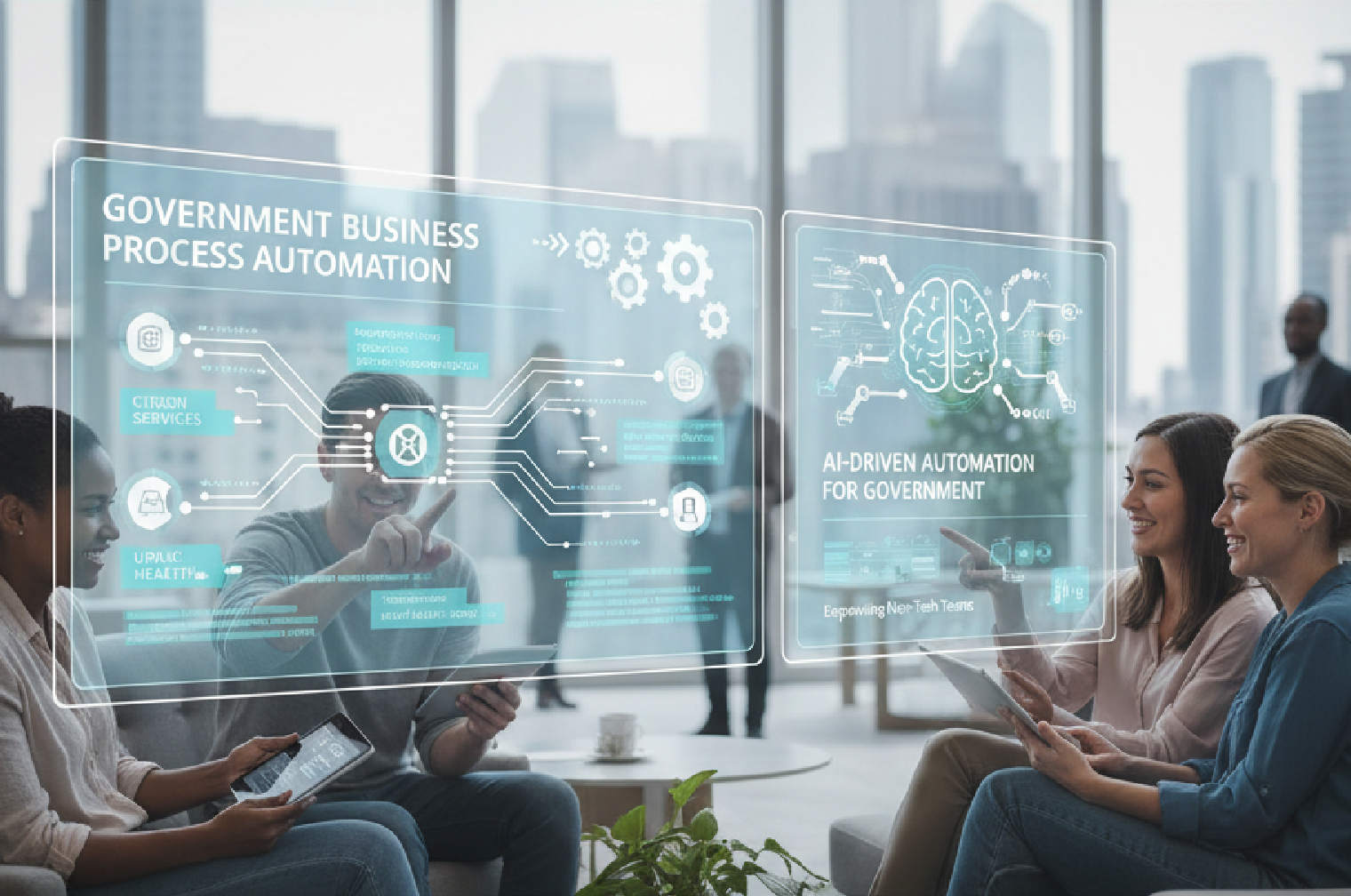
Low-Code Government Apps: Empowering Non-Tech Teams in Government & Public Sector

Low-code government apps are helping public institutions deliver modern services faster by shifting routine build work from constrained IT backlogs to domain experts, without compromising compliance or security.

AI-driven automation for government augments these apps with intelligent routing, document processing, and service orchestration to scale citizen services with fewer manual handoffs and improved auditability.

The modernization mandate

Across jurisdictions, demand for digital services continues to outpace IT capacity, making low-code and no-code viable accelerators for digital transformation in government with measurable gains in responsiveness and inclusion.

Analysts also frame an inflection point: by mid-decade, a majority of new applications are expected to use low-code/no-code approaches, underscoring a permanent shift in delivery models for the public sector.

Check: AI Automation Logistics for SMBs: Transforming Last-Mile Delivery

Build Smarter Public Services

Transform service delivery with Low-Code Government Apps and AI-Driven Automation for faster, seamless solutions.

Why low-code fits the government

By combining visual development, reusable components, and guardrails, low-code government apps compress delivery cycles from months to weeks while retaining extensibility for complex, policy-driven workflows.

This approach aligns with budget constraints by reducing specialist dependency and enabling incremental modernization for legacy portfolios, a priority for digital transformation in government. 

Factor Low-code in government Traditional development 
Delivery speed Visual tooling, templates, and composable services cut lead time to weeks for new public services. Full-stack builds and bespoke integrations extend timelines, delaying service improvements. 
Compliance & security Platforms offer baked-in controls and deployment to accredited enclaves such as FedRAMP/StateRAMP where available. Platforms offer baked-in controls and deployment to accredited enclaves such as FedRAMP/StateRAMP, where available. 
Total cost of ownership Lower build/maintenance effort and reuse reduce lifecycle costs across programs. Specialist-heavy teams and one-off patterns raise long-term maintenance costs. 
Empower non-tech teams Policy experts can compose workflows and forms safely, accelerating change cycles. Reliance on scarce developers creates bottlenecks and longer feedback loops. 
Interoperability API-first, modular services enable government workflow automation across departments. Case tracking was assembled ad hoc with limited analytics and inconsistent user experience. 
Case management Government case management apps delivered as CMaaS unify AI, workflow, and reporting. Case tracking was assembled ad hoc with limited analytics and an inconsistent user experience. 
Low-code fits the government

When platforms make it safe to empower non-tech teams, program managers can author service flows, forms, and rules, reducing reliance on IT bottlenecks and accelerating project delivery while IT governs standards and integrations. This shift has become central to no-code public sector automation initiatives where straightforward processes benefit from visual composition and rapid iteration.

AI-driven automation at scale

AI-driven automation for government blends machine learning, NLP, and intelligent automation to triage requests, extract data from documents, and route cases based on policy and risk, reducing manual effort and cycle time.

Done well, AI-driven automation in government raises service throughput and consistency while enhancing explainability through embedded audit trails and policy-linked decisioning.

  • Document intake and verification streamline permits, benefits, and grants with OCR and NLP, improving first-time accuracy and speed.
  • Virtual assistants extend 24/7 access, deflect routine queries, and escalate sensitive cases with full transcripts for compliance review.
  • Predictive analytics prioritize inspections, fraud screening, and emergency response, optimizing limited resources transparently.

Read: Importance of AI-Driven Automation for SMEs in 2025

Empower Non-Tech Government Teams

Enable your teams to create solutions quickly with Low-Code Government Apps integrated with AI-Driven Automation.

Case management transformed

Modern government case management apps deliver a unified operational picture—case data, evidence, tasks, SLA clocks, and communications—with AI assistance to accelerate resolution and improve citizen outcomes.

With case management as a service (CMaaS), agencies compose configurable solutions once and reuse patterns across benefits, licensing, grants, and enforcement programs, boosting ROI and consistency.

Public sector platforms increasingly offer deployment in accredited security enclaves and maintain continuous updates, aligning with frameworks like FedRAMP and StateRAMP to meet stringent data protection needs.

Governance practices recommended by audit bodies emphasize clear AI policies, model oversight, and risk controls to keep AI-driven automation in government both effective and accountable.

From pilots to platforms

Early wins often start with Government business process automation in a single program, then expand into cross-department Government workflow automation using an API-first, modular strategy.  

Scaling requires operating models that pair platform engineering with federated delivery so agencies can standardize guardrails while enabling No-code public sector automation where appropriate.

Low-code government apps typically reduce backlog by accelerating change requests, cutting handoffs, and surfacing metrics that guide continuous improvement across service lines.  

Combining low-code with AI-driven automation for government further improves throughput, reduces rework, and enables proactive service by detecting needs and risks earlier in the process.

Read: How AI Automation is Redefining Customer Experience 

Where to start

Target policy-stable, high-volume processes—permits, benefits, licensing—where Government business process automation offers immediate relief and clear KPIs for success. Next, expand into Government case management apps to unify channels, data, and decisions, creating a consistent experience across programs while tightening compliance controls.

Streamline Government Workflows

Reduce inefficiencies and enhance collaboration using Low-Code Government Apps powered by AI-Driven Automation.

Partner with ViitorCloud 

ViitorCloud helps public sector leaders accelerate digital transformation in government with a pragmatic platform strategy that blends low-code patterns, integration engineering, and AI-driven automation in government for measurable outcomes in months, not years.  

As a trusted delivery partner, ViitorCloud designs secure, maintainable solutions—from rapid pilots to enterprise-grade rollouts—grounded in reusable assets for Government workflow automation and repeatable success across portfolios. 

Explore how ViitorCloud’s digital experiences practice delivers resilient services, modern casework, and AI-ready architectures tailored to public sector needs, ensuring value, compliance, and citizen impact from day one. 

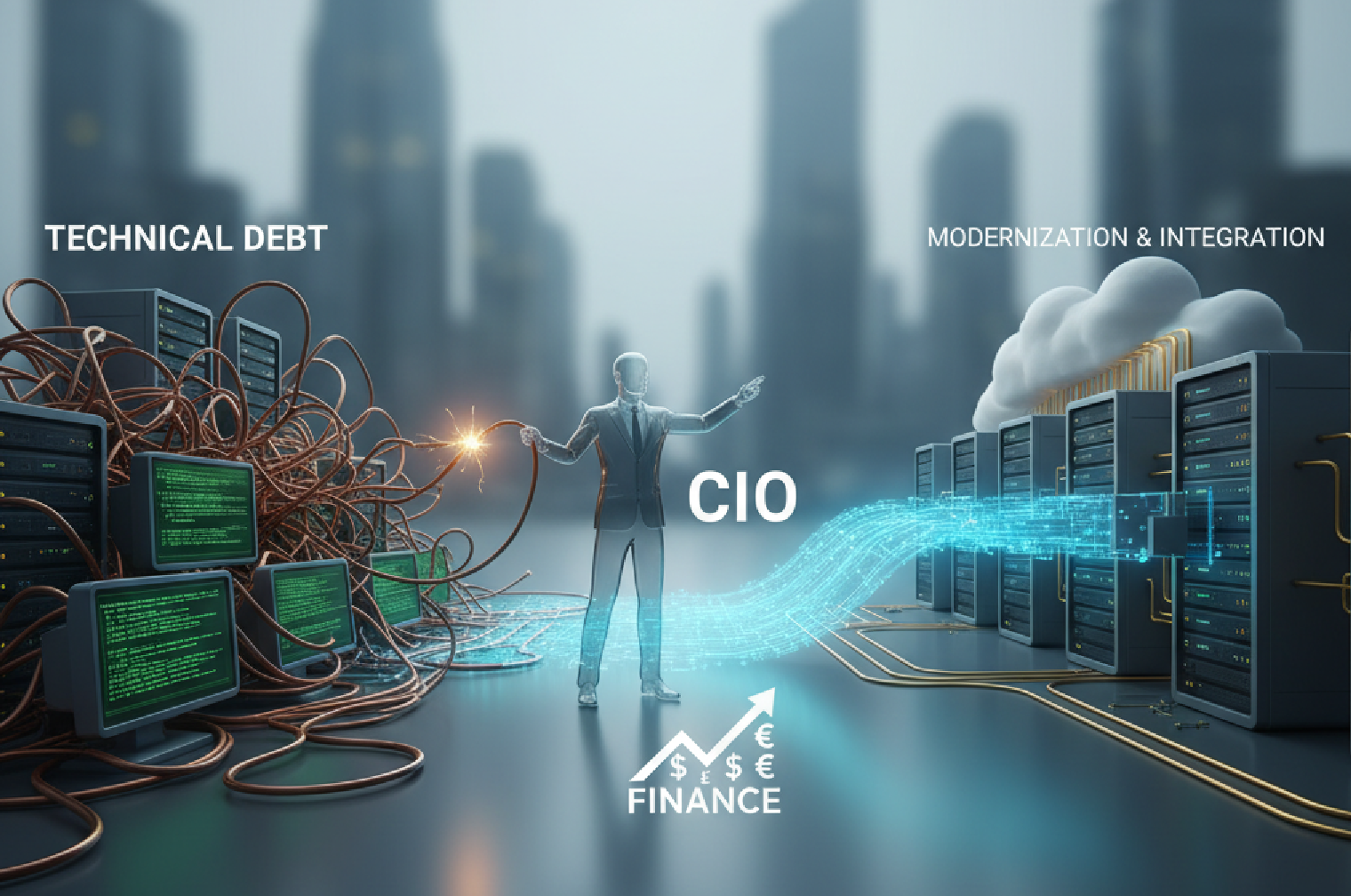
Legacy System Modernization: How CIOs in Finance Can Tackle Technical Debt Without Disrupting Operations

Legacy system modernization is now essential to reduce operational risk and technical debt, yet transformation must happen with near‑zero downtime in a heavily regulated, always‑on industry where service interruptions carry outsized consequences.

The fastest path forward blends progressive modernization with rigorous system integration, using API-first patterns, data interoperability, and controlled migration techniques that let core banking functions continue uninterrupted while the tech stack evolves behind the scenes.

ViitorCloud specializes in this exact balance for BFSI by designing resilient integration architectures and migration roadmaps that modernize incrementally, improve time‑to‑value, and protect business continuity from day one.

What is Legacy System Modernization in Finance?

Legacy system modernization in finance refers to updating or re‑platforming core banking and adjacent systems—often monolithic, mainframe-based, and highly customized—into modular, cloud-ready, API-driven architectures that improve agility, resilience, and regulatory responsiveness without interrupting daily operations.

Financial organizations accumulate technical debt because quick fixes, customizations, one‑off integrations, and deferred upgrades compound over years, making change risky and expensive while diverting budgets from innovation to keep‑the‑lights‑on activities.

Modernization targets those costs head‑on by progressively decoupling capabilities, rationalizing interfaces, and enabling open banking through standards-based APIs and composable services.

Read: System Integration for BFSI: Achieving Seamless Financial Operations

Modernize Legacy Systems Without Disruption

Upgrade your financial systems seamlessly with ViitorCloud’s Legacy System Modernization and System Integration solutions.

What Technical Debt Challenges Do Financial Institutions Face?

Technical debt in banking often represents a large share of the technology estate’s value, leading to spiraling maintenance costs, slower delivery, higher incident risk, and reduced capacity for new revenue initiatives, according to McKinsey’s research on tech debt’s systemic drag on transformation outcomes.

Fragmented point‑to‑point integrations, brittle batch processes, and vendor lock‑in exacerbate complexity, making core changes risky and multiplying the effort required for even routine feature releases. As a result, a disproportionate share of IT budget funds runs the bank activities, while innovation roadmaps stall under the weight of aging platforms and opaque dependencies across the stack.

Why Is Modernization a CIO Priority Now?

Bank IT spending is rising at a ~9% compound annual rate and already consumes more than 10% of revenues, making modernization essential to rein in run costs and improve ROI on digital investments, per BCG’s global banking tech analysis.

Gartner forecasts worldwide IT spending to surpass $5.7 trillion in 2025, fueled in part by AI infrastructure, meaning leaders must shift budgets from maintenance to value creation while navigating higher input costs and stakeholder scrutiny on outcomes.

Accenture notes that although banks have moved many satellite systems to the cloud, core banking remains the “elephant in the room,” so CIOs are prioritizing pragmatic, risk‑aware modernization that demonstrates incremental value and de‑risks the journey early.

How Can Banks Modernize Without Disrupting Operations?

Modernize in phases, isolating high‑change domains first and using parallel runs, feature flags, and canary releases to validate functionality in production with a controlled blast radius and clear rollback paths for safety.

Design for API-first interoperability so legacy and modern services coexist, and layer a robust integration fabric to normalize events, enforce policies, and standardize data contracts across channels and core systems, enabling reversibility and auditability at every step.

Treat observability as a migration enabler—instrument SLIs/SLOs, golden signals, and end‑to‑end tracing so anomalies are detected early and customer impact is minimized during cutovers and steady‑state operations.

  • Phased migration: Prioritize “hollow‑the‑core” patterns to externalize customer, product, and pricing capabilities via APIs before moving underlying records of truth, reducing risk while accelerating visible benefits.
  • API and microservices: Use domain‑aligned microservices and open banking APIs to decouple change cycles, scale independently, and integrate fintech ecosystems faster for new propositions and channels.
  • AI enablement: Deploy AI for fraud detection, underwriting assistance, service automation, and incident intelligence to improve resilience and customer experience during and after modernization.

Check: System Integration in Finance: Streamlining Compliance and Risk Management

Tackle Technical Debt with Confidence

Leverage expert System Integration to modernize legacy platforms while ensuring business continuity.

Legacy vs. Modernized Banking Systems

DimensionLegacy (Old)Modernized (New)
ArchitectureMonolithic cores with tightly coupled modules that slow releases and raise incident riskComposable, domain‑based services with API gateways and event streams for independent scaling and safer change
IntegrationPoint‑to‑point, batch-heavy interfaces that are brittle under changeAPI-first, event‑driven, real‑time integration that supports open banking and partner ecosystems
OperationsHigh MTTR, limited observability, heavy manual controlsAutomated SRE practices, full-fidelity telemetry, policy-as-code, and faster mean time to recovery
ComplianceRetrofitted reporting, fragmented data lineageUnified data models, lineage, and auditable workflows embedded in integration layers
Change RiskBig-bang upgrades with major outage windowsProgressive cutovers with canary/blue‑green and rollback automation to avoid downtime
Legacy vs. Modernized Banking Systems

How Does System Integration Power Finance Transformation?

System integration in finance creates a unified fabric that connects legacy cores, digital channels, risk and compliance platforms, and partner ecosystems, ensuring consistent data, policies, and SLAs while modernization occurs behind the scenes.

It standardizes API lifecycles, enforces governance, and orchestrates flows across hybrid and multi‑cloud, enabling CIOs to decouple delivery schedules and shield customers from backend change.

This discipline is the backbone for digital transformation finance programs, turning disparate systems into a coherent, resilient platform capable of continuous evolution.

Why Modernize Banking Platforms Today?

Banks that delay core and platform modernization face rising run costs, slower-than-market response, and greater operational and regulatory risk as customer expectations shift toward instant, personalized, and always‑on services.

Accenture highlights that only a fraction of bank workloads historically moved to the cloud, and value realization depends on interoperable, composable architectures—making platform modernization central to profitable digitization. With transaction banking, embedded finance, and AI‑driven risk models accelerating, modern platforms are the prerequisite for growth, resilience, and secure ecosystem participation.

Build a Future-Ready Financial Ecosystem

Transform legacy systems with modern, scalable, and integrated solutions tailored to your operations.

How ViitorCloud Supports CIOs with System Integration

ViitorCloud delivers system integration and modernization services purpose‑built for finance, unifying applications, data, and infrastructure so CIOs can execute legacy system modernization without disrupting customer experience or regulatory obligations.

From API integration and data interoperability to re‑architecture and refactoring, our teams implement domain‑specific patterns for BFSI that balance near‑term wins with long‑term architectural health and cost control.

Contact our team to set up a complimentary consulting call with our expert.

Frequently Asked Questions

It’s the process of progressively upgrading banking platforms and core systems into API‑first, cloud‑ready, and composable architectures—so capabilities evolve without interrupting daily operations or breaching regulatory SLAs.

Integration standardizes APIs, data contracts, and orchestration across channels and cores, allowing legacy and modern components to coexist safely while changes roll out in phases.

Big‑bang migrations, poor sequencing, and insufficient observability can impact customer experience and compliance; that’s why progressive cutovers, canary releases, and strong governance are essential.

Adopt “hollow‑the‑core” with targeted component exposure via APIs, migrate in phases with parallel runs, and invest in integration governance to decouple changes from customer‑facing services.

Open APIs enable interoperability with fintechs, accelerate product rollout, and decouple release cycles while supporting open banking requirements and partner channels.

AR/VR for Healthcare Training: Productivity Gains Now

AR/VR for healthcare training is already delivering measurable productivity gains. Faster skill acquisition, fewer errors, and scalable simulation are making it one of the most effective ways to upskill clinicians without compromising patient safety.

Rigorous studies show VR-trained residents commit up to six times fewer intraoperative errors and complete procedures faster, while recent market analyses project sustained double‑digit growth for AR/VR in healthcare, underscoring both efficacy and momentum for adoption

Challenges and AR/VR as a Solution

Traditional training struggles with limited cadaver access, scheduling constraints, and variability in clinical exposure, which slows onboarding and increases reliance on high‑risk, on‑patient learning curves.

In contrast, immersive environments recreate rare events and complex procedures on demand, giving residents repeatable, feedback‑rich practice that strengthens performance and confidence before they step into the OR.

Systematic reviews conclude that AR and VR significantly enhance medical training outcomes by offering realistic, interactive environments and structured assessment loops that transfer to clinical performance.

A 2023 interventional study reported a 40% reduction in overall error rates after VR training, reinforcing the technology’s safety and productivity impact across practical skills.

Revolutionize Healthcare Training with AR/VR

Improve medical staff performance and reduce training time using ViitorCloud’s AI-Powered Digital Experience Solutions.

Productivity Gains Through AR/VR Development

Seminal randomized research demonstrated that VR-trained residents performed laparoscopic dissection 29% faster and were far less likely to injure non-target tissue than traditionally trained peers, establishing a durable evidence base for simulation-first pathways. Contemporary analyses add that VR cohorts finish procedures faster and complete more steps correctly, validating efficiency and quality gains for modern AR/VR for healthcare training workflows.

With targeted AR/VR development, teams compress time-to-competence by sequencing tasks, tracking proficiency thresholds, and delivering haptic feedback that mirrors real instrument-tissue interactions to improve motor planning and accuracy. Studies using proficiency-based simulation frameworks show substantial reductions in resident error rates during their first ten real laparoscopic cholecystectomies, translating virtual mastery into safer early-case performance.

Check this video case study: Peg Tube VR Training Solution

Training outcomes at a glance

MetricTraditional simulationAR/VR for healthcare training
Procedure speedBaseline times with limited repetition opportunities20% faster completion in controlled cohorts learning procedures
Steps completed correctlyVariable adherence to protocols under time pressure38% more steps completed correctly versus traditional training
Error ratesHigher early-case error counts on first proceduresUp to 6x fewer errors in OR after VR-based training
Early residency performanceGreater variability and on‑patient learning curvesProficiency‑based VR cuts OR error rates across first 10 cases
AR/VR for healthcare training outcomes.

The Future of AR/VR for Healthcare

Scalable, cloud‑delivered modules make AR/VR for healthcare accessible across sites, enabling remote training, asynchronous assessment, and standardized curricula that raise the floor of capability system‑wide.

As regulators catalog AR/VR-enabled medical devices and guidance evolves, organizations gain clearer pathways to adopt simulation technologies that align with safety, documentation, and quality frameworks.

Global market studies estimate AR/VR in healthcare at roughly $3.9 billion in 2024 with CAGRs above 20% through the next decade, demonstrating sustained expansion across training, planning, and therapy use cases.

In India, AR adoption in healthcare is projected to grow at over 28% CAGR through FY2032, signaling strong alignment between national digital priorities and immersive clinical education needs.

Read: How ViitorCloud is Pioneering Digital Transformation in Healthcare

Maximize Productivity with AR/VR for Healthcare Training

Enhance engagement and streamline learning with scalable, AI-Powered Digital Experience Solutions.

Digital experience is the backbone

Immersive training succeeds when it’s anchored in robust digital experience solutions that unify content pipelines, data instrumentation, identity, and analytics for measurable learning outcomes and lifecycle management.

Mature digital experience services connect engines, assets, telemetry, and LMS/EHR integrations, while AI-powered digital experience solutions personalize scenarios, automate feedback, and scale content creation for sustained ROI.

Practical delivery requires sweating details—asset pipelines, cross‑platform performance, and real‑time rendering—so simulations run reliably on headsets and mobile devices without compromising fidelity.

Teams that instrument experiences end‑to‑end with digital experience monitoring and optimization mature from pilots to enterprise programs with defensible KPIs and governance.

ViitorCloud’s Role in Shaping Training

ViitorCloud delivers end‑to‑end Digital Experience consulting and implementation—strategy, design, engineering, integration, and optimization—to operationalize AR/VR for healthcare training at scale. Our healthcare and AI thought leadership spans digital transformation, augmented reality, and clinical automation, bringing pragmatic, domain‑aware execution to immersive learning ecosystems.

AI-powered digital experience solutions accelerate scenario generation, adaptive assessment, and performance analytics, reducing content costs while tailoring progression to individual learning curves. Combined with secure integrations and workflow automation, AI augments simulation programs with decision support, structured feedback, and continuous improvement across cohorts and sites.

ViitorCloud partners with healthcare providers to design measurable, safe, and scalable training programs that fit clinical realities and regulatory expectations. The Digital Experience Services team aligns stakeholders, technology stacks, and governance so AR/VR development delivers immediate performance wins and long‑term capability building.

Check our case studies: ViitorCloud Case Studies

Transform Training with Next-Gen AR/VR

Empower your healthcare teams with immersive AR/VR for Healthcare Training powered by ViitorCloud’s AI solutions.

Final Thoughts

AR/VR for healthcare training improves speed, accuracy, and confidence while reducing early‑case errors, making it a practical lever for productivity and patient safety today. Pairing immersive modules with AI-powered digital experience services and solutions enables measurable outcomes, portfolio scalability, and continuous optimization across the enterprise—start by exploring ViitorCloud’s Digital Experience Services to plan a pilot that proves value fast. Contact our team now for a complimentary consultation.

Building Scalable SaaS Platforms for Retail Startups: A CTO’s Playbook

Scalable SaaS platforms for retail startups are built by anchoring every decision to the six pillars of cloud architecture, i.e., security, reliability, performance efficiency, operational excellence, cost optimization, and sustainability—while embracing multi-tenant patterns, event-driven designs, and data models that scale horizontally under spiky retail demand. 

The shortest path is to start with a multi-tenant baseline on a major cloud, automate tenant onboarding and routing, select storage per workload (SQL, NoSQL, or NewSQL), and instrument tenant-level metrics for capacity, cost, and experience, then iterate with load tests that mirror peak season and flash-sale behavior. 

Retail is scaling fast—global ecommerce revenue is expected to surpass $6.09 trillion in 2024 and reach over $8 trillion by 2028—so platforms must handle volatile traffic, complex inventory and pricing, and compliance-heavy payment flows from day one. 

What Makes a SaaS Platform ‘Scalable’ for Retail? 

Scalable SaaS platforms for retail startups should sustain rapid user growth and fluctuating order volumes without degraded latency by distributing state and compute, isolating tenants appropriately, and automating elasticity at each layer. 

It also minimizes operational toil through automated tenant onboarding, observability, and remediation so teams can ship changes quickly while preserving security, compliance, and cost efficiency. 

Finally, it adapts to evolving channel integrations—POS, marketplaces, payments, logistics—via decoupled interfaces and event-driven patterns that localize failures and allow independent service scaling. 

Check: What is SaaS Product Engineering and Why is it Crucial for Business Success? 

What are the core pillars of scalability? 

As stated, CTOs should continuously assess architecture against the six pillars: operational excellence, security, reliability, performance efficiency, cost optimization, and sustainability. 

These pillars translate into practices like autoscaling, fault isolation, continuous verification, least-privilege access, and spend visibility at the tenant and service level. 

Build Scalable SaaS Platforms for Growth

Empower your retail startup with robust SaaS product engineering designed to scale seamlessly.

How to size the opportunity and risk? 

E-commerce is compounding, with 2024 revenues projected at $6.09 trillion and a forecast to exceed $8 trillion by 2028, which means traffic spikes and seasonality will intensify across retail categories. 

Planning must assume higher-than-average peak-to-median ratios, flash promotions, and international rollouts, not just steady linear growth. 

How do you choose the right tech stack? 

Favor services and frameworks that support horizontal scaling and multi-tenancy, then select data stores per domain—relational for strong consistency, document/columnar for elastic catalogs and events, and NewSQL for ACID at scale. 

Use managed cloud primitives that encode best practices out of the box, reducing undifferentiated heavy lifting and compliance surface. 

Read: Why SaaS and Small Businesses Must Embrace Custom AI Solutions 

SQL vs NoSQL vs NewSQL for retail workloads 

Option Scaling model Consistency model Best for Retail examples 
SQL (e.g., PostgreSQL) Primarily vertical scaling with clustering/replication add-ons  Strong ACID transactions Orders, payments, and financial posting Checkout, invoicing, and refunds where integrity is critical 
NoSQL (e.g., MongoDB) Native horizontal sharding and scale-out Flexible schema, eventual consistency options Product catalogs, sessions, activity feeds High-variance attributes and rapid catalog updates 
NewSQL (e.g., distributed SQL) Horizontal scaling with ACID guarantees Strong consistency with distributed transactions High-throughput OLTP at scale  Flash-sale order capture across regions 
SQL vs NoSQL vs NewSQL

Accelerate Retail Innovation with SaaS

Leverage our expertise in scalable SaaS platforms to create future-ready retail solutions.

How should multi-tenancy be implemented? 

Adopt the pool, bridge, or silo model per tenant tier and data sensitivity, balancing isolation, cost, and operational simplicity. 

Leverage standardized onboarding, tenant-aware identity, routing, and metering so new tenants can be provisioned instantly and governed consistently. 

What about routing and integrations? 

Implement deterministic tenant routing at the edge and service tier, using headers or subdomains to direct requests to pooled or isolated backends. 

Decouple retail integrations—payments, marketplaces, logistics—through event buses and retries so external failures don’t cascade into core ordering and catalog flows. 

What compliance is non-negotiable? 

Retail SaaS commonly intersects with PCI DSS for payment flows, SOC 2 for trust controls, and GDPR for personal data in the EU, each shaping architecture and operational controls. 

Design for encryption in transit and at rest, least-privilege access, regional data residency when required, and auditable change management and logging. 

“SaaS is all about agility,” a reminder that architectural choices must accelerate onboarding, updates, and incident recovery without sacrificing isolation or trust. 

Read Also: AI-First SaaS Engineering: How CTOs Can Launch Products 40% Faster 

Optimize Your SaaS Product Engineering

Streamline development and scale confidently with our proven SaaS engineering expertise.

A 5-Step Playbook for Building Your Platform 

  1. Define tenant model and SLAs: Choose pool, bridge, or silo per customer segment and data risk, then codify SLAs for latency, availability, and data isolation. 
  1. Architect for elasticity and failure: Use autoscaling, circuit breakers, idempotent operations, and bulkheads to handle load surges and upstream outages gracefully. 
  1. Pick storage per domain: Combine relational for critical transactions, NoSQL for elastic reads, and distributed SQL where ACID must scale horizontally, all with clear data ownership and retention. 
  1. Build tenant-aware ops: Instrument per-tenant metrics for cost, performance, and feature adoption, and automate onboarding, routing, and policy enforcement. 
  1. Prove it with tests: Run load and chaos tests that simulate peak season and flash sales, validate scaling policies, and rehearse failover and rollback procedures. 

What pitfalls should be avoided? 

  • Treating multi-tenancy as an afterthought increases blast radius and migration cost later. 
  • Picking a single database for all workloads instead of aligning data stores to domains and access patterns. 
  • Skipping tenant-level cost and performance telemetry, which hides noisy neighbor risks and margin erosion. 

How do you integrate retail stats into planning? 

Use the e-commerce growth baselines, $6.09 trillion in 2024 and an eight-trillion trajectory by 2028, to set capacity curves and cost envelopes for the first 24 months. 

Translate forecast peaks into queue depth thresholds, read/write budgets, and cache warm-up timings across services. 

Partner with ViitorCloud for Scalable SaaS Product Engineering 

ViitorCloud specializes in end-to-end SaaS product engineering that builds secure, resilient, and scalable platforms capable of handling rapid user growth and integrating with modern retail ecosystems. 

Our team delivers tenant-aware architectures, composable integrations, and performance-first engineering patterns that evolve with market demands and enterprise compliance needs. 

Partner with ViitorCloud to co-architect the multi-tenant model, select the right data stores per domain, and harden the platform against real retail workloads—with a roadmap that accelerates time-to-value. 

Scale Your Retail SaaS Smarter

Unlock growth opportunities with scalable SaaS platforms designed for retail success.

The Playbook at a Glance 

  • Anchor engineering to the six pillars and treat multi-tenancy, routing, and observability as first-class concerns. 
  • Mix SQL, NoSQL, and NewSQL per domain to keep transactions safe and reads elastic at peak. 
  • Automate tenant onboarding, policy enforcement, and telemetry to scale customers and trust together. 
  • Design for peak and failure, not average load, using autoscaling, queues, and idempotent flows. 
  • Map PCI DSS, SOC 2, and GDPR into cloud-native controls early to avoid rework and deal with friction. 

Frequently Asked Questions

Enterprises often warrant the bridge or silo model for stronger data and performance isolation, while SMB tiers benefit from pooled resources with strong logical segregation and throttles. 

Push read-heavy paths to caches and CDNs, make payment flows idempotent, and isolate payment webhooks behind queues so upstream slowness does not block confirmation paths. 

Use a distributed SQL engine when ACID guarantees are mandatory under horizontal scale, such as global order capture or inventory reservations with strong consistency. 

Prioritize PCI DSS scope reduction if handling payments, establish SOC 2 controls for trust, and address GDPR where data subjects are in the EU, mapping controls into cloud services. 

Use deterministic identifiers at the edge and propagate tenant context through services, selecting routing strategies that match pool, bridge, or silo models.

What is AI-Powered Data Pipeline Development for Real-Time Decision Making in Technology Firms?

AI-powered data pipeline development is the engineered process of ingesting, transforming, and serving data—via both batch and streaming paths—to power machine learning and analytics, enabling decisions to be made with low latency and high reliability in production systems.  

In technology firms, this discipline connects operational data sources to model inference and business logic, enabling actions to be triggered as events occur rather than hours or days later, and facilitating truly real-time decision-making at scale.  

With AI-powered data pipeline development, custom AI solutions for technology firms convert raw telemetry into features and signals that drive automated actions and human-in-the-loop workflows within milliseconds to minutes, depending on the service-level objective. 

Real-time pipelines are crucial because applied AI and industrialized machine learning are scaling across enterprises, and the underlying data infrastructure significantly impacts latency, accuracy, trust, and total cost of operation. By the time a dashboard updates, an opportunity or risk may have vanished—streaming-first designs and event-driven architectures close this gap to unlock compounding business value. 

What is AI-Powered Data Pipeline Development? 

AI-powered pipeline development designs the end-to-end flow from data producers (apps, sensors, services) through ingestion, transformation, storage, and feature/model serving so that AI systems always operate on timely, high-quality data.  

Unlike traditional ETL that primarily schedules batch jobs, these pipelines incorporate event streams, feature stores, and observability to keep models fresh and responsive to live context. The result is a cohesive fabric that unifies data engineering with MLOps so models, features, and decisions evolve as reality changes. 

Build Smarter Decisions with AI-Powered Data Pipeline Development

Integrate data seamlessly and make real-time decisions with ViitorCloud’s Custom AI Solutions.

Why Real-Time Pipelines Now? 

Enterprise adoption of applied AI and gen AI has accelerated, with organizations moving from pilots to scale and investing in capabilities that reduce latency and operationalize models across the business.  

Streaming pipelines and edge-aware designs are foundational enablers for this shift, reducing time-to-insight while improving decision consistency and auditability for technology firms. 

How to Build an AI-Powered Data Pipeline 

  1. Define decision latency and SLA 
    Clarify the “speed of decision” required (sub-second, seconds, minutes) and map it to batch, streaming, or hybrid architectures to balance latency, cost, and reliability. 
  1. Design the target architecture 
    Choose streaming for event-driven decisions, batch for heavy historical recomputation, or Lambda/Kappa for mixed or streaming-only needs based on complexity and reprocessing requirements. 
  1. Implement ingestion (CDC, events, IoT) 
    Use change data capture for databases and message brokers for events so operational data lands consistently and with lineage for downstream processing. 
  1. Transform, validate, and enrich 
    Standardize schemas, cleanse anomalies, and derive features so data is model-ready, with governance and AI automation embedded in repeatable jobs. 
  1. Engineer features and embeddings 
    Generate and manage features or vector embeddings for retrieval and prediction, and sync them to feature stores or vector databases for low-latency reads. 
  1. Orchestrate, observe, and remediate 
    Track data flows, schema changes, retries, and quality metrics to sustain trust, availability, and compliance in production pipelines. 
  1. Serve models with feedback loops 
    Deploy model endpoints or stream processors, capture outcomes, and feed them back to improve data, features, and models continuously (industrializing ML). 
  1. Secure and govern end-to-end 
    Integrate controls for privacy, lineage, and access while aligning with digital trust and cybersecurity best practices at each pipeline stage. 

What Benefits Do Real-Time, AI-Powered Pipelines Deliver? 

  • Faster, consistent decisions in products and operations through event-driven processing and low-latency data delivery. 
  • Higher model accuracy and reliability because data freshness and feature quality are monitored and continuously improved. 
  • Better cost-to-serve and scalability via clear architecture choices that align latency with compute and storage economics. 
  • Stronger governance and trust with lineage, observability, and controls aligned to modern AI and cybersecurity expectations. 

Transform Your Tech Stack with AI-Powered Data Pipeline Development

Drive efficiency and scalability through real-time data processing with our Custom AI Solutions.

Which Pipeline Architecture Fits Which Need? 

Pipeline type Processing model Latency Complexity Best fit 
Batch Periodic ingestion and transformation with scheduled jobs Minutes to hours; not event-driven Lower operational complexity; simpler operational state Historical analytics, reconciliations, and monthly or daily reporting 
Streaming Continuous, event-driven processing with message brokers and stream processors Seconds to sub-second; near-real-time Operationally richer (brokers, back-pressure, replay) Live telemetry, inventory, fraud/alerting, personalization 
Lambda Dual path: batch layer for accuracy, speed layer for fresh but approximate results Mixed; speed layer is low-latency, batch is higher-latency Higher (two code paths and reconciliation) Use cases needing both historical accuracy and real-time views 
Kappa Single streaming pipeline; reprocess by replaying the log Low-latency for all data via stream processing Historical analytics, reconciliations, and monthly or daily reporting Real-time analytics, IoT, social/event pipelines, fraud detection 
Pipeline Architecture

What Do the Numbers Say? 

McKinsey’s 2024 Technology Trends analysis shows generative AI use is spreading, with broader scaling of applied AI and industrialized ML and a sevenfold increase in gen AI investment alongside strong enterprise adoption momentum. The report also highlights cloud and edge computing as mature enablers—key dependencies for real-time AI pipelines in production contexts. 

“Real-time pipelines are where data engineering meets business outcomes—turning raw events into timely, explainable decisions that compound competitive advantage,” —industry expert. 

How ViitorCloud Can Help Your Tech Firm 

ViitorCloud specializes in developing custom AI solutions for technology firms, designing and implementing robust AI-powered data pipelines that enable real-time decision making, enhance operational efficiency, and drive competitive advantage. With a global presence, the team aligns architecture, features, and model serving with the firm’s latency and reliability targets to deliver measurable business outcomes.  

For discovery sessions, solution roadmaps, or implementation support, explore the Artificial Intelligence capabilities and engage the team to discuss the specific pipeline needs and success metrics for the next initiative. 

Accelerate Decision-Making with AI-Powered Data Pipeline Development

Leverage real-time insights and automation tailored to your needs with ViitorCloud’s Custom AI Solutions.

How to Choose Between Architectures 

  • For event-driven products that demand seconds or sub-second responses, prioritize streaming or Kappa, then add replay and observability for resilience. 
  • For heavy historical recomputation with strict accuracy, keep a batch path or Lambda to merge “speed” with “truth” views. 
  • Where cost and operational simplicity dominate, use batch-first with targeted streaming for the few decisions that truly require immediacy. 

Frequently Asked Questions 

Traditional ETL moves data in scheduled batches for downstream analysis, while AI-powered pipelines unify batch and streaming paths to feed features and models for low-latency, in-production decisions. 

Lambda helps when both accurate historical batch views and fresh stream views are required, whereas Kappa simplifies to one streaming path and replays the log for reprocessing, where low latency is paramount. 

In most systems, real-time implies seconds to sub-second end-to-end latency enabled by event-driven ingestion and stream processing, distinct from minutes-to-hours batch cycles. 

Embed validation, schema management, and monitoring into transformation stages, then track lineage and retries to ensure consistent, trustworthy feature delivery. 

Data engineering, MLOps, and platform engineering are core, with demand rising as enterprises scale applied AI and industrialize ML across products.

API Development and Integration: How Logistics Companies Connect Disparate Systems Seamlessly

API development and integration in logistics is the engineering discipline that connects ERPs, WMS, TMS, carrier systems, and marketplaces so data flows in real time across the entire value chain, eliminating silos and manual rekeying at scale.

By exposing well-designed APIs and orchestrating third-party integrations, logistics providers can consolidate orders, tracking, inventory, rates, invoices, and exceptions into a single operational fabric that is traceable, auditable, and fast.

The result is fewer delays, fewer errors, and more predictable ETAs, without ripping and replacing core systems already in use.

For logistics businesses, the primary benefit is operational resilience. When systems speak the same language, teams make better decisions faster, customer promises hold, and margins improve through automation and orchestration at every handoff.

If the priority is to implement system integration in logistics with custom API development and trusted third‑party connectors, ViitorCloud’s system integration services are built to scope, build, and run integrations that align with business KPIs, not just IT checklists.

Why We Think This is Important

Global parcel volume is still climbing and is projected to reach 225 billion by 2028, intensifying the need for real-time logistics visibility and automated exceptions management across carriers and nodes.

API-first ways of working are now mainstream, with industry data showing materially faster API production cycles for teams that adopt collaborative, API-first practices—critical when integrations are the backbone of customer experience in logistics.

Leading logistics operators also report automating bookings and documentation through APIs as part of broader AI-enabled operations, improving reliability and cost while maintaining one consistent face to the customer.

“Industry analysts find that API-first organizations ship faster and collaborate better—advantages that compound in logistics where every minute and message matters.”

Streamline Logistics with Seamless System Integration

Unify your logistics operations with ViitorCloud’s expert API Development and Integration services.

What is API Development and Integration in Logistics?

API development and integration in logistics is the practice of building and connecting software interfaces so multiple systems—like ERP, WMS, TMS, carrier portals, and marketplaces—can send and receive data in real time, reliably, and securely.

Unlike brittle point‑to‑point connectors or batch-only EDI, modern APIs deliver two‑way, event‑driven exchanges for orders, tracking, inventory, labels, invoices, and proof‑of‑delivery across the ecosystem.

Check: GraphQL and Node.js: A Perfect Match for API Development

Why Logistics Companies Need System Integration

Disconnected tools create siloed data, manual reconciliation, and delayed ETAs that are costly and hard to scale during peak demand or network disruptions.

API integration streamlines collaboration with shippers and carriers and reduces manual touches across booking, rating, tracking, billing, and customer updates.

As parcel volumes and service expectations rise, integrated APIs become the operating system for efficient, transparent, multi‑party logistics networks.

Benefits of API Integration in Logistics

API-led system integration in SMBs cuts processing time, removes rekeying, and improves accuracy across freight operations; some teams report over 50% faster processing when APIs drive carrier and partner exchanges.

API-first practices also correlate with faster production cycles and quicker iteration on integrations, helping logistics providers respond to carrier changes and customer needs sooner.

Real-time data improves customer experience through proactive notifications and exception handling, strengthening trust while lowering support costs.

Enhance Connectivity Across Your Systems

Connect ERPs, WMS, and TMS seamlessly with our advanced System Integration solutions.

How to Implement API Development and Integration

  1. Assess: Inventory systems, data models, events, SLAs, and partner interfaces across ERP, WMS, TMS, carriers, and marketplaces to define integration scope and KPIs.
  2. Plan: Choose patterns (synchronous/async), define canonical data models, select gateways/middleware, and map authentication, rate limits, and error handling upfront.
  3. Build: Develop custom APIs and connectors, standardize payloads, and implement orchestration for workflows like quote-to-invoice and order-to-cash.
  4. Test: Validate performance, resilience, and compatibility with partner sandboxes, including negative paths and contract tests for every endpoint.
  5. Deploy: Roll out with gateways, versioning, observability, and staged traffic to manage risk with clear rollback procedures.
  6. Monitor: Track latency, error rates, retries, saturation, and security posture continuously, aligned with SLAs for internal and partner APIs.

Common Integration Patterns & Architecture

Synchronous vs asynchronous: Use synchronous APIs for immediate reads/writes like rate quotes and label creation, and async patterns/webhooks for events such as status updates, POD, and exceptions to avoid blocking flows.

Event buses and webhooks: Adopt event subscriptions to broadcast shipment updates and inventory changes, decoupling systems and reducing polling overhead at scale.

Gateway and middleware: Centralize authentication, rate limiting, routing, and transformation through an API gateway and/or iPaaS to simplify partner onboarding and lifecycle management.

Read: Techniques to Boost Node.js API Performance

Comparison: Traditional (manual/EDI) vs API-driven integration

DimensionTraditional (manual/EDI)API-driven integration
Data timelinessBatch-based, delayed acknowledgements and updatesReal-time, two-way communication for rapid decisions
FlexibilityConstrained by EDI standards and change cyclesFlexible payloads and faster iteration with versioned APIs
Error handlingManual reconciliation and late exception detectionProgrammatic retries, webhooks, and proactive exception flows
Partner onboardingLonger mapping cycles and testing windowsFaster onboarding via gateways, standardized contracts, and sandboxes
Use casesStandardized transactions like invoices and ASNsRich workflows including tracking, POD, inventory sync, and rating
Traditional (manual/EDI) vs API-driven integration

Also Check: Building Scalable APIs with Node.js & Express

Optimize Operations with API Development and Integration

Eliminate data silos and drive growth with ViitorCloud’s seamless System Integration services.

Build a Connected Logistics Stack with Viitorcloud

If you are facing issues in your logistics operations and are ready to eliminate inefficiencies in logistics operations with API development and integration that unifies ERPs, WMS, TMS, and partner platforms, ViitorCloud designs and delivers custom APIs, secure third‑party integrations, and end‑to‑end orchestration with the governance and monitoring modern logistics demands.

Contact us and book a consultation to plan an integration roadmap that fits the operation’s scale and ambition.

Frequently Asked Questions

It’s how ERPs, WMS, TMS, carriers, and marketplaces exchange data in real time through standardized interfaces, eliminating silos and manual rekeying.

APIs automate data handoffs and validations across booking, tracking, and billing, reducing manual touches that can introduce errors.

Timelines vary by scope and partners, but API-first teams ship integrations faster due to collaborative workflows and tooling.

Yes, when aligned to the OWASP API Security Top 10, with strong authorization, token management, and rate limiting.

Use custom APIs for unique workflows or domain-specific data, and third-party connectors to accelerate common integrations, such as those with carriers and marketplaces.

ERP, WMS, TMS, carrier platforms, and eCommerce/marketplaces for end‑to‑end order, inventory, and shipment synchronization.

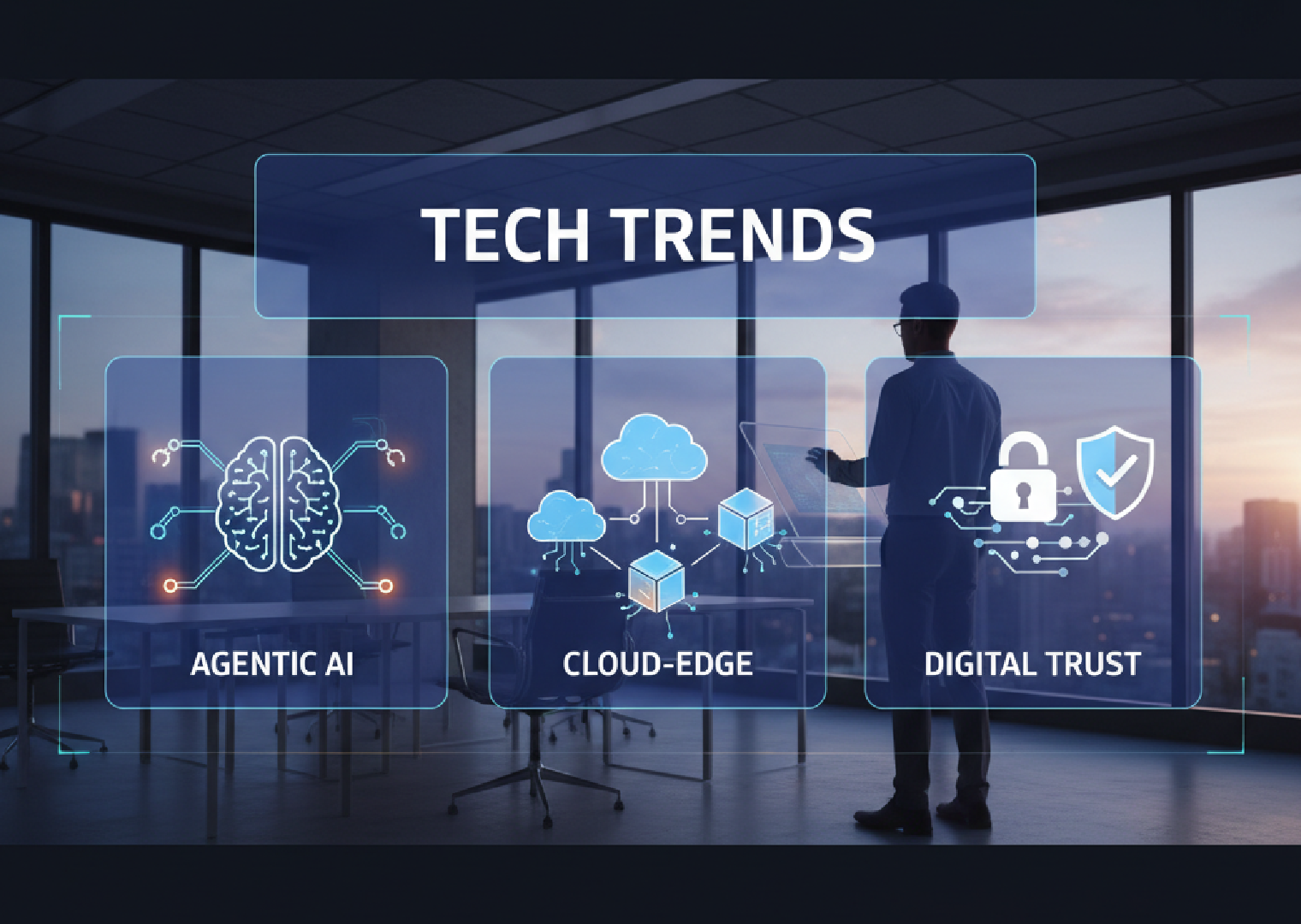
Operationalizing McKinsey’s 2025 Tech Trends with ViitorCloud: Agentic AI, Cloud‑Edge, and Digital Trust

McKinsey’s 2025 Technology Trends Outlook highlights 13 frontier trends reshaping value creation, with AI acting as an amplifier across robotics, semiconductors, mobility, and energy, offering a timely blueprint for IT leaders to prioritize investment, governance, and talent in the face of scaling constraints and global competition.

In this context, ViitorCloud’s AI-first platforms, cloud engineering, and data capabilities provide practical pathways to operationalize these trends safely and at speed for enterprise outcomes.

Why this matters in 2025

The 2025 Outlook shows equity investment rebounded across 10 of 13 trends in 2024, while themes like autonomy, human–machine collaboration, infrastructure bottlenecks, and responsible innovation now define the adoption agenda for CIOs and CTOs.

AI is both a standalone wave and a force multiplier, accelerating use cases from software engineering to energy systems optimization, yet value capture hinges on cost-efficient inference, robust governance, and workforce adaptation at scale.

AI’s Next Phase: Agentic Coworkers

Newly elevated in 2025, agentic AI moves beyond chat to plan and execute multi-step workflows, enabling virtual coworkers that coordinate tools, call APIs, and collaborate with other agents to deliver business outcomes autonomously.

Early signals are strong. Job postings in agentic AI spiked from 2023 to 2024, and equity investment surpassed $1.1B. Yet enterprises must pair experimentation with guardrails for reliability, liability, and safe autonomy.

  • Smaller, domain-specific models (≈≤10B parameters) are surging, lowering compute costs and enabling on-device/edge inference across devices, vehicles, and industrial assets.
  • Multimodal and reasoning advances are shifting AI from retrieval to deep planning and code generation, accelerating developer productivity while introducing new needs for quality, observability, and technical debt management.

At ViitorCloud, we build custom AI solutions and automation for real workflows—codifying data pipelines, orchestrating tools, and integrating governance to keep agentic systems auditable and aligned to KPIs.

Lead Innovation with Agentic AI

Transform decisions and automate complex workflows with ViitorCloud’s Agentic AI solutions for future-ready enterprises.

Compute And Connectivity: From Hyperscale to Edge

“Compute and connectivity frontiers” span application-specific semiconductors, advanced connectivity, and cloud/edge computing—areas that are scaling fast as gen AI and autonomy intensify compute demand and strain power, networking, and supply chains.

Purpose-built silicon is accelerating as organizations chase performance-per-watt and cost per inference, while edge architectures reduce latency, enhance privacy, and enable resilient operations in bandwidth-constrained environments.

  • Cloud and edge computing saw renewed investment momentum in 2024 as organizations balanced centralized training with localized inference and control, creating hybrid architectures that are both scalable and sovereign-ready.
  • Adoption success now depends as much on non-technical execution (permits, grid access, skills, and ecosystem alignment) as it does on software architecture and MLOps maturity.

We deliver cloud consulting, migration, hybrid cloud, and DevOps automation to operationalize AI workloads cost-effectively across public, private, and edge footprints.

Trust, Safety, and Cybersecurity

McKinsey flags “digital trust and cybersecurity” as a foundational trend, noting escalating threats to critical infrastructure and the need for AI trust tooling, explainability, resilience, and tokenized trust systems in finance and healthcare.

IBM reports the global average cost of a breach fell to roughly the mid-$4M range, but costs climbed in several regions and industries, underscoring the imperative for AI-enabled detection, faster containment, and strong governance over “shadow AI”.

  • Verizon’s 2025 DBIR notes ransomware links to the majority of system-intrusion breaches, reinforcing the value of hardening identities, patching edge/VPN surfaces, and improving detection/response at machine speed.
  • McKinsey emphasizes that trust, fairness, and accountability will be gatekeepers to AI adoption; leaders are moving from principles to practical platforms for governance, audit, and risk controls across the model lifecycle.

ViitorCloud implements identity-first architectures (EveryCRED), AI-driven automation, and observability that strengthen cyber posture while embedding responsible-AI guardrails into data and model pipelines.

Cutting‑Edge Engineering: Robotics, Mobility, Energy

Robotics, mobility, bioengineering, space, and energy make up the “cutting‑edge engineering” cohort, where AI augments physical systems and supply chains to create new productivity frontiers.

Robotics is moving from pilots to production with humanoids, cobots, and RaaS models, representing a market opportunity approaching hundreds of billions by 2040, though scaling still requires operating models, IT/OT, and capability upgrades.

  • Future of mobility is advancing across AVs, drones, and eVTOL—but unit economics, safety assurance, and regulatory readiness remain pivotal as commercial deployments expand.
  • Energy and sustainability tech is rebounding, with AI and advanced connectivity enabling predictive maintenance and grid optimization, even as power constraints become a first-order challenge for data centers and AI clusters.

Our data engineering in regulated and asset-heavy sectors (e.g., healthcare and logistics) demonstrates the domain integration required to power predictive analytics and real-time intelligence on cloud foundations.

Build Smarter Systems with Cloud-Edge

Accelerate innovation and optimize operations by connecting cloud power with edge computing through ViitorCloud’s expertise.

Where Viitorcloud Fits: From Roadmap to Run

ViitorCloud’s AI-first approach and cloud execution help enterprises translate trend signals into governed, production-grade systems tied to measurable outcomes.

The focus spans discovery to delivery: solution architecture, data engineering, MLOps/DevOps, and the change management needed to realize adoption and ROI at scale.

Trend-to-solution mapping

McKinsey 2025 trendEnterprise pain pointViitorCloud solutionOutcome
Agentic AIManual, multi-step workflows limit throughput and CXAI-driven automation and custom agents integrated with business systemsHigher case throughput, shorter cycle times, auditable agent actions
Cloud & edge computingLatency, cost-to-serve, and data residency constraintsCloud consulting, hybrid architectures, and edge deployment with DevOps automationLower infra cost per transaction, resilient local inference, faster releases
Digital trust & cybersecurityRansomware/system intrusion risk and AI governance gapsIdentity-first design, observability, and responsible-AI controls in pipelinesFaster detection/containment, compliant AI use, lower breach exposure
Future of roboticsSkills/IT‑OT gaps slow deployment at scaleData/AI integration, simulation, and iterative automation playbooksSafer pilots, scalable automation patterns, clearer ROI attribution
Energy & sustainability techMaintenance downtime and power constraintsPredictive analytics pipelines and cloud platforms to optimize assetsReduced unplanned downtime and optimized energy consumption
ViitorCloud’s Trend-to-Solution Mapping

Action Playbook for IT leaders

  • Prioritize “AI + X” combinations: pair AI with robotics, connectivity, and digital twins to unlock step-change productivity—starting with narrow, auditable use cases and expanding with proven playbooks.
  • Design for scale and sovereignty: architect hybrid-cloud and edge patterns, leverage small models where possible, and plan for power/network bottlenecks with FinOps and capacity roadmaps.
  • Operationalize trust: implement AI governance, model observability, and strong identity controls to reduce breach exposure, accelerate incident response, and preserve customer trust.

Strengthen Security with Digital Trust

Ensure data integrity and build customer confidence with ViitorCloud’s Digital Trust frameworks and solutions.

How ViitorCloud Can Partner

As an AI-first engineering partner, ViitorCloud brings custom AI development, automation, and cloud modernization to productionize frontier trends—grounded in industry domains like healthcare, logistics, and energy with the compliance and observability required for scale.

Offerings include AI solution design, agent orchestration, data engineering, cloud migration, hybrid architectures, and DevOps automation to help enterprises move from PoC to durable value creation.

Get started with an AI and cloud readiness assessment to prioritize quick wins, align governance, and chart a 90‑day path from prototype to production with measurable KPIs tied to cost, risk, and revenue.

RPA + AI Hybrid Automation for Cross-Border Payments

RPA + AI hybrid automation streamlines cross-border payments by pairing fast, deterministic bots with adaptive models that interpret data, learn from patterns, and make risk-aware decisions across complex, multi-party payment flows.  

This fusion reduces manual touchpoints, accelerates settlement, and tightens controls in areas like sanctions screening, AML/KYC, and reconciliation, where traditional rules-based systems are costly and prone to errors.  

As global payment volumes expand and regulators push for cheaper, faster, more transparent cross-border rails, hybrid automation offers an operational blueprint that improves speed, compliance fidelity, and unit economics at scale. 

Hybrid automation is really important now because cross-border payment flows and market revenues continue to rise, even as frictions around data standards, compliance complexity, and interoperability persist.  

Average consumer remittance costs remain elevated globally at around 6–7 percent, underscoring the need for automation-led cost compression and smarter routing across corridors.  

At the same time, legacy AML stacks can generate up to 90–95 percent false positives, creating alert fatigue, avoidable investigations, and customer friction that AI-driven detection can materially reduce. 

What is Hybrid Automation? 

RPA automates structured, rules-based tasks such as data collection, enrichment, and posting, while AI handles judgment-heavy steps like anomaly detection, name screening disambiguation, and document understanding in KYC and trade flows.  

Together, they deliver “intelligent automation,” where bots orchestrate end-to-end processes and invoke models for exceptions, risk scoring, and decision support to reduce latency and errors across payment lifecycles.  

Case studies in reconciliation show that pairing RPA ingestion/matching with AI exception handling achieves high accuracy and same-day closes in high-volume environments, demonstrating the model’s scalability for cross-border operations. 

Check: AI Automation Logistics for SMBs: Transforming Last-Mile Delivery 

How Does It Fix Cross-Border Inefficiencies? 

Hybrid automation compresses delays by automating data handoffs and accelerating in-flight processing that still relies on multi-party checks and legacy queues, reinforced by global modernization efforts like the G20 Roadmap and service-level benchmarking across networks.  

ISO 20022’s richer, structured data unlocks better routing, smarter compliance checks, and faster reconciliation when combined with AI classification and RPA-driven normalization, reducing breaks and manual repair work.  

By automating sanctions/AML workflows and triaging alerts with machine learning, institutions lower false positives, contain compliance costs, and keep legitimate transactions moving. 

Revolutionize Cross-Border Payments

Streamline financial operations with RPA + AI hybrid automation in finance and achieve faster, error-free transactions.

Why This Is Important 

Payment providers face scale-led pressure as global cross-border revenue pools grow and customer expectations shift to near-real-time experiences across regions and methods.  

Despite progress, cross-border remittance costs remain persistently high in many corridors, which incentivizes orchestration, smart routing, and automated exception management to protect margins and experience.  

Regulators and market infrastructures are simultaneously pushing for standardized data and measurably faster, cheaper payments, making automation table stakes rather than optional. 

Industry Use Cases and Practices 

Payment reconciliation benefits from RPA bots that ingest statements and ledger entries at scale while AI proposes probable matches and normalizes formats, enabling same-day reconciliation and audit-ready trails in complex, multi-currency environments.  

AML and sanctions screening leverage AI to cut false positives and improve true positive capture, as shown in large-bank deployments where name screening and transaction monitoring accuracy measurably increase.  

Customer onboarding speeds up with AI-driven identity and document verification while RPA orchestrates data collection, PEP/sanctions checks, and case routing to cut days into minutes without sacrificing compliance. 

Read: How AI and Automation are Transforming BFSI Operations 

What Are the Challenges and How Can We Solve Them 

Legacy systems and fragmented data create brittle integrations and reconciliation breaks; an orchestration-first approach with APIs allows RPA to bridge systems while AI enriches and validates ISO 20022 fields for downstream reliability.  

Regulatory complexity and data privacy concerns require transparent models, defensible governance, and complete audit trails, which hybrid approaches can deliver via explainable AI, policy-driven workflows, and automated reporting.  

Operating risk shifts from manual processing to model and bot lifecycle management, making MLOps, bot governance, and change control for standards like ISO 20022 essential capabilities. 

Read: Why is AI-powered process automation necessary for your business? 

Scale Smart with AI-Driven Automation

Enhance compliance and speed with AI-driven automation in finance tailored to your global payment processes.

Final Words 

At ViitorCloud, hybrid automation blends the speed of RPA with the intelligence of AI to streamline global payments, from screening and onboarding to reconciliation and reporting.  

It is increasingly critical as volumes climb, costs remain elevated in many corridors, and regulators press for cheaper, faster, and more transparent cross-border transactions.  

Adoption hurdles exist, but the trajectory is accelerating with ISO 20022, orchestration, and AI-ready operating models setting the foundation for sustained impact in cross-border finance. 

Frequently Asked Questions

It is the integrated design of deterministic bots and adaptive models to automate end-to-end financial workflows, invoking AI for unstructured data, risk, and exceptions while RPA executes structured tasks and system handoffs. The approach improves throughput, auditability, and consistency in processes like KYC, payments, and reconciliation.

It automates handoffs between institutions, enriches and validates ISO 20022 messages, accelerates screening, and reduces manual exception handling, thereby cutting delays, costs, and errors. AI-guided alert reduction and smarter routing help sustain faster settlement without compromising compliance.

Banks must address legacy integration, model risk management, explainability, and data governance while meeting evolving regulatory expectations and standard migrations like ISO 20022. Successful programs use API-first architectures, orchestration layers, and robust change controls to de-risk delivery. 

Security relies on robust access controls, encryption, model governance, and auditable workflows, which are enhanced by the richness of ISO 20022 data and standardized exchange. AI-enhanced AML and fraud monitoring improve detection fidelity while reducing noise that drives operational risk.

Expect tighter coupling of AI with standardized data, wider orchestration across multi-rail ecosystems, and selective use of blockchain/stablecoin rails for 24/7 liquidity and settlement. Institutions that operationalize MLOps and orchestration will shape the next generation of global payments efficiency and resilience.

AI Consulting and Strategy: Avoiding Common Pitfalls in Enterprise AI Rollouts

Enterprises struggle with AI rollouts because they jump from pilots to production without a cohesive plan that ties business outcomes, data foundations, governance, and integration into an end-to-end operating model, leading to stalled projects and missed ROI despite strong executive interest in AI adoption.  

AI Consulting and Strategy reduces this risk by aligning use cases to measurable KPIs, strengthening data and governance early, and sequencing delivery from pilot to scale so value is realized beyond isolated experiments. 

Only 25% of AI initiatives have delivered expected ROI, and just 16% have scaled enterprise-wide, underscoring why an advisory-led approach that prioritizes architecture, change, and measurement is essential to escape “pilot purgatory” and achieve durable impact across functions.  

With adoption moving fast but scaling constrained by organizational readiness, custom AI solutions guided by strategy help technology enterprises standardize what should be centralized (governance, data) while tailoring solutions to function-level needs (engineering, service, product) for measurable bottom-line benefits. 

Why This Matters 

AI is now a core engine of digital transformation, with more than three-quarters of organizations using AI in at least one function and rapidly increasing gen AI adoption across product, service, marketing, and software engineering.  

Yet despite this momentum, most organizations have not achieved organization-wide EBIT impact from gen AI, which reflects gaps in scaling practices, KPI tracking, and workflow redesign rather than the technology’s potential. 

Failed implementations are costly: fragmented architectures, weak data quality, and the absence of governance stall scale, erode trust, and waste budget, and CEOs themselves cite disconnected, piecemeal technology and the need for an integrated data architecture as barriers to AI value realization.  

Enterprises that move deliberately, linking AI investments to clear metrics, tightening risk controls, and investing in talent and process change, consistently progress from pilots to production at higher rates. 

Transform Your Business with AI Consulting and Strategy

Overcome common AI rollout challenges with ViitorCloud’s proven Custom AI Solutions tailored for your enterprise needs.

What is AI Consulting and Strategy? 

AI consulting and strategy is an advisory-led discipline that defines high-value use cases, quantifies business outcomes, designs the target data and governance architecture, and sequences delivery from pilot to scaled operations with measurable KPIs.  

Unlike generic AI development focused on building models or features, strategy-led programs start with business alignment, codify operating and risk controls, and integrate AI into enterprise systems and workflows to unlock enterprise-wide value rather than isolated wins.  

This approach is particularly critical now as organizations report fast adoption but uneven progress on scaling, talent readiness, measurement, and trust, all of which require structured change and executive sponsorship to resolve. 

Why Do Enterprises Fail in AI Rollouts? 

A lack of strategy and KPI discipline means many AI pilots optimize model metrics without clear links to P&L, weakening the business case for scale and leaving CFOs without durable evidence of value.  

Poor data readiness, disconnected platforms, low-quality inputs, and incomplete governance prevent reliable production performance and cross-functional collaboration in ways CEOs now explicitly recognize as impediments to AI ROI. 

Absent stakeholder alignment and ownership, organizations distribute experiments without a scaling mandate or a center of excellence for risk and compliance, which correlates with minimal enterprise-level EBIT impact from gen AI.  

Unrealistic timelines and underinvestment in organizational change, training, and infrastructure slow adoption, and survey data show that scaling progress depends as much on talent, transparency, and process redesign as on the models themselves. 

Check: Choose an AI Services Company for Your Business Success 

Common Pitfalls in Enterprise AI Implementations (with Solutions) 

Pitfall Recommended solution 
No clear KPI or ROI model for pilots, making it impossible to justify scale Define outcome metrics and finance-approved KPIs up front; track them from discovery through production to demonstrate business impact and prioritize scale investments 
Disconnected, piecemeal data and platforms that block cross-functional AI Establish an integrated enterprise data architecture with clear ownership, quality controls, and pipelines fit for production workloads 
Governance and risk treated as afterthoughts, limiting trust and adoption Centralize AI governance in a center of excellence, standardize policies, and deploy transparency and monitoring to build trust and accelerate safe scaling 
Talent and process gaps that prevent workflow redesign and operationalization Pair technical enablement with role-based training, redesign workflows where value is realized, and fund change management as part of the core plan 
Scaling without a roadmap, causing duplication, rework, and stalled deployments Build a phased adoption roadmap across business units, clarify what’s centralized vs. federated, and sequence integrations to reduce time-to-value 
Common Pitfalls in Enterprise AI Implementations

Build Smarter with AI Consulting and Strategy

Avoid pitfalls and scale confidently with ViitorCloud’s Custom AI Solutions designed for sustainable growth.

How Custom AI Solutions Help Enterprises 

Custom AI solutions align models, prompts, retrieval, and workflows to business-specific data and processes, which is essential because CEOs emphasize proprietary data and integrated architecture as the key to unlocking gen AI value at scale.  

For technology enterprises, tailored patterns—like domain-tuned copilots for software engineering, retrieval-augmented knowledge systems for support, and product analytics copilots—map directly to functions where gen AI is already gaining traction and driving unit-level gains. 

Scalable infrastructure and integration are non-negotiable: organizations that centralize data governance, define a clear adoption roadmap, and invest in cross-functional tech infrastructure report greater progress toward scaling and measurable benefits beyond cost reduction alone.  

In practice, custom systems reduce failure points by controlling context quality, enforcing policy consistently, and capturing KPIs that translate directly to revenue, margin, and productivity outcomes. 

Case Insights and Data Points 

Surveyed CEOs report only 25% of AI initiatives have met expected ROI, and just 16% have scaled enterprise-wide, highlighting the need for tighter KPI discipline and integrated data architecture to unlock value.  

Adoption is racing ahead. Nearly half of organizations say they are moving fast on gen AI, yet experts note scaling requires better measurement, workforce evolution, and investment in data capabilities and infrastructure. 

Most organizations still report limited enterprise-level EBIT impact from gen AI, and fewer than one-third follow most adoption and scaling practices known to drive value, indicating why strategy-led operating models matter at this stage of maturity.  

Meanwhile, public-sector and regional measures show overall AI adoption remains uneven, reinforcing that readiness and risk controls, not just enthusiasm, determine the pace and depth of enterprise transformation. 

Read: Custom AI Solutions for SaaS and SMBs Explained 

Key Takeaways 

  • Enterprises fail with AI mainly due to poor planning, fragmented data, weak governance, and a lack of a KPI-driven strategy that connects pilots to production. 
  • AI Consulting and Strategy ensures alignment between business goals, operating models, and architecture, improving the odds of scaling and enterprise-level impact. 
  • Custom AI solutions grounded in proprietary data and integrated platforms make adoption scalable and practical across technology functions. 
  • Avoiding pitfalls early by investing in data, governance, measurement, and change saves cost, time, and organizational credibility while accelerating ROI. 

Optimize Your Enterprise AI Rollouts

Partner with ViitorCloud for expert AI Consulting and Strategy to deploy Custom AI Solutions without costly missteps.

Final Words 

If you are ready to transform enterprise AI with confidence and speed through custom AI solutions guided by a strategy-first approach, ViitorCloud aligns KPIs, data architecture, and governance to scale AI across technology functions with measurable ROI and resilient operations.  

Book a consultation to avoid costly pitfalls and accelerate adoption with a roadmap built for outcomes, not experiments. 

Frequently Asked Questions

It is an advisory-led approach that aligns AI use cases to business KPIs, designs integrated data and governance, and sequences delivery from pilots to scaled operations with measurable outcomes.

Scaling beyond pilots while maintaining a reliable ROI is the hardest step, with only 16% of initiatives reported as scaled and CEOs citing disconnected, piecemeal technology as a barrier.

Look for strategy-first delivery with KPI tracking, integrated data architecture expertise, centralized governance patterns, and experience operationalizing AI across functions.

Timelines vary, but organizations that define a roadmap, centralize governance, and invest in talent and infrastructure progress faster from pilots to production compared to ad hoc scaling.

Technology, financial services, and services operations see strong functional adoption, particularly in software engineering, marketing and sales, and service workflows.

Weak KPI discipline, fragmented data architecture, insufficient governance, and underinvestment in change management undermine production performance and value capture.